World-Shaking Consequences: What If Trump Strikes Iran With Nuclear Weapons?
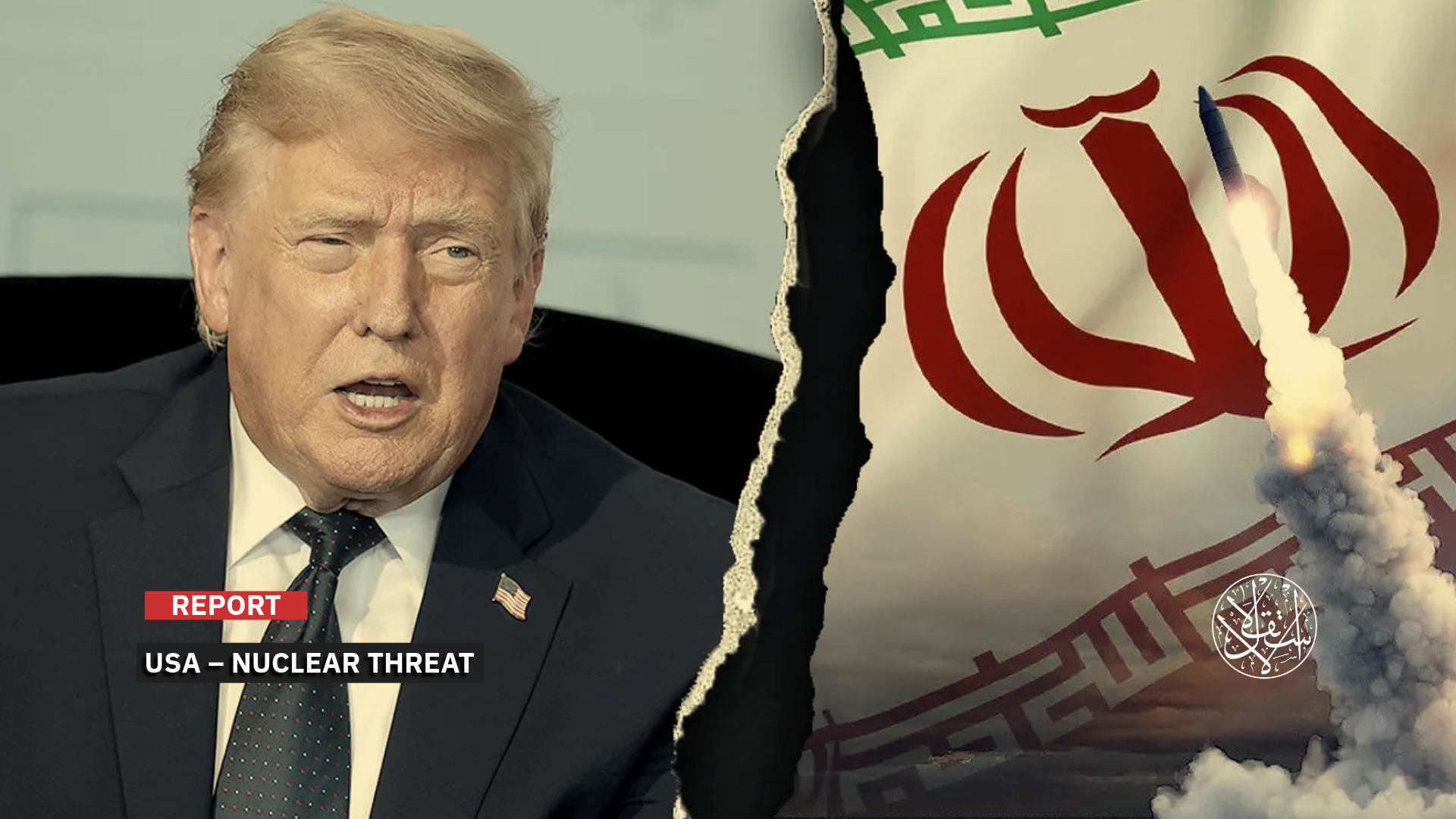
The United States can carry out the strike within an hour, whenever we want, at any time we choose.
American conservative media figure Tucker Carlson sparked widespread controversy on November 2, 2026, when he warned that President Donald Trump’s administration could launch a nuclear strike on Iran within days, under pressure from the Israeli entity’s Prime Minister Benjamin Netanyahu.
Carlson said his warning was based on numerous official sources. It gained added weight because it came five days after Democratic Sen. Chris Murphy said on October 28, 2026, that he had seen a war plan being prepared by the Trump administration, which he described as “crazy and catastrophic.”
These warnings coincided with hard-line positions from Trump, who threatened a powerful and unusual strike on Iran over Tehran’s tougher stance in negotiations and its refusal to make concessions on the nuclear file and the Strait of Hormuz.
However, the greatest danger of threatening Iran with nuclear weapons is not limited to the possibility of a strike. It extends to the impact of these threats on other countries’ security calculations, and to the radical shifts in the world order that could follow if such a strike were carried out.
According to political experts, turning the nuclear bomb from an exceptional means of deterrence into a tool of pressure in political negotiations or regional wars would change the rules of international relations.
The real danger lies in the future of the international order after any possible use of nuclear weapons. A tactical nuclear strike on a country the size of Iran would mark a radical shift in the rules governing relations between states.
It would also put the concepts of national sovereignty, respect for borders, and nuclear deterrence to an unprecedented test.
It could push countries around the world to race to acquire nuclear weapons to protect themselves. The deterrence equation would be turned upside down, and the fear of nuclear attack would become a driver of the nuclear arms race.
What Are Trump’s Intentions?
Carlson said Netanyahu is pressuring Trump and senior administration officials to use a nuclear weapon against a uranium enrichment facility in central Iran, arguing that its rock fortifications make it impossible to destroy with conventional weapons.
He explained that the likely target is the Pickaxe Mountain facility in central Iran, where Israeli intelligence claims Tehran has resumed uranium enrichment.
Carlson’s remarks came after Murphy warned of a crazy plan the Trump administration was preparing against Iran. After attending a classified intelligence and military briefing, Murphy warned that the plan would lead to devastating escalation and could undermine the US commitment to the rule of law.
At an event held by the Middle East Institute (MEI) in Washington on October 28, the details of which were published by The Atlantic in early November, Murphy revealed that he had seen a possible military plan to resume operations against Iran during a closed briefing.
“Their plan is insane. It will lead to devastating escalation and, most likely, to the destruction of our commitment to the rule of law,” Murphy said.
Experts interpreted this as a reference to the possibility that Trump intends to use a tactical nuclear weapon to bomb Iran’s Pickaxe Mountain facility.
Before Murphy’s warnings, Netanyahu posted an AI-generated image depicting a possible Iranian nuclear attack on “Israel”, even though Tehran does not possess a nuclear weapon. The move was seen as an attempt to incite Trump to use a nuclear bomb against Iran.
On November 3, the British newspaper The Telegraph quoted analysts as saying that Netanyahu may have unintentionally helped put the option of a nuclear strike on Iran on the agenda. They said he posted the image as part of his efforts to rally support within his core electoral base.
On August 31, 2026, Trump was asked directly whether he ruled out using nuclear weapons against Iran. He said he did, called the question “stupid”, and said there was no reason to resort to such a weapon.
Trump repeated this position in an interview with Newsmax on October 16, saying, “I wouldn’t use nuclear. We don’t have to,” while discussing a possible strike on Iran’s Pickaxe Mountain nuclear facility.
However, Trump had previously raised fears of a nuclear strike when he wrote on his Truth Social platform on April 7, 2026, “A whole civilization will die tonight, never to be brought back again.”
He posted this hours before the deadline he had set for Tehran to reach an agreement expired, amid US demands to end the closure of the Strait of Hormuz.
Several experts and observers interpreted Trump’s statement as an implicit nuclear threat, given the scale of destruction he described and the ambiguity surrounding the means Washington might use to carry it out.
In an analysis published by the Bulletin of the Atomic Scientists on July 7, 2026, titled “Why Trump’s nuclear blackmail of Iran failed spectacularly,” writer Jack Kennedy argued that the US president’s post contained a “veiled nuclear threat.”
Kennedy noted that Vice President JD Vance spoke the same day about the possibility of using military capabilities that the United States had not yet decided to use.
The analysis argued that keeping the nature of the threat ambiguous may be part of a strategy to intimidate the adversary and push it to the negotiating table, without explicitly announcing a decision to use nuclear weapons.
In his latest remarks on the type of weapon that might be used, Trump said in the October 16 Newsmax interview that the United States was considering targeting the Pickaxe Mountain facility in a future strike.
He said the weapon likely to be used is the GBU-43/B Massive Ordnance Air Blast bomb, known as the “Mother of All Bombs” (MOAB), and stressed that it is non-nuclear.
Trump described the bomb as huge and like a small nuclear bomb, but said it contains no nuclear material.
On November 2, Trump again raised the possibility of an attack on the Pickaxe Mountain site. He told Fox News that “the United States can carry out the strike within an hour, whenever we want, at any time we choose.”

What If?
On November 3, The Telegraph, citing experts, reviewed six main options available to Trump for dealing with Iran, ranked by likelihood.
First: A Tactical Nuclear Strike
The first option is a US tactical nuclear strike on Iran’s Pickaxe Mountain facility. This is the scenario Carlson described, and it involves using a nuclear weapon to destroy the site linked to Iran’s nuclear program.
This option rests on the argument that only a nuclear weapon could penetrate the facility’s fortifications and destroy it, since it lies beneath a layer of solid granite up to 100 meters thick. However, the option appears unlikely for practical and strategic reasons.
Most nuclear bombs are designed to explode in the air, while destroying the facility would require a weapon capable of penetrating deep underground fortifications.
In addition, bunker-busting nuclear weapons such as the US B61-13 bomb have never been tested, let alone used in actual combat. Estimates of their effectiveness therefore rely entirely on computer modeling.
Second: A Full-Scale Invasion of Iran and Regime Change
The second option is a large-scale military invasion of Iran aimed at changing its regime. Netanyahu favors this scenario and has sought it for years.
Most analysts believe that toppling the Iranian regime through a military campaign would likely require a large-scale ground invasion, similar to what happened in Iraq.
However, “Israel” lacks the capacity to carry out an operation of this scale on its own, and Washington shows no willingness to undertake it, given the enormous costs and major military and political risks involved.
Third: A US-Israeli Attack to Seize the Strait of Hormuz
The third option is a US-Israeli military attack to regain control of the Strait of Hormuz and secure navigation through it.
According to experts, the military operations the United States and “Israel” launched against Iran when the war broke out in February 2026 did not include a plan to reopen the strait, despite its crucial strategic importance.
The Telegraph quoted a prominent Israeli analyst specializing in Iranian affairs as saying, “From the minute that the Iranians decided that they would close Hormuz and they started bombing the sites of gas and oil in the Gulf states, [the war] was lost .”
But controlling the strait would be neither easy nor cheap. It would require deploying ground forces to strategic positions, fortifying and defending them, and possibly staying there for years.
Iran would also likely respond by attacking oil facilities and other infrastructure across the region. This could ultimately cause a sharp drop in the amount of oil available for shipping, even if control of the strait were regained.
Fourth: Repeating the Mowing the Grass Strategy
The fourth option is for the United States and “Israel” to carry out a new military operation based on the mowing the grass strategy. This would be a limited air campaign targeting known Iranian military infrastructure, including air defense radars and missile launchers, to keep the Iranian threat under control.
The mowing the grass strategy is one of the core pillars of Israeli military doctrine, while the United States believes a new wave of such strikes could push Tehran back to the negotiating table.
However, the main obstacle to this option is the risk of regional escalation, including Iranian attacks on US military bases and ships in the region, along with shortages in interceptor missile stockpiles.
If “Israel” takes part in the attacks, Iran would likely resume targeting it with drones and ballistic missiles. Applying the mowing the grass strategy could therefore push Tehran to respond with a “scorched earth” policy.
Fifth: A Negotiated Peace Agreement
The fifth option is a peace agreement that ends the war through negotiations, based on a framework that has been on the table for months and that Trump approved in June 2026.
The agreement would ease navigation through the Strait of Hormuz in exchange for easing US sanctions on Iran and releasing its frozen funds.
Talks on Iran’s nuclear program would follow, aimed at preventing Tehran from enriching uranium and developing a nuclear weapon.
Sixth: A Face-Saving Show Strike
The sixth option is a huge, dramatic, but largely symbolic explosion, meant to let Trump and Netanyahu save face and perhaps pave the way for a negotiated peace agreement.
Under this scenario, the two sides could carry out a pre-agreed strike on an Iranian nuclear facility. Alternatively, they could reach an understanding under which Iran symbolically blows up one of its own nuclear facilities as a sign that an agreement has been reached.
This step would allow Trump to declare victory, while Netanyahu could use it to strengthen his political position and stay in power longer.
However, experts doubt that Iran would agree to such a scenario simply to help Trump and Netanyahu save face.
Still, they believe the option could become reasonable if it came with the complete lifting of sanctions on Tehran and the release of billions of dollars of its frozen funds.
Demolishing the World Order
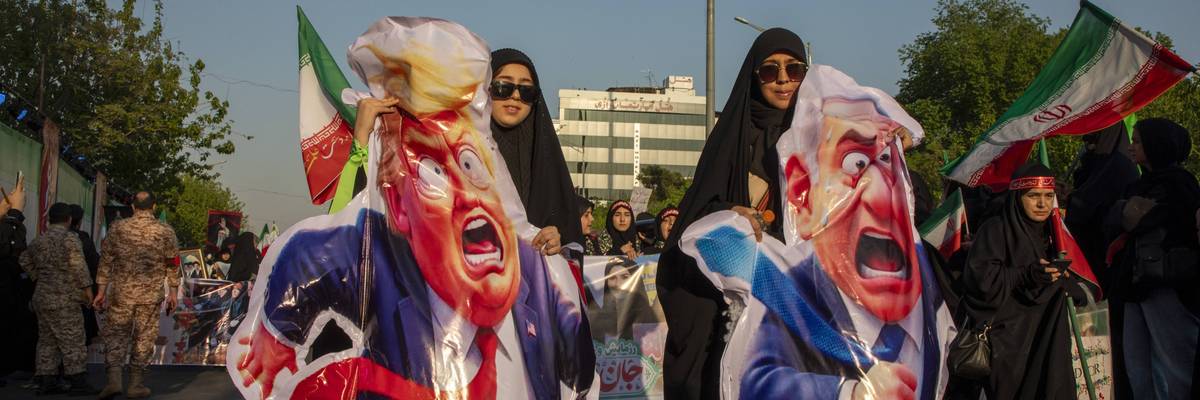
Western assessments indicate that if the United States actually used a nuclear weapon, the result would be more than a military defeat for Iran or the destruction of its facilities.
The world could see a dangerous decline in the nuclear nonproliferation regime and stronger incentives to acquire the bomb.
There would also be cracks in trust between the major powers and their allies, as well as a humanitarian and environmental catastrophe that could extend beyond the region.
Numerous reports published by research institutes, such as Chatham House on March 30, 2026, and the International Institute for Strategic Studies (IISS) on March 25, 2026, quoted experts as saying that a nuclear strike on Iran would not necessarily destroy Pickaxe Mountain.
But it could demolish the order on which international relations have rested for decades. It could also open the door for Russia to use nuclear weapons against Ukraine, and for other nuclear-armed states to use them against countries that have none.
Carlson himself had previously warned that using a nuclear bomb in the Middle East could tempt Russia to use one in Europe as part of its war on Ukraine, which could quickly escalate into an all-out nuclear confrontation.
Experts stress that the real danger is what would happen to the international order after nuclear weapons are used. The use of any nuclear weapon, even a tactical one, against a country the size of Iran would mark a radical shift in the rules of international relations.
It would put the concepts of national sovereignty, respect for borders, and nuclear deterrence to an unprecedented test, since territorial sovereignty has long been one of the fundamental pillars of international law.
A direct nuclear strike on a country with extensive military capabilities would, in practice, cross red lines that have stood for decades. It would also open the door to a new logic that justifies violating states’ sovereignty on the basis of potential threats or anticipated risks.
More dangerous still, the message would not reach Tehran alone. It would reach every country considering acquiring nuclear weapons to protect itself.
If Iran, a country seen as being on the threshold of nuclear capability, were hit by a tactical nuclear strike, other countries would draw a clear lesson. A nuclear arsenal would no longer be merely a military option, but a necessary guarantee against suffering the same fate.
Here the deterrence equation would be turned upside down. Instead of the fear of nuclear weapons preventing wars, the fear of being attacked could speed up the nuclear arms race.
The result would be a less stable world, countries more eager to acquire weapons of mass destruction, and less room for diplomacy and economic containment.
The question is no longer whether a nuclear weapon can destroy a mountain or an underground facility. It is whether the world is ready to live with the collapse of the last red line that has prevented the use of these weapons since 1945.
Professor Robert Pape of the University of Chicago warned that a nuclear strike by Trump on the deeply buried Pickaxe Mountain facility would not achieve what he wants.
He said the Iranian installations inside Pickaxe Mountain, where Iran is alleged to be working on a nuclear bomb, lie hundreds of meters deep. They are well protected by the mountain and by Iran’s ultra-hardened concrete bunkers.
He warned that the resulting radiation could travel far beyond the target. He said the wind could carry radioactive fallout across the Gulf, Afghanistan, and Pakistan, and possibly into parts of India.
Experts stress that the targeted site is a granite mountain. Dropping a nuclear bomb on it would work only if the bomb carried a warhead capable of penetrating the granite.
Even then, a nuclear weapon with a yield of 10 kilotons would cause damage limited to a few dozen meters. It would not reach the heart of the mountain or the Iranian reactor, nor would it fully destroy Iran’s nuclear site.
As a result, calls and criticism directed at President Donald Trump have grown. They urge him to categorically rule out the use of nuclear weapons against Iran, rather than give in to pressure from the Israeli prime minister to push Washington into a nuclear strike on the fortified underground facility.
Critics warned of the dangers of this scenario, questioned the accuracy of the circulating information, and called for avoiding an unconscionable horror, according to Common Dreams on November 2, 2026.
The National Iranian American Council (NIAC) said that “whether these allegations reflect serious military planning or reckless posturing, the very possibility of a US nuclear attack on Iran is an unconscionable horror.”
The council demanded that Trump immediately and unequivocally rule out any use of nuclear weapons against Iran.
It also called on Congress to intervene urgently to prevent further escalation and end the war before the conflict turns into an irreversible catastrophe.
NIAC Policy Director Ryan Costello warned that any nuclear attack would be an unimaginable catastrophe. He noted that the radioactive cloud from the explosion could stretch hundreds of miles and reach major population centers, depending on the weapon’s yield and the wind direction.
He explained that Isfahan province, where the targeted site is located according to reports, is home to more than five million Iranians.
Costello warned that the use of nuclear weapons by the United States and “Israel” in a war of aggression would break the international taboo on these weapons and could encourage other nuclear-armed states to use them.
Journalist Ryan Grim of Drop Site News also urged people not to ignore Carlson’s warnings about Trump’s intentions. He described Carlson as someone who has close sources inside the Trump administration, and what he reports deserves attention.
Andrew Day, senior editor at The American Conservative, also refused to downplay the seriousness of these possibilities.
He recalled that Trump had previously threatened to destroy Iranian civilization and to launch a military attack unlike anything the United States has carried out since World War II.
He argued that such statements carry implicit nuclear threats, especially since conventional weapons have failed to force Iran to surrender, which makes fears of escalation justified.
On October 30, 2026, 200 civil society organizations from around the world appealed to the US Congress to stop Trump from using nuclear weapons against Iran.
The organizations, members of the Back from the Brink coalition, said Trump had threatened in recent weeks to strike Iran hard after the midterm elections. They also warned of his sudden and frequent policy reversals.