Algeria Regrets, Russia Pushes Back, and Morocco Declares Victory: What Is Happening in Western Sahara?
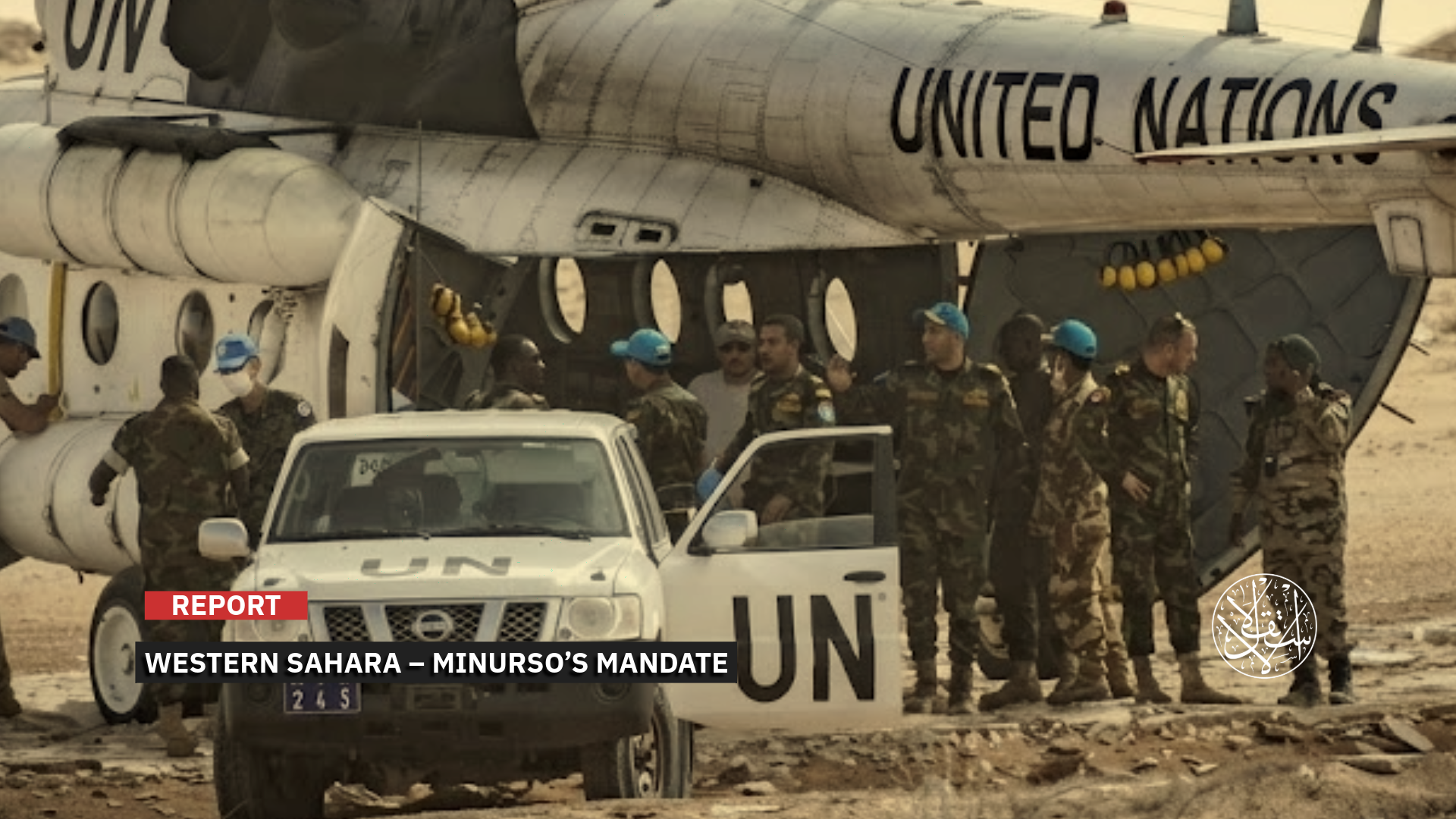
The U.S. proposal was paving the way for a gradual shift in the nature of the conflict in Western Sahara.
The future of Western Sahara is entering a new phase after the UN Security Council declined to renew the mandate of the UN Mission for the Referendum in Western Sahara (MINURSO), drawing a welcome from Morocco and criticism from Algeria and the pro-independence Polisario Front.
The U.N. Security Council failed to renew MINURSO’s mandate at its meeting on October 30, 2026. The mission was established primarily to monitor the ceasefire in Western Sahara.
The Security Council established MINURSO on April 29, 1991, under Resolution 690, following a ceasefire agreement between Morocco and the Polisario Front.
The mission’s core responsibilities include monitoring the ceasefire and the parties’ military activities, as well as overseeing mine-clearance efforts in the territory.
Its original purpose, however, was to organize a referendum allowing the people of Western Sahara to decide their future, with a choice between independence and integration with Morocco.
In 2007, Morocco proposed broad autonomy for Western Sahara under Moroccan sovereignty, while the Polisario Front continued to call for a self-determination referendum, a position backed by Algeria, which hosts refugees from the territory.

Morocco’s Position
In its first response to the decision, Morocco’s Royal Palace issued a statement on the same day, describing the failure to renew MINURSO’s mandate as “a significant development and a major step toward bringing the Western Sahara issue to a definitive close at the United Nations.”
The palace argued that the decision meant the mission should leave the kingdom’s southern provinces in the coming days, along with its personnel, vehicles, equipment, and insignia.
It said the move would close a chapter spanning 35 years, arguing that the mission had been established in a context that no longer existed and had long served to internationalize the dispute over what Morocco calls its legitimate recovery of the Saharan territories.
The Royal Palace stressed that the non-renewal of MINURSO’s mandate should also put an end to the Security Council’s handling of the Western Sahara issue and remove it from the council’s agenda.
According to the statement, this would eliminate the need for the council’s regular meetings on Western Sahara, as well as the related reports submitted by the UN Secretary-General and briefings by his personal envoy.
The palace said the decision would bring an end to the UN political process, which it accused other parties of delaying in an effort to perpetuate the stalemate and preserve the status quo.
It added that similar steps would soon be taken within other UN bodies.
Morocco’s Foreign Minister Nasser Bourita, meanwhile, said the expiration of MINURSO’s current mandate without renewal would bring an end to the Security Council’s regular meetings devoted to renewing the mission’s mandate and reviewing reports on its work.
Speaking on a special program aired by Morocco’s state-run Channel 2 on October 31, Bourita explained that the council’s regular meetings on Western Sahara had been primarily linked to overseeing MINURSO’s mandate, including its renewal and the review of the UN secretary-general’s reports on the mission’s activities.
He said the mandate’s expiration would remove the basis for holding these meetings on a regular schedule. It would also affect the periodic reports submitted by the secretary-general to the Security Council and the briefings delivered by his personal envoy, Staffan de Mistura.
Bourita noted, however, that under the UN Charter, the Security Council has broad powers to maintain international peace and security, including the authority to convene meetings on any matter within its remit whenever necessary.
“Meetings on the issue of Moroccan Sahara will no longer be held under the new circumstances as part of a regular schedule dictated by the renewal of MINURSO’s mandate or the submission of reports on its work,” he said, adding that the council would retain the option of placing the issue on its agenda whenever developments warranted it.
Bourita described the change as “a shift in the Security Council’s institutional approach to the Western Sahara issue,” marking the end of meetings and reports tied to MINURSO’s mandate without affecting the council’s broader responsibilities for maintaining international peace and security.
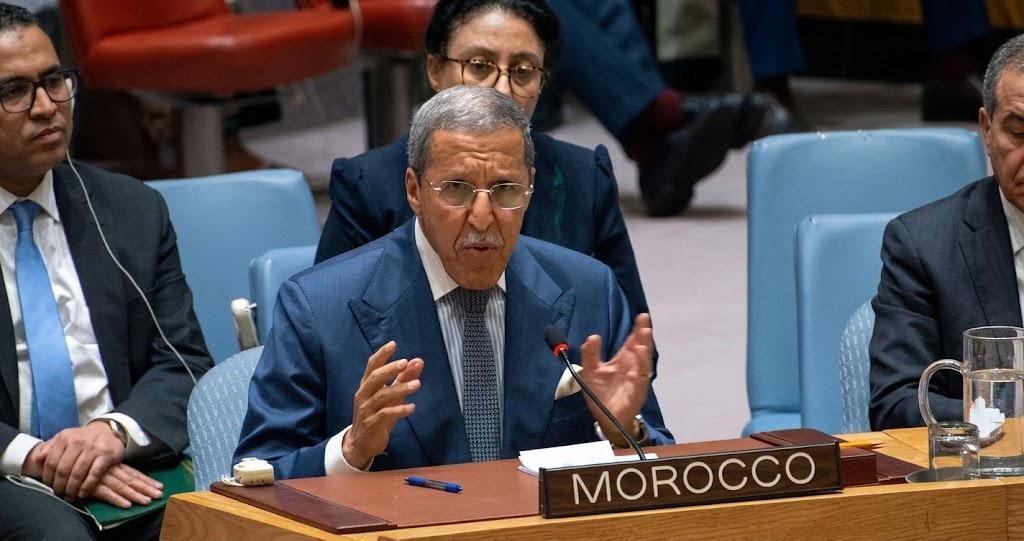
Geopolitical expert Hicham Mouatadid also described the Security Council’s decision not to renew MINURSO’s mandate as “a significant development in the Western Sahara dispute.”
Speaking to Al-Estiklal, Mouatadid said the decision “further strengthens Morocco’s autonomy initiative, which Rabat has put forward as the only political framework for a final settlement of what it describes as a manufactured regional dispute over the Moroccan Sahara.”
He said the development also strengthens growing international support for an autonomy plan under Moroccan sovereignty and reflects Morocco’s firm commitment to resolving the Western Sahara issue in light of the current diplomatic realities.
Mouatadid added that the decision demonstrates “the effectiveness of Moroccan diplomacy, which remains committed to asserting the kingdom’s legitimate rights in its southern provinces and has secured growing support for its autonomy initiative as the sole basis for a lasting political solution.”
He said the non-renewal of MINURSO’s mandate was consistent with Morocco’s long-standing diplomatic approach, which holds that the continuation of any international mechanism should not become an end in itself when maintaining it no longer reflects political and diplomatic developments.
At the same time, Mouatadid stressed the need to account for the changes that have taken place since MINURSO was established in 1991, noting that the international diplomatic landscape has undergone profound shifts since then.
Polisario Front Pushes Back
The Polisario Front, meanwhile, voiced concern over what it described as a deadlock at the Security Council meeting, which it said stemmed primarily from a U.S.-drafted resolution that “fully reflected the official position of the U.S. government and that of the Moroccan occupying state,” in its words.
In a statement dated October 30, the front said the deadlock had been compounded by positions taken by a small number of Security Council members, which it accused of openly supporting expansionist and colonial policies and perpetuating double standards in the handling of international issues.
The Polisario Front welcomed the Security Council’s failure to adopt the U.S. draft resolution, arguing that its adoption would have seriously undermined the foundations of the UN-led peace process in Western Sahara and set a dangerous precedent with destabilizing consequences for regional and international peace and security.
It categorically rejected any attempt to alter the UN mission’s mandate to bring it into line with Morocco’s position, warning that any measures taken could jeopardize the UN-sponsored peace process in Western Sahara.
The Polisario Front also praised what it called the principled position of Algeria, its ally and friend, for standing with the “Sahrawi people in their struggle to defend their legitimate rights in accordance with relevant UN resolutions.”
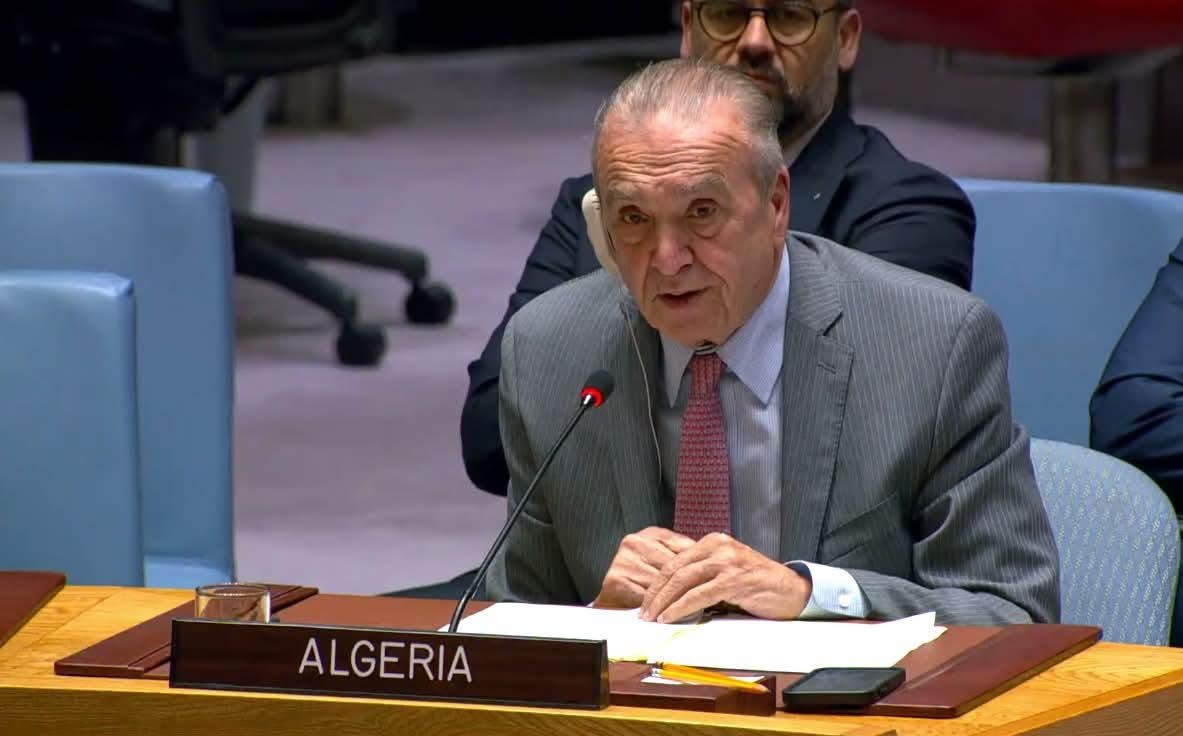
Algeria Voices Strong Objections
The Algerian government made clear its anger over the decision not to renew MINURSO’s mandate, expressing regret in a statement issued by the Foreign Ministry on October 31.
The ministry said the draft resolution presented to the Security Council was excessively and blatantly tilted in favor of one side, namely Morocco, at the expense of the Polisario Front, to the point that it could no longer be considered a serious basis for reaching a just and lasting settlement to the Western Sahara conflict.
The statement also revealed that Algeria’s Foreign Ministry had sent formal letters to Security Council members, drawing their attention to the serious implications of recent changes in how the Western Sahara dispute was being handled. It warned against “adopting a resolution aimed at cementing a reality on the ground and legitimizing an occupation-based status quo at the expense of the Sahrawi people’s right to self-determination.”
The ministry further argued that removing the letter “R,” which stands for “Referendum,” from the acronym of the UN Mission for the Referendum in Western Sahara (MINURSO) was a troubling political signal. It said the change effectively sidelined the referendum option, which had historically been central to the mission’s mandate and to the Sahrawi people’s exercise of their right to self-determination.
Algeria’s Foreign Ministry also argued that the U.S. proposal was paving the way for a gradual transformation of the Western Sahara dispute, shifting it from a decolonization issue into one framed primarily as a humanitarian problem requiring sustainable solutions.
The U.S. Position
U.S. Ambassador to the United Nations Mike Waltz expressed regret over the Security Council draft resolution on Western Sahara, drafted by Washington and vetoed by Russia.
“Unfortunately, Russia vetoed what 11 other members of this Council supported—taking historic steps toward finally ending a 50-year conflict in the Western Sahara,” Waltz said.
“We presented a path to finally stem the real, devastating human cost of this conflict by extending the UN mission in Western Sahara for 12 months, supported the Personal Envoy and the political process, and called on UNHCR to register the refugees in the Tindouf camps who have been waiting 50 years for a durable solution.”
“Russia’s veto means the mission’s mandate will now expire on October 31. The Council chose not to take a step back from the historic progress of Resolution 2797 by not supporting Russia’s alternative text. This was all Russia’s choice,” he added.
“President Trump refuses to accept that this conflict is simply too difficult to solve—and under his leadership, we acted. Our resolution would have taken the next steps on that road to freedom and peace. We will not lend our vote to business as usual in the face of terrible conditions that the UN’s own High Commissioner for Refugees has called ‘untenable, unsustainable, and genuinely, truly inhumane.’”
The U.S. ambassador said Washington was ready to work with the UN secretary-general on an orderly withdrawal that would protect UN personnel and address legitimate security and humanitarian needs. He warned that the Trump administration would continue working with all parties to negotiate a lasting peace.
Sources
- Royal Palace Statement [Arabic]
- Polisario Front Reaffirms Commitment to Cooperating with U.N. Secretary-General and Security Council [Arabic]
- Statement by Ambassador Mike Waltz, U.S. Representative to the United Nations, on a U.S.-Drafted UN Security Council Resolution on the Western Sahara Vetoed by the Russian Federation