Democrats Take Control of Congress: What It Means for U.S. Policy on Gaza
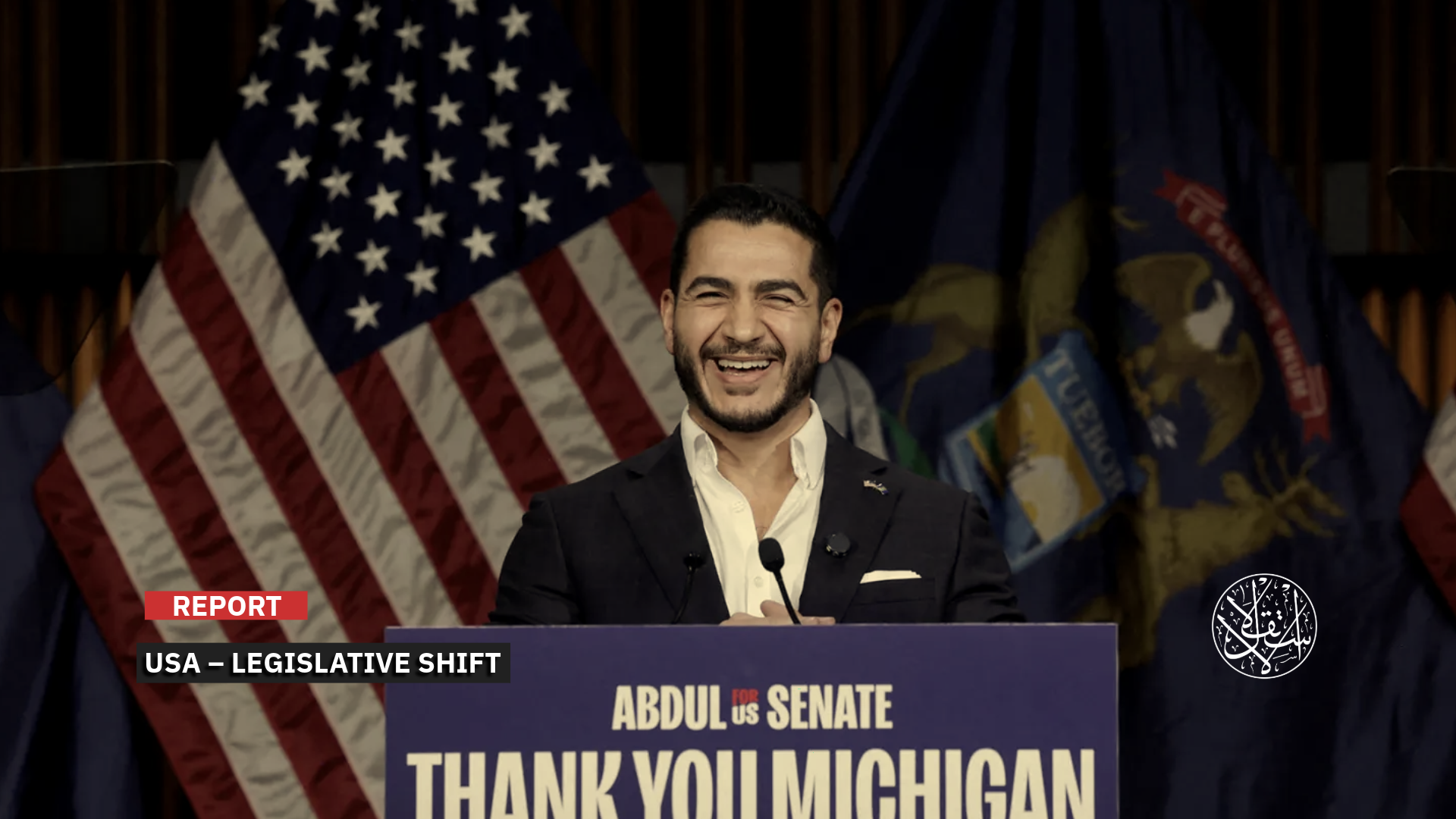
Democrats and their independent allies secured 54 seats in the Senate, compared with 44 for Republicans.
Democratic control of both chambers of the U.S. Congress opens a new chapter in Washington’s relationship with “Israel,” as arming the Israeli Occupation has become an increasingly divisive issue within the party amid “Israel’s” aggression on Gaza and growing opposition to continued U.S. military support.
The new Democratic majority will have legislative, budgetary, and oversight powers that could affect arms deals, humanitarian aid, and reconstruction efforts in Gaza.
The shift has also raised concerns in “Israel” that its traditional backing in Washington could weaken, putting the future of an alliance that has underpinned its regional position for decades under pressure.
The extent of any policy shift, however, will depend on divisions within the Democratic Party, the foreign policy powers retained by President Donald Trump, and ongoing efforts to restructure U.S.-Israeli military cooperation.
The picture has become more complicated since Trump announced on the eve of the elections that he had reached an understanding with outgoing Israeli Prime Minister Benjamin Netanyahu to end annual U.S. military aid to “Israel” by the end of 2026 while maintaining arms sales and defense cooperation.
This has raised questions about whether Democrats can bring about any meaningful change in Washington’s policy toward Gaza during the remaining two years of Trump's term.
Will Congress Change Its Stance?
The 3 November 2026 midterm elections shifted control of both the House and Senate to the Democrats, ending two years of Republican control of both the legislative and executive branches.
According to preliminary results published on the morning of 4 November by Ballotpedia, a U.S. website that tracks elections, Democrats and their independent allies secured 54 Senate seats, compared with 44 for Republicans.
They also secured at least 231 seats in the House of Representatives, compared with 141 for Republicans, as vote counting continued in several districts. The new Congress is set to take office on 3 January 2027.
The shift came alongside victories by candidates who had campaigned against arming the Israeli Occupation. Among the most prominent was Democratic doctor and politician Abdul El-Sayed, who became the first Muslim elected to the U.S. Senate after winning in Michigan.
During his campaign, el-Sayed called for an end to military aid to the Israeli Occupation and described “Israel’s” aggression on Gaza over the past three years as genocide.
Democrat Troy Jackson also won Maine’s Senate seat, defeating Republican Senator Susan Collins, who had held the position since 1997. His campaign criticized the continued provision of U.S. military support to “Israel”.
In the House, five newly elected candidates backed by the Democratic Socialists of America (DSA), a left-wing political movement that supports progressive candidates, won seats. They included Darialisa Avila Chevalier and Claire Valdez in New York, and Chris Rabb in Pennsylvania.
This brought the number of DSA-backed winners to seven, including two incumbent members, strengthening the presence of a faction within the Democratic Party that opposes unconditional military support for the Israeli Occupation.
The election results reflect a shift that had been building before the vote and was clearly evident in a 15 July 2026 House vote on an amendment introduced by Republican Representative Thomas Massie to cut $3.3 billion in U.S. military aid to “Israel.”
Although the amendment was defeated by 314 votes to 104, 103 Democratic lawmakers supported it, while 98 opposed it and 10 voted present. The division extended to the party’s leadership: House Democratic Leader Hakeem Jeffries opposed the amendment, while his deputy, Katherine Clark, and former House Speaker Nancy Pelosi supported it.
In a study published on 22 September 2026, “Israel’s” Institute for National Security Studies (INSS) divided Democratic members of Congress into three main camps. The first, comprising 24 members, calls for an end to military aid and an arms embargo.
The second, comprising 109 members, supports attaching conditions related to human rights and international law to U.S. assistance.
The third, with around 100 members, backs maintaining the military alliance with the Israeli Occupation. Other lawmakers hold positions that overlap across these groups.
INSS concluded that the camp favoring conditions on U.S. aid represents the largest bloc within the Democratic Party, even as traditionally pro-“Israel” party leaders retain considerable influence.
The study also found growing support for reviewing military assistance across broader segments of the Democratic Party.
However, a complete cutoff of aid remains divisive, while pro-“Israel” lobbying groups, particularly the American Israel Public Affairs Committee (AIPAC), continue to wield influence.
Assessing these shifts from an Israeli perspective, Nadav Tamir, executive director of the Israeli branch of J Street, a U.S. pro-“Israel” advocacy group, said traditional support for “Israel” in Congress was increasingly being tied to the policies of the Israeli Occupation government and its treatment of Palestinians.
In an article published by The Times of Israel on 5 October 2026, Tamir explained that the Democratic Party's mainstream remained committed to the alliance with “Israel” but was increasingly willing to use U.S. leverage to pressure its government.
He predicted that the new Congress could pass measures to hold those responsible for settler attacks accountable.
As an example, he pointed to the support of 46 out of 47 Democratic senators for a resolution calling on the State Department to provide information on human rights violations in the West Bank.

What Leverage Do Democrats Have?
Congress has the power to approve budgets, allocate funding, review arms sales, and oversee the executive branch.
These powers give the new Democratic majority several ways to influence U.S. decisions on “Israel” and Gaza, particularly future funding allocations and the conditions attached to them.
They also allow lawmakers to hold Trump administration officials accountable for weapons and aid provided to the Israeli Occupation.
On arms transfers, one key measure is the Block the Bombs Act, introduced in 2025 by Democratic Representative Delia Ramirez. The bill seeks to restrict the transfer of certain types of offensive weapons to “Israel” and condition their use on compliance with U.S. and international law.
Support for the bill grew from 21 lawmakers when it was introduced to 73 in June 2026, including Republican Representative Thomas Massie. Democrats could reintroduce it in the new Congress and seek to broaden its backing.
The Arms Export Control Act also gives Congress a mechanism to review major military sales and block them through joint resolutions.
According to the Congressional Research Service, a legislative branch agency, Congress generally has 15 days to review arms sales to “Israel” that are subject to formal notification.
The president, however, can invoke emergency provisions, and any congressional objection must go through the legislative process before it can become binding.
The most significant development came on the eve of the elections, when Trump told Fox News on 3 November that he had reached an understanding with Netanyahu months earlier to end annual U.S. military aid to “Israel” by the end of 2026.
The assistance is worth nearly $4 billion a year, while arms sales would continue and additional support could still be provided if needed.
Trump linked the announcement to Democratic criticism of continued U.S. funding for “Israel,” citing candidate Abdul el-Sayed.
He suggested that ending the aid would deprive his political opponents of an issue they had been using against Republicans.
The details of how the announcement would be implemented remained unclear, and Netanyahu's office had not officially confirmed it.
Meanwhile, the 2016 U.S.-“Israel” military aid memorandum of understanding remains in effect through September 2028.
It provides for $38 billion over 10 years, including $3.3 billion annually in military financing and $500 million for missile defense programs. Annual funding allocations, however, remain subject to congressional approval.
On humanitarian aid, Democrats could invoke Section 620I of the U.S. Foreign Assistance Act, which restricts assistance to countries that obstruct the delivery or transport of U.S. humanitarian aid. The law also allows the president to waive the restriction on national security grounds.
Section 502B of the same law provides mechanisms for reviewing security assistance in light of human rights violations, giving lawmakers another legal avenue to question the Trump administration's continued support for the Israeli Occupation despite restrictions on humanitarian relief.
Such measures have gained added significance as “Israel's” aggression on Gaza continues, and humanitarian operations face persistent obstacles.
The potential reach of the Democratic majority also extends to Trump's plans for governing and rebuilding Gaza, particularly the Board of Peace, established in early 2026 to oversee transitional arrangements and coordinate international funding. The framework also includes the Palestinian National Committee for the Administration of Gaza, headed by Ali Shaath, which has faced Israeli obstacles preventing it from beginning its work.
On 11 June, Senator Jeanne Shaheen, the top Democrat on the Senate Foreign Relations Committee, wrote to Secretary of State Marco Rubio seeking clarification on the Board of Peace's legal basis and the mechanisms for overseeing its finances. The letter followed Trump's pledge to contribute $10 billion to the board.
Shaheen disclosed that the State Department had notified Congress in April of its intention to transfer $50 million to cover the board's initial operating expenses.
Meanwhile, publicly announced international pledges through the board had exceeded $17 billion, raising questions about who would manage the funds and oversee how they were spent.
These concerns come as a joint assessment released by the United Nations, the World Bank, and the European Union on 20 April estimated that Gaza would need $71.4 billion for recovery and reconstruction over the next 10 years.
Of that amount, $26.3 billion would be required in the first 18 months to restore essential services and repair infrastructure.
With Democrats set to take over congressional committee leadership, they could expand investigations into the Board of Peace's financing and push to make new U.S. funding conditional on transparency, spending oversight, and guarantees that aid reaches Palestinians.
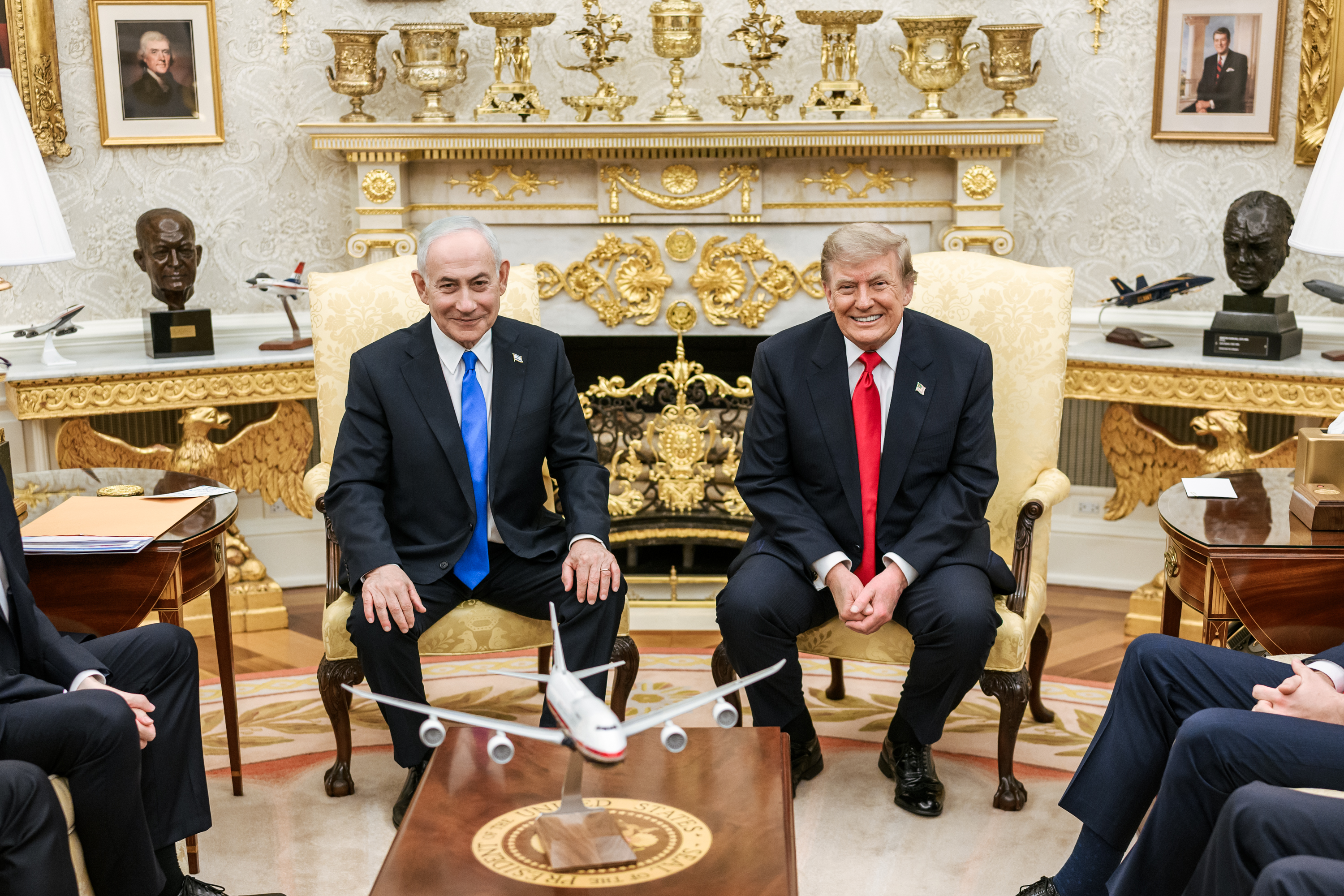
The Limits of Change
The Democratic majority faces constitutional and political constraints that could prevent it from turning its demands into binding decisions.
Trump retains broad powers over foreign policy, including managing diplomatic relations and negotiations, directing executive branch agencies, and vetoing legislation passed by Congress.
Overriding a presidential veto requires a two-thirds majority of members present and voting in both the House and Senate.
Another obstacle lies in the Senate, where ending a filibuster on most legislation generally requires 60 votes. This means that passing sweeping laws to restrict military support for “Israel” would require additional Republican backing or the use of special legislative procedures permitted under Senate rules.
Trump has already demonstrated how effectively presidential veto power can shield arms deals from congressional opposition.
In July 2019, both chambers of Congress passed resolutions seeking to block arms sales to Saudi Arabia and the UAE over concerns related to the war in Yemen and human rights violations.
Trump vetoed the resolutions on 24 July, and the Senate failed to override his veto five days later, allowing the deals to proceed despite congressional objections.
These constraints take on added significance amid ongoing negotiations between Washington and “Tel Aviv” to restructure their military relationship.
On 6 May 2026, the Israeli Ministry of War announced the start of formal talks with the U.S. administration on a new framework for “defense” cooperation.
The proposed framework centers on expanding joint investment in military research, development, and production, while gradually shifting from direct financial assistance to a reciprocal defense partnership.
On 26 May, Stephen Simon, a senior researcher at the U.S.-based Quincy Institute, warned that U.S. support for “Israel” could be shifted into Pentagon procurement accounts, industrial partnerships, and joint production programs.
Such a move could weaken traditional political oversight mechanisms governing aid while allowing U.S. military resources and technology to continue flowing through different channels.
This shift is linked to the U.S. National Defense Authorization Act for fiscal year 2027, which included an initiative to expand military and technological cooperation with “Israel”, covering the development of defense systems, artificial intelligence, and cybersecurity.
In a second study published on 16 June, Simon warned that deeper integration between the U.S. and Israeli defense industries could make it harder to impose political and human rights conditions on future joint programs.
From an Israeli perspective, former Israeli Ambassador to Washington Michael Oren warned on 22 October that Democratic pressure could extend to intelligence cooperation, the joint development of military systems, and sanctions related to settlement expansion and settler attacks.
Oren argued that a deterioration in security ties with Washington could have serious consequences for “Israel”.
He called on the next Israeli government to take action against settler attacks and illegal settlement construction and to announce that it would abandon territorial expansion in Gaza, Syria, and Lebanon.
He also urged “Israel” to reduce its reliance on the United States and Europe by strengthening ties with countries in Asia, Africa, and South America, warning that “Israel's” diplomatic and economic isolation could deepen if its current policies continued.
Assessing the limits of the expected shift, former U.S. official for Israeli-Palestinian affairs Hady Amr said on 22 October that Democratic control of Congress would allow lawmakers to expand oversight of military assistance during 2027 and 2028.
Amr, an associate fellow at the Royal Institute of International Affairs, known as Chatham House, in London, explained that Democrats would be able to hold “Israel” accountable for violations against Palestinians, support Palestinian institutions, and remove some legal obstacles to U.S.-Palestinian relations.
He argued that the separation of powers between the legislative and executive branches would limit Democrats' ability to change foreign policy directly.
However, they could use funding decisions, congressional investigations, and political pressure to influence the administration's policies, while laying the legislative groundwork for broader changes after the 2028 presidential election.
The coming period is particularly significant as the U.S.-“Israel” military aid memorandum of understanding approaches its expiration in 2028 and negotiations advance over a new framework for “defense” cooperation.
The Democratic-controlled Congress will therefore have an influential role in approving funding and reviewing the terms of future military programs, while Trump retains control over political and security understandings with the Israeli Occupation.
Over the next two years, several scenarios are possible, ranging from intensified investigations and congressional oversight of the Trump administration to limited compromises over specific funding allocations and the conditions attached to them.
The legislative confrontation between Congress and the White House could also continue through the end of Trump's term.
The outcome will depend on Democratic unity and the willingness of Republicans to support initiatives concerning “Israel” and Gaza, as Israeli concerns grow that disagreements over arming the Israeli Occupation could lead to a broader reassessment of the future of its military alliance with Washington.
Sources
- Democrats win U.S. House and Senate majorities
- Roll Call 243 | Bill Number: H. R. 8595
- Three Camps, One Party: Democrats And The Future Of U.S.-Israel Policy
- A New Pro-Israel Consensus Is Emerging in Washington
- Trump says Israel will stop receiving $4B in US aid by year's end, can still buy weapons
- Possible Changes in U.S. Military Aid to Israel: Considerations for Congress
- U.S. and Israel Move to Redefine Their Defense Partnership, Launching Talks on a New Chapter in Defense Cooperation
- The Disappearing Aid Check: The Future of US–Israel Defense Support
- Cooperation without Oversight: The United States–Israel Defense Technology Cooperation Initiative
- The International Stakes of Israel’s Domestic Politics
- Will the US midterms change Washington’s policy on Israel and Palestine?