Jordan Church Attack and Tensions With Syria: Who Is the Real Target, and Who Stands to Gain?
The attack came after a Jordanian airstrike targeted a headquarters belonging to the militia of Druze cleric Hikmat al-Hijri in Sweida.
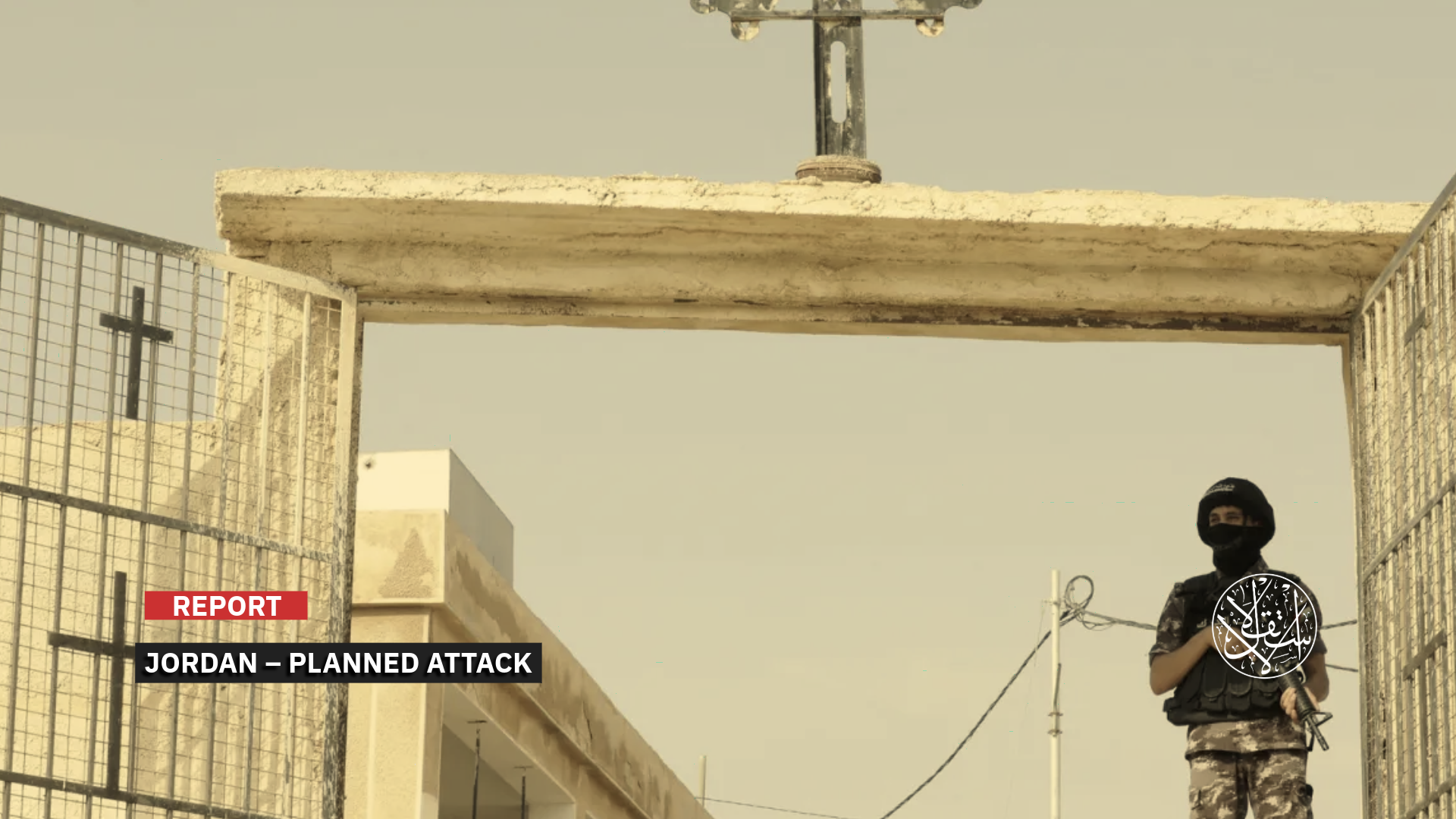
The armed attack on a church in Jordan’s southern Karak governorate on 23 October 2026 was no longer simply an assault on a Christian funeral once its repercussions extended into Syrian territory.
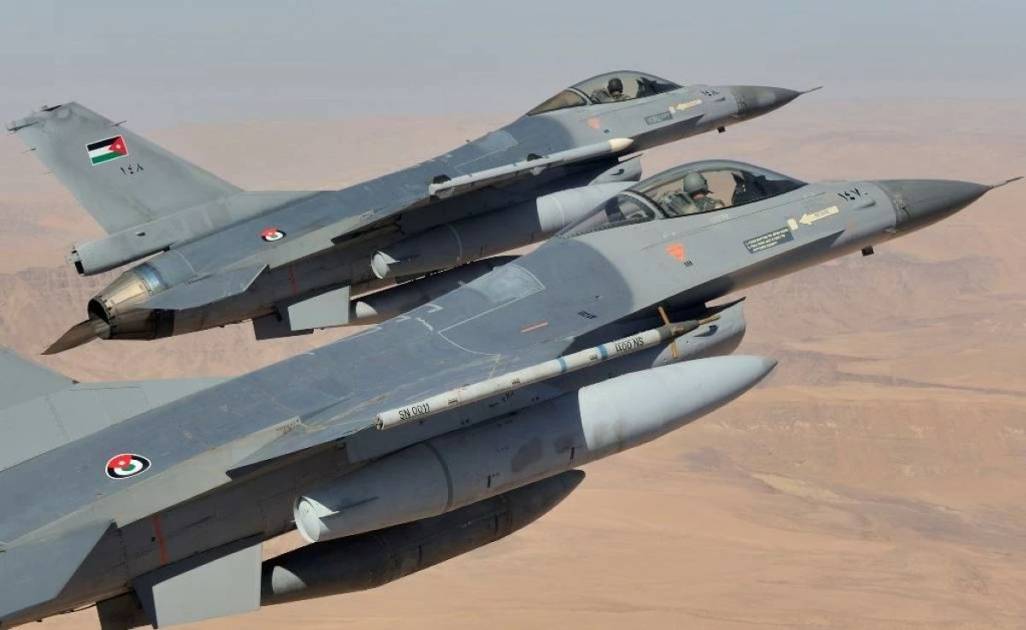
The Jordanian Air Force launched retaliatory airstrikes that it said targeted positions belonging to armed groups linked to ISIS and the attack. It announced that 20 militants had been killed and said the operation was coordinated with Damascus.
Developments, however, quickly sparked a dispute between the two countries. Syria denied that any coordination had taken place, while the strikes killed nine civilians, including four children, a woman, and several elderly people.
These developments placed Amman in an extremely difficult position amid reports that the Israeli Occupation had supplied Jordan with inaccurate intelligence in an attempt to draw it into a crisis with Damascus. They also confronted the Syrian authorities with a highly sensitive dilemma.
Syria needs cooperation with Jordan to secure their shared border and combat extremist groups and smuggling networks.
At the same time, however, it faces growing domestic pressure following the deaths of civilians in foreign airstrikes on its territory.
Amman, meanwhile, is seeking to prevent southern Syria from becoming a haven for groups it considers a threat to its national security.
But it risks escalating tensions with its neighbor if military operations continue without clear and publicly acknowledged coordination mechanisms.
This raises a central question: Could the Karak attack pave the way for deeper security cooperation between Jordan and Syria, or does it expose the fragility of border understandings and reopen the question of Syrian sovereignty at a time when state institutions are still working to consolidate their control over the south?
Nine Christians were killed and 40 others wounded when gunmen opened fire inside and outside a Greek Orthodox church in the Karak governorate, about 118 kilometers south of Amman, during a memorial service.
The attack raised broader questions about its timing and target, as well as the possibility that it was intended to fuel sectarian divisions in a country known for its social cohesion and religious coexistence. It also prompted questions about who might benefit from such an outcome.
The crisis, however, soon extended beyond Jordan and the questions surrounding who sought to exploit the security shock to ignite sectarian strife at home. It spilled over into Jordanian-Syrian relations following the Jordanian airstrikes, which triggered widespread anger among Syrians.
Who Stands to Gain?
On 23 October 2026, Jordan’s state-run al-Mamlaka TV aired footage showing three gunmen firing toward a church during a funeral procession before approaching the entrance while continuing to shoot. Such an attack is extremely rare in the kingdom.
According to various assessments, several parties, both domestic and foreign, stand to benefit from the attack. From the outset, the authorities focused on accusing extremist takfiri groups, pointing to ISIS as a potential ideological beneficiary given its history of attacks in Jordan.
Political actors inside and outside Jordan have also sought to exploit the attack to advance their own narratives about security, extremism, and regional relations, using it to justify tighter security measures or attack political rivals, particularly the Muslim Brotherhood.
Other assessments, by contrast, identify “Israel” as the political beneficiary of the attack, arguing that it fits into a broader Israeli policy of pressuring Jordan’s ruling establishment while presenting itself as its protector and promoting joint security coordination, despite Amman’s announcement that the perpetrators had been arrested.
Jordanian and foreign assessments suggest that the Karak church attack may have been intended to exploit sectarian divisions and undermine the coexistence between Muslims and Christians for which Jordanian society is known, thereby testing the resilience of the Jordanian state.
The sectarian motive is particularly concerning given the regional developments affecting Jordan and the wider region amid the U.S.-Israeli War on Iran and Amman’s involvement through the presence of U.S. military bases on its territory.
Any incident that threatens the kingdom’s domestic cohesion is therefore especially sensitive. Christians are a religious minority with a longstanding presence in Jordanian society and its institutions, and the kingdom presents itself as a model of religious coexistence in a region that has witnessed rising sectarian violence in recent years.
It was clear that the attack on a Jordanian church was designed to put the authorities to the test by challenging their ability to protect domestic security, exploiting sectarian tensions, and fueling hostility toward Islamist movements. Some actors used the incident to accuse Islamists broadly.
Western analyses have suggested that the timing of the attack, amid regional conflicts, may have been intended to exploit Jordan’s involvement in the war with Iran and deepen domestic divisions by targeting a church and fueling hostility toward the Muslim Brotherhood, now known as the Umma Party.
Beyond its timing, the choice of location made the attack particularly serious. The gunmen targeted a church during a funeral, turning a moment of mourning into a scene of further bloodshed, with nine more people killed beside the deceased’s coffin. This risked further inflaming tensions between the authorities and the Islamist party.
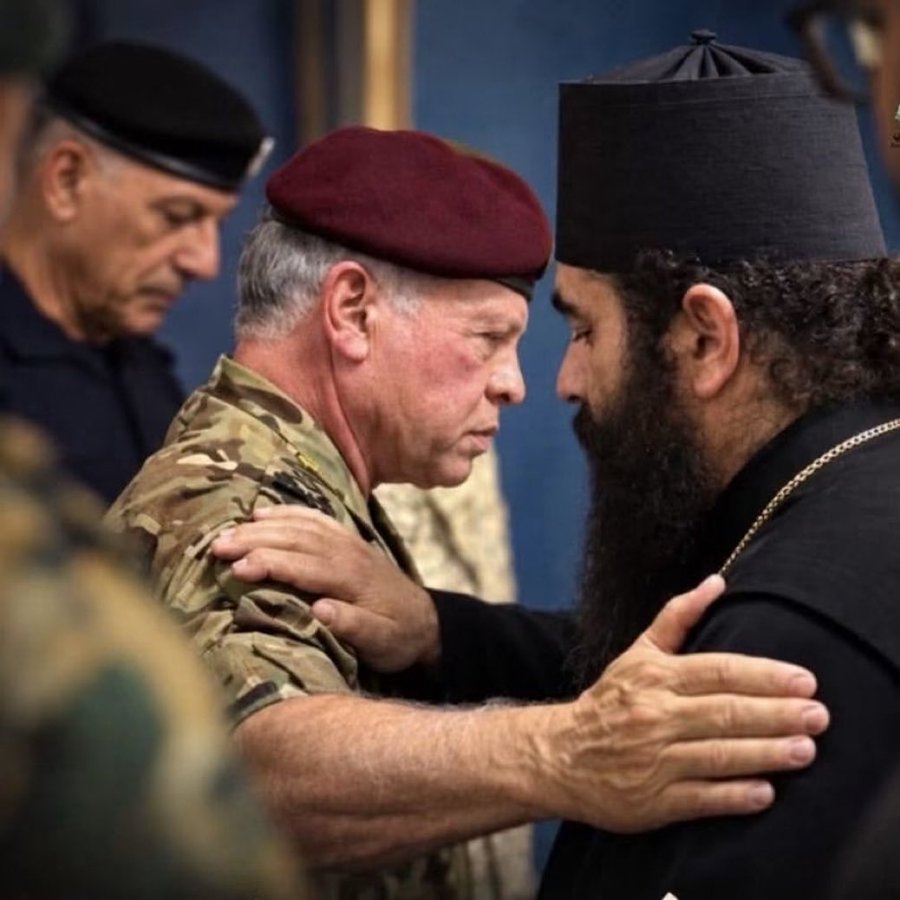
King Abdullah II’s decision to appear in military uniform during a visit to the wounded Christians reflected these concerns. His appearance conveyed a message of solidarity and national unity while signaling his readiness to confront those behind the attempt to incite discord.
Jordan then carried out a retaliatory airstrike in southern Syria, ostensibly targeting those responsible for the attack, despite having already announced their arrest.
The operation followed the king’s order for a firm response to the attack, in which he vowed, “We will confront the terrorist act that targeted Karak with the harshest penalties.”
Jordanian political groups across the spectrum and the Greek Orthodox Patriarchate of occupied Jerusalem also condemned the attack on St.
George’s Church in the village of Hmoud. The church stressed that the attack will not undermine national unity between Muslims and Christians in Jordan.
In a statement issued after the attack, church leaders in occupied Jerusalem emphasized that the assault threatened not only the victims but also Jordan’s social fabric.
The Patriarchate said in its statement, “If the message is intended to uproot us from our Holy Land and force us to leave it, it will only make us more determined to remain there and strengthen our roots.”

Incitement Against the Muslim Brotherhood
Leftist and secular groups hostile to the Islamist movement in Jordan, as well as in the UAE, sought to exploit the attack to smear the Muslim Brotherhood and incite hostility toward it.
Suspicious campaigns spread across social media accounts and Emirati newspapers, attempting to pin responsibility for the church attack on the Muslim Brotherhood.
One of the first and most prominent figures to make this accusation, despite Jordan’s confirmation that the suspects had not yet been arrested, was Mudar Adnan Zahran, a controversial Jordanian opposition figure with ties to Emirati and Israeli intelligence circles.
Zahran, who lives in London, has taken unusual positions, some of which align with Israeli narratives about the future of the Palestinian cause.
He claimed that the perpetrators of the terrorist attack on Hmoud Church were three cousins of former Muslim Brotherhood General Supervisor Abdul Majid Thuneibat and published their photographs despite the fact that the perpetrators had not yet been identified.
He later went further, claiming that the king himself was responsible for the attack because he had allowed the Brotherhood to operate without banning its activities, in a direct attempt to incite the authorities against the group.
As the rumor and accusations spread, one of the three men named, Jaafar Thuneibat, came forward to declare his complete innocence of this terrorist, cowardly, and criminal act, stressing his rejection of violence and extremism in all their forms, according to the Al-Dar website.
The Islamic Action Front Party (now known as the Umma Party) responded by sending its senior leaders to the targeted church to offer condolences and express solidarity with the Christians who had been attacked, while condemning the sectarian crime.
The party, which serves as the political arm of the Muslim Brotherhood in Jordan, also issued a statement condemning the attack on the Karak church, saying “it must be condemned and calls for strengthening national unity and confronting anything that threatens social cohesion.”
Umma Party Secretary-General Muath al-Khawaldeh reaffirmed the party’s condemnation of the attack on the church in the village of Hamoud, in Karak governorate.
He offered his heartfelt condolences to the victims’ families, the people of Karak, and all Jordanians, describing the tragedy as one that affects the entire country.
Al-Khawaldeh said the heinous crime was condemned and rejected by all divine religions and national traditions, stressing that such criminal acts run counter to religious teachings and values.
He also expressed confidence in the Jordanian people’s ability to confront alien ideas and practices aimed at undermining their unity and social cohesion, emphasizing that Jordan would remain, through the awareness and solidarity of its people, a model of moderation, tolerance, and national belonging.
Other branches of the Muslim Brotherhood, including the Syrian branch, also issued official statements strongly condemning the terrorist attack on the church in Karak, describing attacks on civilians and places of worship as crimes that violate the sanctity of human life and run counter to religious and humanitarian values.
Was ISIS Behind the Attack?
One of the potential beneficiaries of the attack is extremist and takfiri groups, if it is established that the church was deliberately targeted because of the victims’ religious identity, as Jordanian officials suggested.
Amman appeared to reinforce this possibility by launching airstrikes against what it said were ISIS positions inside Syria responsible for planning the attack.
A witness who spoke to CNN on 24 October said the gunmen had shouted “Allahu Akbar” while attacking the church courtyard. The authorities viewed this as evidence pointing to ISIS or another extremist takfiri group.
This possibility was also supported by the fact that the Karak governorate had previously witnessed deadly attacks in December 2016 involving an armed cell suspected of links to ISIS.
Jordan’s state-run al-Mamlaka TV quoted Interior Minister Mazen al-Farayyeh as saying at a news conference on 23 October 2026 that “Jordan is facing a terrorist operation carried out by a group of extremists.” He described the attack as the product of terrorist takfiri ideology and blind extremism.
Asked whether the attackers had organizational ties to armed groups, government spokesperson Mohammad al-Momani said the attack was the result of takfiri thinking, hard-line views, and extremism.
He added that any organizational links were being investigated by security agencies and would be announced once the investigation was complete and such links had been established.
Karak governorate had previously witnessed a deadly security incident in December 2016, claimed by ISIS and targeting civilians and security forces.
Ten people were killed in that attack, including seven security personnel and a Canadian tourist, while 34 others were wounded. Four ISIS militants were also killed after barricading themselves inside the historic Karak Castle.
Since 2005, Jordan has experienced several armed attacks. Among the most prominent were the 9 November 2005 bombings targeting three hotels in Amman, claimed by al-Qaeda in Iraq, which killed around 60 people.
On 6 June 2016, five members of Jordan’s General Intelligence Directorate were killed in an armed attack on one of the agency’s facilities in the Baqa'a area of Balqa governorate in central Jordan.
On 21 June that year, six Jordanian security personnel were killed in a suicide car bombing targeting an advanced military post serving refugees in the Rukban area along the Syrian border.

An Israeli Hand?
Notably, the attack came after a Jordanian airstrike targeted a headquarters belonging to the National Guard, a militia affiliated with Druze cleric Hikmat al-Hijri in Suwayda.
The group is accused of rebelling against the Damascus government, acting on behalf of the Israeli Occupation, and smuggling drugs through Jordan.
This prompted questions and speculation: Was the attack retaliation by Zionist proxies or Druze groups collaborating with the Israeli Occupation in response to the Jordanian airstrike, which had previously carried out similar strikes in May 2026?
The attack also coincided with remarks by U.S. Ambassador to Turkiye and Special Envoy for Syria Tom Barrack, who described Druze cleric Hikmat al-Hijri as a Captagon trafficker.
Captagon was the most prominent drug produced in Syria by criminal networks linked to the ousted head of the Syrian regime, Bashar al-Assad.
Barrack said Suwayda, which is controlled by al-Hijri, was a global center for Captagon production, with its economy relying on manufacturing and selling the drug.
He stressed that the area stretching from Suwayda to Daraa was one of the world's centers for Captagon production and smuggling, a trade on which influential actors rely to generate revenue.
He added that his concern was not “Israel” itself, but a particular Druze cleric who, he said, was exploiting Israeli support and an understanding with the United States to persecute other Druze.
He further argued that the issue extended beyond “Israel’s” political intervention and alliance with some Druze, noting that Druze communities in the Golan Heights, along the border, had paid the price of that alliance and of living in an area Israel was seeking to exploit to advance its own objectives.
Yedioth Ahronoth reported on 24 October 2026 that “Israel” had a stake in the outcome of the Karak church attack, questioning whether the shooting exposed ideological vulnerabilities that threatened the stability of the Jordanian kingdom and bilateral security cooperation with “Israel”.
For “Israel”, this initial test will determine whether Jordanian authorities are dealing with an isolated criminal act or a coordinated ideological attempt to undermine the kingdom’s internal pluralism. This, in turn, would determine “Israel’s” ability to protect the Jordanian regime and prevent any threat to its own security, according to the newspaper.
It explained that “Israel” was concerned about the presence of opposition political movements inside Jordan. The prolonged war on Gaza had fueled public anger and sparked sustained street protests across the kingdom, demanding the formal termination of the 1994 peace treaty with Israel.
The newspaper stressed that “Israel’s” interests in Jordan lay in confronting the ideological currents of political Islam, ensuring that peace with “Tel Aviv” was not undermined, and maintaining a secure eastern border.
Why Did Jordan Strike Syria?
Despite announcing the arrest of three suspects in the Karak church attack, with Jordan’s Interior Ministry saying they belonged to the same family and had no apparent ties to any particular organization, Jordanian aircraft carried out an airstrike in Syria, claiming to have targeted ISIS for its alleged role in the church attack.
The operation, dubbed “Operation Jordanian Deterrence: Hmoud,” was announced by the Royal Jordanian Air Force as a strike against terrorist group hideouts in southern Syria.
Syrian authorities later reported that eight civilians had been killed, including four children, a woman, a young girl, and two elderly people.
Jordan declared, “We have taken revenge,” and King Abdullah wrote that the “brave men” had avenged the attack.
It later emerged, however, that the target was civilian, the victims were not terrorists, and the strike had hit the wrong location. This forced Amman to apologize, while insisting that it had killed 20 ISIS militants, a claim Syria did not confirm.
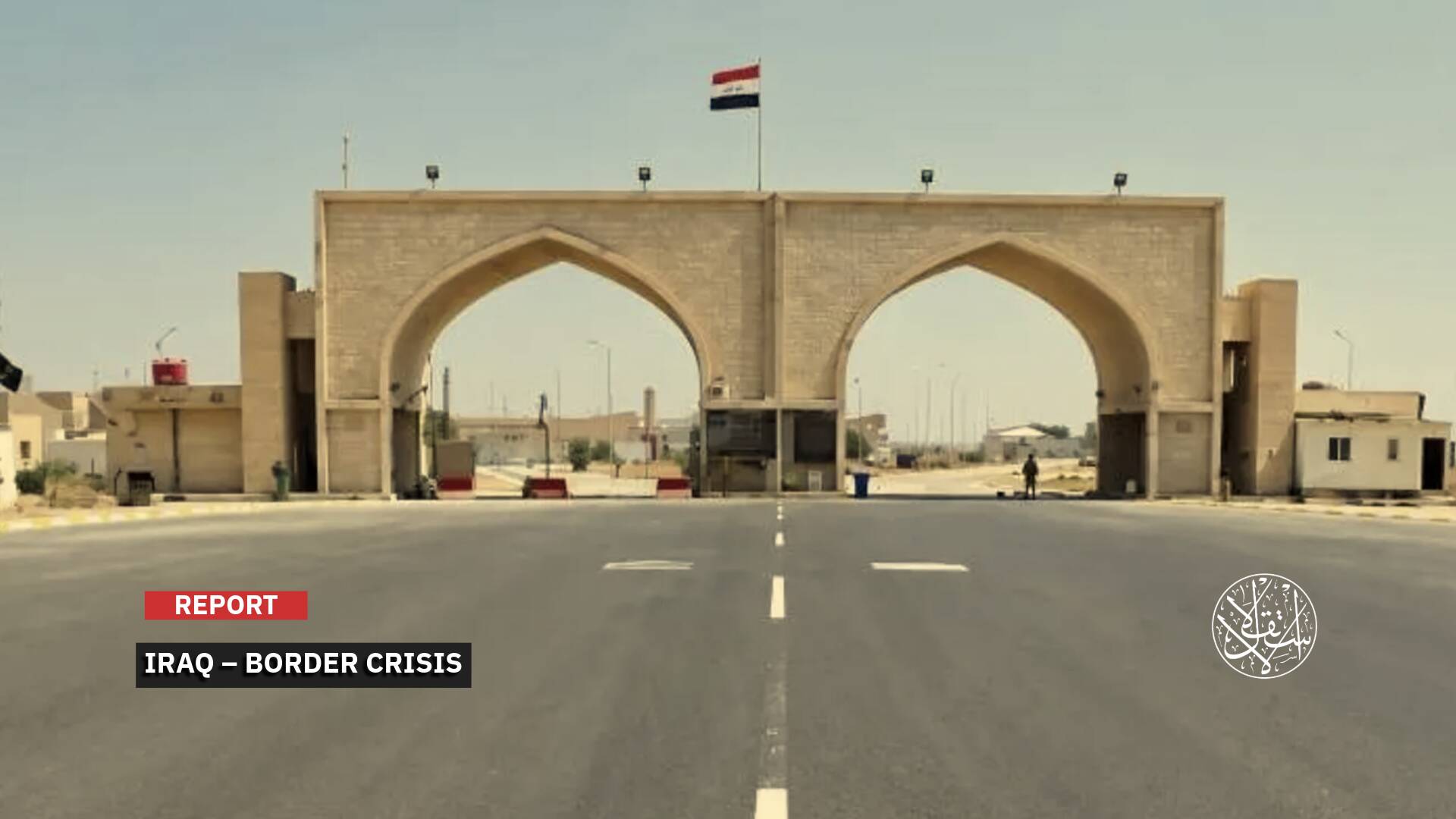
The crisis was not limited to the killing of innocent civilians. It escalated into a dispute between the two countries after the Syrian government said Jordan had carried out the military operation without prior coordination with Damascus, contrary to Amman's claims. The Nasib border crossing with Jordan was then closed before being reopened later.
The Syrian-Jordanian dispute over the airstrikes put security relations between the two countries to the test, particularly in the border areas of Daraa and Suwayda governorates, where concerns over the proliferation of weapons and armed groups overlap with drug smuggling and the risk of unrest spilling into Jordanian territory.
The sensitivity of the issue stems from the two countries' differing priorities. Jordan is focused on securing its borders and preventing southern Syria from becoming a source of security threats, while Damascus's ability to bring the region under control is tied to domestic stability and its efforts to assert authority over armed factions.
As prolonged tensions could complicate security coordination and undermine trust between the two sides, while creating opportunities for regional interference that could further complicate the situation in southern Syria, the two countries announced the formation of a joint security committee to improve field and intelligence coordination.
In an effort to contain the crisis, the Syrian and Jordanian foreign ministers agreed to establish a joint security committee to investigate the details of the airstrikes and strengthen field and intelligence coordination.
The move suggests that both sides are seeking to contain the dispute, but its success will depend on clarifying the circumstances surrounding the operation and preventing further civilian casualties.
Christians make up between 2 and 3 percent of Jordan’s population, according to the Jordanian Ministry of Tourism’s website. Most belong to the Greek Orthodox Church.
Jordan’s Christian community includes several denominations, including Greek Orthodox, Catholic, Armenian Orthodox, and Protestant communities, with churches spread across different parts of the country.
Karak is among the Jordanian areas with a longstanding Christian presence. Christianity in the region dates back to the Byzantine era, when it served as an episcopal center with several churches, according to a historical report published by the Latin Patriarchate of Jerusalem.
Historically, Karak, which has a population of around 375,000, has been home to several Christian clans and families, including the Hijazin, Halsa, and Akasha families. The city also has neighborhoods with sizable Christian communities, according to the Latin Patriarchate’s historical report.