Netanyahu’s Ally Defeated: Does His Loss End the Israeli Right’s Hopes in Brazil?
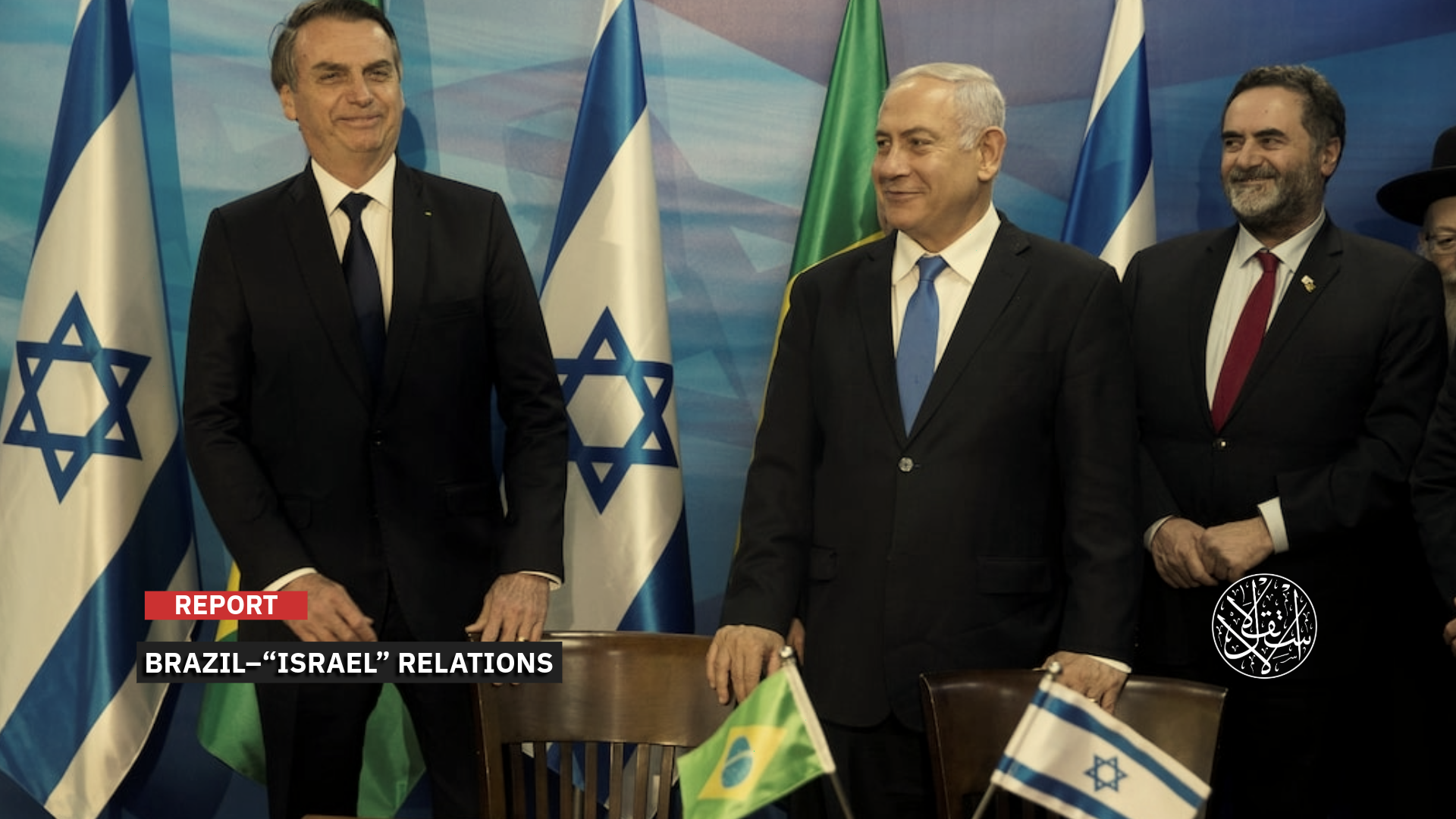
After announcing his candidacy, loser Flavio chose "Israel" as the first stop on his overseas tour, attending a conference in occupied Jerusalem.
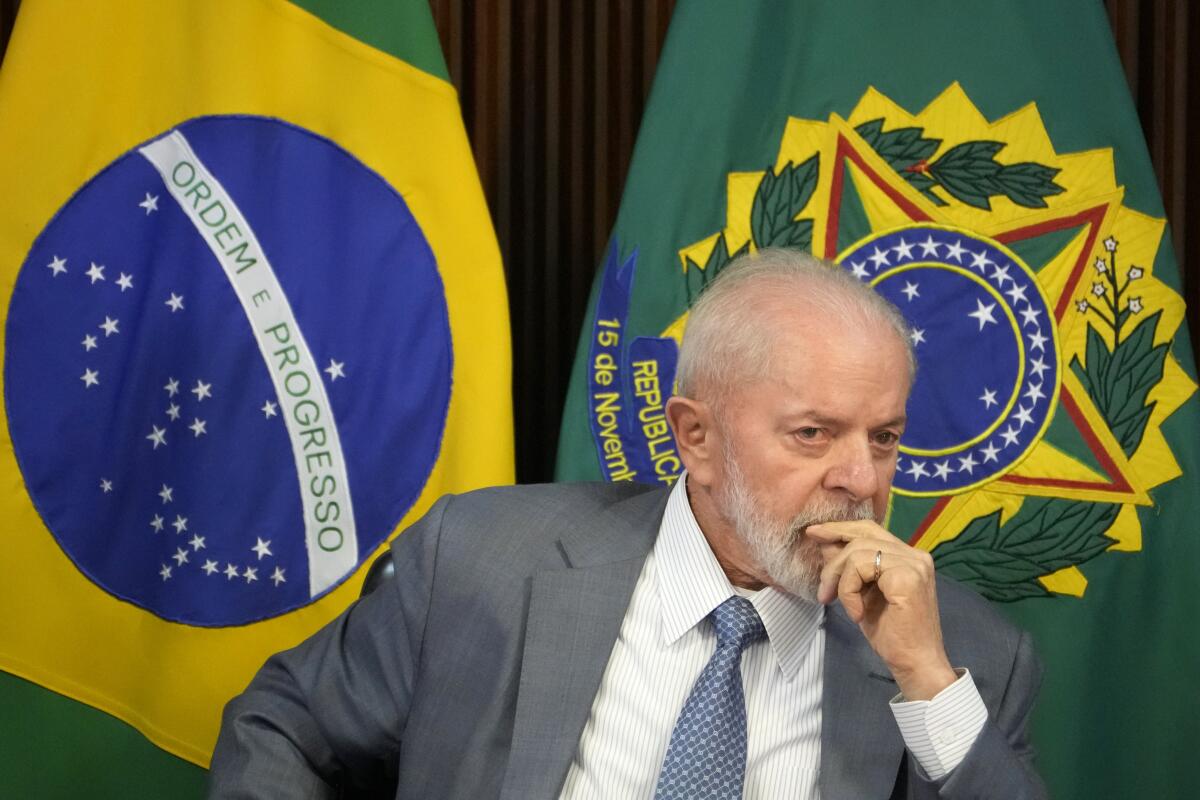
The victory of Brazilian President Luiz Inacio Lula da Silva in the presidential election has had repercussions beyond the country’s domestic political struggle, dealing a blow to Israeli Prime Minister Benjamin Netanyahu’s hopes of strengthening ties between Tel Aviv and Brasilia and easing “Israel’s” international isolation through a victory by his right-wing rival, Flavio Bolsonaro.
As Bolsonaro refuses to concede defeat, questions are mounting over the future of the Bolsonaro family’s alliance with Netanyahu and its influence on Brazilian politics, amid continued disagreements over the war on Gaza and the military, economic, and religious interests that extend beyond the election results.
From the Western Wall to the Campaign Stage
The Bolsonaro family's relationship with Netanyahu did not begin during the latest election campaign.
Netanyahu attended Jair Bolsonaro’s inauguration in early 2019, then accompanied him three months later to the Western Wall in occupied Jerusalem, making Bolsonaro the first head of state to visit the site alongside an Israeli prime minister.
The visit came a week before an Israeli election and appeared to offer direct electoral support for Netanyahu. The Palestinian Authority was angered and recalled its ambassador from Brasilia. The episode ultimately led to the opening of a trade office in occupied Jerusalem rather than the embassy that Bolsonaro had previously promised to relocate there.
Eduardo, the former president’s third son, worked to maintain the ties. In January 2025, after a Brazilian judge ordered an investigation into Israeli soldier Yuval Vagdani over war crimes in Gaza following a complaint by the Hind Rajab Foundation, Eduardo joined forces with Israeli Diaspora Affairs Minister Amichai Chikli to pressure Brazilian authorities. The investigation was eventually dropped, and the soldier left the country.
“I recorded the first video defending the Israeli soldier,” Eduardo boasted in an interview.
“Thanks to our efforts with Minister Chikli, the decision not to investigate set a precedent,” he said.
Flavio, meanwhile, chose the Israeli Occupation as the first stop on his overseas tour after announcing his candidacy.
In January 2026, he attended a conference in occupied Jerusalem with his brother Eduardo, where Netanyahu mentioned both brothers by name.
Flavio also had dinner with Netanyahu, who used the occasion to describe Lula as anti-Semitic.
In July, Netanyahu appeared on a giant screen at the launch of Flavio’s campaign in Sao Paulo.
“Flavio, my friend, you are a great champion of friendship between our peoples,” he said.
“Netanyahu stands to gain” from a Flavio victory, said David Magalhaes, a professor of international relations at the Federal University of Uberlandia in Sao Paulo, Brazil.
“[In particular] at a time when Israel is increasingly isolated within the international community, a situation that has worsened because of the indications of extermination or genocide in the Gaza Strip,” he told Middle East Eye.

Lula: The Voice That Rattled Tel Aviv
On the other side stands Lula, one of the most outspoken world leaders in condemning “Israel’s” war on Gaza.
In February 2024, he compared what was happening in the territory to Hitler’s treatment of the Jews.
The Israeli Occupation responded through its then foreign minister, Israel Katz, who declared Lula persona non grata.
Brasilia then permanently recalled its ambassador in May that year and has yet to appoint a new one.
Lula’s response went beyond rhetoric. In July 2025, his government formally announced that it would join South Africa’s case against “Israel” at the International Court of Justice (ICJ), which accuses the Israeli Occupation of genocide.
Brazil also withdrew from the International Holocaust Remembrance Alliance and froze a deal to purchase artillery from Israeli war company Elbit Systems.
At the opening of the 81st session of the United Nations General Assembly in September 2026, Lula again described “Israel’s” war crimes in Gaza as genocide and warned against foreign interference in Brazil’s elections.
In a message that Folha de S. Paulo said was also aimed at Netanyahu and Argentine President Javier Milei, Lula had directly urged U.S. President Donald Trump in June to stay out of Brazil’s electoral race.
Here lies the paradox: while Flavio accuses his opponent of anti-Semitism and promises to make Brazil a sister nation to Israel, Lula’s position appears closer to public sentiment in Brazil.
According to a Pew Research Center poll this year, slightly more than half of Brazilians hold an unfavorable view of “Israel”, while more than 60% distrust Netanyahu.
Feliciano de Sa Guimaraes, a professor of international relations at the University of Sao Paulo, observes that the average Brazilian voter initially leaned toward “Israel” at the start of the war, but it was the voter who moved closer to Lula, not the other way around.
Al-Quds: The Biggest Promise
Flavio’s platform included three pledges toward “Israel” that went further than his father’s policies. The first was to restore diplomatic representation and accept the credentials of a new Israeli ambassador on the first day of his term.
The second was to move Brazil’s embassy from Tel Aviv to occupied Jerusalem (al-Quds) at the beginning of his term.
In an interview with Israel’s Channel 14, he described the move as a personal commitment that I make with all my heart.
The third was to join the Isaac Accords, launched by Milei and Netanyahu in occupied Jerusalem last April to integrate “Israel” into Latin America’s economic, political, and security structures.
Flavio’s position extends beyond politics. He has embraced “Israel’s” messianic worldview, which frames the occupation of Palestinian land as the fulfillment of biblical prophecy.
If carried out, the embassy move would break with the position of most of the international community, which has avoided determining the city’s status before a negotiated settlement.
The move would also carry significant propaganda value for the Israeli Occupation, particularly after Colombia opened its embassy in occupied Jerusalem on 14 October 2026 and Israeli Foreign Minister Gideon Sa’ar hinted that Brazil could be next.
On the Palestinian issue, his father’s record offers an indication of what might have followed.
Since 2006, Brazil had supported all 29 United Nations Human Rights Council resolutions critical of “Israel” under successive presidents, until Jair Bolsonaro broke with that tradition in March 2019 by voting against a resolution concerning the killing of unarmed protesters in Gaza and another condemning “Israel’s” occupation of the Syrian Golan Heights.
Under a government led by Flavio, Brazil’s official intervention in the genocide case could have been frozen, while Brasilia might also have scaled back its traditional role in rallying Global South countries behind the Palestinians in international forums.
Complaints against Israeli soldiers filed in Brazilian courts would also likely have faced greater political pressure, as illustrated by the Vagdani case.

Arms and the Church
“Israel’s” influence in Brazil, however, does not depend solely on the presidency. It rests on a network of influence built over a quarter-century.
According to Bruno Huberman, a professor of international relations at the Pontifical Catholic University of Sao Paulo, this influence took shape primarily through the armed forces and police, and from there extended to far-right parties and movements.
The deeper irony is that military ties with the Israeli Occupation grew stronger during Lula’s first two terms, when he sought to balance his opening to the Arab world by importing Israeli weapons, creating a relationship of technological dependence.
Researcher Isabella Agostinelli dos Santos says the arms deals had reached around $190 million by 2014, most of them involving Elbit Systems.
In 2001, the Israeli company acquired Brazil’s AEL Sistemas, an aerospace electronics firm.
“So Bolsonaro didn’t usher in a new era. In fact, he intensified structural dynamics that were already under way,” she added.
Huberman adds that military and police officers share an ideological affinity with “Israel” rooted in Islamophobia and counterterrorism, making them a channel of influence within the state.
The strength of this channel became apparent when Lula’s defense minister publicly defended the frozen Elbit artillery deal, estimating that its opponents were acting for “political and ideological reasons.”
The second pillar is religious. Evangelical voters number an estimated 40 million, with 52% supporting Flavio compared with 26% for Lula.
The gap widened in the runoff to 62% versus 32%. Meanwhile, the evangelical parliamentary caucus accounts for more than 40% of the Chamber of Deputies, giving the movement influence that extends well beyond the ballot box.
Magalhaes says these groups were the staunchest defenders of the State of “Israel”, or rather, of an imagined “Israel” that is conservative and deeply religious.
This helps explain why Israeli flags have become a familiar sight at Brazilian right-wing rallies and why Flavio’s promise to move the embassy resonates with voters who associate occupied Jerusalem with prophecies of Christ’s return.

The Limits of the Bet
The road to occupied Jerusalem was far from clear for Flavio, who lost the election. Brazil’s commercial interests lean heavily toward the Arab world.
In 2024, Brazilian exports to Arab countries reached a record $23.68 billion, generating a trade surplus of $13.5 billion, while Brazil continues to run a trade deficit with “Israel”.
Brazil is also the world’s largest exporter of halal meat, a sector that forms part of the social base of the right wing itself.
Brazil’s recent history offers a clear precedent. Days after Jair Bolsonaro, then president-elect, announced in November 2018 that he intended to move Brazil’s embassy to occupied Jerusalem, Egypt canceled a planned visit by Brazil’s foreign minister to Cairo, despite the arrival of a business delegation.
The Arab League also issued a formal protest, prompting Bolsonaro to backtrack and settle for opening a trade office instead. His son appeared aware of this sensitivity, as his first overseas tour was scheduled to include Bahrain and Qatar alongside the Israeli Occupation.
There is also a significant legal constraint. Brazil is a party to the Rome Statute, and the International Criminal Court’s arrest warrant for Netanyahu theoretically obliges it to arrest him.
Welcoming Netanyahu on Brazilian soil, as Flavio invited him to do, would therefore pose an awkward test of Brazil’s obligations to the court and of a judiciary that has shown a willingness to accept complaints against Israeli Occupation soldiers.
Electorally, Guimaraes downplays the importance of this issue, stressing that foreign policy rarely decides elections in Brazil because jobs, the cost of living, and public security matter far more to most voters.
He added that the Palestinian issue has come to reinforce existing loyalties as it has become increasingly tied to the divide between left and right.
Ultimately, networks spanning the arms industry, churches, and security establishment will continue to shape relations between “Israel” and Brazil.
The battle over Brazil’s position on Palestine, therefore, will not be settled by Lula da Silva’s victory and Flavio’s defeat alone.
Sources
- Netanyahu's man: How Israel is betting on a Bolsonaro comeback in Brazil
- Netanyahu Congratulates Flavio Bolsonaro and Invites Him to Visit Israel [Brazilian Portuguese]
- Netanyahu Names Flavio and Eduardo Bolsonaro at Event in Israel [Brazilian Portuguese]
- Netanyahu Backs Bolsonaro’s Son: Will It Win Him Brazilian Votes or Backfire? [Arabic]