Political Expert: Change in ‘Israel’ Is Far From Certain, and Netanyahu Still Has Room to Maneuver
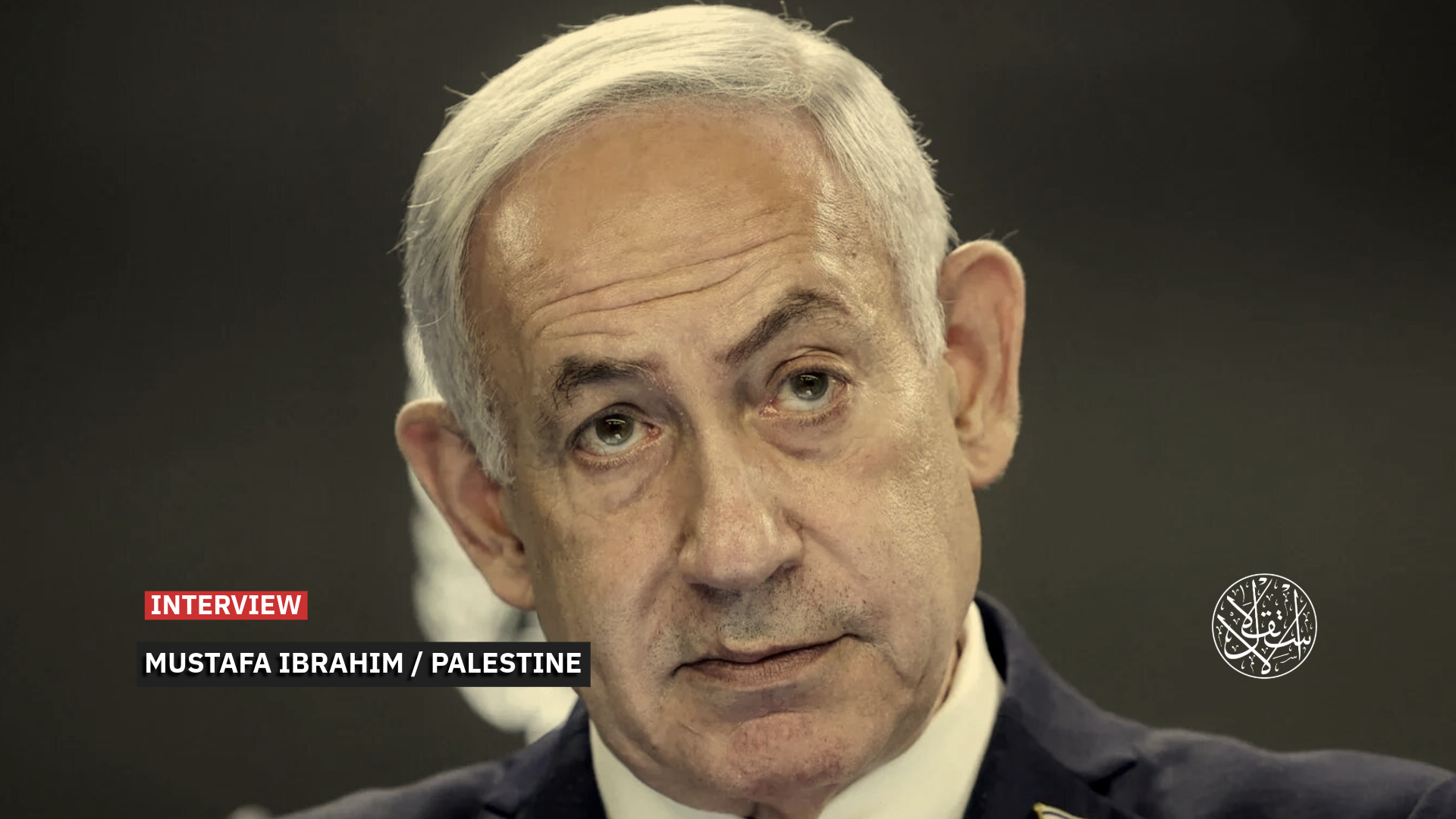
"The election results will still depend on recent developments and the positions taken by political blocs."
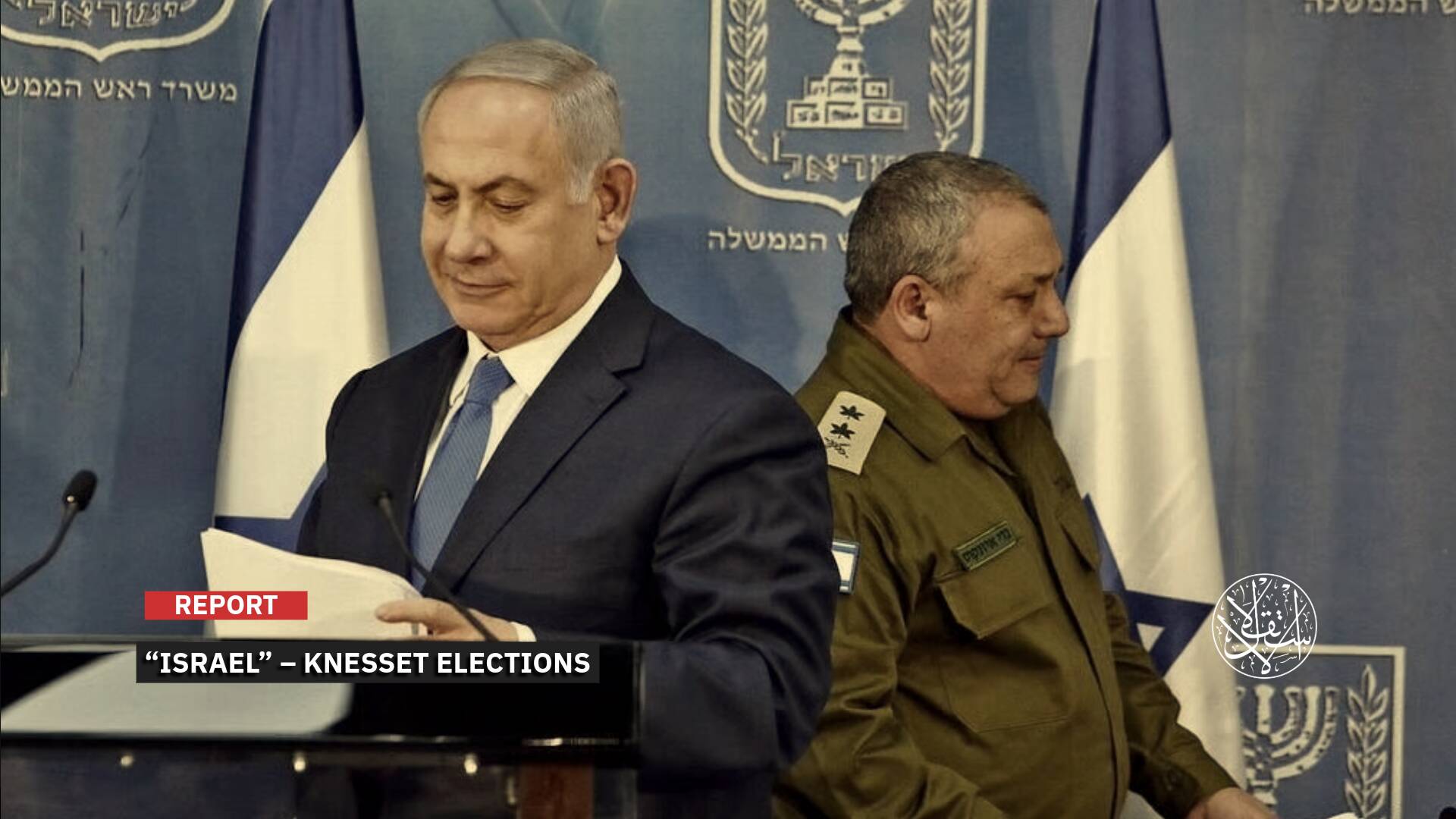
The Israeli Occupation is approaching its October 27 Knesset election at one of the most complex junctures in its history since its founding in 1948, with the fallout from the war on Gaza overlapping with deep domestic divisions and a fierce contest between Prime Minister Benjamin Netanyahu’s camp and the opposition.
With polls showing the two camps closely matched, the prospect of political change remains uncertain, while a continuation of the current political order remains a strong possibility, according to Israeli affairs expert Mustafa Ibrahim.
To examine the outlook for the Israeli Occupation election and its possible outcomes, Al-Estiklal spoke with Mustafa Ibrahim, who outlined several scenarios, including Netanyahu staying in power, the opposition camp forming a new government, unexpected alliances emerging, or the political deadlock continuing.
Ibrahim stressed that the outcome will depend on recent developments and the positions taken by political blocs, adding that meaningful change remains possible but has yet to become a clear-cut outcome.
Calculations of Change
How do you read “Israel’s” political landscape ahead of the upcoming election? Is the country heading toward a change in leadership or a continuation of the current political order?
I believe “Israel’s” political landscape ahead of the election points to the possibility of a change in leadership, but I still see a continuation of the current political order as the more likely outcome, given the way the election campaign is unfolding.
There is a sense of frustration among the Israeli opposition and some segments of the public, as opinion polls show the rival camps running neck and neck.
The Zionist blocs are polling at similar levels, with neither holding a clear advantage: Netanyahu’s far-right bloc and the opposing bloc, commonly referred to as the change camp or the Zionist camp.
Even if there is a genuine push for change, I do not believe it has yet taken clear shape. The war has created a new mood in “Israel.”
October 7th changed how Israelis approach a range of issues, both within Israeli society and in terms of the deepening political divisions within society and the political system.
This comes against the backdrop of the October 7 events and the opposition’s failure to pressure Netanyahu into meeting its demands, whether by establishing an official commission of inquiry or stepping down over “Israel’s” failure on that day.
As for the possibility of a new political landscape emerging, I believe change remains out of reach for now, given the limited time left before the election, which further complicates the political picture. The current situation may persist, or alliances could emerge with other political blocs.
For example, if Netanyahu wins 54 or 55 seats, or if the opposite happens, who would form the government if the change camp rules out Arab lists, including the list led by Mansour Abbas?
Netanyahu has centered his campaign on the war and warnings against an alliance with Arab parties, describing any such alliance as treason.
He also accuses those who cooperate with them of belonging to the left or supporting the establishment of a Palestinian state.
The rhetoric of Likud and Netanyahu has even gone so far as to brand anyone who supports rebuilding Gaza a traitor.
I do not believe there has been any real political shift, particularly in attitudes toward Arab parties. This remains the case even after the Joint List’s proposals and its leader, Dr. Yousef Jabareen, said the list was prepared to provide a safety net for the change camp, but only under certain conditions.
These include recognition of Arab rights and a Palestinian state, among other demands that neither Netanyahu nor the opposition finds acceptable.
Netanyahu’s Maneuvering
To what extent do Israeli opinion polls reflect voters’ actual preferences, and can they be relied on to assess Netanyahu and his bloc’s chances of staying in power?
I believe opinion polls reflect voters’ preferences to some extent. There is always a margin of error that could amount to five or six seats, as some voters remain undecided and may ultimately swing to either camp.
Nevertheless, polls do capture voter trends and can be used to assess Netanyahu’s chances of staying in power, albeit with some uncertainty.
Netanyahu remains highly capable, with the political agility, cunning, and strategic flexibility to maneuver and pursue different approaches.
Although Gadi Eisenkot has been aiming Netanyahu, the prime minister remains highly capable, with a strong instinct for political maneuvering, considerable shrewdness, and the ability to operate through different channels and tactics.
However, with little time remaining before the election, I believe it is impossible to reach a definitive conclusion about Netanyahu and his bloc’s chances of retaining power.
The rival camps, particularly the change camp, have boxed themselves into a difficult position over a potential alliance with Likud.
The change camp insists that Netanyahu cannot be part of any such coalition and must be excluded. That is now virtually impossible, as Netanyahu remains the dominant figure controlling Likud and knows the ins and outs of politics and how to persuade others.
His bloc, meanwhile, remains cohesive, bringing together Likud, Bezalel Smotrich, both the Sephardic and Ashkenazi ultra-Orthodox factions, and even Itamar Ben-Gvir. Together, they form a single bloc.
The question of Ofir Sofer’s place in the Religious Zionist party remains, but Netanyahu does not want to disrupt the election landscape, as doing so could split the vote and waste votes, drawing support away from the ultra-Orthodox right within or aligned with his bloc.
For these reasons, I believe opinion polls no longer play the role they once did. The picture is becoming clearer, and the race remains deadlocked.
Security Takes Center Stage
What are the main factors that will determine the election results, and how much will the war, security, the economy, and domestic divisions influence Israeli voters’ choices?
I think it is difficult to identify any new factors that could determine the election results in the time remaining, unless something dramatic happens that affects Likud’s ability to secure a reasonable share of the vote, particularly amid talk of external threats and the possibility of “Israel” striking Iran.
The opposition could gain ground if missiles are launched at “Israel” and cause casualties or destruction. Such an outcome would affect Netanyahu and the number of seats his bloc wins.
As for the war, I believe it remains the central issue, alongside the economy and domestic divisions. These factors influence Israeli voters’ choices, but the share of voters outside the established blocs is relatively small, unless unexpected developments occur.
Election platforms place greater emphasis on security and security-related issues, which also shape the economy and domestic divisions. Israeli voters’ choices are now largely settled, for the reasons I mentioned earlier, with security remaining the overriding concern.
There is a Zionist consensus in “Israel” in favor of continuing the war, including within the opposition, if we consider its various blocs.
Yesh Atid has talked about the economy, but it is not a priority. Bennett may give the economy greater prominence, but amid the intense focus on security and Netanyahu’s attacks on his rivals, economic issues take a back seat. Security remains the dominant issue.
As for domestic divisions, the blocs have largely settled their positions. Netanyahu’s bloc is clearly defined, as is Ben-Gvir’s, and neither is changing. Smotrich’s position may be more vulnerable, but he enjoys substantial support from Likud and, according to current polls, appears assured of retaining his place.
The same applies to the ultra-Orthodox parties, with both Shas and United Torah Judaism polling at around seven or eight seats each.
However, this is unlikely to have a major impact on the election outcome, particularly because the economy is not being treated as a central issue and the focus remains overwhelmingly on security.
Does the opposition camp led by Gadi Eisenkot have a viable political alternative capable of challenging Netanyahu and forming a stable government? What obstacles could prevent opposition forces from uniting?
I do not believe Gadi Eisenkot represents a political alternative capable of challenging Netanyahu, given the electoral machinery at Likud’s disposal.
Even Eisenkot’s rhetoric and attacks on Netanyahu do not demonstrate the same ability to maneuver politically that Netanyahu has.
An Israeli strategist has described Eisenkot in similar terms, comparing him to former War Minister Benny Gantz, who failed in the election and whose Blue and White party did not clear the electoral threshold.
I therefore do not believe Eisenkot offers a viable alternative, even though polls show him enjoying a degree of support and leading Netanyahu by two or three seats, or sometimes fewer. There are always surprises.
I believe the parties are operating within the same political orbit, broadly aligned with the right. There is no purely centrist party at present.
Eisenkot himself is on the right, and his supporters and voters largely come from the right, including former military officers and security officials. He is drawing votes away from the right-wing camp.
Avigdor Lieberman is also a secular right-wing politician, and his party is often described as representing a particular constituency because Russian-speaking immigrants form its core support base.
Bennett and Lieberman have also fallen short of the results initially anticipated when their party was announced, when some expected it to win more than 20 seats. Bennett is now polling at around 12 or 13.
The Democratic Party represents what remains of the Zionist left, bringing together remnants of the Labor Party and Meretz. It offers a different vision, but one rooted primarily in security considerations.
When it talks about a two-state solution, for example, it does not frame it as a political solution for Palestinians but rather through a security lens. When it says a solution must be found for the five million Palestinians living among Israelis, its proposed approach centers on security rather than a long-term settlement grounded in the establishment of two states and recognition of Palestinian rights.
What role could Arab parties in “Israel” play in determining the next government, and could their votes prove decisive in coalition negotiations?
Arab parties play a very important role, particularly after “Israel’s” Central Elections Committee sought to disqualify Arab lists and Sami Abu Shehadeh, head of the Balad party, which is part of the Joint List. The Joint List also includes the Communist Party, or Hadash, and the Arab party led by Ahmad Tibi.
Polls give these lists around eight seats. If Arab voters turn out in large numbers, the Joint List or the United Arab List led by Mansour Abbas could win between 12 and 13 seats, potentially reaching 15 or more, amid persistent crime, marginalization, and discrimination affecting Arab communities.
Neither of the two major blocs, Netanyahu’s camp or the change camp, also known as the Zionist camp, is willing to ally with Arab parties. The change camp has committed itself to not approaching them.
However, political opportunism is always a factor in Israeli politics, and shifts could occur over who forms the government and how a candidate secures the 61 seats needed for a majority.
The key number in the Israeli Knesset is 61 seats, and every camp is trying to reach that threshold. Without Arab parties, it will be difficult for either bloc to approach the president and convince him that it is best placed to form a government.
Arab parties have maintained their positions, although either bloc could potentially provide the change camp led by Eisenkot with room to maneuver or a safety net. That could change if the two sides reach an agreement to form a national unity government. This is what Israeli President Isaac Herzog is seeking. He has said that if neither bloc has a clear advantage, a national unity government should be formed.
How might Likud respond if Netanyahu loses the election? Could the party seek a new leader, or would it continue to rally around him despite defeat?
If Netanyahu loses, Likud could eventually turn to a new leader, but I believe it is too early to discuss that possibility in detail. Although the Likud bloc appears cohesive on the surface, Netanyahu is the one who built it, and much of its political direction depends on him. He insisted on securing eight seats and brought in the candidates who filled them from outside Likud.
Netanyahu has also sidelined several figures who might otherwise have influenced the party, including Nir Barkat and Yuli Edelstein, among others, but they lack sufficient power.
Even so, Likud may not remain cohesive if Netanyahu loses and fails to form a government. Such an outcome would inevitably affect the party.
For now, however, the bloc remains united, and Netanyahu is still able to steer it forward unless bigger changes or internal splits emerge. I believe it is too early to speculate about that.
There are calls for an alliance between the change camp and Likud without Netanyahu.
But Likud would not agree to such an arrangement, and I do not believe the party would accept a new leader or join a coalition without Netanyahu.
How much could Netanyahu’s legal cases affect his political conduct after the election? Could they influence his decision to remain in politics or leave?
So far, there has been no new impact from Netanyahu’s legal cases. He remains in office and has tried to suggest that he has put some of the cases behind him.
As for how they might affect his political conduct after the election, I believe he could become even more forceful in exercising power.
Still, I do not think the cases will decisively determine his political future, although this could be Netanyahu’s last election if he wins.
If he loses, a more serious scenario could unfold: Netanyahu’s government might remain in a caretaker capacity before the country heads to another election in March.
He could also fail to form a coalition, leading to another election in July next year. I do not believe his legal cases are playing a major role in his political calculations.
The Limits of Political Change
If the opposition comes to power, should we expect a fundamental shift in Israeli policy toward the Palestinians, particularly in Gaza, the West Bank, and settlement expansion? Or will differences between the two camps remain confined to domestic and security policy?
If the opposition comes to power, I do not expect any fundamental change in Israeli policy. As I mentioned, “Israel” has set clear limits on how it approaches the Palestinian cause, with its ambitions centered on security-based solutions. None of the potential leaders can shift this approach while “Israel” remains caught in a cycle of war and security attrition.
Netanyahu has capitalized on the gains he has made, and even the opposition shares much of his political outlook on these issues.
Lieberman, for example, has proposed dissolving the Palestinian Authority and having Jordan govern the Gaza Strip, or the reverse, as part of the debate over the enclave’s future. That future remains unclear, although there has been talk of the Board of Peace taking charge of Gaza’s administration.
Despite settler violence and land seizures, Finance Minister Bezalel Smotrich, who oversees West Bank policy and has been dubbed the emperor of the West Bank, has been able to implement far-reaching and dangerous measures. He is continuing to advance the decisive plan he developed in 2017.
Smotrich has issued dozens, if not hundreds, of decisions concerning land confiscation and settler takeovers of various areas, including areas formally under the control of the Palestinian National Authority. A decision has also been issued to expropriate land to serve the government’s interests in these areas.
The fate of Area C has effectively been sealed. It accounts for roughly 60% of the West Bank, and “Israel” is moving ahead with efforts to displace Palestinians from it.
Around 40,000 people have been displaced from the Jenin, Tulkarem, and Nur Shams refugee camps, while the Israeli Occupation military has refused to implement a Supreme Court ruling allowing refugees to return to their areas.
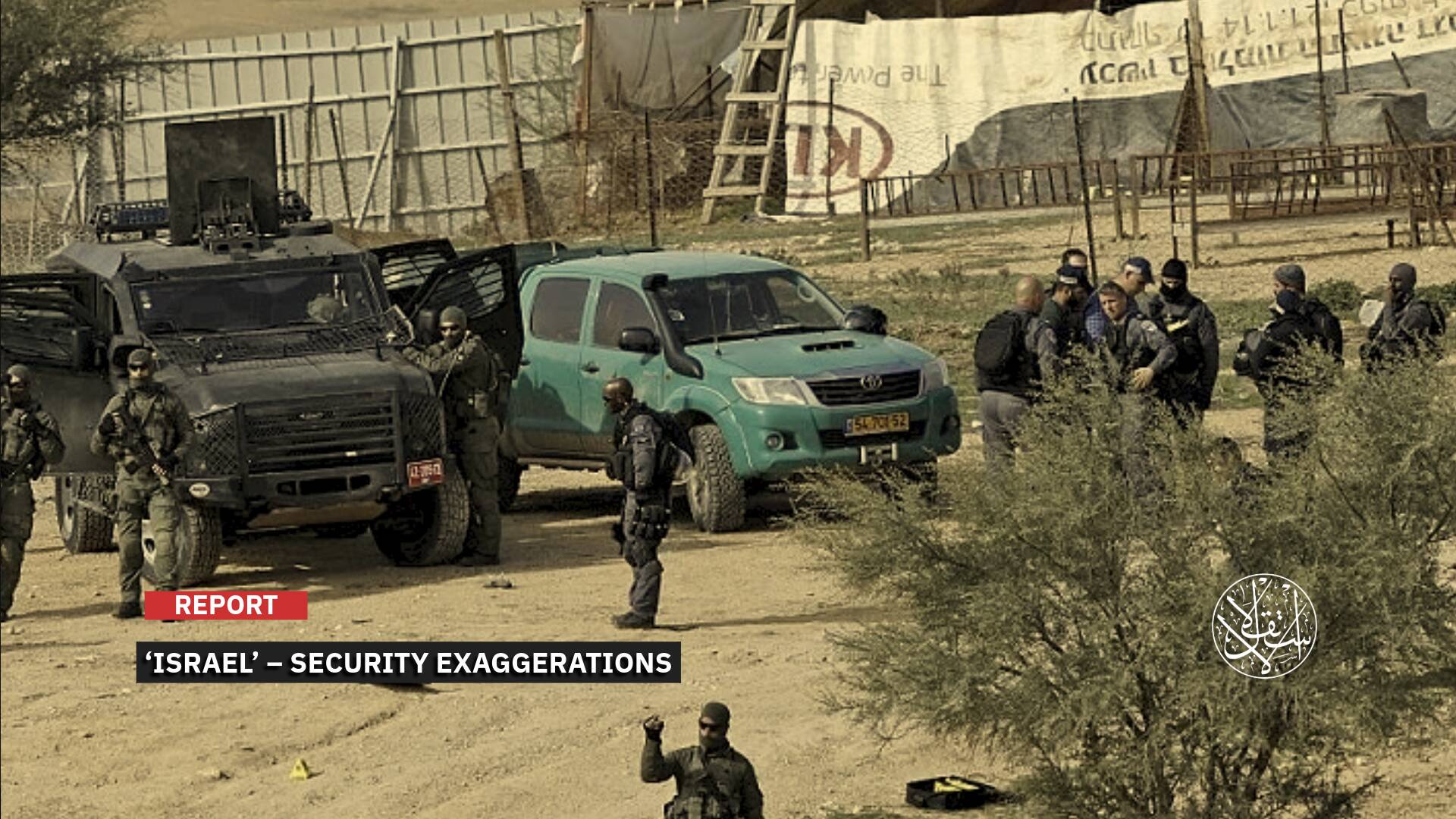
This is compounded by settler efforts to expel Bedouin communities and herders, seize their property and land, burn homes, and carry out daily attacks.
These violations are taking place within a government-backed institutional framework overseen by Smotrich, the minister responsible for West Bank affairs.
What scenarios could unfold if neither camp secures a parliamentary majority to form a government? Could “Israel” face another political crisis or an early election, and what would the consequences be for Palestinians and the region?
I see several possible scenarios. If there is no change, some Israelis, particularly those in the opposition, may become frustrated and fear that certain political blocs could join the right-wing camp and help it form a government.
This could happen if Eisenkot’s camp revises its position on Arab lists and becomes more willing to reach agreements with Arab parties on some of the issues raised by the Joint List or Mansour Abbas.
Such an arrangement could offer Eisenkot’s camp a way out of the deadlock. Alternatively, the two camps could form a national unity government, particularly since Eisenkot might be more acceptable to some political actors. He could even join Netanyahu’s bloc and form a government with it.
Another possibility is that the situation remains unchanged and the election is postponed again, potentially until March.
As I mentioned, the deadlock could persist unless a significant development damages Likud’s standing and enables the change camp to win the election.
The possibilities remain open over the next few days, and some shifts may occur, but no substantial change has emerged so far. Any future government is likely to rest on a narrow majority and could collapse at any moment, as happened with the change government led by Naftali Bennett and Yair Lapid in 2021 and 2022.