Netanyahu Trails in Most Polls: Who Holds the Keys to the Next Israeli Government?
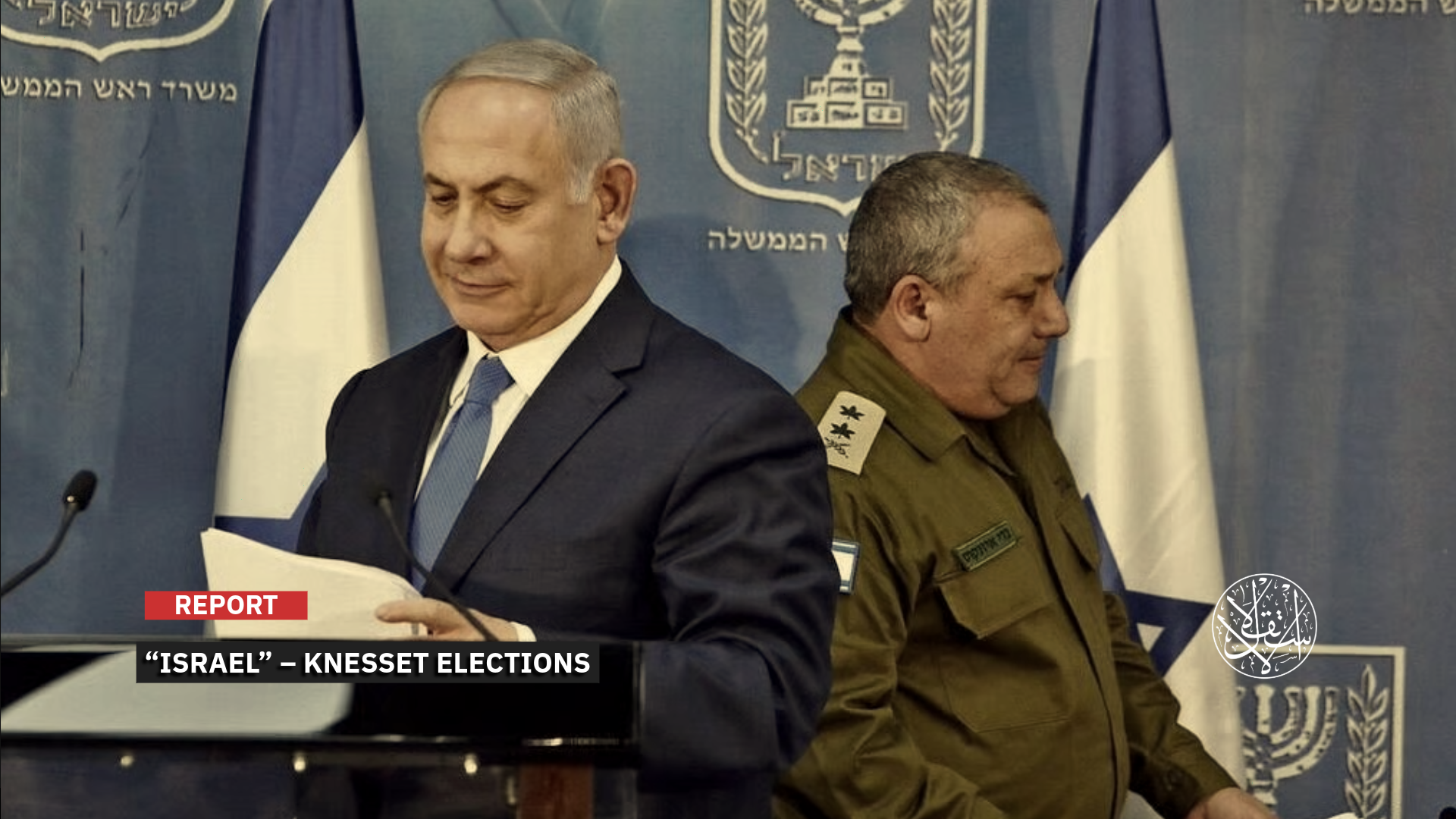
"The race is increasingly focused on undecided voters and smaller parties hovering near the electoral threshold."
The Israeli Occupation enters the final week before its October 27, 2026, Knesset elections with the political landscape shifting. Former military chief Gadi Eisenkot is outpolling Prime Minister Benjamin Netanyahu in most surveys.
In contrast, former Prime Minister Naftali Bennett has lost ground in the race to lead the next government, even as he remains a key player in coalition negotiations.
Most polls put Netanyahu’s bloc at 49 to 51 seats, compared with 51 to 55 for Jewish parties opposed to him. Neither side appears close to the 61 seats needed for a parliamentary majority.
The deadlock reflects deep divisions over whether Arab parties should join a governing coalition, exemptions from military service for ultra-Orthodox Jews, and a fierce contest among opposition leaders over who should become prime minister.
The election, the first since the October 7, 2023, events and “Israel’s” war on Gaza, will test whether Netanyahu can remain in power after years of security and political turmoil.
The outcome may hinge less on the vote itself than on what follows. Whether Netanyahu can assemble a governing majority, Eisenkot can lead an alternative coalition, or “Israel” is forced into yet another election.
Who’s Leading the Race?
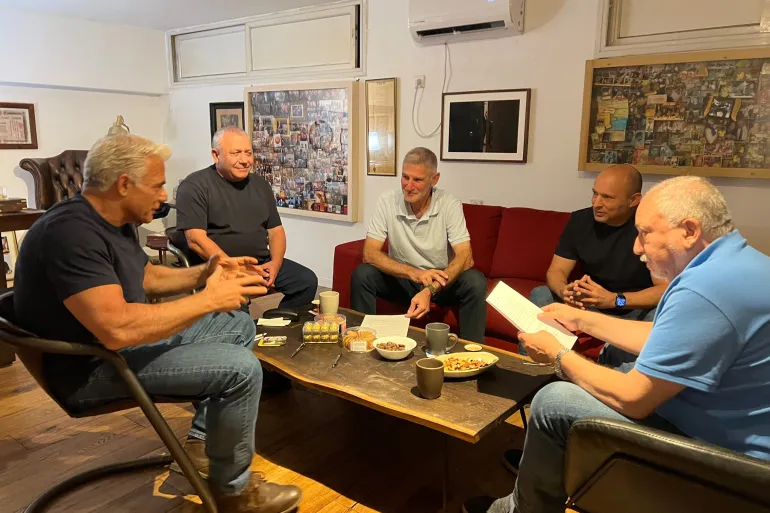
A poll published by “Israel’s” Channel 12 on October 19, 2026, and conducted by the Midgam polling institute, put former military chief Gadi Eisenkot’s Yashar party in first place with 24 seats, ahead of Prime Minister Benjamin Netanyahu’s Likud with 21, and the Yahad list led by former Prime Minister Naftali Bennett with 14. Yahad includes Yair Lapid’s Yesh Atid party.
The poll gave nine seats to the Democrats, led by former deputy military chief Yair Golan, and eight to Yisrael Beiteinu, headed by former war minister Avigdor Lieberman. That brought the combined tally for Jewish parties opposed to Netanyahu to 55 seats, compared with 51 for his bloc.
The two Arab lists, the Joint List and the United Arab List, known as Ra’am, were projected to win 14 seats combined.
A Channel 13 poll released the same day painted an even bleaker picture for Netanyahu, giving Eisenkot 20 seats, Likud 17, and Bennett 14.
Jewish opposition parties were projected to win 51 seats, against 50 for Netanyahu’s bloc, while the two Arab lists secured 15 seats. Another list, with four seats, was not counted as part of either bloc.
Eisenkot’s lead has appeared in several other surveys. A Kantar poll conducted for Israel Hayom and published on October 15 gave his party 24 seats, compared with 21 for Likud and 12 for Bennett.
A poll published by the Zman Yisrael news site that same day put Yashar at 26 seats, Likud at 20, and Bennett’s list at 11.
In that survey, parties opposed to Netanyahu were projected to win 54 seats, against 49 for his bloc.
A mid-October Maariv poll gave Eisenkot 21 seats, Likud 18, and Bennett 13, leaving the two main blocs tied at 51 seats apiece.
A separate survey by “Israel’s” public broadcaster, Kan, several days later gave Eisenkot’s bloc a narrow 52-to-51 lead over Netanyahu’s.
A poll by right-leaning Channel 14 on October 19, however, offered a sharply different picture. It gave Likud 30 seats, Eisenkot 19, and Bennett 10, projecting 62 seats for Netanyahu’s bloc, enough for a parliamentary majority.
Jewish opposition parties were forecast to win 45 seats, with the two Arab lists taking 13.
Channel 13’s polling also pointed to a gradual erosion in Netanyahu’s position. His bloc fell from 54 seats on September 30 to 50 on October 19, while Bennett’s list rose from 11 to 14. Eisenkot’s party remained at around 20 seats.
In an analysis published on October 15, Israel Hayom noted that Eisenkot’s strategy of turning the election into a direct contest with Netanyahu was beginning to draw support away from rival opposition parties.
That could help his party emerge as the largest in the election, while sharpening competition among the very parties whose backing he may need to form a government.
Eisenkot has also performed strongly in polls asking voters whom they would prefer as prime minister.
A Channel 12 survey gave him a 45% to 33% lead over Netanyahu in a head-to-head matchup. Bennett also led Netanyahu, 39% to 34%.
Channel 13 put Eisenkot ahead of Netanyahu by 46% to 38%, while Channel 14 showed the incumbent leading Eisenkot, 54% to 46%.
The shifts reflect the political fallout from the October 7 events and subsequent military confrontations across the region.
A September 9 survey by the “Israel Democracy Institute” found that 68% of Jewish Israelis considered the events of October 7 a major factor in their voting decisions.
Security and foreign policy ranked as the top voting priorities among Jewish respondents, cited by 39%, closely followed by the economy and cost of living at 38%. Military conscription ranked third at 27%, followed by religion and state relations at 26%.
Twenty-three percent identified the party leader as one of the two most important factors shaping their vote.
Those findings help explain Eisenkot’s appeal. He served as chief of staff of the Israel War Forces from 2015 to 2019 and joined “Israel’s” war cabinet after Operation al-Aqsa Flood before leaving it in 2024.
His campaign draws on his military background and personal image as an alternative to Netanyahu’s leadership, which has faced mounting criticism.
Eitan Shamir, director of the Begin-Sadat Center for Strategic Studies at Israel’s Bar-Ilan University, said on June 26, 2026, that Eisenkot’s appeal stemmed partly from his image as an approachable figure who stands apart from conventional politicians.
The deaths of his son and two other relatives during “Israel’s” war on Gaza have also strengthened his standing among segments of the Israeli Occupation public.
In an October 15 analysis, The Guardian linked Eisenkot’s rise to his effort to present himself as an alternative to Netanyahu’s style of government. But Eisenkot has maintained hard-line positions toward Palestinians and has been associated with the so-called Dahiya Doctrine, which advocates the use of overwhelming destructive force.
Bennett, meanwhile, is running on a joint list with Lapid. Although Eisenkot’s rise has weakened Bennett’s prospects of finishing first, the former prime minister remains an important figure in the opposition’s coalition calculations.
His experience leading a coalition government in 2021 and his ability to negotiate among parties with sharply different political and ideological positions could prove crucial in determining who governs after the election.
What Could Upend the Race?
In the final days before the election, the contest is increasingly focused on undecided voters and smaller parties hovering near “Israel’s” electoral threshold.
A Channel 12 poll published on October 12 found that about 8% of voters had yet to settle on a choice. Of those, 1.8% were wavering between parties in Netanyahu’s bloc and 2.6% between opposition parties.
Just 0.2% were undecided between parties belonging to opposing blocs, while 3.1% said they had not yet decided whom to vote for.
These numbers carry particular weight under “Israel’s” proportional representation system, which requires a party to win at least 3.25% of the vote to enter the 120-seat Knesset.
Even small shifts in support for minor parties could determine whether one wins roughly four seats or falls short of the threshold, leaving its votes out of the seat allocation and benefiting parties that clear the bar.
Two lists are especially worth watching: Amcha Yisrael, led by former general Ofer Winter, and the Reservists-Economic political party, headed by former Communications Minister Yoaz Hendel in an alliance with economist Yaron Zelekha.
A Channel 13 poll gave each list four seats, while Channel 12 projected both falling below the electoral threshold.
Winter supports Netanyahu’s return to the premiership but disagrees with him over exemptions from military service for ultra-Orthodox Jews.
Hendel, meanwhile, advocates a broad government of Jewish nationalist parties that excludes both Arab and ultra-Orthodox parties. Their positions could therefore have a bearing on the coalition negotiations that follow the vote.
Uncertainty grew on October 19, when former military chief and war minister Benny Gantz announced that his Blue and White party was withdrawing from the election.
Polls had put the party at just 1.4% of the vote, below the threshold. Its departure could redirect supporters toward Eisenkot, Bennett, or smaller lists, particularly because some of the latest surveys were conducted before the announcement.
Arab voter turnout is another key variable in how the seats are distributed. Recent polls have projected a combined 13 to 15 seats for the two Arab lists, as efforts intensify to boost participation in Palestinian towns and cities inside the Israeli Occupation.
Channel 12 found that 60% of Arab voters intended to turn out, compared with 75% of Jewish voters. The Israeli research institute Stat-Net, meanwhile, projected Arab turnout could reach 63%, up from 56% in the 2022 election.
Mobilization efforts are closely tied to domestic issues that rank high among Palestinian citizens of “Israel.”
A September 9 survey by the “Israel Democracy Institute” found that tackling crime in Arab communities was the leading voting priority, cited by 53.5% of respondents, followed by economic conditions and the cost of living at 46%.
The election campaign has also been shaped by a legal battle over Arab parties’ participation. On October 2, “Israel’s” Supreme Court overturned the Central Elections Committee’s decision to disqualify the Joint List and the United Arab List, known as Ra’am, and reinstated lawmaker Ofer Cassif’s eligibility to run.
Sami Abu Shehadeh, head of the Balad party, withdrew after indications that his disqualification was likely to be upheld.
On the other side of the political spectrum, the growing appeal of the extremist far right among younger voters could help shape the outcome.
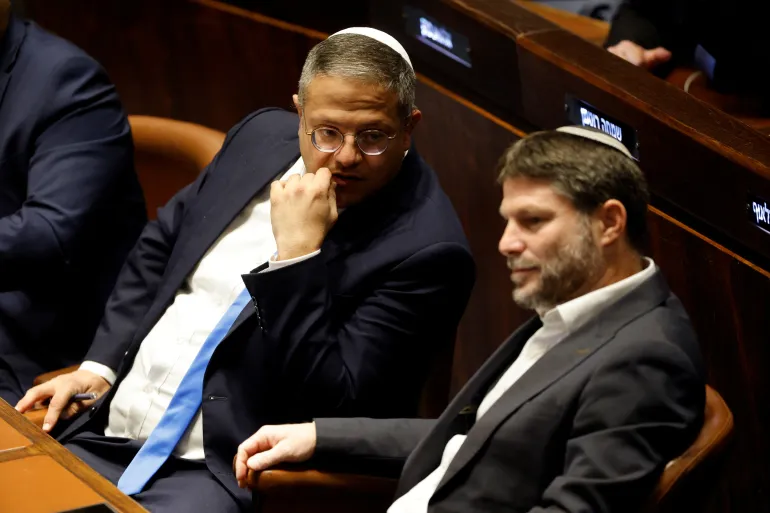
Otzma Yehudit, led by National Security Minister Itamar Ben-Gvir, is projected to win seven to nine seats on its own, after running on a joint slate with other right-wing forces in the 2022 election.
An October survey by the Agam research lab at the Hebrew University of occupied Jerusalem found that Ben-Gvir’s supporters were younger than the average Israeli voter, with roughly one-third voting for the first time. His appeal has also spread beyond West Bank settlements into urban centers, including “Tel Aviv.”
That growth is tied in part to Ben-Gvir’s ultranationalist rhetoric and hard-line policies toward Palestinians. At a campaign rally in “Tel Aviv,” he called for the occupation of Gaza. His campaign has also highlighted expanded gun licenses and tougher prison conditions for Palestinian detainees.
His ally, Finance Minister Bezalel Smotrich, leader of the Religious Zionist Party, faces criticism from parts of the right over his position on military service exemptions for ultra-Orthodox Jews. Polls put the two men’s parties at a combined 13 to 15 seats, preserving their influence within Netanyahu’s bloc.
Campaign developments and foreign relations are also shaping voters’ calculations. A Channel 12 poll found that 26% of respondents said new information about contacts between Jonatan Urich, one of Netanyahu’s close advisers, and Qatari officials had made them more likely to vote for the opposition.
5% said the reports had made them more likely to support Netanyahu’s bloc, while 55% said the revelations would not affect their choice.
The same poll found that U.S. President Donald Trump’s public endorsement of Netanyahu made 12% of respondents more likely to vote for Likud. Seventeen percent said the endorsement had the opposite effect, while 64% said it would make no difference to their decision. The findings underscore how unevenly political developments are influencing voter choices in the final stretch of the campaign.
Who Can Actually Form Israel’s Next Government?
The most complicated phase begins once the official results are announced. Israeli President Isaac Herzog will consult with elected parties before tasking the member of the Knesset he believes has the best chance of forming a government that can win parliamentary confidence, regardless of which party finishes first in the seat count.
The candidate receives 28 days to form a government, with a possible 14-day extension. If the attempt fails, the mandate can pass to another candidate. If all avenues are exhausted and no government can be formed, the Israeli Occupation could be forced into another election.
The 2009 election illustrates why coalition arithmetic can matter more than finishing first. Tzipi Livni’s Kadima party won 28 seats, one more than Likud’s 27, but then-President Shimon Peres tasked Netanyahu with forming a government because he was better positioned to assemble a coalition of supporting parties.
Netanyahu’s current alliance consists of Likud, Otzma Yehudit, and Religious Zionist, along with the ultra-Orthodox parties Shas and United Torah Judaism. Yet most polls suggest he needs at least 10 additional seats to reach a majority, leaving him dependent on a stronger-than-expected election result or support from parties beyond his traditional camp.
Even within his own alliance, tensions are mounting. Ben-Gvir has accused Netanyahu of planning to exclude him from the next government and turn instead to Eisenkot.
Netanyahu has denied this, saying he wants to retain his right-wing partners while inviting other parties to join his government.
The dispute over military service exemptions for ultra-Orthodox Jews presents another obstacle.
Aryeh Deri, leader of Shas, which represents a large segment of ultra-Orthodox Sephardic Jews, has said his party will neither join nor support the next government unless legislation regulating yeshiva students’ military service is passed, regardless of who becomes prime minister.
A Jerusalem Post report published on October 13 cited sources familiar with the ultra-Orthodox parties’ positions who said Shas and United Torah Judaism, which primarily represents Ashkenazi ultra-Orthodox Jews, might decline to recommend either Netanyahu or Eisenkot to form a government and instead initially remain outside the coalition.
These positions complicate Netanyahu’s efforts to secure the backing of all his traditional allies. They also make it harder for the opposition to win over ultra-Orthodox parties, particularly because Bennett and Lieberman have taken hard-line positions against continuing exemptions from military service.
Eisenkot, meanwhile, faces divisions within the bloc that polls put at between 51 and 55 seats, particularly over cooperation with Arab parties.
Lieberman has ruled out both joining a Netanyahu-led government and supporting a minority government dependent on Arab parties. He insists that any coalition should consist exclusively of Zionist parties.
On September 26, Eisenkot said he would not include Ra’am in his government. He also set conditions for potential coalition partners, including support for defining “Israel” as a Jewish and democratic state and for universal military conscription. Throughout October, he reiterated his opposition to an alliance with Arab parties over political differences.
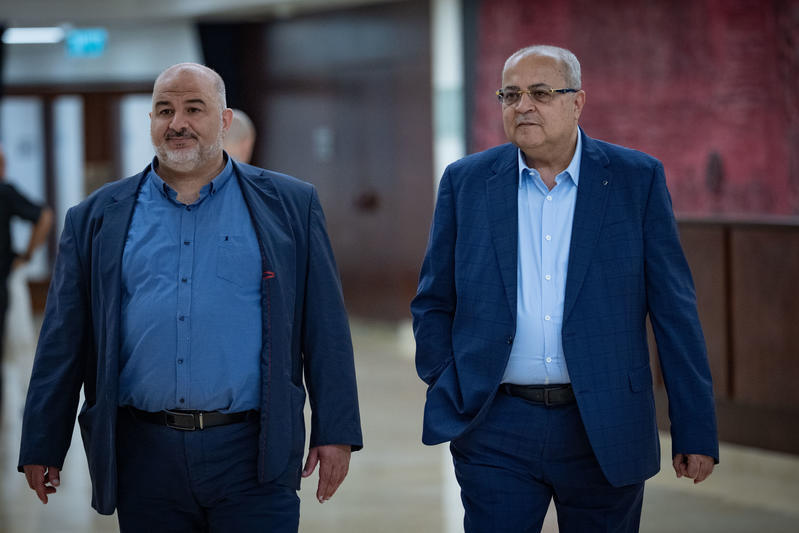
Ra’am leader Mansour Abbas, by contrast, said on October 19 that higher Arab turnout could help bring about a new government and end right-wing policies. He also expressed hope that an understanding with the opposition could be reached after the election.
Ahmad Tibi, one of the leaders of the Joint List, which brings together Palestinian political forces including Hadash, Balad, and the Arab Movement for Change, has also signaled a willingness to provide parliamentary support from outside the government to replace Netanyahu.
He said his bloc could vote with an Eisenkot-led government to establish a state commission of inquiry into the failures surrounding October 7.
An Israel Hayom poll published on October 15 found that 87% of voters in the change camp would accept some form of cooperation with Arab parties if their bloc fell short of 61 seats.
Of those, 37% supported bringing an Arab party into the government, 30% favored outside support, and 20% backed forming a government with an Arab party abstaining from the confidence vote.
“Israel’s” parliamentary rules allow a minority government to take office if it secures the necessary support in a confidence vote, including through backing or abstentions from parties outside the governing coalition.
But Lieberman’s opposition and reservations among other opposition figures make such an arrangement politically difficult.
The opposition is also divided over who should become prime minister. Its leaders have agreed on broad principles for forming an alternative government but have avoided naming a single candidate.
Eisenkot has signed a vote-sharing agreement with the Democrats, while Bennett has reached a similar deal with Yisrael Beiteinu.
Lieberman has accused Eisenkot of undermining his potential partners by focusing on finishing first in the election.
He has also warned that Eisenkot could ultimately pursue a national unity government with Netanyahu.
Eisenkot has denied that possibility. But Bennett added to tensions on October 11 when he said he might accept Netanyahu as a minister in a government he led. He later said the remark was sarcastic and reaffirmed that he would not join a government with Netanyahu.
These divisions could give Bennett bargaining power beyond the 10 to 14 seats projected for his list.
He could influence the opposition’s choice of prime minister or seek a power-sharing arrangement, particularly if Eisenkot’s party finishes first but cannot assemble a majority.
A broad national unity government bringing together Likud and parts of the opposition could, mathematically, clear the 61-seat threshold. But Eisenkot, Lieberman, Golan, and Bennett have all rejected serving under Netanyahu.
That leaves open the possibility of a different Likud figure leading a unity coalition, though such a scenario would require a shift within the party, with no clear signs yet that one is imminent.
Polling suggests Israelis themselves remain divided over the available options. A Channel 13 survey published on October 19 found that 33% favored a national unity government, compared with 31% who preferred a purely right-wing government and 23% who supported an opposition-led government.
Asked what should happen if no government could be formed, however, 52% preferred another election, while 32% backed a unity government in which Netanyahu and Eisenkot would rotate as prime minister.
The Jerusalem Post also reported on October 13 that some opposition figures were considering replacing Knesset Speaker Amir Ohana, a Likud member, if they could assemble a parliamentary majority after the election.
Such a move could give the opposition greater influence over parliamentary proceedings and legislation, including efforts to establish a state commission of inquiry into the October 7 failures and limit the number of terms a prime minister can serve, even while a caretaker government remains in office.
That strategy would depend on opposition parties cooperating in parliament despite their disagreements over forming a government.
If coalition talks fail, Netanyahu could remain at the head of a caretaker government until the legal process runs its course or a new election is held.
The October 27 election could therefore produce a result in which Eisenkot’s party finishes first but cannot form a government, or Netanyahu retains power even if Likud loses its position as the largest party.
Ultimately, the next government will depend on whether either camp can overcome its internal divisions and secure enough partners to command a majority in the Knesset.
Sources
- Israel's Ben-Gvir poised for election gains as young voters turn to far right
- Benny Gantz pulls out of election race, eight days before Israelis head to the polls
- Deri says Shas won’t join next government unless Haredi draft exemptions are enshrined in law
- Haredi parties may refuse to endorse both Netanyahu, Eisenkot after Israeli election, sources say
- Channel 12 Poll: Israel’s Major Parties Gain Ground as Hendel and Zelecha Fall Short of Entering the Knesset [Hebrew]
- Bennett Surges, Winter and Hendel Clear the Threshold, and Eisenkot’s Bloc Regains the Lead [Hebrew]
- Netanyahu’s Lead Over Eisenkot Widens Again, Both in Seats and as Preferred Prime Minister [Hebrew]
- Eisenkot’s Bloc Gains Ground as Winter Falls Below the Electoral Threshold | Israel Hayom Poll [Hebrew]