Despite Public Opposition: Why Did Mauritania’s President Reappoint Mokhtar Ould Djay to Form a New Government?
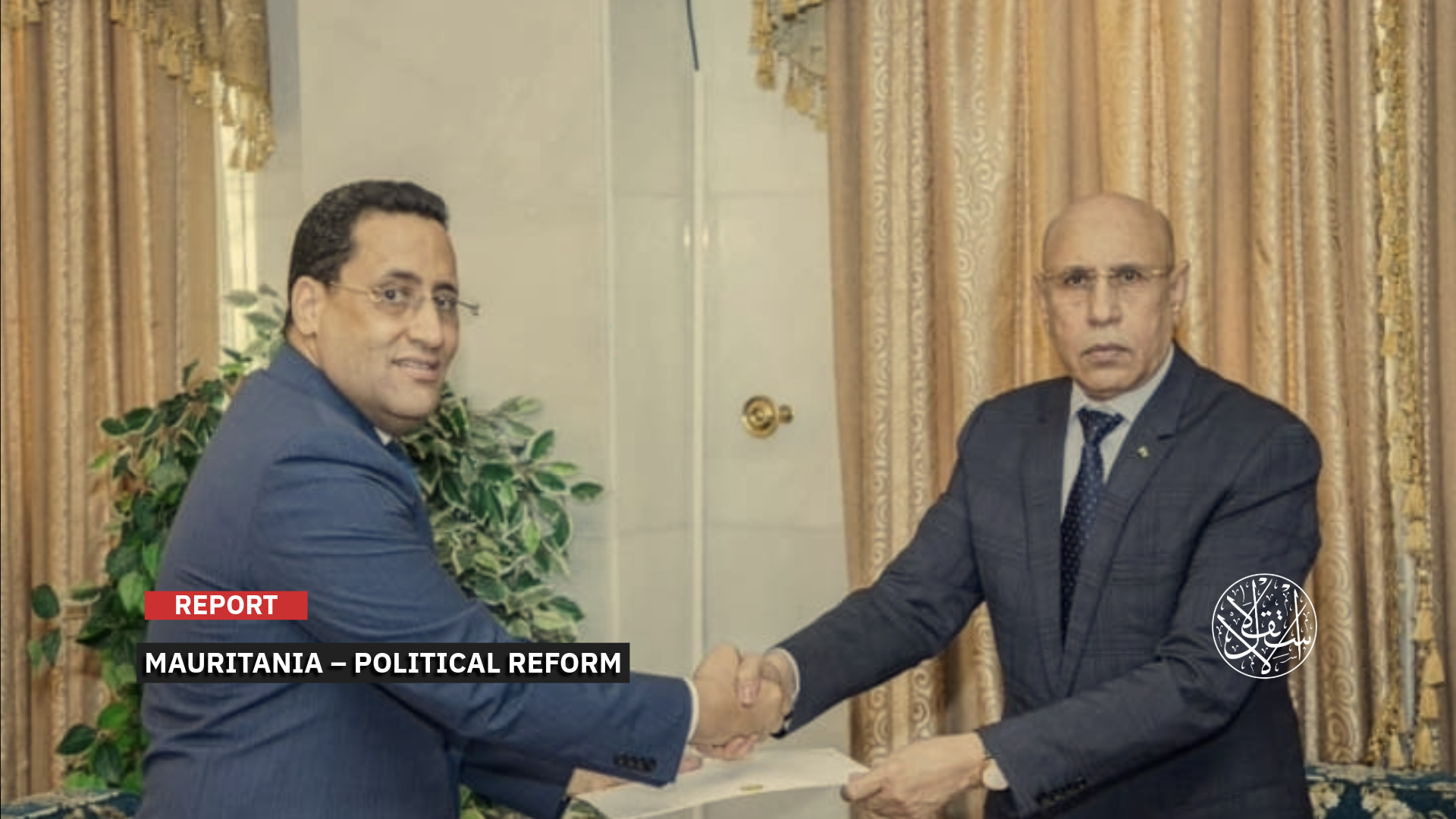
“Forming the new government will send a negative message to everyone hoping for genuine reform and a serious fight against corruption.”
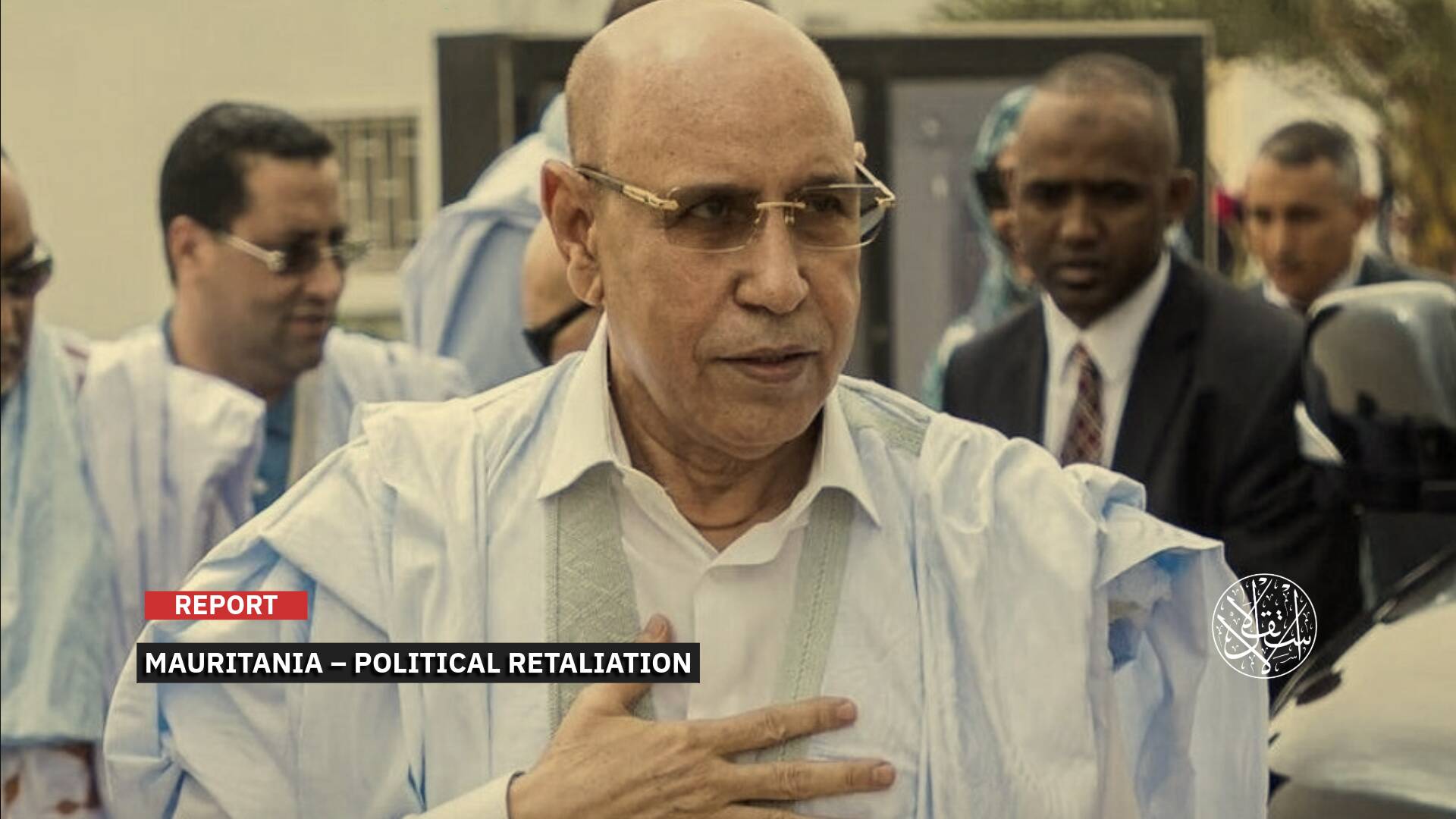
Mauritania’s political scene has witnessed widespread reactions following the announcement of the government’s resignation, amid questions over whether the move is linked to President Mohamed Ould Cheikh El Ghazouani’s efforts to reshape the political landscape, against the backdrop of ongoing debate over a possible third presidential term.
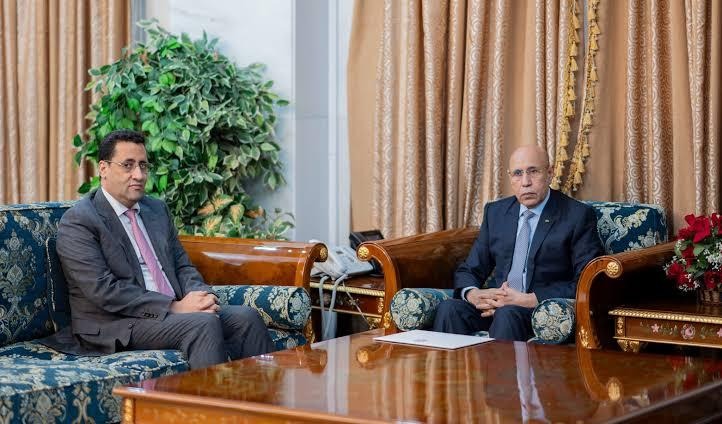
Prime Minister Mokhtar Ould Djay submitted his resignation and that of his government to President El Ghazouani. On October 9, 2026, the Mauritanian presidency announced his reappointment by decree and tasked him with forming a new government.
The government’s resignation came one day after the findings of the final report by the “Independent Investigation Committee” into fires at two electricity substations in Nouakchott were presented. The fires, which occurred in August 2026, caused power outages lasting several days across large parts of the capital.
Meanwhile, government supporters argue that there is no link between the committee’s report and Ould Djay’s resignation, maintaining that the government was not directly involved in the fires or the incidents surrounding them.
Ould Djay’s government was formed in early August 2024, at the beginning of El Ghazouani’s second presidential term. It remained in office for approximately two years and two months, during which it underwent two cabinet reshuffles.
Ould Djay is the third prime minister appointed by El Ghazouani since he came to power in 2019, following Ismail Ould Bedde Ould Cheikh Sidiya and Mohamed Ould Bilal.
A New Assignment
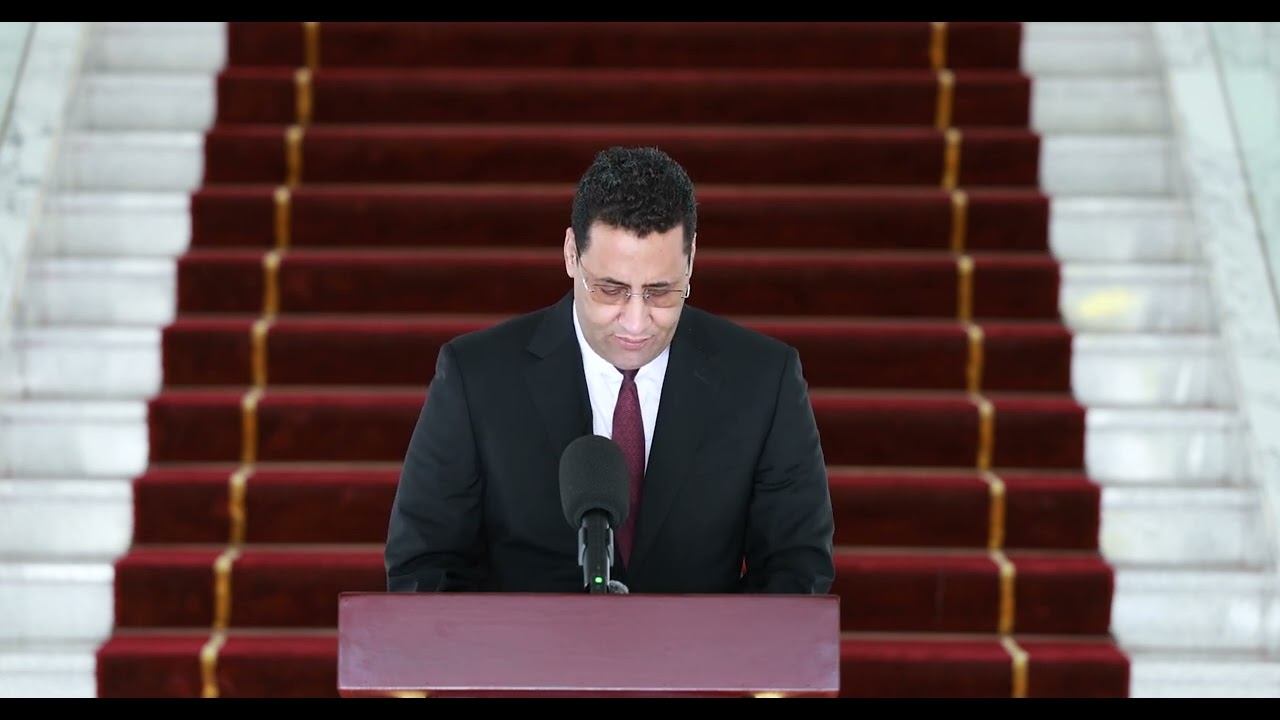
Upon his appointment, Prime Minister-designate Mokhtar Ould Djay pledged to begin work immediately on forming a new government. He stressed that the new government must possess the political and technical competence needed to continue implementing President Mohamed Ould Cheikh El Ghazouani’s programme, “My Ambition for the Nation.”
Speaking to the press on the occasion, following his reappointment as prime minister just hours after his resignation, Ould Djay added that the new government must be capable of addressing the challenges posed by the current global crisis, particularly by strengthening the social safety net to help lower-income citizens cope with its effects.
Ould Djay further stated that the new government must be able to generate momentum and foster genuine hope in education and training, employment, and the inclusion and empowerment of young people in both urban and rural areas. It must also be capable of promoting local development in cities and inland regions.
The prime minister said he would immediately begin working in accordance with these directives so that he could submit a proposal meeting the specified requirements and guidelines to President El Ghazouani as soon as possible, paving the way for the appointment of the new government.
Ould Djay described the president’s confidence in him as precious and a trust to be honoured, expressing hope that he would live up to the president’s expectations and fulfil this responsibility to the fullest.
He added that the president had tasked him with submitting a proposal for forming a new government, noting that he had expressed his thanks and gratitude to the president for entrusting him with this assignment.
Corruption and Mismanagement
As soon as Ould Djay announced his resignation, opposition parties and political figures called for the formation of a technocratic government to address widespread corruption in the country and within government institutions, and to pave the way for fair legislative elections that would restore citizens’ confidence in political life.
In this context, opposition politician Mohamed Ould Dahane sent a warning message to the president, stressing that reappointing Ould Djay to form a new government would send a negative message to everyone hoping for genuine reform and a serious fight against corruption.
In a Facebook post dated October 9, 2026, Ould Dahane emphasized that the appointment would raise legitimate questions about the president’s seriousness in bringing about the desired change. He argued that the country needs new faces and honest, competent people, not the recycling of corrupt figures.
Political and human rights activist Yacoub Ahmed Lemrabet said there was no hope for change and reform in the announced measures, stressing that anyone expecting such change was “deeply mistaken.”
In a post on his Facebook account, Lemrabet noted that the prime minister had previously stated in his first media interview that corrupt individuals could not be dispensed with.
He went on to quote a Hassaniya Arabic proverb: “What does not come with the first serving will not come with the next,” suggesting that reforms that failed to materialize at the beginning of the presidential term were unlikely to come at its end.
In this context, journalist Mohamed Souleh believes that reappointing Mokhtar Ould Djay to form a new government does not amount to a wholesale rejection of the previous government’s performance.
Rather, he argues, the decision carries political and administrative messages aimed at ensuring political stability by retaining a figure with extensive technocratic and political experience to ensure continuity in implementing the president’s program.
In an analysis published by the local outlet Nabd Media, Souleh stressed that the reappointment had allowed the prime minister to restructure his team and address weaknesses and shortcomings within ministerial departments.
He noted that the priorities for the new government’s term should include streamlining public service sectors and addressing their persistent problems, particularly in electricity, water and infrastructure.
He also highlighted the need to address economic and social challenges and establish stricter mechanisms for monitoring public projects and preventing maintenance and operational crises.
Souleh emphasized that the prime minister faces multiple challenges in his new term, foremost among them restoring public confidence through rapid and tangible improvements in the quality of essential services.
He added that Ould Djay must also tackle economic pressures by managing development-related issues and combating inflation amid a challenging regional and international environment.
Finally, he pointed to political and electoral challenges, stressing the importance of maintaining a balance among the political forces supporting the president while ensuring cohesion within the government team.
Lack of Credibility
At the party-political level, Biram Dah Abeid, leader of the IRA movement and a member of parliament, said the president had a historic opportunity to break with the practices that had led Mauritania into its current predicament, but had instead chosen to maintain the status quo.
According to the local news website Meyadin on October 10, 2026, Ould Abeid said, “By reappointing his prime minister instead of listening to the people’s anger, the head of state chose continuity over change.”
He stressed that the decision failed to answer the pressing questions raised by recent events or meet the urgent expectations of Mauritanians, who are struggling with the rising cost of living, unemployment, poverty, corruption and inequality.
He continued, “Nor does it address the failures of a government whose improvisation, incompetence and cronyism have pushed the country towards a multifaceted crisis, which is deepening and leading to further decline and fragmentation by the day.”
“The decision also reflects no willingness to contain tensions stemming from the persistence of outdated practices and the accumulated burden of a heavy historical legacy, or to review restrictive laws that mortgage the country’s future and hinder its development.”
The opposition leader argued that the decision exposed the widening gap between a president confined within the narrow circle of his entourage and the deep aspirations of the Mauritanian people.
He pointed out that activity on social media, citizens’ positions, statements by public opinion leaders and repeated calls for Mokhtar Ould Djay to step down all reflected widespread opposition to the prime minister and his team.
Ould Abeid argued that, by disregarding these demands, El Ghazouani had dealt a serious blow to Mauritanians, including a substantial segment of his own political majority, which had also been calling for change.
He concluded that Mokhtar Ould Djay bore significant political responsibility for what he described as the deterioration in the state’s performance.
He considered that keeping him in office means continuing along a path whose limitations and failures have become evident, while deliberately ignoring the demands for change expressed by Mauritanians.
Meanwhile, the Tajdid Movement for Democracy (TAHADDI party) called for the formation of a government of national experts characterised by integrity, independence and the ability to deliver results. It warned against reappointing officials facing corruption allegations in the anticipated cabinet lineup.
According to the local website Atlas Info on October 10, 2026, the party said the new government should reflect the will for change and place the national interest above narrow considerations.
It argued that the nature of the forthcoming appointments would determine the political direction of the next phase.
The party also called for the investigation into the fires at the two electricity substations in Nouakchott to be completed, with anyone against whom evidence of involvement was established referred to the courts.
It further demanded that those responsible for the incident be held accountable without selectivity or exception.
The party held the government politically responsible for ensuring that the case was not shelved and that the accountability process was not obstructed.
It warned that reappointing officials without genuine reform and serious accountability would perpetuate existing shortcomings and deepen the crisis of confidence in state institutions.
The party added that the credibility of change is measured not simply by changing names, but by adherence to standards of competence and integrity and by holding officials accountable for their responsibilities.
Meanwhile, Aissata Ba Yahya, Minister and Secretary-General of the Presidency, announced the composition of Ould Djay’s new government late on Saturday, October 10.
The new cabinet retained most members of the previous government, with changes in the defence, interior and energy portfolios, as well as in several economic and public service sectors.
The official announcement outlined the government’s mission as continuing to implement the presidential programme, addressing the repercussions of the global crisis, strengthening social protection and employment, and promoting development in the country’s interior regions.
An Eye-Opening Poll
Public opposition to Ould Djay is reflected in widespread engagement on social media, as well as in opinion polls. One example is the final results of a poll published by Salon Nouakchott on the performance of Prime Minister Mokhtar Ould Djay’s government. Conducted over two days, the poll showed a clear lead for those calling for the government to step down.
According to the poll, published on August 14, 2026, it recorded more than 70,000 views, shares, and interactions on the platform. Participants’ responses were distributed as follows: 85% supported dismissing the government, 10% said they needed more time to assess its performance, 4% supported the government remaining in office, and just 1% favoured a partial cabinet reshuffle.
In a post on its Facebook account, Salon Nouakchott said the results, within the limits of the poll’s audience and methodology, revealed a notable critical sentiment towards the government’s performance.
Most participants had not merely called for some ministers to be replaced; they had gone directly to demanding the government’s departure.
It added, “But perhaps the most significant figure is not the 85% alone, but the wide gap between those calling for the government’s dismissal and those expressing confidence in its continuation.”
Ethical Questions
Journalist Mohamed Abderrahmane Ould Abdallah believes that reappointing Mokhtar Ould Djay to form a new government is not merely a routine constitutional procedure, but rather opens the door to political and ethical questions that go beyond the names of incoming ministers to address the very nature of the relationship between authority and accountability.
In comments to Al-Estiklal, Ould Abdallah said it was difficult to understand why confidence had been renewed in an official whose record in office was facing mounting criticism, while citizens continued to await clear answers regarding corruption cases, administrative shortcomings and failures in essential public services.
He stressed that the core issue was not the president’s right to appoint or reappoint a prime minister, but rather the criteria governing that choice and the extent to which it responds to demands for accountability and change.
He continued that the new appointment places the executive branch before a genuine test: does it signal a serious reassessment of the government’s performance, or does it mean continuing along the same course while changing some faces and redistributing ministerial portfolios?
Ould Abdallah noted that the president has the right to place his confidence in whoever he considers suitable to lead the government. However, political confidence should not become a substitute for evaluation and accountability.
He added that the prime minister is not merely responsible for managing government affairs, but is also expected to answer to both the president and public opinion for the outcomes of public policies and the government’s adherence to the law, transparency and the proper use of public funds.
This, the journalist argued, highlights a contradiction. He stressed that if criticism of the government’s performance concerns fundamental issues affecting public funds, essential services and citizens’ livelihoods, renewing confidence in its head requires a political explanation of the reasons behind the decision, the criteria on which it was based and the results expected during the next phase.
He added that reappointing the same official without publishing a clear assessment of the previous government’s record or setting measurable commitments leaves considerable room for questions about whether the reshuffle represents a change in policy or merely a rearrangement of the government’s composition.
Ould Abdallah noted that the president’s and prime minister’s responsibilities overlap in managing the executive branch, but that this overlap must not become a means of diffusing responsibility.
“If the prime minister manages government affairs and coordinates the ministers’ performance, the president also bears political responsibility for his major decisions and for retaining officials in whom he renews his confidence,” he said.
For this reason, Ould Abdallah argued, “It is not reasonable to hold the government solely responsible for all failures while leaving presidential decisions beyond scrutiny. Nor is it right for the prime minister to become a scapegoat whenever a crisis arises, only to be returned to his position whenever political calculations require it, without presenting a clear record of achievements and failures to the public.”
The journalist stressed that genuine accountability begins with defining responsibilities, evaluating results and referring substantiated violations to the competent authorities, away from political exploitation or passing judgment before investigations are completed.
Ould Abdallah concluded that a state cannot be governed through renewed confidence alone, and public trust cannot be restored simply by changing names. Rather, it requires tangible results, verifiable transparency and accountability that spares no one.