West Kordofan Battle: Oil Routes and Key War Fronts in the Sudanese Army’s Crosshairs
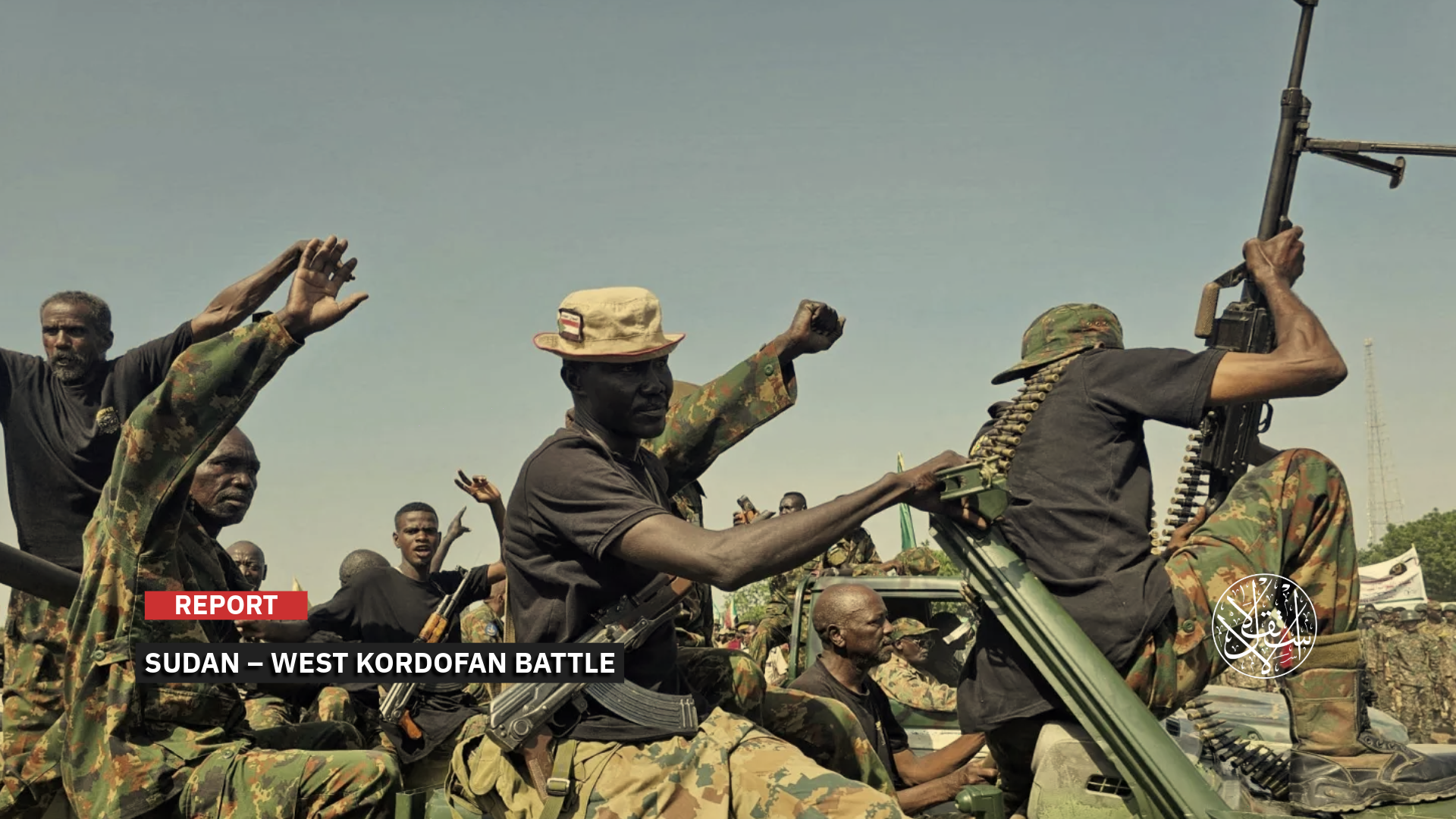
“West Kordofan’s strategic importance stems from its location between Darfur, central Sudan, and the border with South Sudan.”
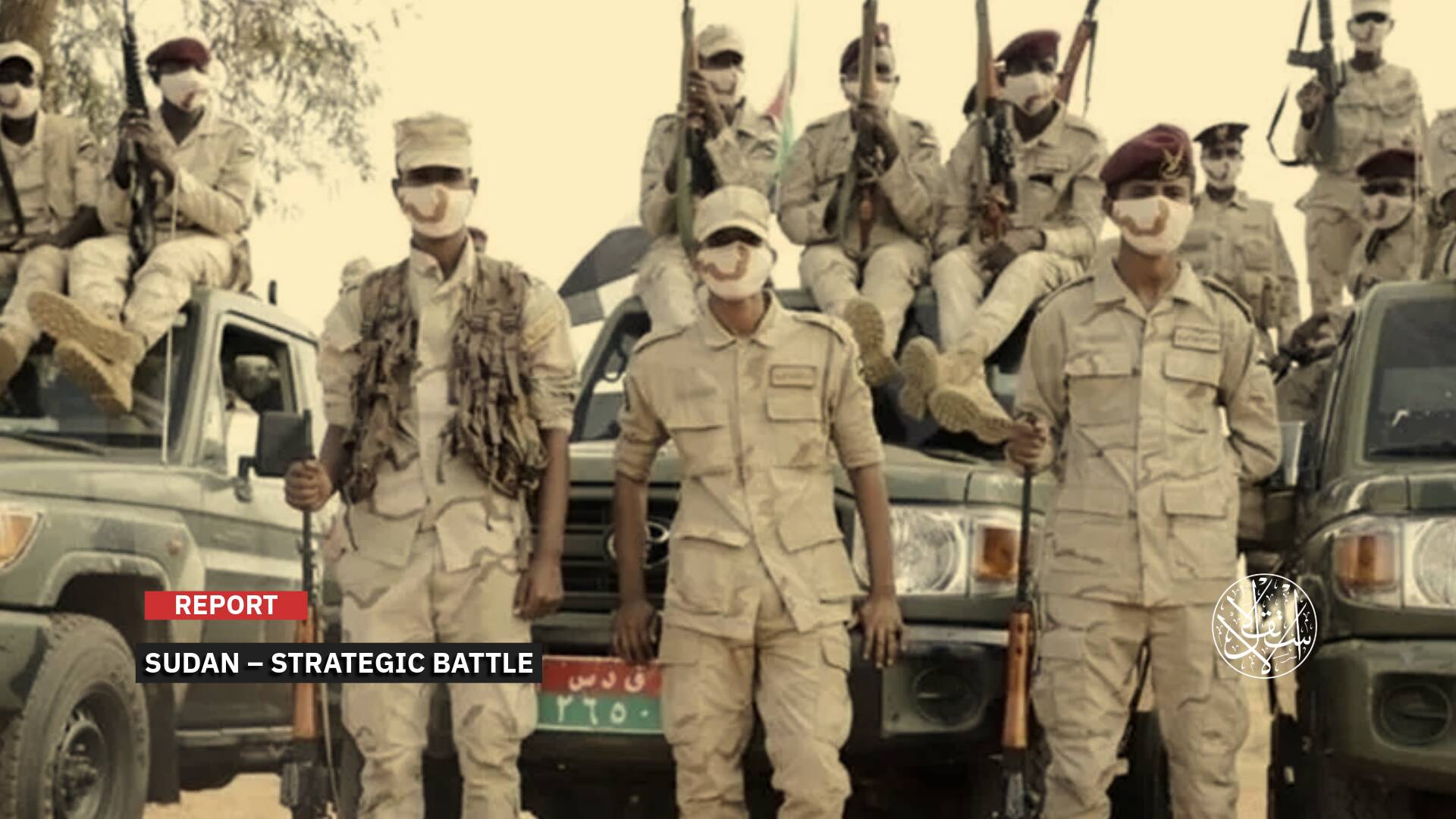
The Sudanese army is not merely expanding its control in North Kordofan; it is seeking to shift the war's focus westward through the gateway of West Kordofan, a move that could redraw the conflict map and impose new dynamics between central Sudan and Darfur.
Following its capture of Sodari and Al-Mazroub, the army began advancing from the outskirts of Umm Kraidem toward Al-Khuwei and the outskirts of Al-Nuhud, pursuing an objective that goes beyond retaking towns and positions: cutting off or restricting the routes used by the Rapid Support Forces (RSF) militia to move and secure supplies between Kordofan and Darfur.
Control of Al-Khuwei and Al-Nuhud would give the army an advanced position at a geographical and economic crossroads linking the region's northern and western parts, paving the way for greater pressure on areas of influence, resources, and transport networks.
However, this advance also carries a high military and logistical cost, as expanding the area under control means extending supply lines and requiring the continued protection of newly captured positions.
West Kordofan is thus entering a potentially decisive phase of the war. Can the army turn its successive gains into a breakthrough that shifts the balance of control, or will the new front become a prolonged war of attrition? What stands between this advance and the opening of a viable route toward Darfur?
Strategic Location
West Kordofan’s strategic importance stems from its location between Darfur, central Sudan, and the border with South Sudan, making it an area where troop movements, trade, pastoralism, and oil exports intersect.
It borders North Kordofan to the north and South Kordofan to the south, while meeting North and East Darfur states to the west. As a result, the impact of the battle extends beyond its administrative boundaries to a wider region.
Within this area, key centres of influence serve different functions. Al-Nuhud is a hub for trade in gum arabic, groundnuts, and livestock, and holds social significance in Dar Hamr, while Al-Khuwei serves as a connecting point toward El Obeid.
Al-Fulah retains its importance as the state capital, while Babanusa is a historic railway junction with lines extending toward Darfur and South Sudan.
The southern part of the state encompasses the oil-producing area associated with Heglig, Baleela, and the surrounding production zones.
The importance of these facilities extends beyond crude oil extraction to processing and transportation, including South Sudan’s oil.
Military control therefore intersects with cross-border economic interests, the government’s ability to collect revenue, and the resumption of market activity.
These interconnected interests become even more sensitive as production disruptions and rising transportation costs take their toll.
Control over crossings and markets can then become a means of imposing levies, exerting pressure on civilians, and financing the continuation of the war.
This geography gives the advance toward Al-Khuwei and Al-Nuhud significance beyond the amount of territory recaptured.
It could alter the movement of goods and troops between El Obeid and western Sudan, while threatening resources and transport networks used by the Rapid Support Forces (RSF) militia.
However, economic influence is distributed across a commercial and agricultural north, an administrative and logistical centre, and an oil-producing, border region in the south.
Recapturing Al-Nuhud therefore does not automatically bring the oil fields within reach, just as entering the state capital is not enough to secure its outlying areas.
The value of the advance ultimately depends on how effectively it connects with other key centres and restores movement between them, turning scattered gains into a territory that can be administered and supplied.
Widespread Control
The Sudanese Armed Forces are entering this battle against a backdrop of successive territorial losses. Al-Fulah came under the control of the Rapid Support Forces (RSF) militia in June 2024, followed by the fall of Al-Nuhud in May 2025, after it had served as an alternative administrative capital.
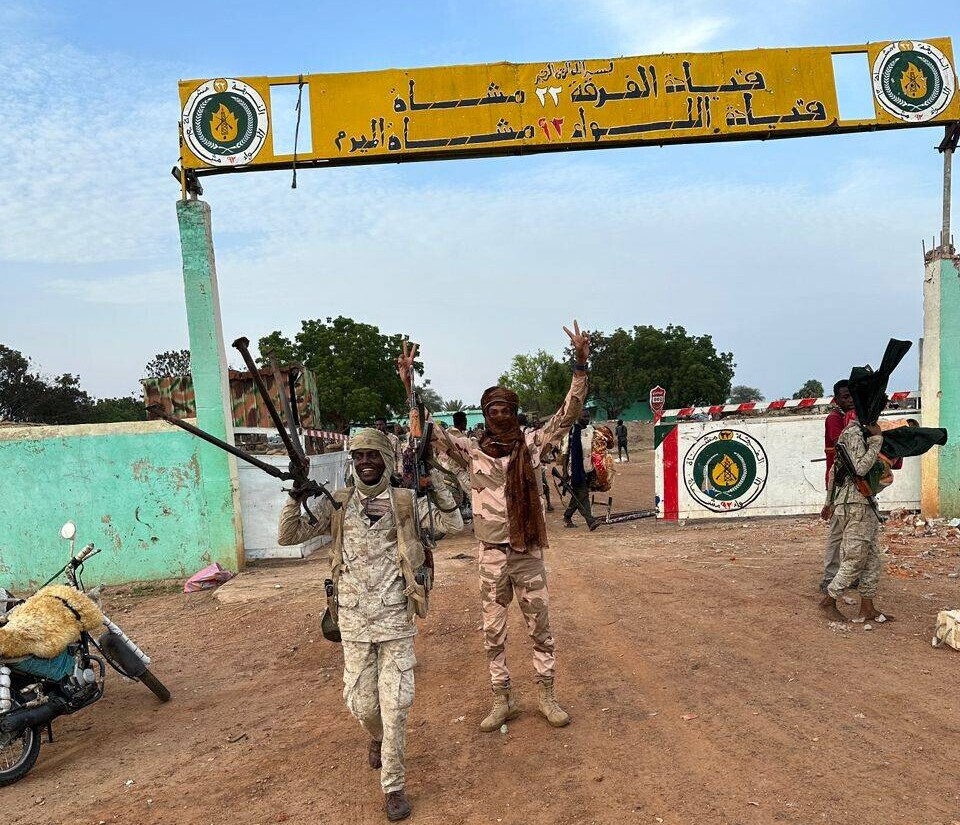
In December 2025, the RSF seized the headquarters of the 22nd Division in Babanusa, ending the army’s control over one of its most important strongholds in the state.
By contrast, the Sudanese Armed Forces are relying on El Obeid and their recent gains in North Kordofan.
However, they face a different reality in the south, where they retain control of Dilling and Kadugli amid threats to the roads, alongside the influence of the Sudan People’s Liberation Movement–North (SPLM-N), led by Abdelaziz al-Hilu, in parts of the Nuba Mountains and its alliance with the RSF militia.
Heglig occupies a unique position. Following the Sudanese army’s withdrawal from the area in late 2025, Juba announced arrangements to secure the facilities using South Sudanese forces, in an understanding with both warring parties.
This situation requires a distinction between protecting the oil fields, sovereignty over the area, and economic administration, rather than indiscriminately placing the region under the control of either side.
In Darfur, the RSF militia retains its influence over most of the region, while the army and its allies control other areas, and additional territories remain under the control of Abdelwahid al-Nur’s movement. This further complicates any subsequent military advance there.
Thus, the army’s gains in the north are putting pressure on an extensive network of influence, but they have yet to dismantle it.
Supply Lines
The nature of the military movements in Umm Kraidem indicates that the army is seeking to prepare the ground for a broader advance through reconnaissance and special forces operations, alongside air strikes.
In a report published on October 6, the local Ayin Network quoted a field source as saying that the advance toward Al-Khuwei locality was continuing under air cover, with Al-Nuhud identified as the main objective of the next phase.
These developments suggest that the operation is an attempt to shift the focus of the fighting westward and force the Rapid Support Forces (RSF) militia to distribute their forces between protecting their strongholds and maintaining pressure on El Obeid.
If the army manages to establish a firm presence around the targeted centres, it could restrict the movement of reinforcements and increase the cost of supplying the front lines, without necessarily cutting off all routes.
The link with Darfur is supported by previous evidence. Visual investigations have documented reinforcements arriving from East Darfur for the battle of Babanusa.
The loss of some key transport links in West Kordofan could therefore affect the RSF’s ability to move troops between the two regions and limit its use of the state as a strategic rear area for operations farther east.
However, opening a route toward Darfur remains contingent on the army completing several successive stages. These begin with securing recaptured areas and linking them to a stable supply base, followed by expanding control within the state.
Equating the advance to Al-Nuhud with the recapture of El Fashir or Nyala overlooks the differences between the fronts and the vast areas under RSF militia influence.
In this sense, the significance of a breakthrough will depend on its ability to alter the RSF militia’s capacity to move and fight, while enabling the army to sustain its operations without exhausting its forces protecting widely dispersed positions.
The advance could yield an important gain by curbing attacks on North Kordofan, even before it develops into a direct offensive inside Darfur.
Drones and Distance
Nevertheless, the challenges in this battle begin with the breadth of the front and the long distances between towns, as well as the differences in terrain, from sandy areas in the north to clay-rich areas in the south that are more affected by rainfall.
Consequently, every expansion of the army’s control adds to its responsibility for protecting supply routes and rear positions, while the Rapid Support Forces (RSF) militia can withdraw from one stronghold while retaining the ability to attack outlying areas or disrupt movement around them.
Drones further complicate this equation, as they allow forces and facilities to be targeted far from the front lines. On October 5, the army announced that it had shot down a drone northwest of Al-Khuwei, reflecting the role of aerial warfare on the new front.
Continued attacks on El Obeid also demonstrate that the westward advance does not eliminate the threat to the base on which the offensive depends.
The burden is compounded by ongoing fighting on multiple fronts simultaneously, requiring the army to balance continuing its offensive with securing the cities from which its forces operate.
The Sudanese Armed Forces face another challenge arising from the diversity of their supporting formations, ranging from armed movements to mobilisation groups and popular resistance forces.
Expanding territorial control requires coordination and discipline to ensure that decisions are implemented and civilians are protected, while successive defections within the RSF militia provide a morale boost to the army.
Local relationships remain another influential factor in this test. Previous reports have revealed differing positions among leaders of the Misseriya community, with some seeking to avoid confrontation with the army while others maintain their alliance with the RSF militia. This underscores why local communities should not be treated as a single, unified bloc.
From Recapturing Territory to Restoring Governance
The impact of the army’s expanding advance extends beyond military control to the question of governance. Recapturing Al-Nuhud could allow part of the government administration to return to the state, while a return to Al-Fulah would signify the restoration of the state capital.
The state government is headed by Hamed Hamad Tirab, appointed in July 2026, who outlined military preparations and recovery plans in September, despite government institutions continuing to operate from outside areas previously under their control.
On the other side, losing population centres and economic hubs threatens the territorial base on which the Tasis alliance relies to build its parallel authority.
However, the RSF militia’s retreat in West Kordofan would not automatically end its influence in Darfur or eliminate the institutions and forces of the Sudan People’s Liberation Movement–North (SPLM-N) in South Kordofan, where local power dynamics differ.
Translating military gains into stable governance in these areas therefore requires the return of the police, judiciary, public services, and wage payments, as well as the protection of markets and residents’ rights and property.
The exploitation of resources also depends on repairing facilities and restoring employment and trade. Meanwhile, the Heglig area requires coordination with South Sudan on security, operations, and the flow of oil.
The International Organization for Migration (IOM) recorded the displacement of more than 308,000 people from the Kordofan states between late October 2025 and early September 2026.
Civilian security stands out as a direct test of the value of the advance. The operation’s results will therefore be measured not only by changes in the front lines, but also by the continued movement of people, access to humanitarian assistance, and the return of residents.
If the authorities fail to translate their military presence into protection and services, troop positions may change while the governance crisis persists, delaying the transformation of a route toward Darfur into sustainable progress.
Sources
- New Defections Hit the RSF as Sudanese Army Launches West Kordofan Operation [Arabic]
- Misseriya Tribe Divided Over Sudanese Army’s Advance in West Kordofan
- WFP Strongly Condemns Attack on Trucks in South Kordofan That Killed One Driver
- Sudan: Sixth Drone Downed in Kordofan in Less Than a Month [Arabic]
- Sudanese Army Engages in Decisive Battles Near El Geneina and Blue Nile State [Arabic]