Heated Diplomacy and a Water Conflict: Where Are Relations Between Egypt and Ethiopia Headed?
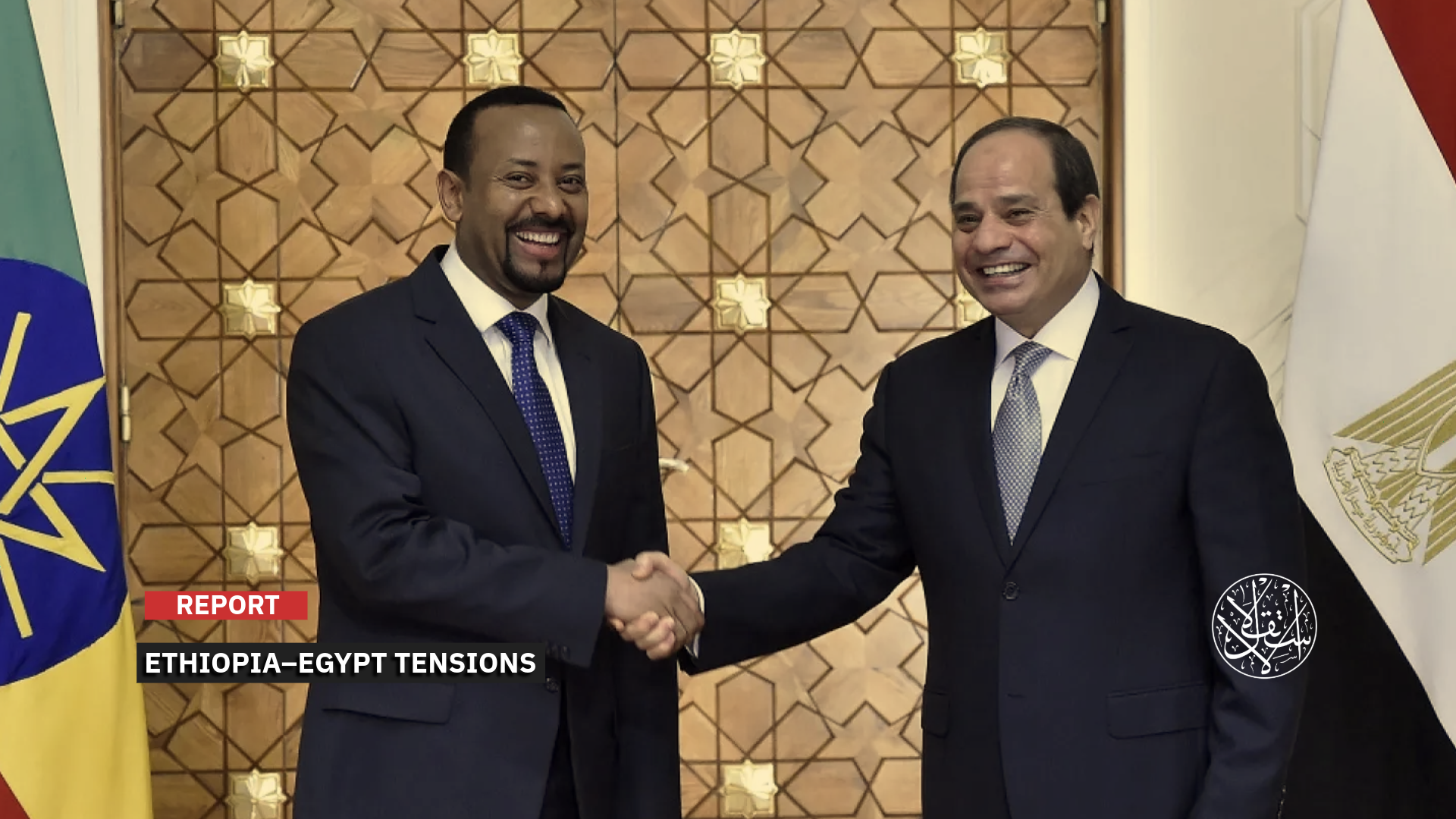
"Egypt should explain why it built the Aswan High Dam without Ethiopia’s approval."
After the head of the Egyptian regime, Abdel Fattah el-Sisi, said on September 29, 2026, that diplomatic solutions to the dispute over Ethiopia’s dams will not come at the expense of Egypt’s existence and its people, relations between Cairo and Addis Ababa entered a new phase of escalation.
The tensions are no longer confined to the long-running dispute over the Grand Ethiopian Renaissance Dam and the management of Nile waters.
The confrontation has taken a sharper turn, with the two countries expelling diplomats and Ethiopia accusing Egypt of having built the Aswan High Dam without Addis Ababa’s approval.
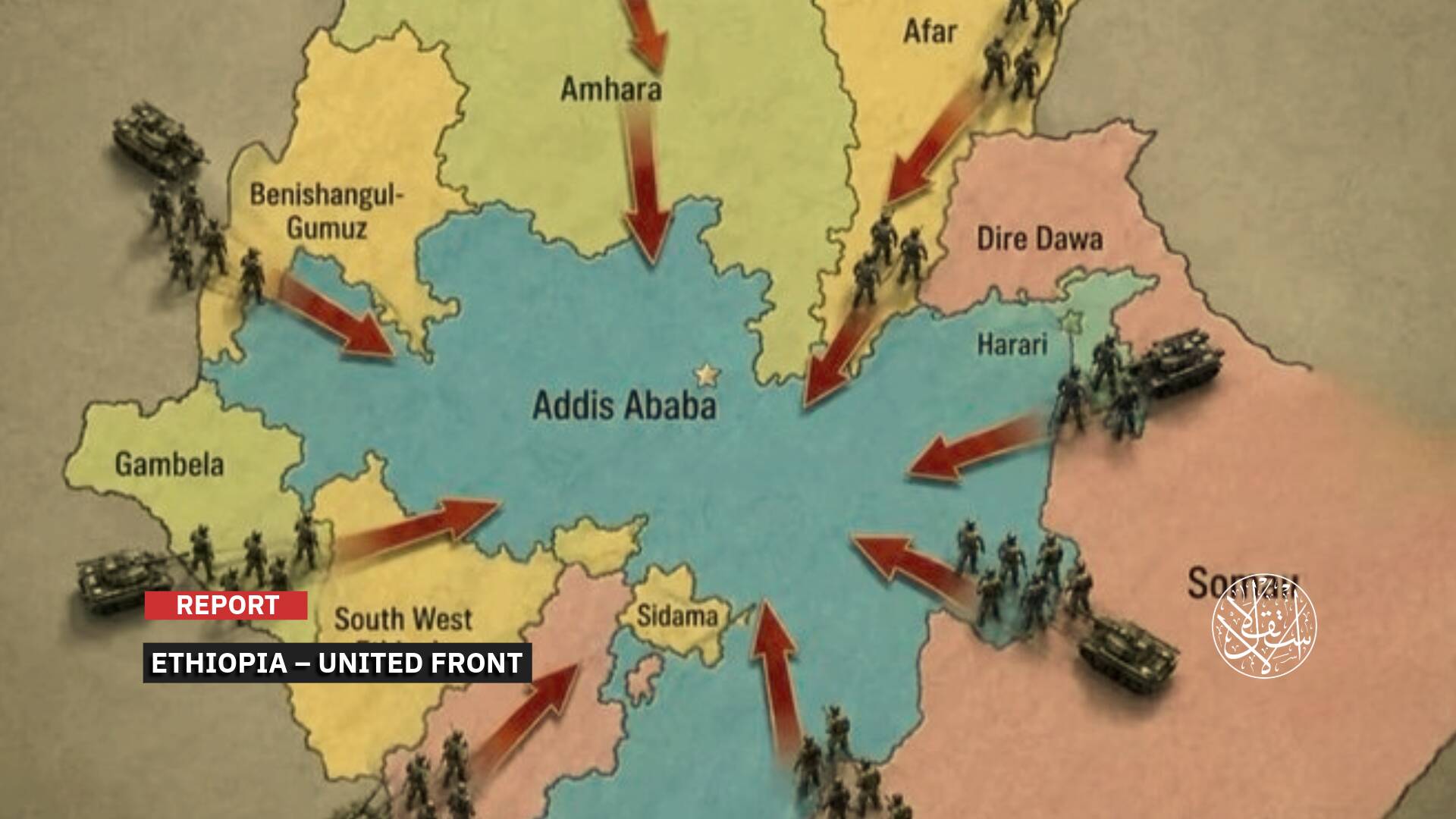
What makes the latest escalation particularly significant is the way the Nile dispute has become entangled with Ethiopia’s internal conflict.
Addis Ababa has accused Cairo of interfering in the conflict and supporting armed opposition forces in Tigray, accusations that were followed by the reciprocal expulsion of diplomats.
Tensions also rose after Ethiopia invoked Emperor Haile Selassie’s opposition to the construction of the Aswan High Dam in response to Egypt’s objections to the Renaissance Dam, despite the different purposes of the two projects and the historical circumstances surrounding their construction.
Addis Ababa has thus brought the Aswan High Dam, a project dating back to the 1950s, back to the center of the countries’ increasingly hostile rhetoric.
Ethiopia argues that Egypt did not consult it before building the dam and therefore has no basis for demanding that Addis Ababa consult Cairo over the construction and operation of the Renaissance Dam.
The escalation has unfolded alongside advances by Ethiopian federal forces and their allies, who have recaptured strategic positions from Tigray forces, contrary to what Addis Ababa accuses Egypt, Sudan, and Eritrea of seeking.
The African Union has also entered the dispute, accusing the three countries of playing a role in Ethiopia’s internal conflict, prompting criticism from Cairo.
Ethiopian Minister of Water and Energy Habtamu Itefa further escalated tensions on October 3, 2026, saying: “Before criticizing Ethiopia, Egypt should explain why it built the Aswan High Dam without Ethiopian consent.”
He claimed that the Aswan High Dam was built without Ethiopia’s approval, while saying the Renaissance Dam was constructed on the basis of the Declaration of Principles agreement signed by Egypt, Sudan, and Ethiopia.
Itefa’s remarks, reported by the state-run Ethiopian News Agency (ENA), further widened the dispute between the two countries.
These developments raise questions about the future of Egyptian-Ethiopian relations and whether Addis Ababa is using the Renaissance Dam and Aswan High Dam disputes, along with its accusations that Egypt is interfering in Tigray, to frame its internal crisis.
They also raise a broader question: Has the Tigray conflict become part of a regional struggle in which Nile water, the Red Sea, and the Horn of Africa are increasingly intertwined, particularly as Ethiopian forces shift from a defensive posture toward retaking strategic areas and positions in Tigray?

Why the Aswan High Dam?
After Ethiopian Army Chief of Staff Field Marshal Birhanu Jula accused Egypt, Sudan, and Eritrea on September 24 of supporting forces fighting the federal government, saying those armed groups needed outside support and supplies to achieve their objectives, Cairo responded by reaffirming its policy of noninterference.
Egyptian Foreign Ministry spokesman Nader Zaki said Egypt’s foreign policy is based on respect for the sovereignty, unity, and territorial integrity of states and noninterference in their internal affairs. He dismissed any allegations questioning Egypt’s commitment to those principles as baseless.
The dispute then spilled into the diplomatic arena in early October, when Ethiopia declared Egyptian diplomat Ahmed Moharam Ahmed Soliman persona non grata and gave him 48 hours to leave the country.
Cairo responded in kind, declaring an Ethiopian diplomat persona non grata and giving him the same 48-hour deadline. The reciprocal expulsions marked a sharper diplomatic turn in the dispute.
This time, the escalation has gone beyond the Grand Ethiopian Renaissance Dam, intersecting with a broader regional struggle over influence and security.
Ethiopia has accused Egypt, Eritrea, and Sudan of supporting forces opposed to its government, accusations Cairo has denied and dismissed as an Ethiopian internal matter that has nothing to do with us.
By moving from defending the Renaissance Dam to reopening the case of the Aswan High Dam and effectively linking Egypt’s position on the Renaissance Dam to Ethiopia’s position on the Aswan Dam, Addis Ababa has broadened the dispute from the operation and management of the Renaissance Dam to long-standing historical questions over Nile waters.
In a notable escalation focused as much on historical narrative and moral legitimacy as on technical issues, Ethiopian Water and Energy Minister Habtamu Itefa brought the Aswan High Dam into the dispute in a Facebook post criticizing its construction. He later deleted the post.
“Before criticizing Ethiopia, Egypt should explain why it built the Aswan High Dam without Ethiopian consent,” the minister wrote.
He went further, arguing that Egypt’s historical record gave it no moral basis to criticize Ethiopia simply for consulting downstream countries.
Itefa said Ethiopia had formally objected in the 1950s to the lack of consultation over the Aswan High Dam and earlier Nile water arrangements, arguing that the project had caused the large-scale displacement of Nubian communities and social disruption.
The reference to the displacement of African Nubians appeared aimed at giving Addis Ababa a symbolic point of leverage against Cairo by appealing to African and international audiences with an argument that upstream countries had historically been denied their right to development.
Itefa said Ethiopia has a sovereign right to develop and use its water resources in the Nile based on the principle of equitable and reasonable utilization, rejecting calls for Ethiopia to obtain prior approval from the two downstream countries for water development projects, according to ENA.
He added that the Renaissance Dam falls under a newer regional framework, namely the 2015 Declaration of Principles signed by Ethiopia, Sudan, and Egypt, according to the state-run agency.
Ethiopia has also accused Egypt, Sudan, and Eritrea of supporting the Tigray People’s Liberation Front (TPLF), which launched a major offensive against government forces, reviving fears of a return to the 2020-2022 war that killed an estimated 600,000 people.
Egypt did not respond publicly, but an Egyptian official told Alqahera News that Addis Ababa was attempting to blame outside parties for its successive internal crises.
After Addis Ababa expelled an Egyptian diplomat without giving a public reason, Cairo reciprocated by expelling an Ethiopian diplomat. Ethiopia and Eritrea also severed diplomatic relations.
An Egyptian Irrigation Ministry official dismissed the Ethiopian water and energy minister’s remarks about the Aswan High Dam as nonsense, saying they reflected political instability in Addis Ababa and were best ignored because responding would be a waste of time.
Speaking to Shorouk News on October 3, the official asked, “Why did the Ethiopian minister delete his embarrassing post about the Aswan High Dam from his Facebook account?”
The official said the deletion showed political confusion and poor judgment and represented a futile attempt to divert attention from what he described as the core of the dispute: Ethiopia’s continued unilateral actions over the Renaissance Dam, which he said violate international law.
The escalation took another step in early October, when Ethiopia announced the formation of a committee to catalogue what it described as more than 22 projects that Egypt had obstructed, including the Renaissance Dam, with a view to examining potential compensation claims.
The move suggests that Ethiopia’s rhetoric is beginning to move beyond defending the Renaissance Dam toward seeking compensation for water projects it says Egypt historically obstructed.
Egypt has strongly opposed the construction of the Renaissance Dam from the outset, arguing that it violates water agreements dating to the British colonial era and poses an existential threat.
Egypt, with a population of about 108 million, relies on the Nile for roughly 90 percent of its freshwater.
Cairo fears the dam could reduce its water supplies during periods of drought and encourage the construction of additional upstream dams.
Egypt’s position received support from U.S. President Donald Trump during both of his terms. In October 2020, he said the situation is dangerous and warned that Cairo could ultimately blow up that dam.
However, his administration failed to broker an agreement on the project, and years of negotiations produced no final deal.
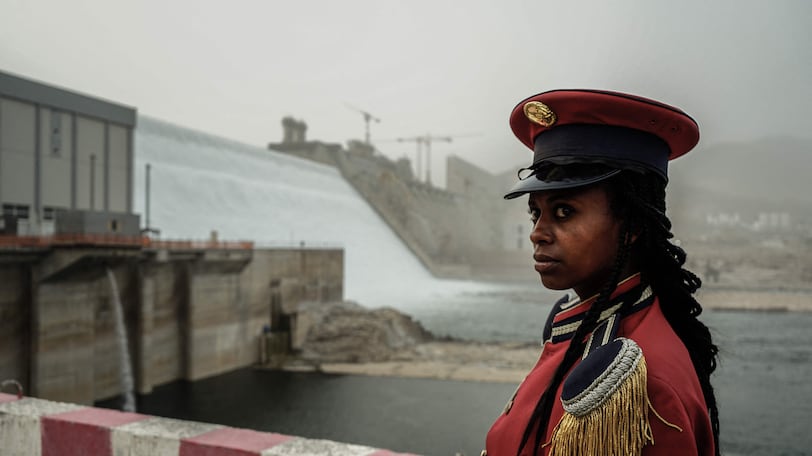
Balance of Power
The Egyptian-Ethiopian dispute is no longer confined to the Grand Ethiopian Renaissance Dam. It has become part of a broader struggle over the balance of power in the Horn of Africa, including competition over Somalia and access to the Red Sea.
The reciprocal expulsion of diplomats by Cairo and Addis Ababa, following Ethiopia’s accusations that Egypt, Sudan, and Eritrea were supporting an alliance led by the TPLF, all of which the three countries deny, was a clear sign of how far the dispute has widened.
The latest escalation appears to have prompted Egypt to host a four-way consultative summit on October 4, bringing together the leaders of Egypt, Eritrea, Sudan, and Somalia in the coastal city of El Alamein to discuss regional issues.
The summit was held as part of consultations and coordination on regional issues of common interest, according to Egyptian presidential spokesman Mohamed El-Shennawy.
Ahead of the summit, el-Sisi warned against unilateral measures that affect the water interests of Nile Basin states, stressing that protecting Egypt’s water rights and interests is an existential issue for the Egyptian people.
During a meeting in El Alamein with Burundian President Evariste Ndayishimiye, the current chair of the African Union, el-Sisi also rejected “the use of the Nile water issue to achieve political gains,” according to a statement from the Egyptian presidency.
Opening the El Alamein summit, el-Sisi said that cooperation in managing transboundary rivers must be based on the rules of international law.
He added that every state has the right to develop its natural resources, but this must be done in a way that does not harm brotherly states, and relations between states must be based on mutual respect and good neighborly relations.
The current situation points to three main possible paths, with the prospect of direct military confrontation remaining less clearly defined than diplomatic and regional pressure, despite hints from figures close to the Egyptian authorities.
Political analyst Tarek Fahmy, who is close to the regime and takes part in political training for military leaders, notably issued two messages.
In the first, he called for rallying around the political leadership, while in the second, he wrote, “If Egypt becomes angry, the option will be zero,” suggesting possible escalation and even war.
He warned that the diplomatic approach and a measured response remain the path being pursued at present.

Three Possible Paths
The first possible path, according to experts and analysts, is a move toward containing the escalation, with Cairo and Addis Ababa allowing African or international mediation to prevent further deterioration, particularly as the African Union and the U.S. have called on the parties to exercise restraint.
That could lead to the continuation of diplomatic negotiations over the Nile and the Renaissance Dam, treating them as an area of mutual interest rather than allowing the dispute to turn into confrontation.
The second possible path is the continuation of the diplomatic war. The exchange of accusations, diplomatic expulsions, and downgrading of relations could continue, with the Tigray conflict used as a tool of mutual pressure while the Renaissance Dam remains at the center of the strategic dispute, an Egyptian diplomat told Al-Estiklal on condition of anonymity.
Relations have already entered a new phase, with the two countries expelling each other’s diplomats and trading accusations of interference in each other’s internal affairs, including over Tigray and the Aswan High Dam.
Ethiopia has also formed a committee to document 22 development projects it says Egypt obstructed and is seeking compensation for.
The third path is the most dangerous. Escalation and political deadlock between the two countries could internationalize the crisis and broaden it across the region, particularly if fighting in Tigray continues and accusations of foreign intervention widen.
Egypt has already responded by seeking to build an alliance through the El Alamein Summit with Sudan, Eritrea, and Somalia.
The Ethiopian dispute could become intertwined with issues involving Eritrea, Sudan, the Red Sea, and the Nile.
This would be the most complex scenario, especially as Ethiopia and Eritrea have severed diplomatic relations and Ethiopian forces have retaken cities previously controlled by Tigray forces.
Cairo appears to view Ethiopia as more than just a Renaissance Dam problem. It sees the security of the Nile, the Red Sea, and the approaches to the Suez Canal as increasingly interconnected.
That is why Egypt has deepened its ties with Somalia, Eritrea, and Sudan, all of which have their own disputes or tensions with Addis Ababa.
An Egyptian official told Mada Masr in early October that the Horn of Africa had become a strategic depth for Egypt in protecting its interests, which can no longer be addressed through the Nile issue alone.
Addis Ababa, by contrast, views Cairo’s growing ties with Mogadishu as part of an effort to contain Ethiopian influence, according to Ethiopian sources.
That perception intensified after Ethiopia signed a memorandum of understanding with the breakaway entity of Somaliland in 2024 to secure access to the sea.
Mogadishu regarded the deal as a threat to its territorial integrity, while Egypt responded by deepening military cooperation with the Somali government.
This is where the three issues converge: Egypt wants to protect the security of the Nile, Somalia wants to prevent Ethiopia from establishing a maritime foothold at the expense of its sovereignty, and Ethiopia wants access to the sea and a stronger regional position.
As a result, relations between Cairo and Addis Ababa are no longer being managed solely through the Renaissance Dam dispute, and the crisis could expand across the region.
Scenarios have also begun circulating about a possible Ethiopian invasion of Eritrea and the seizure of the port of Massawa by force as a maritime outlet, along with unverified scenarios suggesting a possible Egyptian military response if that were to happen.
Egyptian Foreign Minister Badr Abdelatty warned against such a development in a press conference in late September 2026.
“There are sovereign states with ports on the Red Sea, and no one has the right to grant any state military access to the sea. Otherwise, there would be chaos, particularly since many African countries are landlocked,” he said.
Ethiopia has been landlocked since 1993, when Eritrea gained independence after a three-decade war. It relies on neighboring countries’ ports, particularly Djibouti’s, and is seeking maritime access through either Somaliland or Eritrea.
Sources
- Ethiopia: Egypt Built the Aswan High Dam Without Our Consent, So Why Oppose the Renaissance Dam? [Arabic]
- Egyptian Irrigation Official: Ethiopia’s Remarks on the Aswan High Dam Are Nonsense and Reflect Political Instability [Arabic]
- How Could the War in Tigray Trigger a More Complex Conflict? [Arabic]
- Egypt and Ethiopia expel diplomats in tit-for-tat diplomatic row