After the Turkiye Deal, the Chad Route, and Cooperation With Ethiopia: Is Egypt Abandoning Haftar?
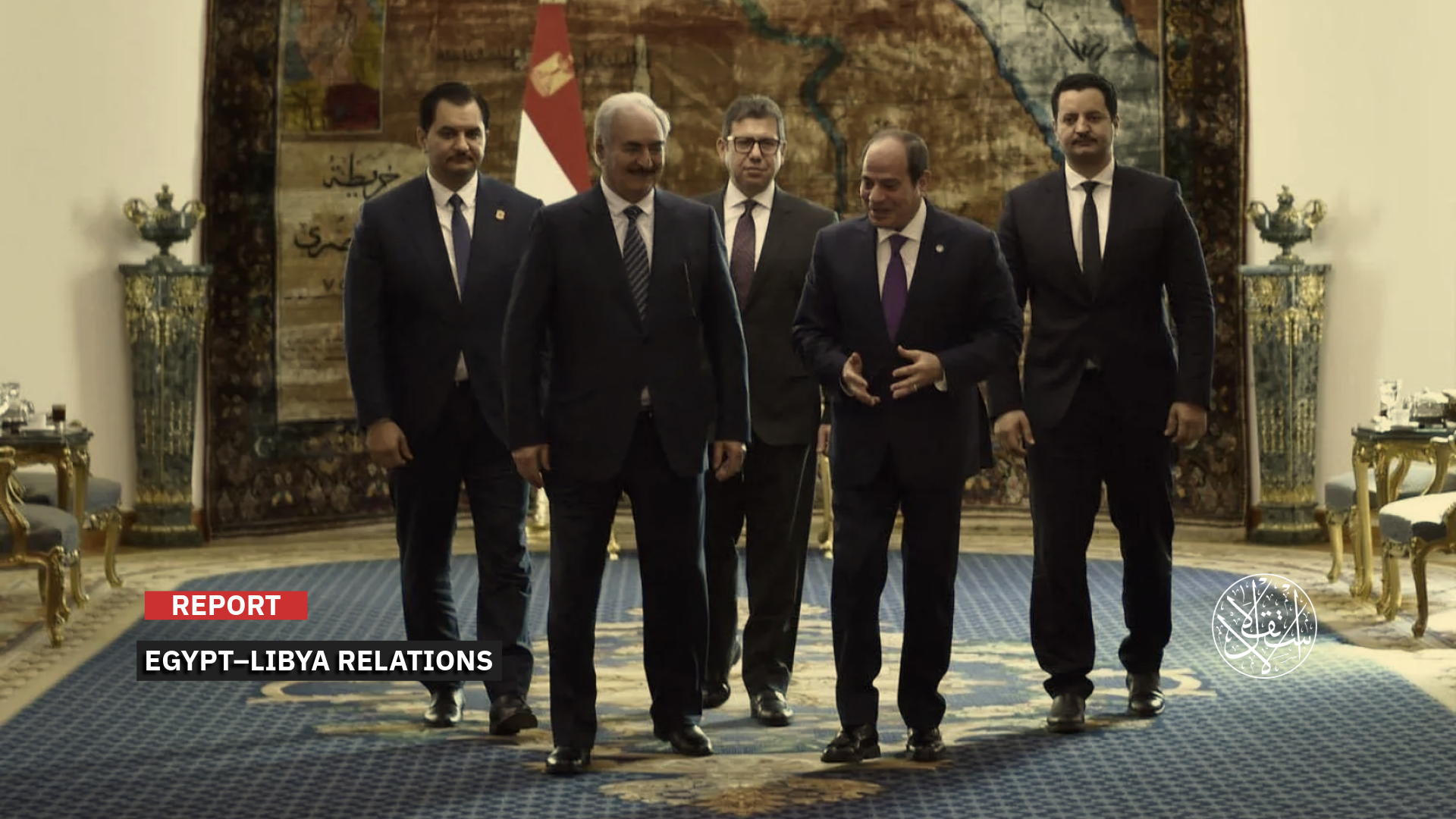
For years, Haftar was Egypt’s most prominent ally in Libya.
Relations between Egypt and Libyan General Khalifa Haftar are growing increasingly tense over three issues: a maritime agreement with Turkiye that Cairo opposes, the rejection of an Egyptian land road project, and reports of a possible rapprochement with Ethiopia.
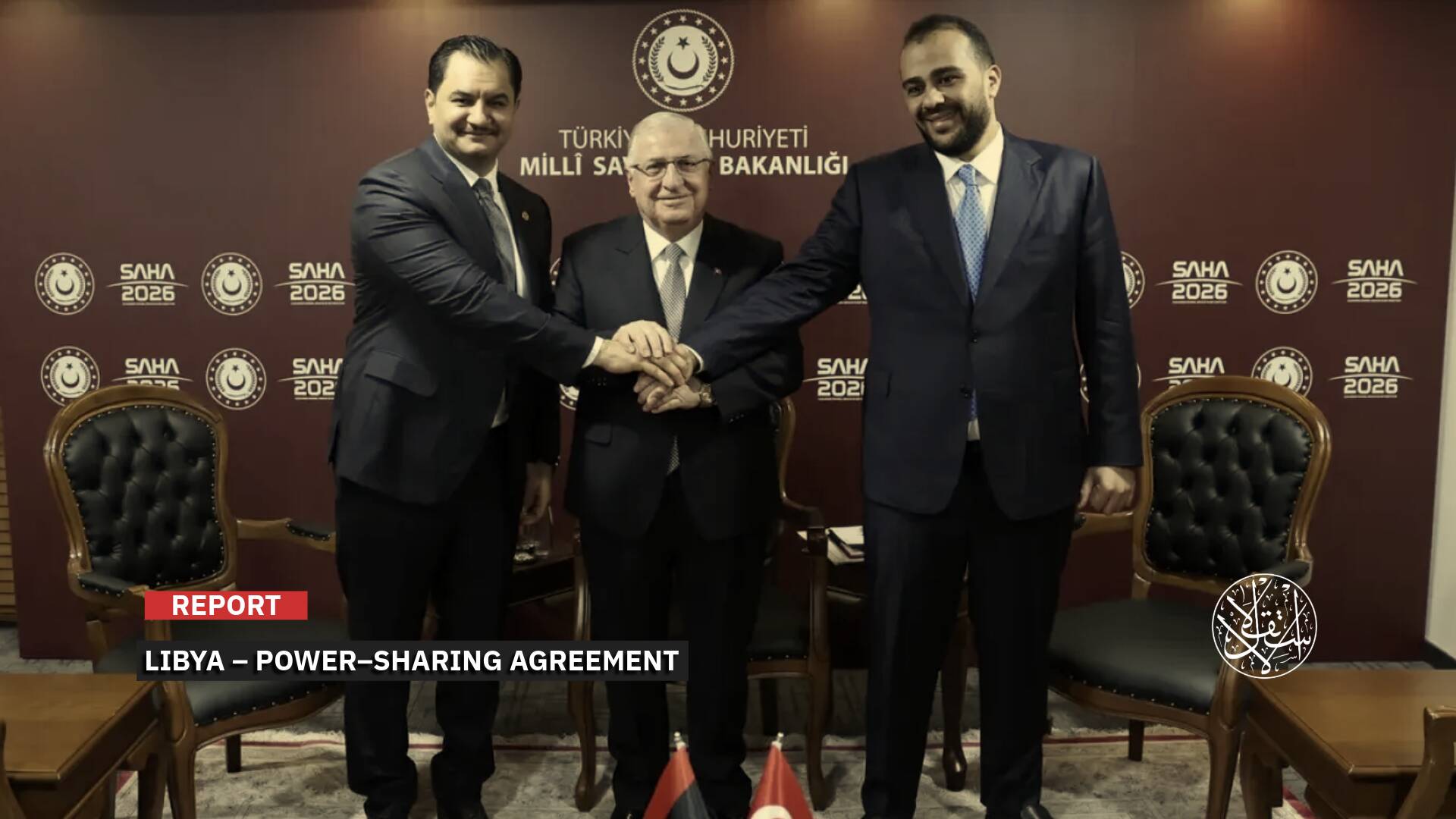
The rift began to take shape after Haftar’s camp moved closer to Turkiye and the House of Representatives loyal to him ratified the maritime agreement concluded with Ankara on October 20, 2026.
In another development, Libyan platforms reported that Haftar’s forces rejected the land road that Egypt plans to build to link its territory with Chad through eastern Libya.
The forces objected because it conflicts with another road project that the eastern Libyan forces are planning through the city of Sirte.
The third issue concerns reports of a possible military rapprochement between Saddam Haftar, Khalifa Haftar’s son, and Ethiopia.
There is unconfirmed information that he visited Addis Ababa on October 29, 2026, to coordinate with it, or that he intends to make such a visit, despite the sharp disputes between Cairo and Addis Ababa.
In light of these developments, Egyptian and Libyan assessments suggest that the Egyptian foreign minister’s visit to Tripoli, as the disputes with Haftar’s camp widen, may reflect a gradual shift in the calculations of Cairo. For years, Cairo bet on eastern Libya and on Khalifa Haftar as its most prominent power.
For years, Haftar was one of Egypt’s most prominent allies in Libya. Cairo gave his forces extensive support, relying on them to secure its western border and confront armed groups.
It also backed him in his conflict with the Tripoli government, which Turkiye supported militarily. In recent months, however, this equation has undergone notable changes.

Three Major Disputes
The first dispute, and a striking strategic shift, was Haftar’s camp drifting away from Egypt and moving closer to Turkiye, Cairo’s traditional rival.
It did so by accepting the maritime boundary agreement signed with Turkiye in 2019 by the Tripoli government, which the eastern parliament had rejected before finally approving it.
This vital dispute exposed the conflicting interests of Haftar and Cairo. Haftar’s son turned to signing the agreement as part of a Turkish-backed U.S. plan to unify eastern and western Libya, under which Saddam would take a presidential post. Egypt saw this as Haftar sacrificing his alliance with Cairo for his own interests.
Only a few days after this dispute, Haftar’s camp rejected the Egyptian land road project with Chad.
Libyan digital media platforms such as Al-Bawsala, Al-Khabar and Lam Plus, along with some accounts linked to the eastern camp, published a statement attributed to “a source in the Libyan General Command” on November 7, 2026, rejecting Egypt’s project.
The source said, “We reject the unilateral Egyptian announcement on building a land road to Chad through Libyan territory. The Egyptian proposal amounts to aborting Libya’s national project to link the city of Sirte with Chad and Niger... and seeks to divert regional trade toward Cairo’s ports at the expense of Libyan interests.”
“We reject attempts to marginalize our strategic ports and turn Libyan territory into a mere corridor serving foreign projects. We consider any unilateral step that affects the country’s sovereignty or strategic development projects a red line, and we remain committed to the Sirte-Chad-Niger route as an economic and strategic artery for the Libyan state.”
A number of Libyan Facebook pages criticized Egypt for building the road “unilaterally,” under the hashtag “#LibyaIsNotACorridor.”
Libyan media also quoted journalist Khalil El-Hasse as saying that Khalifa Haftar’s command rejected the Egyptian project, calling it a unilateral announcement and an infringement on Libyan sovereignty.
According to the Akhbar Libya 24 website on November 7, 2026, El-Hasse said Egypt’s announcement of a project linking the East Owainat area with the city of Kufra and on to Chad affects the overland project that Libya seeks to build. That project would link Sirte with Chad and Niger and turn the new port of Sirte into a commercial and maritime gateway serving trade with Africa.
He explained that the reason for rejecting the Egyptian project is that it would steer the movement of goods toward Egyptian ports, reduce the economic viability of Libyan projects and weaken the role Sirte could play in linking the Libyan coast to African markets.
The talk of a road linking Egypt to Chad through Libya followed statements by Transport Minister Kamel al-Wazir on November 5, 2026. He spoke of building a road running from the East Owainat area toward Libya’s Kufra, and of completing 75 kilometers of that road inside Egyptian territory.
The road is part of a logistics corridor that starts at the port of Berenice on the Red Sea and passes through Aswan and Toshka. It then crosses Libya to Chad, and from there joins the road network leading to Cameroon and the Atlantic Ocean.
Al-Wazir said Egypt will build about 370 kilometers of the road inside its territory, while Libya will build about 300 kilometers inside its own territory to complete the link with Chad.
But the Egyptian announcement met with objections from Haftar’s forces, which, according to Libyan platforms, believed that the way Cairo presented the project ignores their strategic project to link Sirte with Chad and Niger.
The irony is that the Haftar camp’s description of Egypt’s project as a unilateral act that infringes on Libyan sovereignty contradicts the facts.
In September 2024, the Libya Development and Reconstruction Fund, headed by Belgasem Haftar, announced that it had signed a memorandum of understanding with the Arab Contractors company to build a road linking Egypt to Chad through Libya.
Arab Contractors also signed a memorandum of understanding with the Chadian government to begin survey and construction studies in the Chadian section.
In April 2026, Chad set a five-month deadline to complete the project’s studies, following a meeting between the Chadian infrastructure minister and a team from Arab Contractors.
The two projects are in competition, and the two roads do not overlap geographically: the Egyptian route starts in East Owainat and heads toward Kufra, while the Libyan project starts in Sirte and runs south through Sokna and Sebha.
According to the Libyan sources, the two projects do not directly clash from an engineering standpoint. They do, however, compete to attract part of the trade between North and Central Africa, and over which ports and logistics hubs will benefit from that activity.
Haftar’s camp fears that if Egyptian ports become the main starting point for goods bound for Chad, Sirte’s chance of becoming a main gateway for this trade could shrink. The Libyan route, by contrast, could strengthen the role of local ports and link them to Sahel markets.
The leadership in eastern Libya is focusing on strengthening channels for military coordination, counterterrorism, and securing shared borders with neighboring countries such as Chad and Niger.
Saddam Haftar signed a protocol on strategic and security cooperation with Niger’s prime minister, Ali Lamine Zeine, during the latter’s visit to Benghazi.
Rapprochement With Ethiopia
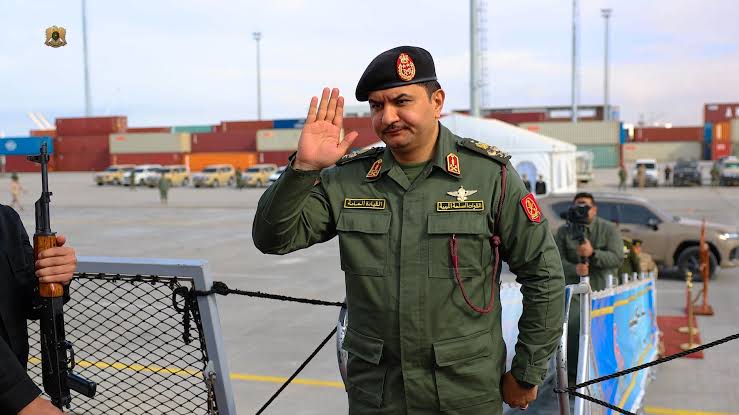
The third blow, and the most serious if confirmed, was the leak of reports through Libyan platforms and accounts claiming that Saddam Haftar, the deputy commander of the eastern Libyan forces, made a three-day official visit to Ethiopia on October 29, 2026, as part of a rapprochement to cooperate on military and security matters.
The reports about Saddam Haftar’s official visit to Ethiopia, or claims that he had already made it, spoke of strengthening military cooperation. This comes at a time when the region is seeing tensions between Cairo and Addis Ababa over several regional issues, including the Grand Ethiopian Renaissance Dam and competition in the Horn of Africa.
The timing of this account is striking. Throughout 2026, Haftar’s camp has sought to expand its network of military and political relations, from Turkiye and the United States to Greece and Britain, in a course that gives it greater room to act independently of its traditional allies, especially Egypt.
Beyond his relationship with Turkiye, Haftar has broadened his network of relations away from his traditional Egyptian ally.
In June 2026, he met Greek Prime Minister Kyriakos Mitsotakis and discussed military, security, and economic cooperation with him. He also met French President Emmanuel Macron, according to Anadolu Agency.
The same month, he met Turkish intelligence chief Ibrahim Kalin in Benghazi. They discussed unifying the institutions and military forces of eastern and western Libya and developing relations between the two sides.
Saddam Haftar also received a British delegation in Benghazi in October 2026 to discuss military, security and economic cooperation.
All of these moves look like an attempt to build a broad network of relations that gives him more independence from any single ally. His relationship with Ethiopia in particular, however, raises special concern in Egypt.
If Saddam Haftar’s visit or direct contacts with Addis Ababa are confirmed, their significance for Cairo would go beyond mere bilateral cooperation, because they come at a sensitive moment in Egyptian-Ethiopian relations.
With the dispute between Cairo and Addis Ababa over the Renaissance Dam and regional security issues in the Horn of Africa ongoing, any security or military opening between Haftar’s camp and Ethiopia could add a new element to Egypt’s calculations in Libya.
Egyptian Countermoves
As disputes pile up over Haftar’s regional moves, from the rapprochement with Turkiye to the objection to the Egyptian land road and the rapprochement with Ethiopia, Egypt has begun moving to strengthen its cooperation with the Tripoli government. That government is Haftar’s rival, and Cairo’s relations with it had been lukewarm.
Cairo’s return to engaging with Tripoli did not come out of nowhere. It came amid a series of shifts showing that its traditional ally Khalifa Haftar and the eastern camp are now acting on independent calculations that may not always match Egyptian interests.
As part of this approach, the Egyptian foreign minister visited Tripoli. Analysts saw the visit as more than an ordinary diplomatic stop in the Libyan file, arguing that it signals a gradual shift in the calculations of Cairo, which for years bet on eastern Libya and its strongman, Khalifa Haftar.
Egypt’s reopening of its embassy in the Libyan capital, Tripoli, after 12 years of closure, at an official ceremony attended by Foreign Minister Badr Abdelatty, was a notable step in this regard.
This raised questions about whether Egypt, following Turkiye’s lead, is showing signs of moving from a policy of betting on a single Libyan party to one of engaging with all centers of power, having discovered that Haftar is no longer an ally it can rely on alone.
Is the foreign minister’s visit to Tripoli and the reopening of the Egyptian embassy there a prelude to this shift?
Notably, this step opened a new window for Egypt in Tripoli. After days of escalation, Abdul Hamid Dbeibah, head of the Government of National Unity, expressed his readiness to address Egyptian concerns over maritime boundaries and economic waters in a call with the head of Egypt’s General Intelligence, Hassan Rashad.
Haftar’s moves have unsettled Cairo, and his camp’s signing of the maritime boundary agreement with Turkiye has worried it, according to Egyptian diplomatic sources speaking to Al-Estiklal.
The worry is not only about what the agreement represents in terms of rapprochement between Haftar and Ankara, but also because it redraws the balances on which Cairo built its Libya policy.
The moves of yesterday’s ally appear to be pushing Egypt to seek alternatives in western Libya. Cairo’s opening to Tripoli is an attempt to spread its bets, deny Haftar a monopoly over the relationship with Cairo, and thereby pressure him to take Egypt’s interests into account.
The sources say the Egyptian move toward Tripoli is not necessarily a complete turn against the eastern camp, but rather a repositioning dictated by the limits of betting on Khalifa Haftar and by shifts in the balance of power in Libya and the region.
They added that the Tripoli visit may be a message to the east as much as an opening to the west, showing that Egypt has alternatives and that its interests in Libya are bigger than any person or camp.
This is especially so, they said, because Haftar has sought to build an independent network of relations that does not pass through Cairo and has changed the rules of the relationship with it.
In its statement on reopening the embassy in the Libyan capital, Tripoli, the Egyptian Foreign Ministry said the reopening of the embassy’s historic headquarters comes as part of an Egyptian diplomatic push aimed at broadening relations with Libya, from political and security files to the fields of economy, energy and reconstruction.
Abdelatty held a series of meetings in Tripoli. He began with Abdul Hamid Dbeibah, head of the Libyan Government of National Unity, then met Mohamed al-Menfi, head of the Presidential Council, acting Foreign Minister Taher al-Baour and Minister of Oil and Gas Khalifa Abdulsadek.
Cairo made a point of bringing along a state media crew, promoting the visit and conducting interviews with senior leaders in the west (Tripoli).
The talks covered developments in bilateral relations, ways to increase the participation of Egyptian companies in Libya’s reconstruction, and speeding up electricity interconnection and gas pipeline projects. They also discussed the political and legal issues related to the Libyan crisis and the demarcation of maritime boundaries.
The foreign minister affirmed, “Cairo’s commitment to a political solution as the only way out of the Libyan crisis, through a comprehensive dialogue that is entirely Libyan-owned and Libyan-led, based on broad national consensus and free from foreign dictates and interference.”
At the same time, however, Abdelatty was keen to stress the importance of taking into account Egyptian concerns about the Turkish-Libyan memorandum of understanding on maritime boundaries. He emphasized Egypt’s firm legal position on the issue, in a way that serves the common interests of both countries.
Will Haftar’s three betrayals of Egypt, and his growing independence in building regional alliances, push Cairo to abandon its policy of betting on a single man?
Or do they suggest that Cairo is not necessarily moving to abandon Haftar, but may have begun spreading its cards between Benghazi and Tripoli? After all, it has discovered that the ally who for years was its main gateway to Libya now has a broader regional agenda that does not always pass through Cairo.
Sources
- Will Sirte Become the Biggest Loser? Egypt’s Road to Chad Stirs Debate Over the Future of the Libyan Trade Corridor [Arabic]
- Egypt’s Road to Chad Tests Cairo’s Relationship With Haftar [Arabic]
- Egypt Reopens Its Embassy in Tripoli After a Closure of More Than a Decade [Arabic]
- Libya’s Dbeibah Says Ready to Address Egypt’s Maritime Concerns