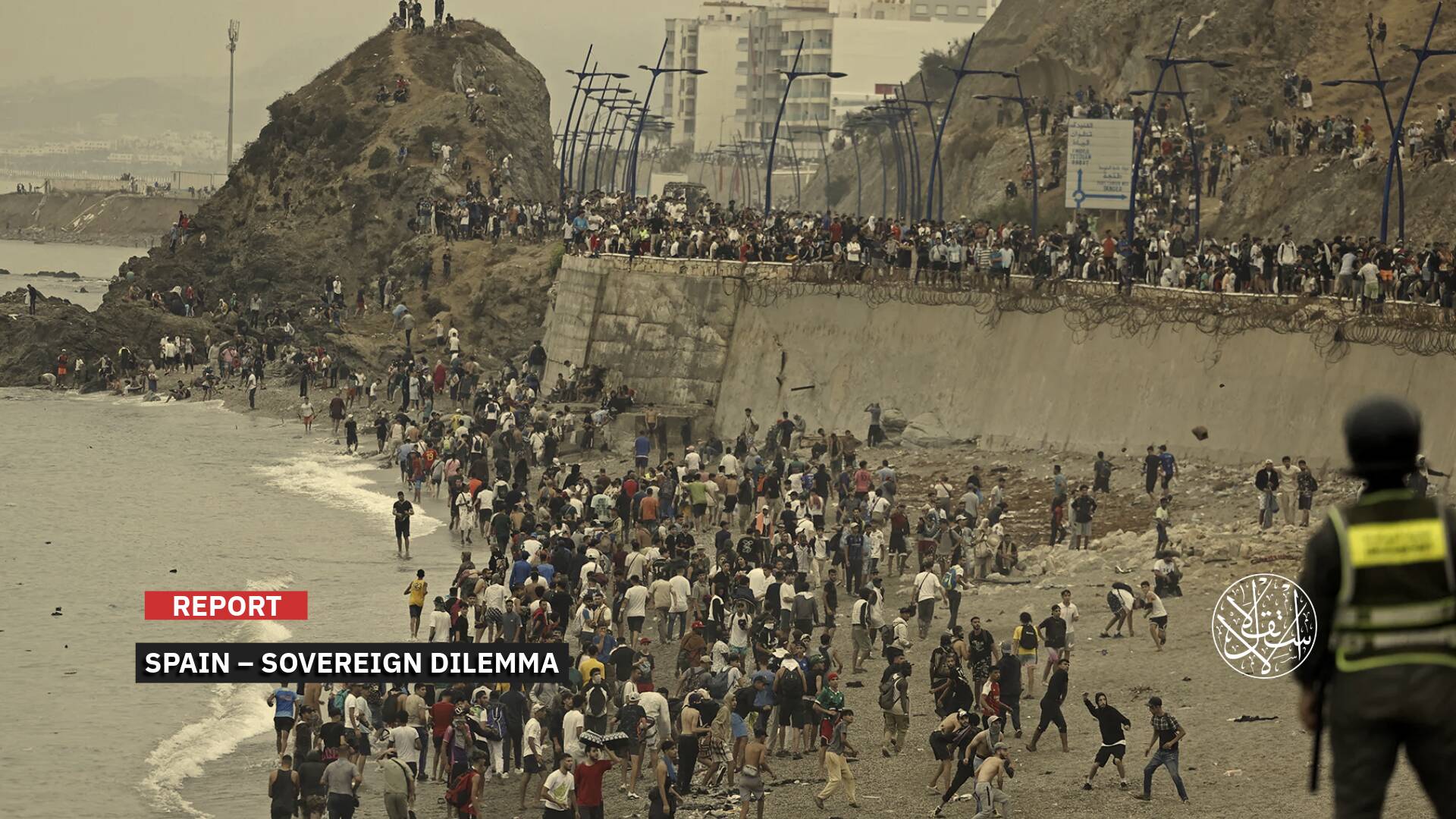
Pursuing Egyptian Dissidents Abroad: How Did It Reach Europe’s Streets and Courts?
In The Hague, Nasser declared what he called a ‘curfew’ and threatened anyone who approached the embassy.
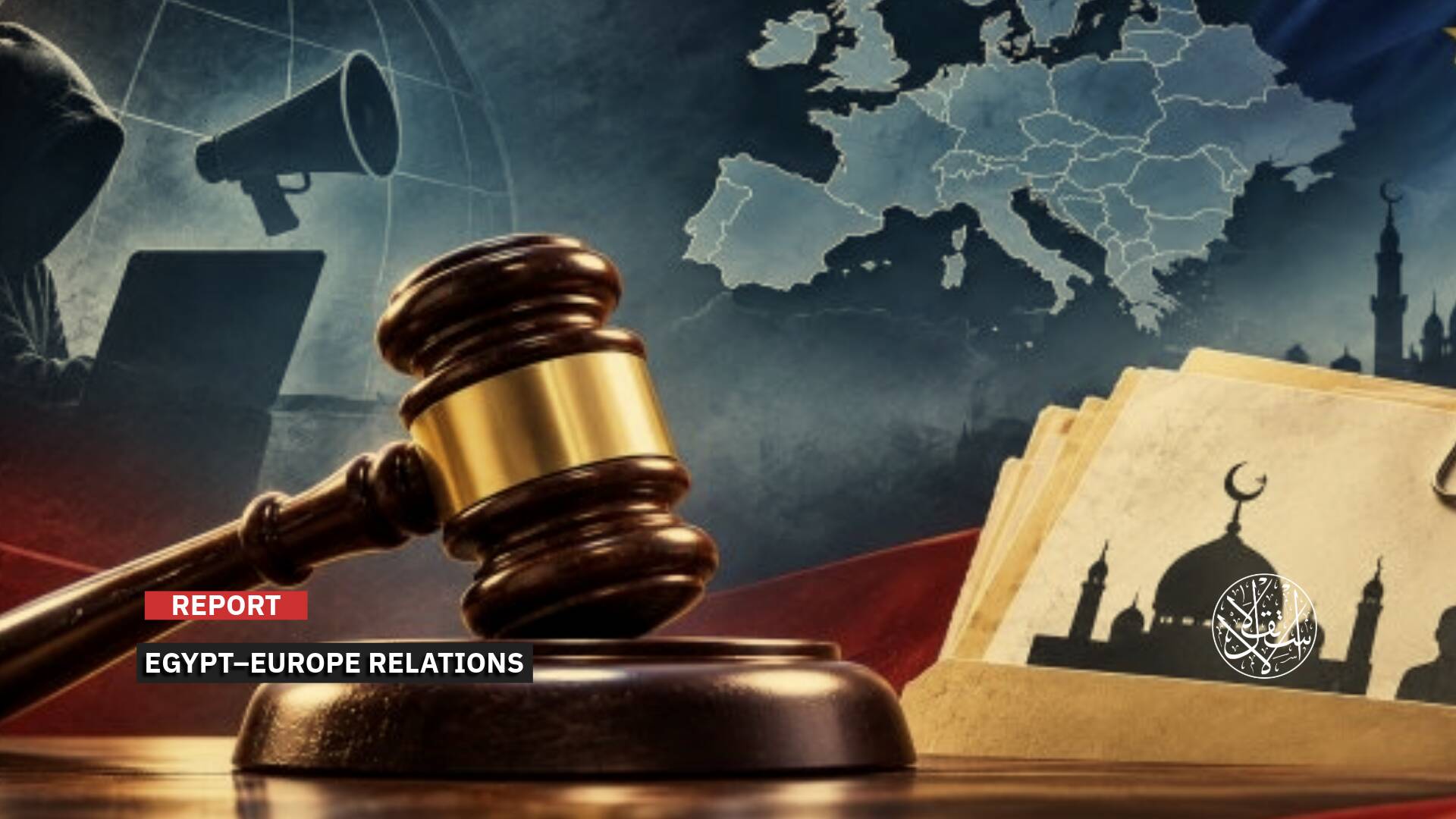
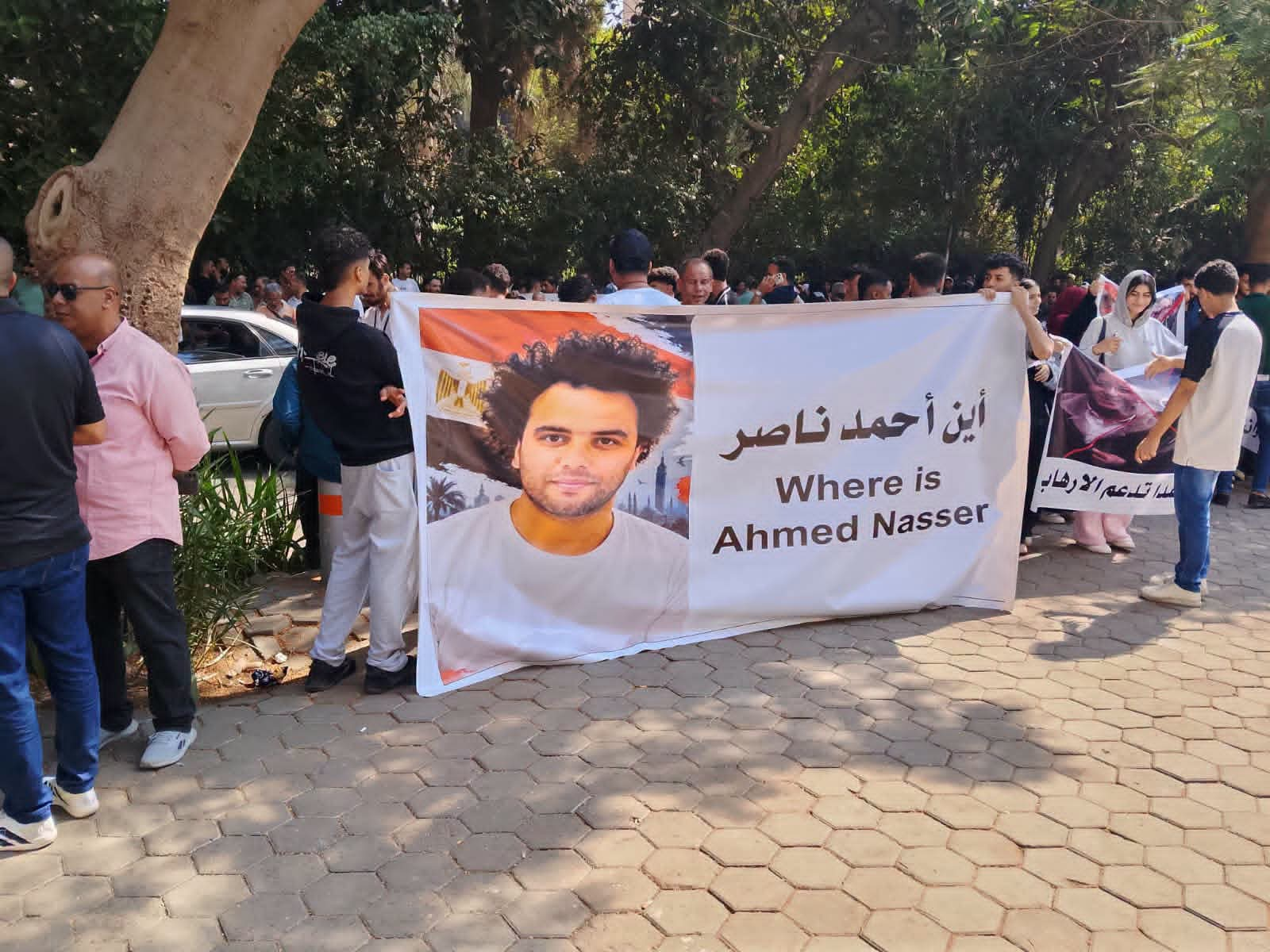
The pursuit of Egyptian dissidents in Europe has become a test for the courts. On October 28, 2026, Dutch police announced that they suspected an Egyptian man of working for a foreign power. The newspaper De Telegraaf identified him as Ahmed Nasser, deputy head of the Egyptian Youth Union Abroad.
Two days later, the Law and Democracy Support Foundation published a report titled “Shield and Sword.” It presented an account linking threats outside embassies to the surveillance of conferences, smear campaigns, and assaults.
The union describes itself as a defender of the state, while its leaders face serious accusations. Between these two pictures, a case is taking shape that goes beyond a single arrest. How do these networks operate? What links their activities to the Egyptian authorities? And how far can Europe protect those who sought refuge there from persecution that crosses borders?

A Front That Goes Beyond the Diaspora
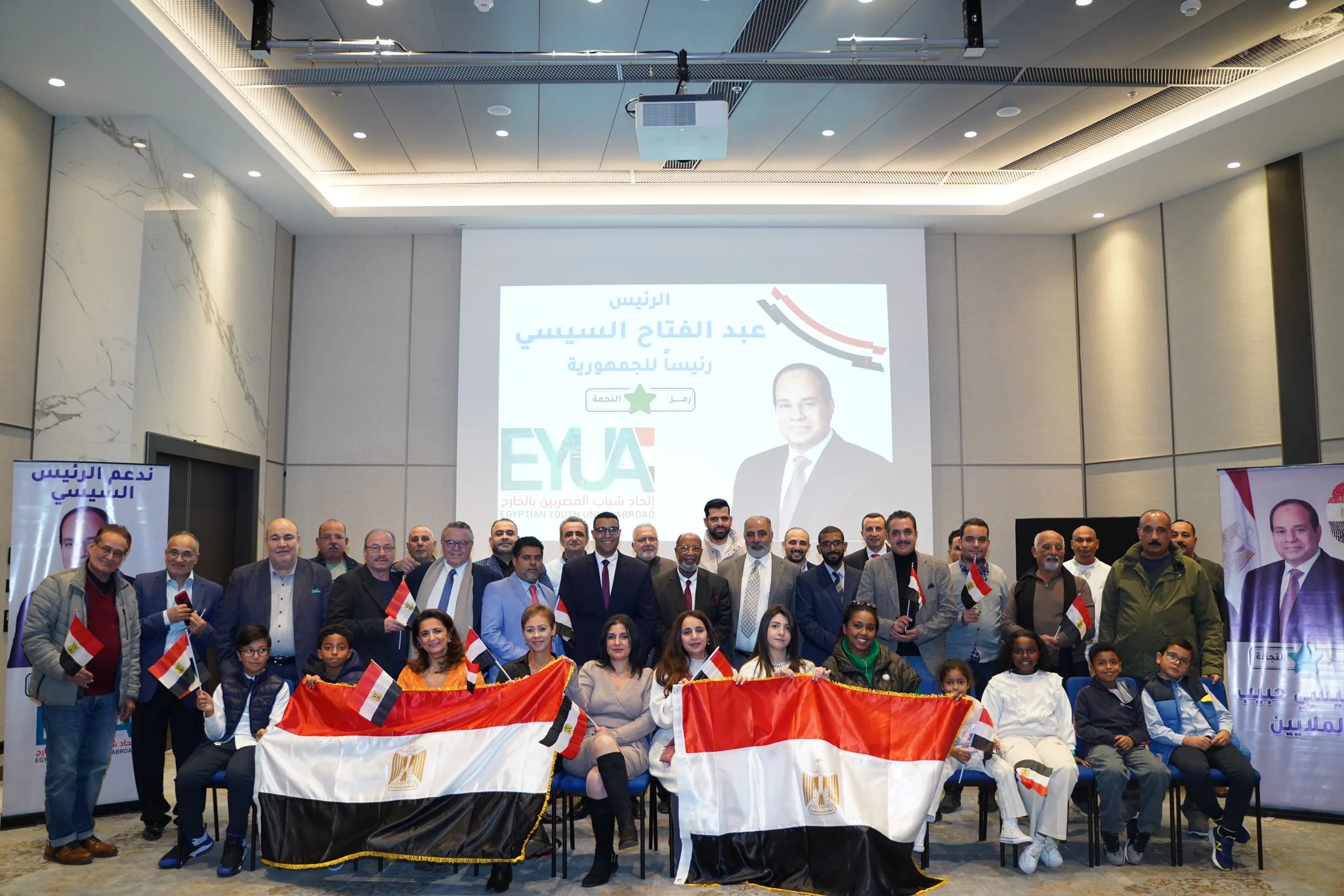
The union presents itself as an entity that represents Egyptians abroad and defends their country’s institutions. According to material gathered in the “Shield and Sword” report, it describes itself as “the shield and sword of the Egyptian state abroad.” Its activities are led by Ahmed Abdelkader and Ahmed Nasser, who appear in recordings and at events across several European countries.
British records show that a community interest company named “Egyptian Youth Union Abroad” was founded on March 24, 2025, and dissolved on August 25, 2026.
The two men served as its directors before resigning in February and March 2026. The company’s registered activities included organizing conferences, social work, and membership activities.
The two men are also active in sports. Abdelkader is registered as a director of the company ONA Sports Investment. The report notes that he and Nasser have appeared in projects and platforms marketing football activities, including an academy announced in Germany.
According to the foundation, these ties help explain why the same people keep appearing in different countries and how they are able to coordinate and travel.
The dissolution of the British company also did not end public activity under the union’s name. The report shows that this activity continued after the company was dissolved. This highlights the gap between the entity’s declared social purpose and the roles the foundation attributes to its leaders.
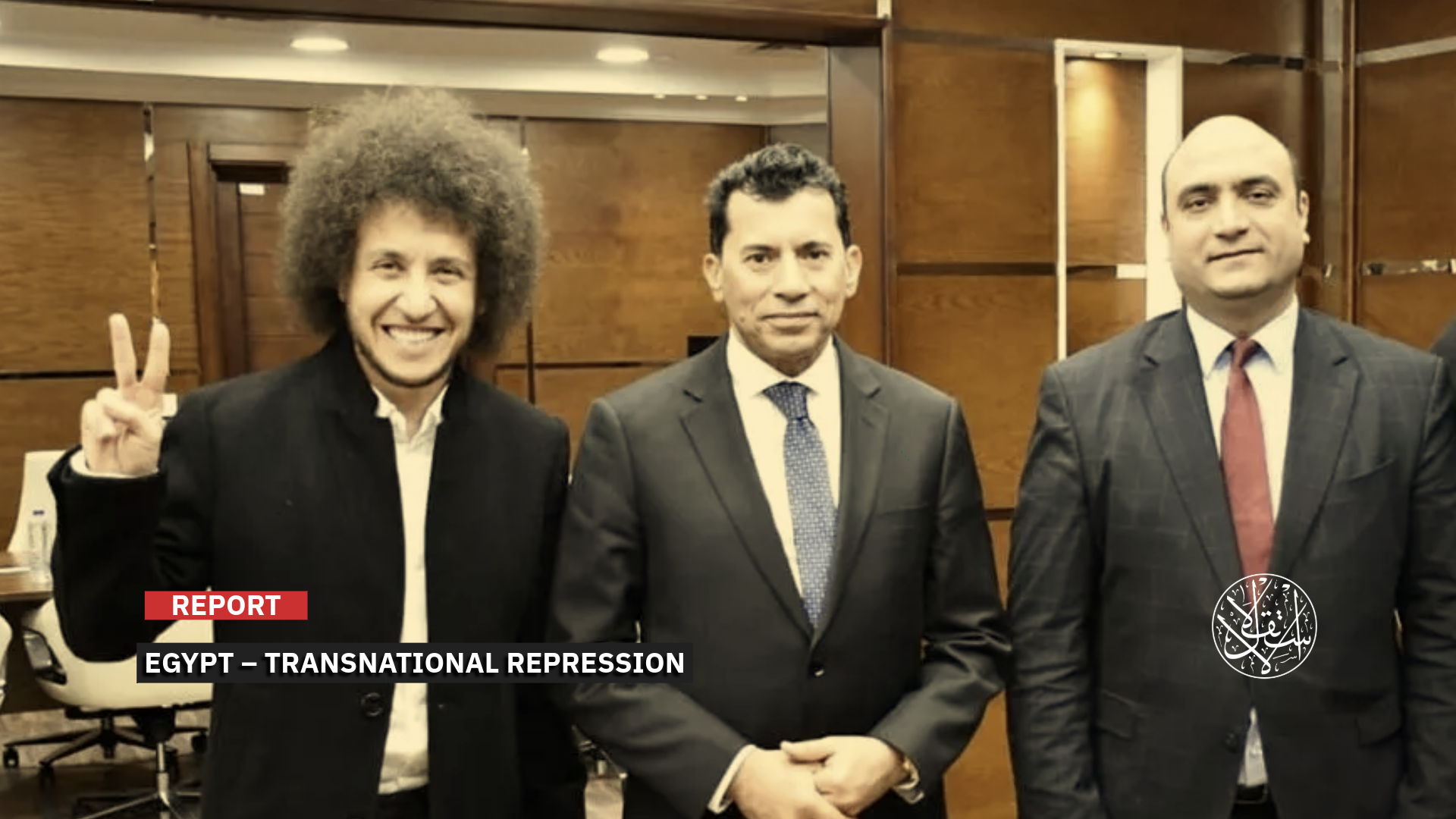
The foundation says these leaders carry out tasks that include gathering information, intimidation, and counter-mobilization. It describes this as repression through proxy actors. It bases this assessment on published material, documented incidents, and complaints, as well as photos showing union leaders with Egyptian officials.
The union’s alleged role on the ground first emerged during the summer 2025 protests against the war in Gaza. At the time, activist Anas Habib locked the gate of the Egyptian embassy in The Hague with a padlock, demanding that the Rafah crossing be opened and aid be allowed in.
The protests then spread to embassies in other countries. According to the report, leaders and members linked to the union then gathered outside Egyptian missions in Europe between August 15 and 25, under the banner of protecting the embassies.
In The Hague, Nasser declared what he called a curfew and threatened anyone who approached the embassy. He then appeared outside the Egyptian mission in Brussels, and the scene was repeated in Berlin.
In Paris, the report quoted the union’s representative, Sameh Abu Zeid, as threatening to break the limbs of anyone who came to the embassy. In London, Abdelkader threatened anyone who harmed what he called the state’s interests.
In remarks published by the Cairo 24 website on August 16, Nasser described these actions as defending the mission and preventing attacks on it.
But according to the rights groups’ documentation, this language of protection came with threats against individuals and with branding them as traitors and terrorists. This turned a political disagreement into an attempt to stop protests by force. The incidents led to Abdelkader’s arrest in Britain on August 25, 2025.
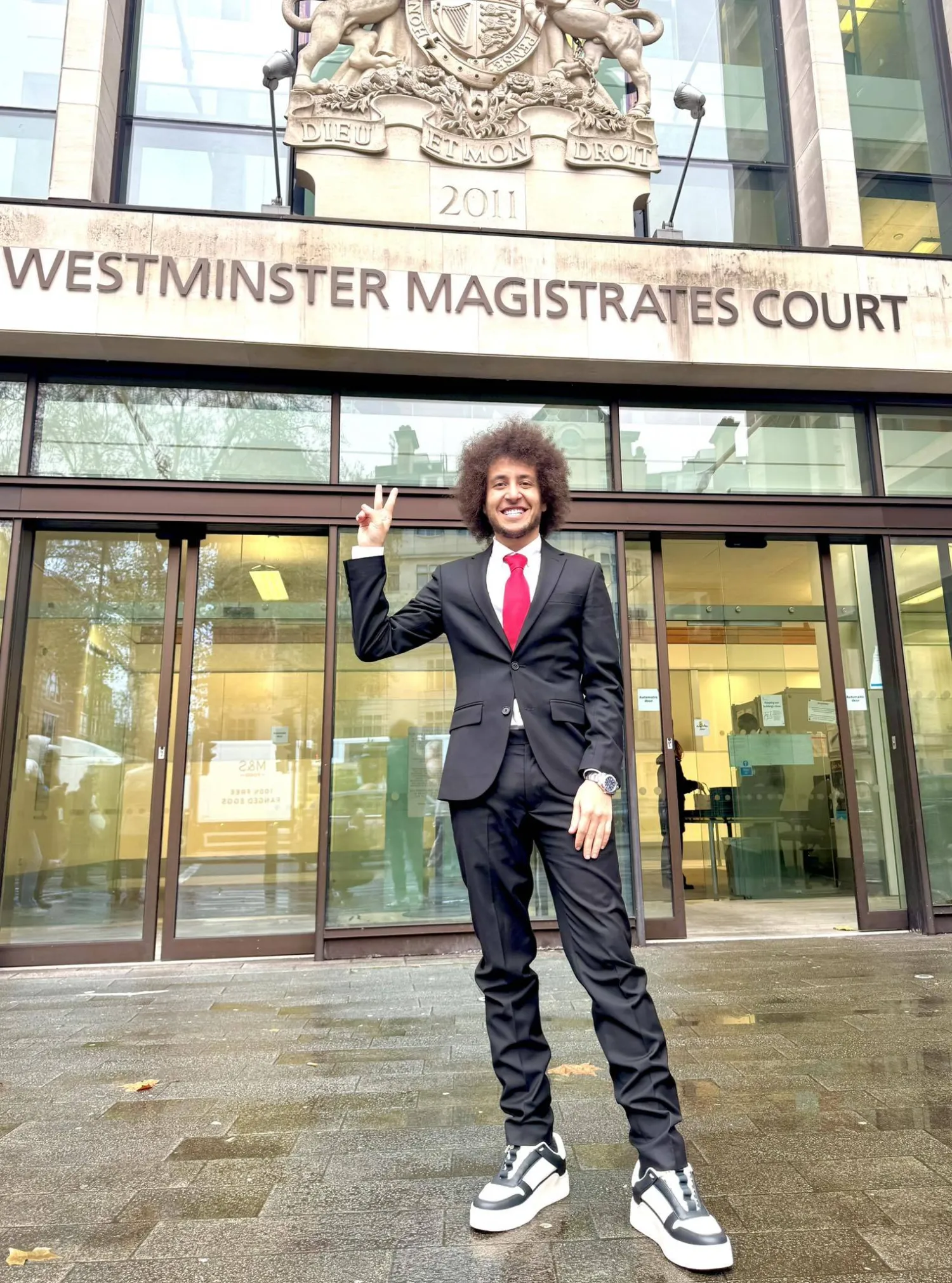
One key detail matters here. On July 7, 2026, his law firm, Peters & Peters, announced that the prosecution had been dropped because there was not enough evidence for a realistic prospect of conviction. The defense described the incident as an ambush on its client inside a café in West London, carried out by people linked to unrest outside Egyptian embassies.
The Hotel Under Surveillance
The documented targeting went beyond the areas around diplomatic missions to the places where dissidents meet and organize. On September 16, 2026, the first National Conference of the Egyptian Opposition Abroad was held in The Hague. At the same time, a campaign targeted participants by filming them, tracking them, and smearing them.
The material included a video titled “They thought they were out of the Egyptian state’s reach.” It showed footage from inside and around the hotel hosting the conference, along with photos of several attendees.
The video used the phrase “The Second Operation – Netherlands” and called for “full documentation of every movement.”
It ended with a recording of the head of the regime, Abdel Fattah el-Sisi, vowing to hold critics abroad to account.
The foundation says it kept a copy of the video after it was deleted following Nasser’s arrest. The footage came with posts calling the participants traitors and spies and celebrating what they described as the infiltration of the conference.
Other posts announced that the conference’s promotional material was being targeted on online platforms.
Among the targeted participants was Nancy Kamal, the conference spokesperson, who lives in Germany. On October 18, acting on her behalf, the foundation filed complaints about the surveillance and smearing she faced after taking part in the conference. The complaints also covered the online publication of her photos and personal information.
In Vienna, the report documented a campaign in September against researcher Moamen Ashraf. It began with posting his photos and accusing him of spying.
It then escalated to posting an AI-generated image suggesting he had been detained, and to announcing that one of his accounts had been shut down.
According to the Law and Democracy Support Foundation, these incidents show that the pressure has shifted from keeping people away from a diplomatic building to targeting political gatherings themselves.
Showing that participants can be filmed and named extends the threat to anyone considering attending in the future, even without a direct attack.
Publishing the photos becomes part of a message: moving to Europe does not hide a person’s activities from surveillance. Taking part in a conference or meeting may be followed by a campaign targeting that person and their reputation.
Violence Finds a Screen
The link between pursuit on the ground and online pressure is clearest in the case of journalist and human rights defender Basma Mostafa. She is one of the founders of the Law and Democracy Support Foundation and its programs director.
On July 18, 2022, during El-Sisi’s visit to Berlin, Abdelkader assaulted her during a protest near the Chancellery. Five UN experts sent a communication about this incident to the Egyptian government, dated December 23, 2024. It covered allegations that she had been surveilled, threatened, and targeted by attempts to hack her accounts, as well as campaigns that included incitement to sexual violence.
The communication stated that, according to the case file, Abdelkader had admitted to working for an Egyptian diplomat, though he did not hold diplomatic immunity.
On April 16, 2025, Germany’s then commissioner for human rights called on Cairo to respond to these allegations. She stressed that surveilling and intimidating dissidents violates both human rights and the sovereignty of the countries that host them.
The “Shield and Sword” report shows how these online tactics extended to targeting activists’ accounts. On September 19, 2026, Nasser celebrated the shutdown of the accounts of Tarek Habib, Anas Habib, and British-Egyptian activist Mona El-Shazly, crediting the union’s “media team.”
The report documents announcements of coordinated mass-reporting campaigns and efforts to cut activists off from their audiences.
The foundation also documented fabricated content showing Anas Habib being beaten, and other content using images of and references to his family.
These examples show how different tools work together: Filming gathers material for smears, mass reporting shuts down activists’ platforms for speech, and fabricated scenes of violence are used to frighten the person targeted.
When this is combined with sexual threats or the targeting of family members, the pressure goes beyond silencing a political position. It imposes a personal and social cost that can last long after the protest itself.
Accountability Crosses Borders
Egyptian rights advocate Mostafa Ezz El-Din Fouad told Al-Estiklal that these patterns have now led to a new criminal case in the Netherlands.
He said the Dutch police statement distinguished between two cases involving the Egyptian suspect Ahmed Nasser, 34. In the first case, Nasser was arrested on October 11, 2026, on suspicion of premeditated assault and robbery with violence.
According to Fouad, this case is linked to an assault reported by activist Anas Habib, and Nasser’s pretrial detention in it was extended by 30 days.
Fouad added that Nasser was re-arrested in the second case, which concerns suspicion of providing services to a foreign state. This includes acts of intimidation and threats during gatherings and demonstrations in 2025 and 2026.
Fouad explained that this step was not arbitrary. The investigation is based on Article 98d of the Dutch Criminal Code.
He noted that the expanded criminalization of espionage has been in force since May 15, 2025. The Dutch government had previously confirmed that it covers activities targeting exile communities, such as gathering information on their members and mobilizing people to pressure critics, when these acts meet the legal elements of the offense.
Egyptian Foreign Minister Badr Abdelatty demanded, in a phone call with his Dutch counterpart, an explanation of Nasser’s detention and his release.
Fouad argued that this demand reveals a serious misunderstanding of how legal systems work in Europe, and in the Netherlands in particular. He noted that the complaints against Nasser had been filed in Germany, Britain, and the Netherlands over several years.
He concluded that uncovering possible links between these incidents depends on gathering scattered evidence and sharing it among the countries concerned. It also depends on proving Nasser’s individual responsibility and showing that he acted on the instructions of a foreign government.
Sources
- “Shield and Sword”: How the “Egyptian Youth Union Abroad” Pursues Dissidents and Opinion Holders in Europe [Arabic]
- CPS Drops Prosecution of Prominent Egyptian Activist
- From May 15: More Forms of Espionage Punishable [Dutch]
- Tension Between Cairo and The Hague: What Is the Story of Ahmed Nasser, Accused in the Netherlands of Providing Services to a Foreign State? [Arabic]