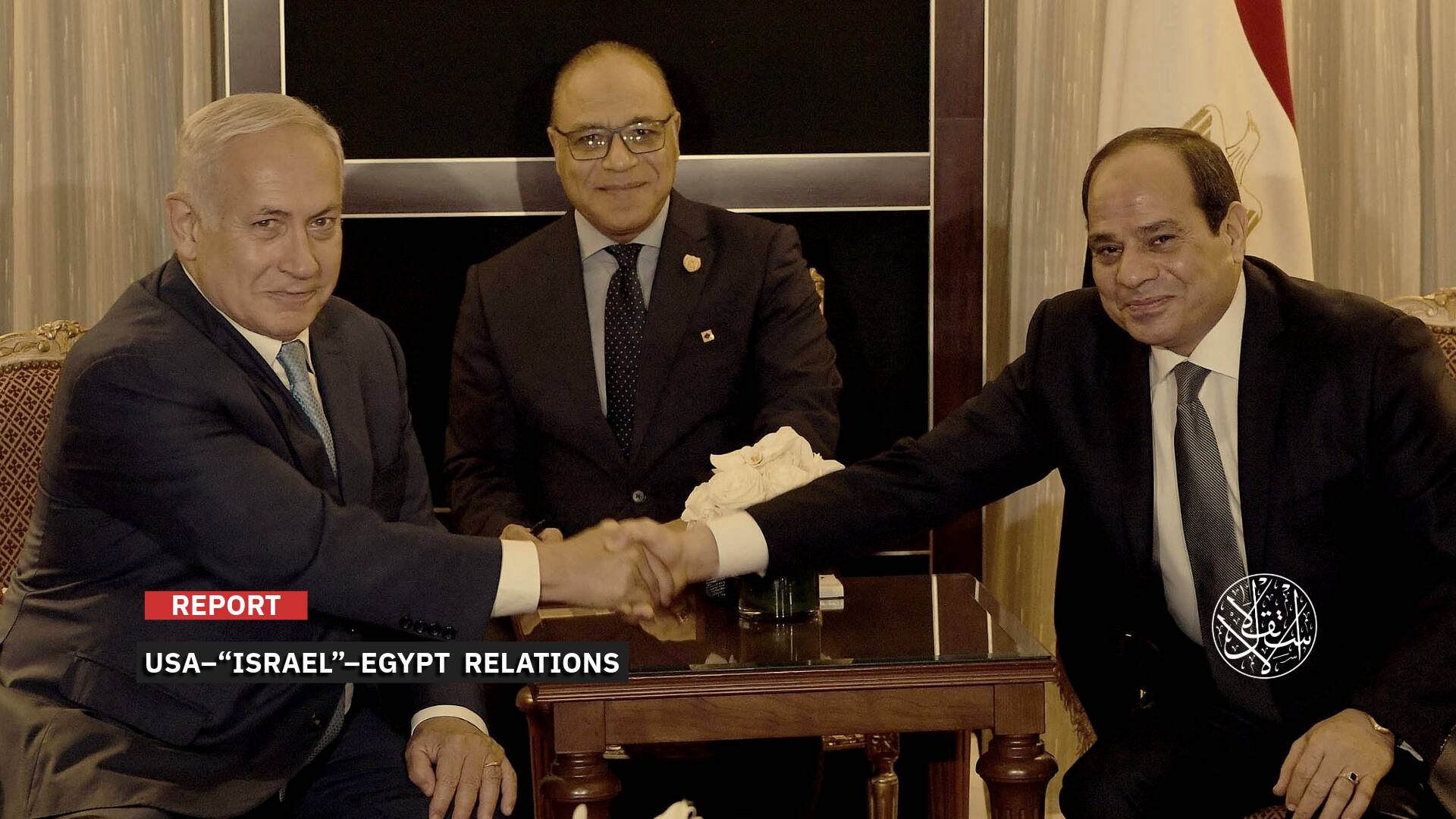
Amid Turkish Role: How Did the Saint Catherine’s Crisis Between Egypt and Greece End?
Reaching an understanding with the government does not necessarily mean the dispute is over.
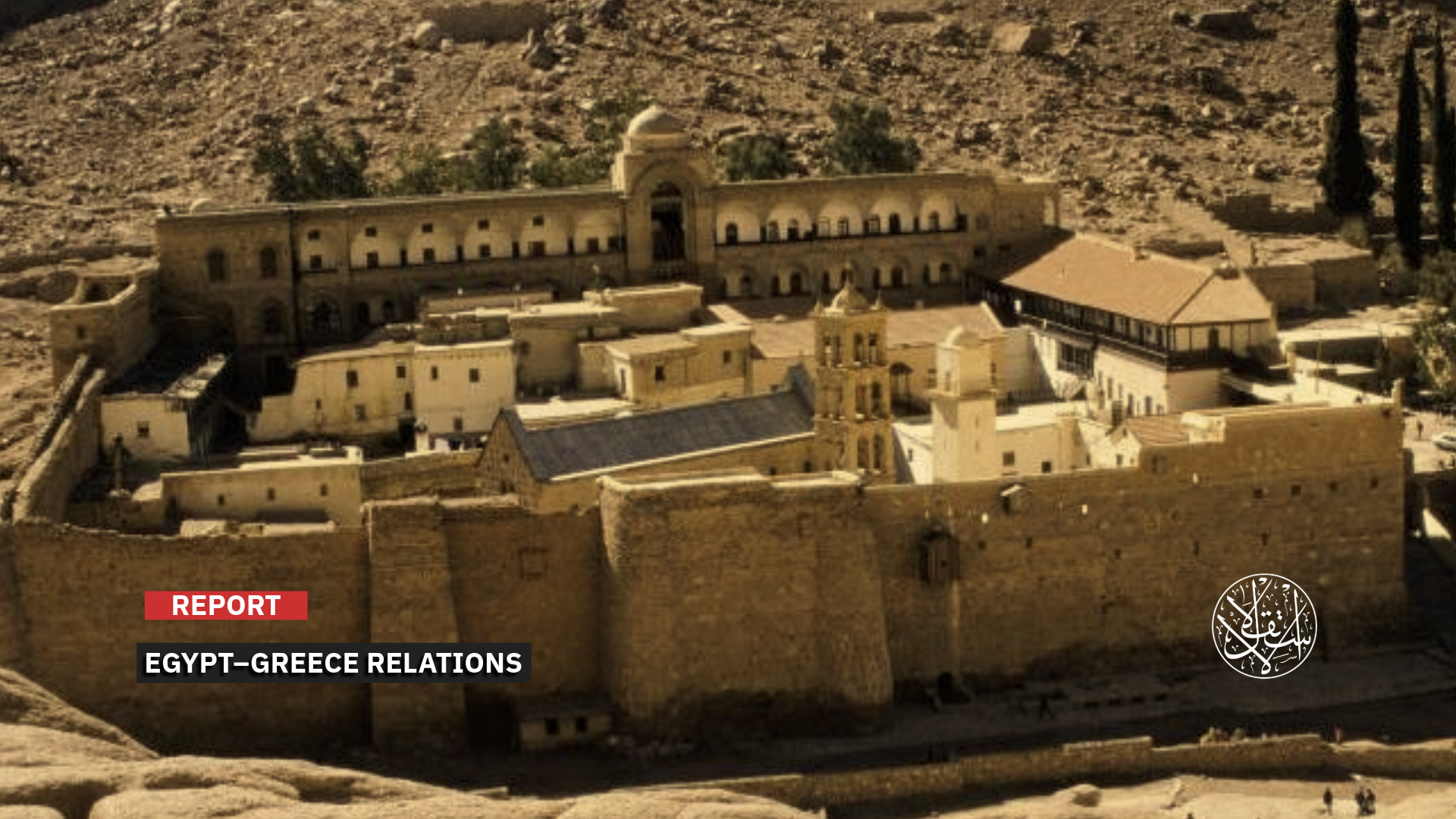
After more than a decade of legal battles, the crisis over Saint Catherine’s Monastery between its Greek monks and the Egyptian government has entered a new phase.
The monastery’s abbot has agreed to sign a deal aimed at ending the dispute over the legal status of the monastery and the lands around it.
The deal followed direct intervention by the Greek government and pressure on the new abbot, Symeon Papadopoulos. Athens had backed him in the September 14, 2025, election, which Greek newspapers described as “Greek electoral engineering.”
These developments came just four days after the House of Representatives in eastern Libya ratified, on October 20, 2026, the maritime agreement signed in 2019 between Turkiye and the government of western Libya in Tripoli. Egypt and Greece had both objected to that agreement.
This raises the possibility that settling the monastery crisis is part of an effort to end disputes between Cairo and Athens so they can focus on coordinating against the Turkish-Libyan maritime deal.
Reports say the Greek monks at Saint Catherine’s have accepted a settlement with Egypt without resolving the question of ownership. Yet the full details of the deal have not been announced.
The monastery’s former abbot, Archbishop Damianos, had opposed it, while the Greek Foreign Ministry praised it.
The failure to disclose all the terms of the settlement raises questions about the nature of the understandings reached. It is unclear whether the Egyptian or Greek side made concessions to close this dispute and focus on confronting the Turkish-Libyan maritime agreement, or whether other calculations lie behind the settlement.

The History of the Dispute
Monks have lived in Sinai since the fourth century AD, while the monastery itself was built in the sixth century. Greek dominance over the monastic community in Sinai developed gradually over the centuries.
From the seventh century onward, the presence of monks of other nationalities declined, and Greek Orthodox monks became the dominant group and took control of the monastery, according to the Catholic Near East Welfare Association (CNEWA).
Since then, the monastery has belonged religiously to the autonomous Orthodox Church of Sinai and has been run by its abbot and monastic community. But it has remained legally and sovereignly under Egyptian sovereignty, because it stands on Egyptian land.
The monastery administration gradually extended its control over lands next to the monastery, farming them and profiting from them, as many Egyptian Orthodox churches do. This led to disputes between the Egyptian administration and these monasteries, including Saint Catherine’s.
The Egyptian authorities used police force against Egyptian monasteries that had unlawfully seized and exploited neighboring lands. This led to direct clashes between monks and state authorities, as happened at the Monastery of Saint Macarius in Wadi al-Rayan and the Abu Fana Monastery in Minya. Saint Catherine’s was treated differently, however, because its monks were Greek.
The Greek priests of Saint Catherine’s believed that their presence there for centuries had given them title to the monastery’s land and its surroundings. But as Egypt’s property laws developed, the question of the legal status of the monastery and its surrounding lands emerged, and the dispute began.
The legal dispute over the monastery’s lands formally began in 2012. That year, retired Egyptian army Major General Ahmed Ragai Attia filed 72 complaints against the monastery after a heated argument with a monk.
He accused the monk of encroaching on areas outside the monastery and of saying that the monastery is Greek land, with the Greek flag flying above it.
Although his first lawsuit was rejected, he kept up a broad legal and media campaign against the monastery until his death in 2021.
During the campaign, Ragai accused the Greek priests of seizing about 20 percent of the land of South Sinai and building Greek colonies on it.
In 2014, he published a book titled “The Protocols of the Monks of Catherine”, in which he called for the lands to be recovered and given Egyptian and Islamic names.
The Egyptian government initially sided with the monastery against Attia’s lawsuits. Its lawyers asked the court to dismiss his case because he lacked legal standing and interest. But it soon changed its position.
In 2014, as the Egyptian authorities considered investment projects in the area, such as the Great Transfiguration project, a legal dispute began. It pitted the South Sinai governorate and the local council of the city of Saint Catherine against the monastery administration over the ownership and possession of 71 plots of land. The monastery held preliminary sale contracts for some of these plots dating back to 2004.
In 2015, the governor of South Sinai filed a separate lawsuit demanding that the monastery’s archbishop be evicted from 29 plots of land and that they be handed over to the state, along with 5 million Egyptian pounds in compensation. The dispute later expanded to include 42 more plots, bringing the total to 71.
The Courts Step In
On May 28, 2025, the Ismailia Court of Appeal ordered the eviction of the archbishop of Saint Catherine’s Monastery, which belongs to the Greek Orthodox community, from 14 of the 71 plots of land in South Sinai that he was disputing with the Egyptian government.
In this ruling, the court found that the Egyptian state owns Saint Catherine’s Monastery and its lands. It granted the monks the right of use and religious possession within a defined area, and placed all dealings related to the lands under the direct supervision of the Egyptian authorities.
The court stressed that the monastery’s spiritual affiliation with the Greek Orthodox Patriarchate “grants it no legal privileges within Egypt.” It divided the disputed lands between the monastery and the Egyptian government into four categories:
The first category covers the land of the monastery building and some churches and shrines. The court granted the monks and the archbishop religious possession of this land for residence and worship, while affirming that it remains state property under the supervision of the Supreme Council of Antiquities.
The second category, whose ownership the court stripped from the monastery, covers lands outside the monastery grounds.
The court attached these lands to the Saint Catherine Nature Reserve under the supervision of the Environmental Affairs Agency.
The third category covers agricultural lands that the court called eviction lands. It ordered the monks evicted from them because they had seized them by force.
The fourth category covers several plots containing small churches and monastic facilities. These are covered by preliminary contracts between the monastery and the local council of the city of Saint Catherine, which the court described as contracts that do not transfer ownership but set out mutual obligations.
The ruling alarmed the priests and their church. Although it protected religious activity inside the monastery, it ordered the evacuation of some surrounding lands that had been farmed and generated income the monastery would lose.
The monastery administration and monks therefore refused to carry out the court rulings. The crisis lasted about 13 months before Egypt announced a deal and presented it to the monastery to prevent escalation between Cairo and Athens.

The Details of the Deal
In July 2026, the Egyptian government, represented by the foreign and justice ministers, began a round of negotiations with the monastery.
The monastery falls under the ecclesiastical jurisdiction of the Greek Orthodox Patriarchate of Jerusalem, which has Greek roots. During the talks, the government presented a new agreement to Symeon, the archbishop of Sinai and abbot of Saint Catherine’s Monastery.
Symeon Papadopoulos is the new archbishop backed by Greece. He came to office after a crisis and power struggle among the monastery’s priests that lasted through August and September 2025, against the backdrop of Egyptian-Greek competition over the monastery’s assets.
The agreement Egypt offered included several terms. Chief among them was recognizing the monastery as an Egyptian religious legal entity.
It also granted the abbot and the monks, who hold Greek, American, and Lebanese nationalities, three-year renewable residence permits.
The agreement also gave the monks the right of possession of the monastery and its religious institutions, meaning the right to live there and worship.
They would also lease the gardens and surrounding lands from the Egyptian government for a token fee and for long periods, without any recognition of the monks’ ownership of the land.
However, the new pro-Athens archbishop, Symeon, rejected the agreement. He asked for time to present it to the monks before taking a final position, and stalled for four months.
He then agreed under pressure from the Greek government, after the monastery had begun to create a crisis between the two countries at a time when they needed to unite their efforts against the Turkish-Libyan maritime agreement.
On October 24, 2026, the abbot of Saint Catherine’s agreed to sign the contract, ending the legal proceedings and pending disputes with the Egyptian government over the monastery’s status. The terms of the final contract, however, have not been disclosed.
No date has been set for signing the agreement. Symeon said it would take place in coordination between the monastic brotherhood and the Egyptian government, after his health improves.
On October 24, the Egyptian Foreign Ministry announced that Minister Badr Abdelatty had received a letter from Symeon approving the contract on the monastery and its surrounding lands, paving the way for its formal signing at a date to be set later.
The ministry said the agreement comes as part of implementing the court ruling issued by the Ismailia Court of Appeal on May 28, 2025, and full compliance with the relevant national legislation, in a way that ends all legal proceedings.
The full text of the agreement and its terms remain unknown, leaving questions about the details of the settlement and its legal impact on the disputed lands.
Before the agreement was approved, the Greek newspaper Protothema published a report confirming that a solution to the monastery crisis was near. It said the abbot had reached an agreement with the Egyptian government ahead of the expected rulings on the appeals filed by both sides over ownership of the monastery’s lands.
The newspaper said that “the core of the agreement is that the Egyptian government grants the monastery legal personality under Egyptian law, which entails legal obligations to protect monastic life and ensure the monastery continues to operate without interruption.”
According to what the Greek newspaper reported about the terms of the new agreement, it repeats what the court ruling said. It grants the monks the right of religious possession for residence and worship within the monastery’s lands, including the monastery building and the lands containing several churches and shrines. It also affirms that these remain state property under the supervision of the Supreme Council of Antiquities.
As for the lands from which the court ordered the monks evicted, which are currently used as the monastery’s gardens and farms, the agreement includes an offer from the Egyptian government to lease them to the monastery under long-term leases for a token fee.
The report said the Greek government had already reached a preliminary understanding with Egypt on the monastery before the priests agreed. It said Egypt is seeking to tighten its control over the monastery’s lands in order to move ahead with the Great Transfiguration project.
In August 2025, Greece passed a law granting the monastery Greek legal personality, allowing its assets to be managed from Athens. The law was titled “The Autonomous Greek Orthodox Monastery of the Holy Mount Sinai in Greece.”
The Secret Behind the Timing
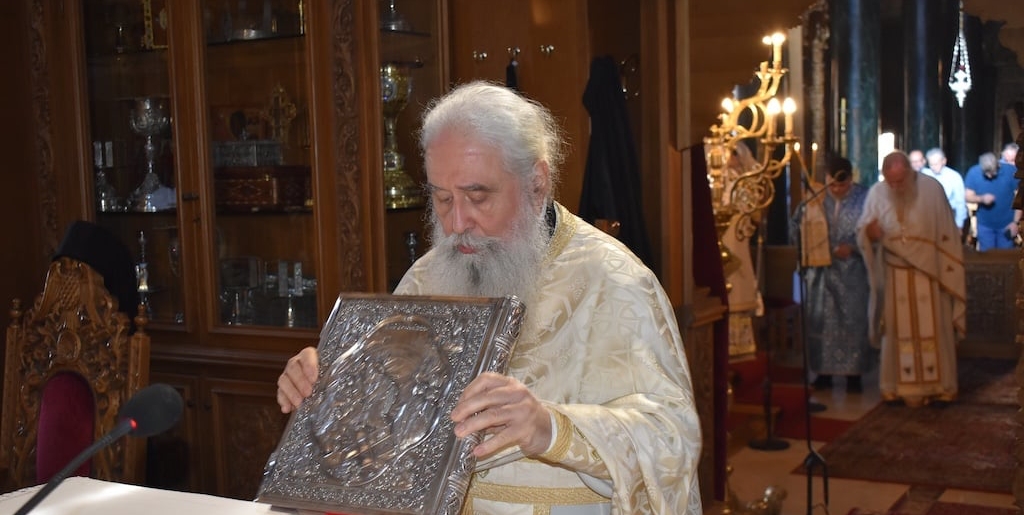
Archbishop Symeon and the monastery’s council of monks suddenly accepted the agreement that the Egyptian government had offered them four months earlier, after long refusing it. This raised a question: Is it linked to efforts at political alignment between Egypt and Greece to confront the Turkish-Libyan maritime agreement?
Did Egypt offer the monks new concessions in the agreement that led them to accept it? And what role did Greece play in pushing the monks to agree now?
An Egyptian diplomatic source told Al-Estiklal that Greece likely pressured the monks and, in return, obtained Egyptian concessions for them. The aim, the source said, was a balanced agreement that would free both countries to focus on the Egyptian-Greek alliance against the Turkish-Libyan maritime agreement.
Things suddenly began to move. Greece thanked Egyptian head of the regime Abdel Fattah El-Sisi for his role in reaching an agreement on Saint Catherine’s Monastery, and also thanked Foreign Minister Badr Abdelatty for facilitating the deal.
Greek Foreign Minister Giorgos Gerapetritis thanked El-Sisi for what he called his personal role in reaching an agreement on Saint Catherine’s Monastery on Mount Sinai. He stressed that the agreement marks a historic milestone for Greece and the Orthodox world.
In a statement on October 24, 2026, Gerapetritis said the agreement between the monastery and the Egyptian state provides a stable legal basis after 1,500 years in which the monastery’s legal status had been unsettled and unregulated.
He stressed that the agreement ensures the preservation of the monastery’s religious character and its church properties, as well as the continuity of monastic life by granting the monks long-term residence permits.
It should be noted that the Egyptian deal provided for three-year renewable residence permits. According to Egyptian sources, the Greek minister’s statement appears to point to an Egyptian concession granting long-term residence permits, possibly 10 years and renewable.
The Greek minister stressed that the agreement has the support of Orthodox institutions, including the Ecumenical Patriarchate, the Patriarchates of Alexandria and Jerusalem, and the Churches of Cyprus and Greece. He said it carries a message of unity for the Orthodox world.
Since Symeon was elected abbot on September 14, 2025, the Egyptian state has not officially recognized his position. As a result, he has been unable to operate the monastery’s Egyptian bank accounts or deal with state institutions in South Sinai.
Symeon holds a Greek diplomatic passport that allows him to travel to and from Egypt for two years. The other monks hold 12-month tourist residence permits, but renewing them takes three months every year, which gives them an actual residence of only nine months.
Why Did the Former Abbot Object?
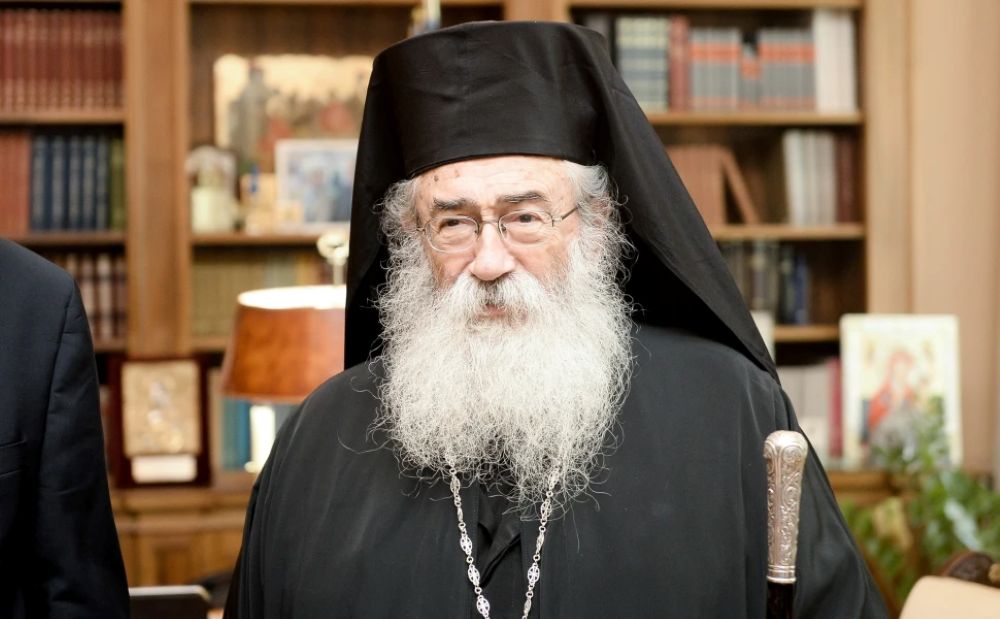
Notably, the former abbot, Damianos, whom Greece had pressured to step aside in favor of Symeon, rejected the agreement with the Egyptian government. He described the settlement as shameful and unacceptable.
His criticism centered on the failure to announce the full terms of the deal. He also raised questions about whether the current abbot has the authority to sign it.
Damianos, who led the monastery for 52 years, said the Greek government had spread word that Egypt’s Court of Cassation intended to issue a final ruling in the monastery case on October 24.
He said this was meant to pressure Archbishop Symeon and the monks into signing the agreement offered by the government in Cairo.
Damianos expressed sorrow that Symeon’s statements did not refer to the content of the planned settlement. Nor, he said, did they mention that the monks had approved it, as the monastery’s basic regulations require.
Damianos stressed that Symeon has no right to sign alone any settlement that involves giving up historical rights established over centuries.
According to sources who spoke to the website Mada Masr on October 25, 2026, Damianos accused the Greek government of pressuring the monks of Saint Catherine’s to accept the agreement Egypt had offered.
In a statement published by an Orthodox news agency on October 24, he said that Greek Prime Minister Kyriakos Mitsotakis and his foreign minister exerted unbearable pressure on the monastic brotherhood to push it to sign an agreement with the Egyptian state.
Part of the conflict between the former abbot, Damianos, and the current one, Symeon, was linked to a wider split within the monastic brotherhood. That split deepened during 2025 as the monks disagreed over how to handle the court ruling and the negotiations with the Egyptian government.
Greek press reports pointed to the emergence of factions within the monastery’s council of priests. Some support the settlement, some oppose it, and others question the reasons for rushing to sign.
The Facebook page “Catherine Filoi”, which is familiar with the positions of several of its monks, described the draft agreement as a catastrophic formula that destroys the monastery’s historical rights and deprives the monks of its ownership.
The page claimed that the Egyptian and Greek governments are putting their political and economic interests ahead of the spiritual and historical value of one of the oldest inhabited monasteries in the world where religious services are still held.
“The monastery is being sold in the market of political and economic interests in exchange for the energy agreement that Athens is seeking to conclude with Cairo,” the page added.
A report by New Lines Magazine on September 4, 2025, said Cairo was seeking to exploit the lands around Saint Catherine’s Monastery for a tourism project.
In return, it said, Cairo would push through a strategic agreement with Athens to lay 1,000 kilometers of undersea cables carrying clean electricity from Egypt to Greece.
These disputes show that reaching an understanding with the government does not necessarily mean an end to the dispute within the monastic community itself.
The monks may split between those who see the settlement as a guarantee of the monastery’s survival and a way to avoid the risks of litigation, and those who fear it will lock in a legal status that curtails rights they consider historical.
The question remains: Will the settlement succeed in reconciling the state’s ownership of the land with guarantees for the historical and religious rights of one of the oldest Christian monasteries in the world? Or will the agreement settle the dispute procedurally, while leaving the core disagreement over ownership, use, and management dependent on how its terms are interpreted and implemented?
The settlement may have shifted the center of gravity from the question of Who owns the land? to the question of What rights will the contract guarantee the monastery and the monks, and how stable will they be?
It cannot be said for certain that the final version matches the proposal published in July 2026 until the contract the two sides will sign, which has not yet been published, is made public.
Sources
- Appeals Over Ownership of “Saint Catherine’s” Lands Postponed After Monastery Head Approves Egyptian-Greek Government Agreement [Arabic]
- Before the Appeal Ruling: Egyptian Government Offers New Agreement Entrenching Its Ownership of Saint Catherine’s Monastery [Arabic]
- Breakthrough in Sinai Monastery Dispute as Archbishop Symeon Agrees to Sign Deal With Egypt
- Mount Sinai Monastery Faces Crucial Court Ruling: Three Scenarios, Archbishop Ieronymos Intervenes
- Mount Sinai’s Ancient Monastery Has Been Plunged Into Chaos