Halting Aid to ‘Israel’: Deception or Reality? And What Does It Mean for Egypt?
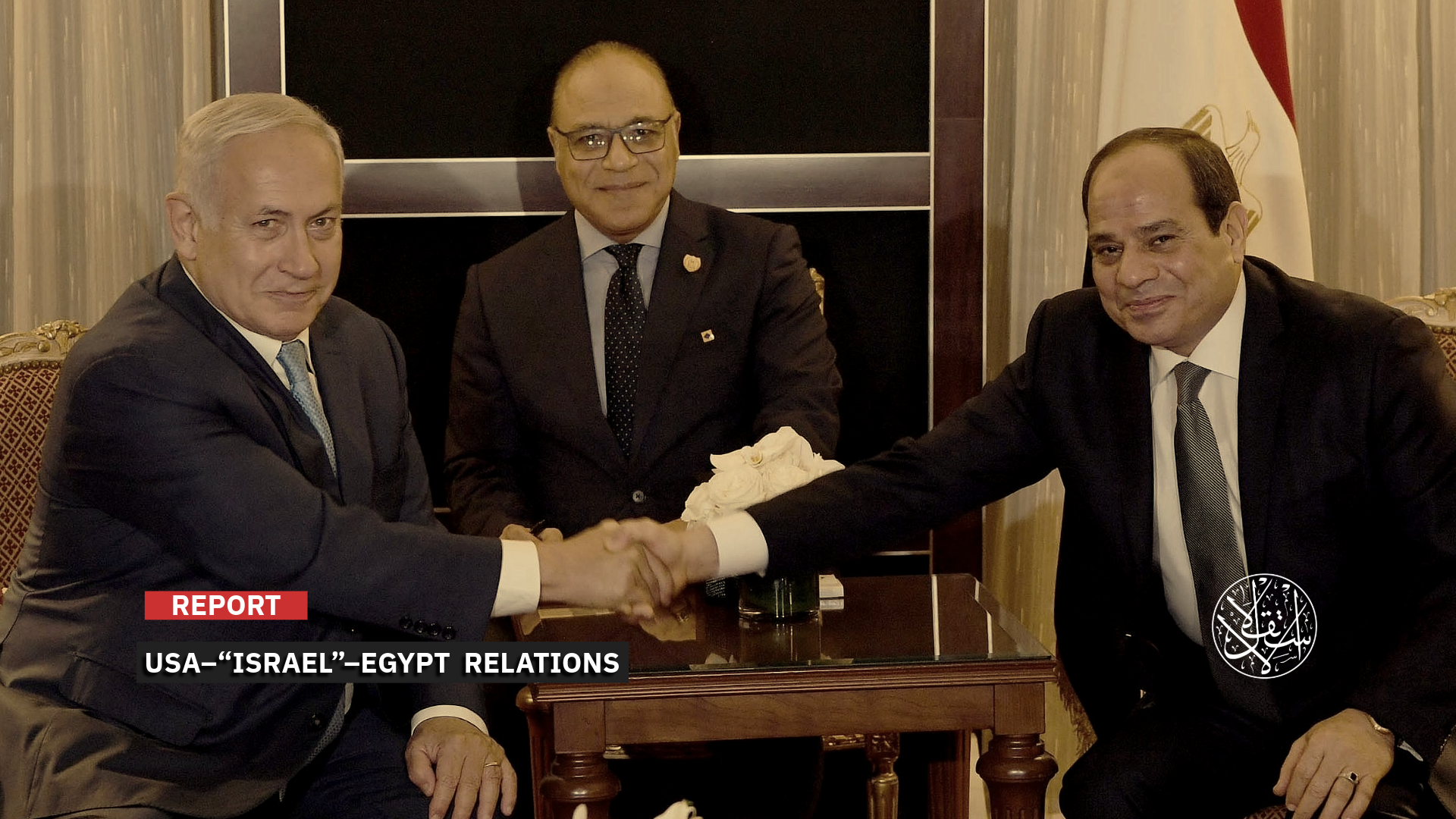
This is over… It’s a matter of time.
Midterm election results in the United States reflected a shift in public mood against “Israel” and the candidates who support it.
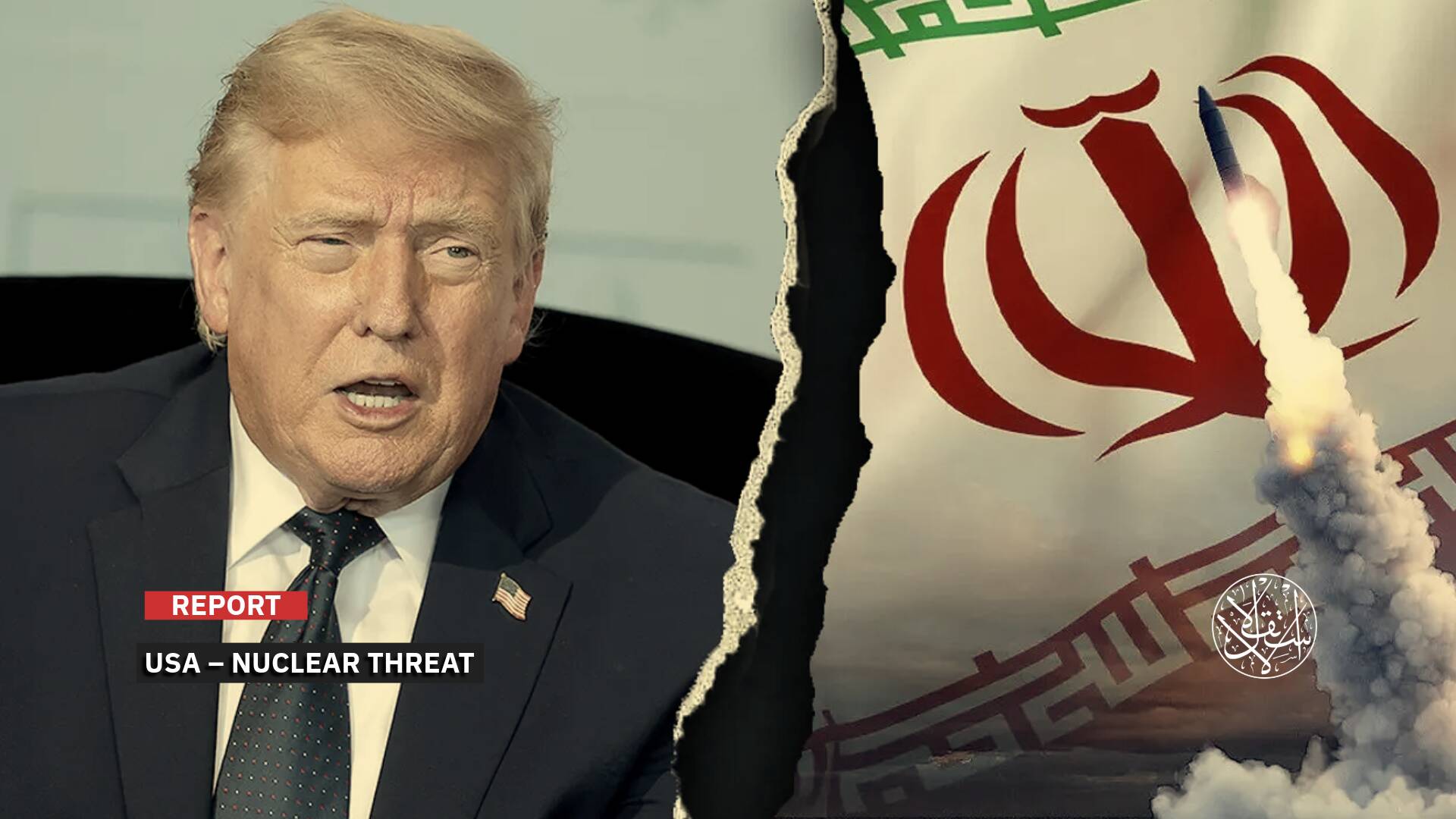
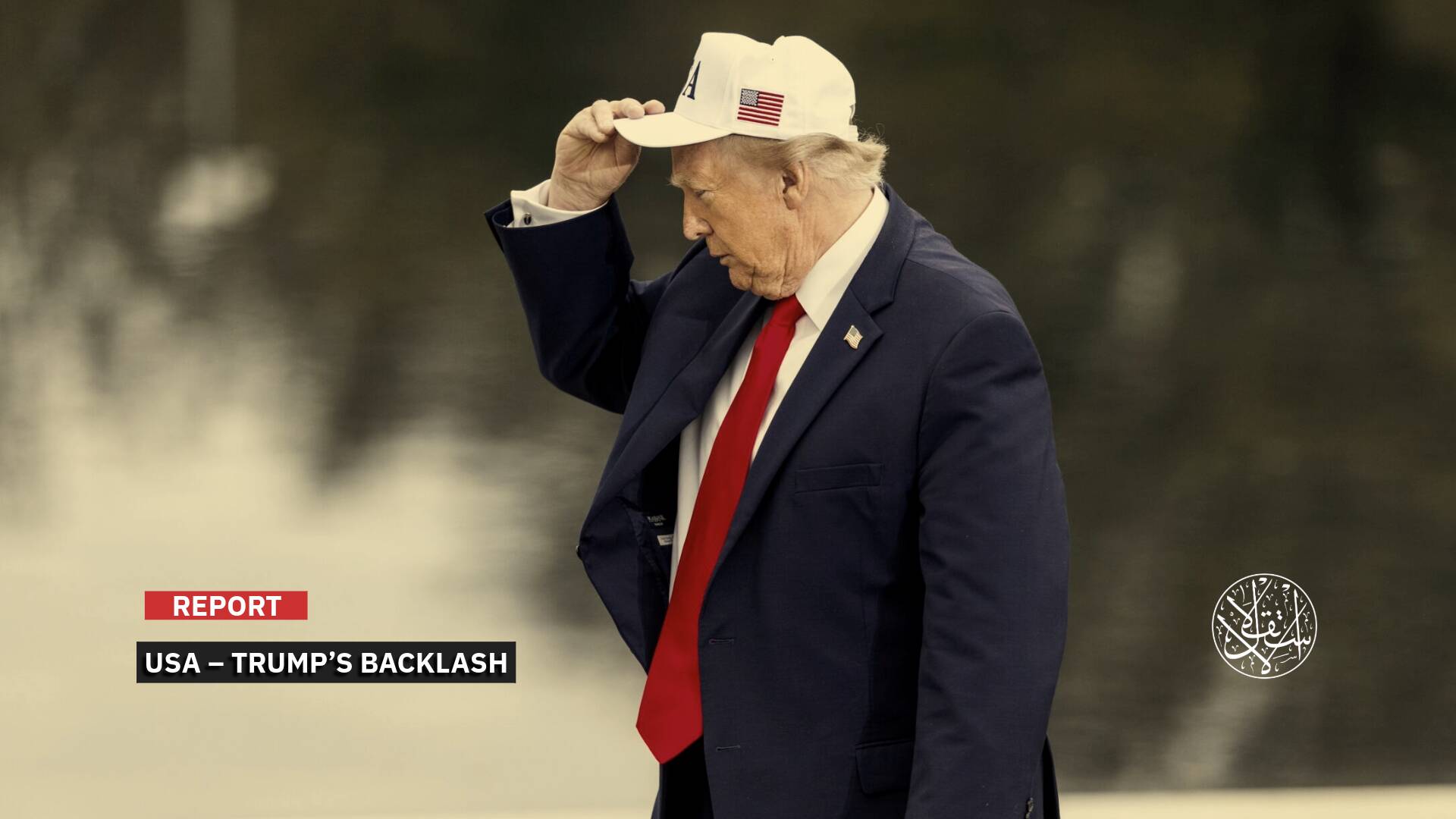
Many Americans believe the billions of dollars in aid “Tel Aviv” receives come at the expense of services provided to them. Against this backdrop, President Donald Trump announced that military aid to “Israel” would end by the end of the year.
On November 3, 2026, Trump said he had agreed with Israeli Prime Minister Benjamin Netanyahu to end the annual US military aid to “Tel Aviv”, worth about $3.8 billion.
Israeli newspapers described the announcement as a surprise, even though Netanyahu had previously expressed his wish to do without this aid. Some Americans, meanwhile, saw it as an election maneuver.
Trump’s announcement did not explain what will happen to the existing agreement between Washington and “Tel Aviv”, which runs until the end of fiscal year 2028.
Nor did it say whether that agreement will be canceled, leaving “Israel” only with the military aid it received through the end of December 2026.
The announcement also raised questions about possible new arrangements that Netanyahu had been seeking. These would integrate “Israel” into the US weapons system, making the Israeli Defense Ministry’s access to weapons a routine procedure that requires no special legislation, as is the case for the US military. That could be an even bigger gain for “Tel Aviv”.
In June 2026, “Israel” and the United States began formal talks on a new framework for military cooperation to replace the current memorandum of understanding (MOU) when it expires in 2028.
What Is the Story Behind Canceling the Aid?
On November 3, Trump announced that he had reached an agreement with Netanyahu to stop US military aid to “Israel” this year. Republicans had been facing criticism from Democratic candidates over the continued aid.
Trump’s announcement came as voters were casting ballots in the congressional elections, amid growing opposition to unconditional US support for “Israel,” which critics see as contradicting the “America First” slogan. Trump and his vice president, JD Vance, later acknowledged the impact of this issue after the results came in.
The timing of the announcement appeared aimed at easing electoral pressure on Republican candidates facing criticism over the aid given to “Tel Aviv”.
In an interview with Fox News, Trump said, “Bibi Netanyahu and I have made a deal that we give Israel $4 billion a year, and we made a deal months ago that we’re stopping.”
He added, “They’re fine with it because, you know, they’ve become a very successful country. They don’t need this money, and we won’t pay any more. So it’s just a wasted thing because we’ve already agreed that by the end of this year, we won’t be paying Israel.”
Trump’s remarks reflected his attempt to ease political pressure on his party’s candidates. He implicitly acknowledged this when he said that “the next generation has no interest in providing or selling weapons to Israel,” according to ABC News on November 3.
The US president explained that political calculations had influenced the decision to cut the aid, noting that he did not want to give Democrats a “talking point” they could use against Republicans.
This came as Abdul El-Sayed, who won a US Senate seat, made ending aid to “Israel” one of the central issues of his campaign.
“We want our tax dollars invested here, not wasted on fighting a genocidal war,” El-Sayed told supporters after his victory, referring to the war in which the United States supports “Israel.”
In a sign of growing public opposition to US aid to “Tel Aviv”, an ABC News/Washington Post/Ipsos poll published on October 18, 2026, found that 58 percent of Americans support reducing military support to “Israel” or ending it altogether.
“Israel” receives $3.8 billion in annual US military aid under a 10-year MOU that expires in 2028. This includes $3.3 billion in military financing and $500 million for missile defense programs.
By comparison, Egypt has received about $1.3 billion a year in US military financing since the late 1980s, in addition to economic and development aid subject to different arrangements and conditions.
So far, it remains unclear how the agreement Trump described will be implemented, or what it means for the aid set out in the MOU that runs until 2028.
This ambiguity comes as Israeli security bodies say they have received no details about the decision. They have also expressed dissatisfaction with it, describing it as an agreement reached between Trump and Netanyahu without informing them of its details.
Is It a Trick and an Election Bribe?
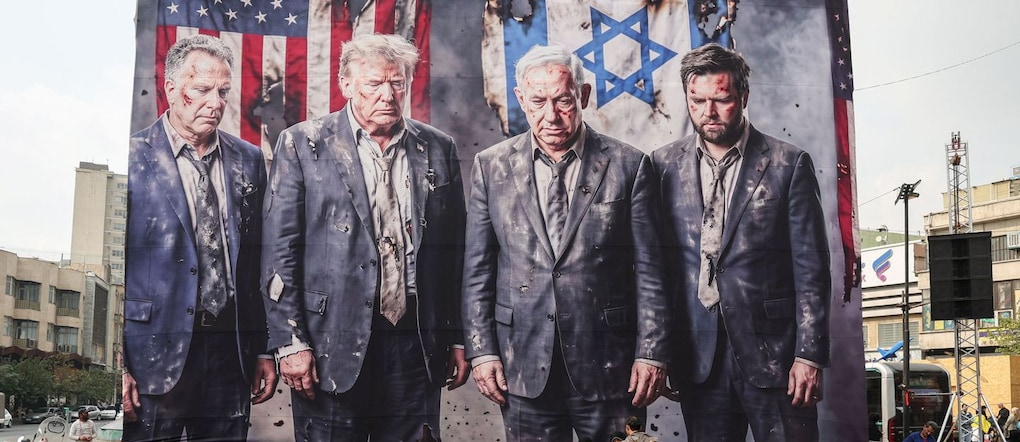
Trump’s announcement was met with widespread skepticism and criticism from rights organizations, analysts, and political figures. They saw the move as an election maneuver meant to absorb growing anger over the continued funding and arming of “Israel,” without actually ending US military support for it.
Critics argued that the announcement, made on midterm Election Day, may have been an attempt to make voters believe Washington was moving to cut off aid to “Israel”.
Meanwhile, they said, the administration and its allies in Congress are working to pass legislation that would shift this support into new forms of military and technological cooperation, away from traditional funding mechanisms and the oversight attached to them.
Questioning how serious the announcement was, the Institute for Middle East Understanding (IMEU) Policy Project described Trump on November 3, 2026, as a “serial liar”.
It noted that since taking office, he has announced weapons deals and giveaways to “Israel” worth more than $20 billion.
The group said the president and his allies know that US funding for “Israel” has become a political liability. For this reason, it said, they are pushing legislation that changes the form of this support rather than ending it, by integrating Israeli weapons companies and industries into US Department of Defense (Pentagon) programs.
According to the project, this step could allow taxpayer money to keep funding Israeli weapons companies, but through less transparent channels with less oversight.
The group added that this step amounts to replacing and disguising military support. It could lead to record levels of US funding for Israeli weapons manufacturers, instead of aid being provided directly and openly.
AIPAC Tracker, an account that tracks the money US politicians receive from the American Israel Public Affairs Committee (AIPAC), also called Trump’s announcement “false hype.” It said the announcement was designed to make voters believe the president had shut off the aid spigot, while the administration and Congress seek to replace the aid with integration in military technology.
The Washington-based Council on American-Islamic Relations (CAIR) also doubted that the announcement would stop the arming of “Israel”. It stressed that ending free military aid does not mean ending US weapons sales to it.
A report by the Israeli newspaper Yedioth Ahronoth, published on November 9, 2026, revealed that US military aid to “Israel” will not stop at the end of this year, contrary to President Donald Trump’s announcement. Instead, the aid will be cut to about half its current level.
Funding for developing air defense systems will rise from half a billion dollars a year to an amount yet to be determined, under a new agreement still being worked out.
The newspaper quoted a senior Israeli official as saying that Trump’s announcement was made “for domestic political considerations only.” The official said it was aimed at supporting the Republican candidate in Michigan, who lost to his Democratic rival Abdul El-Sayed, the winner of the Senate seat.
According to the newspaper, both sides aim to reach a new agreement before the end of this year, and before the new Congress takes office in January. Negotiations are being held between teams from both sides to conclude a new MOU to replace the current agreement.
The teams include representatives of US Secretary of State Marco Rubio, officials from the Israeli Defense Ministry, and officials from “Tel Aviv’s” embassy in Washington.
An analysis by Common Dreams on November 3 pointed out that Trump would use Section 219 of the National Defense Authorization Act (NDAA) to channel all aid to “Israel” behind closed doors, after canceling the aid on paper.
Section 219 of the NDAA bill for fiscal year 2027 establishes a defense technology cooperation initiative between Washington and “Tel Aviv”.
It covers joint research, development, and production in missile defense, drones, artificial intelligence, and cybersecurity.
In September 2026, dozens of rights and civil society organizations called on Congress to drop this provision. They warned that it would deepen the integration of the US and Israeli defense industries and create new channels for military cooperation, at a time when American public opinion increasingly rejects unconditional support for “Israel”.
Before Trump announced the understanding with Netanyahu to end about $4 billion in annual aid, the Israeli prime minister had repeatedly spoken that same year about ending the aid gradually, not all at once.
The core of his proposal was a better model for “Israel”, namely replacing grants with a defense and trade partnership with Washington, or moving from aid recipient to partner.
For this reason, the Israeli newspaper TheMarker said that what Trump announced may have been a deal in which Netanyahu bought Trump’s support with a $7.5 billion check. That is the value of canceling the signed US aid agreement for the next two years, which was supposed to expire in 2028. Because the aid rests on a signed agreement between the two countries through 2028, the amount remaining for the next two years is estimated at between $6.6 billion and $7.6 billion.
The newspaper linked the timing of Trump’s announcement that the agreement was canceled, which coincided with Election Day in the United States and the Israeli elections, to suspicions of a political deal. Under that deal, it suggested, Netanyahu made a serious strategic concession in exchange for Trump’s personal support.
Israeli economic journalist Meirav Arlosoroff wrote, “Trump’s announcement canceling the agreement in the middle of the US Election Day has increased the likelihood that the agreement between him and Netanyahu amounts to a political bribe that Netanyahu paid to Trump.”
She asked whether Prime Minister Benjamin Netanyahu bought political support on the eve of the elections by giving up billions of dollars of the state’s security. In other words, she asked whether he went along with what Trump implicitly said, or whether the two agreed on it to save Trump’s candidates from defeat.
The Israeli journalist said that Trump’s use of the aid cancellation to win over Republican voters shows that “Israel” has become a toxic political liability inside the United States. She said it also reflects an unprecedented decline in “Tel Aviv’s” standing because of the Netanyahu government’s policies in recent years.
On January 9, 2026, Netanyahu said in an interview with The Economist that he sought to taper off military aid gradually over the next decade until “Israel” could do without it entirely. He claimed that “Israel” should not depend on foreign military aid.
“I want to taper off the aid to zero within 10 years,” he said. “I told President Donald Trump that Israel has come of age and has developed incredible capabilities.”
He said the alternative was a plan to invest about 350 billion shekels, roughly $110 billion, in developing an independent Israeli military industry, while maintaining support from and political relations with the United States, according to Reuters.
Netanyahu repeated his position in an interview with CBS’s “60 Minutes” on May 2, 2026. “I want to bring the American financial support, the financial component of our military cooperation, down to zero,” he said.
He added that “Israel” receives about $3.8 billion a year, and that the time had come for it to gradually end its reliance on what remains of US military support.
Asked about the timing, he said, “I don’t want to wait for the next Congress,” because he expected that Congress to begin cutting, reducing, or restricting the aid.
Netanyahu laid out his malicious alternative plan on May 27, 2026, during a meeting with Republican Representatives Marlin Stutzman and Abe Hamadeh. He said the alternative was for “Israel” to move from aid recipient to partner of the United States, with a partnership between the two countries’ war ministries.
This is where the clearest political and economic alternative emerged. Instead of “Israel” receiving free money to buy weapons, the relationship would become a defense and trade partnership in which “Israel” pays for its own purchases from the United States, according to The Washington Post on June 19, 2026.
Days before the Israeli elections, on October 24, Netanyahu spoke in a more pessimistic tone about the future of US aid. “This is over… It’s a matter of time,” he said in a television interview, adding that what matters is replacing the grants model with a defense and trade partnership with Washington.

Will Egypt’s Aid Stop?
The decision to stop aid to “Israel” raised questions about whether it would automatically lead to a halt in aid to Egypt. Another possibility is that the Trump administration will reshape the entire US military aid system in the Middle East, which could also change the terms of support for Cairo.
These expectations were fueled by the fact that US military aid to Egypt and “Israel” has historically been tied to the peace arrangements that followed the Camp David Accords and the 1979 Egyptian-Israeli peace treaty. If the aid is canceled for “Israel,” the thinking goes, it is likely to affect Egypt as well.
Western assessments indicated that stopping US aid to “Israel” could set a political precedent that prompts some lawmakers to call for a review of military support to Egypt and Jordan.
Lawmakers might also seek to reshape that aid and tie it to US interests in the region and to Egypt’s role in serving them. That role includes protecting the security of “Israel,” the Suez Canal, and the Red Sea, as well as military and intelligence cooperation.
However, US assessments explained that Trump’s announcement on “Israel” does not mean that military aid to Egypt will also stop, whether automatically, legally, or legislatively. Unlike “Israel,” Egypt has no written agreement with Washington governing this aid. Instead, the aid is disbursed as a reward for Egypt’s signing of a peace agreement with “Israel.”
This aid to Egypt is tied to Cairo’s commitment to the peace treaty under conditions set out in the US appropriations law. It is not conditional on Washington continuing to fund “Israel” at the same level.
A direct legal provision, Public Law 119-75, ties the continued availability of aid to Cairo to Egypt’s commitment to the peace treaty. But it does not state that stopping US aid to “Israel” automatically stops aid to Egypt.
Under Section 7041 of the US appropriations law for fiscal year 2026, enacted on February 3, 2026, and known as Public Law 119-75, Egypt was allocated $1.3 billion in Foreign Military Financing.
The law also provided an additional $75 million in military financing and $125 million for national security and investment programs. This amounts to about $1.375 billion in military financing, out of a total allocation of $1.5 billion.
Section 7041(a)(3) makes the aid to the Egyptian government conditional on the U.S. Secretary of State certifying and reporting to the congressional appropriations committees that Egypt is maintaining its strategic relationship with the United States and meeting its obligations under the 1979 Egyptian-Israeli peace treaty.
The Congressional Research Service (CRS) explains that the peace treaty between Egypt and “Israel” is a bilateral agreement and that the United States is not a legal party to it. The text of the treaty itself also contains no US commitment to provide ongoing financial or military aid.
However, as the sponsor of the peace agreement, Washington has historically provided aid to both countries to support regional stability, security cooperation, and the peace arrangements. Some US pledges on aid appeared in accompanying letters and documents and remained subject to congressional approval.
Even so, according to US reports, Washington can stop Egypt’s aid while the peace treaty remains in force, and Congress can amend the appropriations or their conditions. This has already happened in past years, when parts of the aid were suspended or reallocated over human rights conditions.
In general, US military aid to “Israel” differs from aid to Egypt, both in amount and like the military relationship.
The aid to “Israel” rests on a long-term MOU covering military financing and missile defense, and on a declared US policy of maintaining Israel’s qualitative military edge.
Egypt’s aid, on the other hand, is tied mainly to military cooperation, regional security, and preserving the Egyptian-Israeli peace treaty. It comes with US legislative conditions on human rights, which are often waived because the aid is meant above all to protect US interests.
The US fiscal year 2026 allocations show a clear gap in direct military support between “Israel” and Egypt. “Israel” receives about $3.8 billion a year, of which $500 million goes to joint missile defense programs.
“Israel” therefore receives about 2.76 times Egypt’s military aid, an annual difference of about $2.425 billion. Egypt, for its part, receives $1.375 billion in the form of weapons and services, not cash as in “Tel Aviv’s” case.
The framework also differs between the two countries. US support for “Israel” is tied to a 10-year military MOU signed in 2016 that covers the period from 2019 to 2028, under which Washington pledged $38 billion.
This consists of $33 billion in military financing grants and $5 billion for missile defense programs, at $500 million a year. The MOU is subject to annual congressional appropriations and is not a binding treaty in itself.
By contrast, according to a Congressional Research Service report issued on February 25, 2026, the US appropriations law for fiscal year 2026 provided a total of $1.5 billion for Egypt. Of this, $1.375 billion is in military financing grants, an increase of $75 million over the previous annual level.
In early October, the US State Department announced that it was waiving the human rights certification conditions for $320 million of Egypt’s military aid for fiscal year 2025. It cited national security considerations and what it described as Egypt’s useful role for the United States.
According to the congressional report, Egypt’s military aid is used to buy weapons systems and services from US defense companies.
There is a fundamental difference between the two countries. Support for Egypt and “Israel” began as one of the direct outcomes of the Camp David Accords, but it is not a provision written into them.
“Israel” has received unique preferential and legal treatment through the signing of written, binding 10-year memoranda of understanding.
Since 1999, three formal written MOUs, each lasting 10 years, have been signed. They began under Bill Clinton, followed by George W. Bush and then Barack Obama, guaranteeing “Israel” a stable flow of funds protected from political swings.
By contrast, successive US administrations have never signed any binding or written MOU with Egyptian governments, whether for 10 years or any other period, to set military aid.
Aid to Egypt has been approved and debated every year through congressional appropriations, based on an oral, unwritten political pledge dating back to the signing of the peace agreement.
It served as a kind of reward for Egypt for signing the peace deal, and also in exchange for services to US interests, such as priority passage for US warships through the Suez Canal. Because it is not codified, it is easy to cancel.
The MOUs also guaranteed “Israel” a rising increase with each 10-year renewal. The amount rose from $2.4 billion to $3 billion under Bush, and then to $3.8 billion under the current Obama agreement, which will expire in 2028.
By contrast, Egypt’s military aid has been fixed and frozen at $1.3 billion a year since 1979, without any increase to make up for inflation or changes in weapons prices. The only exception is a small increase of about $75 million that Congress approved in the 2026 budget.
Under its 10-year MOUs, “Israel” also benefited from “direct cash transfer” and from spending part of the money inside its own economy, until Washington began gradually phasing this out at the start of the Obama era.
Egypt, meanwhile, was subject to a procedure known as “cash flow financing.” This allows it to schedule major arms deals over several years, but 100 percent of the money went directly to US factories and defense companies without ever entering the Egyptian treasury.
In other words, US funding for Egypt is mainly funding for American factories and the US economy. It often includes less advanced weapons such as tanks, which have become outdated compared with drones and defense platforms.

Election Winners Obstruct Support for “Israel”
Even before Trump and Netanyahu proposed ending the annual military aid, calls to restrict US military support for “Israel” had been growing within the Democratic Party. This trend grew stronger after the party won majorities in both chambers of Congress and candidates calling for an arms embargo on “Israel,” or restrictions on arms exports to it, won their races.
The Democratic leadership in Congress remains in the hands of Hakeem Jeffries in the House and Chuck Schumer in the Senate, two of the most prominent Democrats known for their support of “Israel.” Even so, “Tel Aviv” expects them to be forced to yield to the strong current against supporting “Israel” among the newly elected lawmakers and the American public.
An analysis by the Israeli newspaper Haaretz on November 4 explained that the midterm results “will allow Democrats to exert unprecedented pressure on Israel by restricting arms transfers to it.”
It said Democrats would also “try to limit President Trump’s ability to wage war alongside it and push for investigations into settler attacks on Palestinians, even though the party’s leadership remains in the hands of politicians known for their support of Israel.”
Anti-Zionist candidates backed by the Democratic Socialists of America won races in New York, Pennsylvania, and Colorado. Their victories fueled expectations that they will introduce legislation calling for a comprehensive ban on arms supplies to “Israel.”
Haaretz identified three possible tracks for this pressure. The first is an attempt to limit Trump’s powers to wage war alongside “Israel.”
The second is to block or delay arms transfers to it. The third is to require the US State Department to investigate settler attacks on Palestinians in the occupied West Bank.
Trump can use his presidential veto to block legislation he opposes. Still, Democrats may use their control of Congress to expand oversight of US policy toward “Israel.” They could also introduce measures forcing the administration to debate issues that previously enjoyed broad bipartisan consensus.
Sources
- Trump Says $4 Billion in Israel Military Aid Will End This Year, Citing Political Reasons.
- US Will Halt $4B in Aid to Israel as the Mideast Ally Weans Itself From American Dependence.
- Democrats Sweep Midterms, Setting the Stage for Transformation of U.S.-Israel Relationship
- Did Netanyahu “Buy” Trump’s Political Support by Giving Up $7.5 Billion in Security Aid? [Arabic]
- Egypt: Background and U.S. Relations
- Democrats Lead Republicans in House Vote Choice as Trump’s Approval Rating Hits Record Low: ABC/Post/Ipsos Poll
- Congress Should Not Systematically Embed Israel Into US Military
- In Election Day Stunt, ‘Serial Liar’ Trump Deceitfully Says US to End Israel Aid