Through HSBC Funds: How Did Muslim Savings End Up Financing the Israeli War Machine?
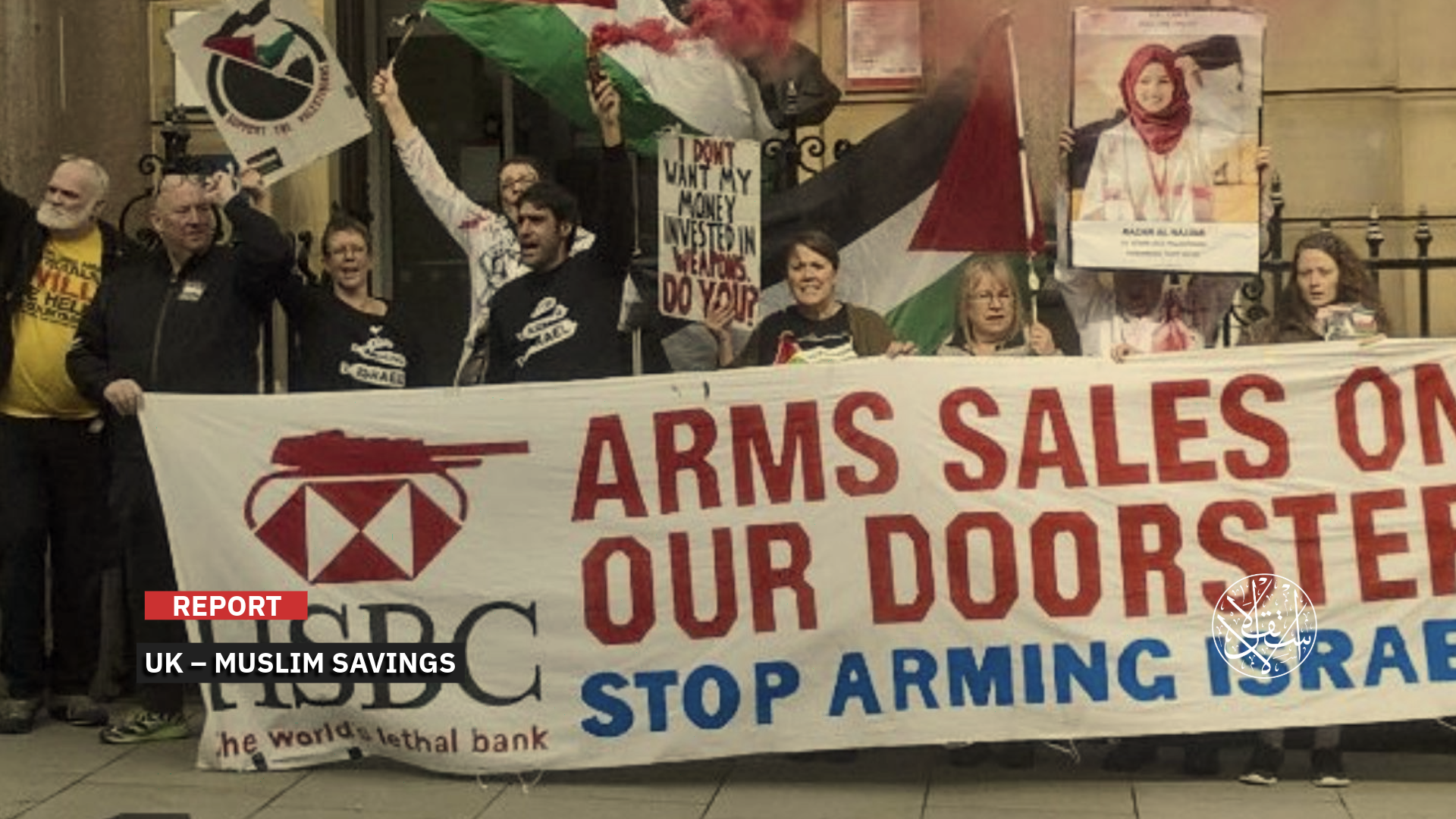
The fund bought shares in five companies linked to the Israeli military’s supply chain.
More than $130 million in investments by HSBC Islamic Global Equity Index Fund went into shares of companies linked to “Israel’s” military supply chain, spanning everything from data analytics to missiles and armored vehicle components.
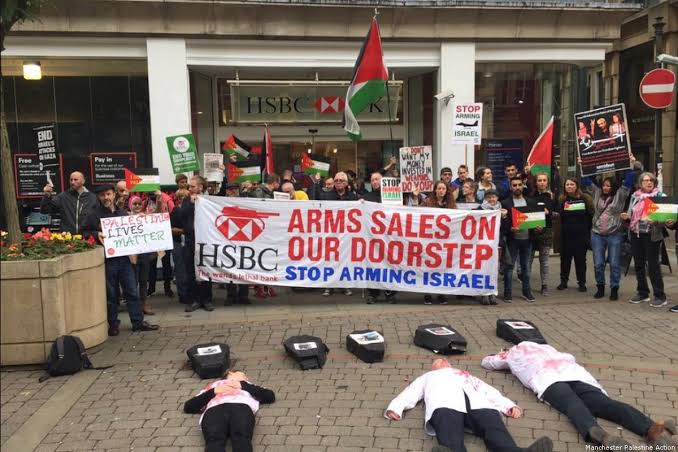
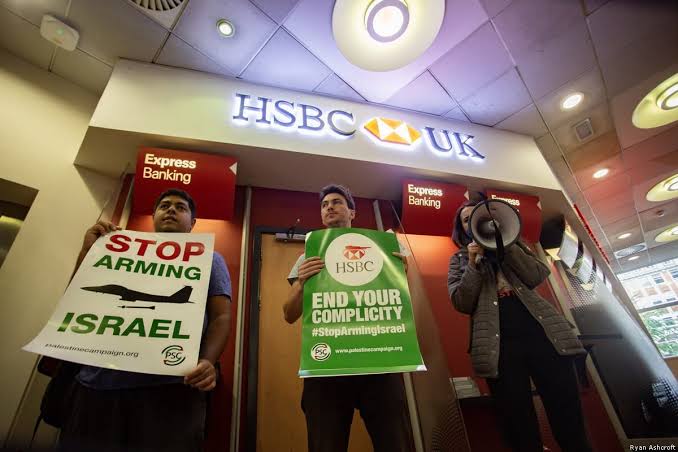
Hyphen reported on 20 October 2026 that the bank had pledged to review the matter following objections to Muslim savings being invested in companies that serve the Israeli Occupation military.
The fund purchased shares in five companies linked to the Israeli military’s supply chain, led by U.S. artificial intelligence firm Palantir and RTX, the world’s second-largest arms manufacturer, according to the fund’s own filings.
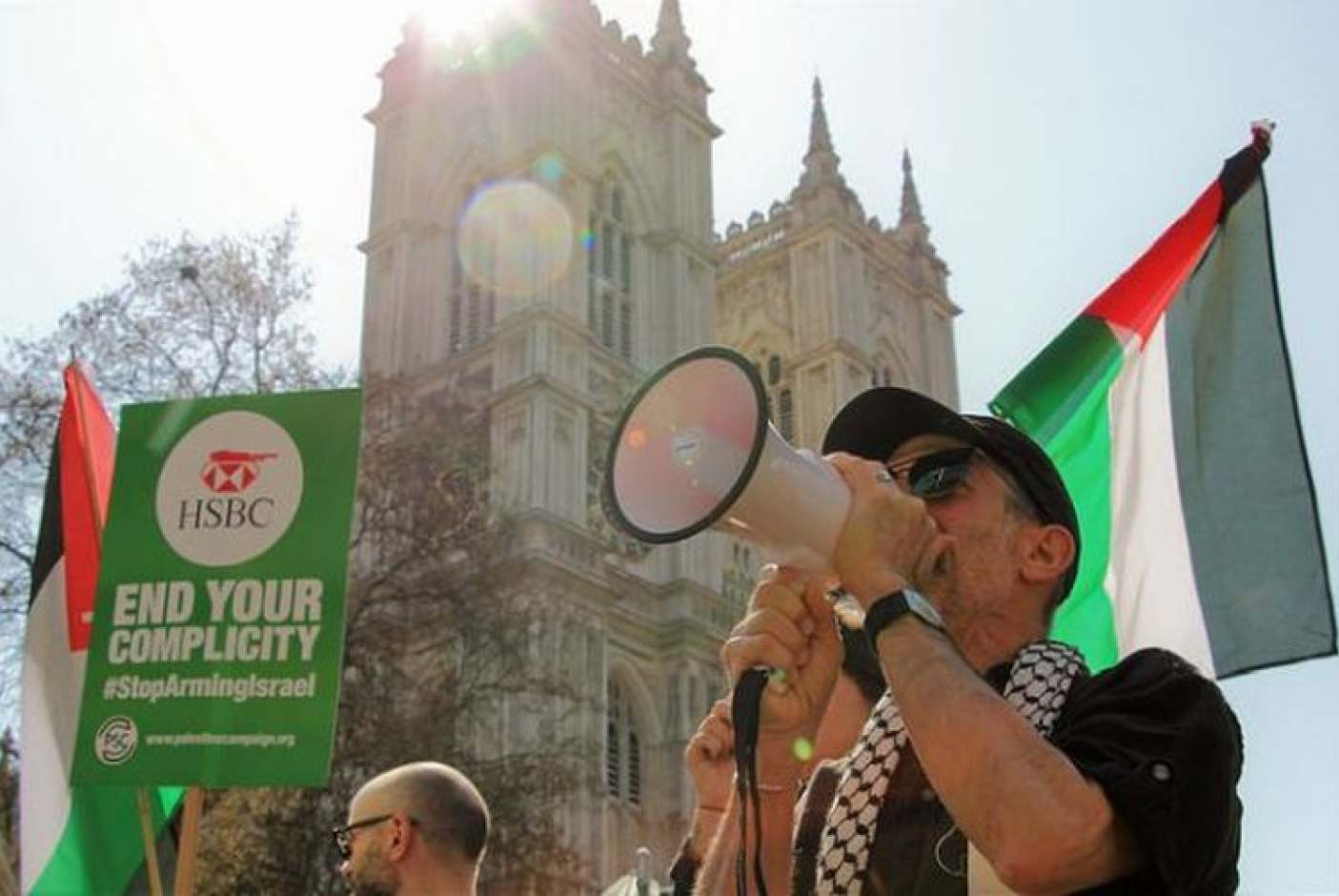
The investments were made despite the fund’s prospectus explicitly listing weapons and defense among prohibited activities and HSBC’s marketing of the fund as a gateway to ethical investments that advance society.
How, then, did these investments pass the fund’s Sharia screening? Who approved the inclusion of arms manufacturers in a portfolio marketed as “halal”?
Was the bank unaware of where its customers’ money was going, or did it itself follow the very path that allowed these investments through?
The Journey of ‘Halal’ Money
Muslim savers do not invest in these companies directly. Their money reaches them through a lengthy chain that begins with a retirement option marketed as Sharia-compliant.
The fund in question is an institutional fund legally domiciled in Ireland and managed by HSBC’s asset management arm in the UK.
It has more than $8 billion in assets and tracks a designated Islamic equity index rather than relying on its managers to select individual stocks.
Most of its funding comes from workplace pension schemes in the UK. In September 2024, Legal & General launched Islamic pension solutions whose underlying funds are managed by HSBC, pledging to exclude companies that derive more than a specified threshold of their revenue from weapons and defense.
Around 40,000 members of NEST, the government-established UK workplace pension scheme, were also invested in the fund.
In this way, individuals select the Islamic option offered by their pension provider, while the actual portfolio decisions are made through a chain of intermediaries they may never see, including the pension provider, the fund manager, and the index provider.
The fund’s semiannual accounts for the six months ending 30 June 2026 reveal where those savings went. It held $38.3 million in Palantir shares, $35.8 million in RTX, $20.3 million in Analog Devices, $18.9 million in Honeywell, and $17.7 million in Rolls-Royce, bringing the total to $131 million.
The market value of these holdings stood at $122.4 million at the end of the reporting period.
The list does not end there. The portfolio also included a $9.5 million stake in BAE Systems, the British defense giant.
Although buying shares on the stock market does not mean transferring money directly into these companies’ coffers, it makes Muslim savings part of their ownership and profit streams.
It also gives the bank, acting on behalf of its clients, voting rights at their shareholder meetings and places it under scrutiny over how it invests the money entrusted to it by customers.
The Turning Point
Because the fund tracks an established index, the key question is not which stocks the bank chose, but which index it decided to follow. Here, the documents reveal a pivotal turning point.
In an official notice dated 29 January 2026, Carne Global Fund Managers, the fund’s manager, announced that it had reviewed the benchmark index in consultation with HSBC, acting as investment manager, citing client feedback without specifying what that feedback entailed.
The decision, effective 23 March 2026, replaced the Dow Jones Islamic Market Titans 100 Index with the S&P Global 1200 Shariah Index. The change was made without objection from the Central Bank of Ireland.
This was no neutral technical adjustment. The Dow Jones Islamic methodology excludes weapons manufacturing and supply, explicitly naming surveillance technologies, components, and offensive systems.
By contrast, the general exclusion criteria for S&P’s Sharia indices do not impose a blanket ban on the weapons and defense sector.
FTSE Yasaar’s Shariah-compliant indices, meanwhile, exclude companies when more than 5 percent of their revenue comes from this sector.
“Scholars translate Islamic principles into practical rules within institutions shaped by regulation and commercial pressures,” Wahyu Jatmiko, a lecturer at the University of Southampton Business School, with a focus on Islamic finance, told Al Jazeera. This helps explain why different indices can reach different rulings on the same company.
Notably, HSBC still links another similarly named fund in Luxembourg to the stricter Dow Jones index, according to its prospectus dated 30 September 2026. This means the same banking group had a more stringent standard available and already in use.
Although the bank has not disclosed transaction records showing when each purchase was made and why, the five companies' shares were acquired during the same half-year period in which the index changed.
Companies at the Heart of ‘Israel’s’ War Machine
Once these companies passed through the new index’s screening process, the fund became a shareholder in businesses involved in multiple stages of “Israel’s” military supply chain, from data analysis centers to missile production lines.
Palantir announced a strategic partnership with “Israel’s” Ministry of War in January 2024 to support war-related missions. It also held a board meeting in “Tel Aviv” as a show of solidarity with the Israeli Occupation.
In a report, UN Special Rapporteur Francesca Albanese said there were reasonable grounds to believe that the company had provided technologies to automate battlefield decisions and generate target lists. Palantir denied any involvement in the Lavender and Gospel systems in an official response.
RTX, through its subsidiary Raytheon and in partnership with “Israel’s” state-owned Rafael Advanced Defense Systems, manufactures Tamir interceptor missiles for the Iron Dome system.
In November 2025, the joint venture secured a $1.25 billion contract to supply the Israeli Occupation with the missiles. It delivered its first batch, manufactured in Arkansas, on 9 October 2026.
The two companies have also developed the David’s Sling system, while Raytheon supplies components for F-series fighter jets used in the occupied Palestinian territories.
Further down the supply chain, Irish outlet The Ditch tracked shipments of components from Analog Devices to Elbit Systems, “Israel’s” largest privately owned arms manufacturer, in 2024, followed by another shipment in September 2025 to Elbit subsidiary Elisra, which specializes in electronic warfare.
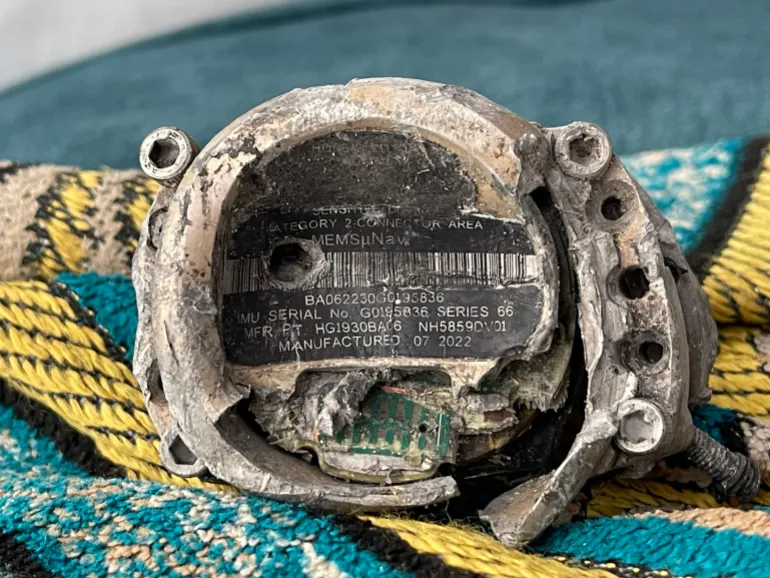
An investigation by Al-Jazeera’s Sanad Verification Agency found that a Honeywell-made measurement unit was part of a missile that struck the UN-run al-Sardi school in the Nuseirat refugee camp in June 2024. The attack resulted in the martyrdom of around 40 Palestinians, including 14 children.
Rolls-Royce, meanwhile, supplies propulsion systems under its MTU brand for Merkava tanks and Namer armored personnel carriers.
A U.S. document also named its subsidiary, Rolls-Royce Solutions America, as a prime contractor in a potential $180 million deal for engines for “Israel’s” Eitan armored personnel carriers.
A Murky Exemption
These connections were no secret, and the fund’s own documents leave little room for ambiguity. An appendix to its prospectus dated 21 September 2026, six months after the index switch, lists weapons and defense among activities deemed unsuitable for investment. Yet it adds a caveat allowing exceptions with the approval of the Sharia committee.
In its promotional materials, HSBC also says it screens companies to ensure they do not derive a significant portion of their revenue from impermissible sources, including weapons.
This wording leaves the bank facing three possibilities: its Sharia committee granted an exceptional approval for these companies; the restriction was interpreted in a way that allowed them into the portfolio; or the fund’s actual practices contradict its published documents.
None of the publicly available materials contains an exemption decision naming the five companies or explaining the grounds for such approval. If an exemption was indeed granted, withholding it from savers raises further questions about transparency.
“The strongest concern is the apparent tension between its stated restrictions and the reported investments,” Jatmiko sums up the dilemma.
The fund’s complex structure does not absolve HSBC of responsibility. The prospectus appendix requires the bank, in its capacity as investment manager, to ensure compliance with the committee’s guidance.
The committee reviews the index methodology and its constituents, issues approvals, and provides an annual certification, although it does not control day-to-day investment decisions.
Other links in the chain include S&P Dow Jones Indices, which manages the benchmark, and Ratings Intelligence Partners, which conducts the Sharia screening of stocks.
Even the composition of the Sharia committee raises questions. HSBC’s promotional webpage refers to two scholars, while its 2025 annual report names three members: Mohamed Ali Elgari, Aznan Hasan, and Nizam Yaquby. The documents, however, do not clarify what role each played in approving the new index.
Compliance on Paper
At its core, the case exposes a gap between compliance measured through financial thresholds and the broader ethical objectives that a Sharia-compliant label is supposed to uphold.
Muhammed Ebrahim, a professor of finance at the Business School of Durham University, said there is a critical gap in the screening process that assesses the company’s declared principal activities, not the end use of its products or its customers.
“A company classified as technology or industrial can pass the business activity screen even if its products end up in weapons systems. This is precisely the issue in the HSBC case,” Ebrahim told Al Jazeera.
“The screening does not typically trace a company’s supply chain to determine whether its components are used in civilian harm.”
The objectives of Sharia, including the preservation of human life and justice, are not covered by an automated sector exclusion test.
He stressed that the bank had let down its Muslim customers, who rightly expect their money not to finance companies involved in harming civilians.
Following an index does not absolve investors of responsibility either. The OECD Guidelines for Institutional Investors recognize that minority shareholdings can establish a business relationship linked to adverse impacts.
They outline options such as changing investment strategies or switching to a different benchmark to address the most serious impacts.
Following concerns raised by the NEST and People's Pension retirement schemes, the Financial Times reported on 20 October 2026 that HSBC had begun reviewing its investment in Palantir.
A bank spokesperson told Bloomberg that HSBC would review the matter in partnership with independent expert advisers to assess whether this approach continues to meet investor expectations, pledging to inform clients of any necessary action.
The bank has yet to announce any divestment or final decision, however, and has not clarified whether its review will extend to the other companies, including RTX, which manufactures interceptor missiles for the Israeli Occupation.
Until then, the savings of tens of thousands of Muslims remain caught between a ‘halal’ label on paper and shares in companies supplying the Israeli Occupation military with weapons of war, as “Israel's” aggression on Gaza has claimed more than 74,500 Palestinian lives since October 2023.