From Border Crossings to Markets: How Gaza’s Food Supply Is Choked Off, and How the Hungry Pay the Price
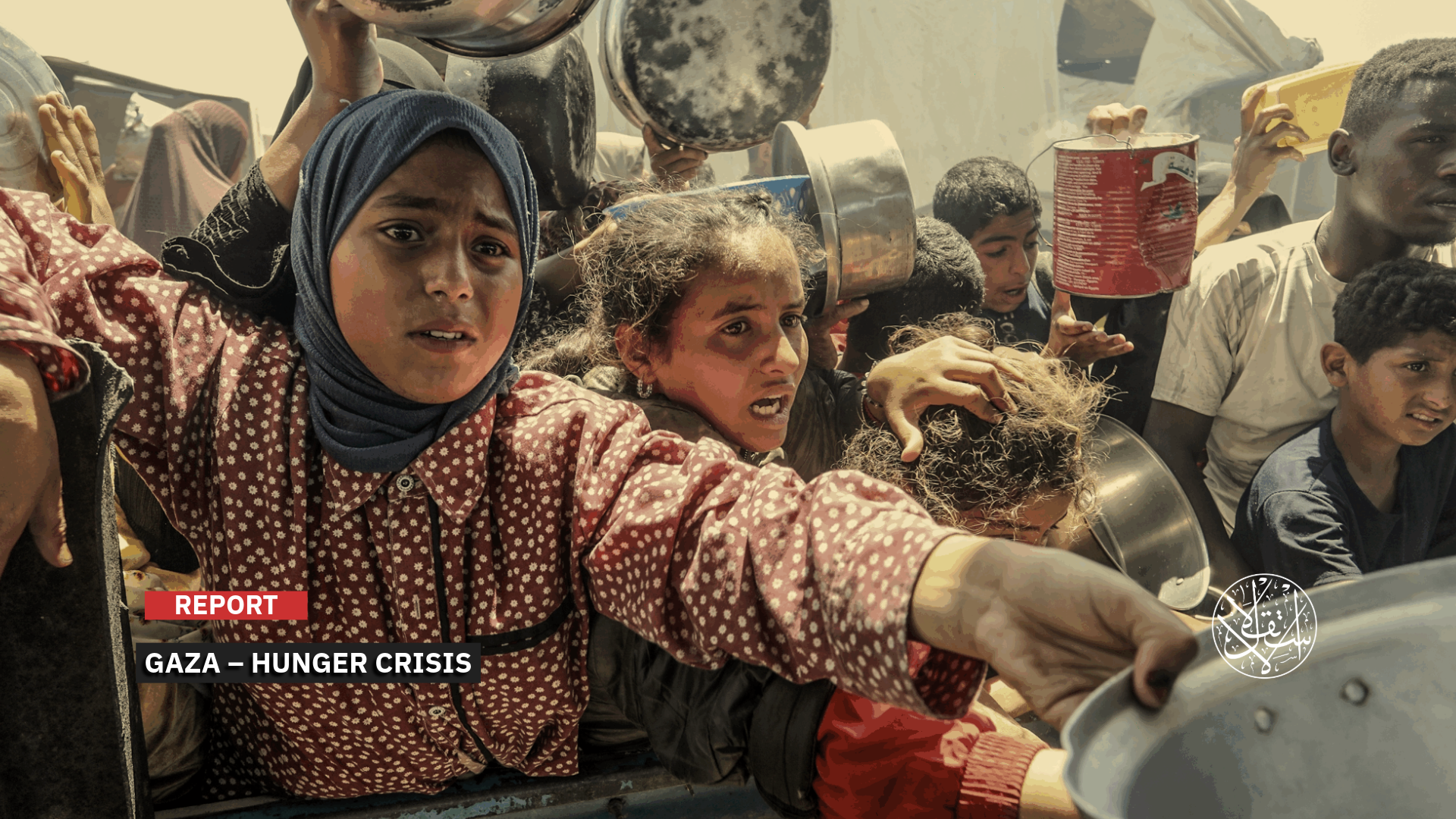
The crisis is worsening as complaints mount that some traders are exploiting supply shortages to drive up prices.
Fears of hunger are mounting again in the Gaza Strip, a year after a ceasefire was declared, as many bakeries shut down, food supplies dwindle, and prices continue to rise.
The growing crisis is leaving families battered by “Israel’s” war struggling to meet their most basic needs. Many have lost their livelihoods and exhausted their savings, while humanitarian aid, a lifeline for most of Gaza’s population, continues to dwindle.

Hunger Returns to Gaza
Fears of another hunger crisis are growing in the Gaza Strip as the Israeli Occupation continues to control border crossings, the volume and types of goods allowed in, and the flow of supplies into the enclave.
The limited resumption of commercial truck deliveries after several days of suspension in mid-October 2026, amid a dispute over fees imposed on traders, has done little to stabilize markets or ease shortages of essential food items.
The dispute over truck fees has also sparked accusations about who is responsible for disrupting trade, as complaints mount that some traders are stockpiling goods and raising prices to profit from shortages.
The latest developments point to a deepening food crisis driven by a combination of Israeli Occupation restrictions, declining humanitarian aid, the collapse of agricultural production, limited competition, and weak market oversight.
Together, these factors raise pressing questions about who controls access to food and its prices and who bears responsibility for the worsening hardship facing Gaza’s population.
Wafaa Ismail, a woman in her fifties from Gaza City, says flour has suddenly disappeared from markets, while the price of the small quantities still available has doubled, making it increasingly difficult for her to put bread on the table for her family as living conditions deteriorate.
Speaking to Al-Estiklal, Ismail accused some traders of hiding and stockpiling goods to exploit the crisis and drive up prices. She believes warehouses across the enclave still hold supplies but says continued Israeli restrictions on border crossings give those holding the goods greater control over what reaches the market and allow them to capitalize on people's desperation.
Residents are increasingly worried that prices will continue to climb as the flow of goods remains erratic. Prices for basic necessities can change within days, while some products disappear from shelves or are sold in limited quantities at prices beyond the reach of most families.
The situation has heightened concerns about whether food supplies will remain available, particularly for households that lost their sources of income during “Israel’s” war on Gaza and now depend on humanitarian assistance or whatever savings they have left.
With supplies of flour, vegetables, and eggs dwindling, families are being forced to buy less and give up foods that were once part of their daily diets. Fears that border crossings could close again have also prompted some residents to stockpile whatever they can afford.
The crisis is worsening as complaints mount that some traders are exploiting supply shortages to drive up prices, raising fears that Gaza could once again face the waves of hunger that have plagued the enclave during the war.
These accounts reflect the extent of the deterioration in markets that were already struggling with soaring prices.
A report by the United Nations Office for the Coordination of Humanitarian Affairs (OCHA) found that average prices for monitored goods in September 2026 were about 204% higher than before October 2023.
Meanwhile, a World Food Program (WFP) survey found that 44% of households surveyed had gone to bed hungry at least once in September 2026, while 45% had run out of food entirely at least once.
The crisis has been compounded by the shutdown of commercial bakeries after supplies of flour permitted by the Israeli Occupation to enter Gaza ran out.
On 22 October, Abdel Nasser al-Ajrami, head of the Bakeries Association in Gaza, warned that stocks were running low and most commercial bakeries had halted operations.
He later clarified that 12 commercial bakeries remained closed, while seven continued to operate.
Al-Ajrami said 21 bakeries receiving flour and fuel support from the WFP were still operating, producing 150 metric tons of bread a day for distribution to shelters.
These subsidized bakeries operate separately from commercial bakeries, which have been forced to close because their designated flour supplies have run out. Gaza needs an estimated 450 metric tons of flour every day, he added.
The bread shortage has coincided with cuts to humanitarian assistance. On 19 October, the WFP announced that funding shortfalls had forced it to reduce the number of people receiving monthly food and cash assistance from 1.6 million in September to 1.1 million in October.
The agency also cut food rations by half, reduced the number of hot meals it funds from 250,000 to 150,000 a day, and lowered the value of cash assistance provided to 75,000 families.
These cuts are particularly alarming as households' purchasing power continues to collapse. The WFP estimates that unemployment affects more than 80% of Gaza’s population and that only one in five children receives a sufficiently diverse diet.
OCHA, meanwhile, recorded more than 2,800 children admitted for malnutrition treatment in September, including more than 360 suffering from severe acute malnutrition.
In August 2025, the Integrated Food Security Phase Classification (IPC), an international system for assessing food insecurity, confirmed famine conditions in Gaza Governorate.
In December, it reported an improvement following an increase in the flow of aid and commercial goods, while warning that conditions could deteriorate again if supplies were disrupted.
In its latest assessment, published on 23 July 2026, the IPC projected that more than 1.4 million people, or 67% of Gaza’s population, would face acute food insecurity at crisis levels or worse through the end of the year.
Of these, approximately 212,000 people were expected to face emergency levels of food insecurity.
Those projections preceded the October truck dispute and cuts to humanitarian assistance, heightening fears that food security could deteriorate further in the months ahead.
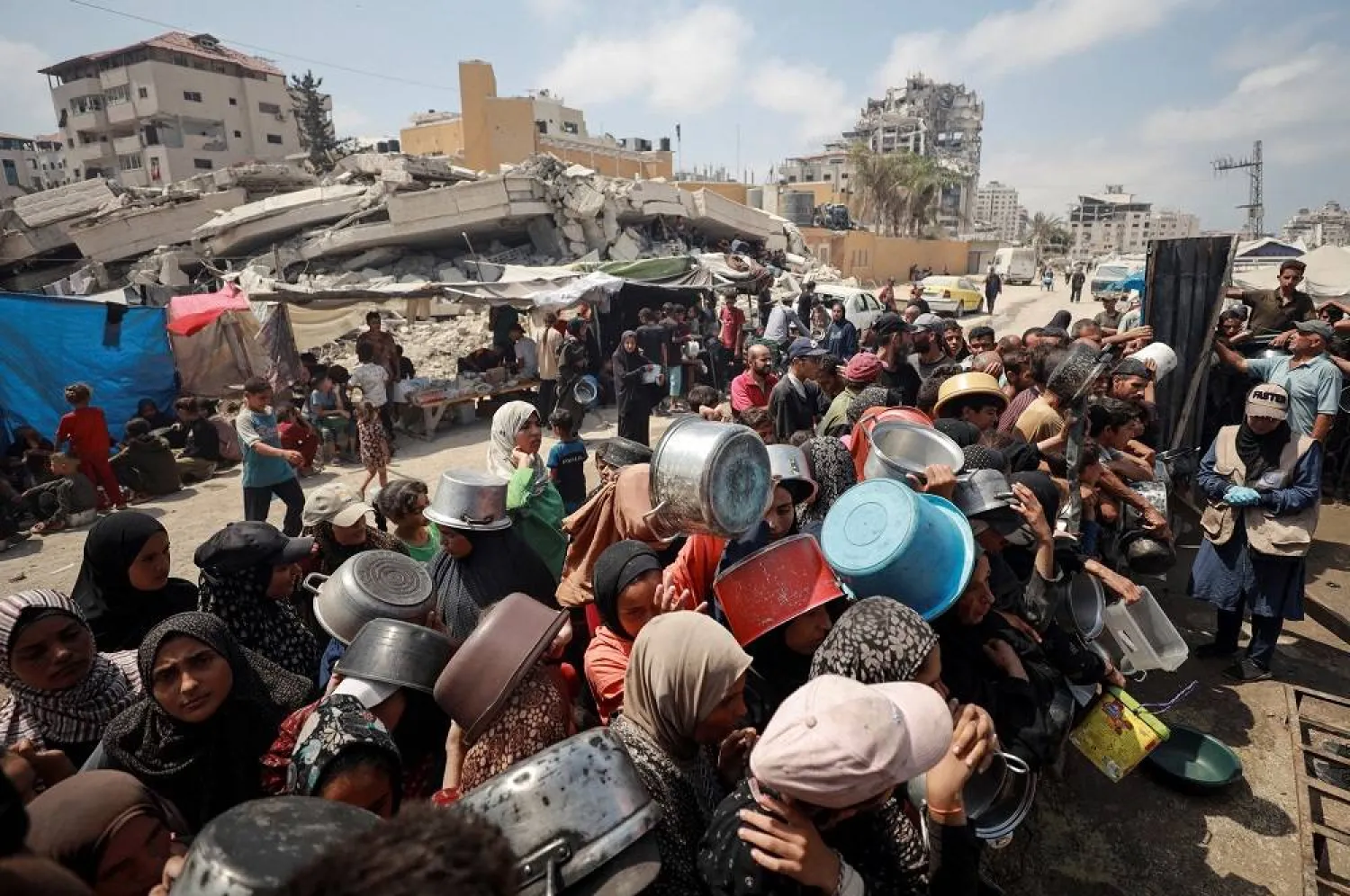
Why Isn’t Enough Food Reaching Gaza?
The flow of goods into Gaza remains subject to Israeli Occupation restrictions on border crossings, permits, and inspections. Since the northern “Zikim crossing” was closed on 24 May 2026, Karem Abu Salem, southeast of the enclave, has been the only operational entry point for commercial shipments, according to OCHA.
The “Kisufim crossing” in the southeast has remained closed, while the Rafah crossing at Gaza’s southernmost point has been used for limited periods to facilitate the movement of travelers and patients, rather than regular commercial traffic.
The fragility of supply chains became evident again in mid-October, when commercial coordination was suspended for several days amid a dispute over truck fees.
On 19 October, Israeli Occupation authorities announced a gradual resumption of commercial deliveries, while restrictions on essential food items remained in place.
Markets were left struggling to replenish depleted stocks and build reserves against the possibility of further disruptions.
According to records from Gaza’s Crossings and Borders Authority, 171 trucks entered the enclave on 20 October, including 53 commercial trucks. The following day, 148 trucks entered, of which 51 were commercial.
The number rose to 188 trucks on 22 October, including 69 commercial shipments. In total, 507 trucks entered Gaza over the three days: 173 commercial trucks, 295 carrying humanitarian aid, and 39 transporting fuel.
The types of goods delivered offer further insight into why food shortages persist. Of the 173 commercial trucks that entered during those three days, 63 carried charcoal, accounting for more than one-third of commercial shipments.
The remaining trucks carried a mix of food, clothing, shoes, cleaning products, frozen goods, blankets, and other items.
On 22 October alone, 27 trucks carried charcoal briquettes, compared with just three carrying general food supplies, three carrying vegetable oil, and three transporting snack foods.
The authority also recorded three trucks carrying flour and wheat as part of WFP aid deliveries, even as commercial bakeries dependent on privately supplied flour remained shut.
On 22 October, Nahed Shuhaiber, head of the Association of Transport Companies in Gaza, said Israeli Occupation authorities determine which goods may enter the enclave and provide transport companies with lists of approved items.
He noted that restrictions remain in place for potatoes, onions, cucumbers, tomatoes, and flour, while the entry of coal, tents, tarpaulins, and various other items is permitted.
Supplies have also been affected by inspection, coordination, and cargo-handling procedures. An OCHA report found that 937 aid trucks had been scheduled for shipment through various routes between 29 September and 12 October, but only 807 were unloaded.
Inspections, screening procedures, and operational restrictions delayed the arrival of some shipments, particularly those traveling through the Egyptian route.
Al-Ajrami said he had received assurances that 30 trucks carrying commercial flour would enter on 25 October following efforts to prevent further bakery closures.
Meanwhile, the Egyptian committee operating in Gaza announced that it had begun dispatching flour shipments to support bakeries.
The crisis, however, remained unresolved as operators awaited the arrival and distribution of the promised quantities.
The disruption to commercial deliveries began with a dispute over additional fees. The Israeli military’s Coordinator of Government Activities in the Territories (COGAT) accused Hamas of demanding 10,000 shekels per truck and requiring 30% of sales to be paid in cash.
COGAT said traders’ objections to these demands had led to the suspension of commercial coordination.
Gaza’s government authorities, however, said the money had been proposed as a voluntary contribution to a social fund for people in need.
Shuhaiber said the Economy Ministry had requested the payment from traders.
He added that Gaza's Ministry of Economy Undersecretary Khaled Al-Raqab had told transport-sector representatives that the funds were intended to help pay the salaries of civilian employees. The accounts revealed conflicting explanations of the contribution’s nature and how the money would be spent.
On 18 October, Riyad Al-Sawafiri, head of the Economic Committee at the Gaza Chamber of Commerce and Industry, said the chamber opposed imposing any additional fees.
The Economy Ministry had told the chamber that the payment was voluntary, he said, while holding “Israel” responsible for freezing commercial coordination because of its control over truck movements.
On 19 October, COGAT announced that commercial coordination would resume after receiving assurances from traders that the financial demands had been dropped.
It also said it would tighten oversight of bank transfers. The parties continued to dispute responsibility for the trade suspension, while Israeli restrictions on incoming supplies remained in force.
The impact of these restrictions has been compounded by the destruction of local agricultural production. On 18 August 2026, the United Nations Food and Agriculture Organization (FAO) reported that only 448 hectares of agricultural land remained both undamaged and accessible as of 24 June, representing just 3% of Gaza’s total agricultural land.
The assessment found that the area of intact, accessible farmland had shrunk by 25.5% compared with October 2025. Restrictions on access to farmland, the westward movement of the Yellow Line marking areas of Israeli military deployment, and shortages of seeds, fertilizers, irrigation equipment, and fuel have further undermined farmers’ ability to produce food.
With local agriculture severely weakened, Gaza has far less capacity to make up for shortages of vegetables and other food products entering through the crossings, leaving residents increasingly dependent on restricted commercial deliveries and dwindling humanitarian assistance.

Who Is Profiting From Gaza’s Food Crisis?
Rapid increases in food prices have raised questions about whether traders and importers are exploiting the crisis. Some goods become more expensive as soon as reports emerge of border crossings closing, while residents increasingly complain that supplies are being stockpiled and withheld from markets. Limited competition and weak oversight of warehouses and prices have made it harder to curb these practices.
In early October 2026, Gaza’s Agriculture Ministry uncovered one example of price manipulation after receiving complaints that tomatoes were selling for 16 to 20 shekels per kilogram, exceeding the official price cap of 13 shekels.
Inspectors responded by reviewing supply and sales invoices and requiring violators to comply with approved prices.
On 18 October, the ministry announced that it had issued a warning to another trader for charging more than the permitted rates.
The problem, however, extends beyond retail practices to the import system itself. In a position paper published on 4 August 2026, the Gaza Chamber of Commerce, Industry, and Agriculture warned that imports had become concentrated in the hands of just 10 to 13 traders, compared with around 2,000 traders and companies before the Israeli war.
It argued that Israeli Occupation restrictions and import coordination procedures had weakened competition, giving a small number of importers greater control over the supply of goods and the prices consumers pay.
A survey of 366 companies and businesses conducted by Gaza’s chambers of commerce and published on 5 January 2026 found that 85% of respondents believed the concentration of imports was fueling monopolies, driving up prices, and undermining competition.
Another 93% said the mechanisms governing the entry of goods lacked transparency and clear standards, while 84% reported having been subjected to illicit payments, either directly or indirectly.
On 13 August 2026, the chambers of commerce and private-sector organizations involved in the assessment estimated that payments made through import coordination arrangements and illicit fees had reached approximately $2.06 billion between the start of the war and 26 July.
At a news conference, they warned that these costs were draining traders’ capital and being passed on to consumers through higher prices.
Palestinian economic researcher Saif al-Din Yousef Odeh offers another explanation for how the system enables exploitation.
In a study titled Monopoly and Exploitation in a War Economy, published by the Gaza Chamber of Commerce in February 2026, he explained how the cash shortage had created multiple opportunities for price manipulation.
These included charging more for goods purchased electronically than for those paid for in cash, imposing steep commissions on people seeking cash, and stockpiling goods or withholding them from markets to profit from scarcity and rising prices.
Odeh links these practices to Israeli import restrictions and the emergence of intermediaries who control access to import coordination arrangements. Some traders, he explained, face substantial additional costs to bring goods into Gaza, which are subsequently passed on to consumers.
Meanwhile, holders of import approvals, intermediaries, and some suppliers benefit from their ability to secure access to goods and control the quantities released to the market and when they are sold.
In response, Gaza’s Economy Ministry announced on 19 October that it had conducted 24 inspection rounds covering 344 businesses and commercial establishments.
The ministry said it had issued 16 violation reports, required 55 establishments to sign legal undertakings, seized 6,311 kilograms of various goods and products, and destroyed 735 kilograms of food deemed unfit for consumption.
The enforcement measures highlight commercial violations that are adding to the pressure on consumers.
Chambers of commerce have called for all licensed traders to be allowed to import goods, an end to illicit coordination arrangements, tighter oversight of markets and warehouses, and accountability for those involved in hoarding goods and manipulating prices.
Commercial data and economic research point to multiple beneficiaries of Gaza’s restricted import system, particularly those who secure import approvals and intermediaries who collect payments for arranging shipments.
Other traders are also accused of exploiting shortages to raise prices or control the supply of goods.
Yet Israeli authorities retain primary control over what enters Gaza, in what quantities, and which products are permitted.
Palestinian consumers are left bearing the cost of these practices as their purchasing power continues to collapse.
Sources
- Funding cuts force WFP to drastically reduce lifesaving assistance in Gaza
- Humanitarian Situation Report | 2 October 2026
- Gaza Strip: Acute Food Insecurity Situation for 16 April - 30 June 2026 and Projection for 1 July - 31 December 2026
- Humanitarian Situation Report | 15 October 2026
- Israel to resume commercial shipments to Gaza after Hamas fee dispute
- Al-Ajrami Tells Palestine Online: Flour Deliveries to Gaza Promised for Sunday [Arabic]
- Gaza Crossings Authority: Truck Deliveries Into Gaza on Thursday, 22 October 2026 [Arabic]
- Position Paper: Continued Restrictions on the Entry of Commercial Goods Into Gaza [Arabic]
- Monopoly and Exploitation in a War Economy: Eroding Purchasing Power and Draining Gaza Residents’ Savings [Arabic]