From ‘Operation Decisive Storm’ to ‘Dawn of Yemen’: What Has Changed in the Dynamics of the Yemeni Conflict?
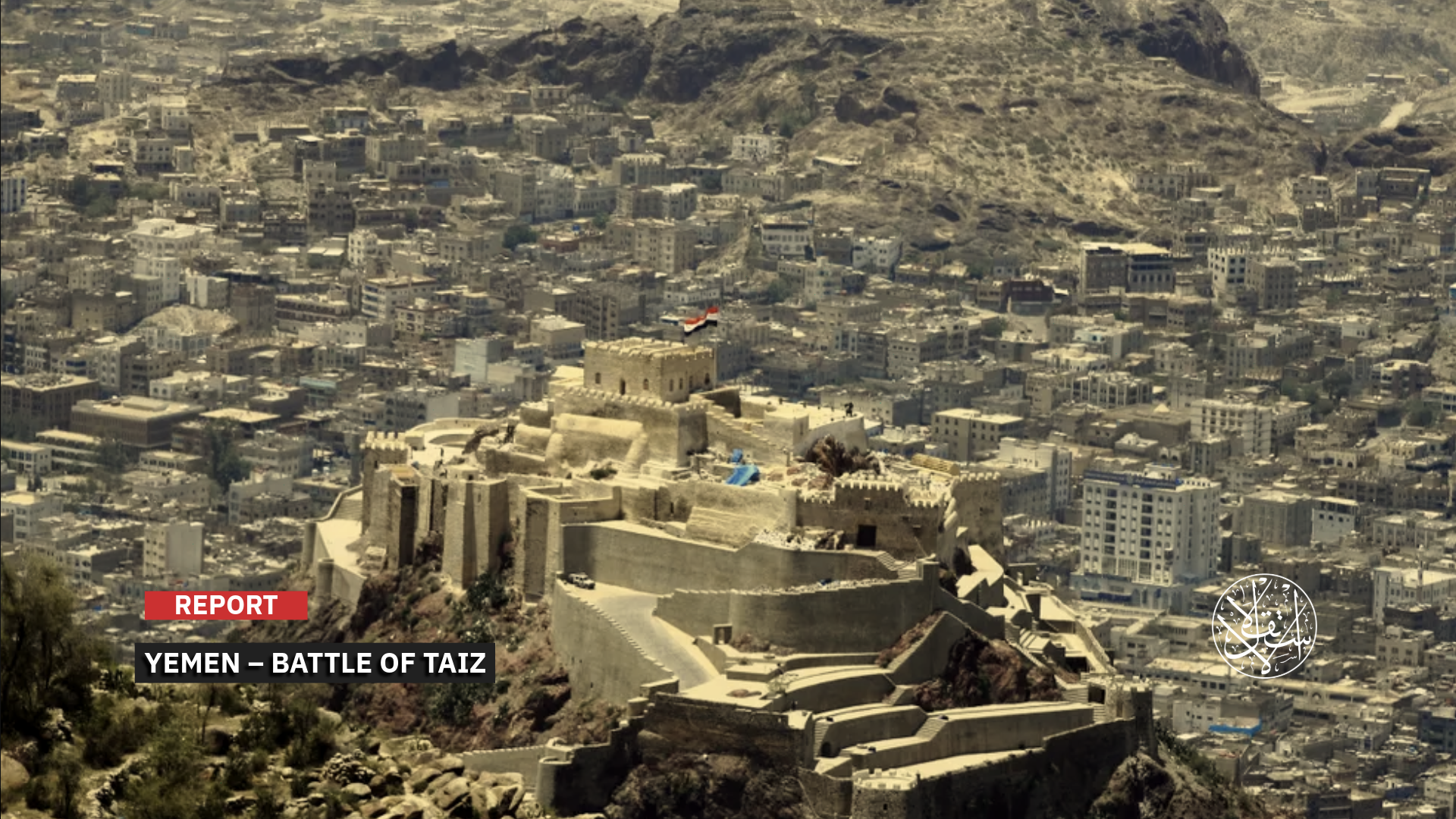
“Operation Dawn of Yemen was launched to reclaim territories under Houthi control, amid escalating clashes in Taiz and its surrounding areas.”
Since 2015, local resistance forces have succeeded in preventing the Houthis from bringing the center of Taiz city under their control. However, anti-Houthi militia forces have failed to unify their efforts and turn their military gains, particularly along the western coast, into a strategy capable of ending the city’s isolation and securing its communication and supply lines.
The fragmentation of military decision-making, competition among local forces, and differing priorities among their regional backers have all contributed to the persistence of this predicament.
More than a decade after the outbreak of the war, Operation Dawn of Yemen, announced by the political leadership in October 2026 to reclaim territories under Houthi control, was launched amid escalating clashes in and around Taiz.
Developments on the ground, however, soon put the operation to a difficult test. The Houthis continued to advance in parts of the governorate’s countryside, drawing closer to vital routes leading toward Aden. At the same time, government forces and local resistance fighters repelled advances, amid questions about the adequacy of military and government support.
Will Operation Dawn of Yemen succeed in breaking the pattern of setbacks that has long plagued the battle for Taiz, or will divisions and conflicting priorities continue to stand in the way of turning battlefield resilience into strategic gains?
The Emergence of the Taiz Resistance
Clashes in Taiz intensified as the Houthis expanded southward following their takeover of Sanaa in September 2014, in cooperation with military units loyal to former President Ali Abdullah Saleh.
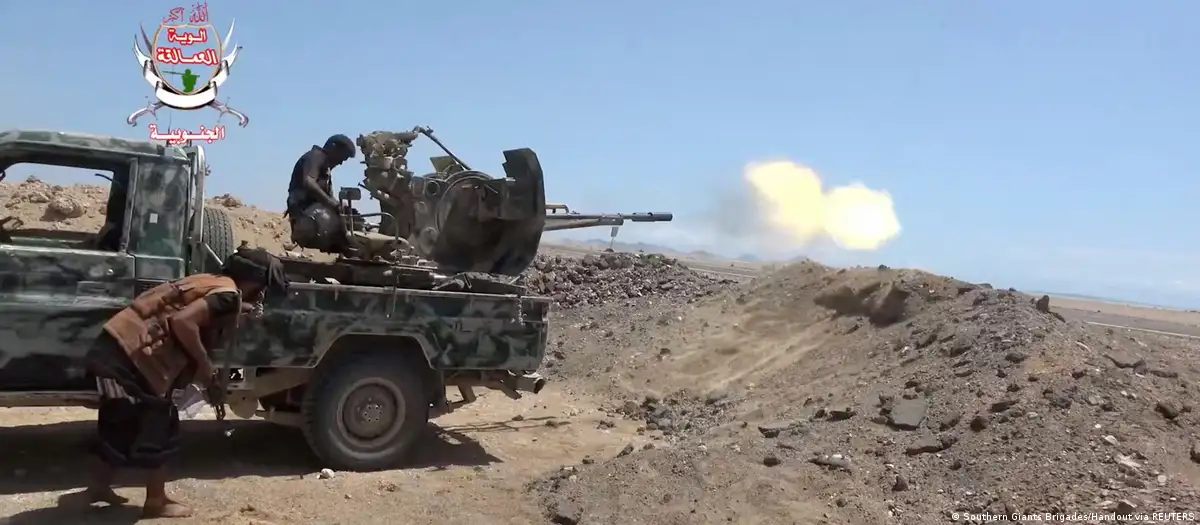
When fighting reached Taiz in early 2015, the city faced an organized force amid the disintegration of state institutions. Local resistance forces subsequently emerged as a force capable of confronting the Houthi advance.
During the formation of the resistance, Sheikh Hamoud Saeed al-Mikhlafi emerged as one of its most prominent leaders, drawing on his social and political networks to organize fighters and mobilize the population.
He was joined by units from the remnants of the army, as well as various local and Salafist formations. However, the diversity of these forces was not matched by the establishment of a unified military command, a shortcoming that later affected the conduct of the battle and the coordination of efforts.
Despite this fragmentation, the resistance succeeded in preventing the Houthis and their allies from bringing the city center under their control. However, this defensive success did not translate into decisive advances beyond the urban area.
The Houthis retained control of key highlands, access points, and major roads, and continued to exert pressure on the movement of civilians and the flow of supplies.
The Saudi-led coalition's intervention failed to bridge this gap. Its airstrikes did not develop into an integrated ground operation capable of decisively resolving the battle in and around the city. This outcome reflected a combination of difficult terrain, the multiplicity of local forces, weak military coordination, and divergent regional priorities.
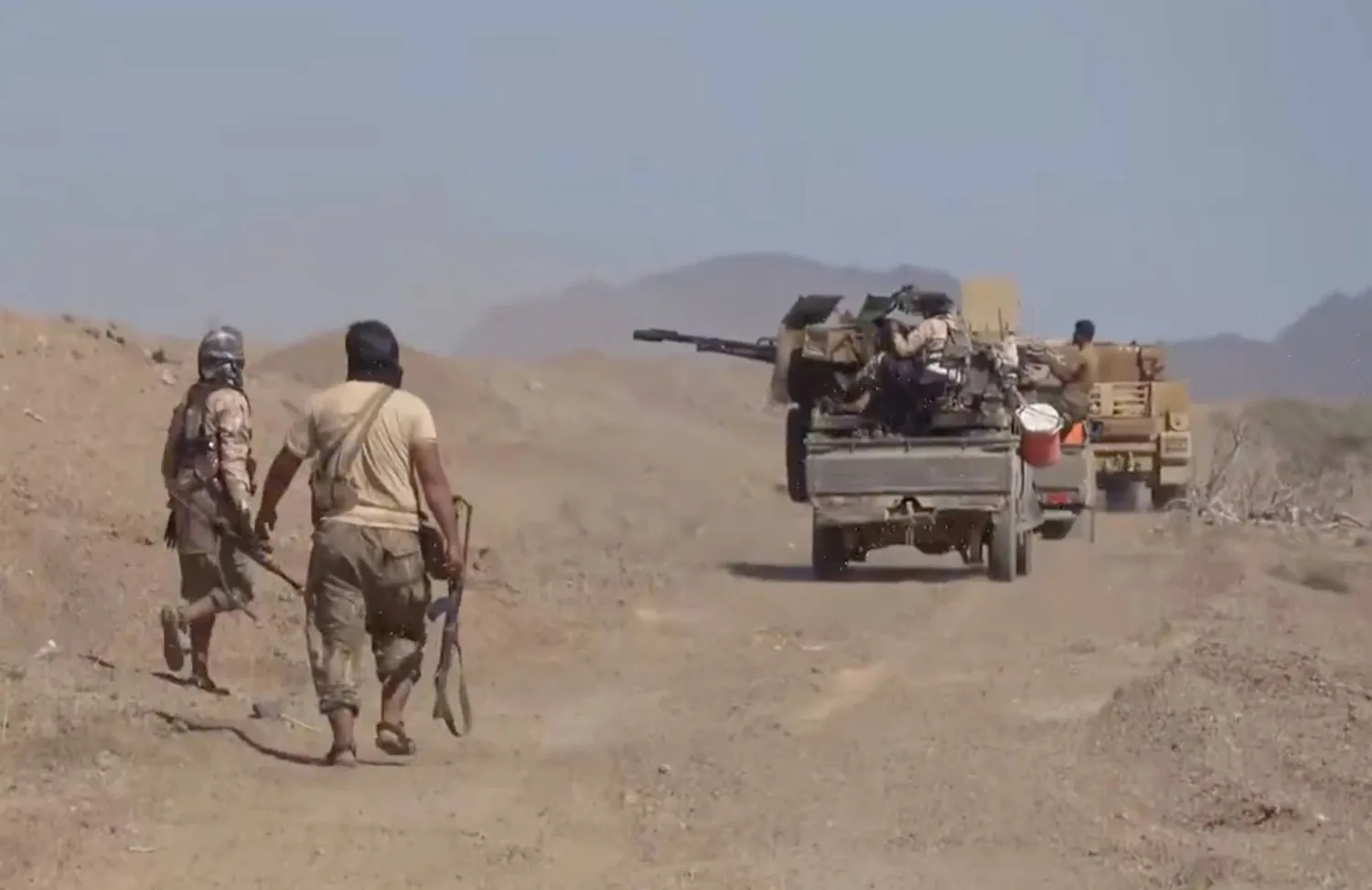
In August 2016, government forces managed to open a limited access route from the southwest, but this did not resolve the problem of maintaining access to the city. The eastern route through Al-Hawban remained a major source of pressure, and the blockade continued thereafter, albeit in a partial and fluctuating form.
While the battle against the Houthis remained unresolved, divisions within the anti-Houthi camp increasingly affected the leadership of the resistance and the distribution of support.
In 2016, relations between al-Mikhlafi, the internationally recognized government, and the coalition deteriorated. He subsequently came under pressure that forced him to leave the city, as some of the support was redirected to rival formations, most notably the Abu al-Abbas Brigades, which were backed by the United Arab Emirates and designated as a terrorist organization by the U.S.
These developments were not merely disputes over leadership; they reflected diverging calculations among regional powers and their local partners. The Islah Party was an influential force in Taiz, while the UAE adopted a hostile stance toward it and supported local formations aimed at curbing its influence.
Thus, Taiz found itself confronting two parallel struggles: a conflict with the Houthis that failed to bring the blockade to an end, and competition within the anti-Houthi camp that undermined efforts to unify military operations.
The Siege of Taiz and Divided Military Command
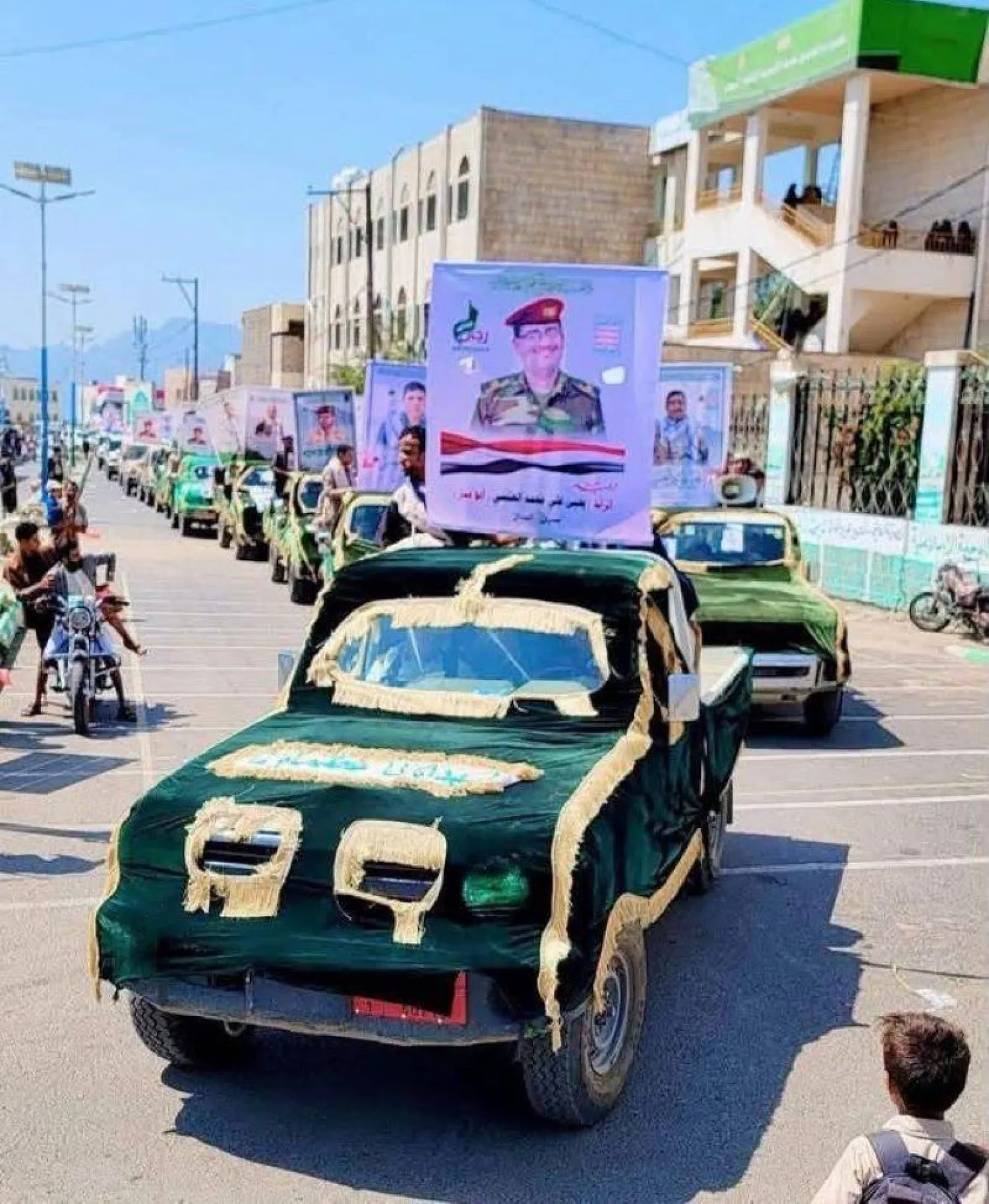
The siege of Taiz began in the summer of 2015, when the Houthis retained control of the northern and main roads leading into the city, restricting the movement of residents and the flow of supplies and making the southern route through Al-Turbah toward Aden the most important remaining access corridor.
The continuation of the siege was not solely the result of Houthi military superiority; it was also linked to the fragmentation of anti-Houthi militia forces and the divergent priorities of their regional backers.
In January 2017, government forces, backed by the coalition, launched Operation Golden Spear to retake the western coast, succeeding in capturing Dhubab, Mocha, and its port.
However, the coastal advance did not translate into a sustained military connection with the fronts around Taiz, and the main roads leading into the city remained under Houthi control.
In April 2018, the National Resistance, led by Tareq Saleh and backed by the UAE, with the participation of Tihami and southern forces, launched an operation toward the Mocha junction and Al-Barh, aiming to advance eastward and break the siege from the western side. However, it failed to achieve a breakthrough that would guarantee the reopening of supply routes to the city.
At the same time, divisions within the anti-Houthi camp deepened. Following advances by the 35th Armored Brigade in Al-Silw and Al-Qabbaytah in early 2018, competition among armed formations within Taiz intensified. The clashes with Abu al-Abbas's forces ultimately ended in April 2019 with an agreement for them to withdraw from the city.
These developments demonstrated that the presence of multiple forces backed by different regional actors had not produced a unified command. Instead, competition over influence and decision-making continued to obstruct coordination among the various fronts.
Even after the eastern Softel access route between the city and Al-Hawban was opened in June 2024, the easing remained limited, as it did not resolve disputes over vital corridors or provide lasting guarantees that they would remain open.
With the launch of Operation Dawn of Yemen in October 2026, these longstanding shortcomings resurfaced in a more dangerous form. According to Reuters reports published on October 16 and 17, the Houthis advanced into areas south of Jabal Saber and seized positions along the road leading to Aden, including areas in Al-Turbah and Al-Misrakh. Government forces, meanwhile, sought to retake the territory and reopen the road with the support of airstrikes.
The threat posed by this advance extends beyond Taiz and its access routes. It could also disrupt government operations around the Bab el-Mandeb Strait and bring the Houthis closer to Aden, with military, political, and symbolic implications for the government and the coalition supporting it.
In an analysis published by the Russian newspaper Vzglyad and republished by Al-Estiklal, control of Taiz could open the way toward Aden and give the Houthis a strategic gain that they could leverage to strengthen their influence and political narrative, with potential repercussions for Riyadh’s calculations and the standing of the Saudi leadership in managing the Yemen file.
At the domestic level, an analysis published by Yemen Future on October 16 argues that bringing Taiz’s resistance strongholds under Houthi control could expand the group’s geographic and political reach toward the coast and weaken its rivals’ ability to compete with it over the representation of Yemen and the country’s future system of governance. It could also reinforce the perception that the Houthis are the actor best positioned to impose facts on the ground.
The battle, meanwhile, places the Presidential Leadership Council before a test that goes beyond managing the front lines to encompass its ability to protect areas under its authority and translate its stated goal of restoring the state into tangible results.
The continued gap between political promises and the capacity to protect civilians threatens to erode public confidence in the government and drive local communities to seek alternative sources of security.
At the same time, the battle presents an opportunity for the National Resistance to demonstrate its role within the anti-Houthi camp by helping defend Taiz and link the coast with the governorate’s interior, provided that coordination with other forces is strengthened.
Taken together, these developments reveal that the core problem lies not so much in the breadth of these forces’ deployment as in their inability to turn multiple fronts into a shared strategy.
This is the challenge confronting Operation Dawn of Yemen amid mounting Houthi pressure and growing questions about the level of government support provided to the forces defending the city.
Between Abandonment and the Six Phases
Against the backdrop of these developments, debate has intensified over the responsibility of the internationally recognized government and the coalition for the deterioration of the military situation in Taiz.
In an analysis published on X on October 13, writer Abdul Nasser al-Muwadea offers a critical assessment, arguing that conditions in the governorate have become more difficult than they were in 2015, as Houthi control has expanded across parts of the countryside and key roads, while military and political circumstances and the morale of the parties have changed.
Al-Mawda warned of a worsening humanitarian toll and criticized the performance of the forces responsible for managing the situation in Taiz, pointing to corruption and internal infiltration.
A similar assessment is reflected in the position of former minister in the internationally recognized government, Saleh al-Jabwani, who criticized military operations along the coast in a post dated October 12, arguing that they were depleting forces without delivering gains commensurate with the losses.
Al-Jabwani believes that efforts to save Taiz are hampered by supply shortages and leadership failures. He called for a Saudi air bridge to support the front and criticized Saudi Arabia’s management of the battle.
Others, meanwhile, argue that the army and local resistance forces continue to hold their ground despite limited resources, amid the government leadership’s inability to secure supplies, reopen supply routes, and lift the siege. This has reinforced a sense of abandonment and left the city facing an ongoing conflict with unequal resources.
The issue is also linked to warnings about poor coordination among anti-Houthi militia forces. Former Prime Minister Maeen Abdulmalik warned, in remarks cited by The Guardian and published by Aden al-Ghad on October 17, that the fall of Taiz could pave the way for Houthi expansion toward Lahj, Aden, Mocha, and Bab el-Mandeb. He pointed to weak coordination and regional rivalries and called for the various military formations to coordinate their efforts.
Meanwhile, reports have emerged that Operation Dawn of Yemen consists of six phases. Defense Minister Taher al-Aqili was quoted as saying that the operation is being conducted in multiple stages and that forces remain in the first phase, while the military leadership has refrained from disclosing further details.
The Regional Dimension and Iran’s Role
According to an assessment by Saudi researcher Muhanna al-Hubail, published by Aden al-Ghad on October 17, the significance of Taiz extends beyond local military calculations to the regional balance of power between Iran and the United States and the negotiations surrounding their rivalry.
Al-Hubail argues that the fall of the city could provide Iran with additional leverage by enabling the Houthis to use their territorial gains to advance Tehran’s objectives. Conversely, Taiz’s continued resistance could limit the group’s ability to translate battlefield gains into broader political outcomes.
Al-Hubail emphasizes that achieving a lasting shift on the ground requires a combination of military resilience, secure supply lines, and unified fronts. The Houthis’ ability to consolidate their gains depends not only on military advances but also on their capacity to exploit them politically, redeploy their forces, and expand their influence into other areas.
Thus, three interconnected dimensions converge in the battle for Taiz: a military dimension, involving roads, highlands, and supply corridors; a political dimension, concerning the credibility of the government and the future of anti-Houthi militia forces; and a regional dimension, linked to the Houthis’ ability to turn gains within Yemen into leverage that strengthens Iran’s position.
From this perspective, Taiz is not merely another front in Operation Dawn of Yemen. It is a battleground whose outcome could influence the course of the war in Yemen and the surrounding balance of power.
The battle for Taiz demonstrates that the real test facing Dawn of Yemen goes beyond retaking positions. It lies in the internationally recognized government’s ability to unify military decision-making, secure supply lines, and achieve tangible gains on the ground.
The loss of the city could strengthen Houthi influence and provide Iran with additional regional leverage, while Taiz’s continued resistance and the restoration of its connections with surrounding areas could significantly affect the balance of the conflict.
Ultimately, the operation’s success will be measured by its ability to change the realities on the ground that have kept Taiz under siege since 2015.
What Has Really Changed?
A comparison between 2015 and 2026 reveals that Taiz has shifted from a battle to prevent the city from falling to a struggle to maintain its links with the surrounding areas. Yet it has not overcome the dilemma that has plagued it since the beginning of the war: enduring the threat without possessing the means to defeat it militarily and politically.
In 2015, local resistance forces prevented the Houthis from taking control of the city center, but they were unable to retake all the access points and roads. In 2017, Operation Golden Spear achieved significant gains along the western coast, but those gains were not integrated into a comprehensive campaign capable of ending the siege.
In 2026, however, renewed fighting brought the issue back into focus at a more dangerous level. The question was no longer simply whether to close an access point or reopen a road, but whether the city could maintain its external lines of communication in the face of an advance threatening to encircle it and wear down its resistance fighters.
What has changed since 2015 is the expanding scope of the Houthi threat and the evolution of the tools used to exert pressure. Meanwhile, their opponents have remained constrained by shortcomings in battle management and fragmented military decision-making.
Despite their multiple formations and broad deployment, the internationally recognized government and resistance forces have failed to develop a unified strategy linking the Taiz fronts with the western coast, amid internal divisions and divergent regional interests.
The deeper conclusion is that Taiz has not been a victim of the Houthi siege alone, nor can its predicament be explained by a conspiracy here or a single decision there.
The crisis has also been compounded by divisions within the anti-Houthi camp, competition among its various factions for influence and decision-making power, the proliferation of centers of power, and the lack of coordination between military and political objectives.
Accordingly, the success of Operation Dawn of Yemen hinges not on the continuation of hostilities, but on its ability to transform the balance of the conflict, break the siege, secure supply lines, and bring the scattered fronts under an integrated military command.
One important issue also warrants attention: the risks posed by Houthi expansion in Taiz today extend beyond military and territorial control. They also include attempts to reshape the demographic and social fabric, as well as the sectarian identity, of areas that fall under the group’s control.
As residents are displaced, concerns are growing that this vacuum could be exploited to resettle individuals loyal to the group, while mosques, schools, and public institutions are used to disseminate its ideology and entrench its sectarian presence in a predominantly Sunni society.
This could bring about profound changes in the identity and social fabric of Taiz, exacerbate sectarian divisions, and make the restoration of social cohesion more difficult in the long term. This is one of the most dangerous changes accompanying the Houthis’ current offensive against Taiz.
Sources
- The Evolution of Hardline Salafism in Taiz [Arabic]
- The Proxy War Perspective in Yemen [Arabic]
- Yemen’s Western Coast: An Overview of Politics, Society, and War Along the Red Sea [Arabic]
- Yemeni Government Launches Offensive to Retake All Areas from Iran-Backed Houthis [Arabic]
- Yemeni Government Announces Large-Scale Military Operation Against the Houthis, and Other Middle East News [Arabic]
- Yemeni Government Calls for Urgent UN Action to Lift the Siege of Taiz [Arabic]
- Why Is the Battle for Taiz So Important? [Arabic]
- In-Depth Analysis: Taiz, a Major Prize in Yemen’s War—Why Is Everyone Fighting So Hard to Control It? [Arabic]
- Russian Newspaper: How the Battle for Taiz Puts Mohammed bin Salman’s Future at Stake [Arabic]
- Analysis: Why the Battle for Taiz Is Linked to the Fate of Yemen’s Political Forces [Arabic]
- Maeen Abdulmalik Warns: The Fall of Taiz Would Open the Way for the Houthis to Threaten Bab el-Mandeb and Besiege Aden! [Arabic]
- Saudi Researcher: Taiz’s Resilience Complicates Iran’s Calculations, and the Battle for the City Could Shape the Next Phase of the Confrontation [Arabic]
- Minister of Defense: Operation Dawn of Yemen Consists of Six Phases, and We Are Still in the First [Arabic]
- Taiz Governor Discusses Activating a Unified Operations Room for Military Formations Under the Leadership of the Ministry of Defense [Arabic]
- Overlooking the Red Sea: Houthis Seize Yemen’s Strategic City of Mocha [Arabic]
- Fake Soldiers on Real Salaries and Saudi Support That Never Arrived: How Did Mocha Fall to the Houthis? [Arabic]
- Al-Shalafi Reveals Formation of a Committee to Investigate Withdrawals from Mocha, Hays, and Al-Khokha and Reorganize the Western Coast Command [Arabic]
- Fact-Checking Rumors About Escalation in Taiz [Arabic]
- Why Is the Battle for Taiz, Yemen, So Important? [Arabic]