Secularism at School Gates: The Hijab Sparks a Crisis Between Turkiye and Azerbaijan
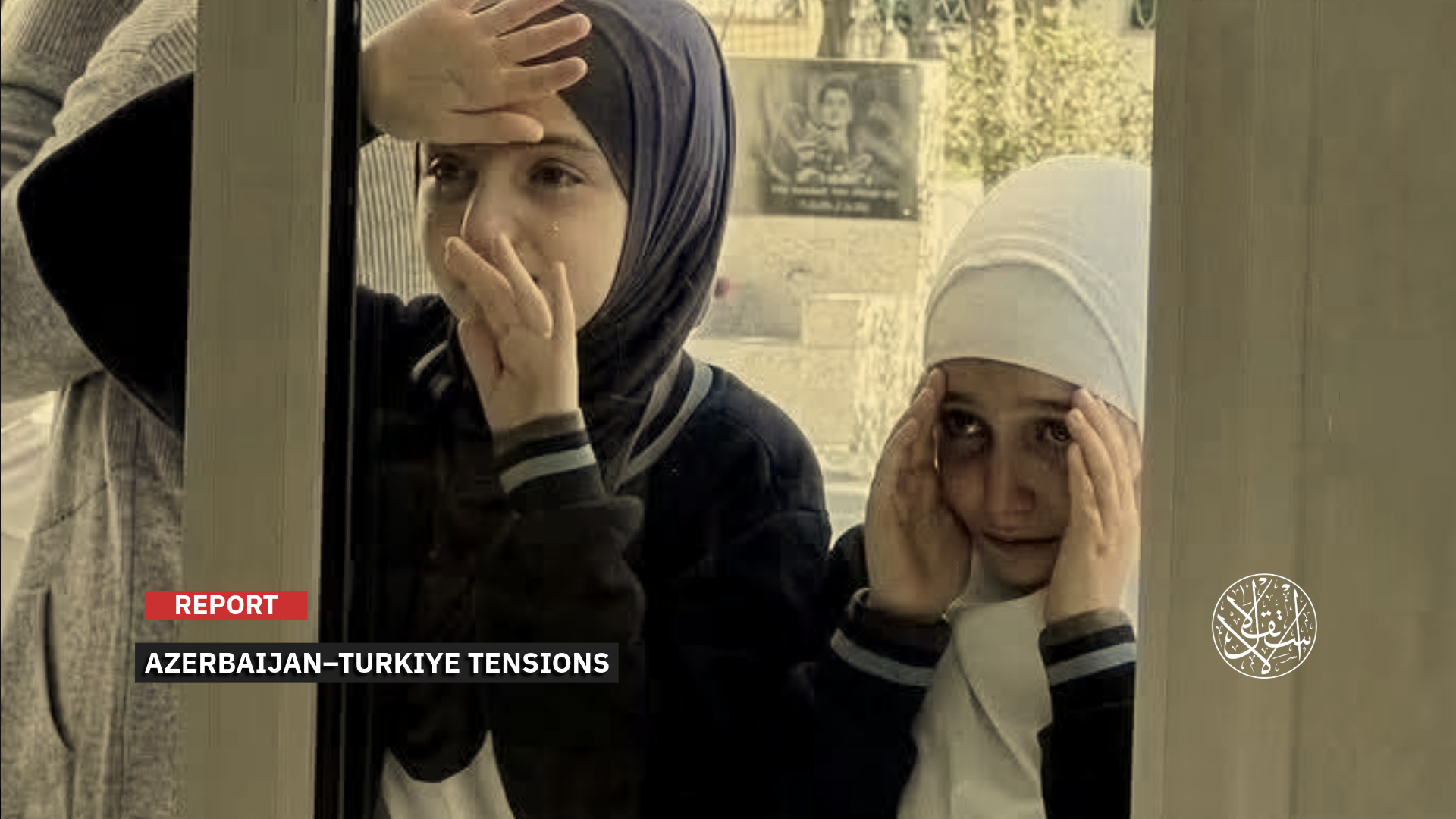
“In Baku, students refused to enter their classrooms in solidarity with their hijab-wearing classmates.”
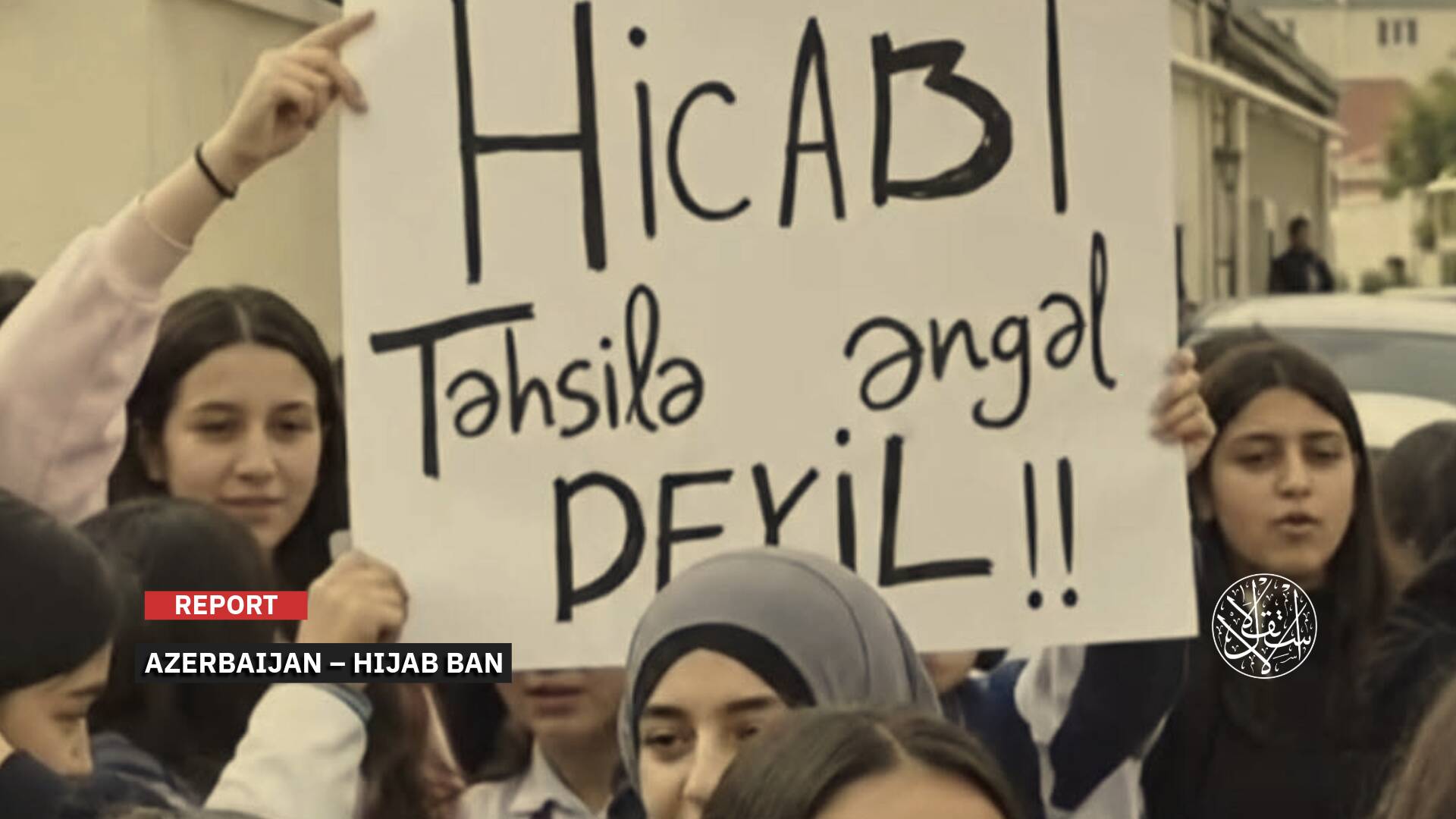
In early October 2026, middle-school girls in the Azerbaijani city of Sumgait returned home after authorities barred them from their classrooms for wearing hijabs.
The scene was captured in videos that spread across social media, and within days became emblematic of a crisis escalating across the country, extending from schoolyards to police stations and from Baku to Ankara.
Within just a few weeks, hijab-wearing students and teachers were barred from entering their schools, prompting protests by students and parents.
The Interior Ministry announced that 37 people had been detained. Meanwhile, Turkiye, Baku’s closest ally, was reminded of one of the most painful periods in its modern history, only to find itself facing Azerbaijani accusations of interference in the country’s internal affairs.
Voices grew louder, warning that school-age girls were being made to pay the price for a political and ideological dispute they had played no part in creating.
How did a government decision that makes no explicit mention of the hijab turn into an effective ban on hijab-wearing girls at school gates?
Is Baku pressing ahead with its vision of secular education, whatever the cost? And how far can the slogan “Two states, one nation” withstand a crisis that touches both identity and faith?
Nationalism and Secularism
The crisis did not begin in schoolyards, but in legislative corridors. On July 7, 2026, Law No. “434-VIIQD” was adopted, adding the principles of “patriotism and secularism” to the General Education Law.
The law made compliance with dress-code rules mandatory for students and staff at public schools, while holding parents responsible for ensuring that their children adhered to them.
When Azerbaijani President Ilham Aliyev brought the amendment into force on July 22, he tasked the Cabinet of Ministers with aligning the dress-code regulations with the new law.
The result was Decision No. 309, issued on September 21 and signed by Prime Minister Ali Asadov, which prohibited students from wearing items of clothing that “disrupt the uniformity of the approved school uniform and are incompatible with the principle of secular general education.”
The decision made no mention of the hijab or head coverings. However, its broad wording left school administrations considerable room for interpretation, which some translated into a ban on hijab-wearing girls entering classrooms.
Activists also reported that some students had been given until the start of the following week to decide whether to continue wearing the hijab, amid warnings that doing so could jeopardize their educational futures.
Baku’s Education Department reinforced this approach by stressing that school administrations were responsible for monitoring compliance with the prescribed dress code, with parents involved in addressing violations.
The scope of the measures widened on October 6, when Decision No. 325 was issued, requiring teachers to wear clothing consistent with the professional and secular character of educational institutions.
Complaints subsequently emerged from hijab-wearing female teachers who said they had been barred from teaching or asked to change their attire.
Through this gradual progression, from legislation to students and then teachers, the issue evolved from a dispute over the hijab into a broader question about the limits of state authority over citizens’ religious appearance within public institutions. This question did not remain confined to legal texts; it soon reverberated through schoolyards.
Security Crackdown
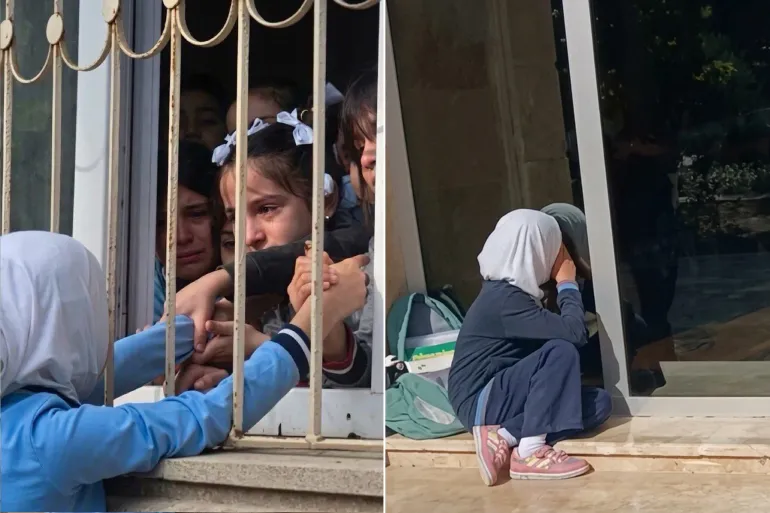
In the circulating videos, girls can be seen standing outside school gates or in schoolyards, waiting for permission to enter that never comes. In another clip, a teacher bids farewell to her pupils with tears in her eyes after being told to remove her headscarf.
She insists that the hijab does not prevent her from doing her job and vows to defend both her right and the children’s right to an education without abandoning her religious principles.
Students did not remain mere spectators. At School No. 69 in Baku’s Balakhani district, students refused to enter their classrooms in solidarity with their hijab-wearing classmates.
Elsewhere, students at several schools chanted slogans demanding the freedom to wear the hijab, while parents took part in gatherings where banners rejected the use of religious attire as grounds for denying anyone an education.
Tensions mounted further after activists reported that the mother of a soldier killed in the Nagorno-Karabakh war had been barred from entering a school because she was wearing a hijab.
The authorities, meanwhile, opted for a security-focused response. In announcing the detentions, the Interior Ministry accused some protesters of clashing with school staff and damaging educational facilities.
It opened a criminal investigation under Article 233 of the Criminal Code, which concerns organizing or participating in actions that disrupt public order.
This followed the detention of religious scholar Abgul Suleymanov near his home on the evening of September 22, after which a court ordered him to serve 30 days of administrative detention.
The move came after he criticized the exclusion of hijab-wearing girls from schools on social media, writing that he would rather go to prison than see young girls denied an education because of their hijabs.
On the media front, the Media and Broadcasting Council warned against politicizing the issue and turning it into a religious dispute, citing alleged fake accounts and information manipulation orchestrated from abroad.
At the same time, users complained of slow internet speeds, particularly on video-sharing platforms such as Instagram and TikTok.
These measures suggest that the authorities view the issue as one that touches the very identity of the state, rather than as a mere administrative dispute over dress codes.
The Land of Conquests
The crisis draws its sensitivity from a contradiction that is difficult to overlook: Islam reached this land at an early stage. The historic region of Azerbaijan, which today spans the present-day republic and northwestern Iran, was conquered in 22 AH (642 CE), during the reign of Caliph Umar ibn al-Khattab.
The campaign was led by Bukayr ibn Abdullah, whom the caliph reinforced with an army under the command of Simak ibn Kharasha, before appointing Utbah ibn Farqad as governor.
Islam became firmly established in the region after Arab tribes were settled in Ardabil, spread widely during the Umayyad era, and, under Abbasid Caliph Abu Ja‘far al-Mansur, the region became a base for its expansion northward.
Today, Muslims account for around 95 percent of the republic’s population, the majority of whom are Twelver Shiites, estimated to make up approximately 70 percent of the population, concentrated in Baku and the central and southern parts of the country.
Sunnis account for roughly 25 percent, most of them following the Hanafi or Shafi‘i schools of jurisprudence, with concentrations in the north.
Yet this former Soviet republic emerged in 1991 from seven decades of communist rule to become a state whose constitution separates religion from the state while guaranteeing freedom of belief. The authorities base their argument on this principle.
MP Sevinj Fataliyeva maintains that the dress-code rules do not target religious beliefs, but seek to create a neutral educational environment that does not discriminate among students on the basis of religious affiliation or social status.
Opponents, however, argue that this purported neutrality forces female students to make a harsh choice between their hijab and their place in the classroom.
This is not the first time such a confrontation has occurred. In December 2010, then-Education Minister Misir Mardanov declared that the school uniform did not accommodate the hijab. Hundreds protested outside the ministry, and the demonstrations ended with 16 people arrested.
At the time, the minister accused internal and external forces of organizing the protests, a scene that today appears to be repeating itself in strikingly similar detail.
It is the same logic of the uniform that Turks heard nearly three decades ago, and whose scars have yet to fade from their collective memory.
February 28
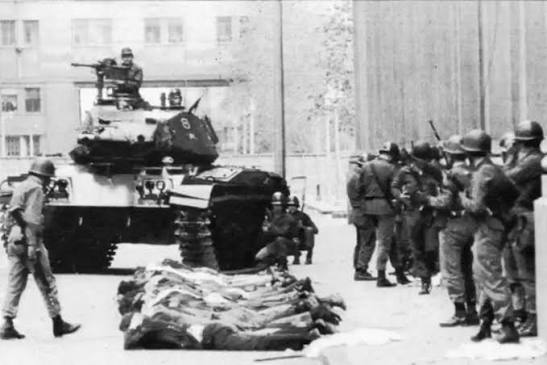
The Turkish reaction came as no surprise. The period of February 28, 1997, remains an open wound in the country’s collective memory, as does the legacy of public-sector dress-code regulations introduced after the military coup of September 12, 1980, led by General Kenan Evren, when women wearing headscarves were barred from entering universities and examination halls.
At some universities, most notably Istanbul University, persuasion rooms were established, where female students were taken and pressured to remove their headscarves or abandon their studies. Thousands of women were dismissed from jobs in education, medicine, and the civil service.
The repercussions extended to graduates of Imam Hatip religious schools and even to private companies that were placed on blacklists for employing women who wore headscarves.
For this reason, Turkish press and media coverage of the crisis transcended the traditional divide between conservatives and secularists. Even the longstanding secular newspaper Cumhuriyet devoted news coverage to the crisis, while the pro-government newspaper Turkiye revisited memories of that era.
The newspaper Sozcu ran the headline ‘Hijab Ban in a Brotherly Country’, while Karar drew a connection between images of girls barred from school and the right to education.
Milli Gazete opted for the stark headline ‘Barred Female Students Return in Tears’, while Yeni Asya described the developments as Reviving the Spirit of February 28 in Baku and called on Ankara to hold talks with the Azerbaijani authorities.
In Yeni Akit, columnist Ali Karahasanoglu compared the arguments being used in Baku today with those voiced by Turkish secularists during that period, when they would say that their mothers wore headscarves but that they could not remain silent about attire they considered contrary to the principles of the republic.
Former Family Minister Fatma Sahin, meanwhile, addressed a message to the Azerbaijani people, saying that Turkiye had endured the bitter consequences of such bans for decades.
She added that excluding women from education and employment had done nothing to resolve security concerns. Instead, it had fractured the social fabric and left deep-seated trauma that took decades to heal.
She stressed that her appeal was offered as fraternal advice, not as interference. Before long, the debate had moved beyond newspaper pages to party platforms and the corridors of political power.
Ankara Calms and Baku Escalates
Official Ankara initially appeared keen to contain the hijab crisis and avoid turning it into an open dispute with Baku, an ally with which it maintains close strategic and security ties.
Relations between the two countries rest not only on political affinity, but also on military and security cooperation and a partnership strengthened by the 2021 Shusha Declaration, which established a framework for their alliance.
Turkiye’s response to the crisis was therefore not simply a matter of solidarity with hijab-wearing students. It was also a test of Ankara’s ability to defend its position on the hijab without damaging a relationship that both capitals describe with the slogan ‘Two states, one nation’.
An early indication of the issue’s sensitivity came when Turkish President Recep Tayyip Erdogan addressed the question of hijab bans in his speech to the United Nations General Assembly on September 22, one day after Azerbaijan amended its school dress-code rules. He said Muslim women and girls were facing increasing discrimination.
He argued that banning the hijab in schools constituted an infringement of women’s fundamental rights. However, he did not name Azerbaijan or explicitly link his remarks to the decision issued in Baku.
This allowed Ankara to express its principled objection without entering into a direct confrontation with Azerbaijan’s leadership.
During the first few days, the Turkish government issued no direct official response to the implementation of the restrictions in Azerbaijani schools, despite the circulation of footage showing students being barred from entering their classrooms.
Omer Celik, spokesperson for the ruling Justice and Development Party (AKP), instead emphasized that disagreements over domestic and foreign policy could be resolved through dialogue between the two countries.
This approach amounted largely to an attempt to contain the crisis and prevent it from escalating from a media dispute into political tension between the allies.
Yet Ankara’s caution did not prevent criticism from spreading within Turkiye. Oktay Saral, a senior adviser to Erdogan, described denying hijab-wearing students access to education as unacceptable, arguing that keeping a student at the school gate because of her head covering was incompatible with justice and her right to education.
He called on Baku to reverse the practice, moving beyond general allusions to direct criticism of what was happening in Azerbaijani schools.
Voices within the ruling AKP joined the criticism. Party lawmakers urged the Azerbaijani authorities to reconsider the restrictions imposed on hijab-wearing students after videos showed girls being prevented from joining their classes.
The debate was thus no longer confined to the Turkish press or opposition parties. It had reached figures within the president’s political circle, making the issue increasingly sensitive for Baku.
Other Turkish political actors, meanwhile, sought to distinguish opposition to the restrictions from interference in Azerbaijan’s internal affairs.
Kemal Kilicdaroglu, leader of the Republican People’s Party (CHP), acknowledged that his party bore some historical responsibility for Turkiye’s era of hijab bans, but urged Baku not to interfere in women’s clothing.
Mahmut Arikan, leader of the Felicity Party, reminded Azerbaijani President Ilham Aliyev in an open letter that many of the mothers and wives of soldiers who fought in the Nagorno-Karabakh war wear hijabs. The Free Cause Party (HUDA PAR) described the measures as a violation of fundamental rights.
Opposition to the restrictions also split beyond political statements and into the streets. In Istanbul, demonstrators gathered outside the Azerbaijani consulate to protest the restrictions, carrying banners rejecting the hijab ban and invoking Turkiye’s experience during the February 28, 1997 period.
References to that period were not merely historical reminders. They served as a warning that restrictions on religious appearance could exclude women from education and employment and leave social scars that would be difficult to heal quickly.
Baku, however, did not treat these criticisms solely as a debate over rights and freedoms. It increasingly viewed them through the lens of sovereignty and foreign interference. On October 2, Aliyev addressed his country’s foreign policy approach during a conference organized by his party.
He stressed that Azerbaijan would not accept interference in its affairs and needed neither guardianship nor patronage from anyone.
Although he did not explicitly name Turkiye or the hijab crisis, his remarks reflected growing sensitivity to criticism from a country with which Baku maintains a close alliance.
This stance was accompanied by warnings from Azerbaijan’s Media and Broadcasting Council against politicizing the issue and turning it into a campaign targeting relations between the two countries.
The council cited fake accounts and information manipulation that it said were being orchestrated from abroad, warning of attempts to exploit the crisis to damage the Turkish-Azerbaijani alliance.
Allegations also emerged of a coordinated campaign targeting the Azerbaijani government, although official statements from Azerbaijani bodies did not explicitly name Turkiye on every occasion.
The most significant development came on October 13, when the ruling New Azerbaijan Party, led by Aliyev, entered the confrontation more directly.
The party accused Turkiye’s AKP and political and media figures close to it of exploiting the hijab issue to fuel division within Turkiye and the wider Muslim world, while exerting political pressure on Baku.
It called on the Turkish government to abandon what it described as a harmful policy, stressing that no country, regardless of its religious or political ties with Azerbaijan, had the right to impose its will on the country or interfere in its internal affairs.
The dispute had thus moved from diplomatic restraint to an open confrontation between the ruling parties of the two countries. While critics of the restrictions frame the issue as a defense of students’ right to education and freedom of belief, Baku insists that regulating school uniforms is a sovereign matter governed by its vision of state secularism, rejecting any attempt to turn the issue into a tool of political pressure.
This divergence puts the slogan ‘Two states, one nation’ to a practical test. Is the strategic partnership strong enough to contain a dispute involving religion, identity, and individual rights? Or could differing interpretations of secularism and the limits of religious expression open the door to broader tensions?
The escalation in rhetoric does not necessarily mean that the two countries are heading toward a rupture. Their shared security, military, and economic interests give both sides strong incentives to preserve the alliance.
Nevertheless, the crisis has exposed the limits of political solidarity when it clashes with domestic policies affecting questions of identity and faith.
It has also revealed the difficulty Ankara faces in remaining silent when scenes of exclusion recur in a country it regards as brotherly, given that ending restrictions on women who wear the hijab has been a central part of its own political narrative.
In turn, Baku maintains that such solidarity must not become a form of tutelage over its domestic decisions.