Would the Fall of Bab El-Mandeb Pave the Way to Sana’a or Prolong Yemen’s War?
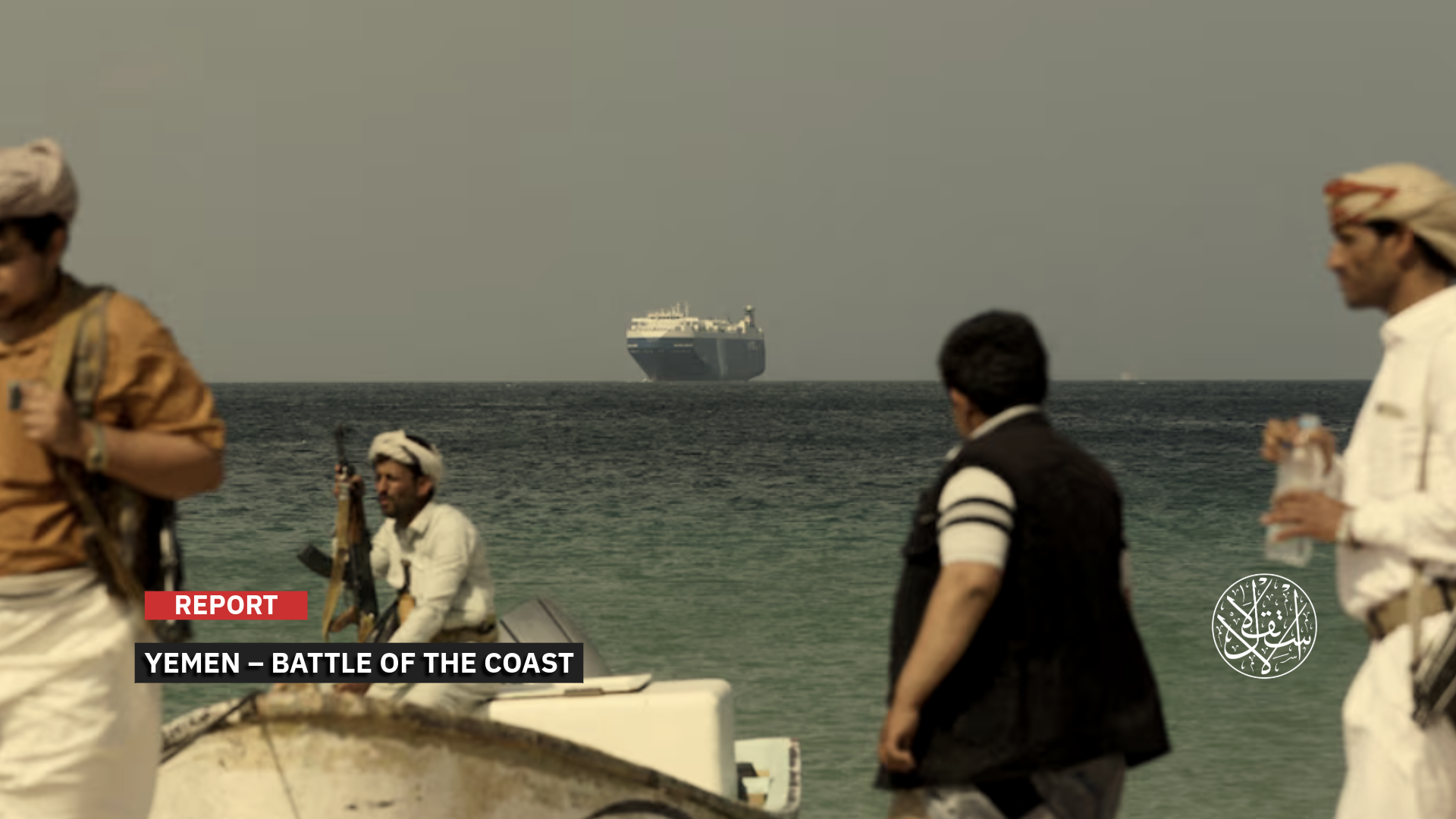
"The coalition announced a large-scale operation that it said destroyed 136 Houthi military targets."
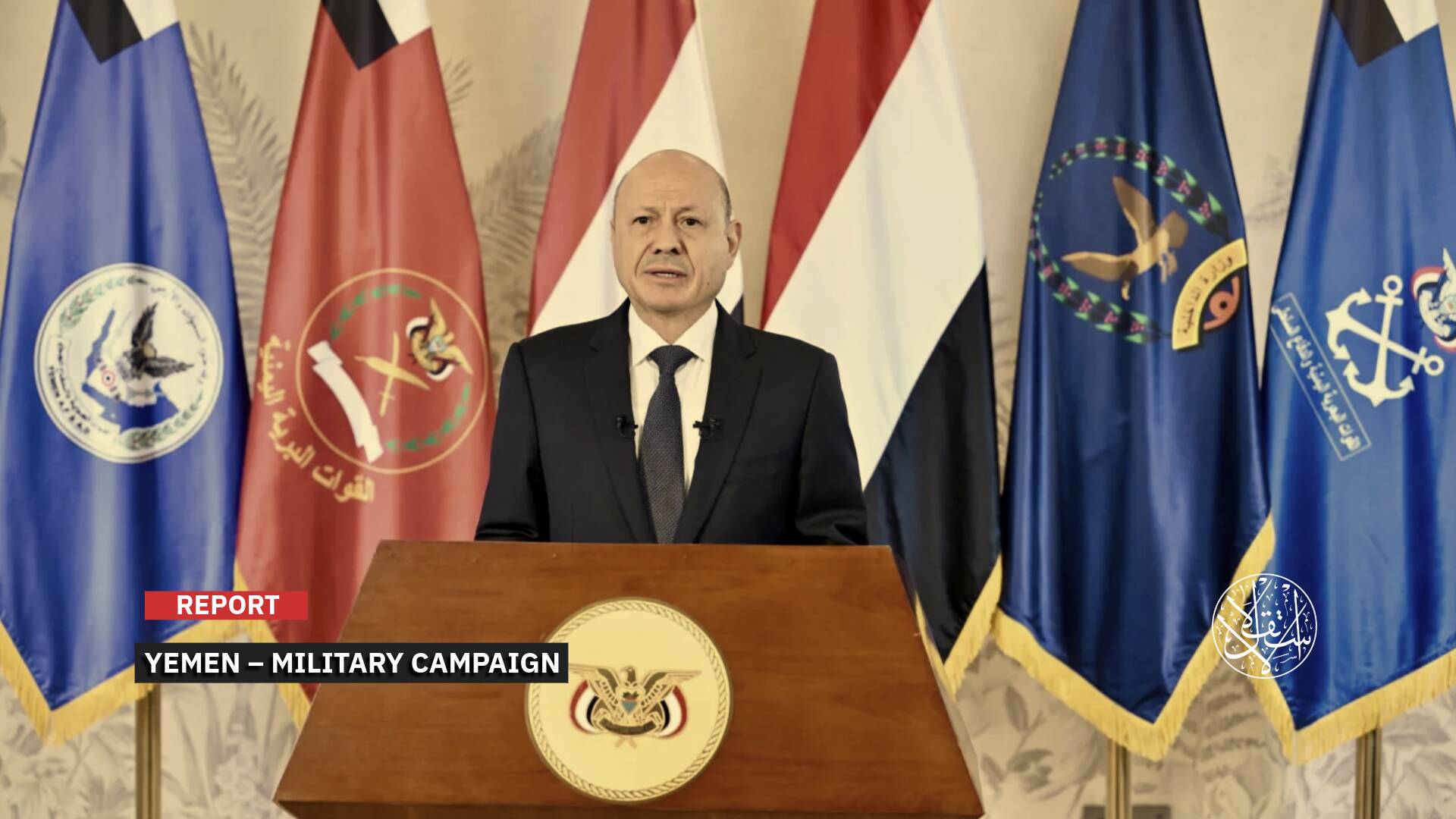
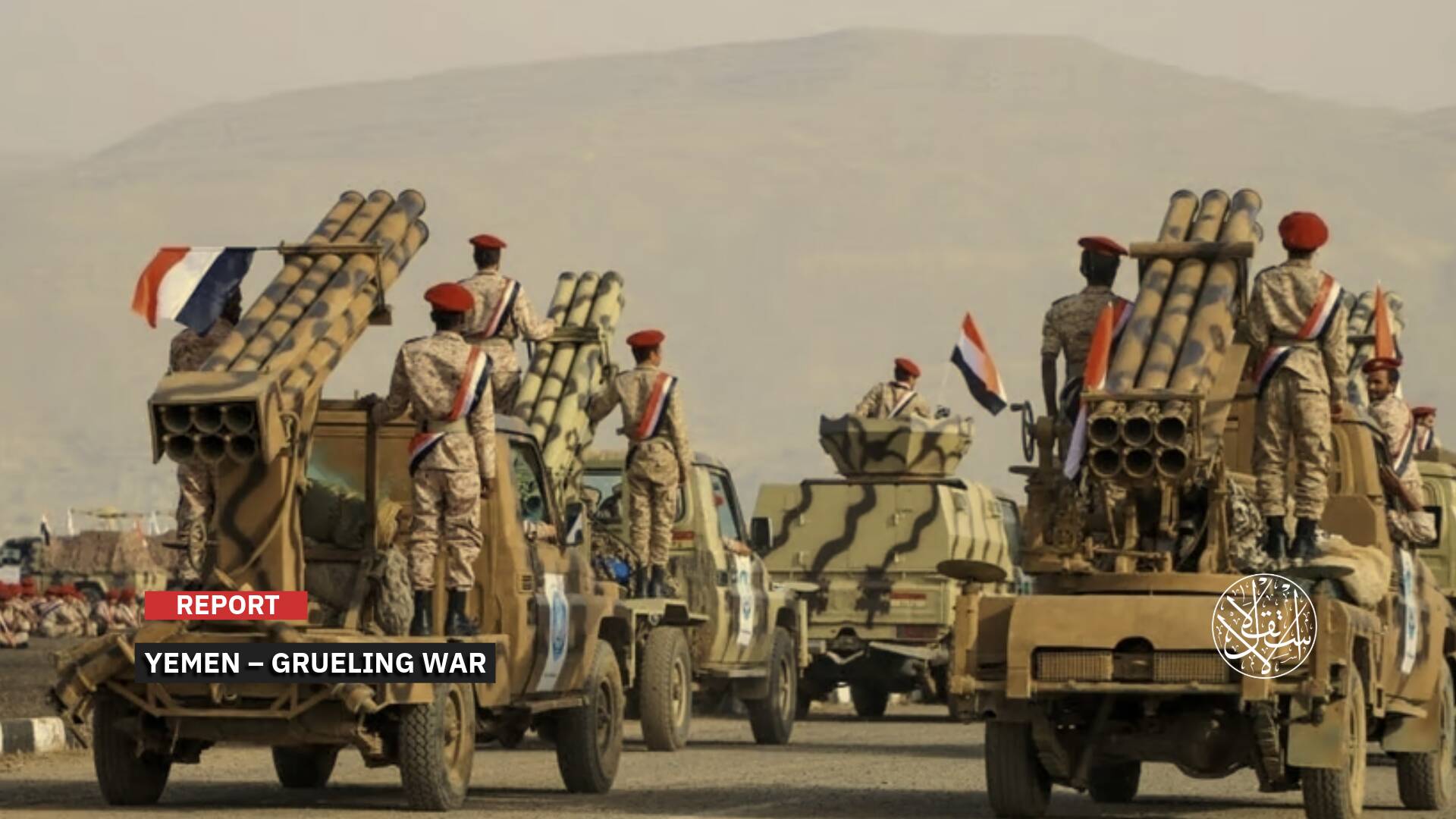
Yemen’s war is entering a more complex phase as military operations to retake Houthi-held territory expand, raising questions about the group’s ability to sustain its fight under mounting airstrikes and a ground offensive and whether its shrinking weapons capabilities could weaken its grip on the territory it controls.
On October 10, 2026, the Saudi-led military coalition announced a large-scale operation that it said destroyed 136 military targets in Houthi-controlled areas, as government forces continued their counteroffensive.
A War of Attrition
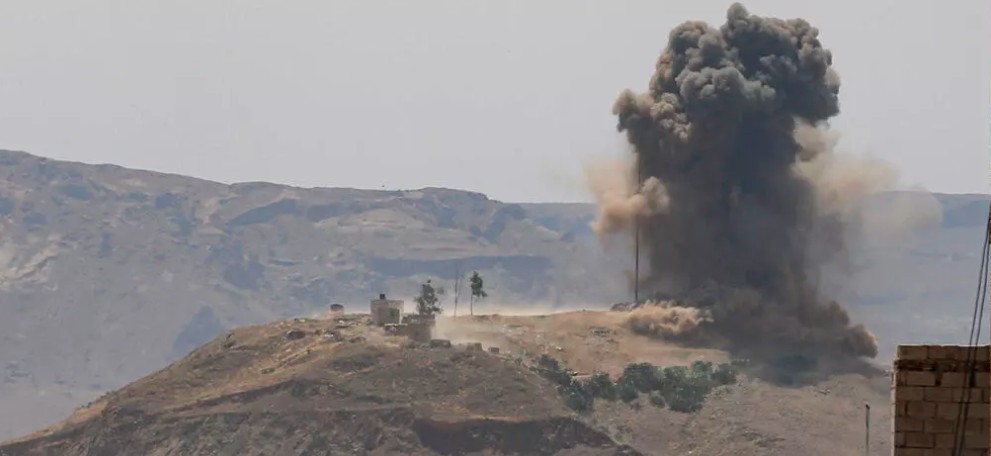
The Houthis’ ability to withstand the offensive depends on several factors, including retaining manpower, financial resources, and weapons; moving fighting into areas where airstrikes are less effective; and exploiting any failure by their opponents to turn airstrikes into lasting territorial gains.
Yemeni military expert Ali al-Dahab told Al-Estiklal that “the Houthis’ ability to keep fighting is closely tied to the situation on the front lines. Most battles that erupted in 2015 have since subsided, leaving active fighting concentrated along the western coast and the Taiz front. This has allowed the group to focus its resources on areas where clashes continue.”
Al-Dahab said “the Houthis draw on the human, financial, and natural resources of the areas under their control, including recruitment, levies, taxes, and customs revenues, as well as their use of mountainous terrain, waterways, and fuel. These resources help the group offset some of its losses and continue financing military operations, even as its positions come under airstrikes.”
By contrast, the military expert pointed to the weakness of government forces in Taiz and the limited support they receive, noting that local resistance forces play a prominent role in the fighting.
He stressed that “the Houthis’ ability to absorb airstrikes is linked to the failure to capitalize on their effects on the ground. Without effective military advances, even sustained bombardment may have a limited impact on who controls territory.”
This assessment suggests that the turning point will depend less on the number of targets destroyed than on how much the strikes degrade the Houthis’ command, weapons, and supply networks, and whether government forces can retake and hold positions.
If airstrikes continue without a coordinated ground advance, the campaign could become a prolonged war of attrition, allowing the Houthis to retain their ability to prevent a decisive outcome.
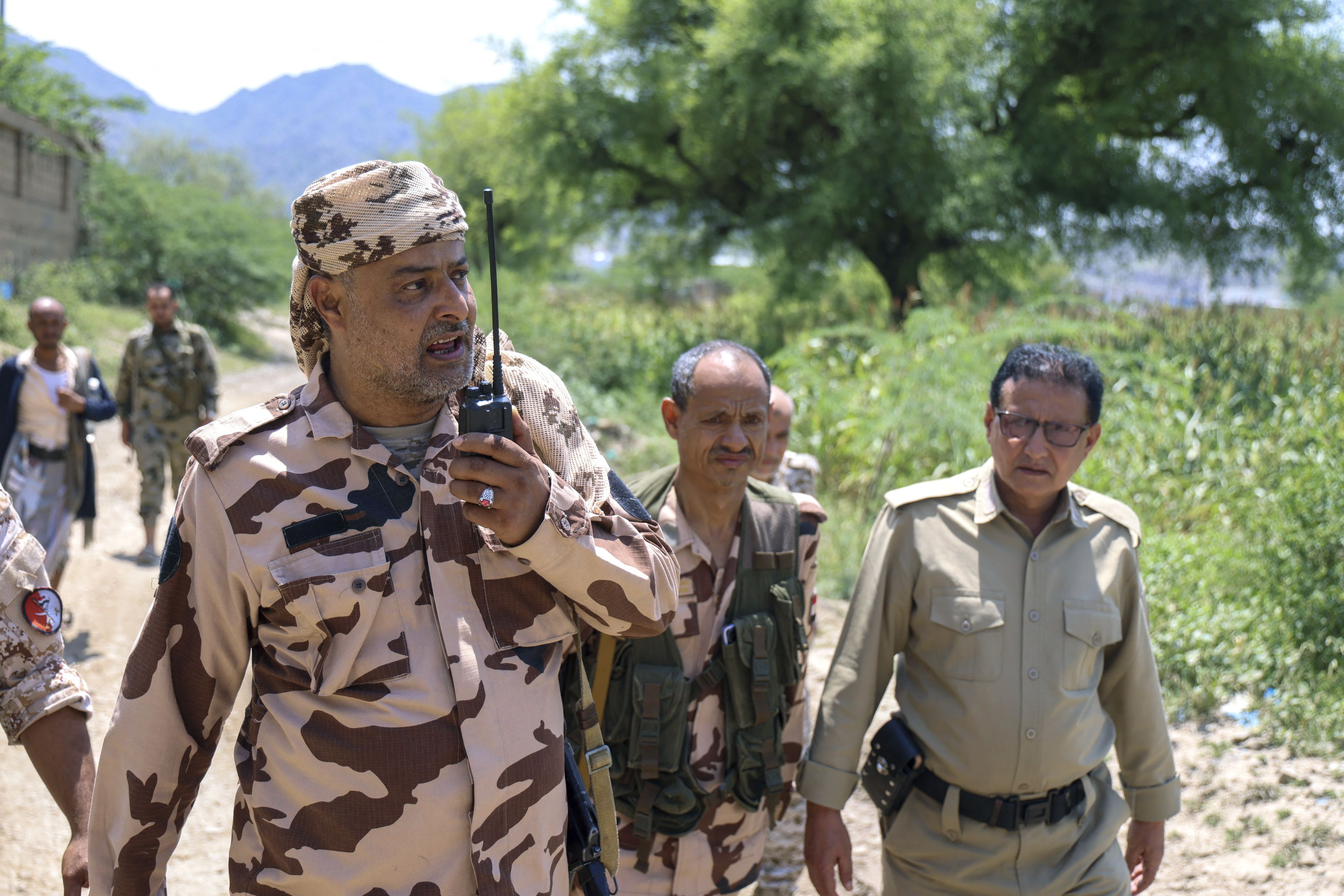
Abdulsalam Mohammed, chairman of the Yemeni Abaad Studies and Research Center, told Al-Estiklal that the Houthis risk exhausting their capabilities in pursuit of strategic objectives, explaining that the group concentrated a significant portion of its forces in exposed coastal areas in an attempt to seize Bab el-Mandeb before mounting military pressure pushed it toward the surrounding highlands.
Mohammed believes the Houthis’ move into the mountains reflects an attempt to preserve their ability to threaten shipping and coastal areas, even if they are forced to withdraw from the strait.
“The mountains of Taiz overlook Bab el-Mandeb, the Lahij and al-Mudharabah areas, the al-Arah coast near the Gulf of Aden, and the capital, Aden,” he said, arguing that these positions could give the group new vantage points from which to sustain military pressure.
However, Mohammed distinguishes between attrition and collapse, arguing that the current pressure does not necessarily mean a decisive defeat is imminent.
He identified three key signs that would indicate the Houthis were beginning to collapse: a breakdown in their leadership structure; a decline in their weapons capabilities as factories and missile production facilities are targeted and smuggling operations are halted; and the loss of territory they control.
These indicators suggest that the group’s decline will not be measured solely by territorial losses but also by its ability to replace leaders and weapons, maintain supply lines, and prevent battlefield setbacks from triggering internal organizational turmoil.
If airstrikes disrupt weapons supplies while government forces advance, the Houthis could find it increasingly difficult to manage multiple fronts simultaneously.
Mohammed noted that the Houthis are making tactical gains along the coast but could suffer strategic losses if the pressure continues.
He argued that retaking key areas, alongside support for resistance forces in Taiz and elsewhere, could create opportunities for residents to turn against the group.
But that scenario depends on the presence of government forces capable of advancing, not simply on Houthi setbacks on a single front.
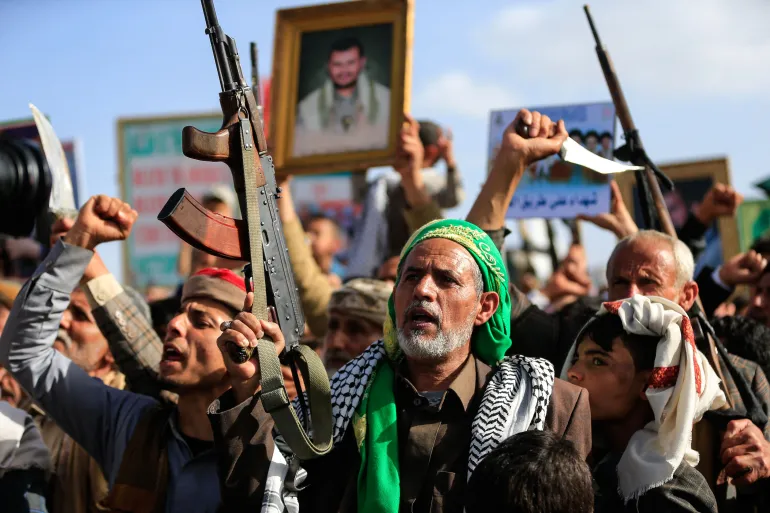
Battlefield Gains
Retaking Bab el-Mandeb would be a strategic gain that extends far beyond its immediate military value, given the strait’s importance to international shipping and the economic and security interests tied to it.
But regaining control of the strait would not automatically open the road to Sana’a. Advancing from the coast into the interior would require navigating different terrain, securing supply lines, and coordinating the efforts of the various anti-Houthi forces.
Yemeni military expert Ali al-Dahab warned that divisions within the government camp could undermine efforts to turn coastal advances into broader gains.
“The camp supporting the internationally recognized government is already divided,” he said.
He pointed to competing banners and agendas that do not necessarily translate into battlefield gains for the government, making it harder to agree on the next objectives after retaking coastal areas.
Al-Dahab noted that some forces fighting along the coast promote separatist goals, raising suspicions among other anti-Houthi factions, particularly those from northern and central Yemen.
If these divisions persist, territorial gains could remain limited military achievements rather than part of a unified strategy to restore state authority.
Mohammed, meanwhile, believes that retaking the entire coast, including Bab el-Mandeb and Hodeidah, while strengthening the fronts in Marib and Taiz, could shift the balance of the conflict and weaken the Houthis’ ability to hold other areas.
He argues that losing strategic positions could encourage local resistance movements to mobilize and increase pressure on the group from within the territory it controls.
But this scenario assumes that anti-Houthi forces can coordinate their operations and overcome their political differences, a challenge no less significant than the military advance itself.
Mountainous terrain gives defenders a battlefield advantage, while competition among anti-Houthi factions could erode the gains made along the coast and prevent them from translating into an advance toward Sana’a.
Retaking Bab el-Mandeb could therefore mark a turning point in the war, but it would not guarantee a decisive outcome.
Reaching Sana’a would require a sustained degradation of Houthi military capabilities, government forces advancing along multiple fronts, and a unified political and military strategy capable of governing recaptured areas and preventing new conflicts among the forces involved.
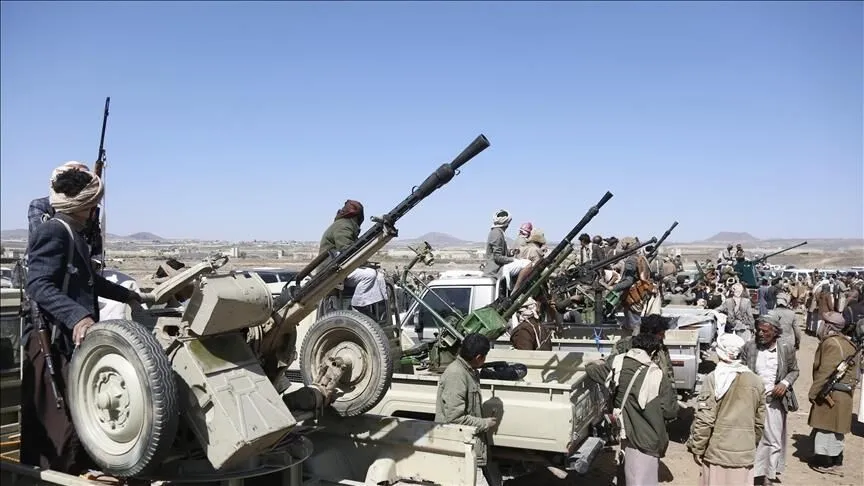
Urban Warfare
The threat of urban warfare does not begin only when forces reach Sana’a. It is already evident in Taiz and other areas where shifting front lines overlap with populated communities.
Yemeni military expert Ali al-Dahab explained that fighting in Taiz has moved beyond conventional warfare to include hit-and-run attacks, ambushes, sniper fire, control of high ground, and road blockades, amid intermittent clashes between the Houthis and their opponents.
“The war has entered a phase of fighting inside cities and rural areas, with forces occupying high ground. These conditions restrict residents’ movement and disrupt their daily activities and access to essential supplies,” al-Dahab said.
He described the situation in Taiz as extremely difficult, with the siege continuing despite the Houthis’ failure to capture the city since 2015 and sustained military pressure.
Taiz offers a glimpse of what other cities could face if the ground offensive expands. Fighting in populated areas is not just about controlling streets and buildings. It also affects access to food, fuel, and humanitarian aid, residents’ freedom of movement, and the delivery of essential services.
This scenario differs from Mohammed’s assessment that the Houthis could collapse as they lose strategic positions and face growing popular opposition.
He argues that a decisive outcome may not require a full-scale urban war if the loss of key areas weakens the group and encourages local opponents to mobilize. But that remains a possibility contingent on a shift in the balance of power on the ground.
If the Houthis refuse to retreat or reach a settlement, the conflict could instead become a prolonged war of attrition across cities, mountains, and coastal areas, rather than a rapid advance toward the capital.
The outcome would then depend on the government forces’ ability to sustain the fight, secure the areas they retake, and prevent divisions within their own camp from allowing the Houthis to regain the initiative.
The evidence suggests that the challenge is not simply to drive the Houthis out of Bab el-Mandeb but also to prevent them from rebuilding their ability to threaten the strait, dismantle the sources of their military strength, and unite the forces fighting them.
Between the prospect of a gradual Houthi collapse and a prolonged urban war, the decisive factor will be whether Yemen’s internationally recognized government can turn military superiority into lasting control while minimizing the cost to civilians.
Sources
- Coalition Says It Destroyed 136 Houthi Military Targets, Ramped Up Air Support for Yemeni Forces [Arabic]
- Road Blockades and Battles for the High Ground: Why Are the Houthis Trying to Encircle Taiz? [Arabic]
- Yemen’s Government Launches Major Military Offensive Against the Houthis [Arabic]
- All-Out War: Why Did al-Alimi Choose This Moment to Take on the Houthis?