Operation ‘Dawn of Yemen’: Are Government Forces Finally Moving To Restore State Control and Defeat the Houthis?
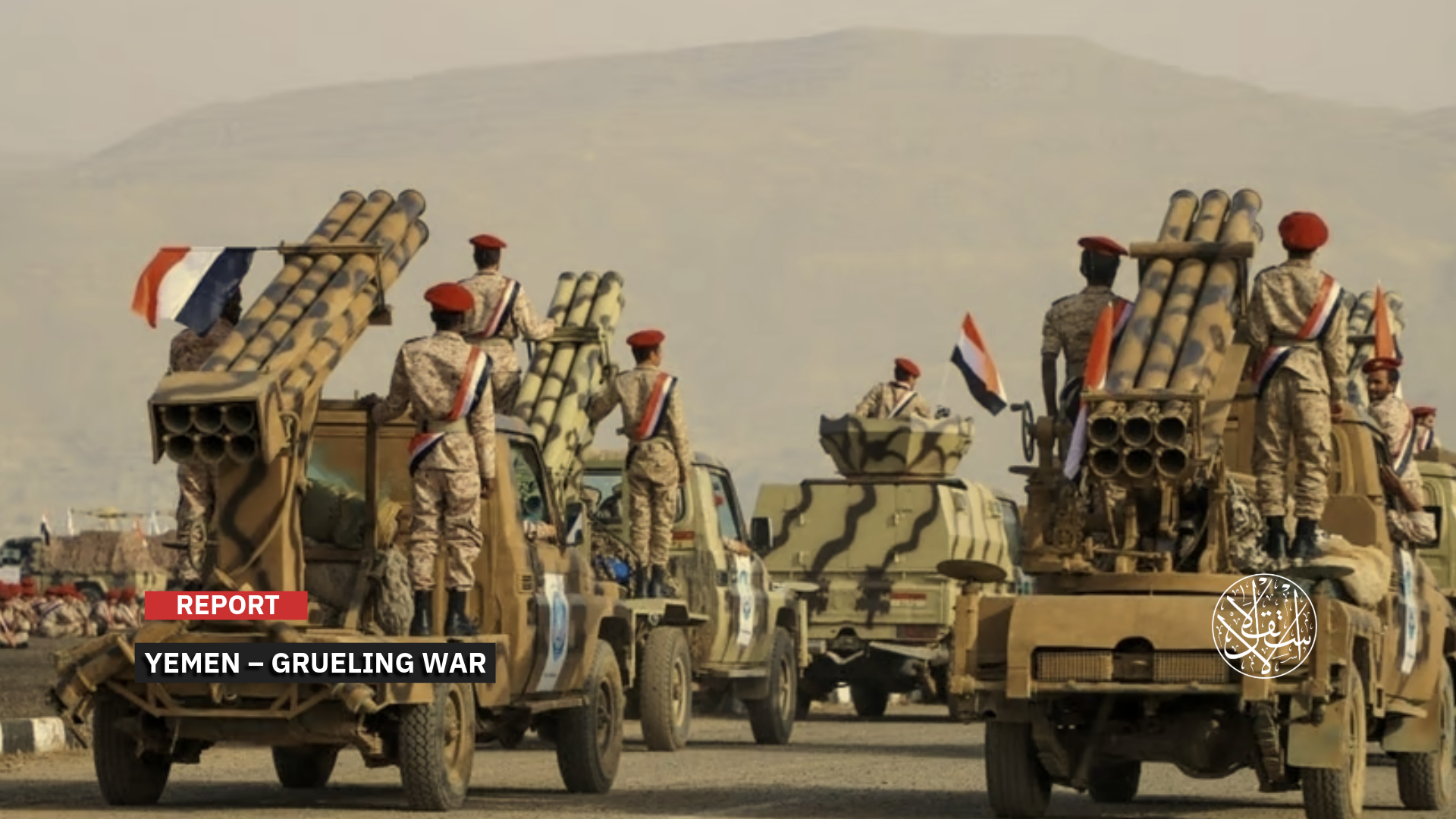
"The Houthi collapse has accelerated as government forces make advances."
With the same speed previously witnessed on the fronts of Mokha and Bab el-Mandeb, the fronts across Taiz’s districts collapsed in the face of the Houthi militia’s advance.
Areas, positions, and villages fell like autumn leaves, extending all the way to the city of Al-Turbah (Al-Hujariah) in southern Taiz—a city that stands as one of the governorate's most important urban centers, a final stronghold, and a vital lifeline connecting it to the cities of Lahj and Aden to the south, thereby sustaining its very existence.
But now, in the opposite direction and in dramatic fashion, the same collapse is unfolding within the Houthi ranks, which until recently had seized full control of Mokha and Bab el-Mandeb on Yemen’s western coast with a speed that caught everyone off guard.
The Houthi collapse has accelerated as government forces, represented by the Giants Brigades, Nation’s Shield Forces, and Popular Resistance, continue to advance, to the point that it has become difficult to keep pace with developments or stop to examine and assess them in detail.
The Yemeni government had launched a broad military operation, declaring the start of efforts to liberate all Yemeni territory.
On Monday, October 5, Presidential Leadership Council Chairman and Supreme Commander of the Armed Forces Rashad al-Alimi announced the launch of Operation ‘Dawn of Yemen’ to restore state institutions, liberate the capital, Sana’a, and end the Houthi takeover.
“With God’s blessing, Operation Dawn of Yemen has begun to restore state institutions, liberate the capital, Sana’a, and end the coup by the ‘Houthi terrorist militias,’” President al-Alimi said in a post on X.
“With God’s help, the will of our people, the valor of our armed forces and all military formations, and the support of our brothers and friends, Yemen will move toward a new dawn of freedom, peace and stability,” he added.
Within less than 24 hours of the launch of the military operation, government forces, backed by more than 100 Saudi-led coalition aircraft, managed to retake the city of Mokha and capture Bab el-Mandeb and the nearby Dhubab area. All of these areas are part of Taiz, which the Houthis continue to besiege.
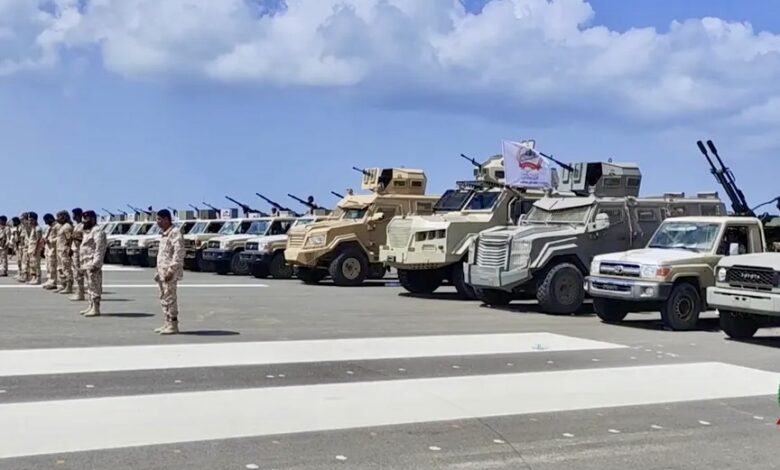
The Fall From Within
The fall of Mokha and Bab el-Mandeb was initially less a result of the Houthis’ strength or the weakness of government forces than of collusion from within the government camp itself.
The areas were handed over to the Houthis without a single shot being fired, while the state’s weapons were handed over to the militia as spoils, in a scene reminiscent of what happened in Mosul, Iraq, in 2013, when the city was emptied, and its weapons and resources were handed over to what was then known as the Islamic State.
The Houthis quickly put the advanced military equipment they seized in Mokha to use, turning it against the remaining areas of Taiz, the city they have kept under a suffocating siege since 2015.
Just as positions in Mokha and Bab el-Mandeb were handed over to the Houthis, the same thing happened in many villages, areas, and districts across Taiz province, through the same side that had previously handed over its weapons and equipment to the Houthis on a silver platter.
It was striking that the Taiz fronts were left without military support in the form of weapons and ammunition, despite appeals from resistance fighters to government authorities and their extraordinary resilience as they faced the Houthi advance with their personal weapons.
However, narrow political calculations within the government camp, along with the complicity of some parties through their sleeper cells, ultimately led to the fall of most of Taiz’s fronts and villages, while the city itself continues to suffer a severe Houthi siege, even as the resistance has shown the highest levels of steadfastness and resilience.
As for what happened in al-Turbah, south of Taiz, sleeper cells played a key role in disrupting Yemeni government forces.
The cells emerged with their weapons in the middle of the city, declaring that it had fallen and chanting the Houthi slogan, creating the impression that the city had been taken over by the militia.
That move, along with the rumors surrounding it, had a major impact on undermining the morale of fighters and causing some fronts to collapse.
But the reality is that residents of al-Turbah confronted the cells, managed to contain and control them, arrested some of their members, and uncovered the hiding places of others.
They secured the strategic city, which remains under their control to this day despite continued rumors that it has fallen.
On the other side, the Houthis quickly moved to try to breach the defenses around Taiz, as resistance fighters and the public were distracted by Turbah, whose fall the Houthis had falsely claimed, in an attempt to enter the heart of Taiz, which has resisted the militia since 2015.
Fighting erupted around Taiz on the eastern and western fronts. According to developments on the ground, Houthi forces are racing against time to tighten their control over the city and seize it, potentially turning it into a bargaining chip in future negotiations with the internationally recognized government.
Yet the resistance remains fierce, despite no reports so far of government forces arriving to reinforce the besieged city, which represents the central battleground in Yemen’s broader conflict.
The greatest threat to Taiz, however, remains the sleeper cells that had established a foothold in parts of the city and had previously facilitated the entry of some Houthi fighters into the al-Safiya area.
According to the account cited, the fighters infiltrated the city aboard public buses and later, with the help of cells linked to a particular political faction, managed to seize the home of Yemeni Parliament Speaker Sultan al-Barakani, followed by the home of Presidential Leadership Council Chairman Rashad al-Alimi in his hometown in the Al Oloom area of Taiz.
The danger lies in the possibility that the Houthis could seize the city while government forces are focused on retaking the western coast and advancing toward Hodeidah.
Reports have said that Mokha, Dhubab and Bab el-Mandeb have fallen to government forces, while circulating reports suggest that the rapid advance could extend to the cities of al-Khokha, Hays, and Bajil, and possibly bring government forces to the outskirts of the strategic city of Hodeidah, which is of critical importance to both sides of the conflict.
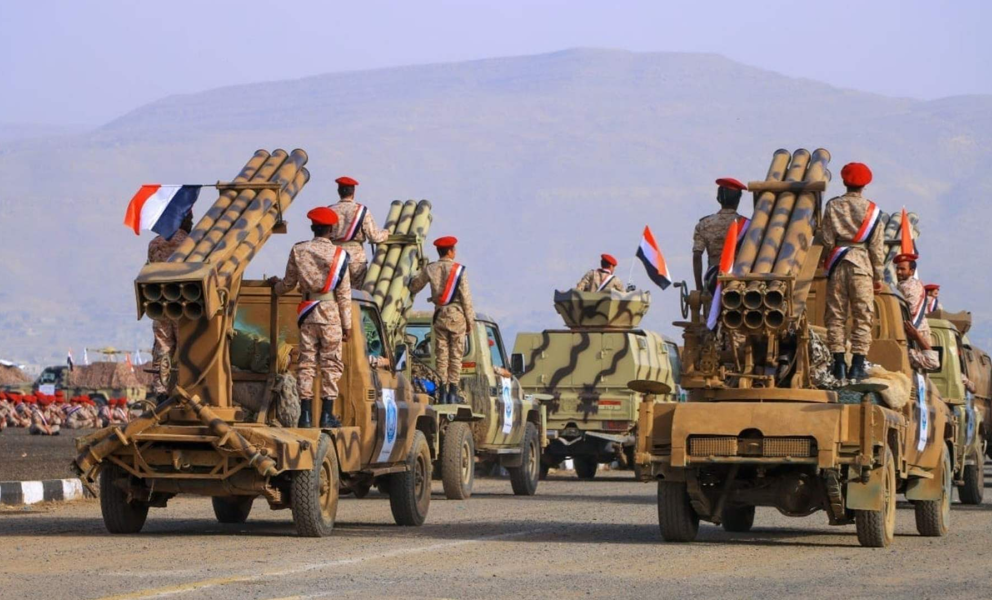
Chances of a Decisive Victory
The most important question remains: Does the Yemeni army have the capacity to carry out President al-Alimi’s Dawn of Yemen plan to restore the state and end the Houthi takeover? And how large is its organizational structure, and what military capabilities does it possess to fight a decisive battle against the Houthis?
Government forces include the regular army across its seven military regions, along with major combat formations that have been reorganized under the state, most notably the Giants Brigades, Nation’s Shield Forces, and Emergency Forces.
The Giants Brigades are the largest of these formations. The Defense Line website estimates their strength at around 70,000 fighters across roughly 30 brigades and combat units, with a main presence in the south, Lahij, Bab el Mandeb, Shabwa, Al Dhale and Abyan, as well as units in Marib and Hodeidah.
Nation’s Shield Forces have around 45,000 fighters in 21 combat brigades and are deployed across southern and eastern Yemen, with operations extending into Marib, al-Jawf and Taiz.
They have received Saudi weapons and support, including armored vehicles, heavy weapons, artillery, anti-tank weapons, Katyusha rocket launchers, and drones.
The Emergency Forces, the newest of the major formations, consist of six divisions and 22 brigades, with around 35,000 fighters deployed across Marib, Saada, Al Jawf, Shabwa and Hadramawt. Their equipment includes armored vehicles, combat vehicles, anti-tank weapons and drones.
Alongside these formations, the regular army remains the broader institutional framework for government forces. Its strength is concentrated mainly in the ground forces deployed across seven military regions, alongside the navy, coastal defense, air force, air defense, border guards, special operations forces and reserves.
Its arsenal combines weapons inherited from the prewar period with newer equipment acquired by various formations with Saudi support, including tanks, armored vehicles, artillery, rocket launchers and anti-tank weapons, as well as drones and reconnaissance and communications systems.
In recent months, Saudi support has gone beyond funding and conventional arms supplies, focusing increasingly on improving mobility, reconnaissance, communications, command, and control capabilities, as well as providing technical and intelligence support.
This has coincided with a broad restructuring of the government’s military apparatus, led by Riyadh in coordination with the Yemeni leadership, with the aim of unifying command centers and integrating the various formations into a more cohesive system.
These developments indicate that government forces now have a large and diverse combat force, with a greater capacity to conduct large-scale offensive operations than in previous years. This became evident on the ground with the launch of Dawn of Yemen, as the Giants Brigades and Nation’s Shield Forces, backed by the coalition, made rapid advances and seized Bab el-Mandeb and Dhubab, while operations continued toward the western coast.
But having the capacity to achieve breakthroughs on the ground does not necessarily mean being able to decisively win the war.
The fundamental challenge remains turning this force of multiple formations into a unified force under a single command and control structure, capable of maintaining the momentum of the offensive across broad fronts all the way to Sana’a.
The past several months have shown that reorganizing the government forces has improved their operational capabilities, but they have yet to be tested in a prolonged and comprehensive battle aimed at the heart of Houthi-controlled territory.
Accordingly, Operation ‘Dawn of Yemen’ has the potential to succeed in its initial phase by retaking large areas, breaking through Houthi defensive lines, and redrawing the map of control. But it is still too early to determine whether it can end the Houthi takeover and retake Sana’a.
The decisive factor will be whether the government and Saudi leadership can maintain the unity of the forces, sustain air, intelligence, and logistical support, and turn their numerical and weapons advantages into a unified operational command capable of managing a prolonged war, rather than simply securing quick victories on the periphery.

An Indirect Role
The UAE withdrew its direct military presence from Yemen after the changes that swept the south in early 2026, but that did not mean the end of the networks and relationships it had built up over years of war.
In this context, Sheba Intelligence reported an Iranian-Emirati agreement under which Abu Dhabi would finance a Houthi campaign to seize Bab el-Mandeb in exchange for the Houthis refraining from attacks on Emirati territory. Another report said the UAE was lobbying in Washington to limit the level of U.S. military support for Saudi Arabia.
These developments point to a struggle that goes beyond the course of military operations to the outcome of the war and the balance of power it will produce. Weakening Riyadh’s ability to achieve a quick victory, or keeping the Houthis as an active military force, could prevent the rebuilding of the anti-Houthi camp under centralized Saudi leadership while giving Abu Dhabi more room to preserve its influence in the south, along the coast, and around Bab el-Mandeb.
The Giants Brigades, the National Resistance Forces led by Tareq Saleh, and southern forces linked to the Southern Transitional Council (STC) stand out as the main components of the network through which the UAE built its influence.
From this perspective, the UAE’s potential role is not limited to influencing the course of battles. It also extends to shaping who controls retaken areas and how power and decision-making are redistributed within the anti-Houthi camp.
This is particularly important in the south, where the southern issue remains a means of preserving the political presence of Abu Dhabi’s allies and influencing the shape of the next political settlement, despite the shift of forces once aligned with the UAE into security and military arrangements under the Saudi umbrella since the beginning of the year.
The success of Operation “Dawn of Yemen” and the restoration of state authority could reduce one of the UAE’s most important sources of influence if Riyadh succeeds in unifying the forces, integrating armed formations, and limiting the autonomy of groups pursuing a separatist project.
That would not necessarily mean the end of the southern issue, however. Instead, it could shift it from a military bargaining chip into a political issue within the future state framework.
This is where one of the most important outcomes of the war for Saudi-Emirati competition will be determined: whether rebuilding the state leads to the concentration of power and decision-making in a single center, or leaves the existing plurality of forces and influence intact as part of Yemen’s postwar political equation.
Political Decision
Riyadh is working to rein in the UAE’s conduct in Yemen through a combination of pressure and a realignment of understandings with international and regional actors.
Washington is providing Saudi Arabia with intelligence support, as well as assistance in target identification and planning operations against Houthi targets.
At the same time, Riyadh has activated the Mecca Joint Defence Agreement to move toward collective deterrence and deploy additional military capabilities on its territory, while rebuilding Yemeni forces under more centralized command.
This shift gives Saudi Arabia leverage that goes beyond diplomacy, allowing it to reshape the balance of power inside Yemen, integrate armed formations under its command, and reduce the ability of forces linked to Abu Dhabi to operate outside Saudi decision-making.
On the political front, UAE Vice President Sheikh Mansour bin Zayed’s visit to Riyadh on September 29, at the invitation of Saudi Defense Minister Khalid bin Salman, and his meeting with Mohammed bin Salman marked the first high-level Emirati visit since tensions between the two countries over Yemen intensified, opening a direct channel to reorganize relations between the two sides.
These moves combine pressure with keeping the door open to an understanding, meaning that Abu Dhabi’s ability to support any course that could obstruct a military victory would be reduced, while its interests would be accommodated within new arrangements that do not allow the emergence of a parallel center of influence outside Saudi decision-making in Yemen.
Riyadh’s message to Abu Dhabi, therefore, appears to be that continued Emirati influence in Yemen cannot come at the expense of efforts to unify military and political decision-making, and that any support for the Houthis or efforts to obstruct a military victory will carry greater political and strategic costs.
Scenarios for ‘Dawn of Yemen’
Operation ‘Dawn of Yemen’ marks a new phase in the Yemeni war. At its core, it is a battle being waged by the Yemeni state, its armed forces, and the military formations operating under its command to restore state institutions and end the Houthi militia’s control, with regional and international backing.
The first hours showed that government forces were capable of shifting from defense to offense and retaking strategic positions along the western coast, around Bab el-Mandeb and Mokha, as well as in other areas across several provinces, suggesting that the battle has entered a decisive phase.
But the speed of the initial advance does not necessarily mean the war will be decided quickly. The tougher test will come as operations move into areas that are more heavily populated and fortified, particularly Taiz, Marib, al-Jawf, and al-Bayda, followed by Sana’a, Sa’dah and Hodeidah.
Three main scenarios now appear possible:
First, government forces could continue advancing until they retake most of the country and the Houthis lose their ability to maintain a military and political center of gravity. This could pave the way for the retaking of Sana’a and an end to the Houthi takeover. Much will depend on Saudi Arabia remaining committed to its allies throughout the campaign.
Second, government forces could make substantial gains without defeating the Houthis, shifting the war toward a political settlement from a position of greater strength for the government. But such a settlement could face Houthi rejection of disarmament and a transition into a political party, which appears likely, potentially causing the settlement to fail and giving rise to a new form of conflict.
Third, the operations could turn into a prolonged war of attrition if the Houthis receive undisclosed military support and political backing from major powers such as Russia and China, or if there is a sudden shift in the U.S. position. The Houthis could then regroup, open new fronts, and make greater use of their missile and drone capabilities.
In all cases, another battle will emerge within the government camp itself, centered on rebuilding the military institution and ending the existence of multiple centers of power.
The future of formations that emerged during the years of war, including the National Resistance Forces led by Tareq Saleh, will be tied to the outcome of this process. It is also likely to determine Saleh’s own future as a political or military actor, or whether he remains outside both roles.
Ultimately, the real measure of Operation’s success will not be the scale of its territorial gains alone, but its ability to achieve the objective for which it was launched: restoring the state and its institutions, ending the Houthi takeover and enabling Yemenis to regain control of their national affairs.
The greater wager for ‘Dawn of Yemen’, therefore, is not simply to redraw the lines of control on the map, but to return Yemen to Yemenis, end the state of Houthi rule and divided authority, and restore the state’s control over its decisions, sovereignty and institutions.
If the operation succeeds in doing so, it will be more than another military round in the war. It will mark a turning point in modern Yemeni history.
Sources
- The Chairman of the Presidential Leadership Council announces the launch of Operation "Dawn of Yemen" to reclaim state institutions and liberate the capital, Sana'a [Arabic]
- Saudi-Led Restructuring of Yemen’s Security and Military Sectors: Key Trends and Factors [Arabic]
- Southern Giants Brigades: Capabilities, Circumstances of Formation, Organizational Structure, and Deployment Map [Arabic]
- Yemen’s Nation Shield Forces: Capabilities, Circumstances of Formation, and Organizational Structure [Arabic]
- Yemeni Emergency Forces: Contexts of their formation, command structure, capabilities, and organizational nature [Arabic]
- Operation ‘Dawn of Yemen’ Opens Multi-Front Offensive as Government Forces Retake Bab el-Mandeb
- Pakistan, Saudi Arabia, and Turkey agree on the rapid deployment of troops to Saudi Arabia [Arabic]