New Leaders and Stalled Front Lines: Can al-Alimi’s Appointments Shift the Course of Yemen’s War?
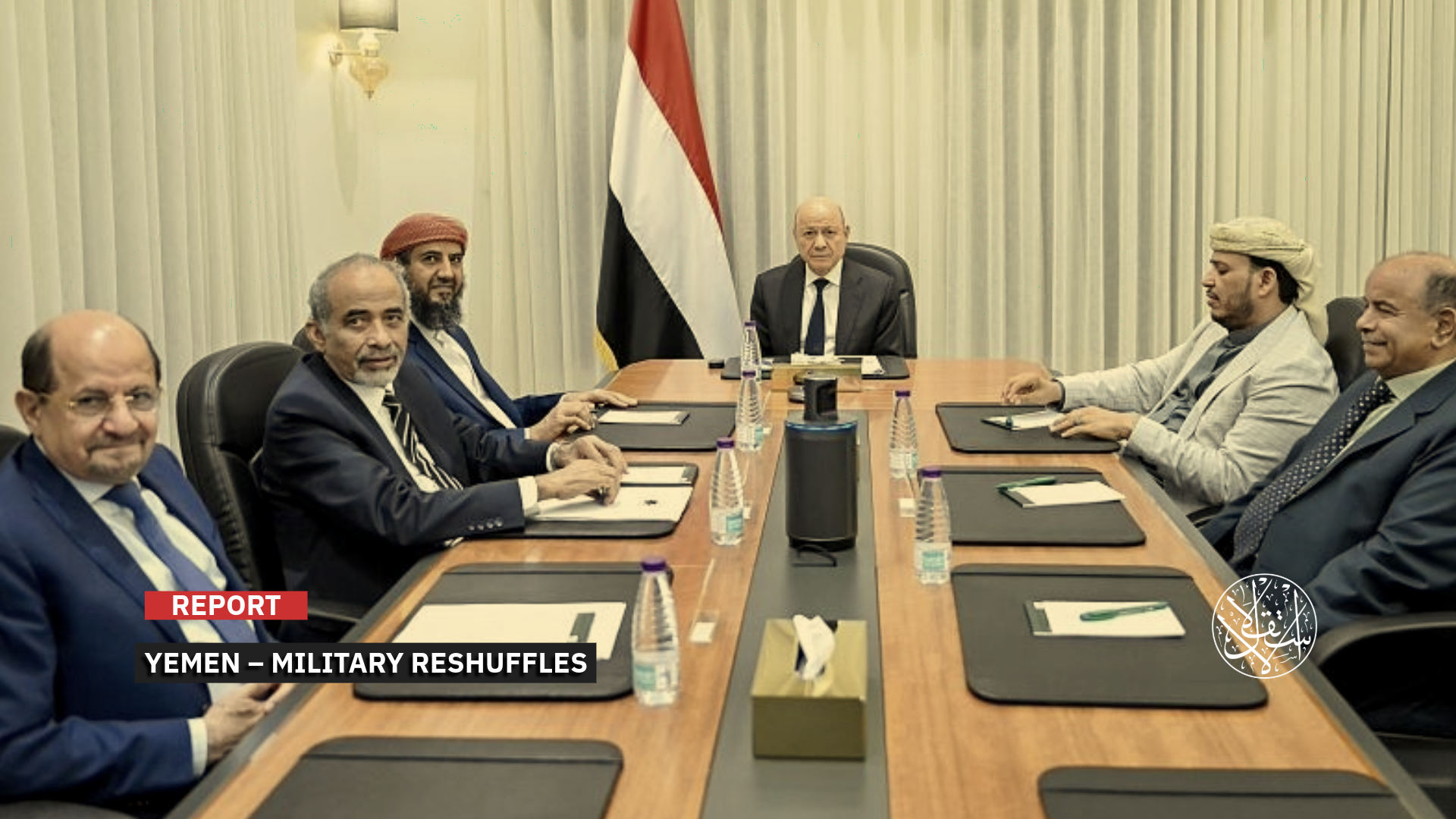
Supporters see the latest military reshuffle as an opportunity to reorganize field command.
President Rashad al-Alimi’s latest round of military and government appointments has put the Yemeni leadership’s priorities under scrutiny, raising questions about whether the reshuffle is part of a broader effort to reshape the country’s political and military landscape or a response to the mounting demands of the war against the Houthis.
The changes come as fighting intensifies along several key front lines, particularly in Taiz, Lahj and Yemen’s western coast, while Operation Dawn of Yemen carries growing military and political implications. The appointments offer a glimpse into how the internationally recognized government intends to position itself for the next phase of the conflict.
On the military front, al-Alimi appointed Major General Rashad Ahmed Ismail al-Yousifi to oversee the Taiz front and join the Supreme Military Committee. Major General Majdi Monadel was named commander of the Tur al-Baha military axis and the First Brigade of the Nation’s Shield Forces, also called the Homeland Shield Forces. The reshuffle also changed the axis’s chief of staff and operational command.
The government changes extended beyond the military establishment. Salem Abu Bakr Mohammed Thabet al-Awlaki was appointed information minister, replacing Moammar al-Eryani.
Judge Akram Naseeb Ahmed al-Amiri was named minister of civil service and insurance, while Ahmed Saleh Ahmed al-Awlaki took over as minister of local administration.
The appointments also included Major General Hussein al-Ajji Ali al-Awadhi as governor of al-Bayda province and Major General Ameen Ali al-Akimi as governor of al-Jawf province, where he will also command the provincial military axis.
The reshuffle has sparked debate over the backgrounds of the newly appointed officials, the political calculations behind the distribution of key positions, and whether the changes reflect an effort to rebalance power among the various factions within the internationally recognized government.
At the heart of the debate is whether al-Alimi’s latest moves mark the beginning of a serious effort to rebuild state institutions and unify military command, potentially strengthening the prospects of Operation Dawn of Yemen, or amount to little more than a redistribution of positions and influence at a time when government forces are losing ground, and the battle requires decisive action rather than administrative reshuffling.
A Necessary Reset
Supporters argue that the latest military reshuffle could offer an opportunity to overhaul field command, address shortcomings in the management of front-line operations, and improve coordination among military formations. Such changes, they say, could help government forces regain the initiative against the Houthis.
In a report published on November 3, Al-Jazeera Net quoted military and strategic affairs researcher Ali al-Dahab as predicting the appointments could positively affect the course of the fighting.
He cautioned, however, that the new commanders’ success would depend on their ability to fill existing leadership gaps and secure the logistical support they need.
Military analyst Yahya al-Hatami likewise argued that the decisions could give government forces, resistance groups and their local support base fresh momentum in Operation Dawn of Yemen.
This assessment rests on the premise that changing military leadership amid escalating tensions could help breathe new life into the front lines, draw on military experience and local networks, and strengthen coordination among units, particularly in areas where government forces have lost ground in recent months.
Even so, proponents do not view the appointments as a guarantee of success, but rather as an initial step whose impact will ultimately depend on whether the new commanders receive the supplies, weapons and authority needed to carry out their missions.
The changes to the leadership of the Tur al-Baha military axis are also seen by analysts as an opportunity to address weaknesses in its previous performance, restore the readiness of some units, and improve operational coordination among government forces, the Giants Brigades and the Nation’s Shield Forces.
Military analyst Majid al-Taher argues that the axis’s strategic importance extends well beyond its immediate geographic area.
It plays a key role in securing the southwestern front lines of Taiz and could provide a launchpad for military advances toward al-Wazi’iyah and Mokha, potentially expanding operations into other areas.
From this perspective, the leadership overhaul in Tur al-Baha, coupled with the appointment of a new chief of staff and head of operations, could strengthen command and control, improve cohesion among the forces deployed in the area, and bolster the front lines in Taiz and Lahj, as well as routes leading to Aden.

The Appointments Leave Deeper Failures Untouched
Others argue that, despite their administrative and military significance, the latest changes fall short of addressing the deep-rooted problems plaguing Yemen’s military establishment.
The core issue, they contend, is not who holds the top positions, but the proliferation of competing power centers, divided loyalties, and the absence of a unified military structure operating under the authority of the Ministry of Defense.
In this regard, Murad al-Arifi, a researcher at the Sana’a Center for Strategic Studies, views the reshuffle as an attempt to reverse military setbacks. But he argues that it faces the same persistent obstacles: divisions within government forces, the failure to unify military decision-making, and an inability to rein in competing loyalties.
Al-Arifi questioned the effectiveness of the changes in their current form, arguing that they do little to address the structural problems undermining the military establishment.
The criticism echoes an article published by Annedaa newspaper under the headline, “Between a Cabinet Reshuffle and Military Changes: Is the Legitimacy Government Rebuilding State Institutions or Redistributing Influence?”
The article questions whether the decisions are part of a broader effort to rebuild state institutions or simply another political bargain to redistribute positions among the factions making up the government.
The objections go beyond the identities of the newly appointed officials to the criteria behind their selection and accountability for past failures.
A key question is whether commanders whose front lines suffered setbacks have undergone a genuine assessment of their performance, and whether the latest dismissals and appointments have been accompanied by an examination of the reasons behind territorial losses. Equally important is whether the incoming commanders will be granted the authority they need to unify military units and overcome existing divisions.

The controversy surrounding this approach is also evident in the backlash over the appointment of Ameen al-Akimi as governor of al-Jawf and commander of its military axis, one of several high-profile decisions in al-Alimi’s latest reshuffle.
On November 3, Shabwa Press reported criticism from journalist Yasser al-Yafei over al-Akimi’s return to both positions.
Al-Yafei pointed to previous military failures in the province during al-Akimi’s tenure, renewing questions about the criteria for selecting commanders and whether the latest appointments take past performance and accountability into account.
The criticism extends beyond military affairs to the political calculations reflected in the government appointments.
At issue is whether the internationally recognized government is seeking to strengthen state institutions or simply redistribute positions and privileges among political factions, at a time when its priority should be unifying the anti-Houthi front.
In this context, Yemeni writer and political analyst Yaseen Tamimi criticized the successive government appointments in a November 9 post, arguing that they overwhelmingly benefit members of the Southern Transitional Council (STC), despite its announced dissolution and the appointees’ continued identification with its separatist agenda.
He said the appointments were granting them growing political, financial, and symbolic privileges, with backing from external actors whom he accused of seeking to weaken the Yemeni state.
Tamimi argued that these gains far outweigh the STC’s contribution to Operation Dawn of Yemen, accusing the group of taking hostile positions toward the campaign and continuing to undermine Yemen politically, militarily, and in terms of security under foreign direction.
He also linked the appointments to al-Alimi’s political approach to the southern question, particularly his proposal to address it through a Saudi-sponsored South-South dialogue conference and his stated willingness to accept its outcomes.
Al-Tamimi said this raised concerns about the future of the Yemeni state, the country’s shared national identity and Yemenis’ right to determine the future of their own country.
For Tamimi, the appointments amount to more than routine administrative changes. He sees them as part of a broader redistribution of power and privileges in favor of the separatist camp, unfolding alongside a political process that could reshape Yemen’s state structure and national identity under the influence of external interests and competing calculations.
Dawn of Yemen Puts the New Command Structure to the Test
The significance of the latest appointments goes well beyond replacing commanders or reshuffling positions. Their real test will be whether they can address structural weaknesses within government forces and bring military decision-making under a unified command.
Taiz and Tur al-Baha stand out as two interconnected fronts within a wider operational theater stretching from southern Taiz to northern Lahj. Fighting around al-Maqatirah and Hayfan is closely linked to front lines and supply routes leading to Tur al-Baha.
As a result, military developments in either area can affect the other’s defensive position, as well as the security of strategic routes leading to Lahj, Aden and Yemen’s western coast.
In Taiz, Major General Rashad al-Yousifi was assigned responsibility for the front amid mounting military pressure on the province, but the move did not bring a change in the leadership of the military axis. Major General Khaled Qasim Fadel remains commander of the axis and the 145th Infantry Brigade.
Fadel’s continued tenure alongside the appointment of a new front commander raises questions about how authority and operational responsibilities will be divided between the two leaders, and whether they can avoid overlapping mandates and conflicting orders while ensuring unified battlefield decision-making.
The success of the appointment will largely depend on how clearly al-Yousifi’s powers are defined and how effectively he coordinates operations with the existing command structure.
In Tur al-Baha, appointing Major General Majdi Monadel as commander, alongside a new chief of staff and head of operations, could signal an effort to reestablish a clear chain of command in an area whose front lines connect southern Taiz with northern Lahj and whose military developments have direct implications for the routes leading to Aden.
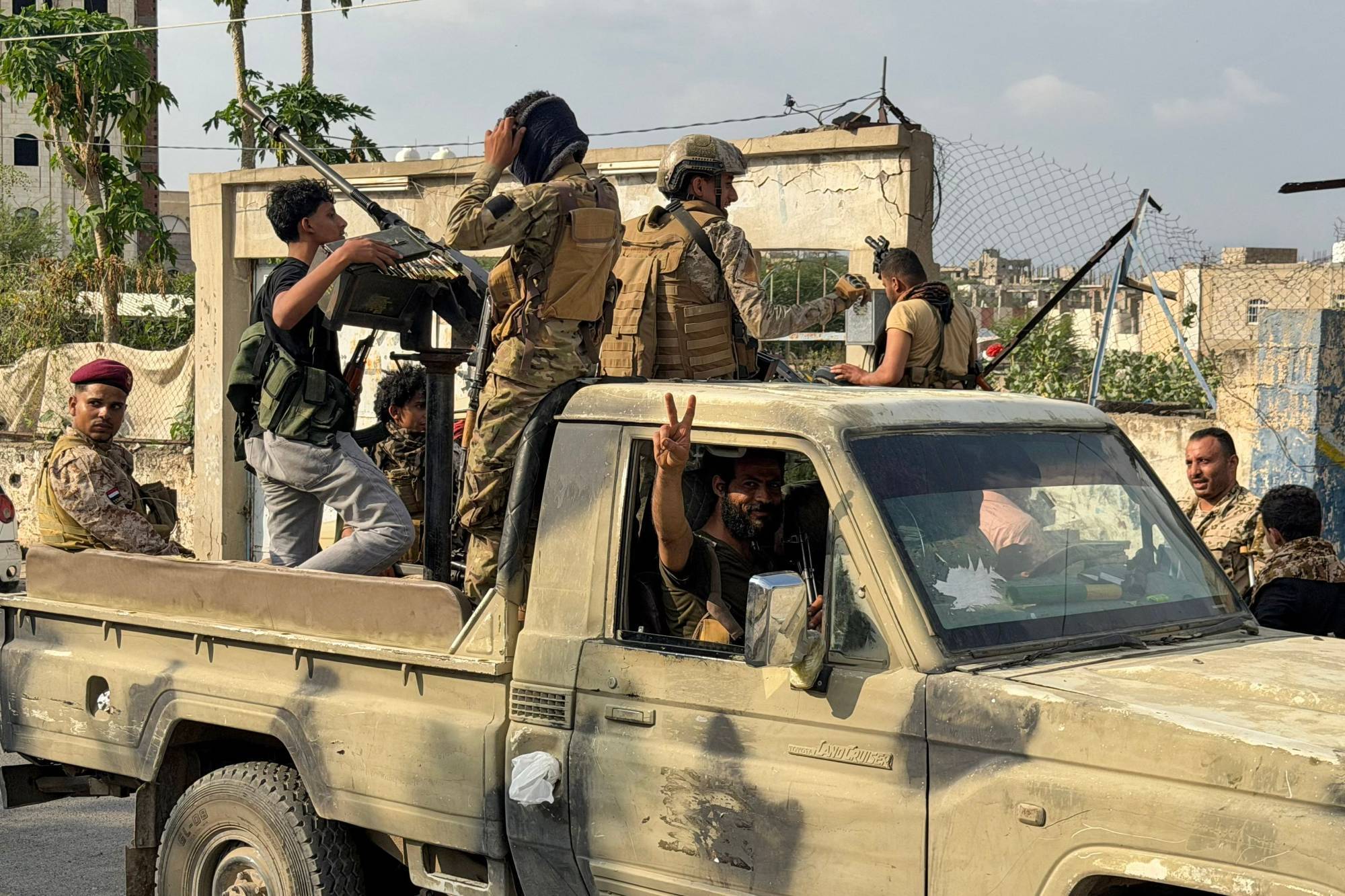
But the success of this move will ultimately depend on whether the new commanders are given real authority and can effectively reorganize their units and improve coordination among them. These challenges go beyond individual appointments and point to deeper flaws in the military structure itself.
A November 3 report by Yemen Shabab Net highlighted persistent weaknesses in government forces’ readiness, the proliferation of military formations, disparities in weapons and logistical supplies, and fragmented command-and-control systems.
One of the most significant structural problems is that the latest reshuffle did not extend to the Giants Brigades, the Nation’s Shield Forces or the Emergency Forces, all of which are linked to the Saudi-led coalition and operate outside Yemen’s Ministry of Defense command structure.
This raises renewed questions about the state’s actual authority over these formations, particularly since the establishment of a coalition-led Supreme Committee to restructure the army early this year was supposed to pave the way for a unified military structure.
The fact that these forces remain outside the latest changes points to two possible explanations: either the restructuring initiative has failed to achieve its objectives, or these formations have deliberately been kept outside the regular armed forces for considerations that go beyond military organization.
Either way, the continued fragmentation of military formations and command centers remains a major obstacle to building a unified national army.
The consequences are also evident in the absence of any accompanying military directives following the Taiz and Tur al-Baha appointments to reinforce the Taiz front with forces from the Giants Brigades and the Nation’s Shield Forces, or to order them to join the fight and ease Houthi pressure on its front lines.
This raises questions about whether a joint operational plan exists to bring the different formations’ capabilities together in a single campaign, rather than leaving them to operate under separate commands and competing operational agendas.
Ultimately, the effectiveness of the appointments must be measured against the progress of Operation Dawn of Yemen. So far, however, there has been no clear announcement detailing developments across its six phases or signaling a shift from reshuffling forces and commanders to coordinated military operations on the ground.
The contrast is particularly striking given the continued announcements of large numbers of airstrikes against Houthi positions, which some sources say have exceeded 40,000, while the Taiz front continues to call for ground support.
There has been little clarity, however, on whether the forces are receiving the weapons, ammunition, and equipment they need. Appeals from the province to the government and military leadership to meet the needs of its front lines have continued, with no battlefield results commensurate with the scale of the escalation being announced.
The gap between stated objectives and battlefield results is not limited to Taiz and Tur al-Baha. It also extends to the western coast, where Operation Dawn of Yemen has yet to deliver any tangible military gains in the areas of Bab el-Mandeb, Mokha, al-Wazi’iyah, and the Kahbub Mountains, even as Houthi pressure on the Taiz front continues.
This raises questions about whether the various fronts are genuinely coordinating their efforts and whether the leadership changes will translate into a joint operational plan capable of retaking lost positions and easing pressure on threatened areas.
Ultimately, the real test of the appointments is not how many positions they cover or who the new commanders are, but whether they can unify command and control, integrate the efforts of the various armed formations and ensure that front-line forces receive the support they need.
Without addressing these structural weaknesses and clearly defining powers and responsibilities, the changes risk amounting to little more than a reshuffling of commanders within a divided military structure, while Operation Dawn of Yemen continues to fall short of bridging the gap between its stated goals and results on the ground.

Taiz and the Dilemma of Political and Military Decision-Making
Moving beyond the debate over the latest appointments to address the deeper challenges facing the anti-Houthi camp, writer Abdulkader al-Guneid raises pointed questions about who is actually calling the shots in Yemen’s war. In an article on X titled “They Are Watching Taiz”, he questions which side truly controls the course of the fighting.
Al-Guneid argues that the Houthis have retained the initiative, deciding when and where confrontations take place as they pursue battlefield gains and expand their control. The other parties, including the government, army, state institutions, the public and its allies, have largely been left watching from the sidelines, without a counterstrategy capable of changing the course of the war.
He also criticizes what he describes as boasting about wearing down the Houthis and betting that the group will eventually collapse under the strain of a prolonged conflict. In his view, this calculation overlooks the fact that attrition has not prevented the Houthis from making territorial gains.
Instead, they are expanding their control even as the fighting takes its toll, leaving the eventual outcome tilted in favor of the group and Iran.
Al-Guneid warns that a side that focuses on exhausting its opponent without stopping its advance could end up suffering a far greater strategic defeat than it anticipates from prolonging the war.
From this perspective, Taiz is not an isolated local front but a strategic linchpin whose importance extends far beyond the province. Its fall or continued weakening would shift the burden of the conflict to other Yemeni provinces and the south, and eventually to the wider region and its allies.
They could find themselves facing further Iranian expansion without effective local forces or capable allies able to establish meaningful lines of defense.
He concludes that the problem is not a lack of will among Yemenis, but the leadership’s failure to bring together available political will and resources and deploy them as part of a unified political and military project.
These criticisms echo the wider debate sparked by the government reshuffle, which coincided with the military changes.
At issue is what criteria guide the distribution of key positions, and whether the appointments are driven by the demands of rebuilding state institutions or by political deals to redistribute influence among the various factions in power.
In this context, writer Abdulwahab al-Awj, in an article published by Yemen Window on November 6, questions the significance of the government reshuffle and military changes taking place simultaneously.
He asks whether the timing reflects an institutional effort to rebuild the state or an attempt to rearrange the balance of power among its constituent factions.
These questions carry added weight given the proliferation of anti-Houthi military formations, their differing political affiliations and their reliance on different sources of support. This means that changes to positions and military leadership are inevitably tied to the existing balance of power within the internationally recognized government camp.
Ultimately, the success of the changes should not be measured by the redistribution of positions alone, but by their ability to overcome divisions and competing centers of decision-making, unify political and military command, and provide frontline forces with the support they need.
The goal must be to move the anti-Houthi camp beyond reacting to the group’s moves and watching its advances, and toward taking the initiative and changing the course of the confrontation.
Is a Change in Leadership Enough?
The latest government and military appointments highlight that the crisis facing Yemen’s internationally recognized government is not so much a shortage of leaders or positions as the absence of a unified political and military structure capable of managing available resources and deploying them in the fight to restore state control.
Redistributing positions, whether as part of institutional reform or political deals among the factions in power, will do little to change the course of the conflict unless it is accompanied by an end to competing centers of decision-making, the placement of all military formations under a unified national command, and tangible support for frontline forces.
With divisions persisting and some fronts losing ground, Operation Dawn of Yemen faces a test that goes beyond changing commanders to rethinking how the entire campaign is being run. The appointments could pave the way for unified decision-making and a renewed effort to wrest the initiative from the Houthis.
Alternatively, they could simply reshuffle positions within the same dysfunctional structure, allowing the Houthis to continue exploiting divisions and the passage of time to expand their battlefield gains.
Sources
- Presidential decree issued for a cabinet reshuffle in the government of Dr. Shayea Al-Zandani [Arabic]
- Presidential decrees appoint new leadership for the Tur Al-Baha axis [Arabic]
- Chairman of the Presidential Leadership Council appoints a commander for the Second Military Region [Arabic]
- Two presidential decrees appoint governors for Al-Bayda and Al-Jawf governorates [Arabic]
- Military reshuffles in Taiz and Lahj aimed at curbing the Houthi advance toward Aden [Arabic]
- Between cabinet reshuffles and military changes: Is the legitimate government reorganizing its institutions, or merely redistributing influence? [Arabic]
- "Dawn of Yemen" (Fajr Yemen) offensive operations have surpassed 42,000 individual targeting actions