The Rise of the Democrats: What Awaits US-Syrian Relations?
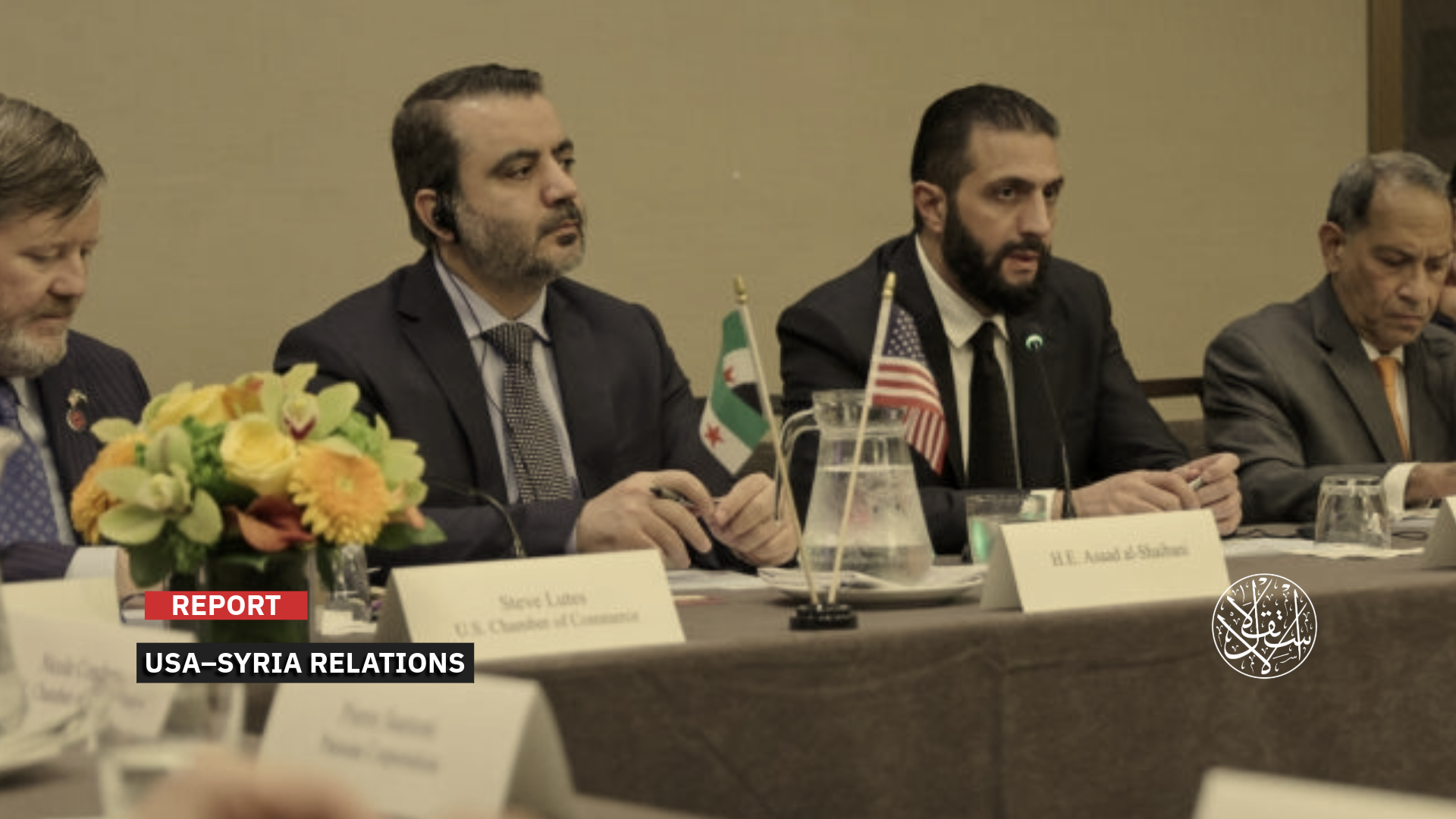
The United States does not appear to be seeking a deeper involvement in Syria at this stage.
U.S.-Syria relations are entering a new phase, marked by growing economic engagement but limited political interest, against the backdrop of the shifts brought about by the U.S. midterm elections and the Democrats’ victory in securing majorities in both chambers of Congress.
As communication between Damascus and Washington expands, official, business, and banking contacts are increasing. U.S. companies are also showing growing interest in investment and Syria’s economic recovery. Yet Syria does not appear to rank among Washington’s strategic priorities.
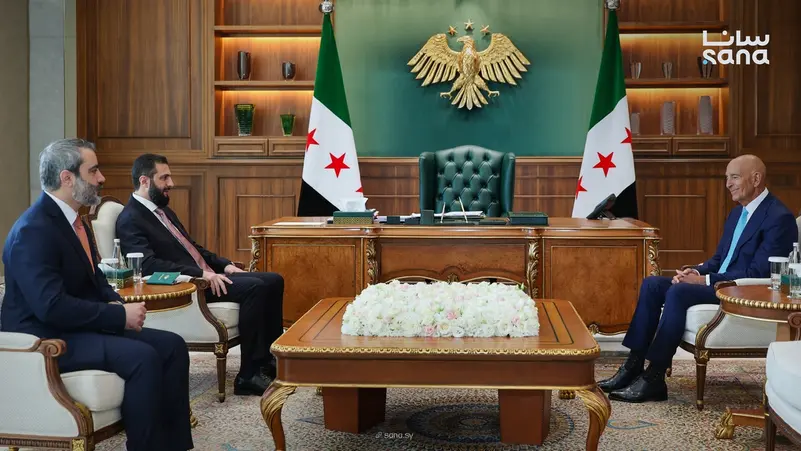
The Future of US–Syria Rapprochement
The growing gap between economic engagement and limited political interest raises questions about the future of closer ties between the two countries and whether the current momentum can move beyond the efforts of U.S. envoy Tom Barrack to become a stable, institutional policy. Attention is also turning to how the Democratic-majority Congress will approach oversight of relations with Damascus.
“Syria has no friends or enemies in the United States.” This assessment captures the likely direction of U.S.-Syria relations in the period ahead, following the midterm elections that ushered in a new political landscape with Democrats securing majorities in both chambers of Congress.
Despite the progress in U.S.-Syria relations over the past period, the political shift in Washington is unlikely to bring about a fundamental change in the relationship. Rather, it highlights the limited priority Syria receives in U.S. policy and the absence of a clear, institutional approach toward Damascus. The current rapprochement remains largely driven by the efforts of U.S. Special Envoy for Syria and Iraq Tom Barrack.
Recent contacts between U.S. senators, including Chris Murphy, during their visit to the Gulf region have also pointed to a degree of satisfaction in some U.S. political circles with the situation in Syria.
Washington no longer views Syria as a safe haven for the Islamic State group, believes Iranian influence has receded from its former levels, and sees the country's borders as being under a measure of control.
Against this backdrop, the United States does not appear interested in expanding its involvement in Syria for now. Instead, it is focused on achieving a limited set of security and political objectives, with little appetite for a broader commitment, according to observers.
This reflects the current balance in Washington: there is no outright hostility toward Syrians, the Syrian government, or the Syrian people, but neither is there an appetite for additional commitments or initiatives beyond what has already been achieved.
Nor is there any clear push among congressional Democrats to introduce new political initiatives that would take U.S.-Syria relations to a higher level or advance them beyond the steps already taken by the administration.
Since the fall of Bashar al-Assad's regime on December 8, 2024, many high-level meetings between U.S. and Syrian officials have focused on counterterrorism, regional security, sanctions relief, and the lingering effects of sanctions.
A New York Times report published on August 25, 2026, on the lifting of major U.S. economic restrictions tied to Syria's designation as a state sponsor of terrorism, noted that the move followed the completion of congressional notification and review procedures. It raised hopes for greater investment and economic recovery but did not automatically make U.S. reconstruction funding available.
A report by the Congressional Research Service also noted that the Trump administration had not requested specific funding for foreign assistance to Syria in its fiscal year 2027 budget, while seeking to retain the authority to provide nonlethal stabilization assistance, including aid to minority communities.
The Democrats' control of both chambers of Congress is expected to subject Republican President Donald Trump's administration to greater legislative scrutiny and could make it harder to pass foreign policy legislation and budgets.
Observers say, however, that Democrats and Republicans broadly share an interest in regional stability and reducing the direct U.S. military presence while prioritizing counterterrorism, border security, and efforts to curb Iranian influence.
Analysts believe the future of U.S.-Syria rapprochement will depend on the ability of Syrian diplomats and U.S. institutions in Washington to engage with the new Congress and both its chambers, rather than relying solely on understandings between the White House and Damascus brokered through the special envoy.
Less Political Interest
Against this backdrop, Bassam Barabandi, a researcher at the Center for International Studies in Washington, told Al-Estiklal that U.S.-Syria relations remain largely nominal following the midterm elections.
“There are no real relations in place today. U.S. Special Envoy for Syria and Iraq Tom Barrack has ideas for making the region more stable, but these are not administration or institutional policies. They are his personal ideas,” he said.
Barabandi added that Democrats have a particular regard for Barrack, respect him, and appreciate his work in the region. “He has consistently reached out to both Democrats and Republicans to explain his work in Syria, Iraq, and Turkiye,” he said.
“At the same time, Syria is not a priority in any of the issues currently on the U.S. agenda. There is, to some extent, a desire in Washington to keep Syria out of Iran’s orbit and prevent it from becoming a base for the Islamic State group, but no funding has been allocated to achieve those goals,” he added.
Barabandi said Democrats tend to be more cautious, if not more hard-line, and that their main foreign policy concerns center on human rights and combating corruption. He noted that they are particularly concerned about corruption, both at home and abroad, and do not want U.S. companies engaging in corrupt practices overseas.
As a result, U.S. companies awarded contracts in Syria are likely to face greater scrutiny, particularly given the political considerations surrounding such deals. Barabandi said this would be the main development to watch over the next two years, particularly in 2027 and 2028, rather than necessarily in 2027.
“The United States has no interest in spending money on reconstruction, funding programs, or anything of that kind in Syria. That is why we are likely to see less political interest in the country,” he said.
“Democrats pay more attention to media coverage of minorities, religious protections, and mutual representation, but none of these issues is central to their agenda. So we should not expect a shift with the Democrats’ rise to power. Relations between Washington and Damascus are unlikely to advance and will largely remain as they are. What we may see instead is greater scrutiny of corruption in Syria,” he added.
Barabandi noted that Democratic members of Congress believe the United States has already done all it can for Syria by lifting sanctions and reopening the embassy. They therefore see little reason to devote greater attention to the country, particularly as domestic issues, the wars in Ukraine and Iran, and economic concerns at home are likely to take precedence.
Intensifying Economic Engagement
U.S.-Syria economic ties are gaining momentum, with officials and financial institutions from both countries stepping up their meetings. Discussions have focused on restoring banking ties, reconnecting Syria to the global financial system, strengthening legal and regulatory frameworks, and exploring investment opportunities and the entry of U.S. companies into the Syrian market.
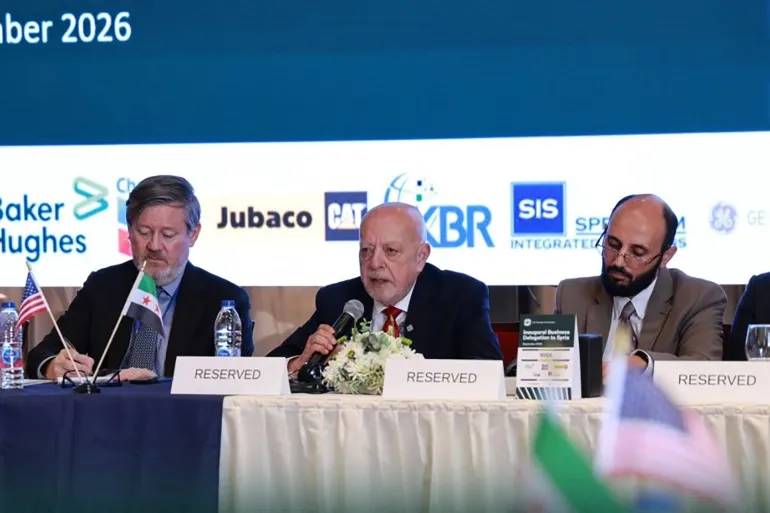
On September 14, 2026, a U.S. business delegation representing 50 companies held roundtable meetings in Damascus with the Central Bank of Syria and the ministries of transport, economy, industry, finance, communications, and energy to explore investment opportunities in the Syrian economy.
The delegation included Deputy Assistant Secretary of State Jake McGee, U.S. Chamber of Commerce Vice President for Middle East Affairs Steve Lutes, and representatives of major companies, including Chevron and Mastercard.
Syrian Finance Minister Mohammad Yisr Barnieh said economic and financial relations between Syria and the United States were increasingly moving toward partnership, cooperation, and coordination. He noted that Syria was receiving support from the U.S. Treasury Department and the Federal Reserve as part of efforts to promote economic recovery, rebuild the country's economy, and reconnect it with the global economic system.
A Central Bank of Syria delegation led by Governor Safwat Raslan met with officials at the Federal Reserve Bank of New York to discuss practical aspects of banking relations between the two sides, particularly arrangements for using the Syrian central bank's account at the institution.
In October 2026, the Syrian central bank said the two sides had discussed technical and operational arrangements for using the account to conduct banking transactions during a meeting at the Federal Reserve's headquarters. The discussions also covered the mechanisms needed to make use of the account and take practical steps toward expanding banking ties.
Another sign of growing cooperation came when Syrian Justice Minister Mazhar al-Wais held a series of meetings with the World Bank in Washington to explore cooperation and support for developing Syria's judicial and justice sectors. The meetings took place on the sidelines of his participation in the Law, Justice, and Development Forum.
In a statement published on its official platforms on November 6, 2026, the Syrian Justice Ministry said the discussions covered several key areas, including digital transformation in judicial institutions, legislative reform, particularly laws protecting investors, and efforts to strengthen judicial capacity and improve the efficiency of legal services to better meet the needs of Syrian citizens.
The visit was part of broader efforts to expand international cooperation in reforming the judicial system, recognizing the central role of the courts and justice institutions in upholding the rule of law, rebuilding state institutions, and establishing a legal environment conducive to economic recovery and reconstruction.
The Justice Ministry also reviewed the main activities and achievements of its various departments during October. These included ongoing efforts to reform the judiciary, safeguard rights, and uphold the rule of law, as well as Minister al-Wais's meetings, participation in Arab and international events, recruitment and training of judicial personnel, and work on transitional justice and accountability, among other issues.
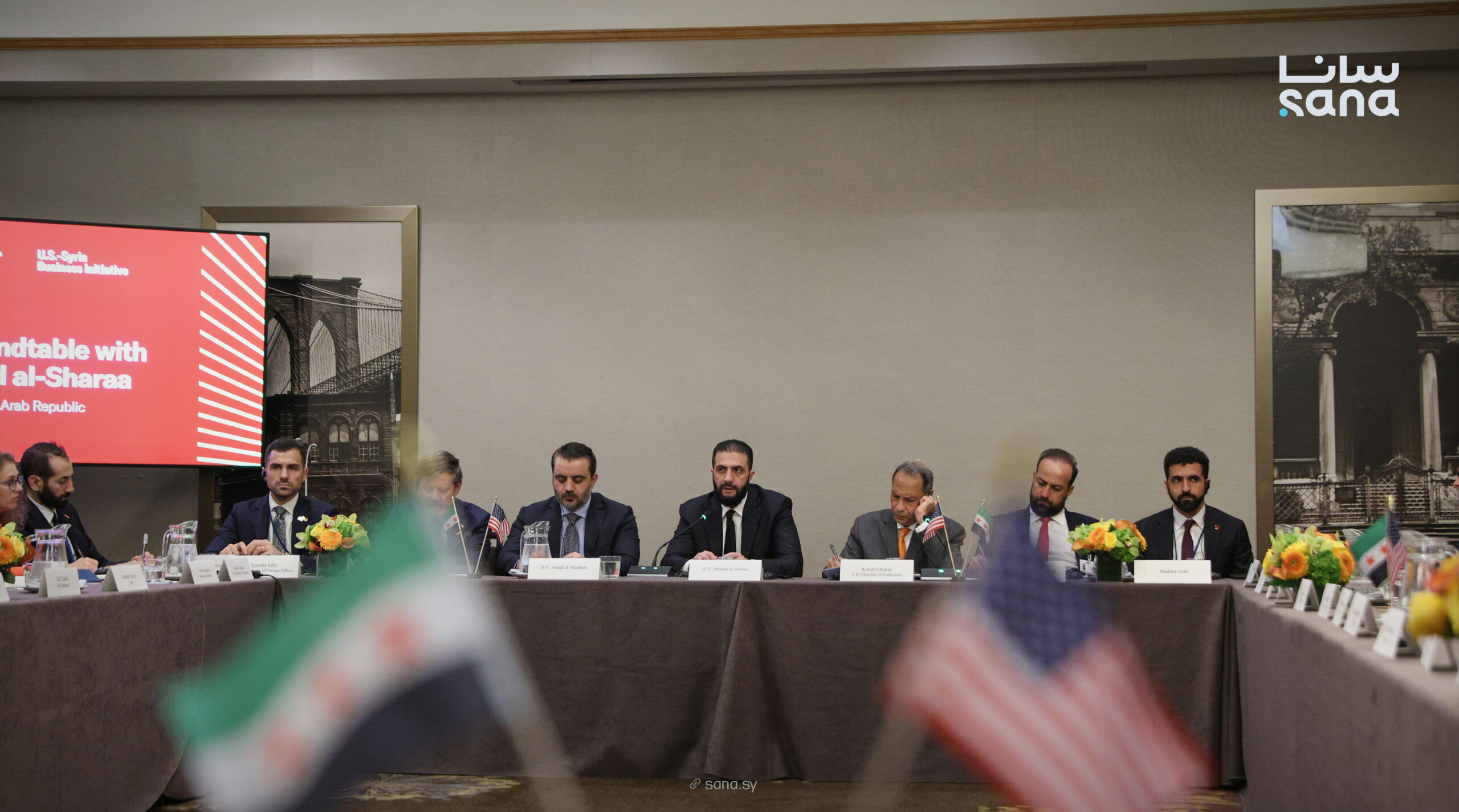
Earlier, on September 23, 2026, Syrian President Ahmed al-Sharaa held an expanded meeting with representatives of U.S. and international companies on the sidelines of his participation in the U.N. General Assembly meetings in New York.
The discussions focused on investment opportunities in energy, infrastructure, financial services, and consumer goods, with major companies taking part, including Procter & Gamble, energy giant Chevron, and heavy equipment manufacturer Caterpillar.
During the meeting, al-Sharaa outlined the government's vision for rebuilding the economy, stressing that Syria was ready to welcome foreign investment and highlighting the role global companies could play in rebuilding the country after years of war and mismanagement.
According to Dr. Samer al-Safadi, a member of the Syrian American Alliance, the meeting brought together chief executives and representatives of more than 30 companies on the Fortune 500 list, an annual ranking published by Fortune magazine of the 500 largest U.S. companies by total revenue. The participation reflected the scale of the business interests represented at the meeting.
Sources
- How Democrats Scored a Resounding Victory in the Midterm Elections [Arabic]
- Justice Minister Meets World Bank in Washington to Discuss Judicial Reforms [Arabic]
- President al-Sharaa Meets Business Leaders and Executives From Major Global Companies in New York [Arabic]
- Representatives of 50 U.S. Companies Explore Investment Opportunities in Syria [Arabic]
- Syria’s Central Bank Holds Talks With the Federal Reserve on Strengthening Banking Ties [Arabic]