Iraq: A Call to Amend the Constitution Reignites Debate over Power-Sharing Quotas and the Future of the Political System
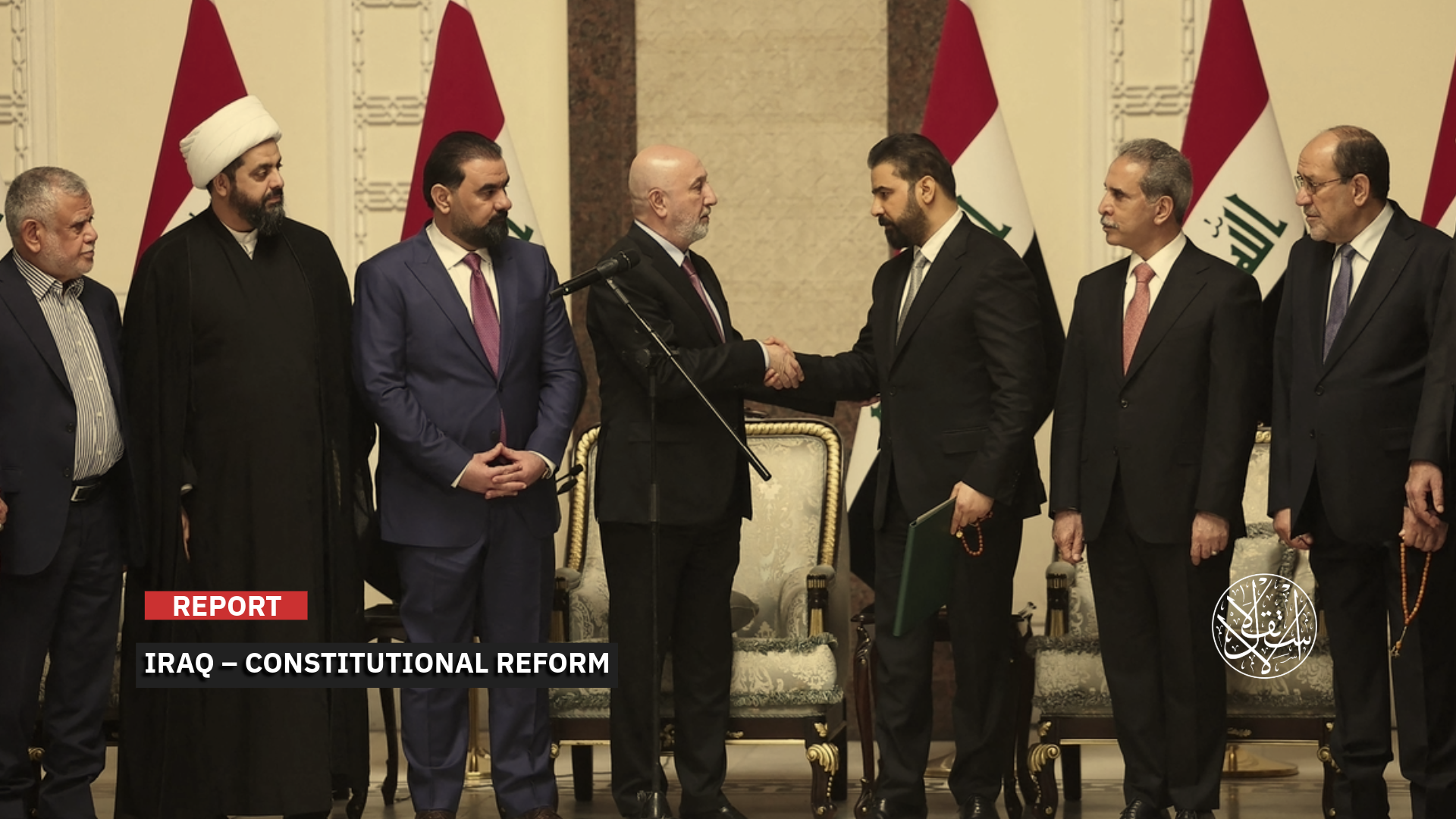
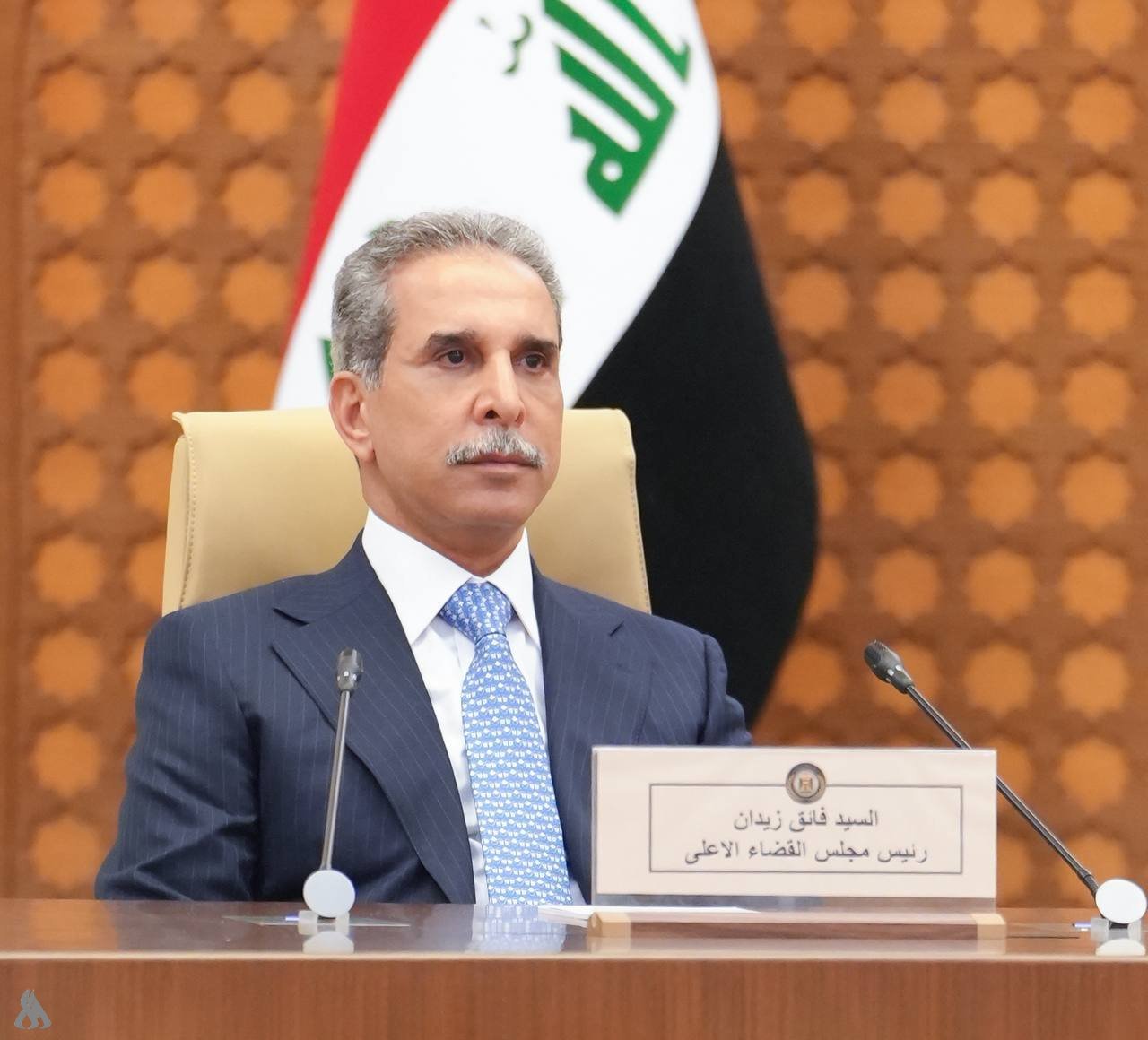
Judge Faiq Zaidan affirmed that there is a flaw in how some provisions of the constitution are interpreted.
A call by Faiq Zaidan, head of Iraq’s Supreme Judicial Council, to amend some provisions of the 2005 Constitution has reignited debate over the future of the current political system and whether the constitutional flaws that have repeatedly stalled key political milestones can be fixed.
Zaidan’s call comes 21 years after the referendum on the country’s permanent constitution, which was written after the 2003 U.S. occupation, amid questions over whether the dominant political forces are ready to revisit the rules that govern how governments are formed and how the country’s top posts are filled.
The most prominent problems center on how to interpret the concept of the “largest parliamentary bloc” tasked with forming the government, the two-thirds majority required in parliament to elect the president, and adherence to constitutional deadlines.
While supporters believe an amendment could ease political deadlock, others warn it could be exploited to entrench the quota system or give existing practices constitutional cover, given that earlier attempts at review have faltered.
Testing the Amendment
Zaidan’s call places the constitution at the heart of a renewed debate over why the formation of governments and the election of the three presidencies (parliament, the government and the presidency of the republic) keep stalling, and over whether the political crises stem from flaws in the texts or from the way they are applied.
The call also raises the question of parliament’s and the political forces’ responsibility for resolving constitutional problems anew, especially since earlier reviews failed to bring about fundamental changes despite repeated demands for reform.
Article 142 provides for a parliamentary committee on constitutional amendments that represents the components of the Iraqi people, which is to submit its proposals to a parliamentary vote before they are put to a popular referendum.
A committee was formed in 2007, and another after the October protests of 2019, but neither managed to achieve fundamental amendments, while draft proposals prepared by official bodies remained shelved in the institutions concerned.
According to experts, about 30 percent of the constitution’s provisions have been suspended, which deepens the question of whether the problem lies in the texts themselves or in the absence of political commitment to implementing them.
The existence of constitutional mechanisms for amendment does not necessarily mean that the dominant forces are willing to use them in a way that would change the rules for distributing power and exercising influence.
Kadhim Yawer, head of the Dastournama Foundation for Democratic Studies in Iraq, told Al-Estiklal that the Iraqi Constitution contains articles that allow it to be amended, but through complex mechanisms.
Yawer added that the political process built on the current constitution has faced numerous constitutional problems in applying laws and interpreting constitutional provisions, particularly regarding the powers of the federal government, the Kurdistan Regional Government, parliament, the Supreme Judicial Council and other state institutions.
He explained that these problems have fostered a conviction that the constitution must be changed or amended at some point, but that those calling for this differ in their aims and objectives.
He noted that some parties seek to gain more political positions and posts, while others are trying to legitimize the flawed practices in applying the constitution that have entrenched sectarian divisions within Iraqi state institutions, including judicial institutions.
Yawer pointed out that sectarian and partisan quotas, even if not explicitly mentioned in the laws, still shape the distribution of posts and the leadership of judicial and other state institutions, as the process is governed by narrow political and sectarian calculations that have proved hard to overcome at various stages.
The researcher added that, through calls to amend the constitution, some parties are trying to give constitutional cover to these practices, which have persisted for more than 20 years despite the political, economic and structural problems they have caused within Iraqi state institutions.
He stressed that if calls to amend the constitution are driven by such motives, they will create new problems and will not produce results that satisfy the Iraqi people or meet their aspirations.
Yawer concluded that amending the constitution could be the right step if it is done through sound mechanisms, away from narrow political interests and attempts to legitimize practices that contradict the constitution’s provisions.
But he warned that entrusting this task to institutions shaped by the quota system, such as parliament, the government and the presidency, would not lead to amendments that the Iraqi people accept or that improve the rules of the political process and change them for the better.
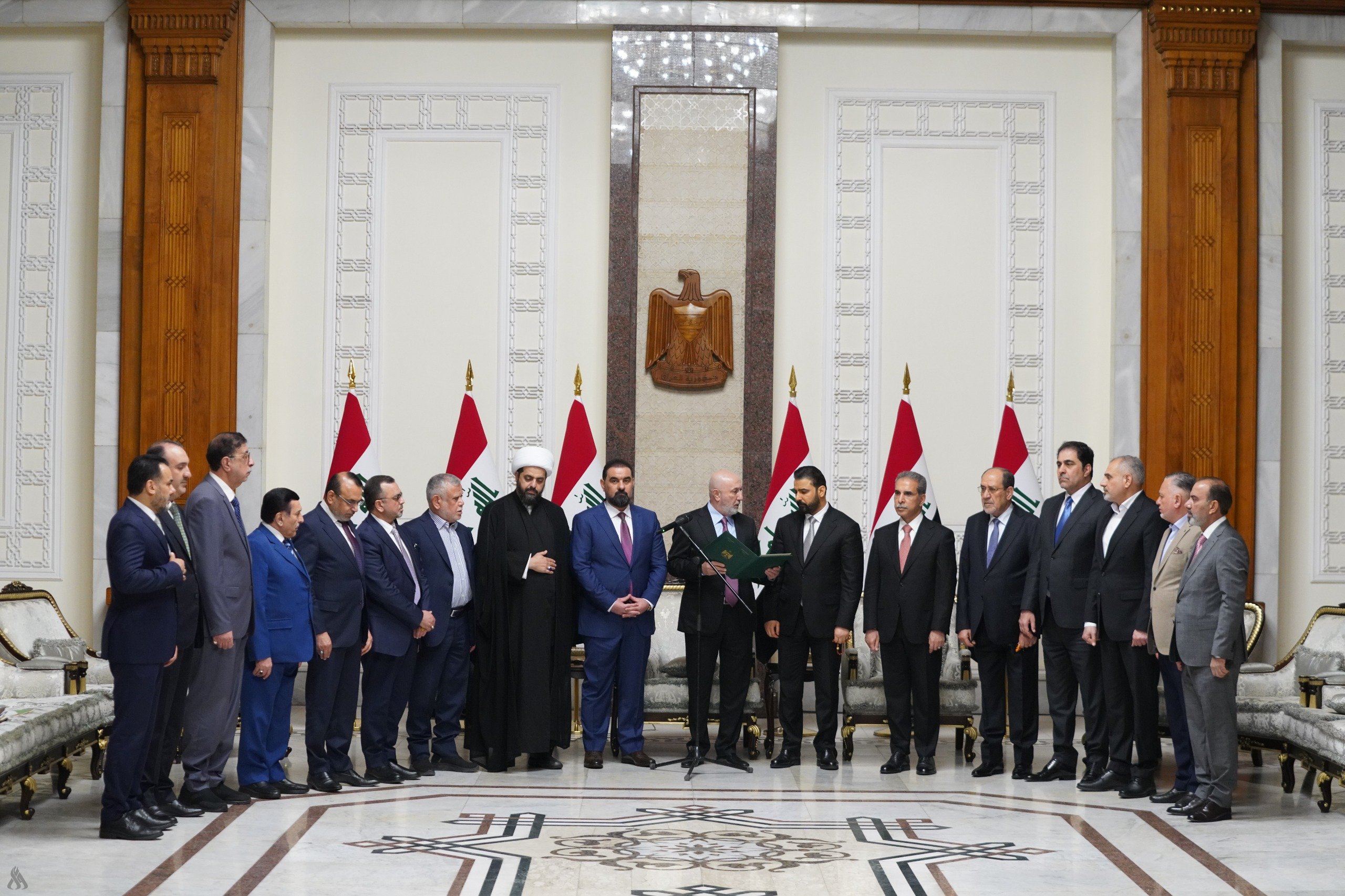
The Balancing Dilemma
The constitutional problems touch key junctures in the formation of the authorities, above all, the interpretation of Article 76 on designating the prime minister.
The Federal Supreme Court’s 2010 interpretation sparked controversy over what is meant by the largest parliamentary bloc, and whether it is the list that wins the election or the alliance formed in parliament after the results are announced.
Essam al-Faili, a professor of political science at Al-Mustansiriya University, told the Iraqi news agency Shafaq News on October 22, “The 2010 judicial interpretation shifted the concept of the largest bloc from the list that wins the election to the bloc formed afterward inside parliament, which entrenched the dominance of a single component and trapped the political process in a vicious circle.”
Al-Faili added that the political system needs an amendment that allows parliamentary forces to divide into a governing majority and an opposition, as proposed by Muqtada al-Sadr, leader of the National Shiite Movement.
He also called for addressing the requirement of a two-thirds parliamentary vote to elect the president, which he said had created something resembling Lebanon’s “blocking third.”
Al-Faili argued that the ambition to change the shape of the system collides with a lack of trust and with some parties’ wish to insert short-term clauses that have affected the course of consensus.
This view suggests that the dispute is not only about rewording articles, but about how they affect political parties’ ability to form governments and settle appointments, and about the nature of the relationship between the majority and the opposition in parliament.
In a television interview on October 17, political analyst Ali Nasser argued that some forces benefit from keeping the constitution in its current form, especially given the absence of clear penalties when constitutional deadlines for forming governments and filling posts are missed.
He said that competition over ministries and political positions, and the priority given to partisan deals, weaken the chances of passing amendments.
Nasser ruled out tangible progress at this stage, despite the need for a genuine constitutional review. This assessment puts the seriousness of the call to a political test: whether the forces that benefit from the current mechanisms are willing to accept new rules that could limit their ability to block key milestones or control the distribution of posts.
The balancing dilemma remains whenever amending the articles on the largest bloc, the election of the president and the parliamentary majority is considered.
Changes aimed at speeding up the formation of the authorities must therefore preserve guarantees for the participation of Iraq’s components and prevent the majority from becoming a tool for excluding others.
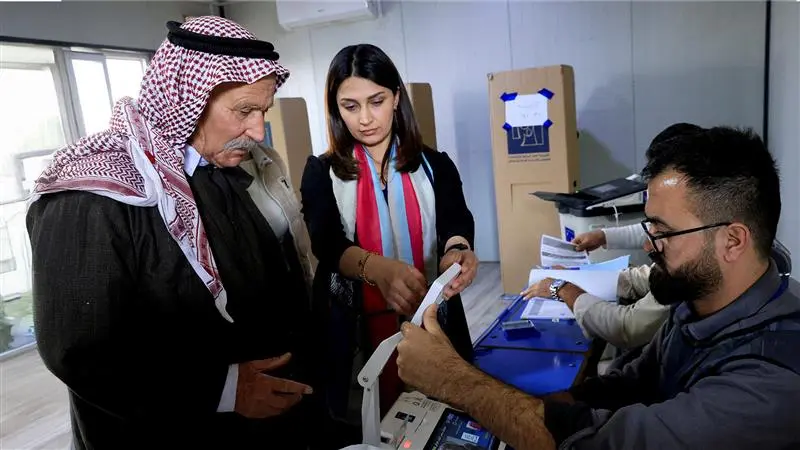
Alternatives to the System
The debate is not confined to amending specific articles; it extends to the nature of the political system and its ability to overcome recurring crises. In this context, legal expert Ali al-Tamimi says experience has proved the parliamentary system in its current form unworkable, and he calls for adopting a mixed system, modeled on the French one, as a more realistic option.
In a press statement on October 22, al-Tamimi proposed that the president be elected directly by the people and given broad powers, which would require amending Article 73, while a prime minister designated by parliament would run the government.
He also called for addressing Article 140 on the disputed territories, whose deadline expired in 2007. This vision proposes a broader change than merely fixing the mechanisms for forming governments, but it does not settle whether the political forces are willing to adopt it.
The mixed-system proposal raises the question of whether the parliamentary system has faltered because of its design, or because of a failure to abide by the existing texts and the use of partisan deals to block key milestones.
A shift toward a presidential or mixed system would itself require redefining powers and guarantees of participation and accountability, and would not on its own be enough to end political disputes.
Writer Nouri Hamdan said Zaidan’s call deserves to become a serious debate, but stressed that its weight will be measured not by the number of statements of support, but by the emergence of specific proposals, the announcement of institutions’ responsibilities and timelines, the release of documents to the public, the involvement of specialists and civil society, and then a commitment to holding a referendum wherever the constitution requires one.
In an article published by the Iraqi newspaper Al-Aalem Al-Jadeed on October 25, Hamdan added that a review produced through closed-door understandings will once again face the question of participation that accompanied the constitution’s birth.
Hamdan called on parliament to clarify what became of previous reviews, asking which articles were discussed, what remained in dispute and whether the proposals were settled according to the prescribed process.
The writer argued that these questions are not a matter of dwelling on the past, but a condition for understanding the legal and political starting point of any new attempt, stressing that it is hard to convince citizens of another promise of reform as long as the results of the previous one remain hidden from them.
Hamdan stressed that the value of a constitution is not limited to setting timetables for distributing posts, but also includes defining how authority derives its legitimacy and is held accountable, and protecting citizens when their interests diverge from those of the ruler.
He called for asking how each amendment would affect people’s ability to choose, monitor and object, and how it would affect the independence of institutions and fairness in managing resources, arguing that these are the criteria for judging any reform, whoever proposes it.
He added that the 2005 Constitution is not beyond criticism, and that the memory of fear that accompanied its drafting does not make its compromises infallible.
But he stressed that reforming it requires credible procedures, guaranteed rights and the ability to build trust that goes beyond bargaining over positions.
The writer concluded that, after more than two decades, Iraqis deserve to know why the promise of review faltered and what will make the next attempt produce different results, stressing that the people must take part in understanding and debating the amendments and must have credible reasons to believe their voice will be respected.
Sources
- Head of Iraq’s “Judiciary” Calls for Reviewing the Constitution’s Provisions [Arabic]
- Between Violation and Suspension… “Iraq’s Constitution” Faces Amendment [Arabic]
- On the Anniversary of Its Referendum… Zaidan Calls for Amending the Constitution and Settling the “Controversial Clauses” [Arabic]
- From the Drafting Committee to Calls for Review: Where Did Constitutional Reform Stall? [Arabic]