Al-Maqatirah in the Line of Fire: How Does the Houthi Advance Threaten the Routes to Aden?
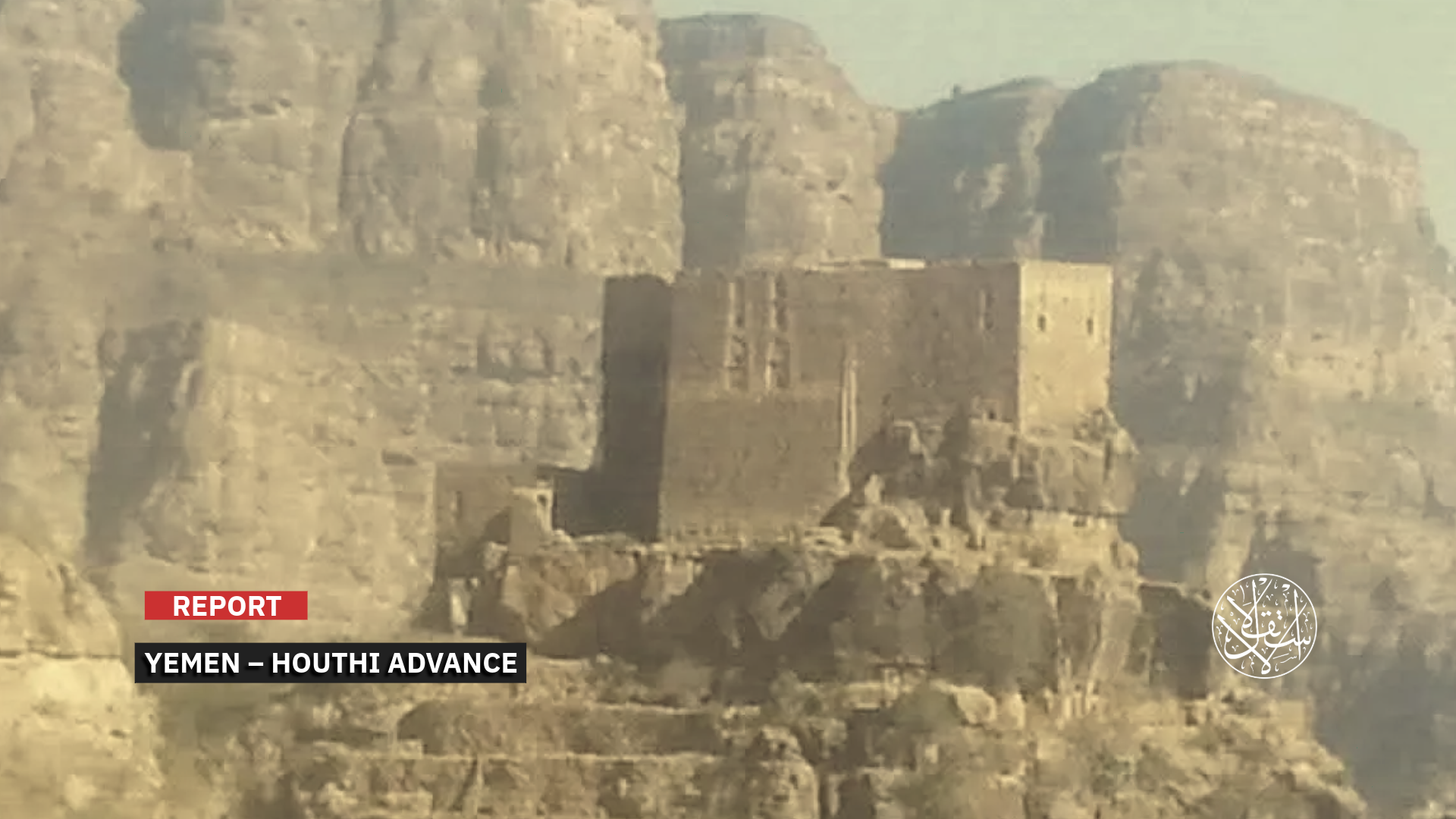
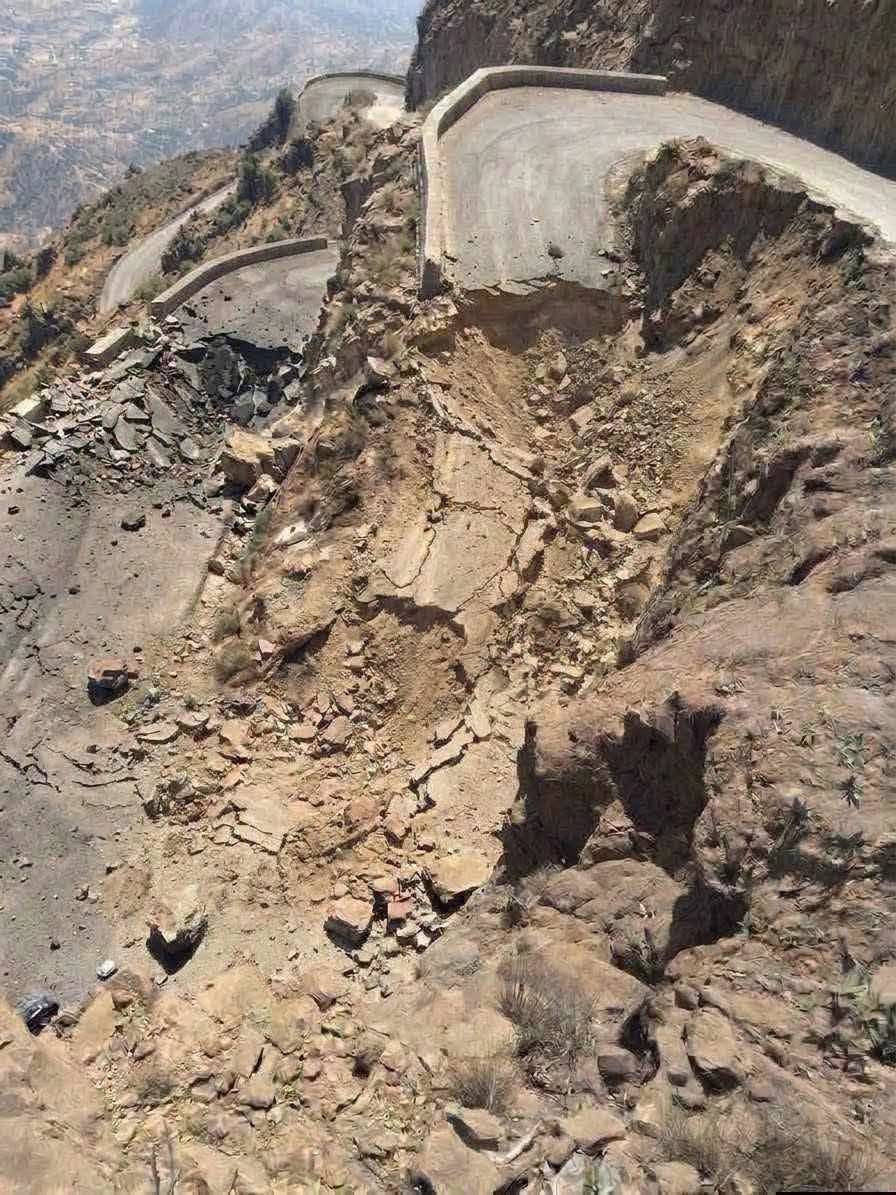
Al-Maqatirah district lies in a mountainous area overlooking the road linking Taiz and Aden.
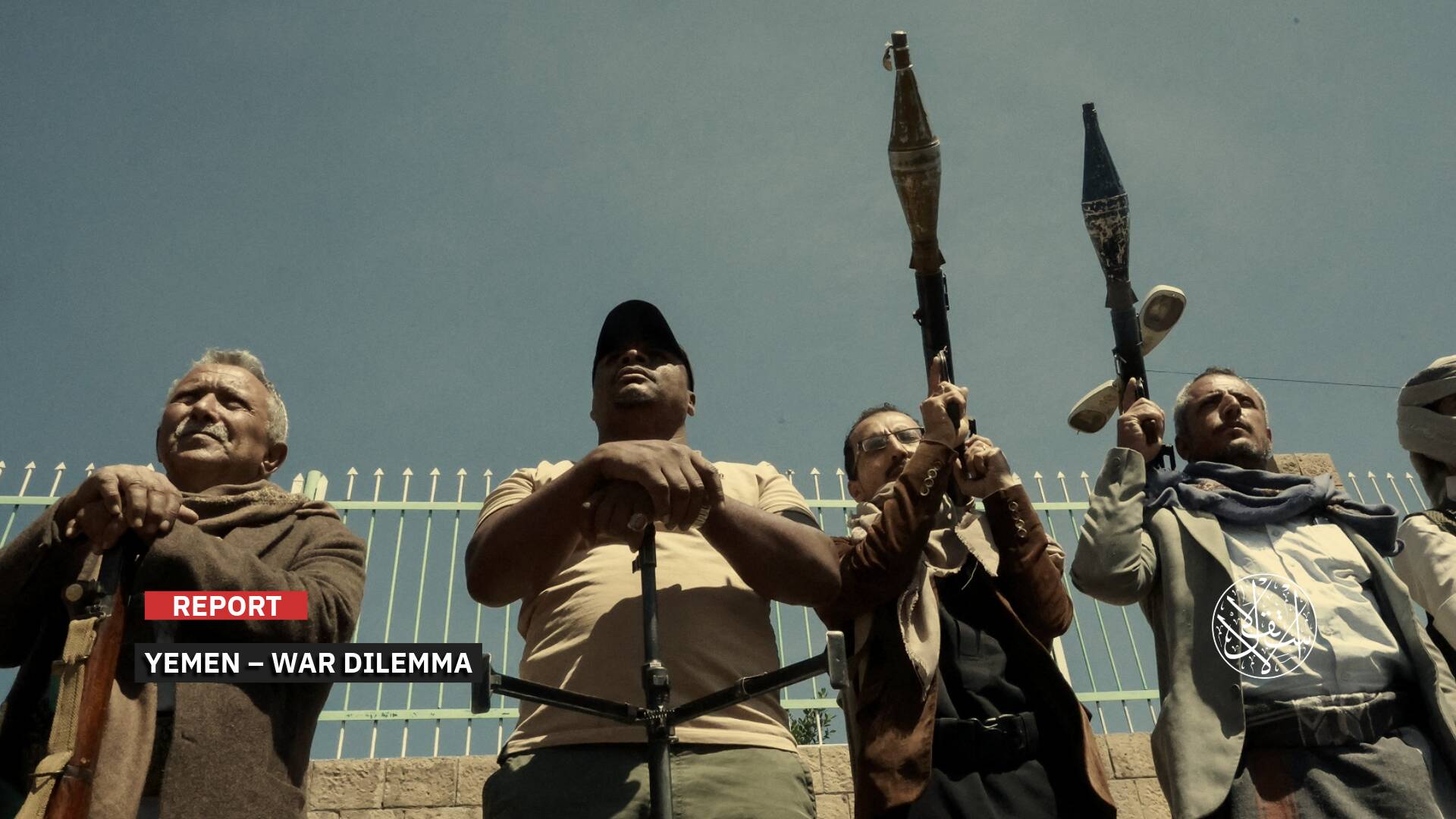
Just 80 kilometers from Aden, the war in Yemen is nearing a point it has not reached since 2015. Reuters, citing four military sources, reported that the Houthis have advanced to within this distance of the city, the main stronghold and temporary capital of Yemen’s internationally recognized government.
They are now closer to Aden than at any time since the first months of the war, when they briefly entered the city before being driven out.
But the issue is not distance alone. It is also the route that made this advance possible, and the role that Al-Maqatirah district now plays in the struggle for control of the south.
Three days after the Houthi advance began, government forces started regaining the initiative at some positions on November 3. The front then entered a phase of back-and-forth fighting and counterattacks, instead of a Houthi advance that met no resistance.
Al-Maqatirah is therefore no longer a front where one side is advancing. It has become a battleground whose outcome is still unsettled.

Al-Maqatirah: A Strategic Location
Al-Maqatirah district lies in a mountainous area overlooking the road linking Taiz and Aden. This gives its high ground great military importance, allowing whoever controls it to monitor the movement of troops and supplies.
Reports by the U.S.-based Institute for the Study of War (ISW) on November 2 and 3 indicate that Houthi control of the district’s mountain heights gave the group direct oversight of Tur al-Baha. The area is a vital passage linking the Taiz highlands to the coastal plain that leads to Aden.
Tur al-Baha lies about 50 kilometers from the capital of Lahij governorate and 80 kilometers from Aden. One of the main roads to the temporary capital also runs through it. According to sources, this road is the last overland link between Taiz and government-held areas.
Three sites in Al-Maqatirah stand out for their strategic importance: Souq al-Rubu’, the district’s center; Al-Maqatirah Castle, which rises more than 2,100 meters above sea level; and Mount Uraf. Controlling these sites gives the Houthis the ability to cover with fire the overland supply lines linking Taiz and Aden.

The group’s advance did not stop with the capture of Souq al-Rubu’ on November 1. The ISW report issued on November 3 noted that the Houthis continued trying to expand south, southeast, and southwest of the district, and that clashes broke out with government forces at positions south and southeast of the market on November 2 and 3.
Al-Maqatirah thus appears to be the scene of a push aimed at pressuring government supply lines from two directions: the Aden road from the south and the West Coast front from the east.
The importance of this advance is magnified by the location of Lahij governorate. Lahij is Aden’s overland gateway and its first line of defense. It also links the temporary capital with the governorates of Taiz, al-Dhale, Abyan, and al-Bayda.
Some of its districts also overlook areas near the Bab el-Mandeb Strait and the Gulf of Aden. This gives the governorate a military importance that extends beyond its administrative borders and makes control of its roads and passes a factor in the security of Aden and in the links between battlefronts.
Geospatial imagery dated November 2 showed Houthi attempts to advance south along the Taiz–Aden road toward Tur al-Baha.
It also detected Houthi movements across the heights in southwestern Al-Maqatirah toward the coastal plain, as well as clashes on November 3 in the areas of al-Zuraiqa and al-Majza’, about 7 and 12 kilometers south of the group’s earlier positions.
This expansion carries a meaning beyond securing the road to Aden. The advance at al-Majza’ may signal an attempt to approach the Mocha–Taiz road, about 40 kilometers to the southwest, which is an important supply line for government forces.
A Change to the Map or a Temporary Advance?
The Institute for the Study of War believes the Houthi advance threatens to isolate government forces stationed inside Taiz and cut off their reinforcement routes.
It is also pushing the military command to pull units from the West Coast fronts and redeploy them to Al-Maqatirah to contain the breach.
At the same time, the institute warns that pushing further south into the lowlands will remain risky for the Houthis, because their movements will be exposed to airstrikes, unless they can secure the commanding heights before government forces reorganize their defenses.
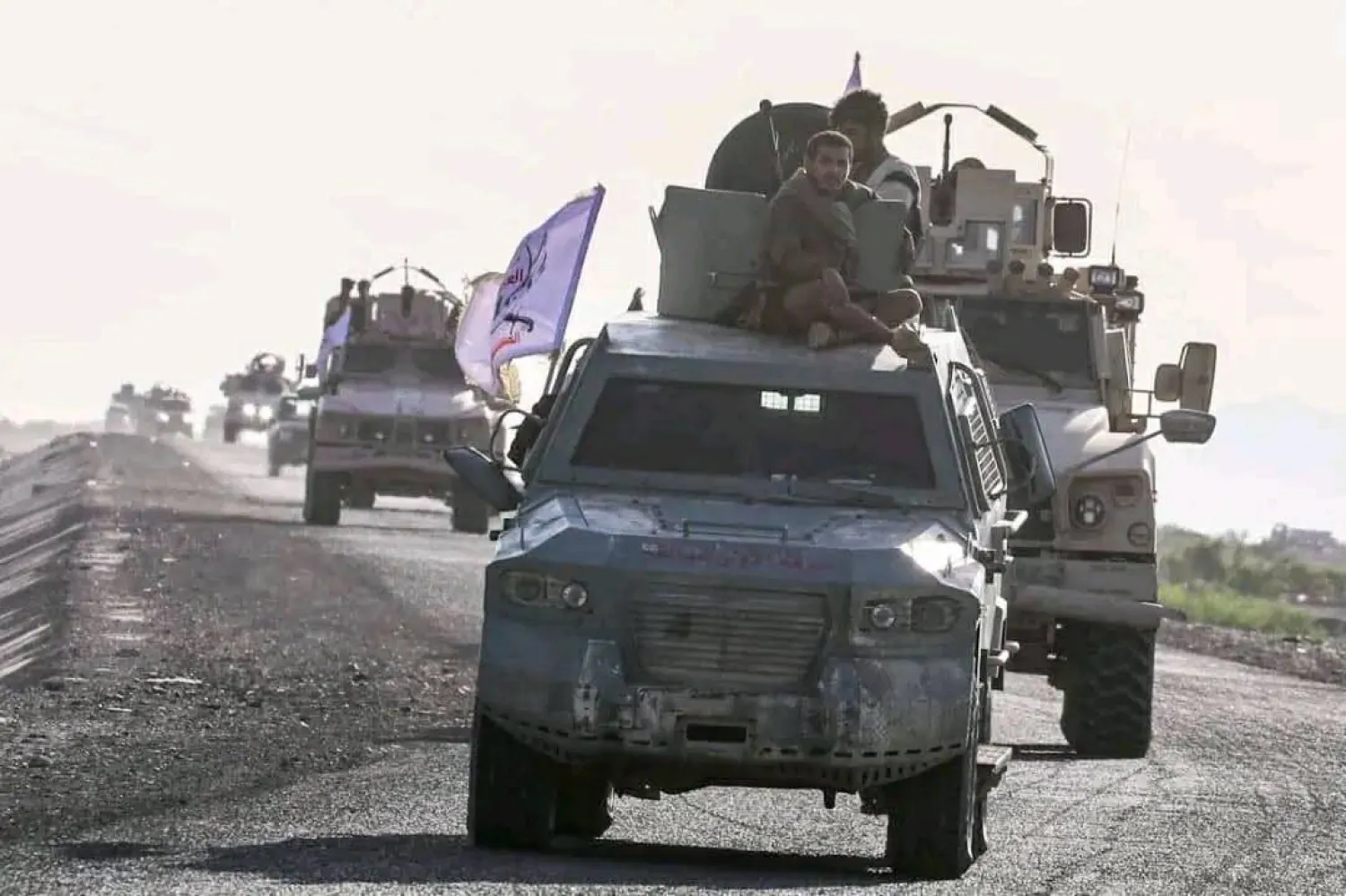
In a related development, the government armed forces announced that they had carried out 1,208 military operations, which they said neutralized about 370 Houthi fighters and destroyed 120 vehicles. These figures suggest that the confrontation has shifted into a phase of mutual attrition, rather than a one-way Houthi advance.
The question is therefore no longer whether the Houthis have achieved a breakthrough on the ground, since they already have. It is whether they can hold on to their gains and turn them into stable control.
Al-Maqatirah remains contested. Government forces report advances in al-Sawalha, al-Khazzan al-Ahmar, and Ma’baq, while the Houthis hold high ground and strategic areas, including Souq al-Rubu’ and the strategic Al-Maqatirah Castle.
The map of control has therefore not fully changed, even though the Houthi breakthrough has marked an important shift in the course of the fighting and put new pressure on government defense and supply lines.
In this context, military expert Ali al-Dhahab notes that the Houthi advance does not necessarily reflect the group’s military superiority so much as it exposes organizational failures in how government forces are managed. This explanation places part of the blame for the breach on the structure of the anti-Houthi camp, not only on the group’s offensive capabilities.

The Government’s Dilemma: One Army or Many?
But there is a question that military calculations alone cannot answer: Why have forces that outnumber and outgun the Houthis, and that enjoy air support, been unable to stop their advance in a single district?
The answer lies like the government camp itself. In Aden, Lahij, and Taiz, there is no unified military system with a single decision-making process and a cohesive command. Instead, there are multiple formations with different loyalties and calculations.
They include the national army forces of the legitimate government; the forces of the Southern Transitional Council, which sees Aden and Lahij as its sphere of influence; and the Giants Brigades and Nation’s Shield forces, deployed along the West Coast and in other areas.
This fragmentation allows the Houthis to exploit divisions within the camp opposing them and to open simultaneous fronts that drain its capabilities.
When the group escalates in Al-Maqatirah, the government does not necessarily have a unified military reserve ready to intervene.
Instead, it is forced to redistribute its forces and pull units from other fronts, as happened when units were moved from the West Coast to Al-Maqatirah, leaving their former positions exposed to pressure.
The Institute for the Study of War report describes this as putting the government in simultaneous dilemmas, forcing it to choose between multiple fronts so that strengthening one weakens another.
The battle for Al-Maqatirah is therefore not just a test of the Houthis’ ability to advance on the ground. It also shows whether the government can unify its military decision-making and coordinate the movements of the formations under its command. Without an effective joint operations command, any Houthi breakthrough can be repeated on another front, even though government forces have the advantage in numbers and weapons.
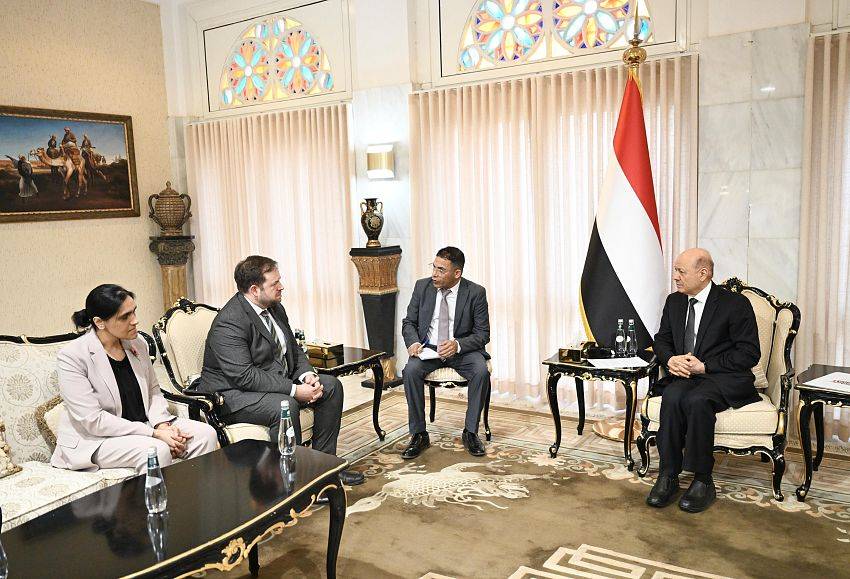
In response to this dilemma, the first political and military steps came on November 3, when the Presidential Leadership Council issued a decision to restructure the Tur al-Baha military axis.
The decision removed its former commander, Abu Bakr al-Jabouli, and appointed Major General Majdi Munadhil Thabit al-Subaihi to replace him. It also named Colonel Bassam al-Harq as chief of staff and Brigadier General Naji al-Shattaf as head of operations.
The decision came after the commander of the Fourth Military Region, Major General Hamdi Shukri, detained al-Jabouli and transferred him to Aden.
The changes coincided with a cabinet reshuffle in the government of Dr. Shaya al-Zindani, as well as changes in the leadership of the Taiz front, where Major General Rashad al-Yousifi was appointed to head the front, replacing Major General Youssef al-Sharaji.
These decisions reflect official awareness of the need to address the leadership and organizational failures exposed by recent developments.
But they remain administrative steps, and they will not change the situation on the fronts on their own unless they lead to better coordination, readiness, and field command.
Activists and residents have also accused the previous leadership of giving up high ground in al-Shamayatayn and al-Turbah, and then in Al-Maqatirah.
Whether or not these accusations are proven, they reveal the depth of the crisis of trust within the government camp and make the new leadership’s task more complicated.
The success of these changes depends on whether they improve the performance of government forces on the ground.
They will need to secure the gains in al-Sawalha, al-Khazzan al-Ahmar, and Ma’baq and recover the positions that were lost, rather than simply replacing commanders without changing the reality of division and weak coordination among the military formations.
A Bargaining Chip
It may be too early to read the Houthi advance in Al-Maqatirah as an inevitable prelude to seizing Aden.
The group knows that pushing into a flat coastal city would leave its forces more exposed to air and naval strikes. It would also struggle to secure its supply lines and to run a city the size of Aden.
The goal of this advance may therefore go beyond direct territorial control. It may be to use battlefield gains to raise the group’s political demands and strengthen its position in any future negotiations.
This escalation comes amid growing international pressure for a ceasefire and a return to the political process.
Drawing on their experience over the years of war, the Houthis know that holding battlefield leverage near Aden gives them a stronger negotiating position than controlling Sanaa and the areas already under their rule.
The advance also sends two messages abroad. The first, to Tehran, is that the group can still threaten maritime routes, above all the Bab el-Mandeb Strait.
The second, to Riyadh, is that continued fighting in southern Yemen could raise the cost of the war and complicate any future regional arrangements.
In this sense, Al-Maqatirah may not be a final military objective so much as a bargaining chip that the Houthis are trying to turn into political gains.
They could do this by entrenching their control over new areas, extracting concessions on ports and the restrictions imposed on them, or imposing more favorable terms in any future agreement.
This possibility is reinforced by the timing of the escalation, which comes as the government is busy reorganizing its institutions and making cabinet and military changes.
The Houthis are trying to present themselves as the side able to impose facts on the ground, facing a government that is still dealing with its internal failures and trying to regain the initiative.
Humanitarian Fallout and the Dynamics of the Conflict
The consequences of cutting the Taiz–Aden road are not limited to changing the map of military control. They also extend to a worsening humanitarian crisis.
According to Reuters, the siege has displaced more than 100,000 people amid shortages of food, fuel, and medicine. Disrupting the road, a main supply route to Taiz, which has been besieged since 2015, has threatened a lifeline that more than one million people depend on.
The dangers grew when the Houthis struck the public market in Tur al-Baha with a ballistic missile and artillery shells on the morning of Tuesday, November 3, killing and wounding civilians.
They then struck a training camp in Qa’tabah, in northern al-Dhale, on the morning of Wednesday, November 4.
According to Adn Gad, the preliminary toll was seven killed and 15 wounded. These attacks recall the strike on a recruit training center in Shabwa in October, and they show the danger of targeting centers that prepare government forces and of blocking the flow of new units to the fronts.
On the West Coast, the remaining residents of Dhubab have now all been displaced. On November 2, the government warned of the consequences of the escalation and called for protecting civilians and opening the roads to Taiz.
Taiz Governor Nabil Shamsan revealed that residents have lost about three million liters of water that used to come from the wells of Wadi al-Dabab, highlighting how the conflict has spread to basic resources and the necessities of life.
These developments show that the battle has gone beyond control of heights and roads to simultaneous pressure on civilians, training centers, and sources of supply.
Al-Maqatirah puts pressure on the link between Taiz and Lahij, al-Dhale allows Aden to be threatened from the north, and the West Coast is tied to the security of Bab el-Mandeb and international shipping.
Three tracks of the conflict thus intersect: breaking the siege of Taiz, containing the threat to Aden, and protecting the West Coast and strategic roads. This interdependence means that a failure on one front could undermine the government’s ability to defend the others, forcing its forces to spread their capabilities thin instead of concentrating them to regain the initiative.
Still, Houthi battlefield gains do not necessarily mean the group can hold them or turn them into lasting political gains, especially given the military and logistical burdens of fighting on many fronts.
For the government and the Presidential Leadership Council, meanwhile, the biggest test is to unify the armed formations and operational decision-making, and to turn the recent leadership changes into a real ability to coordinate defense and offense.
In the end, the heart of the battle is no longer simply control of territory. It is control of communication and supply routes, and the ability to protect cities and sustain military power.
The Houthis have not reached Aden, but they can now threaten its surroundings and pressure the supply lines of Taiz and the West Coast.
How this escalation ends will depend on whether the government can regain the initiative and prevent the Houthi gains from becoming a reality on the ground that is hard to reverse.
Sources
- The Houthis Advance to Within 80 Kilometers of Aden [Arabic]
- Why Is the Battle for Yemen’s Taiz So Important? [Arabic]
- Yemeni Army: 1,208 Operations Against the Houthis Neutralized 370 of Them [Arabic]
- The Yemeni Army… Holding Firm Around Taiz and Advancing in Al-Jawf [Arabic]
- World Food Programme: Warning of Disruption to Life-Saving Assistance in Taiz, October 14, 2026 [Arabic]
- “It May Constitute a War Crime”… How Did the Houthis Disrupt the Last Main Supply Road to Taiz? [Arabic]
- An Unconventional Siege… How Did the Houthis Cut Off Supplies to Taiz? [Arabic]
- 7 Killed and 15 Injured in Initial Toll of Houthi Missile Strike on Training Center in Northern Al-Dhalea [Arabic]
- Yemen’s Government Announces Cabinet Reshuffle Affecting Three Ministerial Portfolios [Arabic]