“Jewish Hezbollah”: How Does the Israeli Occupation Provide Cover for Settler Violence?
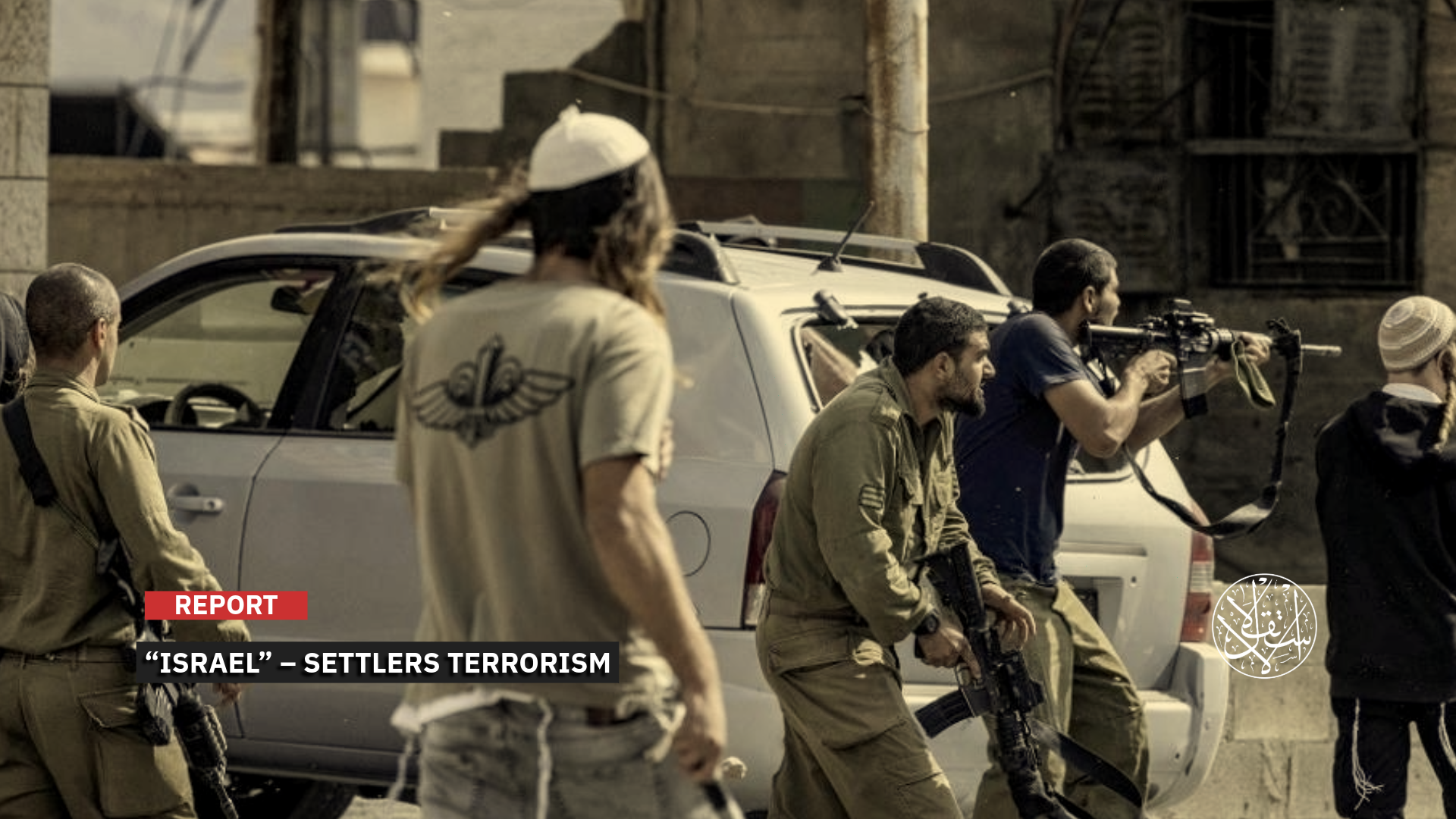
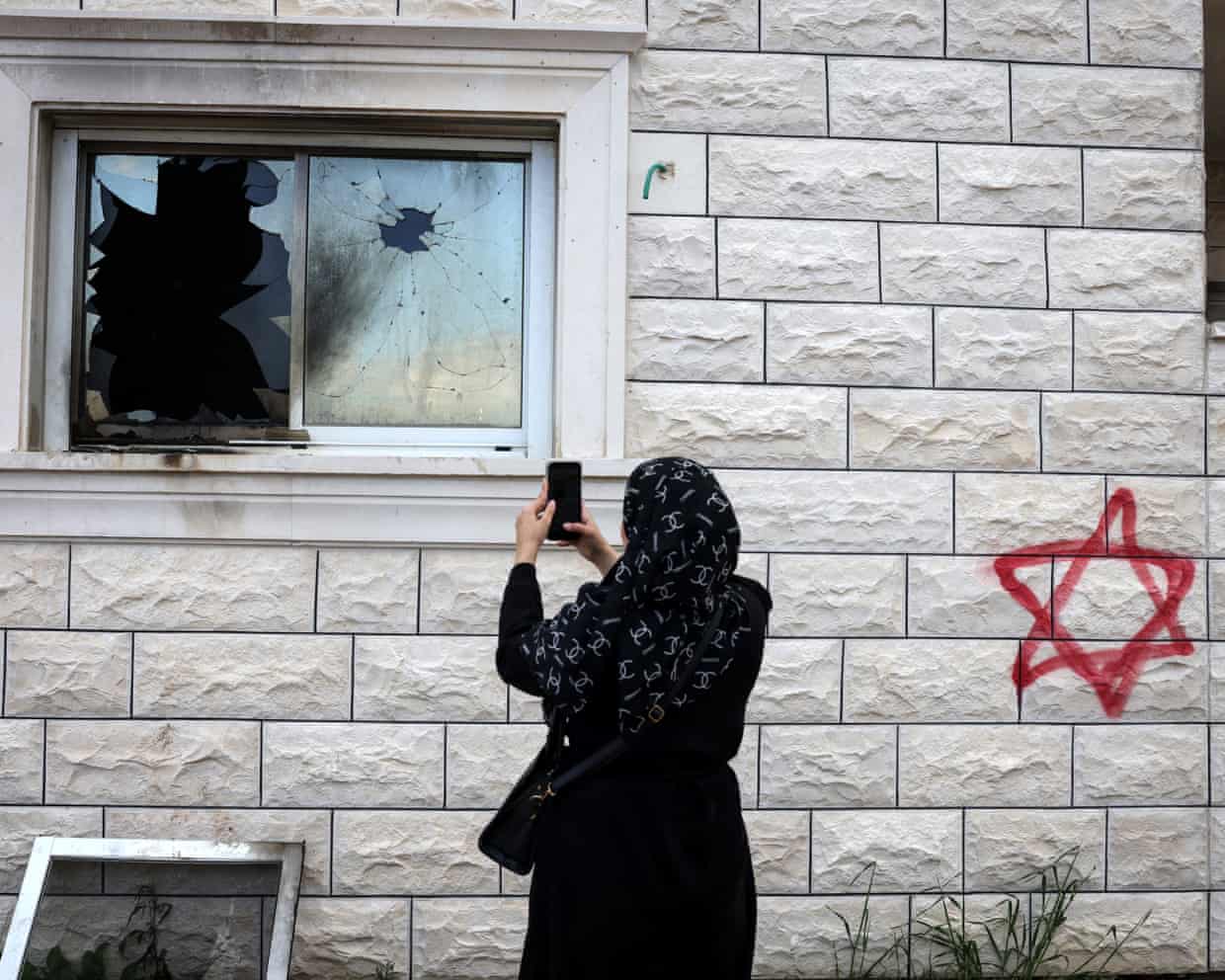
The term “Jewish Hezbollah” refers to groups of extremist settlers who attack Palestinians, assault their property, and loot it.
The escalating attacks and crimes committed by settlers against Palestinians, their property, and their farmland in the occupied West Bank, and their expansion to include an American journalist and a European delegation in October 2026, raise questions about why the Israeli occupation army and authorities have failed to deter the perpetrators despite the repeated nature of these attacks.
These questions go beyond the identities of the settlers carrying out the attacks to include the entities providing them with political cover, ideological support, and financial backing.
According to reports, this makes them part of a system in which the roles of settlers, the Israeli army, and the police overlap, with these actors supporting one another in attacks on Palestinians.
What is the connection between the biblical programs implemented and funded by international Zionist organizations to train occupation soldiers and align them with the goals of “Greater Israel”?
How do these soldiers cooperate with settlers and protect them rather than arresting them, given the convergence of interests between the two sides?
To understand this phenomenon, it is necessary to distinguish between four interconnected tracks: the Zionist ideological frameworks that generate justifications for these actions; the educational and settlement institutions that promote these ideas; the entities that finance settlements and outposts; and the political and security cover that allows certain groups to continue their activities, integrates their members into the military, or at least spreads their ideas within its ranks. According to reports, this may explain why the Israeli occupation army turns a blind eye to the actions of certain settlers.

What is the ‘Jewish Hezbollah’?
“Jewish Hezbollah” is not the official name of any known Israeli organization. Rather, it is a political and media term used to warn against groups of extremist Jewish settlers who engage in violence against Palestinians.
These groups are said to sometimes defy the Israeli state authorities and military, despite the latter’s cooperation with them and its turning a blind eye to their crimes.
The term refers to groups of extremist settlers who attack Palestinians, loot their property, and seek to displace them and seize their land, relying on networks of political and biblical support. Meanwhile, according to these criticisms, the occupation authorities deliberately fail to deter them.
The label was coined by Israeli figures, including journalists and political commentators, not by Arabs, to describe far-right settler groups and radical Zionist nationalist factions that wreak havoc in the West Bank, allegedly damaging “Israel’s” image abroad and tarnishing the image of Jews.
Among the most prominent groups and organizations with hard-line religious and nationalist Jewish ideologies are the following six:
- “Hilltop Youth”: Extremist youth groups active in the West Bank that carry out attacks against Palestinians and establish settlement outposts.
- “Price Tag”: An extremist network that carries out retaliatory attacks against Palestinians and their property. Its members claim that they are responding to attacks by the Palestinian resistance.
- “Lehava”: An extremist right-wing movement opposed to relationships and marriages between Jews and non-Jews. The European Union has accused it of inciting hatred and violence.
- “Nahalah”: A settlement movement led by Daniella Weiss that advocates establishing and expanding settlements and outposts.
- “Amana”: A settlement organization involved in establishing and expanding settlements and providing logistical and financial support for settlement projects.
- “Hashomer Yosh”: An organization that supports farms and settlement outposts in the West Bank. Amnesty International has documented its links to practices involving attacks on Palestinians and their land.
According to some accounts, Israeli writer Amos Oz coined the term “Jewish Hezbollah” in 1989. It later gained wider circulation through commentators such as Thomas Friedman during the period of “Israel’s” withdrawal from Gaza.
Israeli writer Ben-Dror Yemini used the term in Yedioth Ahronoth on October 18, 2026, while criticizing settler attacks on Palestinians, diplomats, and foreign journalists during the Palestinian olive harvest season. He linked the settlers’ religious extremism to ideological violence.
Ben-Dror Yemini compared the growing violence of settlers to the emergence of a local armed entity resembling Lebanon’s Hezbollah, describing them as “Jewish Hezbollah”.
The writer warned that the danger lies not only in the attacks themselves, but also in the environment that allows them to continue, from religious rhetoric justifying the seizure of Palestinian land, to political figures accused of encouraging extremists, and finally to foreign Jewish entities that fund them.
“These are cancerous cells. We cannot wait, because if we do not eradicate them from among us, they will destroy the Zionist project,” he said.
Official Data
As international Zionist organizations increasingly fund what are described as educational programs within the occupation army, targeting soldiers and officers, questions have emerged about the objectives of these programs and their influence on participants’ thinking.
Particular concern centers on the link between military education and biblical narratives, which may strengthen ideological ties with settlers and encourage soldiers to turn a blind eye to their crimes.
In this context, the organization Ad Kan, whose name means “Enough” in Hebrew, submitted an inquiry to the occupation army asking how many foreign organizations fund these programs.
Ad Kan is a right-wing Israeli organization established in 2015. It says it works to expose the activities of Arab and foreign organizations it considers hostile to “Israel”.
It is headed by a former military officer and says it monitors foreign funding and its influence on Israeli public policy and media.
In response to a request submitted under the Freedom of Information Law, the occupation army disclosed, according to a report published by the organization on October 18, 2026, that approximately 110 foreign institutions had funded biblical training programs for officers and soldiers between 2021 and 2025. The programs were intended to align participants ideologically with settler beliefs, according to the report.
The report also identified several organizations that receive funding from abroad and channel it toward settlement outposts and settler activities. Among the most prominent are:
1. Amana: A central organization in the settlement movement, responsible for establishing new settlements and outposts and providing them with funding, loans, and infrastructure. It is also accused of financing settler attacks against Palestinians.
In November 2024, the U.S. Department of the Treasury announced that it had placed the organization on its sanctions list, citing its links to individuals and outposts previously targeted by sanctions, as well as its role in financing and developing settlement outposts.
2. Hashomer Yosh: An organization that recruits volunteers and provides material and organizational support to farms and pastoral settlement outposts.
In May 2026, the European Union added the organization to its sanctions list, stating that it supports at least 28 violent outposts or settlements, recruits armed volunteers, and provides guards involved in attacks, according to the sanctions decision.
3. Artzenu and Shivat Zion: Both organizations were named in sanctions measures announced by Britain and other Western countries in June 2026.
On June 9, 2026, the British newspaper The Guardian reported that Artzenu raises funds to purchase tactical military equipment for armed settler groups, while Shivat Zion operates as a legal front, enabling some financial transactions linked to Artzenu to be conducted through it.
4. The Farms Union and Ahavat Gilad: Both organizations were also included among the entities targeted by Western sanctions measures in 2026.
According to a report by the Peace Now organization, the Farms Union provides financial and organizational support to outposts associated with violence and forced displacement, while Ahavat Gilad serves as a channel for transferring donations to some of these outposts.
Who Shapes Extremist Ideology?
According to Israeli and Western studies and assessments, several entities play a central role in producing and promoting extremist ideology among radical Jewish youth.
These include rabbis and hard-line religious nationalist movements, Kahanist educational institutions, and Zionist military education programs.
Some hard-line currents within religious Zionism serve as ideological reference points for segments of the settler population.
They link control over Palestinian land to extreme biblical and nationalist concepts, deny Palestinians’ rights to their land, and justify their exclusion and extermination.
Many of these individuals embrace Kahanist ideology, sometimes referred to as the redemptionist movement, after the ideas of Rabbi Meir Kahane, which are associated with calls for the expulsion of Palestinians and the establishment of Jewish supremacy.
Among the figures associated with this movement is Rabbi Dov Lior, who considers Palestinian-owned land part of the Land of “Israel” and offers biblical justifications for seizing it.
Religious Zionism is divided into two camps over the question of redemption, or the coming of the Messiah.
The first believes that redemption is in God’s hands alone and cannot be influenced by human action, and that its proximity or remoteness can be assessed by the extent to which Jewish religious teachings are observed.
The second camp, described as revolutionaries or reformists, claims to seek to hasten or bring about divine redemption through human action rather than waiting for God’s will.
This approach is associated with circles within today’s religious Zionist movement, including groups linked to Itamar Ben-Gvir and Bezalel Smotrich, as well as the Hilltop groups.
According to accounts of this movement, this Haredi Zionist redemptionist current advocates settling in Palestinian-populated cities to provoke friction with residents and drive them from their land. It also calls for building the Temple on the ruins of Al-Aqsa Mosque, without waiting for the coming of the Messiah or for Jews to repent.
Extremists among Haredi Jews, including members of Torah Cores and hard-line organizations such as Lehava, operate according to an extremist Jewish religious framework associated with rabbis from the Kahanist movement.
When Haaretz published Israeli military data on October 18, 2026, showing a significant increase in the military’s reliance on organizations associated with Zionist identity and the settlement heritage to educate soldiers, it highlighted the role of Zionist educational institutions in military instruction, alongside a decline in programs teaching soldiers about democracy and human rights.

Military Education
The most significant finding in the investigative report published by the Israeli newspaper Haaretz was the clear shift in the institutions the occupation army relies on to educate its soldiers and officers.
This shift was reflected in a sharp increase between 2021 and 2025 in activities organized by institutions affiliated with the Israeli right, the settlement movement, and Jewish heritage, alongside a decline in the military’s reliance on organizations focused on democracy and human rights.
The largest increase was recorded by the Israel Mitvim Institute, which operates under the tourism and tour-guiding company “Israel-2GO”, headed by a former activist in the Religious Zionism Party.
The organization conducted educational activities for the military focused on promoting Zionism, identity, Jewish heritage, and a biblical fighting spirit. It organized 303 activities in 2024 and 742 in 2025.
Behind the company is Yosef Speizer, who was a member of the Yamina electoral list led by Naftali Bennett and Ayelet Shaked before running in the August 2022 elections with the Religious Zionism Party, headed by current Finance and Settlement Minister Bezalel Smotrich.
Other institutions also recorded significant increases in activities promoting religious Zionist ideology within the military through training courses during the same period. Activities organized by Midreshet Shomron rose from 19 in 2021 to 278 in 2025.
Activities organized by the Kfar Etzion Center increased from 32 to 227, while those organized by the Darkhei Avot Association rose from three to 356. Activities organized by the Western Wall Heritage Fund increased from 42 to 413, according to Haaretz.
The number of activities requested by the military from Midreshet Shomron, based in the settlement of Shavei Shomron and specializing in tours focused on the Torah, history, and settlement heritage, rose from 19 in 2021 to 278 in 2025, an increase of approximately fifteenfold.
Similarly, the number of activities organized by Beit Sefer Sadeh in Kfar Etzion, a center for academic studies and field tours, increased from 32 to 227 over the same period.
Activities organized within the military by the so-called Western Wall Heritage Fund increased from 42 to 413.
Meanwhile, the number of activities requested by the military from the City of David Association, which is affiliated with the Israeli right and operates in the fields of archaeology and tourism in Jerusalem, rose from 84 to 366.
The organization is headed by Amit Deri, who is close to Israeli Diaspora Affairs Minister Amichai Chikli. The two share a close friendship, and Deri succeeded Chikli as head of the organization after Chikli entered political life.
In 2023, the Israeli business news website The Marker revealed that approximately 1.5 million shekels in funding from the Ministry of Diaspora Affairs had been allocated to Midreshet Tavor through the company Israeli Voices to finance a propaganda project called DiplomAct.
By contrast, activities organized by some institutions focused on democracy and human rights declined. Activities at the Center for Human Dignity fell from 27 in 2021 to just one in 2025.
The “Israel” Democracy Institute recorded no activities in 2025, compared with one activity in 2021.
Domestic Funding
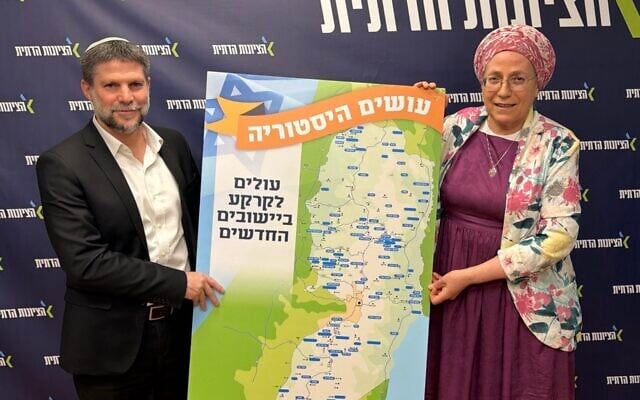
Since two of the most prominent hard-line figures associated with these Zionist movements assumed ministerial positions in the Israeli government, Finance Minister Bezalel Smotrich and National Security Minister Itamar Ben-Gvir, domestic funding directed toward settler groups has increased, alongside growing tolerance of their activities and attempts to influence the military establishment, according to reports.
Data and reports issued by Israeli and international organizations document the Israeli government’s direct funding of these organizations, as well as settlement outposts and farms. This support includes security equipment and infrastructure that help them remain in place and expand, as well as facilities associated with settlers.
On July 19, 2026, The Times of Israel published a document from the Ministry of Settlement Affairs revealing that the “Tel Aviv” government had allocated 5.5 million shekels to cover food, clothing, and living expenses for young men residing in settlement outposts. The program covers approximately 650 young men, with the funds to be transferred through local settlement councils.
On June 15, 2026, Yedioth Ahronoth also published a report revealing that the occupation government allocates 50 shekels per day to each of these young extremist settlers, bringing the total allocation to 5.5 million shekels through the end of 2026.
These allocations were part of a broader program reportedly costing 120 million shekels, intended to address the circumstances of young men living in settlement outposts.
In a report published in June 2026, Amnesty International revealed that the government provides funding to the Hashomer Yosh Association, which recruits volunteers to work in settlement outposts. The organization has received at least three million shekels in government funding since 2023, Amnesty said.
On March 25, 2026, The Times of Israel revealed that 50 million shekels had been allocated to purchase security equipment and supplies for unauthorized settlement outposts, in addition to other allocations for infrastructure.
The funding was channeled through the Ministry of Settlement Affairs and the Settlement Division of the World Zionist Organization, in coordination with military bodies and settlement councils.
According to the Israeli organization Peace Now, the government funded approximately 68 settlement farms in 2023 with 15 million shekels, in addition to allocating 13 million shekels to 33 other outposts.
Approximately 75 million shekels were also allocated in the 2024 budget for security-related components at settlement outposts and farms.
The equipment included vehicles, drones, cameras, electricity generators, gates, fences, and solar panels, providing these sites with the material and security capabilities needed to remain in place.
The organization notes that some funding mechanisms operate through the Settlement Division of the World Zionist Organization and settlement councils, supporting the establishment of a settler presence on Palestinian land amid a rise in attacks against Palestinians.
American and British Funding
Support for Israeli settlers in the occupied West Bank is not limited to the budgets allocated by the Israeli government to expand settlements and secure new outposts.
Outside “Israel”, journalistic investigations, financial documents, and government measures have revealed networks of private donations, charitable organizations, and crowdfunding platforms that channel money to settlements and institutions associated with the settlement movement.
The United States and Britain stand out as important sources of documented foreign donations, whether through charities that benefit from tax exemptions or online fundraising campaigns.
In some cases, this support goes beyond establishing institutions inside settlements to financing settler security teams or raising money for individuals who have been sanctioned over acts of violence.
Among the organizations examined in these investigations are the Central Fund of “Israel”, which provides support to entities linked to settlements, as well as Honenu, which offers assistance to the families of Jewish settlers convicted of violent crimes.
There is also the Hebron Fund, which finances projects in the settler community inside the city of Hebron through foreign entities.
Its funds have been used to purchase properties and improve living conditions within settlements, in addition to providing assistance to the families of settlers convicted of violent crimes.
An investigation by the British newspaper The Guardian in December 2023 highlighted what it described as crowdfunding after October 2023, through which foreign organizations, particularly American and British ones, provided funding to settlers under the pretext of responding to the Al-Aqsa Flood operation.
The newspaper identified a platform called “IsraelGives”, which raised money for Israeli organizations from donors inside and outside “Israel”.
The platform hosted at least 450 active fundraising campaigns, including 204 launched after October 7, 2023. Some sought donations to purchase tactical equipment or provide logistical support.
The beneficiaries included the Israeli military, military units, and paramilitary security groups associated with Israeli communities, including settlements in the West Bank.
The newspaper estimated that financial pledges to the military, paramilitary groups, and settlers since October 7 amounted to approximately $5.3 million. It noted that a large proportion of donors whose locations could be identified were based in the United States.
American reports have also documented fundraising campaigns for settlers who were sanctioned by U.S. authorities or accused of committing acts of violence against Palestinians.
An Associated Press report noted that a New Jersey-based nonprofit organization called World of Tzedaka received donations from American donors by credit card, while allowing them to claim tax deductions when eligible.
Foreign funding is not limited to the United States. In June 2026, The Guardian revealed that 32 charities in England and Wales had donated at least £28 million to settlements in the West Bank, according to data compiled by British Member of Parliament Melanie Ward.
The documented cases included funding for religious schools and institutions operating within settlement areas.
In August 2026, the UK Charity Commission also announced that it had opened a formal investigation into donations made by some of these charities. This does not, in itself, establish that all the organizations involved had committed violations.

Political Cover
The issue is not limited to money and ideology. Media reports indicate that political pressure and direct ties between settlement leaders and military officials influence how attacks in the West Bank are handled.
Hebrew-language media reports, citing sources within “Israel’s” security establishment, have revealed that political pressure from settler leaders prevents field commanders from effectively confronting settler violence, or what the reports describe as “Jewish terrorism”.
The sources indicated that some military commanders have become wary of the political leadership, directly affecting their priorities and law enforcement in the West Bank, according to journalists Yaniv Kubovich and Lisa Rozovsky in an article published in Haaretz on October 19, 2026.
The two journalists reported that Israeli military commanders take the political consequences of their decisions into account before taking any action to protect Palestinians from settlers.
They fear attacks from right-wing ministers and members of the Knesset, or intervention by Israeli Defense Minister Israel Katz in promotion decisions.
They also noted that heads of settlement councils maintain direct and continuous contact with brigade and division commanders, and sometimes with the political leadership.
These relationships have gone beyond security coordination to become a center of influence over the military’s priorities and operations.
The journalists explained that incidents involving allegations made by settlers receive immediate attention and investigations by senior officers, while serious and routine acts of violence against Palestinians do not receive the same response, owing to pressure from settlement leaders.
Indeed, senior officials, including the chief of staff and the head of the Central Command, visit illegal settlement outposts such as Maoz Shaul Farm.
According to the report, these visits send implicit messages to brigade and division commanders to show leniency toward these outposts and their residents and refrain from enforcing the law against them.
To illustrate the coordination and close cooperation between occupation soldiers and settlers, some of whom are former soldiers or reservists, Haaretz reported on October 19, 2026, what could be described as a “duet” between the two sides, reflected in their cooperation during attacks on Palestinians.
The newspaper explained that occupation soldiers arrive whenever settlers attack Palestinian villages. They protect the settlers on the one hand and arrest Palestinians on the other, accusing them of throwing stones and clashing with the settlers, even when the incident may have involved an attack by settlers.
The newspaper cited several cases and reported that the hotline operated by the Human Rights Defenders Fund had received 272 calls since the beginning of 2026.
It also documented 368 unexplained incidents in which Israeli soldiers detained Palestinians in the context of coordination with settlers, as of October 15, 2026.
Under this pattern of coordination, 678 Palestinians were arrested during 2026, including 16 women. Most were detained in their pastures and fields, and even inside their homes.
Some were held in custody, while others disappeared for extended periods, with the occupation authorities providing no information about their whereabouts.
After their release, many said they had been beaten by soldiers, in addition to having been attacked by settlers who stole their olives or burned their crops, homes, and vehicles.
These arrests follow a recurring pattern: soldiers appear within minutes of settlers entering Palestinian land and attacking residents. The incident is subsequently described using the occupation army’s term “friction”.
The soldiers then arrest the Palestinians who were attacked, handcuff them, and blindfold them, relying on settlers’ claims that the Palestinians initiated the violence.
Elisha Yered, one of the prominent activists in the Hilltop Youth movement, which is considered part of what has been described as “Jewish Hezbollah”, acknowledged this scenario, which the report characterized as deliberate and coordinated.
He made the remarks while appearing on a podcast hosted by Tamir Dortal, when asked about the purpose of the attacks as a strategic step to displace Palestinians from their land, according to Haaretz.
On October 21, 2026, the Israeli military approved an amendment to the Planning and Building Law in the occupied West Bank, allowing buildings constructed without permits in settlement outposts to be connected to water and electricity networks, even before the plans required to legalize them have been approved.
The head of the Israeli military’s Central Command signed the amendment on September 23, 2026. The Bimkom organization, which focuses on planning and human rights, says the move represents another step toward legitimizing settlement outposts on the ground and deepening discrimination between settlers and Palestinians in the West Bank.
Sources
- Israel’s Homegrown Hezbollah: Jewish Settler Violence Is Destroying Zionism From Within
- Israeli Defense Officials: Political Pressure Preventing IDF From Tackling Jewish Terrorism
- UK and Allies Impose Sanctions on Firms Enabling West Bank Settler Violence
- Settlers Attack and Soldiers Arrest: “A Relay of Terror” to Expel Palestinians From Their Land [Arabic]
- Data: The Israeli Right and Settlement Movement Strengthen Their Presence in Military Education [Arabic]
- Government Document Shows 650 Youths Living in Illegal West Bank Outposts