Turkiye’s Rapprochement With Haftar’s Camp: Why It Alarms Its Eastern Mediterranean Rivals
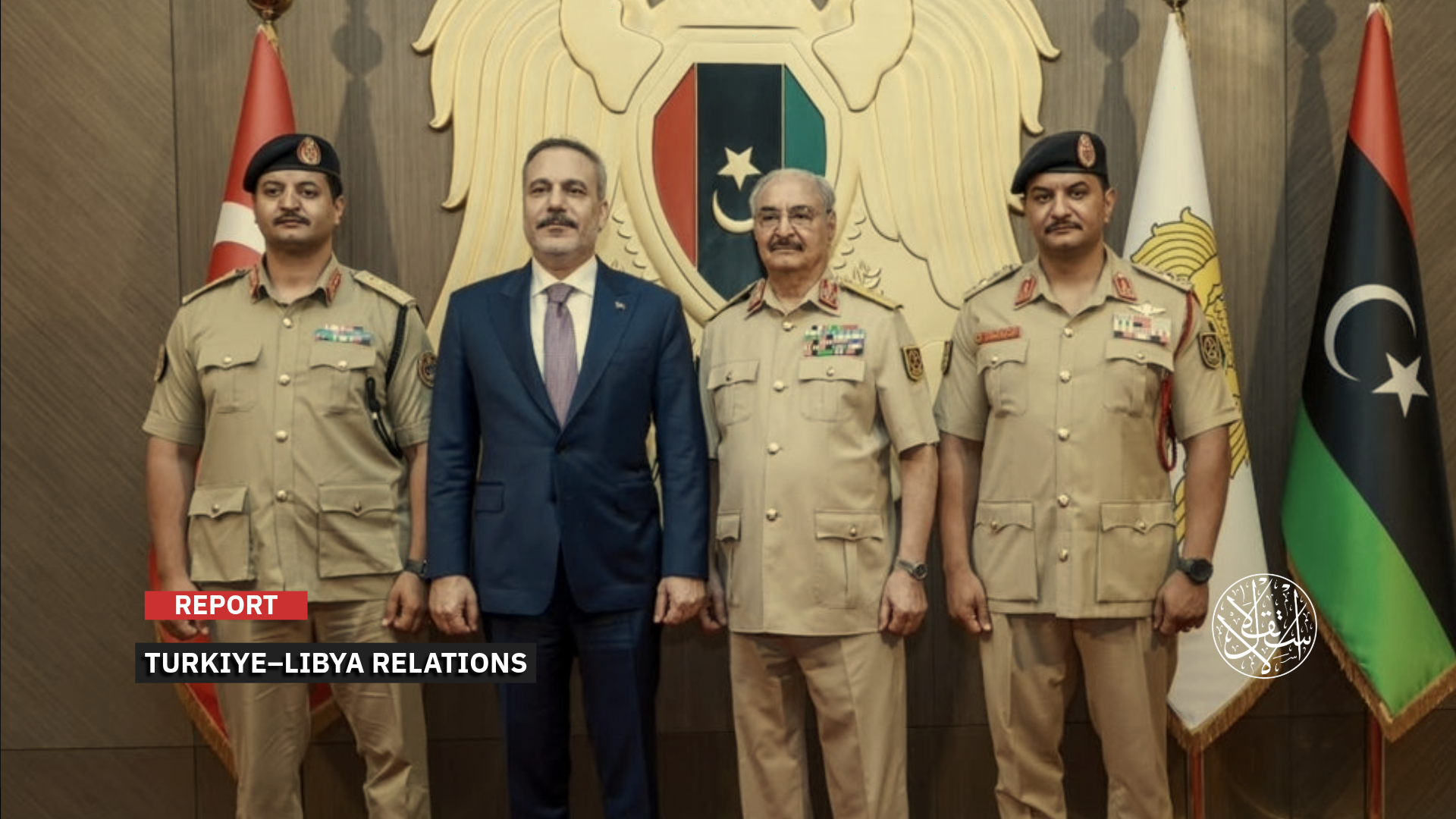
"The memorandum of understanding on maritime boundary demarcation dates back to 27 November 2019."
After nearly two years of quiet diplomacy with Saddam Haftar, the son of Khalifa Haftar, who controls eastern Libya, Turkiye has secured a key objective.
In a significant strategic shift and another diplomatic gain for Ankara, Libya’s House of Representatives unanimously approved the maritime boundary agreement signed with Turkiye in 2019. The vote took place at the parliament’s headquarters in Benghazi.
On 20 October 2026, the eastern Libyan parliament approved the 2019 agreement, which had initially been signed only by the Tripoli-based government in western Libya. The move could pave the way for Turkiye to expand its influence in the Mediterranean and open the door to Turkish exploration for energy resources in Libyan waters.
The decision came alongside the parliament’s repeal of its 2020 resolutions rejecting ratification of the agreement and severing political ties with Ankara.
The vote took place during the second session chaired by the House’s new leadership, headed by al-Salhin Abdelnabi, who was recently elected to replace Aguila Saleh after his 12 years in office. Saleh had been the main obstacle to securing the eastern parliament’s approval of the agreement.
As expected, Egypt, Greece, Cyprus, and the Israeli Occupation rejected the deal, arguing that it was illegitimate and infringed on their exclusive economic zones. The European Union also opposed it, saying it would harm Greece and Cyprus.

What Does the Agreement Mean?
The maritime boundary memorandum dates back to 27 November 2019, when it was signed by Turkish President Recep Tayyip Erdogan and Fayez al-Sarraj, the former head of Libya’s UN-recognized Government of National Accord in Tripoli.
The Turkish parliament ratified the agreement, but its approval in Libya was held up for years by the country’s political divisions and the dominance of Khalifa Haftar’s supporters in the eastern parliament, commonly known as the Tobruk-based parliament.
Libya has been divided between rival eastern and western administrations for more than a decade, following a civil war that erupted after the ouster of former Libyan leader Muammar Gaddafi in a popular uprising backed by NATO airstrikes against his forces.
The agreement defines the maritime jurisdiction between Turkiye and Libya, including their continental shelves and exclusive economic zones, through specific coordinates and technical annexes.
However, it remained stalled in the Libyan parliament because Haftar’s camp opposed ratification.
Now, following a rapprochement between Turkiye and the Haftar authorities, particularly his son Saddam, Ankara has secured a breakthrough. Saddam is reportedly being groomed to succeed his father as the dominant figure in eastern Libya and has ambitions to lead the country or secure a senior position as part of efforts to unify its eastern and western administrations, an initiative supported by Turkiye and the United States.
In recent months, Ankara has pursued negotiations through back-channel contacts and intensive diplomatic meetings with the Haftar family. Turkish officials, including intelligence chief Ibrahim Kalin and Foreign Minister Hakan Fidan, have also made a series of visits to eastern Libya.
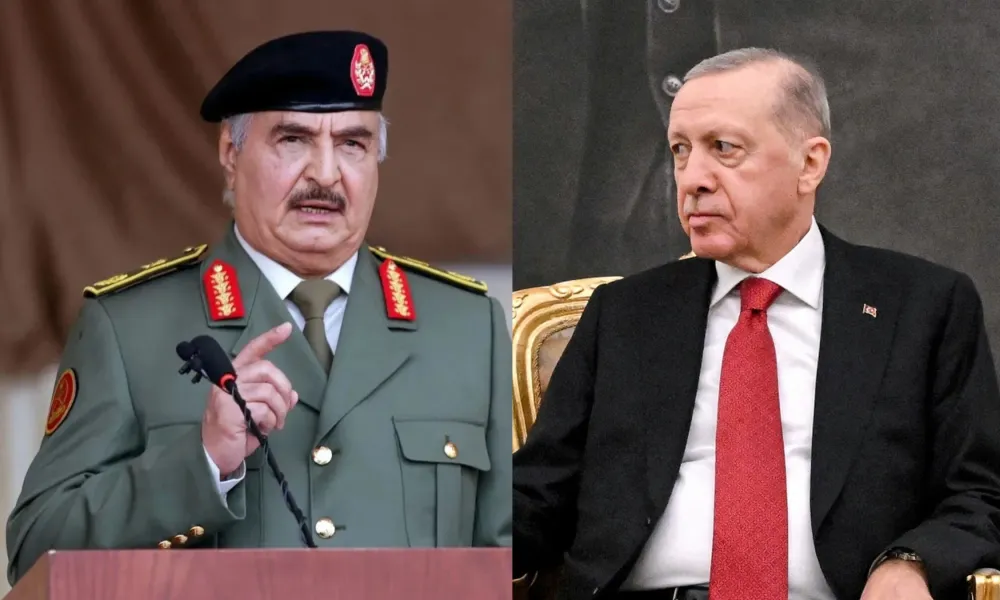
The U.S. adoption of a plan to unify Libya also helped advance Turkiye’s diplomatic initiative. The plan envisioned an agreement among Libya’s main political factions, with the backing of key foreign powers, foremost among them Turkiye, which supported the western camp, and the United Arab Emirates and Egypt, which backed Haftar in the east. Each sought to protect its own interests.
According to Il Foglio on 20 October 2026, Saddam Haftar seized on the U.S. initiative to reshape the balance of power in eastern Libya and remove obstacles to an understanding with Ankara.
As part of this effort, House of Representatives Speaker Aguila Saleh, who opposed the maritime agreement with Turkiye, was removed from his position on 6 October 2026 and replaced by al-Salhin Abdelnabi, a figure loyal to the Haftar family.
The move was a deliberate attempt to eliminate the last political obstacle to ratifying the maritime agreement.
Saleh had been one of Egypt’s most prominent allies in eastern Libya and had opposed ratification of the agreement with Turkiye for years. His removal, Il Foglio reported, cost Cairo one of its key sources of influence within the Tobruk-based parliament, while Haftar succeeded in securing unanimous approval of the deal.
In a report published on 20 October 2026, Le Monde likewise noted that eastern Libya’s decision to approve the agreement was preceded by the removal, on 6 October, of former parliament speaker Aguila Saleh, who opposed the maritime deal and was close to Egypt.
He was replaced by al-Salhin Abdelnabi, who had previously chaired the Libyan-Turkish Friendship Group in parliament. Greek media outlets opposed the agreement, saying that Haftar and his son had sidelined Aguila Saleh to facilitate this development.
Il Foglio argues that Saddam Haftar is seeking to become president of a reunified Libya with Turkiye’s backing in exchange for approving the maritime agreement. It views the eastern parliament’s endorsement of the deal as “part of a broader political understanding.”
Under this interpretation, the arrangement could give Ankara strategic and economic gains in the eastern Mediterranean while opening a potential path for Saddam Haftar to reach Tripoli as president of a unified state.
However, this remains a political ambition and an emerging understanding, not a finalized agreement on a transfer of power. It also lacks the support of political factions in western Libya.
Saddam Haftar welcomed the House of Representatives’ unanimous decisions to ratify the Libyan-Turkish maritime agreement and repeal Resolutions No. 1 and No. 6 of 2020, which rejected the deal and severed political ties with Ankara.
He said the decisions marked a step toward overcoming past political divisions and putting Libya’s national interests above all other considerations.
To demonstrate that Turkiye remains an ally of western Libya, represented by the internationally recognized government in Tripoli, Ankara arranged for Turkish intelligence chief Ibrahim Kalin to meet Prime Minister Abdul Hamid Dbeibeh on the same day as the vote in Tobruk.
The new Libyan parliament’s position means that key figures in eastern Libya, previously backed by Cairo, now support a maritime agreement that Egypt opposes.
Libya’s ratification therefore puts the agreement at odds with regional opposition. Egypt and Greece had both rejected the deal, and in 2020 Cairo and Athens signed an agreement demarcating an exclusive economic zone in the eastern Mediterranean in response to the Turkish-Libyan accord.
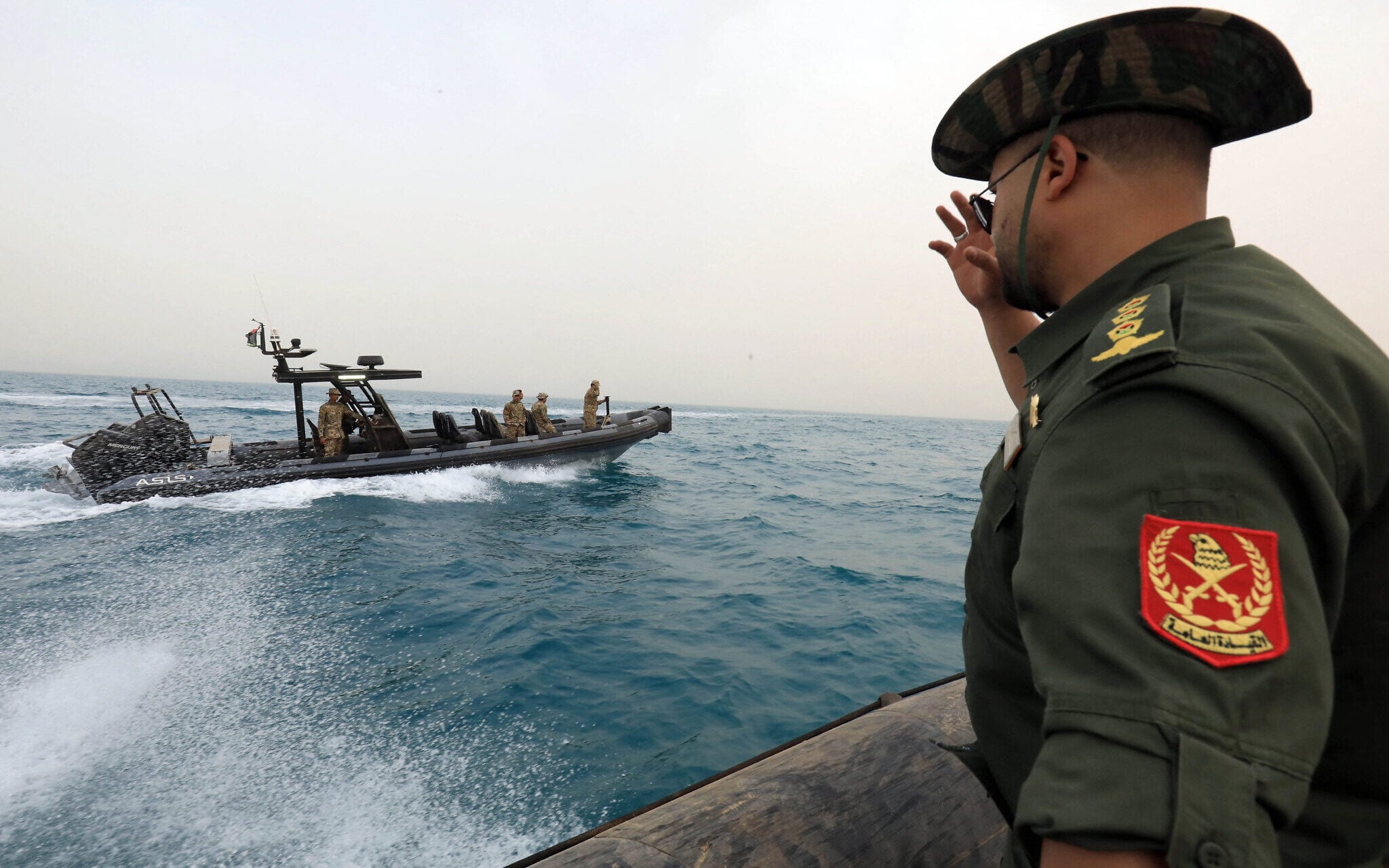
A Political Earthquake in the Mediterranean
The maritime agreement offers Ankara direct economic benefits tied to specific oil and gas exploration projects, as well as strategic gains that advance Turkiye’s Blue Homeland doctrine.
This maritime strategy is built around three main objectives: expanding Turkiye’s influence and protecting its interests in the surrounding seas, particularly the Aegean, Mediterranean, and Black Seas.
The doctrine seeks to extend Turkish maritime influence by asserting the country’s rights in waters it considers part of its strategic sphere while protecting its economic interests by securing rights to explore for oil, gas, and other marine resources.
It also aims to strengthen Turkiye’s naval power by developing its fleet and enhancing its ability to protect the country’s maritime interests.
Because this geopolitical and military doctrine overlaps with the maritime spheres of influence of Greece, Cyprus, and Egypt, it has fueled disputes with all three countries over maritime boundaries and energy resources in the eastern Mediterranean.
In this context, political analyst Ahmed Dahshan said the agreement had allowed Turkiye to achieve everything it had long sought and hoped to accomplish in eastern Libya at virtually no cost, while consolidating its military presence alongside its staunch allies in western Libya. That presence, he said, had gained legitimacy through acceptance by eastern Libya and regional and international powers.
Turkish analysts view the agreement as a political earthquake in the Mediterranean, and a breakthrough against what they say has been a Western effort to confine Turkiye to a “landlocked” position under the so-called Seville Maps.
Under this interpretation, the maps would limit Turkiye’s use of its Mediterranean coastline largely to tourism and leisure, denying it an exclusive economic zone despite having the longest coastline in the eastern Mediterranean.
The “Seville Maps” are not a legally binding international agreement on maritime boundaries. Rather, they are maps used in discussions over the division of maritime zones of influence in the eastern Mediterranean.
Turkiye rejects this approach, insisting that it will not accept having its maritime rights confined to its coastlines along the Aegean and Mediterranean seas.
Turkish Foreign Ministry officials have previously described the map as reflecting exaggerated Greek and Cypriot claims, arguing that it disregards the principle of equity in maritime boundary delimitation.
Developed by two academics at Spain’s University of Seville as part of European maritime planning studies, the map dates to the mid-2000s and has since become known as the Seville Maps.
Opposition to the maps helped strengthen Turkiye’s “Blue Homeland” doctrine, which calls for protecting a broader maritime sphere for the country and expanding its military and economic presence in the surrounding seas.
Turkish social media accounts described the Libyan parliament’s ratification of the agreement as a “historic day for the Blue Homeland” and hailed the decision as “a major diplomatic gain in the battle for the Blue Homeland,” which, they said, had become a legal and geographical reality.
The accounts added that “one of the key political arguments used for years by those who claim the Turkish-Libyan agreement is invalid, citing the lack of approval by eastern Libya’s parliament, has collapsed.”
Although the Seville Maps are not an international ruling denying Turkiye its maritime rights but rather a cartographic interpretation that has become part of a political and legal dispute over maritime boundary delimitation, Turkiye’s rejection of the maps and insistence on its maritime demands have helped establish a new reality.
Perhaps for this reason, the European Union has described the agreement as invalid and without legal effect.
European Commission President Ursula von der Leyen also rejected the Libyan House of Representatives’ ratification in Benghazi of the maritime boundary agreement signed in 2019.
She said the agreement infringes on the sovereign rights of third countries, is incompatible with the law of the sea, and is null and void, reaffirming the EU’s solidarity with Greece and Cyprus.
Greece’s Foreign Ministry also categorically rejected the Tobruk-based parliament’s decision to ratify the agreement, arguing that it violates international maritime law and infringes on the sovereign rights of countries in the region. Like Egypt, Athens maintained that the agreement has no legal effect.

Egypt and Israeli Occupation
Following the announcement that the Haftar-aligned parliament in Tobruk had ratified the maritime boundary agreement with Turkiye, Egypt’s Foreign Ministry reiterated its opposition to the deal, having rejected it previously after the Tripoli government signed the agreement with Ankara in 2019.
The Egyptian Foreign Ministry described the agreement as absolutely null and void, with no legal effect, arguing that it violated Egypt’s sovereign rights in its exclusive economic zone and encroached on that zone. It added that ratification of the agreement would have no legal effect on Egypt.
Journalist Samir Alaraki explained that this dispute is not between Turkiye and Egypt. It is a battle between Turkiye on one side and Greece and southern Cyprus on the other, backed by Israel, France, and the European Union.
He said the conflict was one of the legacies of the collapse of the Ottoman Empire and was intended to confine Turkiye to a narrow maritime space.
Greece, for example, controls the island of Meis, known internationally as Kastellorizo, which lies just two kilometers from the Turkish coast near Antalya but roughly 600 kilometers from mainland Greece. Yet Athens uses the island as a basis for determining its maritime boundaries.
Reports had suggested that one reason for the meeting between the head of the Egyptian regime, Abdel Fattah el-Sisi, and Khalifa Haftar, commander of eastern Libya’s forces, on 19 August 2026, was Egypt’s attempt to pressure Haftar and other relevant Libyan parties to prevent ratification of the agreement.
Haftar’s sons, Belqasim and Khaled, attended the meeting, along with Egyptian General Intelligence Service chief Hassan Rashad. Saddam Haftar joined them later.
Egypt had previously taken steps to protect its maritime rights in response to the 2019 Turkiye-Libya agreement.
In 2020, it signed a partial agreement with Greece delimiting their exclusive economic zones, and in 2022, it unilaterally declared its western maritime boundary with Libya.
The maritime corridor sought by Turkiye and Libya overlaps with the exclusive economic zones of Egypt and Greece and crosses the maritime boundaries declared by Egypt.

Turkish social media accounts said Egypt lost 15,000 square kilometers under its maritime boundary agreement with Greece and another 11,500 square kilometers under its maritime boundary agreement with Cyprus, but stands to gain 26,500 square kilometers through the Turkiye-Libya agreement.
Egyptian social media accounts justify Cairo’s rejection of the agreement as a matter of compliance with international law and ensuring legal certainty for its exclusive economic zone.
They argue that “accepting it would make Egypt a party to an international dispute that could disrupt its economic projects in the eastern Mediterranean.”
Egyptian analysts on social media mocked Khalifa Haftar and his family for abandoning Egypt and selling out its interests to Turkiye.
They described the signing of the agreement as a betrayal of Cairo, which had supported the family’s control over eastern Libya.
Journalist Hafez al-Mirazi questioned why Egypt was angry and objecting to the agreement, alongside other affected countries, namely Cyprus, Greece, and “Israel”, if the Libyan maritime boundary deal truly served Egypt’s maritime interests.
Libyan political analyst Nasser Abu Deeb told Ein Libya that Egypt had founded the Dignity movement launched by Khalifa Haftar to take control of eastern Libya, backing him and standing by his side.
He added that Egypt had saved Haftar from defeat by drawing its red lines in Sirte during the Operation Volcano of Rage, preventing forces from Tripoli from advancing into eastern Libya.
Abu Deeb said the developments reflected a politics of competing interests and a struggle for positions in Libya.
He noted that some parties viewed Turkiye as one of the main avenues through which Haftar could secure a seat at the head of the Presidential Council.
On 20 October 2026, Israeli television network i24NEWS reported that the Turkish maritime agreement would put Haftar at risk of damaging his relationship with Egypt to appease Ankara.
It noted that Benghazi’s rapprochement with Ankara clashed with Cairo’s position and its calculations over influence in the eastern Mediterranean, opening a regional rift that extended beyond maritime boundaries to a broader struggle for influence across the Mediterranean.
The network added that the Haftar camp’s efforts to push the agreement through eastern Libya’s House of Representatives reflected a drive to strengthen ties with Ankara.
At the same time, however, it placed Haftar in a delicate position: deepening relations with Turkiye without damaging ties with Egypt, which opposes the agreement and is coordinating with Greece to counter it.
Although the Israeli Occupation is not a party to the maritime area between Turkiye and Libya, its Foreign Ministry said in a statement that it strongly condemns the decision by the Libyan House of Representatives to ratify the memorandum of understanding between Turkiye and Libya.
It argued that the agreement violates the sovereign rights of our allies in the region, referring to Greece, Cyprus, and Egypt.
A report by Maariv described the agreement as a real strategic threat, warning that “Israel” would be affected by the rapprochement between Haftar and Turkiye.
Explaining how the agreement could hurt “Israel”, the newspaper said it could make it harder for “Israel” to connect to European energy infrastructure through Cyprus and Greece.
Turkish Parliament Speaker Numan Kurtulmus responded to foreign objections to the Libyan House of Representatives’ ratification of the maritime memorandum of understanding between Turkiye and Libya, dismissing them as worthless and emphasizing that the agreement had been reached by two sovereign states through mutual consent.
“We know why these countries object. Some object because they believe they should,” Turkish Foreign Minister Hakan Fidan told Anadolu Agency on 21 October 2026.
He added that other countries faced genuine strategic problems related to the issue but stressed that this agreement is entirely legitimate, both legally and politically, and there is no need to debate that.
Sources
- Eastern Libya parliament approves maritime deal with Turkey, drawing Greek rejection
- Libya approves contentious Turkey deal over Mediterranean waters
- Eastern Libya signs contentious deal with Turkey, using migrants as bargaining chip
- Libya’s Eastern Parliament Approves Türkiye Maritime Deal
- Despite Greek and Egyptian Objections, Eastern Libya’s Parliament Unanimously Approves Maritime Boundary Deal With Turkiye [Arabic]
- Turkiye’s Maritime Deal Back in the Spotlight: Is Haftar Risking Ties With Egypt to Appease Ankara? [Arabic]