What Lies Behind Algerian Concerns Over Introducing the Death Penalty for Forest Fires?
“Justice must hold those responsible accountable through fair trials, not through revenge killings.”
The widespread wildfires that swept through Algeria’s forests in the summer of 2026 have brought the death penalty back to the forefront of public debate, more than three decades after its execution was suspended following the period known as the ‘Black Decade’, which Algeria experienced at the end of the last century.
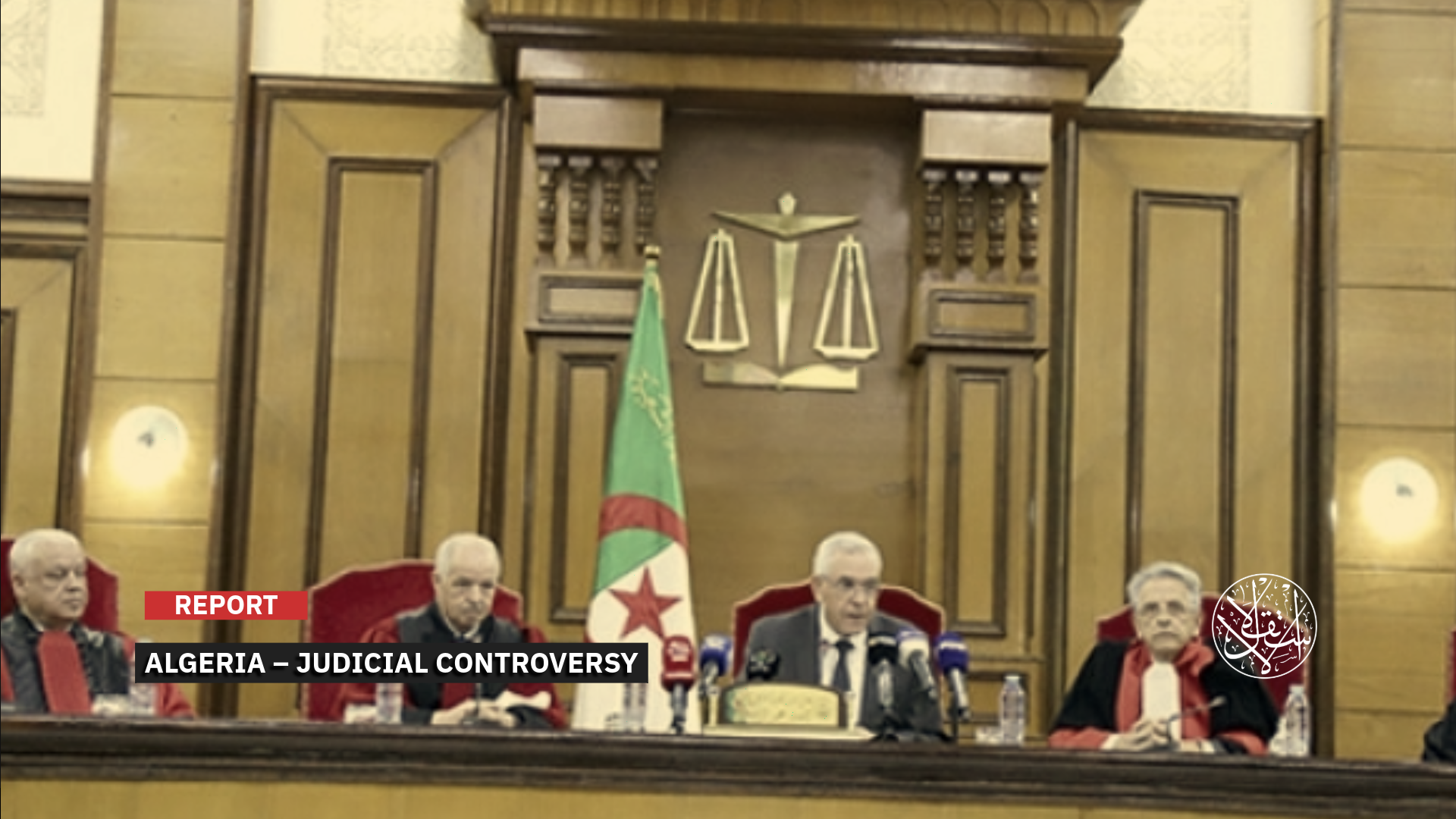
On October 7, 2026, the People’s National Assembly (the lower house of parliament) unanimously approved amendments to the Penal Code that introduced the death penalty for several crimes.
Under the amended law, the death penalty applies to those convicted of deliberately setting fire to forests and fields, or intentionally sabotaging public and private property, when such acts are committed in the interests of foreign parties or as part of treason, espionage, or organized crime.
The punishment also covers crimes targeting national security, public order, or national unity, as well as acts threatening economic and environmental stability. The amendments also impose harsher penalties for child abduction.
The Algerian government quickly published the amendments in the latest issue of the Official Gazette on October 14, 2026, according to the Algerian Press Service.
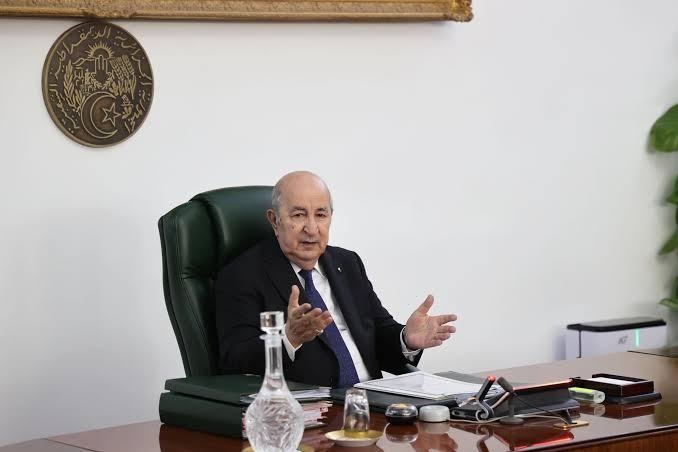
Algerian President Abdelmadjid Tebboune had instructed the justice minister to prepare a draft amendment to the Penal Code introducing the death penalty for anyone who deliberately sets fire to forests. The directive followed a wave of fires across several provinces in eastern and central Algeria that killed 12 people.
The decision was made during a meeting chaired by Tebboune at the Presidential Palace on September 30, 2026, to discuss measures to address the aftermath of the recent fires. Senior civilian and military officials attended.
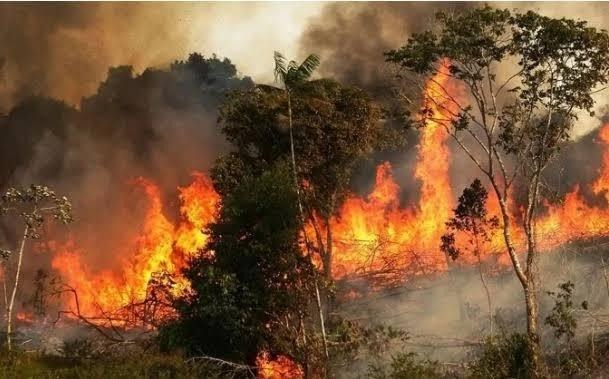
Between August 26 and 30, 2026, Algeria experienced a wave of devastating wildfires that swept across large areas of the country’s northeast, particularly the Kabylie region and surrounding areas, causing significant loss of life and material damage.
According to official figures, the fires killed 37 people and injured more than 183, while destroying over 141,000 hectares of vegetation. Preliminary figures indicated that this was the country’s deadliest wildfire season since 2021.
The disaster has once again highlighted the vulnerability of forested areas to recurring catastrophes, alongside criticism of the preparedness of prevention and emergency-response systems.
Questions have also been raised about delays and inadequate firefighting resources, including aerial and ground operations in some difficult-to-access areas.
Broadly Worded Provisions
The new government decision has sparked widespread controversy in Algeria, with a clear divide emerging between supporters and opponents. The debate has also drawn responses from international human rights organizations.
Diana Eltahawy, Deputy Regional Director for the Middle East and North Africa at Amnesty International, described the amendments adopted by the People’s National Assembly as regressive and a devastating blow to human rights.
In a statement published on Amnesty International’s website, Eltahawy stressed that the Algerian government’s course of action runs counter to the country’s international human rights obligations.
She noted that these amendments—rushed through parliament in a process that lacked meaningful consultation with relevant stakeholders, including human rights NGOs and lawyers—mandate the death penalty for acts defined in overly broad terms, such as inciting, encouraging, or facilitating the setting of fires, including through social media.
She added that this dangerous step represents a setback and that threats to resume executions for the first time in more than 30 years contradict Algeria’s longstanding support for United Nations General Assembly resolutions calling for a moratorium on executions as a step toward abolishing the death penalty. The move also runs counter to the global trend toward abolition.
Meanwhile, the International Federation for Human Rights (FIDH), based in Paris, expressed solidarity with the victims of the recent fires, their families, and everyone who stepped forward to help those affected. It said the criminal justice system’s response to the fires was a cause for concern.
In a statement responding to the events, the federation stressed the need for a serious, independent, and effective judicial response, emphasizing that the resumption of executions cannot be justified, particularly when individuals have already been arrested in connection with investigations into these fires.
The human rights organization maintains that no crime, however serious, can justify the death penalty. In cases of arson, as in any other crime, justice must prosecute, try, and punish those responsible, but it must not respond to death with death.
The federation added that reinstating executions in Algeria would constitute a historic setback and a break with more than three decades of an effective moratorium on carrying out death sentences.
It also stressed that the Algerian government will not strengthen its standing by bringing back the gallows, but by turning this moratorium into permanent abolition and making unequivocally clear that the right to life does not depend on the nature of the crime or the political circumstances.
Unjustified Punishment
Domestically, Issa Rahmoun, secretary general of the FIDH, believes that the seriousness of a crime can never justify the death penalty.
According to a report published by the Ahdath Alyoum website on October 14, Rahmoun stressed that justice must hold those responsible accountable through fair trials, rather than through revenge killings. He noted that reinstating executions would represent a major setback.
He emphasized that Algeria has not carried out any death sentences in 33 years, despite death sentences continuing to be handed down regularly.
He also noted that Algeria has supported United Nations General Assembly resolutions in recent years calling for a moratorium on executions to ultimately abolish the death penalty.
Rahmoun argued that discussing the resumption or expansion of the use of capital punishment represents a major regression in human rights and sends a troubling signal regarding the country’s international obligations.
He called for a focus on independent and credible investigations to establish responsibility on the basis of evidence.
Rahmoun also stressed the need to uphold the presumption of innocence and guarantee the right to a defense for anyone accused of a crime.
He said trials must be held before independent courts, with effective avenues of appeal available to ensure justice. He called for stronger fire-prevention mechanisms instead of resorting to harsh punishments.
In a similar vein, Louisa Hanoune, secretary-general of the Workers’ Party, reiterated her opposition to resuming executions. She stressed that crime should be addressed by tackling its underlying causes and punishing perpetrators, rather than carrying out death sentences.
In statements to the press on the occasion, Hanoune said the state has a duty to protect lives.
She argued that the death penalty does not address the root causes of crime and underscored the importance of safeguarding the credibility of the judiciary and preventing miscarriages of justice whose consequences cannot be reversed once a death sentence has been carried out.
It is worth noting that, one day before the law was published in the Official Gazette, the Ministry of National Defence released a promotional video about a security investigation titled ‘Uncovering the Plots of Treason… and the Threads of Collaboration’.
The video is expected to be broadcast on public television and includes statements by individuals describing how they were exploited to carry out acts of sabotage, including setting forests ablaze. The political opposition figure Amir Boukhors, known as Amir DZ, is also mentioned.
The ministry spoke of individuals being exploited through their social circumstances and desire for influence, with promises of wealth and assistance from abroad in exchange for carrying out tasks targeting national security, property, and Algeria’s resources.
According to the statements featured in the released footage, these tasks included setting forests on fire, damaging national assets, spreading division, and destabilizing society.
The excerpt also included a conversation referring to an initial operation, followed by a question about the possibility of carrying out a mission in Constantine. The speaker confirmed that the person concerned was expected to carry out whatever task they were assigned.
According to the excerpt, the statements also referred to a promise to handle the procedures for obtaining a visa to France, alongside mention of what the speaker described as a mariage blanc (white marriage), a sham marriage entered into to obtain a benefit, such as regularizing residency status, without being based on a genuine marital relationship.
The Prime Suspect
Amid this controversy, Algerian political activist Abdellatif Bousenane said the political implications of the amendment proposed by the authorities and approved by parliament were clear, including its potential use to threaten political opponents of the Tebboune regime.
Speaking to Al-Estiklal, Bousenane said, “The regime has already sentenced me personally to one year in prison without suspension simply because I wrote on my Facebook account that Tebboune is a failed president. Yes, a full year in prison for a single statement.”
He continued, “It was a political statement, since I am an Algerian citizen who can vote against Tebboune and say that he is a failure because he has failed. In other words, I was simply exercising my role.”
“When you speak the truth or describe the reality, the corrupt regime’s judiciary sentences you to a year in prison without suspension. So what would happen if I said more and exposed the corruption of the regime’s barons, cocaine-related cases, inflated invoices, plunder in all its forms, and their ties to dangerous foreign networks,” he said.
“In that case, the regime’s barons could fabricate a case against me and sentence me to death,” he added.
Bousenane argued that, with the new legislative amendment allowing the death penalty to be imposed, the question was why the authorities were resorting to capital punishment.
“The clear answer is that the regime has found no stronger response to cover up a very serious crime for which it is itself the prime suspect,” he said.
He explained that, “immediately after the major disaster that struck several areas, the regime realized that the public would demand answers about the resources and adequate funding it had failed to allocate to Civil Protection, its failure to prepare forests against fires, the absence of an early-warning system for wildfires, and its failure to establish an emergency plan to protect people’s lives if it could not bring the flames under control.”
The political activist added that “these questions would have made the regime the primary party accused of bearing responsibility for the deaths of hundreds of innocent people, the loss of livelihoods for thousands of families, and the destruction of thousands of hectares of forest.”
Bousenane said, “Therefore, this new legislation was introduced to cover up this very serious crime. The regime will consequently escalate its actions and announce the resumption of executions against imaginary suspects whom nobody knows or has ever seen.”
He warned that “most Algerians now understood that the central question surrounding the wildfire disaster was not who had started the fires, but how they could be contained.”
Starting a fire in a forest, he noted, was something anyone could do, and the state could not monitor all 47 million people. However, he stressed, the state had a duty to provide the necessary logistical resources.
Accordingly, Bousenane argued that the regime’s statements about those responsible for the fires were merely an attempt to evade responsibility.
He described this as the strongest evidence against what he called the corrupt regime, making it the primary suspect in the crime of Jijel.
He pointed out that Jijel is one of Algeria’s most densely forested provinces, yet it still lacks a wildfire early-warning system, despite the disasters the country has experienced over the years in Tizi Ouzou and many other northern provinces.
Sources
- Algeria: The Council of the Nation Must Reject Regressive Legislation Expanding the Scope of the Death Penalty [Arabic]
- Algeria: President Tebboune and the Authorities Are Escalating Their Rhetoric on the Death Penalty to Conceal Their Inability to Manage the Wildfires [French]
- Algeria Accuses “Amir DZ” of Setting Forests Ablaze and Points to Involvement by French Interior Ministry Officials [Arabic]
- Algeria: Tebboune Threatens to Reinstate the Death Penalty to Cover Up His Failure to Address the Wildfires [Arabic]