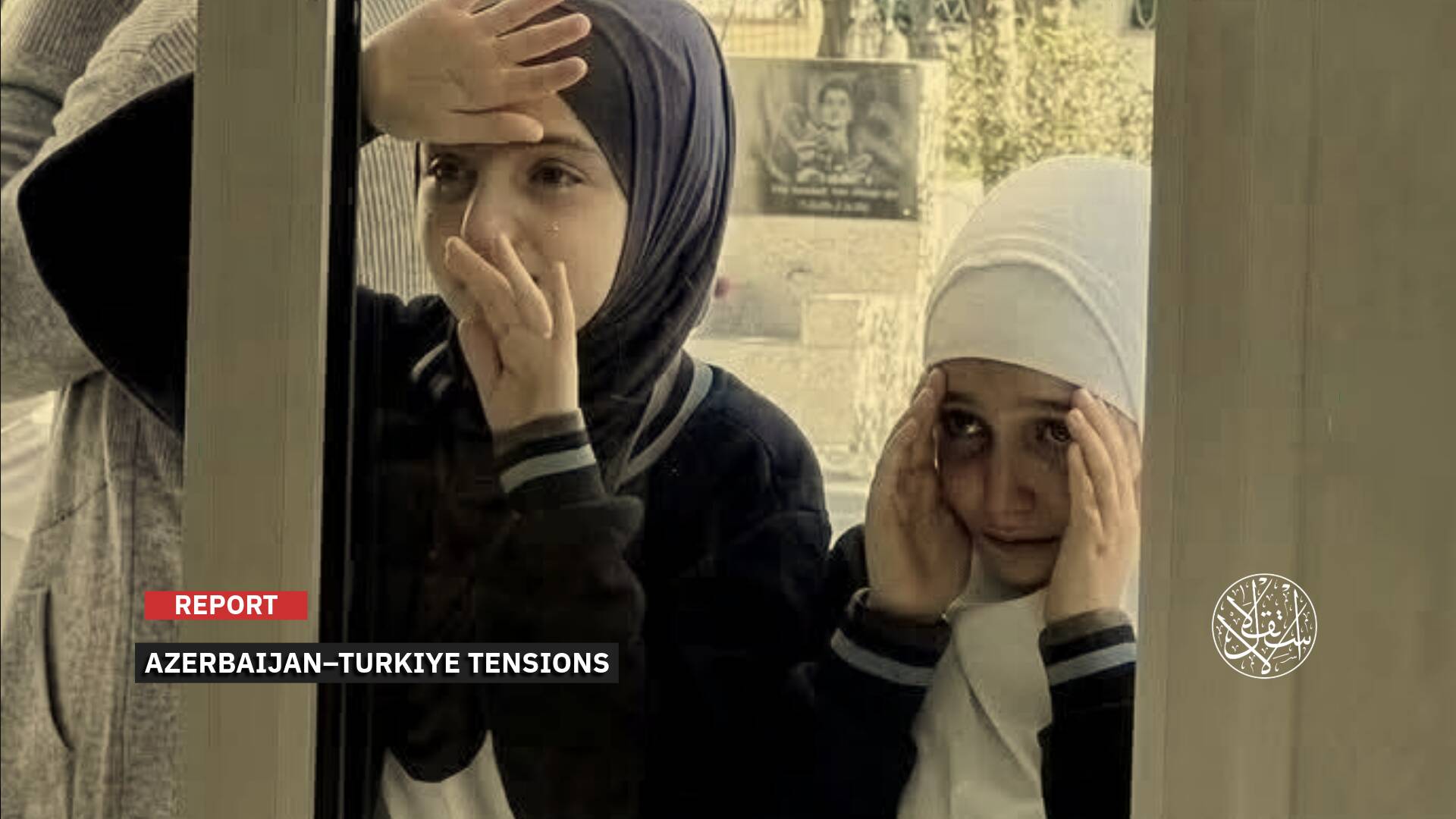
Israeli Funding and Revised Curricula: Who’s Behind the Effort to Monitor Gaza’s Schools?
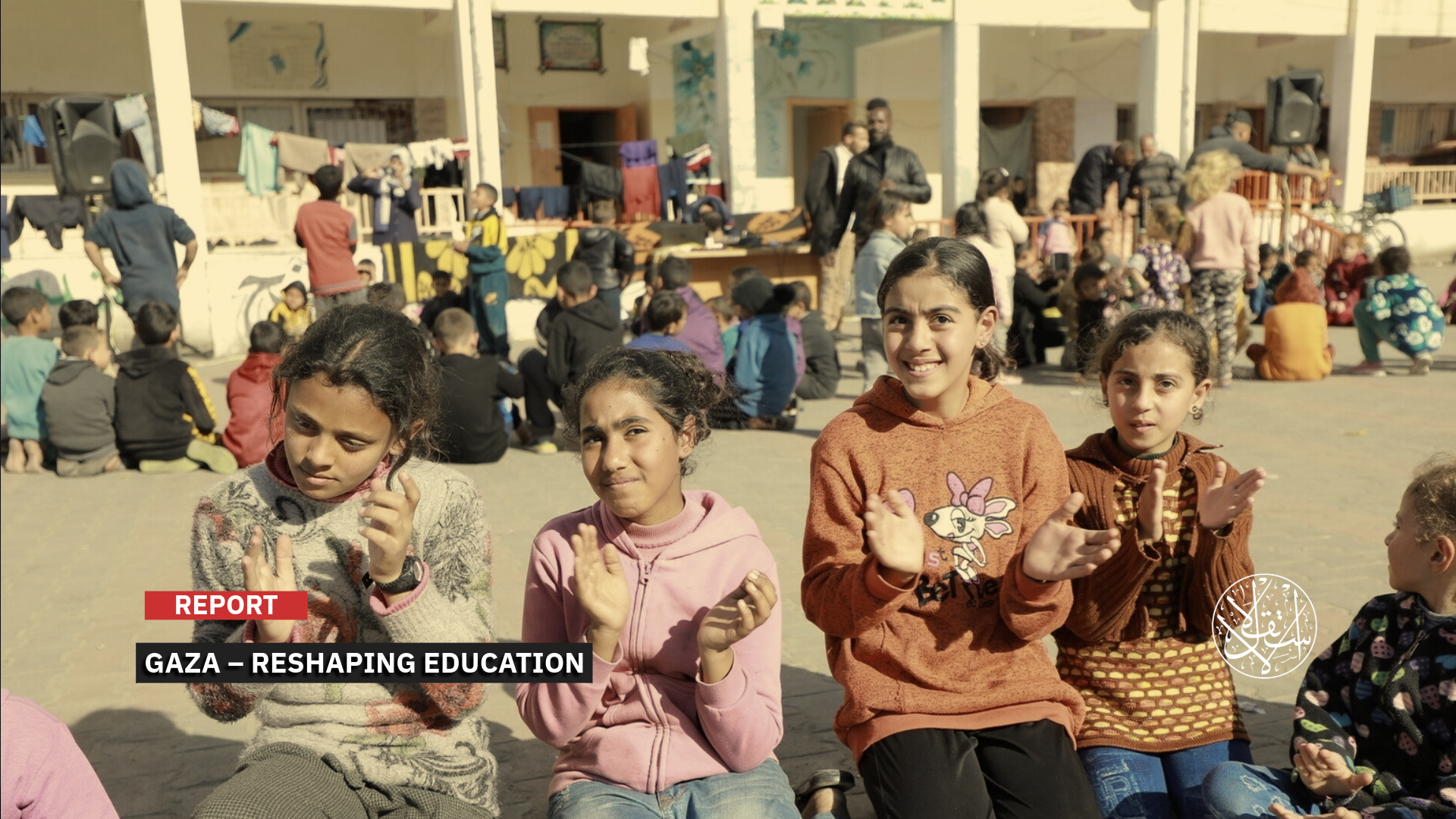
“The project was established following coordination with the Israeli Coordination of Government Activities in the Territories (COGAT).”
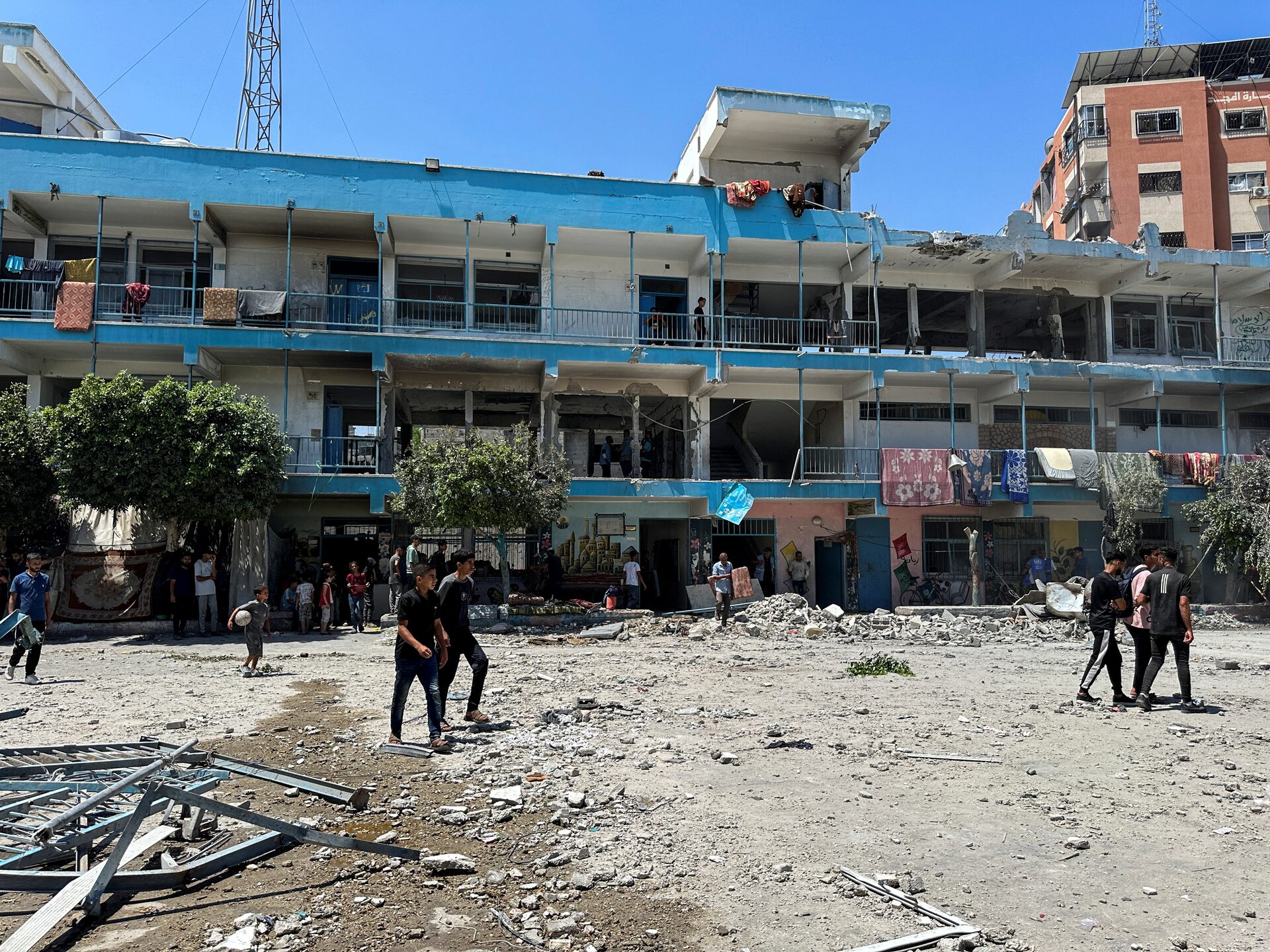
In Gaza, where the Israeli Occupation’s war has destroyed most schools, an American nonprofit is planning to record students’ and teachers’ conversations and use artificial intelligence to analyze them for language it deems inciting or antisemitic.
The project also involves revising Palestinian curricula, assessing teachers’ ideological views, and monitoring their performance.
The plan brings together American, Israeli, and international organizations amid broader efforts to reshape Palestinian education under the banner of deradicalization.
It raises questions about who will decide what Gaza’s children learn and what they are allowed to say in the classroom, as well as the risks such surveillance poses to their privacy and freedom of expression.
Who's Behind the Project?
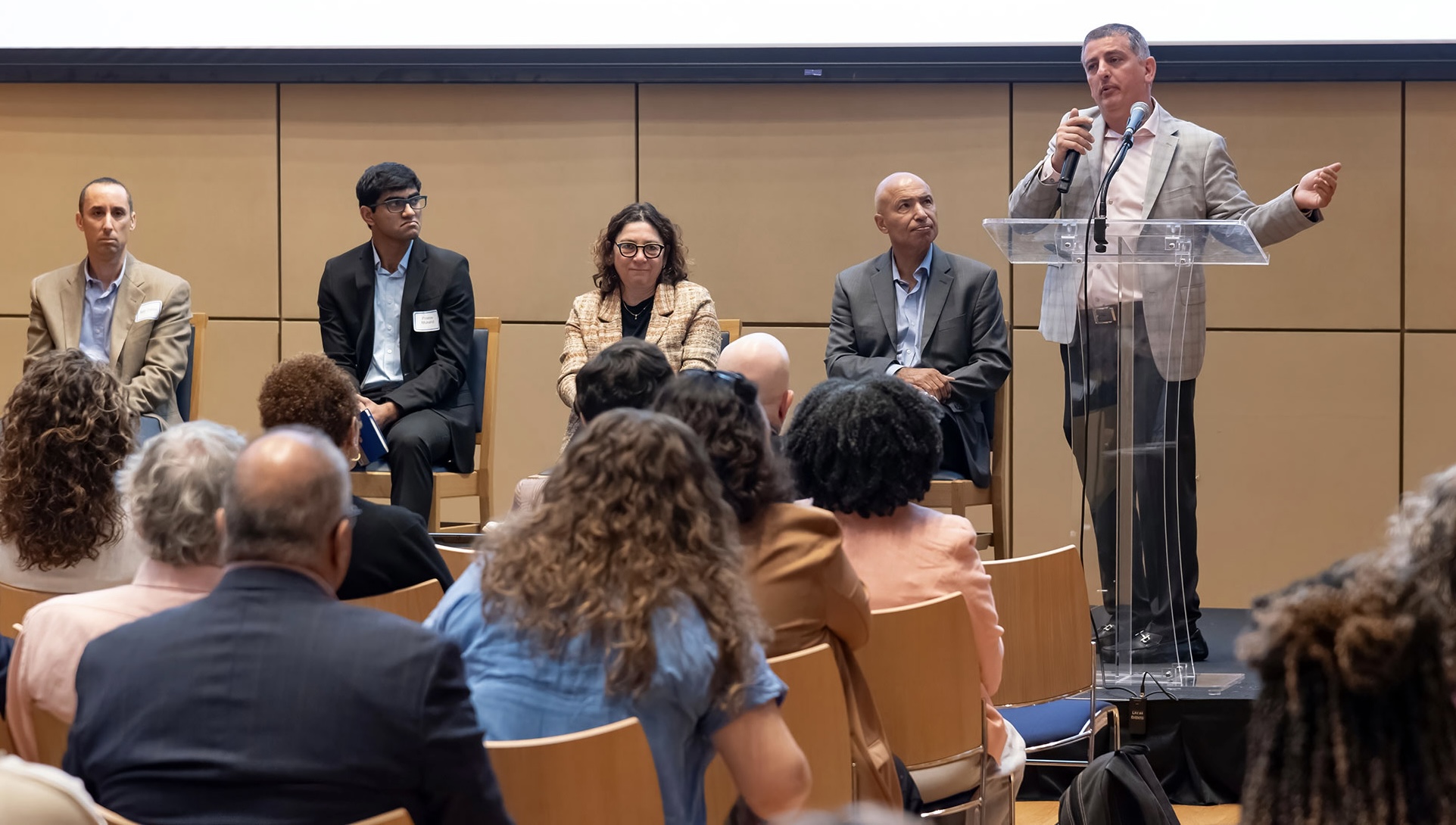
The project is being run by the Gaza Children Village, a U.S. nonprofit registered in North Carolina and founded by David Hasan, a Palestinian-American neurosurgeon and professor at Duke University School of Medicine, after the Israeli Occupation launched its war on Gaza in October 2023.
Hasan was born in Kuwait to Palestinian parents from the West Bank and moved to the United States at age 18.
He later took part in two medical missions to Gaza, in December 2023 and April 2024, working in hospitals across the territory.
In an interview with the UAE-based newspaper The National on September 19, 2025, Hasan said that seeing children who had lost their families had inspired him to establish a project combining shelter, education, and health care.
His initial efforts to build a village capable of accommodating around 20,000 children, however, ran into financial, security, and logistical obstacles.
In an interview with Jewish News on May 5, 2026, he said he had grown up with a single Palestinian narrative about Jews, but that his views changed while studying in the United States and interacting with people from different cultures and religions.
Hasan added that he avoids taking explicit political positions and had refrained from using the terms “genocide” and “war crimes” when discussing the Israeli war on Gaza.
He also spoke about visits to Israeli agricultural settlements that came under attack on October 7, 2023, his relationships with Israeli figures, and his participation in activities organized by the Israeli Peres Center for Peace and Innovation in 2024.
According to its official website, the organization began its educational work in July 2025 through a project called Amal Academies, which provides schooling in tents and temporary centers in central and southern Gaza.
The program also offers daily meals, medical care, and psychological support, relying on Palestinian teachers and staff.
Speaking at Reichman University in the Israeli Occupation on October 8, 2026, Hasan said the organization was operating 21 academies serving around 22,000 children across Gaza, according to The Jewish Chronicle.
The first academy opened in Deir al-Balah in central Gaza, where it enrolled around 500 children from nearby displacement camps. Hasan later announced plans to expand into Khan Younis and Nuseirat.
The organization’s website also indicates activity in Rafah but does not provide an updated list of all academy locations.
In an interview published by Duke University on September 8, 2025, Hasan revealed that the project was established following coordination with the Israeli Coordination of Government Activities in the Territories (COGAT).
The agency, which operates under “Israel’s” War Ministry, is responsible for coordinating the entry of aid and goods into Gaza.
Hasan said an interview with Haaretz helped him establish contact with Israeli officials. In January 2025, the COGAT and the Israeli Occupation military then allocated an area in northern Gaza for the project.
A “ceasefire” and the withdrawal of Israeli Occupation forces from the area prevented the plan from moving forward.
A subsequent attempt to establish two centers, one in northern Gaza and another in the south, was derailed when “Israel” resumed its genocide. The organization eventually chose Deir al-Balah as the base for its activities.
Hasan said local community leaders had accepted the outside funding on the condition that the children’s Palestinian identity would be preserved, according to an interview published by Jewish News.
He also pointed to pressure and objections from Hamas and the Palestinian Authority over the nature of the curricula and the organization’s Israeli partnerships.
He said he had avoided relying on existing local institutions, instead selecting staff and partners in their individual capacities.
The Jewish Chronicle, meanwhile, reported that agreements with community leaders included a commitment not to publicly disclose details of the educational changes.
No documents have been made public confirming that the organization obtained an educational license from the relevant Palestinian authorities or formal approval from the authorities governing Gaza to revise the curricula.
It also remains unclear which body is responsible for overseeing the academies’ educational standards.
The idea of monitoring classrooms grew out of Hasan’s concerns about whether teachers would adhere to the revised curricula.
He said his team had developed a prototype of an AI-powered microphone designed to record classroom conversations and analyze them for language the organization considers inciting or antisemitic.
Under the proposed system, recordings would be retained for 72 hours and analyzed for suspicious language.
If the system flagged a potentially problematic statement, it would alert Hasan and provide the audio clip and a transcript of the conversation. He would then review the context and contact the teacher.
If the organization determined that a violation had occurred, the teacher could be dismissed.
An investigation published by the Associated Press on October 9, 2026, revealed that the technology had been tested, with plans to deploy it in dozens of classrooms.
The organization had not announced when the system would become operational or published a list of the phrases it would target.
In one of his messages, Hasan discussed developing the system in collaboration with Poly Labs, a New York-based U.S. nonprofit that uses technology to address crises.
The organization, however, told the Associated Press that it had not participated in developing or deploying the technology.
The organization’s official list of partners includes several Israeli and international institutions.
Among them are IsraAID, an Israeli humanitarian organization that provides field expertise, technical cooperation, and conditional financial support for some community programs, and the Israeli Natan Fund, which contributes humanitarian coordination and operational expertise.
The network also includes SmartAID, an international organization that uses technology in humanitarian work and helps provide connectivity and deliver equipment; World Central Kitchen, which specializes in food relief; and the Australian charity Minderoo Foundation, alongside organizations supporting education and community care programs.
Israeli and American representation extends to the organization’s board, which includes Israeli Reform Rabbi Nava Hefetz, education director at Rabbis for Human Rights, and Palestinian entrepreneur Reem Younes from Nazareth.
Other board members include Azzam Shawwa, a former governor of the Palestine Monetary Authority, and Liana Katz, who also serves on the board of the Center for Peace Communications, a U.S. organization that runs dialogue and community relations programs across the Middle East.
The organization’s management team includes E.J. Kimball, who handles government affairs and relations with the U.S. Congress, as well as staff specializing in donor relations, curriculum development, and field coordination.
Financial disclosures published by the organization in February 2026 showed that it had received around $1.624 million in grants, donations, and other revenue in 2025, while spending approximately $381,900. Of that amount, $346,400 went toward programs and $35,500 toward administration.
In September 2025, The National reported that Israeli supporters had contributed around $200,000. One prominent supporter of the project was Israeli physician Dan Turner, vice dean of the Hebrew University of Jerusalem’s medical school.
In his interview with The Jewish Chronicle, Hasan also discussed donations from American Jews and the British charity Pears Foundation. He estimated that nine months of schooling would cost $260 per child.
The organization has not disclosed its funding details for 2026, the cost of the surveillance system, or which parties would be granted access to the data it collects.
Reshaping Education?
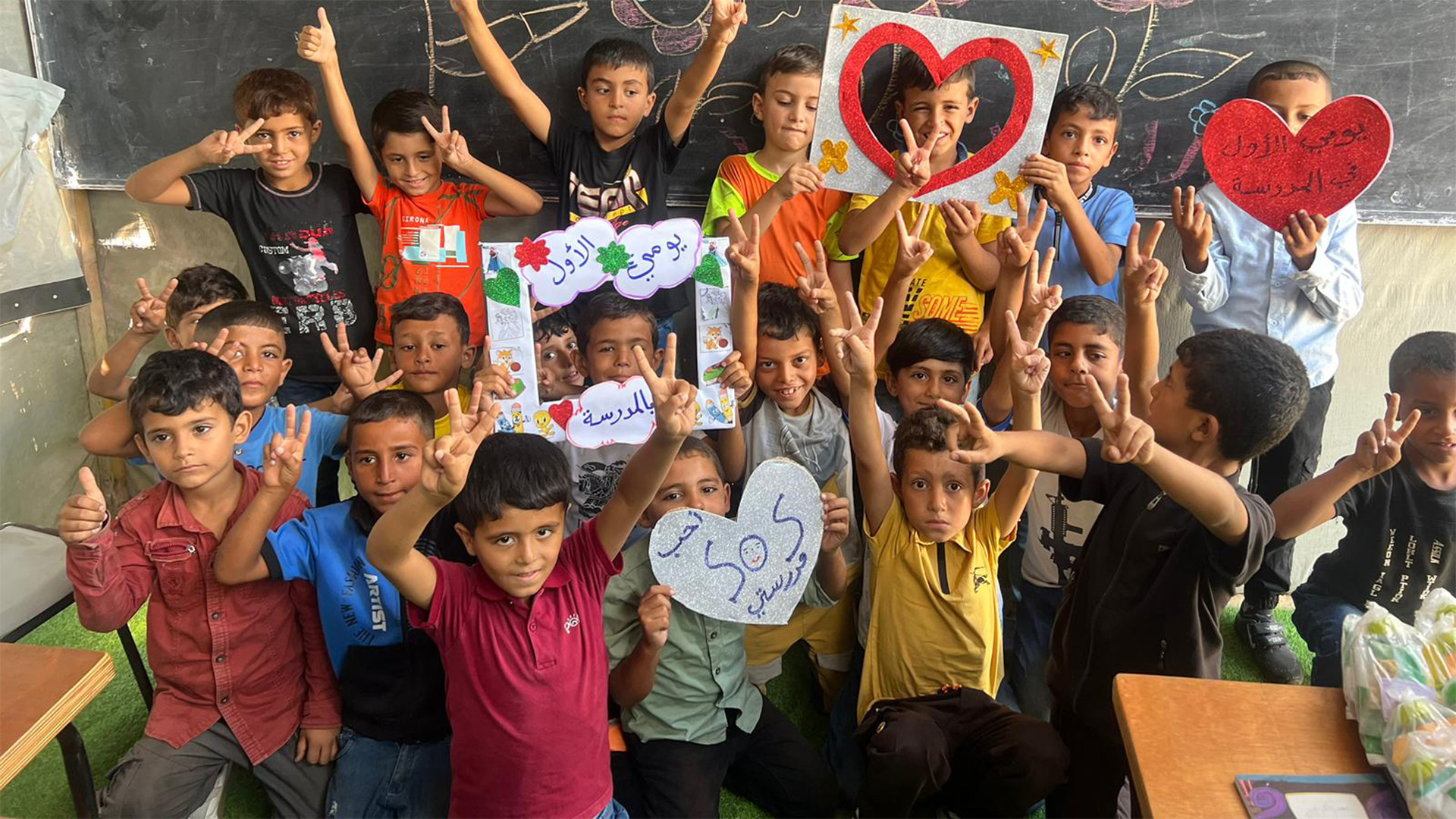
The Gaza Children Village began revising educational content before announcing its classroom surveillance project. Its Amal Academies use Palestinian curricula as the basis for instruction but modify texts and lessons the organization considers to promote violence or hostility toward the Israeli Occupation.
In an interview published by The Jewish Chronicle on October 2, 2026, Hasan gave examples of the changes. One involved replacing a math problem about the number of martyrs targeted by the Israeli Occupation during the First and Second Intifadas with a question about a soccer match in the West Bank.
Another change replaced a text about Palestinian resistance fighter Dalal Mughrabi with one about Palestinian educator Hind al-Husseini.
The organization also revised an Islamic education lesson addressing the relationship between Jews and the Prophet Muhammad, peace be upon him.
The changes also introduced lessons on Judaism, Christianity, and other religions, as well as material about the displacement of Jews from countries across the Middle East and North Africa.
Hasan said the project aims to expose children to different historical narratives, including the Palestinian Nakba of 1948.
Hasan described the organization’s approach as the first pro-”Israel” curriculum to be introduced in Gaza or the West Bank, while insisting that it preserves Palestinian identity and promotes understanding and coexistence, according to his account.
In an earlier interview with Jewish News, he said the organization uses two curricula: one based on modified Palestinian textbooks and another focused on tolerance, critical thinking, religion, and conflict resolution.
Hasan’s statements also shed light on the organization’s teacher recruitment process. He said staff undergo security vetting through U.S. and Israeli procedures, and that applicants who had previously worked with Hamas or the U.N. Relief and Works Agency for Palestine Refugees in the Near East (UNRWA) are excluded.
Candidates also take a psychological assessment containing around 50 questions about their views on violence, revenge, and tolerance. Hasan said the test was developed in collaboration with researchers at Stanford University and sorts applicants into three categories based on their attitudes. Those the organization considers hateful or vengeful are excluded.
Hasan also described how advisers join classroom sessions remotely and without prior notice to assess teachers’ performance.
Jason Olson, a former U.S. Navy officer and former official responsible for “deradicalization” at the Board of Peace, said one-third of former employees who take the test fail it.
On October 8, 2026, Hasan called for UNRWA to be dismantled while an alternative provider took over its educational services, speaking at a session organized by “Israel’s” Reichman University.
The same approach is reflected in the organization’s relationship with IMPACT-se, an institute specializing in monitoring and evaluating school curricula.
The institute has repeatedly criticized Palestinian textbooks and called for the removal of material it considers to promote violence or antisemitism.
On September 9, 2026, the British House of Lords in London hosted the first session of the sixth annual forum on political Islam organized by the UAE-based TRENDS Research and Advisory.
An official statement said the Gaza Children Village had been established in cooperation with IMPACT-se and presented the project as an educational model for countering incitement and extremism.
The following day, the forum moved to the French Senate in Paris, where IMPACT-se CEO Marcus Sheff presented the organization’s work.
He said the Gaza Children Village had drawn on the UAE’s moral education curriculum, the Seeds of Hope series, and philosophy for children and had trained 229 teachers.
The project’s goals also align with the Trump administration’s vision for Gaza. The first point of President Donald Trump’s plan called for transforming the territory into a deradicalized zone and launching interfaith dialogue intended to change perceptions and narratives among Palestinians and Israeli Occupation settlers.
Debate over curricula predates the current war. A report issued by the U.S. Government Accountability Office on January 8, 2026, said Washington had monitored UNRWA’s efforts to review Palestinian textbooks against principles of neutrality, nonviolence, and nondiscrimination.
The report highlighted objections to educational content concerning martyrs, occupied Jerusalem, and Palestinian detainees, as well as guidance UNRWA had issued to teachers on addressing material it considered inconsistent with U.N. principles.
These efforts came amid sustained U.S. and Israeli pressure over the textbooks used by the agency.
In a parallel effort, the U.N. Educational, Scientific, and Cultural Organization (UNESCO) announced on July 8, 2026, a new phase of cooperation with the Palestinian Ministry of Education to develop a curriculum framework.
The announcement followed a workshop held in Amman in late June as part of a program running from 2026 to 2028.
UNESCO’s document states that the process was initiated at the request of the Palestinian ministry and involves its educational institutions, with an emphasis on preserving Palestinian identity and culture.
The changes introduced by the U.S. organization, however, raise questions about who has the authority to approve curricula for schools in Gaza.
Palestinian Law by Decree No. 8 of 2017 on general education requires private educational institutions to follow the curricula and textbooks approved by the ministry. Article 18 also requires written approval before additional curricula or textbooks can be introduced.
The Gaza Children Village revised the curriculum without the Palestinian Authority’s approval.
Mohammed Abu al-Rub, a spokesman for the government in Ramallah, said he did not have enough information to assess the organization’s curriculum.
He said it was based on tolerance and justice, while warning against crossing important boundaries by introducing surveillance into classrooms.
Concerns Consequences
Plans to record classroom conversations have drawn objections from within the Gaza Children Village itself.
Bishara Bahbah, a Palestinian American political activist and member of the organization’s board, said he had not been aware of the surveillance project and that it had not been presented to the board.
He opposed using surveillance tools to restrict exchanges of views between teachers and students.
In comments on October 9, 2026, Bahbah distinguished between using cameras to monitor academic performance and using them to silence classroom discussions.
Under current circumstances, he said, the priority should be to get as many children as possible back into school.
A representative of a partner aid organization also warned the Associated Press that AI-powered monitoring of conversations could prompt the organization to reconsider its cooperation with the Gaza Children Village.
The representative requested anonymity out of concern that speaking publicly could affect the organization’s work in Gaza.
An employee of the Gaza Children Village, who also spoke to the news agency on condition of anonymity, said some teachers were worried about potential repercussions from Hamas over the revised curricula or about working for an organization that receives support from Israeli aid groups.
Ines Abdel Razek, co-director of the Palestinian Institute for Public Diplomacy (PIPD), a Palestinian organization focused on political and human rights advocacy, said the project raised concerns about attempts to influence the thinking of younger generations.
She called for support for educational institutions and UNRWA as they work to rebuild Gaza’s education sector.
Amjad Iraqi, senior analyst on “Israel” and Palestine at the International Crisis Group, said the use of information and technology by the Israeli Occupation authorities in military operations had deepened Palestinians’ fears that their words could be recorded and their behavior monitored.
Article 16 of the U.N. Convention on the Rights of the Child protects children from arbitrary or unlawful interference with their privacy, while Article 13 guarantees their right to freedom of expression.
Guidance issued by UNICEF in December 2025 stressed the need to protect children’s privacy and data, prevent discrimination, and ensure transparency, accountability, and oversight in the use of AI systems.
These standards raise questions about whether the Gaza Children Village obtains consent from parents and teachers before recording classroom conversations, whether they can refuse to participate, and what safeguards govern the use of the data.
They also raise concerns about how technical errors would be reviewed and how teachers could challenge decisions made against them based on analysis of their conversations.
Although Hasan has said recordings would be retained for 72 hours, it remains unclear where the data would be stored, who would be authorized to access it, what would happen to transcripts, alerts, and backups after the original recordings were deleted, and what safeguards would prevent the information from being used for other purposes.
These questions are particularly sensitive in Gaza, where the Israeli Occupation military used AI technologies during its genocide to analyze information and intercepted communications that contributed to the expansion of attacks. This helps explain Palestinian concerns that classroom recordings could be leaked or accessed by unauthorized parties.
The issue takes on added significance amid the collapse of Gaza’s education infrastructure. On September 10, 2026, Save the Children reported that about 97.5 percent of school buildings in Gaza had been damaged.
UNICEF has estimated that around 700,000 children have been deprived of regular in-person education over the past three years.
Mohammed Fares, a teacher and psychological specialist, warned of the potential psychological effects of monitoring children’s classroom conversations.
A child who believes their words are being recorded and evaluated may become afraid to express opinions or discuss personal experiences, he told Al-Estiklal.
This is particularly concerning in Gaza, where many children are coping with the effects of the Israeli aggression, the loss of family members, and displacement.
Fares explained that a safe learning environment depends on trust between students and teachers. Constant surveillance, he said, could increase anxiety, hesitation, and fear of making mistakes.
Using AI to classify children’s conversations according to criteria related to incitement and hate also carries additional risks, Fares said, particularly when children discuss national issues or experiences involving the Israeli Occupation and personal loss.
He warned that emotional expressions and personal views could be interpreted without sufficient regard for their psychological and social context.
The need for education and psychological support in Gaza makes it essential to give children space to express their feelings and discuss their experiences freely, while protecting their privacy and keeping education free from political or ideological pressure, according to Fares.
Sources
- A US charity plans to use AI to monitor its Gaza classrooms for ‘hateful’ speech
- Exclusive: Deradicalised curriculum for children in Gaza classes sows seeds of hope
- Q&A With Duke Neurosurgeon David Hasan
- Gaza school founder backed by Israeli donors says children are taught ‘we are better together’
- The Palestinian-American doctor who wants to build orphanages for Gaza's children - and bridges with Israelis
- The Gaza Children Village
- At the British House of Lords, Lawmakers and Experts Warn of the "Muslim Brotherhood’s Threat" and Call for a Unified European Strategy to Counter It. [Arabic]
- Paris Hosts Closing Session of TRENDS’ Sixth Annual Forum, With Calls for Tougher European Policies and a Unified Response to the "Muslim Brotherhood’s Threat" [Arabic]