Political Alliances Upended Abbas’s Plans: Why He Pulled Back From Palestinian Elections
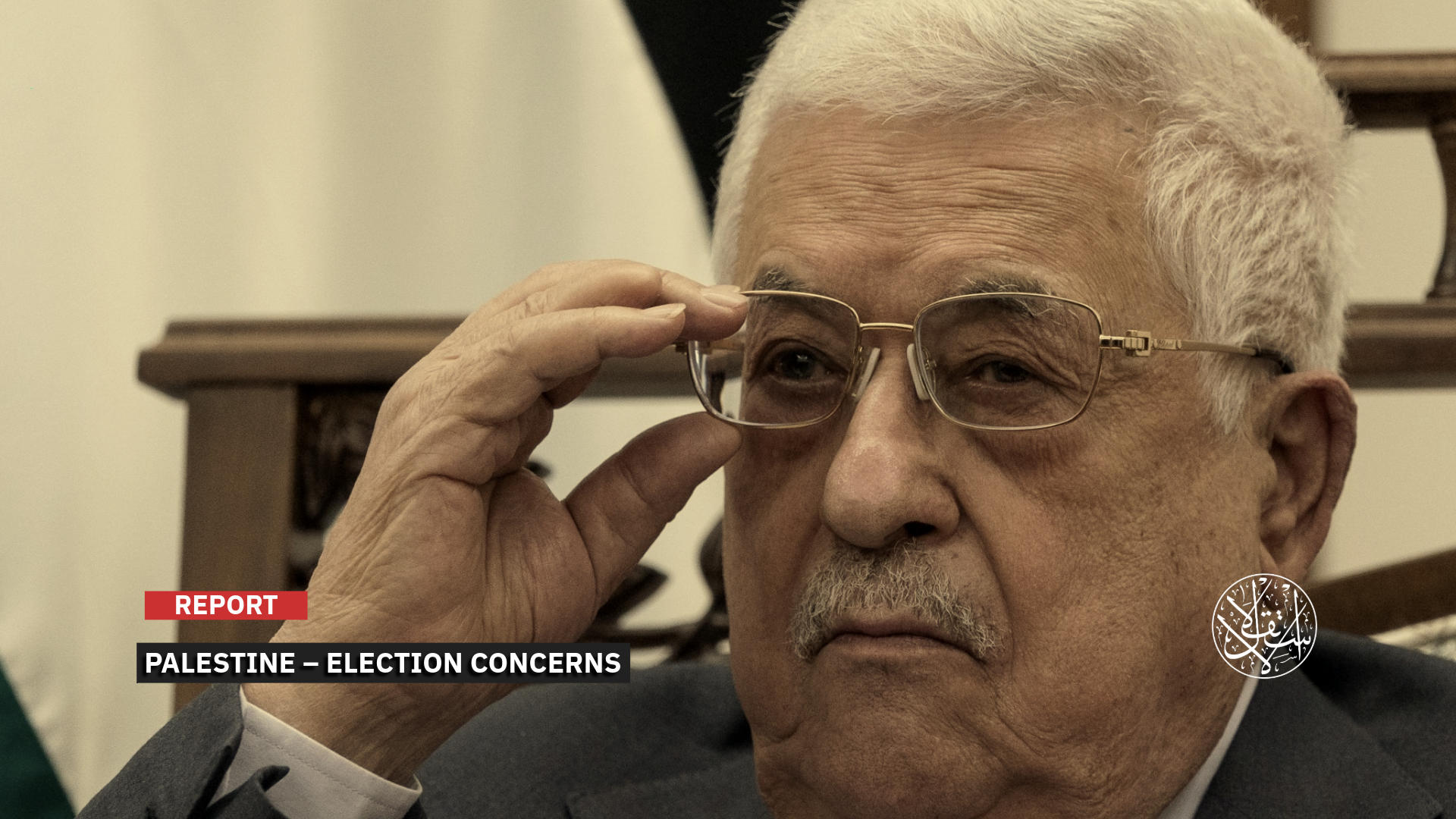
“Hamas described the postponement of the elections at this stage as a step in the right direction.”
Three months after calling for legislative elections that would end 20 years without a vote, Palestinian Authority President Mahmoud Abbas reversed course. He postponed the elections until September 2027, bringing the crisis of political legitimacy back into focus.
The decision has raised questions about the calculations that led Abbas to open the door to electoral competition, only to agree with his rivals to delay the vote by nearly a year, amid shifts in the balance of power among Palestinian factions.
Reasons for the Election Delay
Mahmoud Abbas, head of the Fatah movement, settled the fate of the elections on October 10, 2026, when he issued a decree canceling the date set for legislative elections on November 28.
The new decree set September 11, 2027, as the date for simultaneous legislative and presidential elections, based on a decision by the Executive Committee of the Palestine Liberation Organization (PLO), the organization’s highest leadership body.
The Executive Committee justified the decision by citing delays in implementing international arrangements for the Gaza Strip, the continued presence of Israeli Occupation forces, the absence of international stabilization forces and Palestinian police, and obstacles to bringing in election materials and observers.
It also pointed to escalating attacks by Israeli Occupation forces and settlers in the occupied West Bank and Jerusalem, as well as “Israel’s” continued withholding of Palestinian clearance revenues, or tax funds, which it said amounted to nearly $7 billion.
The Palestinian presidency had settled on postponing the vote before the official announcement.
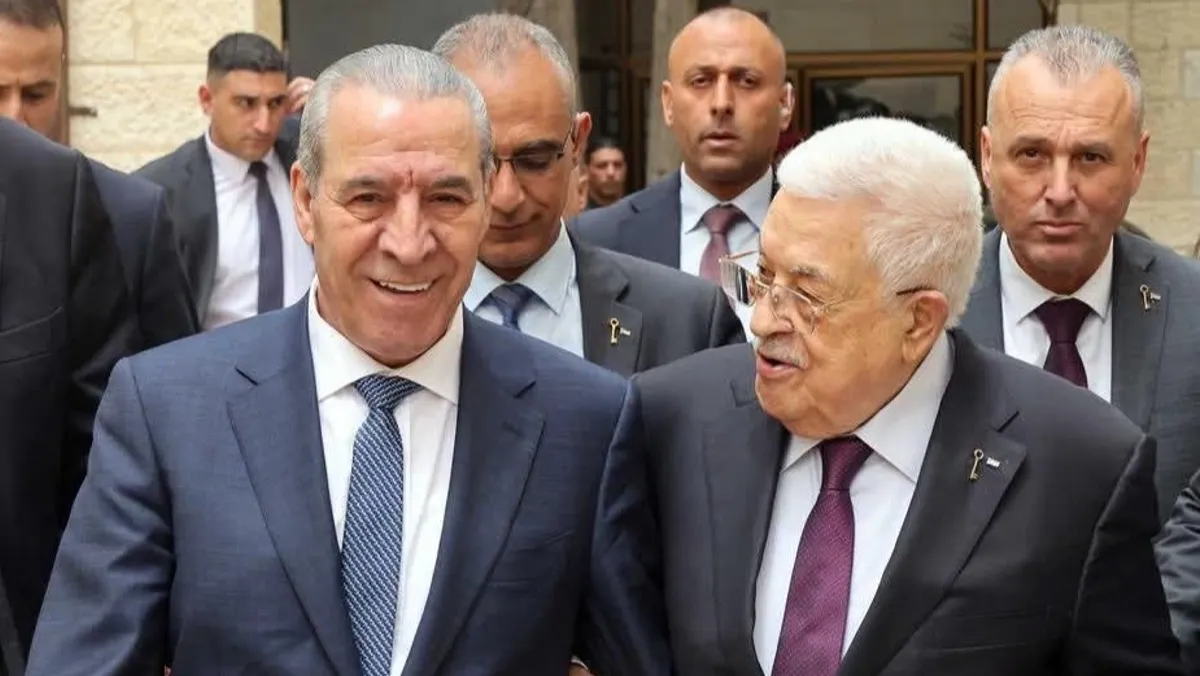
On October 8, Palestinian Vice President Hussein al-Sheikh sent a letter to French Foreign Minister Jean-Noel Barrot, informing him that the political, security, and economic conditions on which the election date had been based had not materialized.
The letter explained that Palestinian leaders had expected progress in implementing the U.S. plan for Gaza, including the withdrawal of Israeli Occupation forces and the deployment of international forces and Palestinian police.
They had also expected U.S. action to halt settlement expansion and annexation in the occupied West Bank and Jerusalem, as well as the release of Palestinian clearance revenues.
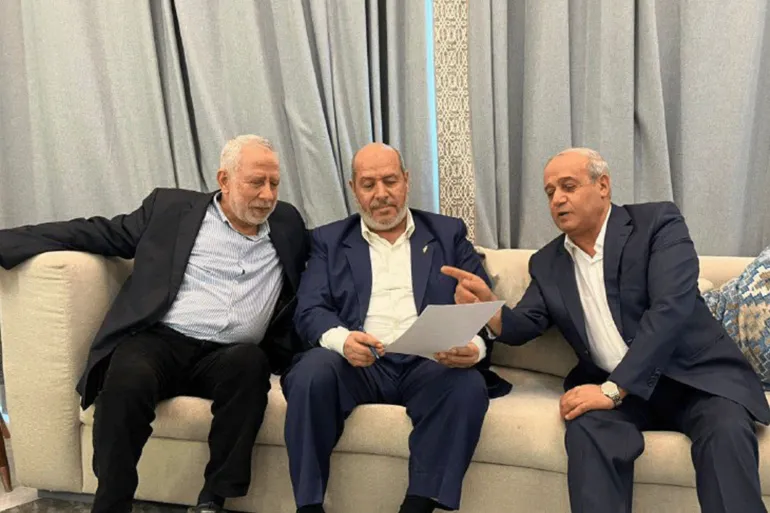
The postponement followed an understanding reached by four factions during meetings in Cairo on October 7. The talks brought together a Fatah delegation led by Jibril Rajoub, secretary of its Central Committee; a Hamas delegation headed by deputy leader Zaher Jabareen; and representatives of Palestinian Islamic Jihad (PIJ) and the Popular Front for the Liberation of Palestine (PFLP).
The factions agreed to recommend that Abbas and the PLO Executive Committee postpone the elections by six months to a year, allowing time for a comprehensive national dialogue under Egyptian auspices.
The proposed talks would address ending the Palestinian division, rebuilding institutions, and holding elections for the Palestinian National Council, the PLO’s parliamentary body.
Fatah spokesman Munther al-Hayek said the movement was open to holding or postponing the elections as national interests required.
Maher Mezher, a member of the PFLP’s Central Committee, said discussions with the factions had addressed rebuilding the political system and activating the PLO on democratic foundations.
The possibility of postponement had been raised even before the October meetings. In remarks to journalists on September 4, Rajoub said he believed it would be difficult to hold the elections in November.
He also disclosed that he had met with Hamas leaders in Turkiye, including Khalil al-Hayya and Zaher Jabareen, and called for national dialogue ahead of the vote.
Hamas, which had been preparing to participate in the elections, signaled its willingness to accept a delay if it created an opportunity for dialogue aimed at rebuilding Palestinian institutions and leadership, according to Bassem Naim, a member of its political bureau.
Muhammad al-Hindi, deputy secretary-general of PIJ, also confirmed that the factions had reached an understanding on the decision.
After the decree was issued, Hamas described the postponement as a step in the right direction and called for binding agreements on the National Council, the Legislative Council, the political program, and the management of the transitional period.
Hamas’s position highlights its interest in linking the next elections to a broader restructuring of the Palestinian political system and its role within the PLO.
The movement has long called for such changes, a demand that has gained greater significance following the Israeli war on Gaza and the resulting shifts in its political and military standing.
The agreement among the factions, however, faced opposition within the PLO. On October 10, Ramzi Rabah, a member of the PLO Executive Committee and the Democratic Front for the Liberation of Palestine’s political bureau, revealed that his faction had opposed postponement, arguing that national dialogue could take place alongside the elections.
Rabah said national dialogue had been under discussion within the PLO Executive Committee for three months without being implemented.
He also revealed that Egypt had not issued a formal invitation for comprehensive talks by the day the decision was made, raising questions about the justification for postponement and what guarantees existed against another delay.
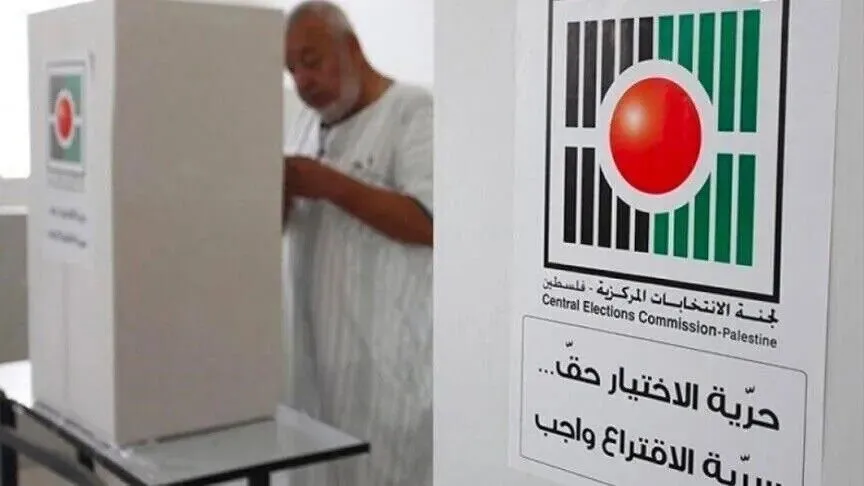
These objections take on added significance in light of preparations by the Central Elections Commission, which announced on October 6 that it was continuing candidate registration and voter awareness activities in Gaza.
The commission also accredited around 300 journalists to cover the process and issued tenders for the production of election materials inside the territory to circumvent restrictions on bringing in equipment.
On October 7, the commission announced that nine electoral lists had submitted applications to run, indicating that administrative preparations were advancing despite continuing security and political obstacles.
These included concerns over the safety of voters and candidates, freedom of movement, the operation of polling stations in areas affected by displacement and destruction, and restrictions imposed by the Israeli Occupation in occupied Jerusalem.
In September, the Palestinian Center for Policy and Survey Research identified serious obstacles to holding the vote, including destruction and displacement in Gaza, the absence of a unified security administration, Israeli Occupation restrictions, and the Palestinian Authority’s financial crisis.
However, it proposed a limited postponement of three to four months, rather than a delay of nearly ten months.
Abbas’s decision also drew criticism from his rivals. Mohammad Dahlan, a former senior Fatah figure and head of the Democratic Reform Movement, described the decree as a flagrant crime against democracy, arguing that it would entrench the continued rule of the existing leadership.
Who Was in the Best Position To Win?
The growing rapprochement between Hamas and Mohammad Dahlan’s faction emerged as one of the most significant developments before the elections were postponed.
The two sides had begun contacts to form a national electoral list that could bridge their longstanding divisions dating back to the Palestinian split in 2007.
The initiative took shape during factional talks in Cairo in August, involving Dahlan and Khalil al-Hayya, head of Hamas’s political bureau, as well as figures from Palestinian Islamic Jihad, the Popular Front for the Liberation of Palestine, and the Democratic Front for the Liberation of Palestine.
Nasser al-Qudwa, a former member of Fatah’s Central Committee and head of the National Democratic Forum, also took part, alongside several independent figures.
According to leaked accounts in the local press, Dahlan proposed forming a broad national bloc to shift the balance of power, estimating that it could win more than 50 per cent of the vote. That projection depended on successfully uniting the participating factions and their respective electoral bases.
Hamas signaled its willingness to nominate a limited number of figures without publicly declared organizational ties to the movement.
PIJ leaned toward supporting the list without putting forward party-affiliated candidates, while other factions requested more time to consider the proposal.
On September 28, Muhammad al-Hindi confirmed in an interview with the Associated Press (AP) that an understanding had been reached to support a national list including independent figures.
Dimitri Diliani, a spokesman for Dahlan’s faction, said work was underway to form a joint list, with negotiations continuing over candidates and the electoral platform.
The rapprochement was particularly significant given Dahlan’s former position within the Palestinian security services in Gaza and his longstanding rivalry with Hamas and Abbas before he moved to the United Arab Emirates (UAE) and developed close ties with its leadership.
For Hamas, the alliance offered an opportunity to contest the elections through a broader list capable of attracting voters from different constituencies while easing some of the political pressure associated with the movement’s direct participation.
The arrangement, however, faced a challenge from efforts within Fatah to form a separate list linked to Marwan Barghouti, the Fatah leader imprisoned by the Israeli Occupation since 2002, who enjoys strong support in Palestinian opinion polls.
On September 9, Qadura Fares, a Fatah figure and former head of the Commission of Detainees and Ex-Detainees Affairs, revealed that preparations for an independent list were nearing completion.
He said it could be headed by Barghouti or backed by him if he chose to run for president. The list would include Fatah cadres and national figures committed to reforming the movement and the Palestinian Authority.
As the factions moved toward an agreement to postpone the elections, the prospect of a Barghouti-backed list had begun reshaping other alliances.
An investigation published by Saudi newspaper Asharq on October 9 revealed that Dahlan’s faction had expressed interest in joining Barghouti’s bloc, potentially ending its electoral understanding with Hamas.
These developments showed that Fatah’s official leadership was facing competition on several fronts, as Hamas’s support base overlapped with Dahlan’s network, Barghouti’s popularity, and the votes of independent candidates.
Hussein al-Sheikh, Palestinian intelligence chief Majed Faraj, and Palestinian National Council President Rawhi Fattouh were involved in efforts to reunify the movement and contain Dahlan’s faction before the vote.
A poll published by the Palestinian Center for Policy and Survey Research on August 12 found Fatah and Hamas tied at 24 per cent each, after Hamas’s support had fallen from 35 per cent over the previous ten months.
When respondents were asked how they would vote in an election featuring the traditional party lists, Fatah led with 32 per cent, compared with 29 per cent for Hamas. Another 21 per cent of likely voters had yet to make up their minds.
Scenarios involving breakaway lists, however, produced more troubling results for Fatah’s official leadership. A report published by the center in September found that an independent list linked to Barghouti would receive 33 per cent of the vote, compared with 14 per cent for Fatah’s official list.
In another scenario, an independent Dahlan list received 17 per cent, compared with 16 per cent for Fatah. A broad national and Islamist alliance received 22 per cent, matching the share projected for Fatah’s official list in that scenario.
These findings were reinforced by a poll conducted by Vision for Political Development on September 19, which surveyed around 1,370 Palestinians in the West Bank and Gaza Strip.
In Gaza, Fatah received 29.9 per cent support, compared with 25.2 per cent for Hamas, 17 per cent for independent candidates and professionals, and 14.2 per cent for lists associated with Dahlan.
A hypothetical list led by Barghouti also topped the competition among Fatah factions, with 31 per cent support, compared with 20.3 per cent for Fatah’s official list and 17.9 per cent for Dahlan’s list.
Meanwhile, 41.7 per cent said they would support a list bringing together Hamas, Dahlan’s faction, and national and leftist forces. In a separate hypothetical scenario, 48 per cent said they would back an Islamist movement list featuring academics, experts, and prominent figures.
Taken together, the figures suggest that the greatest threat to Fatah’s official leadership was the potential fragmentation of its electoral base between Barghouti and Dahlan, alongside the emergence of opposition alliances capable of attracting voters from beyond Fatah.
The result could have been a legislature divided among multiple blocs, with its majority depending on the final alliances and voter turnout.
A Bid To Renew Political Legitimacy
Mahmoud Abbas’s decision to call legislative elections came amid growing Palestinian and international pressure to rebuild the Palestinian Authority’s institutions and renew its legitimacy.
Legislative elections had not been held since 2006; Abbas’s original presidential term expired in 2009, and the Palestinian political divide remained unresolved.
On July 9, 2026, Abbas issued a decree setting November 28 as the date for legislative elections, as part of a broader electoral process that included presidential elections scheduled for early 2027.
The timeline followed a series of internal and local political milestones, including municipal elections and Fatah’s eighth general conference, held in May 2026.
The announcement fulfilled commitments Abbas had made to French President Emmanuel Macron as part of the diplomatic process accompanying international recognition of the State of Palestine in September 2025. Those commitments included political and institutional reforms and general elections intended to give the Palestinian leadership a renewed popular mandate.
On July 10, France’s Foreign Ministry confirmed that the election date had been set in fulfillment of Abbas’s commitments to Macron.
Paris also announced its readiness to support the electoral process in accordance with international standards, underscoring the role of elections in efforts to strengthen the Palestinian Authority’s legitimacy and its role in arrangements for the postwar period in Gaza.
At the same time, shifts in public opinion appeared to offer Fatah’s leadership a better electoral opportunity following a sharp decline in Hamas’s popularity.
The movement faced criticism over the scale of destruction and human losses caused by the Israeli war on Gaza, while calls grew among Palestinians for political reform and a change in leadership.
Palestinian political analyst Saeed Ziad argues that Abbas viewed Hamas’s declining popularity amid the war on Gaza as an opportunity to renew his own political legitimacy, following years of accumulated failures and repeated setbacks in holding Palestinian elections.
In an analysis posted on X, Ziad said Abbas was counting on Hamas and other factions refusing to participate in the vote. That would have allowed Fatah to compete against limited opposition and secure a comfortable majority in the Legislative Council.
Ziad added that Hamas’s decision to contest the elections disrupted Abbas’s calculations, particularly as the movement moved toward a broad national alliance with Dahlan despite their longstanding political rivalry, alongside other Palestinian forces.
He argued that the rapprochement altered the electoral balance and threatened Fatah’s chances of retaining its majority.
Ziad estimated that the alliance could have won around 60 per cent of the seats in the Legislative Council.
He linked the decision to postpone the elections to Abbas’s concerns about the outcome, arguing that within weeks, the Palestinian leader had gone from expecting an easy victory to facing the prospect of losing his majority and seeing the balance of power in parliament shift toward Hamas and its allies.
Hamas’s declining popularity coincided with continued weakness in Abbas’s own standing. An August 2026 poll by the Palestinian Center for Policy and Survey Research found that 79 per cent of respondents supported his resignation, while 44 per cent said neither Fatah nor Hamas deserved to lead the Palestinian people.
This meant Fatah’s prospects of winning an election depended on its ability to unite its ranks and attract voters who had lost faith in traditional political forces.
Against this backdrop, changes introduced by the presidency to the election law reshaped the electoral contest. In June, the number of parliamentary seats was increased to 200 before being reduced to 132 again in August.
The amendments adopted a fully proportional representation system with a 1 per cent electoral threshold, lowered the minimum age for candidates to 23, and raised the quota for women on electoral lists to 33 per cent.
The amendments retained a requirement that candidates recognize the PLO as the sole legitimate representative of the Palestinian people and commit to its political and national program and international legitimacy resolutions.
The provision sparked debate over its implications for the participation of Hamas, PIJ, and other groups that disagree with some of the PLO’s political commitments.
In September, Khalil Shikaki, director of the Palestinian Center for Policy and Survey Research, said restrictions on candidacy could limit the inclusiveness of the electoral process and push factions to seek arrangements involving independent candidates, amid continued disagreement over the conditions for participating in the political system and Hamas’s place within the PLO.
These developments revived memories of the 2006 elections, when Hamas won a majority of seats in the Legislative Council. Its government subsequently faced a boycott by the Israeli Occupation and Western countries, while internal divisions deepened, culminating in the 2007 split that left separate authorities governing the West Bank and Gaza Strip.
The election crisis resurfaced in April 2021, when Abbas postponed legislative elections scheduled for May, citing Israeli restrictions on Palestinian participation in occupied Jerusalem.
At the time, lists linked to Barghouti, al-Qudwa, and Dahlan were preparing to challenge Fatah’s official slate. Hamas opposed the postponement then, in contrast to its current position.
Shikaki argued that holding legislative elections before presidential elections risked triggering a constitutional crisis if the vote produced a parliament with a fresh popular mandate while the president’s electoral term had expired years earlier.
He therefore proposed holding both elections together after a short delay to address legal and security obstacles.
Abbas ultimately scheduled legislative and presidential elections for September 11, 2027, giving the factions an additional 11 months to reorganize, negotiate the restructuring of the PLO and the Palestinian National Council, and determine Hamas’s role in both institutions.
The postponement also gives Fatah’s leadership time to address internal divisions, after election preparations exposed alliances and rival lists that threatened its chances of retaining a parliamentary majority.
With no legislative elections held since 2006, the new date has become a test of the understanding between Fatah and Hamas, as well as of whether the anticipated national dialogue can overcome the divisions that have stalled the renewal of Palestinian institutions for years.
Sources
- Hamas: Palestinian Election Delay Requires Comprehensive National Dialogue [Arabic]
- Interview | Ramzi Rabah: Election Postponement Was Hasty, We Did Not Agree to It, and National Dialogue Does Not Preclude Holding Elections on Schedule [Arabic]
- The 2026 Palestinian Legislative Elections: Prospects and Obstacles, Competing Forces, and Possible Outcomes [Arabic]
- Palestinian Politics After the Gaza War: Greater Prospects for Elections, Declining Hamas Popularity, and Shifting Prospects for Israeli-Palestinian Peace [Arabic]
- Results of Palestinian Public Opinion Poll No. 9 of 2026 [Arabic]
- PLO Executive Committee approves postponement of Palestinian elections to September 2027
- Palestinians set to delay legislative elections due to worsening conditions, letter says
- Palestinian factions move to delay the first legislative elections in 20 years