$19 Billion: How ‘Israel’ Used October 7th to Fast-Track Arms Deals
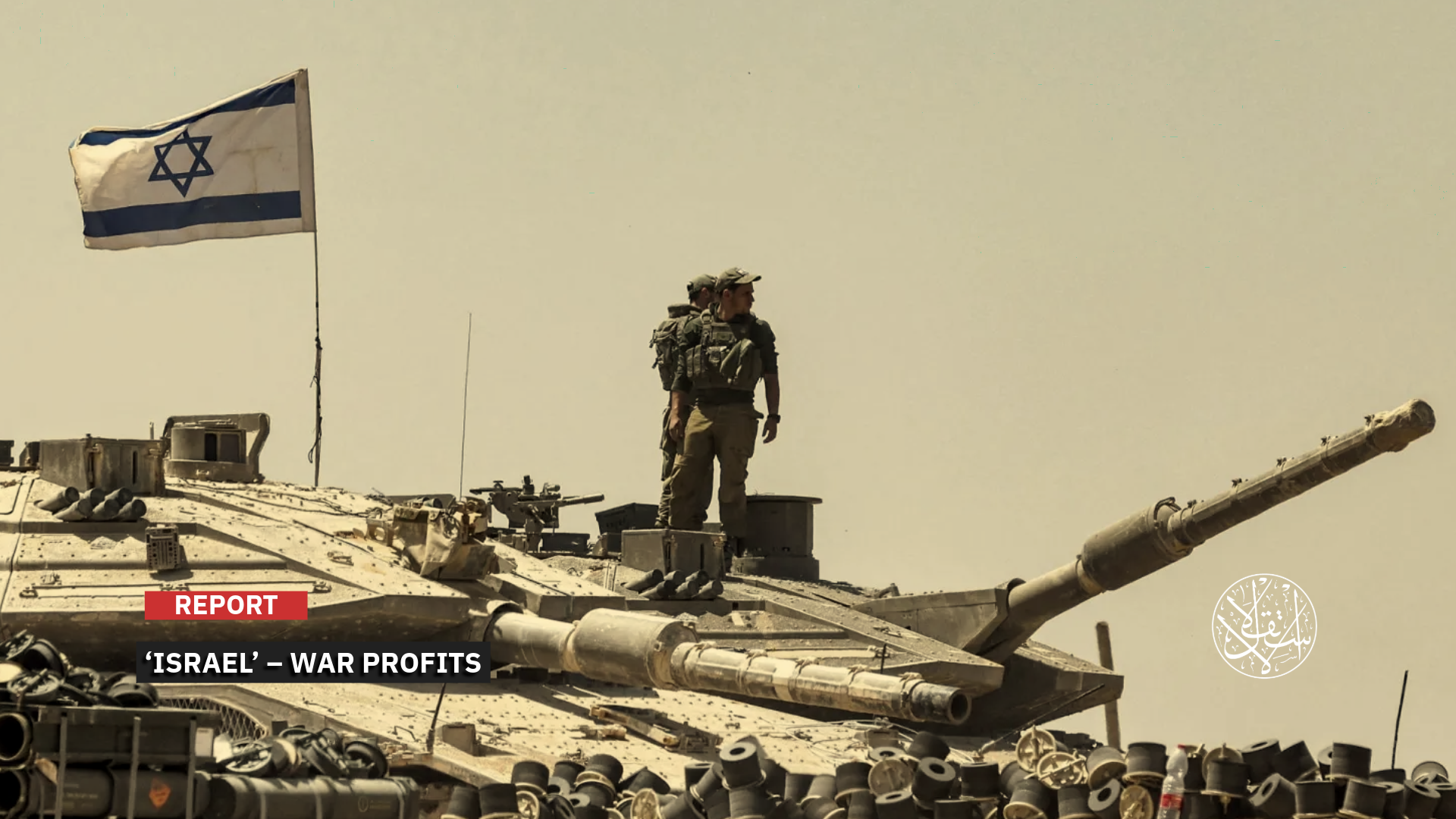
“The United States supplied 68% of Israel’s major arms imports between 2021 and 2025.”
Three years after the failure of October 7, 2023, “Israel’s” defense industry has entered a record phase of expansion in exports and orders, benefiting from a global arms buildup that began before the attack, followed by demand generated by the war on Gaza and the expansion of military operations into Lebanon, Iran, and Yemen.
Years of fighting have pushed manufacturers to increase production, hiring, and investment, while expanding the presence of emerging military technology companies. Meanwhile, the Israeli government has increased its direct involvement in foreign arms deals.
With government-to-government deals accounting for more than half of exports in 2025, arms sales have become more closely tied to financing military buildup, opening new markets, and deepening security ties with buyer countries.
Arms Deals
The rise in Israeli arms exports began years before October 7. On June 14, 2023, Israel’s Ministry of Army announced that the value of arms export contracts had reached $12.546 billion in 2022, up from $11.3 billion in 2021.
At the time, growth was driven by rising demand in Europe and Asia and expanding military ties following the Abraham Accords normalization agreements. Drones, missiles, and air-defense systems accounted for a significant share of exports.
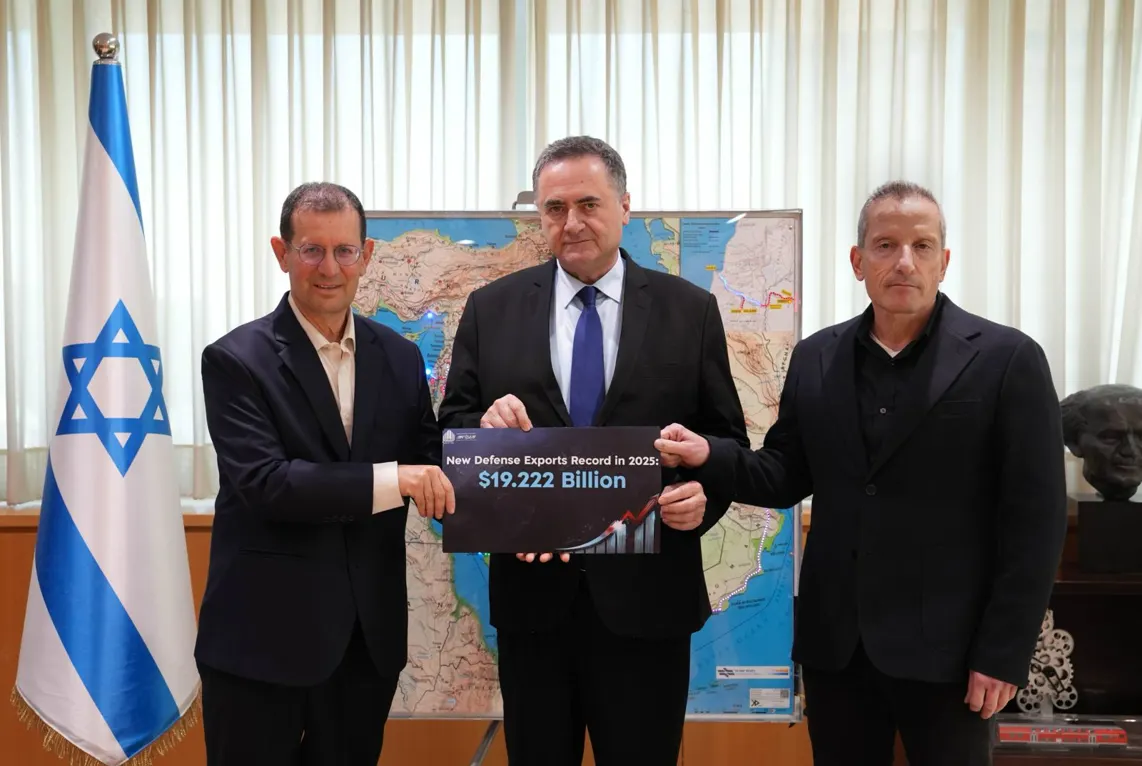
The value of arms export contracts continued to rise, reaching $13.073 billion in 2023 and $14.795 billion in 2024, before surging by approximately 30% to $19.2 billion in 2025, marking the fifth consecutive annual record.
The composition of demand also changed. The share of missiles and air-defense systems in total exports rose from 19% in 2022 to 36% in 2023 and 48% in 2024, before declining proportionally in 2025 as demand expanded for radars, surveillance systems, electro-optical systems, aviation, and command-and-control systems.
The deal to supply Germany with the Arrow-3 long-range missile defense system illustrates how a significant portion of European demand predated the Operation Al-Aqsa Flood.
On June 15, 2023, Berlin approved the initiation of procedures to acquire the system. Washington approved the deal in August, and the full contract, worth $3.6 billion, was signed in November.
The agreement formed part of a broader European effort to strengthen air and missile defenses following Russia’s invasion of Ukraine.
After October 7, the system gained a new operational track record when it was used to intercept long-range missiles launched toward “Israel”.
In December 2025, Berlin signed an additional agreement worth $3.1 billion to expand the deal, bringing the total value of Germany’s Arrow agreements to more than $6.7 billion.
Israel’s Ministry of Army said the expansion was one of the factors behind the record level of arms exports in 2025.
The Stockholm International Peace Research Institute (SIPRI) places “Israel’s” rise within a broader global surge in arms transfers.
In March 2026, the institute reported that the volume of international transfers of major arms increased by 9.2% in 2021–2025 compared with 2016–2020, while European countries’ arms imports rose by 210%.
Over the same period, “Israel’s” share of global major arms exports increased from 3.1% to 4.4%, making it the world’s seventh-largest arms exporter.
Zain Hussain, a researcher in SIPRI’s Arms Transfers Program, attributes “Israel’s” growing share of global arms exports to strong demand for air-defense systems, a sector in which Israeli defense companies have a significant presence.
This demand has grown as European countries have increased their military budgets and accelerated purchases of missiles, radars, and interceptor systems following Russia’s invasion of Ukraine.
The ongoing war that began in October 2023 added further momentum to this trend. Officials at Israel’s Ministry of Army have directly linked the battlefield performance of Israeli military systems to growing foreign demand.
When the 2024 export results were announced in June 2025, Israeli Army Minister Israel Katz said the record figure was linked to what he described as the military’s achievements on the fronts in Gaza, Lebanon, Yemen, and Iran.
Meanwhile, the Director General of the Israeli Ministry of Army, Major General (retired) Amir Baram, said international interest had increased in systems whose performance foreign governments had observed during recent military operations.
Brigadier General (retired) Sasson Haddad, the former Head of the Budget Department at Israel’s Ministry of Army and a researcher specializing in security economics, offers an analysis that combines the influence of global market conditions with the performance of Israeli military systems during combat.
In a study published on September 7, 2026, by the Jerusalem Institute for Strategy and Security, an Israeli think tank, Haddad attributed the record level of arms exports in 2025 to rising global demand, limited international production capacity, the operational performance of Israeli military systems, and what he described as government reforms that facilitated arms exports.

Reshaping the Industry
The expansion of foreign markets coincided with mounting pressure on factories inside “Israel”.
The Israeli military required a continuous supply of ammunition, missiles, interceptor systems, reconnaissance equipment, and communications systems, while companies continued to fulfill their foreign contracts.
The simultaneous demand from domestic and international customers forced manufacturers to operate production lines around the clock, increase inventories, expand facilities, and hire more workers. Meanwhile, order backlogs grew to levels that guaranteed major companies years of production.
Israeli defense manufacturer Elbit Systems illustrates the scale of this transformation. During the war, the company increased its inventories and expanded operations to three shifts after approximately 2,000 of its employees were called up for reserve military service in the early stages of the conflict.
In 2025, the company’s revenue rose to approximately $7.9 billion, while its order backlog exceeded $28 billion, driven by growing demand from the Israeli military and foreign markets.
Rafael Advanced Defense Systems underwent similar expansion, increasing its facilities and investment in research and development while recruiting approximately 2,000 new employees in 2025. Its order backlog exceeded $23 billion.
The expansion also extended to emerging military technology companies. After October 7, the Directorate of Defense Research and Development, known by its Hebrew acronym MAFAT, a branch of Israel’s Ministry of Army responsible for developing new technologies, expanded its engagement with this sector.
In 2026, MAFAT selected two investment funds to attract private capital into military technologies. The move, according to Amir Baram, was intended to strengthen technological and industrial independence and address needs identified during years of fighting.
In April 2025, Gal Harari, Vice President of Technology at MAFAT, told the Israeli financial newspaper Calcalist that the ministry had begun working during the war with companies that had not previously been part of its supplier network.
Engineers and entrepreneurs who had served in the military reserves also relayed needs identified on the battlefield to development teams.
This connection helped accelerate the development of solutions in areas including drones, communications, artificial intelligence, protection, and reconnaissance, while shortening the time between identifying a military need and testing a product.
However, the expansion also exposed the limits of “Israel’s” industrial capacity. In a study published in February 2026 by the Dado Center for Interdisciplinary Military Studies, which is affiliated with the Israeli military, Sasson Haddad examined bottlenecks that emerged during the fighting in production capacity, inventories, raw materials, and supply chains.
These constraints are linked to the structure of an industry that directs a significant share of its output to foreign markets, increasing pressure on the same production lines whenever demand from the Israeli military and foreign customers rises simultaneously.
Haddad argues that the impact of exports on military capability depends on how contracts are fulfilled. A foreign contract can finance a new production line, fund equipment purchases, expand the supplier network, and increase employment.
By contrast, a contract fulfilled using a production line already operating at full capacity can intensify pressure on the Israeli military’s own requirements.
For this reason, in his September 2026 study, Haddad called for arms exports to be evaluated not only by their financial value but also by their contribution to production capacity, supply chains, research and development, and the ability to sustain prolonged warfare.
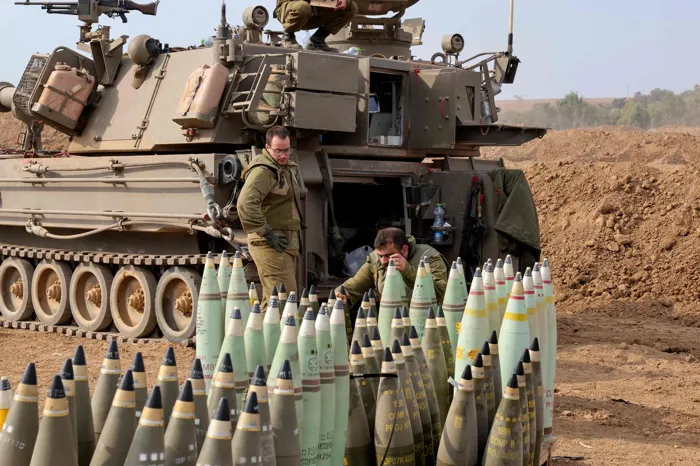
These pressures have brought ammunition independence back to the forefront of military planning. Restrictions affecting some United States supplies during the war on Gaza prompted increased investment in domestic production of ammunition, rocket motors, interceptor missiles, and other components.
Yet the limits of this approach remain clear in “Israel’s” continued reliance on foreign suppliers. SIPRI data show that the United States accounted for 68% of “Israel’s” major arms imports during 2021–2025, compared with 31% supplied by Germany.
“Israel” also depends on American combat aircraft and imports ammunition and other military capabilities that were used extensively during the war.
A Tool of State Policy
The Israeli government has expanded its role in the arms trade as government-to-government deals have grown. Under these agreements, the Ministry of Army negotiates contracts with foreign governments, while companies carry out development and supply operations.
The value of these contracts reached approximately $10 billion in 2025, accounting for more than half of total arms exports that year, after remaining significantly lower in previous years.
This arrangement ties arms deals to security relationships that extend beyond the delivery period. In many cases, contracts include training, maintenance, technical support, industrial cooperation, and knowledge transfer.
In November 2025, Israel’s Ministry of Army approved reforms to simplify export procedures and expand the list of countries to which companies could market certain products through faster procedures.
The ministry linked the move to rising global demand and the need to expand markets and strengthen the industrial base.
That same month, Amir Baram outlined the role of exports in military policy at the annual conference of the Defense Export Controls Agency (DECA), the body responsible for marketing and export licenses.
He linked increased exports to funding new systems for the Israeli military, supporting industry and the economy, and strengthening “Israel’s” influence abroad.
The breakdown of exports in 2025 reveals a widening customer base. Europe accounted for 36% of contracts and the Asia-Pacific region for 32%, while the share going to countries that signed the Abraham Accords reached approximately 15%, up from 12% in 2024.
Growth in Arab markets accompanied expanding military cooperation with the UAE, Morocco, and Bahrain. Meanwhile, India and other Asian countries continued purchasing Israeli systems while increasing requirements for local production and technology transfer.
The impact of battlefield use on exports is particularly evident in the August 2026 deal with Greece for the Achilles Shield system.
The two Army ministries signed an agreement to establish a multilayered air-defense network based on Israeli systems, linking the project to the operational experience these systems had accumulated over years of fighting.
At the same time, expanding exports has encountered political pressure in some markets. In June 2025, France closed the exhibition stands of four Israeli companies at the Paris Air Show following a dispute over the weapons on display. Spain also canceled contracts with Israeli companies.
In August 2025, Rafael Chief Executive Officer Yoav Turgeman told the Israeli financial newspaper Calcalist that the international climate had affected the company’s sales opportunities, even as its order backlog continued to grow.
Sasson Haddad argues that the continuation of the boom will face a test in the coming years as Europe, Japan, and other countries expand their own defense industries and increasingly require local manufacturing and technology transfer.
He believes that Israeli companies’ ability to turn current demand into production lines, supplier networks, and capabilities that endure after the global purchasing surge subsides will determine the long-term value of today’s record figures.
Meanwhile, the Israeli government is increasingly linking arms exports to financing military buildup, expanding the defense industry, and deepening security ties with foreign governments.
Sources
- All-Time Defense Export Record: Israel Crosses the $19 Billion Threshold
- Israel Sets New Record in Defense Exports: Over $14.7 Billion in 2024
- Trends in International Arms Transfers, 2025
- From Sales to Strength: Israel’s Defense Export Policy [Hebrew]
- Elbit Systems Reports Fourth Quarter and Full-Year 2025 Results
- Israel MOD Director General Meets Leading Defense-Tech and Startup CEOs on Strategy: Ministry Orders Reach Approximately $330 Million, Double the Figure for the Same Period Last Year
- Major Deal Signed to Expand Sales of the Arrow 3 System [Hebrew]
- Historic Milestone: Arrow 3 System Handover Marks a New Chapter in the Israeli-German Defense Partnership