Executions Return to Eastern Libya: Where Does Judicial Authority End and Military Authority Begin?
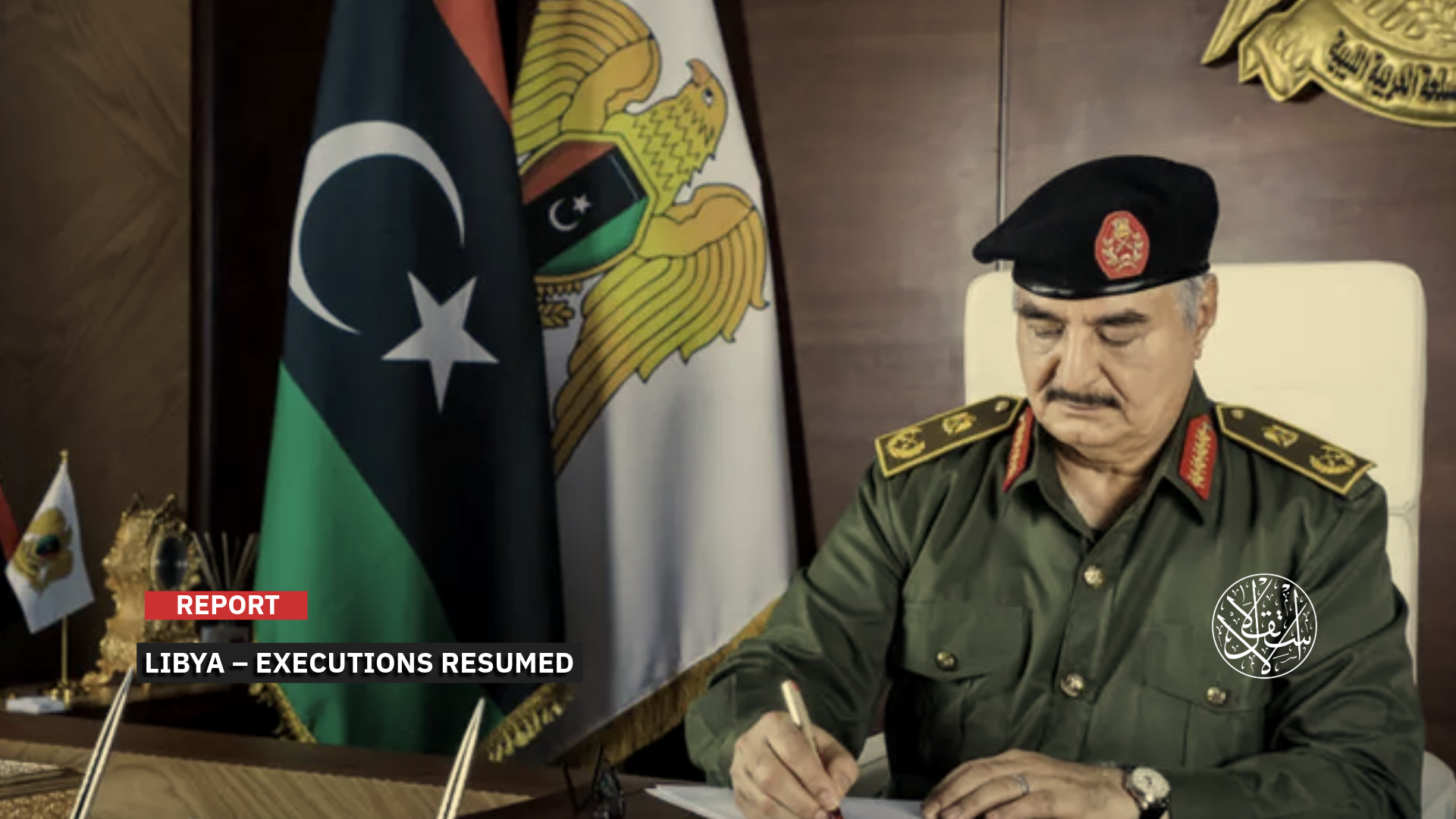
“Of the 31 people executed, eight were from Derna, and 23 were from Benghazi.”
Executions have resumed in eastern Libya, where Khalifa Haftar’s militia forces hold sway and control, putting dozens of prisoners at risk of execution following military trials that Amnesty International describes as secret and unfair, and in which confessions were allegedly extracted under torture.
Since the announcement on August 23, 2026, that executions would resume, human rights organisations have documented the execution of more than 30 people, while the organisation has warned of an imminent risk to at least 50 more men held in Qarnada Prison.
Between the authorities’ account that those executed were convicted of terrorism and assassinations, and rights groups’ accounts of violations of defence guarantees and families being denied the chance to say goodbye to their sons, the cases linked to the conflicts in Benghazi and Derna have returned to the forefront, raising questions that go beyond the punishment itself to the independence of the judiciary and the military’s authority over civilians.
The executions have ended a de facto halt to carrying out the death penalty that had been in place since 2010, while Libya’s institutions remain divided and oversight and accountability mechanisms remain contested.
Why have executions resumed now? Who has been executed, and who is awaiting the same fate? How were their trials conducted?
Behind Closed Doors
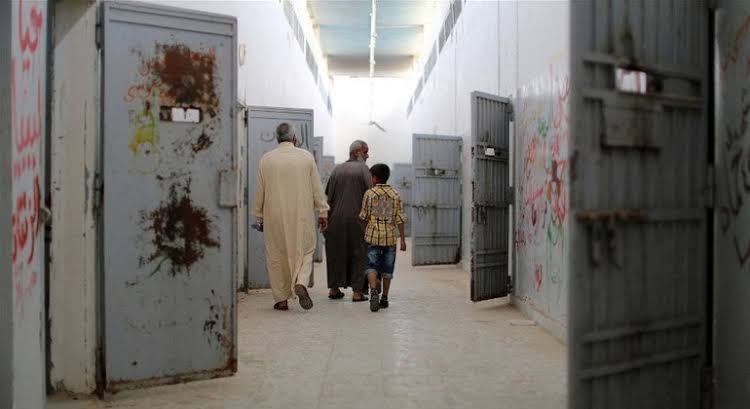
The cases date back to years of fighting between Khalifa Haftar’s forces and their opponents in eastern Libya. Many of those sentenced to death were arrested during or after the conflict and then spent long periods in detention before being referred to military courts, bringing cases dating back to earlier conflicts to the execution stage years after the major fighting had ended.
In its initial announcement, the Office of the Military Prosecutor said that 10 people had been executed after being convicted of joining banned organisations and assassinating military personnel and civilians, stressing that prosecution and defence procedures had been completed.
Executions subsequently continued, with the Libya Crimes Watch organisation documenting the execution of 31 people by September 10, 2026, in a statement published on September 21.
However, the reasoned judgments and case files were not made available for independent examination, while rights groups documented restrictions on defendants’ access to their lawyers, evidence, and the opportunity to present their defence.
Amnesty International said at least five people had been subjected to enforced disappearance or incommunicado detention, while at least four were tortured to extract confessions, through methods including electric shocks, burning and beatings. Some defendants were also denied private meetings with their lawyers before and during their trials.
The organisation highlights an even more complicated case: at least two of those executed had their death sentences reduced to life imprisonment by a higher military court, after the sentences were issued in 2019. Amnesty said it was unable to establish the legal basis for carrying out their executions.
This shifts the dispute from the fairness of the investigative procedures to whether the punishment carried out was consistent with the court’s own judgment.
With detailed rulings unavailable, questions over the individual charges, evidence of guilt, appeals process and the authority that authorised the executions remain behind the doors of courts and prisons, making it impossible to determine whether judicial review provided defendants with effective protection.
Unconstitutional Trials
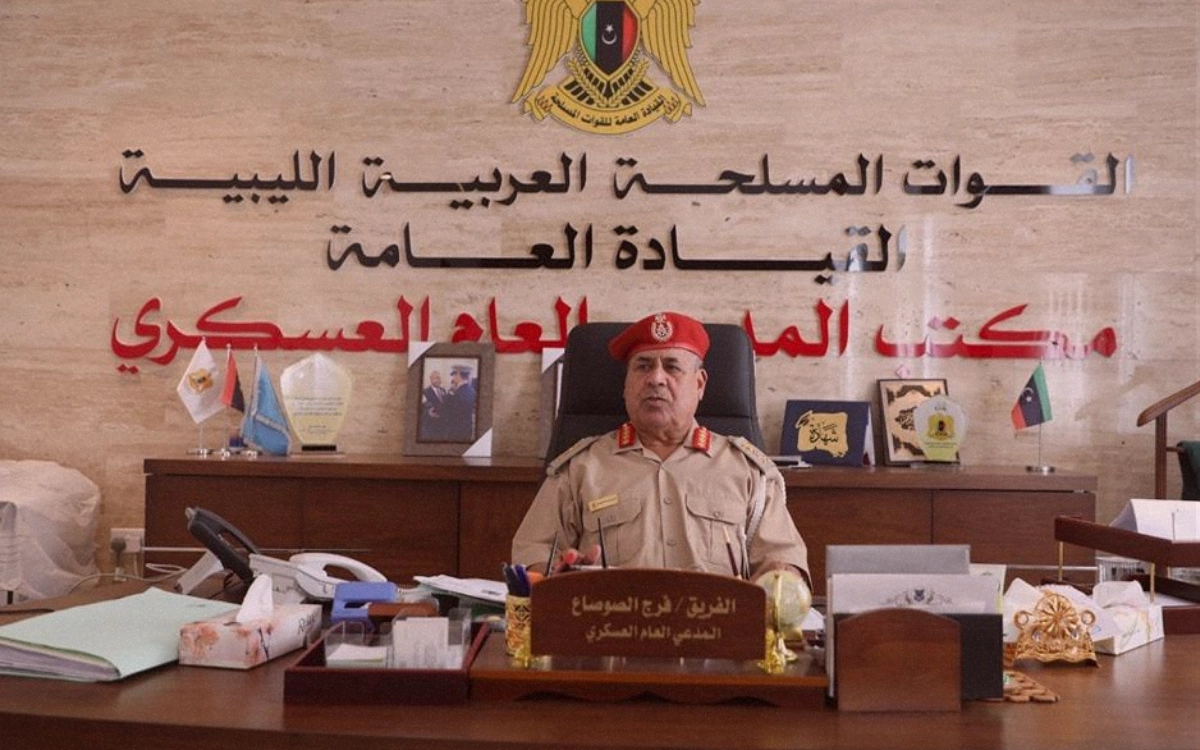
The legal issue begins with the court that heard these cases. In 2017, the House of Representatives expanded the jurisdiction of the military judiciary to include civilians accused of crimes against the state and the internationally unrecognised government, giving Haftar’s militia forces a role extending beyond the prosecution of their own personnel and purely military offences.
However, on November 2, 2025, the Constitutional Chamber of the Supreme Court ruled, in Challenge No. 22 of Judicial Year 71, that Law No. 4 of 2017 was unconstitutional insofar as it assigned the trial of civilians accused of crimes against the state to military courts.
The ruling was based on equality before the law, the right to be tried by the ordinary competent court, and the prohibition of exceptional courts. It did not, however, mean that the challenge to jurisdiction erased criminal liability.
This places the legality of the courts’ jurisdiction at the heart of the objections. The existence of the death penalty in legislation does not, in itself, settle whether the body that issued the sentence had lawful jurisdiction. Nor does accusing a civilian of a serious crime deprive them of the right to a competent and independent court.
Against this backdrop, the timing of the resumption of executions raises political and security questions. The initial announcement came about two weeks after the killing of military intelligence chief Fawzi al-Mansouri in a bombing targeting him in Benghazi on August 10, 2026, a temporal proximity noted by Amnesty International.
This coincidence does not mean that those executed were accused of involvement in the attack simply because the executions took place afterwards.
But the timing opens the door to viewing the executions as part of deterrence messages announced by the authorities in response to what they describe as terrorist organisations and assassination networks.
On August 26, Saddam Haftar, in his capacity as acting commander-in-chief, chaired a meeting attended by the president of the Supreme Military Court, the military prosecutor and the director of the Military Police and Prisons Department.
According to Al-Mustaqbal news agency, affiliated with the House of Representatives’ Media Services Foundation, the meeting discussed the implementation of final judgments, and Saddam praised the efforts of the judicial authorities. The meeting demonstrates direct senior-level oversight of the issue.
Libyan political analyst Elias al-Barouni, speaking to the British outlet Middle East Eye, argues that the core issue concerns who has the authority to issue and enforce judgments in a divided state, and whether the judiciary can remain independent of the dominant power.
From this perspective, transparency in proceedings and access to evidence become the criteria for distinguishing criminal accountability subject to judicial review from the use of justice institutions to consolidate the military influence of Haftar and his militia forces.
Contested Identities and Families Under Pressure
This struggle also extends to how those sentenced to death themselves are characterised. Of the 31 cases of executions documented by Middle East Eye, eight of those executed were from Derna and 23 from Benghazi, without the publication of case files that would allow each person’s individual responsibility and organisational affiliation to be established.
Regarding the first batch, the Libyan organisation for Human Rights and Solidarity said that three of those detained in al-Kweifiya Prison were Quran teachers who had been arrested in 2014, while six of those detained in Qarnada Prison were residents of Derna who had fought against the Islamic State. This is a rights-based account that disputes the classification of all of them as terrorists.
Meanwhile, the families’ suffering extends beyond this dispute. The rights organisation documented cases in which some families received calls from unidentified individuals asking them to go to Benghazi Medical Centre to identify the bodies, before they were transferred by the Red Crescent for burial, without prior official notification or the provision of death certificates and forensic reports.
Other reports have described restrictions on mourning ceremonies and security surveillance of some families, limiting their ability to seek information or lodge objections. Organisations have called for the families to be protected from intimidation or retaliation because of their efforts.
There is no complete official list of those whose death sentences have been carried out, nor verified individual information that would allow those at risk of execution to be categorised on a tribal or political basis.
Enforceable Order
Against this deadlock, calls to halt the executions are directed at the authorities controlling the prisons, Libya’s judicial institutions and international bodies.
The immediate power to suspend executions lies with the eastern authorities and the agencies carrying them out, while investigating alleged violations requires access to case files, detainees and witnesses.
On September 16, the UN mission said it had held extensive discussions with the authorities at both the political and technical levels, urging them to suspend the executions and review the cases, but expressed regret that the executions had continued.
Amnesty International is calling for an official halt to executions, the annulment of sentences handed down following unfair trials, and the retrial of defendants accused of recognised criminal offences before civilian courts, with evidence obtained through torture excluded.
It also calls for independent investigations and for international monitors to be allowed access to Qar’nada and other places of detention.
Domestically, the Libyan rights organisation Libya Crimes Watch has called on the Prosecutor General to open an investigation into the circumstances of the arrests, trials and executions, and on the military prosecution to publish the judgments and the guarantees afforded to the defence, and to provide families with medical and legal documents.
It has also submitted an urgent appeal to three UN special rapporteurs concerned with the death penalty, judicial independence, and human rights in counter-terrorism.
However, continued institutional division weakens the ability of civilian bodies to impose a unified review, while suspending executions remains the step that preserves the possibility of correcting errors.
Subsequent accountability, meanwhile, requires determining the responsibility of each body involved in the investigation, sentencing, approval and implementation of the executions.
For those sentenced to death whom organisations have warned are at imminent risk of execution, the impact of these demands depends on whether they reach prison administrations in the form of binding orders.
The right to a defence, the publication of case files and investigations into torture lose their ability to save those concerned if they are preceded by firing squads, even if their innocence or the invalidity of their trials is established later.
Haftar’s Crimes
The executions in eastern Libya were preceded by years of extrajudicial killings in areas controlled by Khalifa Haftar, including killings of prisoners and detainees, with some of these cases reaching the International Criminal Court.
In 2017 and 2018, the ICC issued two arrest warrants for Mahmoud al-Werfalli, a commander in Haftar’s al-Saiqa militia forces, over allegations that he committed or ordered the killing of 33 people in seven incidents, followed by the killing of 10 others in front of a mosque in Benghazi. Proceedings against him ended in 2022 following his death, without him standing trial.
In October 2017, the bodies of 36 men were found near al-Abyar. Human Rights Watch attributed responsibility to groups aligned with Haftar’s militia forces, based on photographs and testimonies, including accounts from relatives of six victims who had been detained before their deaths.
Haftar ordered an investigation, but the organisation said its findings had not been made public when its report was published.
Documentation also extended to the Tariq bin Ziyad Brigade, commanded by Saddam Haftar.
Amnesty International documented the discovery of the bodies of three forcibly disappeared people in Benghazi and cited testimonies reporting that at least five prisoners had died as a result of torture or being denied medical treatment.
It called for a criminal investigation into the responsibility of Saddam Haftar and deputy, Omar Amraja, assessing that they knew, or should have known, about crimes committed by their subordinates without preventing or punishing them.
Questions of responsibility extend beyond the actions of individual fighters. Legal scholars Ryan Goodman and Alex Whiting analysed a recording attributed to Haftar from 2015 and interpreted his remarks as an instruction not to take prisoners, raising suspicions that he had issued orders to commit war crimes.