Parliamentary Bloc: How the French Far-Right Expanded Its Presence in the Senate
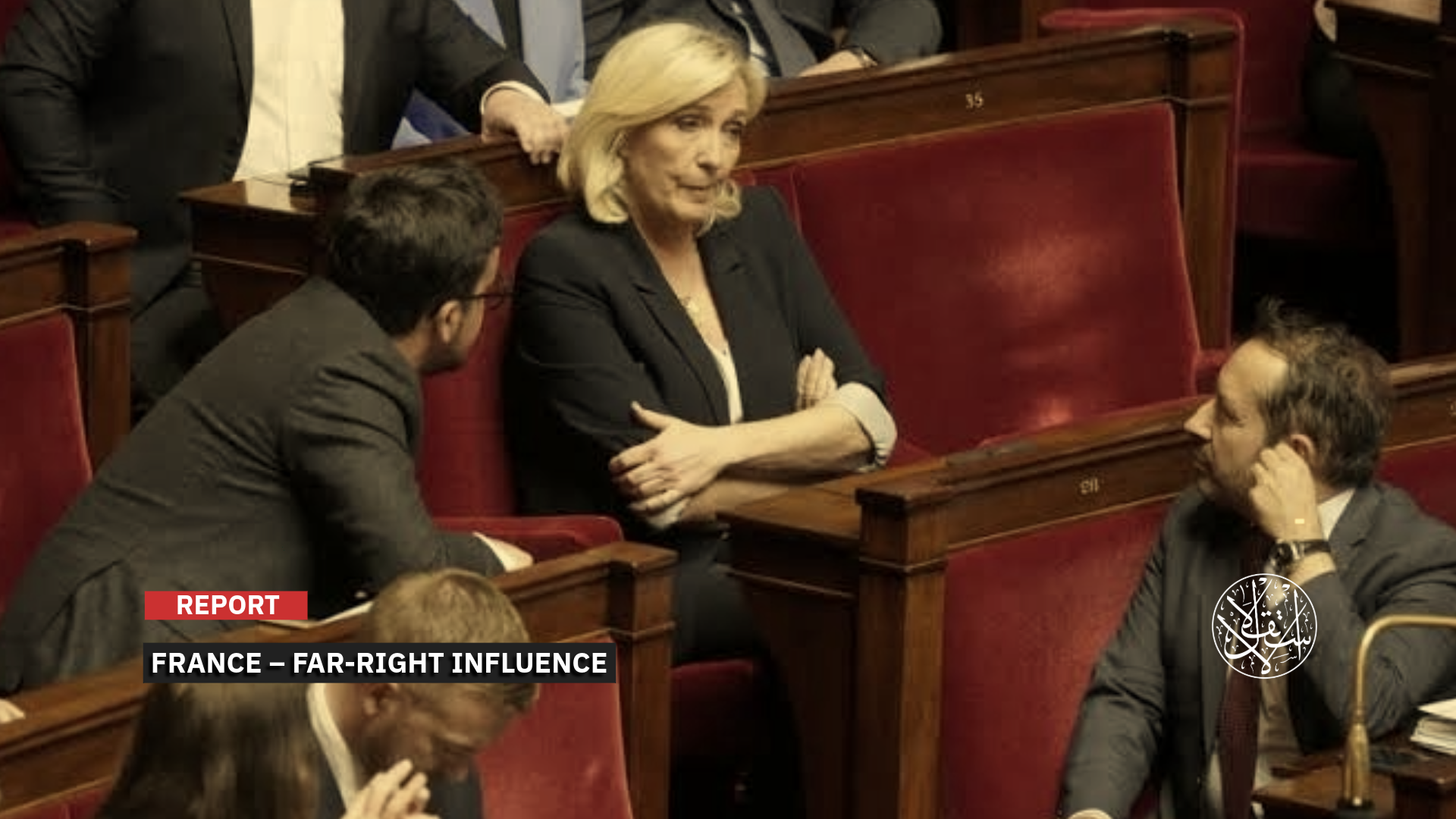
“The National Rally winning a group was the culmination of their establishment in the political landscape.”
In a sign of the far-right's growing presence and expanding influence within state institutions, the National Rally party has recently achieved notable success in the French Senate elections.
The National Rally had previously demonstrated its strength by becoming the largest single bloc in the National Assembly following the snap legislative elections called by President Emmanuel Macron.
This latest success in the Senate confirms that the party has established a firm foothold across all of the state's legislative institutions.
Informed sources indicate that these results will create a new reality for the French government regarding the passage of sensitive legislation; the far-right is no longer merely a protest force but has become an active partner in shaping policy from within the halls of the second parliamentary chamber.
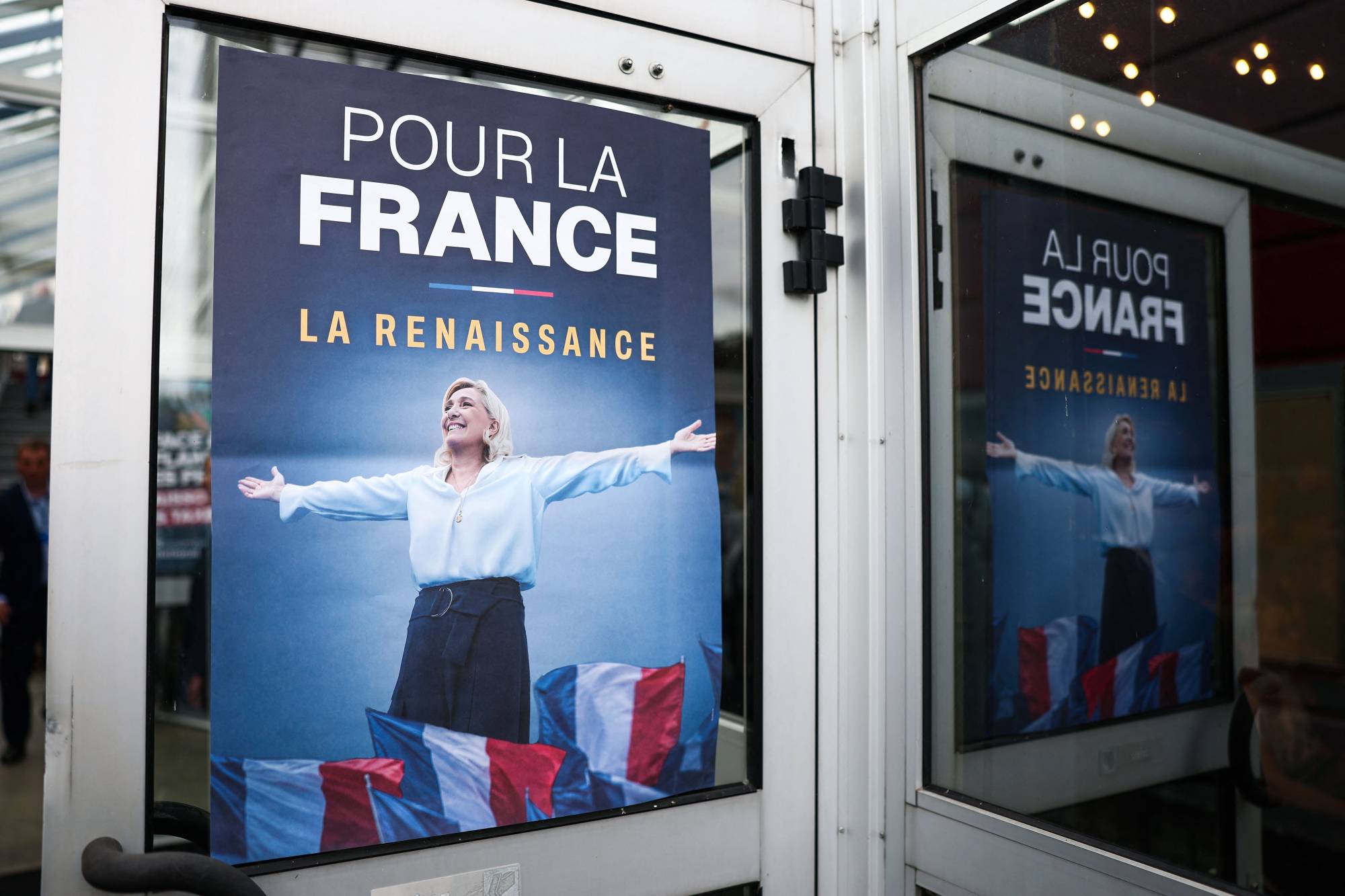
Far-right leader and presidential candidate Marine Le Pen hopes to capitalize on her party's momentum ahead of the presidential election scheduled for April 2027 to choose a successor to President Macron.
Polls show Le Pen leading voting intentions for the first round, followed by figures such as former Prime Minister Edouard Philippe and radical-left leader Jean-Luc Melenchon.
Parliamentary Bloc
The far-right National Rally party and its allies achieved unprecedented gains in the French Senate elections on September 27, enabling them to form a parliamentary group in the upper house for the first time.
Agence France-Presse (AFP) reported that the National Rally won nine seats in the French Senate elections, bringing its total representation in the chamber to 12 members.
With the addition of two members from its ally, the Union of the Right for the Republic (UDR), the prospective group will comprise 14 members.
Conversely, the results showed that the conservative right, the center, and the Socialist Party would remain the dominant major forces in the Senate, while the France Unbowed party entered the chamber for the first time.
This new diversity reflects the sharp polarization currently characterizing the French political landscape.
Gérard Larcher, a member of the Republicans party, is expected to retain his position as Senate President in the vote scheduled for next week.
Members of the French Senate are elected via indirect suffrage by an electoral college composed primarily of local elected officials.
Half of the Senate’s 348 members are up for renewal every three years—as members serve six-year terms—with 178 seats contested in the most recent election.
The National Rally (formerly the National Front) first entered the Senate in 2014 with two seats, later increasing its representation to three seats in 2023.
The Senate ranks below the National Assembly in terms of political and legislative weight; if a persistent disagreement arises between the two chambers regarding the final wording of a bill, the government may authorize the National Assembly to make the final decision alone.
Senators participate in debating and amending laws and government bills; they may also propose legislation, expedite the passage of certain bills, or obstruct others.
The Senate plays an oversight role regarding government activity, with its committees summoning ministers and officials for questioning and testimony.
Furthermore, Senate approval is required for constitutional amendments and the passage of organic laws.
Additionally, the Senate President assumes the duties of the President of the Republic on an interim basis should the office become vacant, pending the election of a new president.
The Senate’s importance grew after President Macron’s camp lost its absolute majority in the National Assembly in 2022, thereby losing the ability to pass government bills and legislation relying solely on its own deputies' votes.
This shift gave the Right—which dominates the Senate—greater leverage to press its demands on the government, which now requires the support of right-wing deputies in the National Assembly to pass a number of its legislative proposals.
The 2023 immigration law serves as a prime example of this dynamic; the government accepted certain hardline amendments introduced by the Senate—regarding the residency and status regularization of foreign nationals—in exchange for the votes of the right-wing Republican Party in the National Assembly.
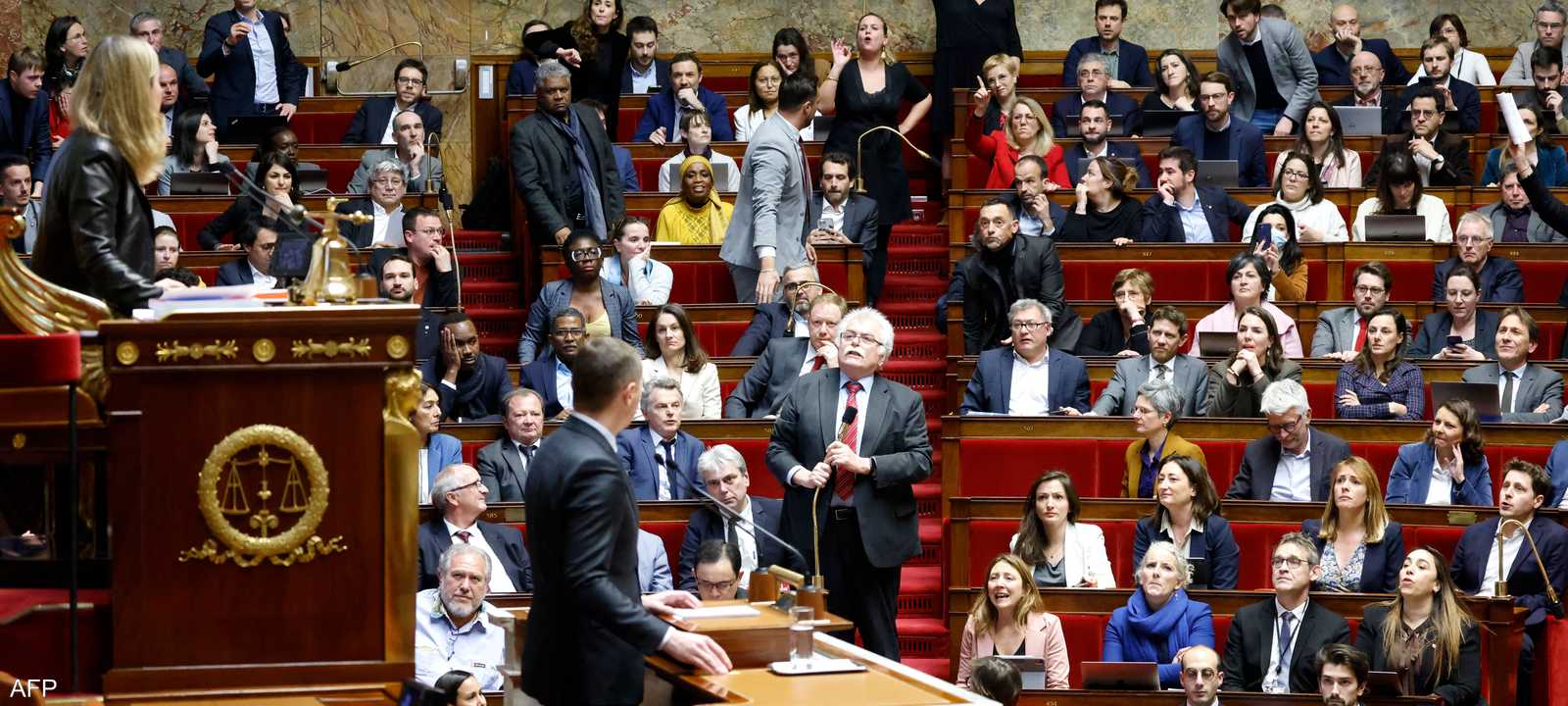
Far-Right Influence
Over the past four years, the National Rally has made gains in every election, strengthening its presence across various seats of power: the European Parliament, the National Assembly, and municipal governments. The Senate alone had remained an exception to this trend.
While Le Pen hopes to capitalize on this breakthrough ahead of next year's presidential election, observers view the formation of a Senate group as a reflection of the party's expanding influence within local institutions and its ability to translate that influence into representation within the parliament's upper house.
It is worth noting that French senators are elected via indirect suffrage by an electoral college composed primarily of local elected officials—specifically representatives from France's municipal councils.
The traditional right has consistently held a majority in the Senate, lending the chamber a more conservative, right-leaning character compared to the National Assembly.
Beyond the political symbolism, forming a parliamentary group in the Senate grants the National Rally additional powers and resources not available to senators who do not belong to any group.
One of the most significant of these powers is the so-called right of initiative (droit de tirage), which allows any political group to request the establishment of a commission of inquiry once per parliamentary year, without the need to put the proposal to a vote in a plenary session.
Furthermore, the group requesting the commission is entitled to secure the role of either committee chair or rapporteur for one of its members.
Having a political group also gives the party greater weight in Senate debates, as speaking time during sessions is allocated among groups based on the size of their representation.
Senate rules also allow groups to participate in organizing the chamber's proceedings through the Conference of Presidents of Senate Groups.
In addition, members of political groups benefit from financial allowances that enable them to hire parliamentary assistants.
A portion of the public funding provided by the state to political parties is also linked to the number of elected parliamentarians.
Observers believe that the National Rally's gains in the Senate reflect not only its ability to mobilize voters but also the expansion of its influence within the local political establishment, signaling an increasing capacity to build networks and alliances across French state institutions.
They noted that the National Rally is no longer merely accumulating electoral victories; it is also securing institutional positions—spanning the European Parliament, the National Assembly, local councils, and the Senate.
The magazine L'Obs suggests that the new bloc faces a choice between an approach focused on cementing its political identity and one based on negotiation to secure votes, positions, and tangible legislative amendments.
It adds that there is also an internal challenge: the bloc is a joint venture with the UDR, and both parties maintain their own leaders, networks, and electoral interests—necessitating coordination on legislative texts, appointments, and oversight initiatives.
The magazine notes that initial moves—such as requesting an inquiry commission, proposing legislation, or adopting a unified stance within committees—will reveal whether this alliance remains merely a symbolic electoral label or evolves into a genuine parliamentary bloc.

Political Break
Leaders of the National Rally were quick to link the Senate election results to the upcoming presidential election.
Le Pen viewed the party's performance as exceeding both expectations and hopes, asserting that the newly elected senators would serve as a crucial pillar of the presidential campaign.
The party’s presidential candidate also made no secret of her satisfaction regarding the party’s deepening roots and expanding presence across the country.
For his part, Bardella described the result as another milestone on the path toward electing Le Pen as president in the vote scheduled for next spring.
He added that the results reveal the party’s strengthened presence in cities and towns—particularly rural ones—whose interests the National Rally claims to defend against the Parisian ruling elites that have neglected them for decades.
Bardella did not stop at celebrating the result; he leveraged it to call upon those he described as sincere patriots within the right-wing Republicans party to work alongside his own. He extended an implicit offer for them to join a government he might personally lead should Le Pen be elected president.
He sought to sow further discord within the right-wing party, noting that several of its leaders had supported President Emmanuel Macron over the past few years and held ministerial posts in his governments; consequently, he argued, they do not represent the break with the status quo that the party's voters and local elected officials desire.
The National Rally leader went so far as to describe his party’s alliances and understandings with conservative forces as a cultural revolution in political practice, linking this shift to his party’s openness and its transformation into a unifying force capable of rallying broad support.
Conversely, Republican leaders—both within and outside the Senate—were divided: some urged against associating with the far-right bloc, while others argued that its members were democratically elected and that ostracizing them was pointless.
As for the Left—which maintained roughly the same level of representation in the chamber—its constituent forces (including the Socialist Party, the Communists, and the Greens) are calling for a separation wall to prevent the normalization of the far-right’s presence in the second chamber of the French parliament.