Nabeel Rajab: A Bahraini Rights Defender Who Confronted the Regime for Three Decades and Died Far From Home
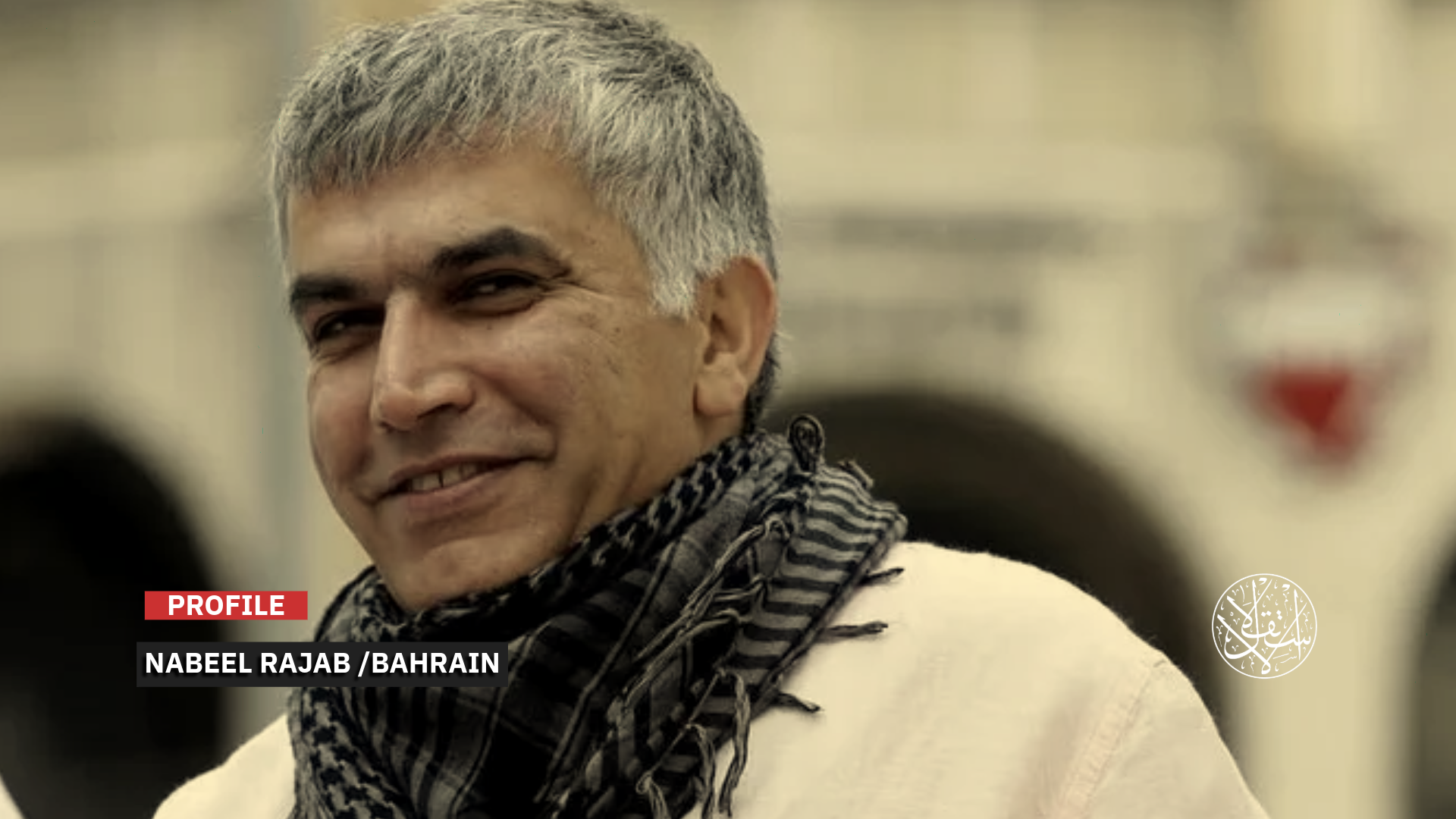
Rajab was among the most prominent participants in the 2011 protests demanding political and constitutional reforms.
For three decades, Bahraini rights defender Nabeel Rajab fought one battle after another over his positions on detention, torture and public freedoms, before the 2011 protests made him one of the most prominent faces of his country’s opposition.
As his profile grew inside and outside Bahrain, trials and prison sentences piled up against him, and the consequences of his activism spread to his business and his family. He spent long years away from them before he died in Turkiye on November 17, 2026, at the age of 62.
His death brings back into focus a life that drew both support and controversy across very different circles. Rajab defended detainees with whom he disagreed on sectarian and intellectual grounds, criticized the authorities and their Western allies, and later clashed with parts of his own base over his defense of freedom of belief.
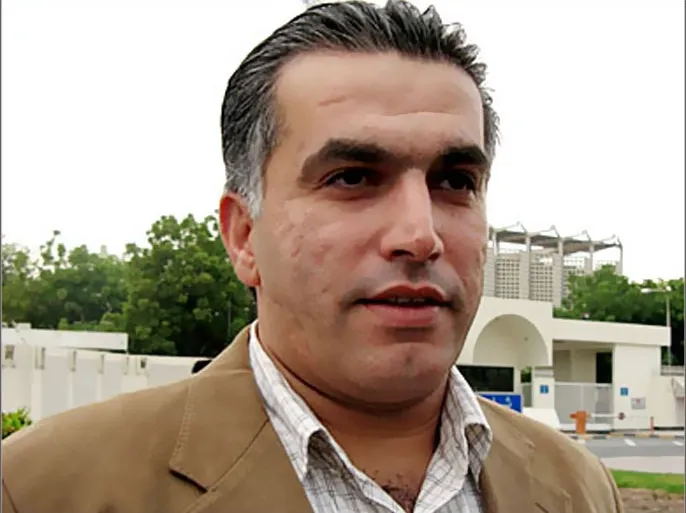
Formative Years
Nabeel Ahmed Abdulrasool Rajab was born in the Bahraini capital, Manama, on September 1, 1964. He grew up in a well-off family that, according to his American lawyer, Joshua Colangelo-Bryan, enjoyed good relations with the ruling family.
After finishing secondary school in 1983, he moved to India to study political science and history at the University of Pune, graduating in 1987. He then returned to Bahrain, where he worked in contracting and ran small businesses.
His years of study in India left a clear mark on his later concerns. There he lived amid vast religious, ethnic and cultural diversity and saw the sharp divide between poverty and wealth.
In a 2023 interview, he recalled the slums, the exploitation of workers and the human trafficking he had encountered while living there. He said these issues stayed with him and later surfaced in his human rights work and his writing.
Rajab’s involvement in human rights work began during the political unrest that swept Bahrain in the 1990s, when demands for reform grew, and complaints of detention and torture emerged.
With the limited opening that accompanied King Hamad bin Isa Al Khalifa’s accession to power and his announcement of political reforms in the early 2000s, Rajab helped found the Bahrain Human Rights Society.
In 2002, together with activist Abdulhadi al-Khawaja and others, he founded the Bahrain Center for Human Rights. The center took up the cases of detainees, sectarian discrimination, economic rights and foreign labor.
Two years later, the center collided with the authorities. In September 2004, it organized a seminar on poverty and economic rights at which al-Khawaja criticized the then prime minister, Khalifa bin Salman Al Khalifa.
After the seminar, al-Khawaja was arrested, and an order was issued to close the center. The government justified the order by citing violations of the Societies Law, while activists saw it as punishment for criticizing the prime minister.
After the order, Rajab stressed that their human rights work had begun before the center was founded and would continue despite its closure. Its members did, in fact, keep working despite the authorities’ decision to dissolve it.
In February 2005, Rajab urged the Bahraini government to act to bring home six Bahrainis held at the U.S. detention facility at Guantanamo Bay and to guarantee their right to fair trials. He criticized the government for leaving their defense to human rights activists with limited resources.
He also announced that he planned to travel to Washington to meet the lawyers handling the detainees’ cases and discuss the legal options available. According to his later account, his defense of people, some of whom were seen as linked to hard-line Islamist currents, drew criticism from Shiite and liberal circles.
In June 2005, police held him for about half an hour during a protest against unemployment at which protesters and rights defenders, including al-Khawaja, were assaulted. Rajab said at the time that the rights defenders had come to monitor the demonstration and protect participants from attacks, and that his colleague was beaten when security forces intervened.
Migrant workers’ rights were among the issues he took up early on. In 2003, he helped found a society to protect migrant workers, and he criticized the treatment of domestic workers from Asian countries.
In a 2005 interview with The Washington Post, he said that some domestic workers who turned to the police for protection from their employers ended up detained instead of receiving justice. He criticized the lack of accountability for the abuses they suffered.
In April 2007, a proposal was put forward in Bahrain’s parliament to bar unmarried migrant workers from living in residential neighborhoods. Rajab opposed it, calling it a form of discrimination against a group on which the country’s economy depends.
In November of the same year, at a conference in Bangladesh organized by bodies including the World Bank and the International Organization for Migration, he called on the governments of India, Pakistan and Bangladesh to coordinate their positions and press for the protection of their citizens working in the Gulf, rather than each country dealing alone with the abuses they faced.
This work broadened Rajab’s human rights connections beyond Bahrain. He later helped found the Gulf Center for Human Rights, which works to protect defenders of rights and freedoms across the region.
He also joined the Middle East advisory committee of Human Rights Watch and served as deputy secretary-general of the International Federation for Human Rights (FIDH). These positions allowed him to present cases of detainees and abuses to international institutions and foreign parliaments while keeping his presence inside Bahrain.
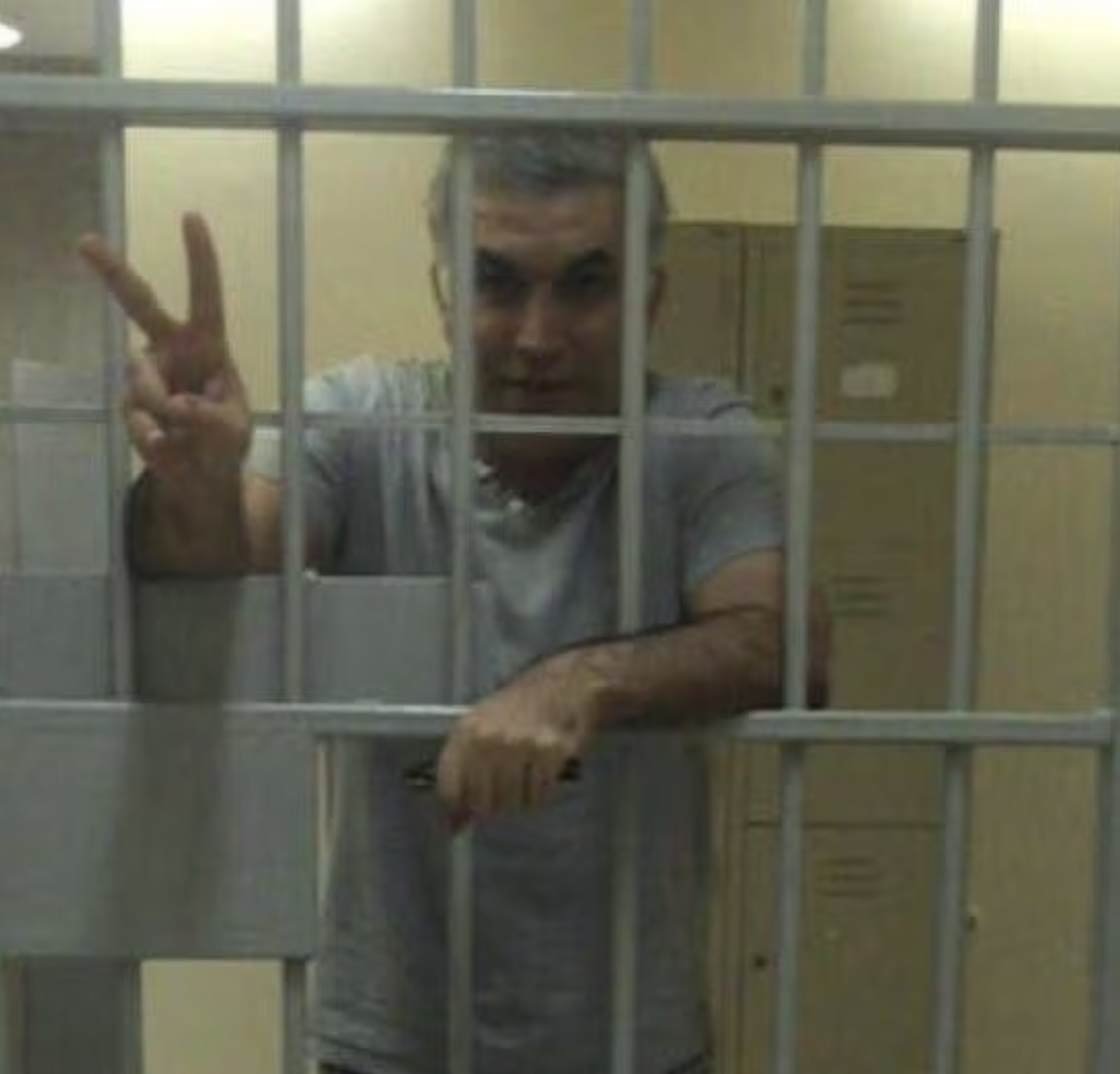
A Face of the Opposition
When Bahrain’s protests broke out on February 14, 2011, Rajab became one of the most prominent participants in the demonstrations demanding political and constitutional reforms and an end to discrimination and corruption.
The protests centered on the Pearl Roundabout in Manama until security forces moved in to disperse them. The authorities then called in Saudi-led Gulf forces and imposed a state of emergency amid a sweeping campaign of arrests and prosecutions.
From his position at the Bahrain Center for Human Rights, Rajab helped document the arrests, torture cases and deaths linked to the crackdown. He used social media to publish victims’ testimonies and call for protests.
His online accounts became especially important as restrictions tightened on the movements of journalists and international human rights organizations. His presence at the protests became tied to relaying what was happening in the villages and areas that saw clashes with security forces.
In November 2011, the Bahrain Independent Commission of Inquiry, formed by royal order, said it had received 8,110 complaints and statements about abuses including torture, arbitrary detention, excessive use of force and dismissal from work. It concluded that some detainees had died in custody.
The king announced that he accepted the commission’s recommendations, while human rights organizations continued to criticize their limited implementation and the ongoing security and judicial prosecutions. During that period, Rajab accompanied American human rights activist Brian Dooley on field visits to the homes of families of people who had been killed or detained.
Dooley recounted that they visited the family of businessman Karim Fakhrawi, a co-founder of the newspaper Al-Wasat, who died in custody. They also met other families who described the assaults and arrests their relatives had suffered.
Dooley described how people would gather around Rajab as soon as he arrived in some villages, despite the fear the crackdown had left behind. His visits became a source of support for families who had lost their sons or did not know their fate.
The attacks reached Rajab personally. In April 2011, unknown assailants threw tear gas canisters at his home and at his mother’s house next door, according to testimony his lawyer gave before the human rights commission of the U.S. Congress.
In January 2012, he was beaten as he left a peaceful protest and was taken to hospital. Then began a series of trials that ended with him being jailed many times.
In August 2012, a Bahraini court sentenced him to three years in prison for taking part in demonstrations the authorities deemed unauthorized; the sentence was later reduced to two years. International human rights organizations criticized the ruling, arguing that the acts it was based on amounted to exercising the right to peaceful assembly.
After his release in May 2014, he resumed his public activism and visited European countries to present the human rights situation in Bahrain. He then returned home even though he expected to be arrested again.
At that stage, Rajab put forward a political vision based on reform and negotiation. He declared his support for a transition to a constitutional monarchy on the British model, with a parliament holding real powers and an independent judiciary.
At the same time, he defended citizens’ right to call peacefully for a republic, even if that was not his personal choice. He stressed his readiness for dialogue with the government, arguing that leaving the crisis unresolved was harming the country.
His criticism extended to Western policy toward Bahrain, especially that of the United States and Britain. He argued that military, security and economic interests limited the pressure on the authorities to carry out genuine reforms.
He was particularly critical of London for supporting Bahraini oversight bodies that, in his view, helped improve the government’s image abroad while abuses continued.
In October 2014, he was arrested again over tweets in which he accused Bahraini security institutions of helping shape the intellectual environment of some of those who joined the Islamic State group. He faced further prosecutions in 2015 before being released under a royal pardon.
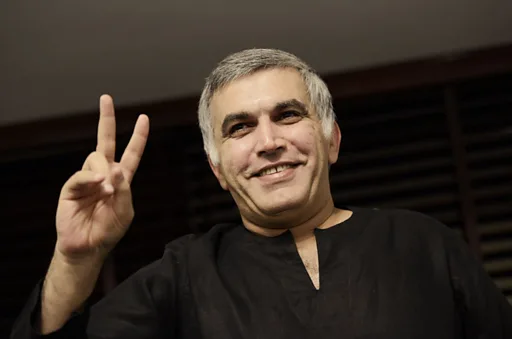
Years of Confrontation
On June 13, 2016, Rajab was arrested again over media statements in which he criticized the restrictions on journalists and human rights organizations entering Bahrain.
He was sentenced to two years in prison over those statements. Then, in February 2018, another court sentenced him to five years in prison over tweets in which he criticized the military operations of the Saudi-led coalition in Yemen and spoke about prisoners being tortured inside Bahrain’s Jau Prison.
Organizations including Human Rights Watch and Amnesty International described his trials as a violation of freedom of expression and called for the sentences against him to be overturned.
During his detention, his family reported that his health had deteriorated and that he suffered from heart and skin problems. Human rights organizations documented that he was held in harsh conditions, including periods of isolation and confinement to his cell for most of the day, with restrictions on movement, communication, and access to medical care.
His first years in prison had already taken a heavy toll on his family life. In October 2012, his mother died while he was serving a prison sentence. The authorities allowed him to attend her funeral but refused to let him take part in the three days of mourning.
The government said he had violated the terms of his temporary release by giving a political speech at the funeral, while the Bahrain Center for Human Rights considered the speech a peaceful exercise of freedom of expression.
Two years later, Rajab spoke about the pain of losing his mother and other relatives while he was in detention, and about restrictions that prevented him from discussing human rights issues even in calls with his family.
In a letter published in 2012, his wife, Sumaya, appealed to the U.S. and British governments and to human rights organizations to intervene for his release. Speaking for their two children, Adam and Malak, she described how his arrest had affected their lives.
The family also complained of the pressure on his business and on family members’ lives, and the two children later took part in campaigns calling for their father’s release. In late 2019, Adam had to hold part of his wedding celebration inside a courtroom so that his father could attend.
Adam recounted that the meeting took place amid a heavy security presence and a ban on photography, and lasted about half an hour. During that time, the family ate together and sang wedding songs with Rajab before he was taken back to prison. Those minutes became one of the few family occasions he shared during his long detention.
On June 9, 2020, Rajab was released from Jau Prison under the alternative sentencing system after about four years of continuous detention, though legal restrictions on his movement and activities remained.
By 2023, he announced that the rest of his sentence had ended and that he had regained his full freedom. But he spoke of how hard it was to make up for the years he had been away from his family, especially while his son and daughter were growing up.
During his years of isolation, he began writing his first novel, “A Retroactive Letter,” which was published in March 2023. In it, he revisited an experience from his youth tied to his years of study in India and his travels to Nepal and the Himalayas.
In an interview with the Muwatin platform, he said he completed the first draft of the novel on his bed in prison and feared his papers would be confiscated before he could get them out. After his release, he found it hard to balance his need for solitude to finish writing with his wish to spend time with his family.
Rajab also spoke about being detained alongside prisoners convicted of belonging to the Islamic State group. He said he held long discussions with them about the group’s ideas and operations and noticed that some of them were gradually reconsidering their positions.
He explained that he tried to understand the circumstances that led them to join the group and the psychological barriers that make it hard to abandon its ideas, especially for those who had lost relatives or friends in the fighting in Syria and Iraq.
After his release, Rajab came into sharp conflict with parts of his Shiite base over his defense of members of Bahrain’s Al-Tajdeed Society, a cultural group of Shiite researchers and intellectuals who take a critical approach to religious tradition.
He criticized the campaigns of takfir, incitement and boycott that targeted its members, and he defended their right to expression, research and belief, even though he disagreed with some of their ideas.
He said his position triggered a campaign involving clerics, former members of parliament and social media accounts. It included calls to boycott his weekly majlis and the launch of his novel, as well as abuse directed at his family.
He described it as one of the harshest popular campaigns he had faced, after he found himself at odds with figures and currents that had supported him during the 2011 protests. He held to his position, arguing that defending rights must cover all beliefs and affiliations and that losing popular support is no reason to back down.
In March 2026, Rajab left Bahrain amid rising regional tensions and a wave of arrests linked to the protests that accompanied the confrontation with Iran. He said he feared arrest if he returned home, after he had accused the authorities of torturing a detained activist.
On the morning of November 17, 2026, his wife and daughter found him unresponsive at the family’s home in Turkiye, and his death was later confirmed. The Associated Press quoted Bahraini activist Ebrahim Sharif, a close friend of the family, as saying that family members believed he had most likely suffered a heart attack.
Sources
- Joshua Colangelo-Bryan Testimony Regarding Nabeel Rajab
- Bahraini Human Rights Centre Dissolved
- Bahrain Urged to Stand Up for Rights of Citizens in Guantanamo
- In Bahrain, Doubts About Reform
- Bangladesh, Pakistan, India Urged to Work Together
- Nabeel Rajab Faces Another Defiant Year in Prison
- Bahraini Activist Nabeel Rajab on Dialogue With the Government, the International Community and Democracy
- On Prison Years, Writing and Human Rights: An Interview With Nabeel Rajab [Arabic]
- Nabeel Rajab, Prominent Bahraini Human Rights Activist, Dies at 62