Egypt Takes Its Battle Against the Muslim Brotherhood to Europe: Do Its Terror Lists Intersect With the UAE’s Campaign?
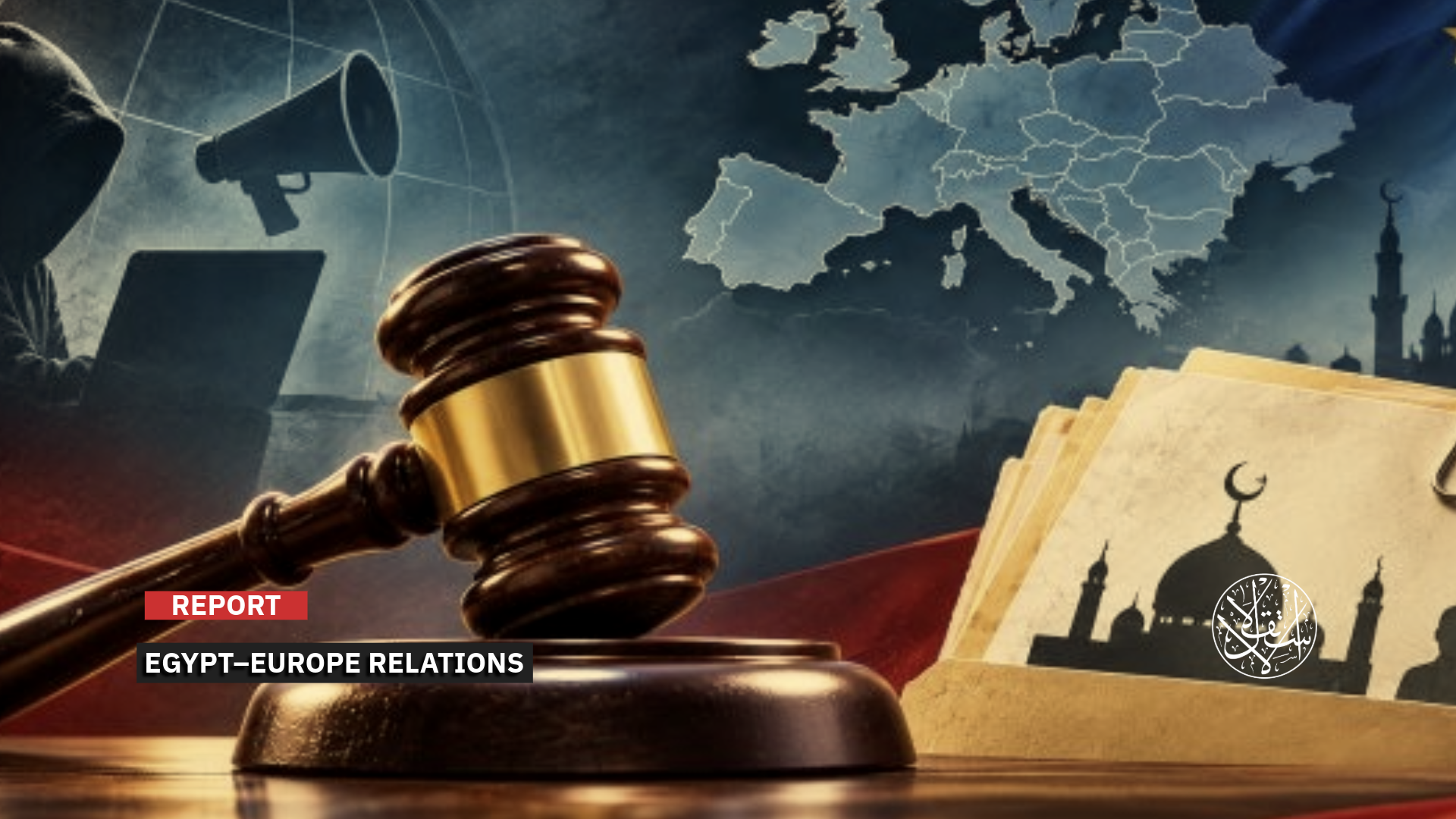
A local criminal court has ruled to place 35 European Islamic associations and institutions on Egypt’s terror lists.
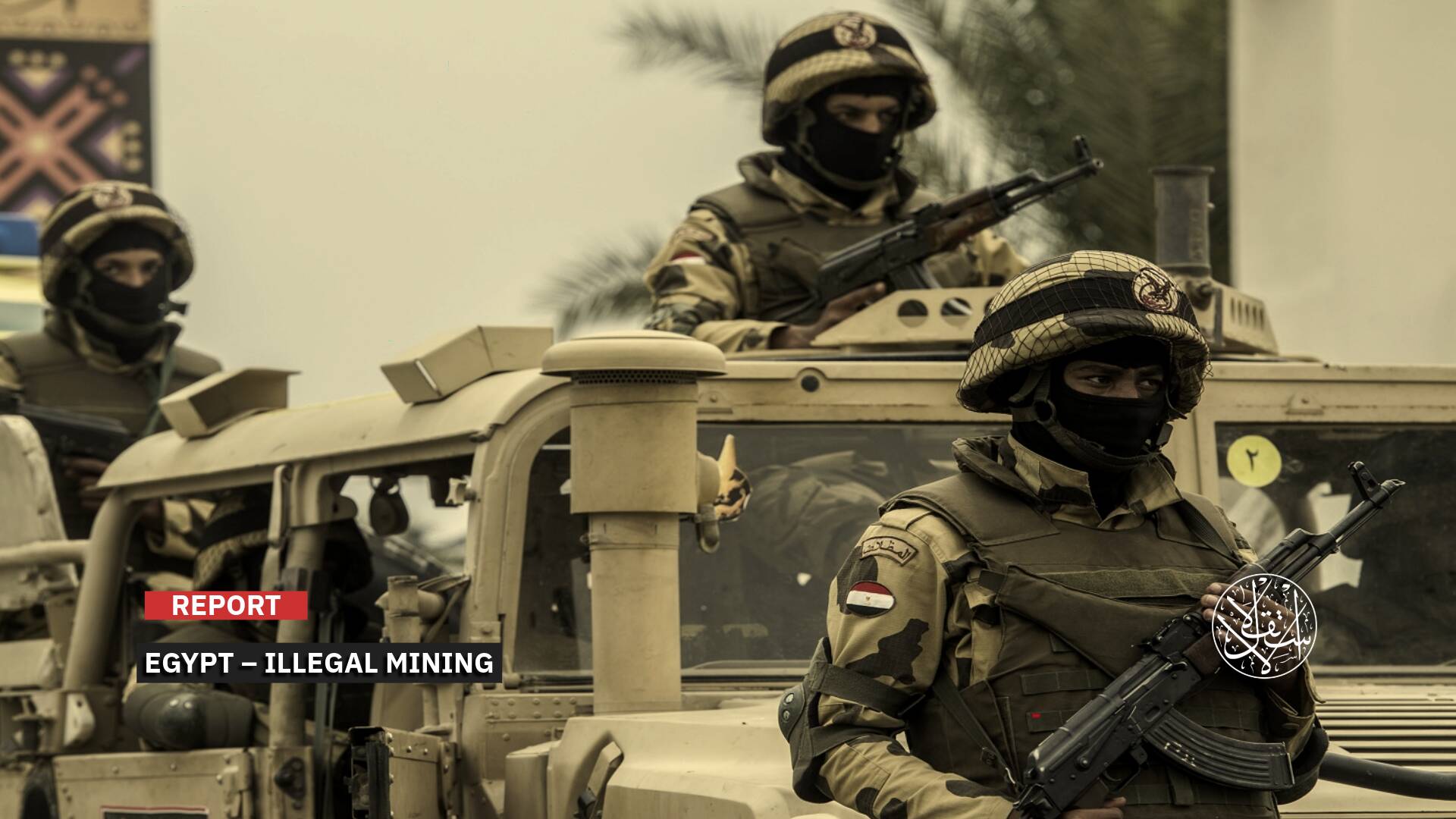
The Egyptian Court of Cassation’s decision on November 8, 2026, to place the Muslim Brotherhood permanently on the lists of terrorist entities was just the latest chapter in the long struggle between the Egyptian authorities and the group.
What is new this time is that Egypt’s terror lists have crossed its borders. A Criminal Court ruling placed 35 European Islamic associations and institutions, spanning different nationalities, on the lists of terrorist entities.
This moves the confrontation from inside Egypt to what Cairo considers Brotherhood networks operating through these transnational associations.
The decision, issued by a court rather than the government, raises questions that go beyond the judicial side. Among them: why did Egypt choose this moment to expand its list of what it deems terrorist entities to include European associations that operate legally in their own countries and that those countries’ authorities do not classify as terrorist?
What is Cairo’s goal, and what can it achieve with a decision that does not oblige European governments to adopt the same designation? And why antagonize Europe’s Muslims who belong to these associations, even if the justification is a battle against specific figures within them whom Cairo claims have ties to the Muslim Brotherhood?
Is the decision an Egyptian attempt to dry up the Brotherhood’s sources abroad and put its file on the table in European capitals? Or does it align with an Emirati drive against Islamic associations in Europe, on the pretext that they are tied to the Brotherhood?
Since the 2013 coup, head of the regime Abdel Fattah El-Sisi’s government has treated the Muslim Brotherhood, and anyone connected to it, as a principal domestic enemy, imprisoning thousands of its members and supporters. It is now trying to extend that pressure to associations operating in Europe that it says are close to the group.

Lists Expanding Beyond Borders
More than 13 years after the coup against elected President Mohamed Morsi and the banning of the Muslim Brotherhood inside Egypt, Cairo appears to believe the battle is no longer confined to the domestic organization.
Organizations and figures that have left Egypt or operate abroad, along with the Islamic institutions Cairo accuses of being linked to them, have become part of Egypt’s security and political equation. That is the justification regime loyalists give for these moves in reports published by Egyptian newspapers.
The goal may be twofold. The first aim is to dry up any sources of funding or activity whose effects could reach Egypt. The second is to convince European capitals that the Brotherhood file is not merely an internal Egyptian matter but an issue of transnational networks.

On November 8, 2026, the Egyptian Court of Cassation placed the Muslim Brotherhood “permanently” on the list of terrorist entities. The ruling rested on a final, irrevocable verdict issued on April 2, 2026, against three people; until then, the listing had run for three years and then for five. No sooner had the Court of Cassation ruled than further decisions followed, this time reaching European Islamic institutions.
The prosecution published the decision in the official gazette, Al-Waqa’i Al-Misriyya, ending the earlier temporary listing and making it permanent. Hours later, another ruling came from the Criminal Court placing 35 European Islamic associations on the list of terrorist entities under Egypt’s classification.
Notably, the group had never been absent from the terror lists the authorities have issued since 2014. It had already been listed in multiple court decisions in 2017, 2021, 2022, 2023, 2024 and 2026.
What is new in the latest decision is that it ends the effect of the earlier “temporary listing” and makes the listing permanent on the basis of an irrevocable ruling. Previous rulings listed the group for three years and then for five years before being renewed.
Experts therefore argued that this is not simply the republication of an old decision but an important legal development in the Muslim Brotherhood file inside Egypt: earlier decisions listed the group temporarily, while the new one places it on the list permanently.
By contrast, lawyers and other Egyptians commenting on social media said that nothing is new and that the permanent listing is no different from the temporary one. They argued that the ruling was timed to coincide with mounting criticism of the authorities over train accidents. The most recent was a collision between two trains in Al-Ayyat, in Giza Governorate, that killed seven people and injured 125.
Under the law regulating terrorist-entity lists, the decision continues the same legal measures applied for years. These include banning the Brotherhood’s activities, freezing its funds and assets, and prohibiting any direct or indirect funding to it.
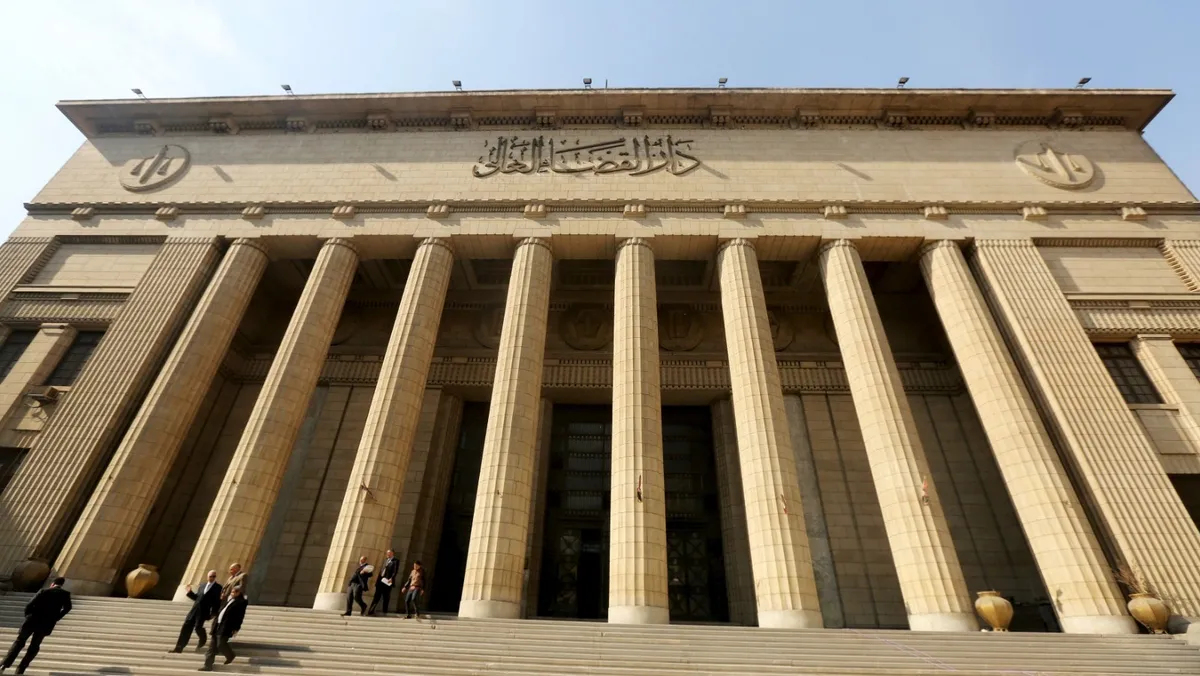
The surprise, however, was another ruling, issued on November 10, 2026, by the Cairo Criminal Court with no publicly announced lead-up. It placed 35 Islamic associations and institutions in Europe and 36 individuals on the lists of terrorist entities and terrorists for five years, in Case No. 11108 of 2026, Supreme State Security.
The listed entities included “a number of Islamic institutions, leagues, associations and councils in European countries, among them the Council of European Muslims with its various branches, Muslims of France, the Muslim Association of Britain and the Swiss Muslim League.”
The list also named “the German Islamic Community and the Islamic associations in Sweden and Italy, along with several other entities in various European countries.”
It further included “the European Council for Fatwa and Research, the European Council of Imams, the European Council for the Muslim Family, the European Council for the Holy Quran, the European Council for Muslim Women, the European Islamic Forum for Students and the European Institute of Human Sciences with its various branches.”
The list also covered Islamic institutions, associations and councils in a number of other European countries, including the Hikma Association for Science, Friendship and Cooperation in Turkiye.
The list of individuals contained 36 names, some of them non-Egyptians. Among them were Anas Osama Tawfiq Altikriti, Ibrahim Farouk Mohamed El-Zayat, Abdelaziz Mohamed Abdelaziz Ibrahim, Hamza Korkmaz, Hussein Mohamed Halawa and Wissam Al-Bardawil, along with other names cited in the decision.
What Is Its Link to the European Resolution?
The decision comes as Europe itself is seeing a growing debate over the Muslim Brotherhood and its civil and religious-outreach networks.
It came just days after new European moves to discuss how to deal with networks linked to the group. That timing gives it a political dimension beyond the Egyptian court case.
There are signs of growing European scrutiny of Islamic networks and groups close to the Muslim Brotherhood, amid incitement by the far right, which has made gains in several countries.
On October 8, 2026, the European Parliament adopted, by 381 votes to 167, a resolution calling for a European strategy to counter what it described as Islamist entryism and the influence of Muslim Brotherhood networks.
The resolution also called on the Council of the European Union to consider placing entities and individuals linked to the Muslim Brotherhood on the EU list of terrorist organizations if they meet the established criteria, and to apply appropriate restrictive measures.
According to the EU’s Legislative Observatory, on October 8, 2026, members of the European Parliament deplored the invitation of the Forum of European Muslim Youth and Student Organisations (FEMYSO) to the European Parliament on September 21, 2026, extended by members of the Left and the Greens.
They called for barring organizations linked to the Council of European Muslims, including FEMYSO, from EU institutions, removing them from the EU Transparency Register, and excluding them from institutional events and meetings where their presence could lend legitimacy to the alleged infiltration strategies linked to the Muslim Brotherhood.
This development matters in the context of the Cairo Criminal Court’s decision to list 35 European entities. There is a striking overlap between some of the networks Egypt has put on its terror lists and the institutions the European resolution called for closer scrutiny of.
However, the European Parliament vote does not mean the EU has designated the Muslim Brotherhood or the entities mentioned as terrorist organizations. The resolution is a political, parliamentary call; any formal listing requires legal procedures and a decision by the competent EU bodies.
Parliament did not designate the Muslim Brotherhood a terrorist organization directly, but it urged EU institutions to take broader steps, chiefly five recommendations:
- Calling on the Council of the EU to consider listing individuals and entities linked to the Muslim Brotherhood on the EU list of terrorist organizations, if they meet the necessary legal criteria.
- Developing a European methodology to detect what the resolution described as “indicators of Islamist entryism” and the influence networks associated with it.
- Tightening oversight of EU funding to individuals and entities suspected of ties to Brotherhood or political Islam networks.
- Conducting a comprehensive review of European funds granted to people or institutions suspected of links to these networks.
- Strengthening cooperation among European countries to monitor cross-border networks, funding and partnerships.
According to the text of the resolution, it referred explicitly to the Council of European Muslims. It called for barring organizations linked to the Council, including FEMYSO, from EU institutions and from events that could give them institutional legitimacy.
This is where the significance of Egypt’s timing becomes clear. Cairo moved at a moment when the Brotherhood file is no longer absent from the European debate but has become a subject of political and institutional controversy on the continent.
That may give Egypt an opening to move from going it alone to building a broader international position and pressuring Europe over these Islamic institutions. This is especially so because its latest decision came after the Brotherhood’s legal status inside Egypt as a terrorist group was made permanent.
Legally, the Egyptian decision does not automatically lead to a ban on these institutions in the European countries where they operate.
The Egyptian designation has legal force inside Egypt, but it does not oblige the EU, Britain, Germany or France to adopt the same list. So far, Cairo’s decision does not mean that the listed entities have automatically become terrorist organizations under European law.
Foreign coverage of the decision stressed this point. It noted that most of the institutions concerned operate legally in the countries where they are registered and that any European designation would require its own procedures, evidence and decisions.
Still, the decision is not without impact outside Egypt. Its political value may lie in putting a complete file, with the names of institutions and networks, before European governments, especially if Cairo decides to use it in its political and security contacts.

What Do the Successive Decisions Signal?
The listing of prominent religious-outreach, research and student institutions and Islamic councils has raised eyebrows, because it implicitly targets Muslim communities abroad. It also opens a debate about where domestic hostility toward the group ends and where carrying the confrontation to international religious institutions begins.
This designation has legal force only inside Egypt. According to the Insight International website on November 11, 2026, the EU countries and governments where these associations and institutions are registered have taken no similar steps, and most of these organizations operate legally in those countries.
Lawyers say that including institutions operating outside Egypt in its terror designation raises a problem about the limits of Egyptian jurisdiction. The decision will not automatically lead to the closure of those institutions’ offices in European countries or to the freezing of their accounts and assets there.
Egypt has no direct mechanism for enforcing these measures beyond its borders. That would require judicial or security cooperation, or separate decisions by the authorities of the countries concerned under their national laws, so the listing’s direct impact outside Egypt is limited.
Politicians have also asked: do the Egyptian authorities have evidence of these European Islamic associations’ involvement in terrorism that European governments and their intelligence services have failed to uncover?
And if they do, why not announce it and present it to those governments? And why is Egypt using these decisions to antagonize Muslim communities in Europe, when these European Islamic institutions represent enormous soft power for the Arab and Islamic world?
In this context, former judge Waleed Sharaby described the Egyptian judges who ruled to place 35 European Islamic institutions on terror lists.
He said they did so despite knowing that these institutions are subject to strict security, financial and administrative oversight in Europe.
Journalist Kotb El-Araby, a former deputy head of the Supreme Council for Media and a figure close to the Muslim Brotherhood, described the Egyptian prosecution’s new decisions regarding the group as shots in the air that add nothing new.
“All they did was open the door for media mouthpieces to fill their programs with supposedly brilliant analyses of the grave consequences of the listing decisions: that for the first time they are permanent rather than temporary for five years as before, and that they completed the circle by designating religious-outreach institutions in the West as affiliated with the Brotherhood,” he said.
He described the decision to place 35 European Islamic institutions and associations on Egypt’s list of “terrorist entities” as “part of an unwritten Egyptian alliance with the fascist far right in Europe that is fighting Islam itself, and part of an Egyptian-Emirati-Israeli alliance to confront the forces that reject Abrahamic normalization in the region.”
Dr. Mourad Aly, an Egyptian analyst, hinted at an Emirati role in Egypt’s decision without naming Abu Dhabi. Writing on X, he asked who “benefits from exporting Egypt’s political feuds to Europe’s Muslims and turning institutions that could have been a strategic asset for Egypt into its adversaries?!”
The UAE has been waging a campaign against the very same European Islamic institutions. It incites against them and urges the governments of the countries where they operate to put them on terror lists, claiming they are controlled by the Muslim Brotherhood.
The entities covered by the Egyptian decision stretch from Britain, France and Germany to northern and eastern Europe. That map makes Cairo look as if it is moving its battle with the Brotherhood from inside Egypt to networks abroad that it sees as extensions of the organization.
The decision’s most significant message may be that Cairo has shifted its focus from a group banned inside Egypt to what it considers an international or European structure that supports it.
Ultimately, though, whether this strategy succeeds depends on what Europe does. European capitals are not obliged to adopt Egyptian rulings or designations, and they may ask for independent evidence under their own laws and standards.
The question remains: will Europe treat the Egyptian list as intelligence and judicial material worth examining, or as an extension of Cairo’s political conflict with the Muslim Brotherhood?
What Is the UAE’s Role?
Egypt’s new campaign against 35 European Islamic associations and institutions, over their alleged ties to the Muslim Brotherhood, intersects with the Emirati campaign against European Islamic entities that began in 2014.
For more than a decade, the UAE has waged a multilevel campaign against what it considers Muslim Brotherhood networks in Europe. It began by placing dozens of European institutions on its terror lists in 2014.
European authorities, however, accused this Emirati campaign of having political motives. They pointed out that some of the associations and names on the Emirati list had no connection whatsoever to the Muslim Brotherhood.
Islamic preacher and researcher Essam Tallima believes the Egyptian decision “is a direct implementation of the UAE’s instructions.” He noted that several of the figures designated by both Egypt and the UAE are at odds with Abu Dhabi, among them Anas Altikriti and Hussein Halawa.
“In this decision, the Egyptian regime is completely subordinate to the UAE,” he said. He added that the same thing has happened in more than one decision, including the blockade of Qatar and the UAE’s later attempt to designate these centers and pressure the European countries that host them.
He pointed out that “the UAE’s hostility toward these centers is well known, because of its policies, normalization, and its war on the Brotherhood and on Islamists who do not fall in line with its policies in most countries of the world, especially in Europe.”
The Emirati incitement campaign against European Islamic institutions began in November 2014. That month, Abu Dhabi placed 82 organizations on its list of terrorist organizations. They included the Muslim Brotherhood and a number of European Islamic institutions in Britain, Germany, France and other European countries, almost identical to the entities covered by Egypt’s latest listing.
According to a February 2021 report by the Documentation Centre Political Islam, which is affiliated with the Austrian government, European governments objected to Abu Dhabi over the listing of organizations operating on their territory.
The “Abu Dhabi Secrets” investigations revealed European accusations that the UAE used Alp Services, a private Swiss intelligence firm, between 2017 and 2020. The firm compiled extensive lists of figures and organizations and linked them to the Brotherhood, even though some of those targeted had no ties to it. In 2026, the political pressure became more open within European institutions.
The issue of “fighting political Islam” in Europe appears to combine Emirati security concerns, influence campaigns, and a regional political struggle.
On April 15, 2024, the French investigative outlet Mediapart published an extensive investigation titled “Abu Dhabi Secrets: French and Swiss Courts Target the UAE.” It accused Abu Dhabi of spying on Europeans under the pretext of pursuing the Muslim Brotherhood.
On July 8, 2023, Belgian broadcaster RTBF reported that an investigation by Brussels and other European capitals had shown that Abu Dhabi uses intelligence firms to track and defame European figures over their alleged ties to the Muslim Brotherhood.
On January 18, 2026, documents were leaked from inside the European Parliament that reportedly prove the UAE paid millions of dollars to a Swiss intelligence firm to carry out covert smear operations across Europe.
The documents described spying on lists of more than 1,000 people and 400 organizations in 18 European countries. They were labeled as close to the Muslim Brotherhood even though they had no ties to it. The lists included French politicians and public institutions, among them the National Center for Scientific Research (CNRS) and the left-wing party La France Insoumise.
The documents also showed that Abu Dhabi financed black-propaganda media campaigns against Islam, Muslims and mosques, as well as against journalists, academics and politicians, by funding fake news networks that operated in 18 European countries.
The aim was to turn Muslims into something like an “enemy within,” and to spread lies that would justify closing mosques, fabricating charges, and broadcasting systematic hate speech against Islam in the West.
The documents highlighted a clear overlap between the Emirati rhetoric used in these campaigns and narratives linked to “Israel” that present Islam as a security threat. That overlap amplified the political and media impact of these campaigns within European societies.
Investigations published by leading European media outlets, including the French site Mediapart and the European Investigative Collaborations (EIC) network, said the leaked documents prove there is a complex, multinational Emirati network of espionage and defamation.
According to those investigations, the network works systematically to impose a distorted image of Islam in Europe.
This network aims to fight what Abu Dhabi calls “Muslim Brotherhood thought,” which it claims has spread within Muslim communities, among politicians, and in mosques and religious and civil institutions.
On June 2, 2026, the UAE’s incitement against the Brotherhood and Islamic institutions moved into the European Parliament itself. Mohamed Ismail Al Sahlawi, the UAE’s ambassador to the European Union, took part in a conference held there titled The Muslim Brotherhood: A Real Threat to Europe.
According to an official Emirati statement, the conference discussed what it called the group’s infiltration of European societies and institutions. Participants called for drawing on the Emirati experience and placing the Brotherhood on European terror lists.
This move is believed to be linked to the European Parliament’s October 8, 2026, resolution on the influence of the Brotherhood, which called for countering what it described as “Islamist entryism and the influence of Muslim Brotherhood networks.
Sources
- Egypt Lists 35 European Muslim Organizations as Terrorist Entities
- Egypt Adds the Council of European Muslims and 35 of Its Branches to Terror Lists: Cairo Publishes the List of Individuals and Entities Covered by the Court Ruling [Arabic]
- The Need for an EU Strategy to Counter Islamist Entryism and the Influence of the Muslim Brotherhood Network
- Through a Secret Document: How Did the UAE Plan to Pressure Paris on the Muslim Brotherhood File? [Arabic]
- Muslim Brotherhood: The Emirates’ Secret Plan to Influence the French Public Debate [French]
- The Muslim Brotherhood’s Pan-European Structure
- Egypt Lists 35 Europe-Linked Organizations and 36 Individuals as Terrorists: Full Names and Legal Implications