From Stadiums to Real Estate: How Did Emirati Influence Expand in Manchester?
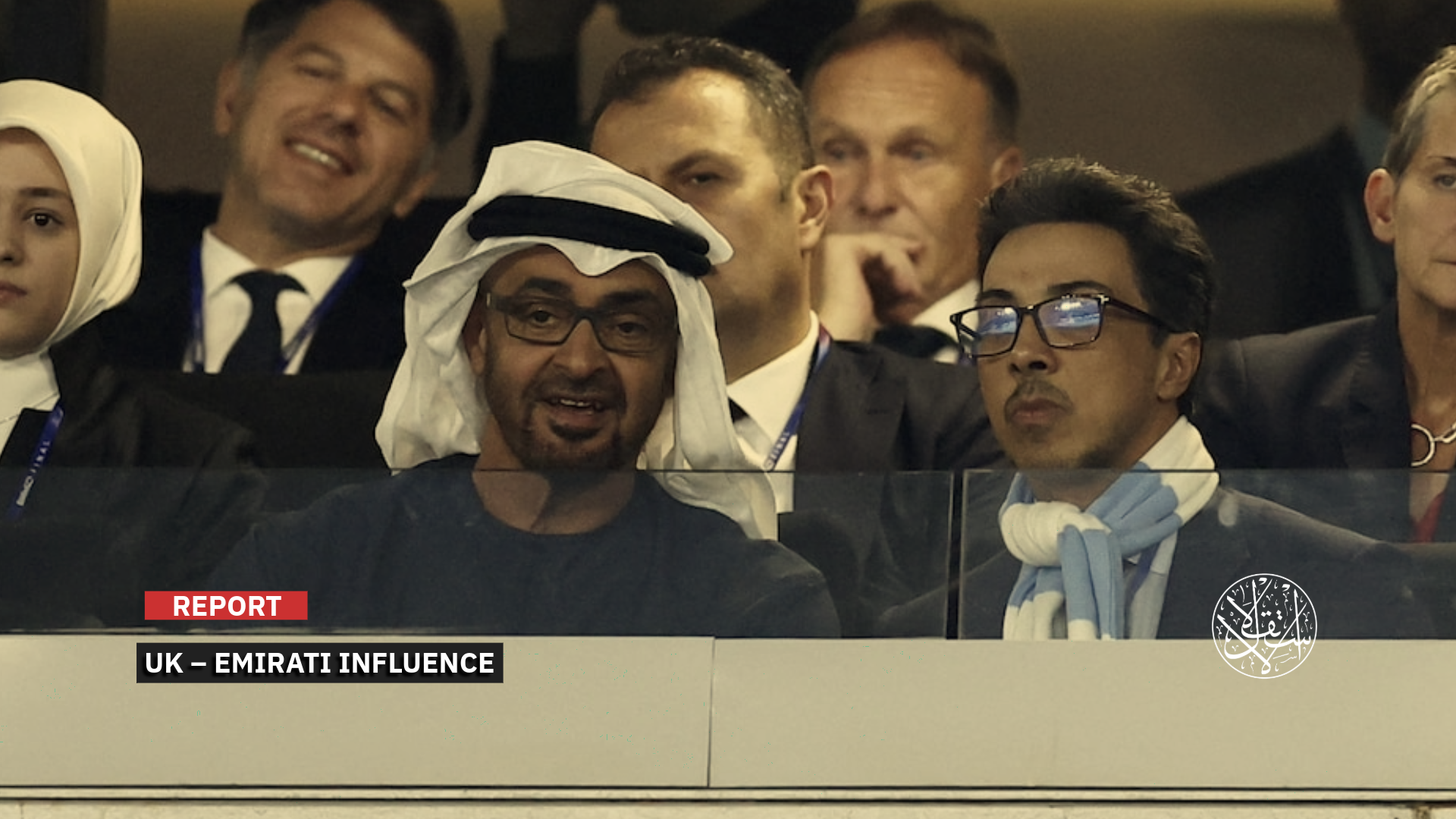
FairSquare accuses the city’s leaders of helping entrench Emirati political influence through sport and investment.
Public land, multimillion-pound loans and agreements that restrict disclosure: with these threads, The Guardian, in two investigations published on October 25, 2026, redrew the map of Emirati influence in Greater Manchester, Britain.
Over a decade, the land owned by companies linked to the UAE grew by 39 percent, reaching 101 hectares. Companies linked to Mansour bin Zayed, Vice President of the UAE an, and disclosure-restricting agreementsd owner of the controlling stake in Manchester City Football Club, hold about two-thirds of the Emirati-owned land in the area.
Behind these figures lies a relationship that has stretched from the soccer stands to housing projects and the circles of officials, amid objections over the use of public money, weak transparency, and how much residents actually benefit from the returns of development.
So how did Abu Dhabi go from owning a soccer club to becoming an influential investment partner in the city?
What made this expansion possible? And why are objections to its political and social cost mounting now?
From the Stands to the City
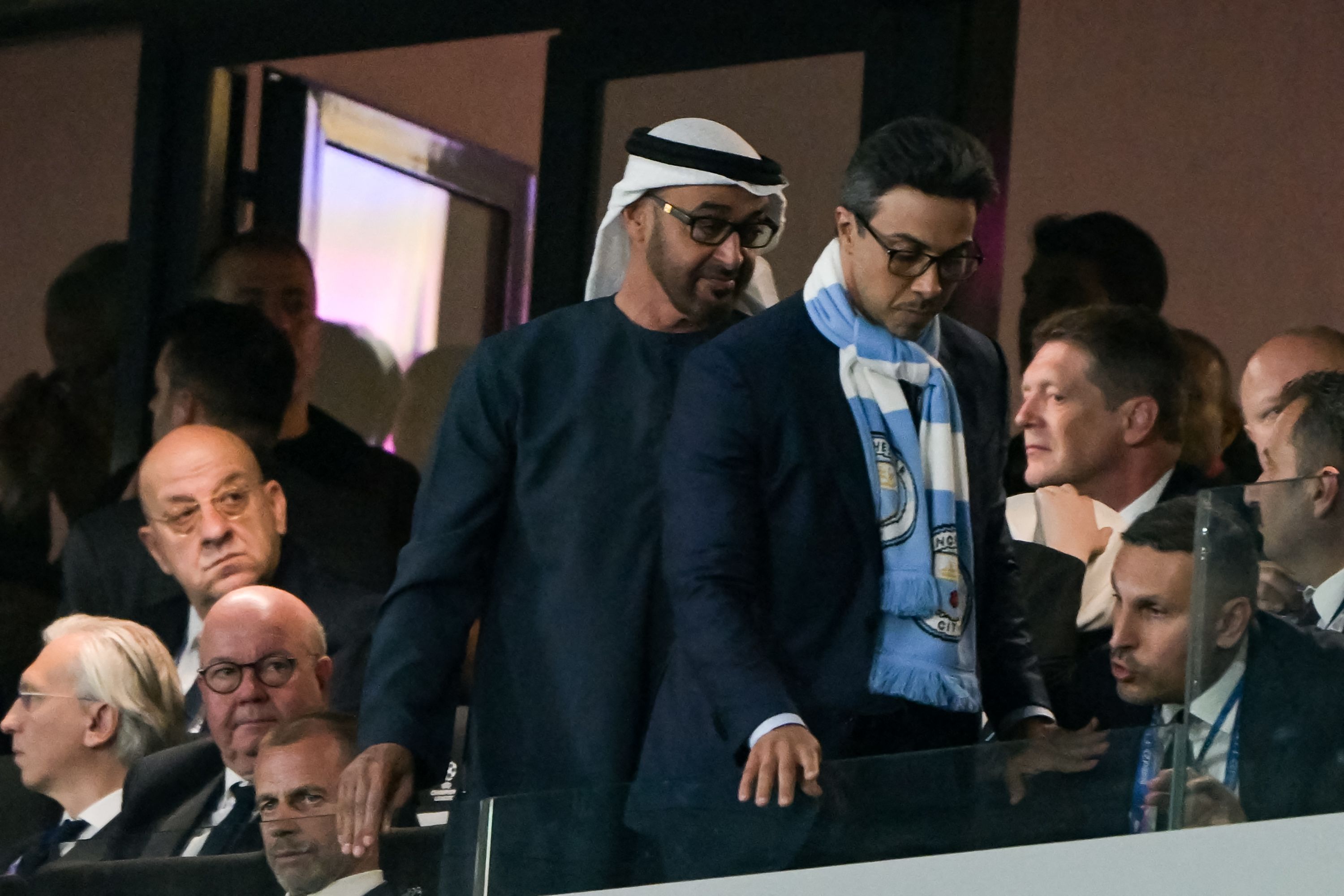
The story began in September 2008, when the Abu Dhabi United Group, owned by Mansour bin Zayed, acquired Manchester City Football Club.
The club gave the Emirati investor a gateway to a broad public and to a city that was seeking to regenerate its former industrial areas.
Then, in 2011, a sponsorship deal with Etihad Airways put the company’s name on the stadium and the surrounding complex, extending the Emirati commercial presence beyond the bounds of sporting competition.
But becoming a partner in reshaping the city required political cover. In the summer of 2013, David Cameron’s government encouraged the local council to prepare investment opportunities for Abu Dhabi, at a time when relations were strained over London’s position on the Muslim Brotherhood after the Arab Spring.
The British government’s wish to strengthen ties with the UAE thus met the local authorities’ need for money to restart stalled projects.
In June 2014, the “Manchester Life” partnership between the council and the Abu Dhabi United Group was announced, with targeted investment of up to £1 billion over ten years.
The Treasury welcomed the initiative as part of its plans to revive the north of England, announcing a first phase of more than 830 homes, with the ambition of spurring the development of more than 6,000 units in the area.
This sequence shows that the influence took shape through cooperation between two levels of power: a Conservative government in London and a Labor leadership in Manchester.
Regeneration efforts also predated the Emirati investor’s arrival; it joined existing projects and public infrastructure and then became a partner in completing them.
While former council leader Richard Leese defends the partnership, arguing that it brought construction back to areas developers had shunned, its critics argue that tying the city’s regeneration to an extremely wealthy investor gave Abu Dhabi a role that went beyond that of a financier.
Continued development became an argument for defending the relationship, raising questions about the authorities’ ability to review its terms and to hold accountable the party they depend on.
Land and the Terms of Influence
The relationship took concrete form in land, a resource that local authorities have the power to dispose of. In a study published in 2022, researchers at the University of Sheffield documented the granting of leasehold rights to six public sites for about £4.95 million, under contracts running up to 99 years.
The council kept the freehold, but the length of the contracts gave the companies near-permanent economic control over how the sites are used and developed.
The advantages did not stop at the first sites: a cooperation agreement signed in December 2015 gave the Abu Dhabi-linked party priority access to opportunities to develop other land.
The agreement ran for ten years and required prior written consent for any announcements about the partnership, making the limits of transparency themselves part of the contractual arrangement.
The council defends this clause as a way of regulating disclosure between partners, while objections focus on its effect on the public’s ability to know the terms on which its assets are disposed of.
Favoring one particular partner also raised questions about the opportunities left for other competitors and about how to ensure the best return for the city.
The corporate structure complicates the picture further. Being partners in development does not mean sharing all property revenue equally: Manchester Life says its rented buildings are owned by Jersey-registered companies within a structure belonging to the investor, while the council receives contractually fixed returns.
The company says the investor bore the costs and risks of development, that the land was provided on commercial terms and that sale and rental income is subject to British tax.
Accountability therefore centers on how fairly the value generated by the investment and the public land together is shared, and on how clear the contracts governing that sharing are.
This mechanism shows how influence can expand through the terms of a partnership, from owning a project to securing a front-row position in the city’s future opportunities, while consequential details remain beyond public scrutiny.
A Network That Reaches Officials
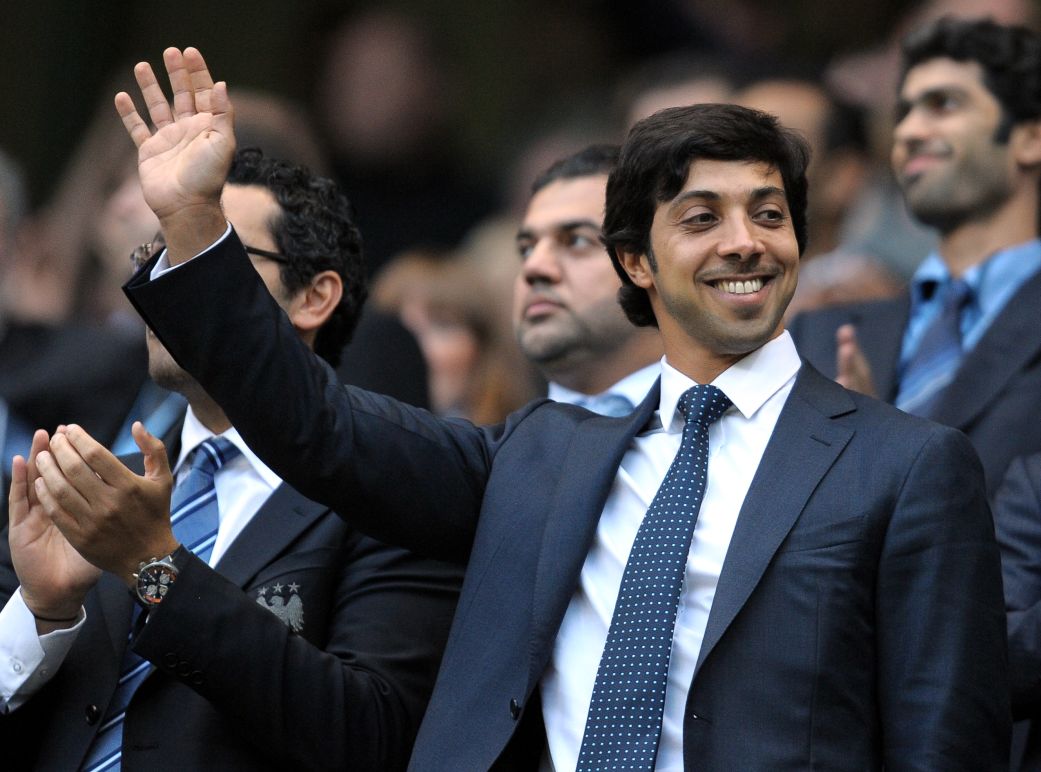
Behind the contracts lies a network that combines business and political ties. At its center is Mansour bin Zayed, Vice President of the UAE and owner of the controlling stake in Manchester City, and beside him is Khaldoon Al Mubarak, the club’s chairman, CEO of Mubadala and chairman of Abu Dhabi’s Executive Affairs Authority. These overlapping positions give the relationship a reach well beyond running a soccer team.
Other figures connect the club to real estate development. Martin Edelman chairs Manchester Life and also sits on the board of City Football Group, while Simon Pearce sits on the boards of both the club and the property company and works as an adviser to the Executive Affairs Authority.
On the British side, Richard Leese and Howard Bernstein, the council’s former chief executive, played prominent roles in building the partnership.
After Bernstein retired from the council in 2017, City Football Group appointed him strategic development adviser, and he joined the board of a joint company with the local council to develop the stadium area. In 2023, Leese was named an honorary president of the club.
These moves show how close local decision-making circles and the investor became, but on their own they do not prove any wrongdoing or illicit gain.
Their sensitivity lies in the fact that expertise and relationships officials built inside public institutions became available to the commercial partner they had dealt with.
Scrutiny has extended to Andy Burnham, now prime minister and formerly Mayor of Greater Manchester. In October 2026, revelations about his contacts with the club’s leadership raised questions about how complete his disclosures had been, after it emerged that he had two dinners with Khaldoon Al Mubarak, in 2017 and 2018, that were not disclosed in an official statement.
His office said the hospitality had been declared in line with standard procedures, while Burnham denied that club officials had discussed with him the allegations of financial breaches against them.
Even so, the controversy reopened questions about where investment relationships end, and politicians’ duty to guarantee independent oversight and protect public trust in public decisions begins.
Public Money and Social Return
Questions of oversight become more pressing when the money is traced. In 2017, Burnham chaired meetings that approved loans to Jersey-registered property companies ultimately owned by Mansour bin Zayed.
The financing totaled about £55 million and covered the New Little Mill, Vesta Street and Lampwick projects. Lampwick alone was approved for a £24.5 million loan to build 213 units for private rent.
One question these arrangements raised was why companies owned by such a wealthy investor were financed from a public housing investment fund.
The Greater Manchester Combined Authority says the loans were repaid in full and that the financing is open to any developer who meets the criteria.
But repayment does not settle the debate over how the money was prioritized or whether the projects needed it. This led members of the scrutiny committee to review the approval procedures.
The housing record reveals another side of accountability. According to The Guardian, Manchester Life delivered 2,039 homes and other developers added 2,839, for a total of 4,878, about one-fifth short of the 6,000-unit target set when the initiative was launched.
More telling still, social and affordable housing made up only 8 percent of the units completed in the area, against a local policy target of at least 20 percent, and Manchester Life contributed none of them.
This gap in who benefits from development lies at the heart of the objections, especially when public resources go into projects dominated by market-rate housing.
For its part, the council says it received about £3 million through profit-sharing, plus £17.6 million in local taxes. The company points to the restoration of historic buildings, the provision of business space and training opportunities.
These are tangible benefits, but judging the deal still depends on how they were distributed: How much went back to residents who need housing? And how much went into raising the value of the investor’s assets? Here the dispute moves from how much was built to the social purpose of financing and facilitating these projects.
Objections That Go Beyond Soccer
The objections are as varied as the partnership’s effects. Locally, researchers including Jonathan Silver, Adam Leaver and Richard Goulding have raised questions about land valuation, public return and the transparency of financial structures.
These criticisms have converged with demands from the Greater Manchester Housing Action campaign that land disposal serve residents’ needs and that social housing be given priority when deciding how land is used.
On the human rights front, FairSquare accuses the city’s leaders of helping entrench Emirati political influence through sport and investment.
A 2023 report by the organization said officials intervened to remove a critical reference to the relationship with the UAE from a 2019 event commemorating Manchester’s democratic history. The incident puts freedom of criticism among the costs of this controversial relationship.
Organizations including Amnesty International and Human Rights Watch have previously urged Burnham to use the city’s ties to press for the release of Emirati human rights defender Ahmed Mansoor.
Their objection centers on fears that economic interests could become a reason to stay silent about abuses, and that the club’s success could be used to polish the image of the Emirati authorities.
Politically, the Liberal Democrats have called for disclosure of Burnham’s meetings, hospitality and ties with the club’s owners, so that the extent of the investors’ influence over officials can be examined.
Objections over housing, rights and transparency thus intersect, without adding up to a single position rejecting Emirati investment.
Official scrutiny gives some of these concerns a basis: a council report in July 2026 acknowledged that earlier reviews had found weaknesses in how development agreements were documented and monitored, despite the economic benefits they delivered.
Although Emirati money is only part of the foreign investment in Manchester, its presence brings together the symbolism of the club, land and political ties.
That defines the test ahead: Can the city hold a partner that helped reshape it publicly accountable, or will its need for that partner’s investment make the terms of the relationship stronger than its ability to review them?
Sources
- ‘That’s the way the city works’: how the UAE changed the face of Andy Burnham’s Manchester
- Emirati-linked firms’ ownership of Manchester land ‘up 39%’ in 10 years
- “They Are a Selfish Bunch”: How Abu Dhabi Helped Shape Modern Manchester [Arabic]
- Manchester City Appeals Its Conviction for Serious Financial Breaches… Can Abu Dhabi’s Funding Save It? [Arabic]
- “An Emirati Threat to Pull Billions Out of Britain” – in The Telegraph [Arabic]