Blackmail Using Wives and Children: What Confessions Is the Israeli Occupation Seeking From Gaza Detainees?
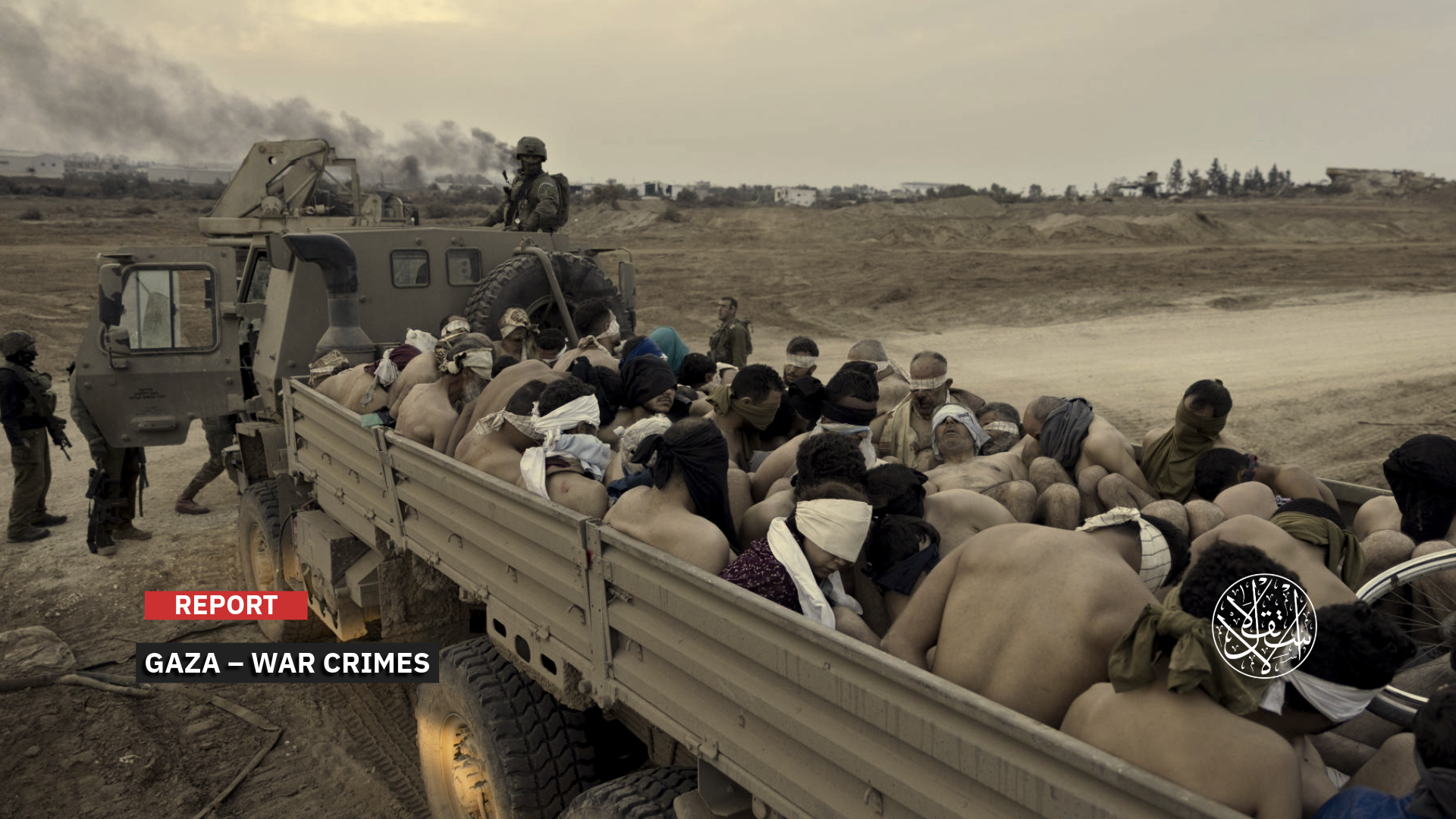
Since the start of the genocide in Gaza on 7 October 2023, the Israeli Occupation has detained more than 15,000 Palestinians.
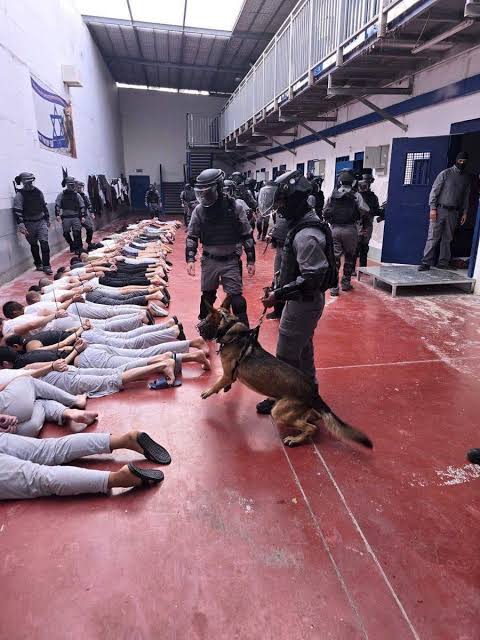
The Israeli Occupation has subjected Palestinian detainees to severe forms of torture after arresting them from their homes, displacement centers, and hospitals across Gaza and transferring them to detention facilities.
They were effectively given two choices: endure torture, which in many cases ends in death, or answer questions designed to update “Israel’s” target bank and facilitate the continuation of its genocide against the Palestinian people in the Gaza Strip.
The Israeli Occupation has turned prisons into centers for widespread torture and established new detention facilities and camps to detain Palestinians from Gaza. Among the most notorious are “Sde Teiman” and “Rakefet”, as well as separate wings within “Ofer” and “Negev” prisons. Detainees have been subjected to various forms of abuse, including what has been described as “medical torture”, as well as starvation.
During its ground invasion of the Gaza Strip, the Israeli Occupation also set up detention sites inside the territory, turning some into locations for torture and mass executions. These included Palestine Stadium in central Gaza City, as well as several schools and universities.
Since the start of the genocidal war on 7 October 2023, the Israeli Occupation has detained more than 15,000 Palestinians from the Gaza Strip, according to figures released by the Palestine Center for Prisoners Studies on 7 October 2026.
During the same period, more than 21,000 Palestinians have been arrested in the occupied West Bank, according to figures from the Commission of Detainees Affairs and Addameer Prisoner Support and Human Rights Association.
Meanwhile, 98 Palestinian detainees have been martyred in Israeli Occupation prisons as a result of torture, systematic starvation, and medical neglect. The figure includes only those whose identities have been confirmed.
Figures from the Commission of Detainees Affairs show that, as of early July 2026, more than 9,400 Palestinian men and women were held in Israeli prisons and detention centers. They included 3,244 administrative detainees, 99 female detainees, and more than 350 children.

The Harshest of Experiences
Al-Estiklal spoke with several former Palestinian detainees who had been held in Israeli prisons, subjected to various forms of torture, and later released as part of prisoner exchange deals reached between the Palestinian Resistance Movement (Hamas) and the Israeli Occupation.
Their accounts shed light on the circumstances of their arrests, the interrogations they endured, the information Israeli interrogators sought to extract from them, and the purpose behind those questions.
One of the former detainees was Ibrahim al-Hanouni, who was arrested inside the Khalifa bin Zayed School in Beit Lahia in December 2023.
Al-Hanouni described being detained by Israeli Occupation forces during the war as one of the harshest experiences a person could endure, given the brutality, inhumane conditions, physical and psychological torture, pressure, and blackmail to which detainees were subjected.
“I was arrested inside the school after deciding to remain in the area. I had sent my family, my wife, and my children to the southern part of the Strip so they would be spared the horrors we were experiencing at the hands of the Israeli Occupation in northern Gaza,” he told Al-Estiklal.
“First, we were detained and then ordered to remove all our clothes, leaving us only in our underwear. We were then blindfolded in the bitter cold, with no idea what was happening during the field interrogations,” he said.
“We could hear gunfire and executions. We could also hear the sounds of torture inflicted on children and women before we were transferred outside the Gaza Strip. Throughout that period, the torture and executions continued,” he added.
Al-Hanouni said the detainees remained blindfolded on the way to the detention facility and before being taken inside. Israeli Occupation Soldiers forced them into specific positions before beating them repeatedly in sensitive areas of their bodies, particularly their genitals, noting that the purpose was to cause sexual dysfunction and infertility among male detainees.
He stressed that he was not the only one subjected to this treatment. Everyone transferred alongside him, including detainees from different parts of northern Gaza, endured the same abuse. According to him, soldiers used the same method against all of them.
The former detainee added that they were subjected to various forms of physical and psychological torture before being brought in for interrogation. He said the questioning sought to extract information from civilians, even though, in his account, Israeli forces knew they were not combatants.
“The interrogators focused their questions on individuals affiliated with Palestinian factions, the locations where the families of people accused by the Israeli Occupation of belonging to the resistance had sought refuge, tunnels, aid workers, merchants, and the movements of certain individuals,” he added.
Al-Hanouni said he believed the questions were intended to gather intelligence that would help the Israeli Occupation identify additional targets, making it easier to attack civilians and carry out massacres against them.
“One of the questions the Israeli Occupation repeatedly asked displaced people and detainees was whether any of those held had relatives suspected of belonging to the resistance, whether women or children. The aim was to use them as tools of pressure, blackmail, torture, and revenge,” he noted.
He said Israeli interrogators placed considerable emphasis on this issue, adding that women and children who were subsequently arrested were subjected to abuses and atrocities that were difficult to describe.

Torture of Medical Personnel
The Israeli Occupation’s raids extended beyond homes and displacement centers to hospitals and medical facilities, which became primary targets. These facilities were bombed and besieged before being stormed, with massacres carried out inside them. Hundreds of medical workers, patients, the wounded, and displaced people seeking refuge in hospitals were also arrested.
Israeli forces subjected medical personnel to severe abuse. More than 1,700 medical workers have been martyred, while more than 360 have been arrested and subjected to various forms of torture. Many were taken to interrogation rooms after enduring repeated rounds of abuse.
One of those detained was nurse Asaad Harz, who was arrested during the second Israeli Occupation military raid on al-Shifa Medical Complex in western Gaza City. The assault began on 18 March 2024 and lasted two full weeks, ending with the withdrawal of Israeli forces on 1 April. It left behind massacres and hundreds of arrests.
Harz endured extremely harsh conditions during one of the bloodiest and most brutal phases of the war on Gaza. During the raid, he witnessed violations against medical staff and patients, including torture, rape, and extrajudicial executions. Mass graves were also discovered after Israeli Occupation forces withdrew from the hospital’s vicinity.
Speaking to Al-Estiklal, Harz recounted his arrest and the abuse he endured during interrogation.
“The raid began at night, and one horrific and painful event followed another. When Israeli forces stormed the internal medicine ward where I was working, they arrested me and began interrogating me inside the hospital,” he said.
“Every question I could not answer was met with a beating, using the butt of a rifle and a small metal hammer, as well as gunfire directed right beside me,” he noted.
Harz said the field interrogations focused on identifying medical personnel who had treated Israeli captives or wounded members of the resistance. Interrogators demanded their names and information about them before the detainees were transferred from the hospital to Israeli prisons outside the Gaza Strip.
He added he could not remember much about the journey to the detention facility because he repeatedly lost consciousness from the torture. He described his arrival at the “Sde Teiman” detention facility as one of the most difficult stages of his ordeal, saying the abuse there reached the point of torture that could result in death.
The medical worker added that interrogations inside the facility continued to focus on medical personnel accused of treating wounded resistance members. The questioning later expanded to include the names and whereabouts of prominent doctors across Gaza.
He said several of those doctors were subsequently killed, adding that he believed the Israeli Occupation was seeking to eliminate Gaza’s medical expertise.
Harz said the violations extended beyond interrogation and torture. Some medical workers were also forced to record videos containing statements alleging that the resistance operated inside hospitals, which could then be used to justify attacks on health facilities and ambulances.
He cited the case of a fellow detainee who was forced by Israeli forces to record a video statement claiming that the resistance used ambulances.
Harz insisted that these allegations were baseless and said the recordings were intended for propaganda purposes and to justify attacks on medical institutions.
He added that after completing interrogations targeting medical personnel, Israeli interrogators turned to other detainees, asking them to identify homes belonging to people who supported or sympathized with Hamas, as well as homes where supporters of the resistance lived.
Harz said the aim was to extract statements that could be used to portray Palestinian society as a whole as a legitimate target.
He said the recordings might be presented to foreign media outlets or international bodies to justify massacres and the ongoing genocide in Gaza.
Torture for Its Own Sake
The Israeli Occupation has not limited its arrests and torture to people it suspects of having links to Hamas. Civilians have also been a primary target. Even when interrogators become convinced that thousands of detainees have no relevant information to offer, they continue to hold and torture them.
That was the experience of Mohammed Shehadeh, who was arrested from his home west of the al-Maghazi refugee camp in central Gaza during a sudden Israeli incursion in late December 2023. The raid took place without any prior evacuation warnings.
According to Shehadeh, Israeli forces arrested hundreds of Palestinians during the incursion and used them as human shields to protect their tanks and soldiers from attacks by the resistance.
Speaking to Al-Estiklal, Shehadeh said Israeli Occupation forces stormed the camp from the area farthest from the border, without issuing any evacuation warnings. They arrested hundreds of people, including women and children, and forced them to walk in front of tanks and armored personnel carriers.
“The Israeli Occupation used us as human shields in front of tanks and armored personnel carriers. Resistance fighters refrained from targeting the vehicles because doing so could have cost us, including women and children, our lives, or left us crushed beneath their tracks. The fighters did, in fact, avoid attacking the vehicles that the Israeli Occupation had forced us to walk in front of.”
Shehadeh explained that after the “military mission” ended, Israeli forces had positioned their vehicles and built earthen barriers before transferring the detainees to prisons outside the Gaza Strip via an area east of the al-Bureij refugee camp. There, the interrogations and torture began.
“The Israeli Occupation knew we were civilians and had no information relevant to what it was looking for. Yet it continued to torture us in acts of revenge. The methods included using police dogs to sexually assault detainees, breaking their limbs, and depriving them of sleep,” he said.
He also described being held for days in rooms known as “the disco,” where music was played at extremely high volume and harsh yellow lighting was kept on, preventing detainees from sleeping and driving them toward psychological collapse.
Shehadeh added that other torture methods included forcing detainees to sleep on metal beds fitted with nails and leaving their wounds untreated.
He stressed that the torture he endured was not followed by interrogation and was not intended to extract confessions or obtain information. Rather, he said, it was inflicted purely as an act of revenge.
According to Shehadeh, the abuse continued until the final moments of his detention, which lasted more than a year. He described that period as the most difficult of his life.
Sources
- Center: Israeli Occupation Has Detained More Than 15,000 Palestinians From Gaza Since the Start of the Genocidal War [Arabic]
- Palestinian Organizations: More Than 20,000 Palestinians Arrested in the West Bank Over Two Years [Arabic]
- Two Years of Genocide: Israel Kills 1,701 Medical Workers in Gaza [Arabic]
- Palestinian Organizations: More Than 20,000 Palestinians Detained in the West Bank Over Two Years [Arabic]