Behind the Hijab Crisis: Why Has Azerbaijan Suddenly Escalated Tensions with Turkiye?
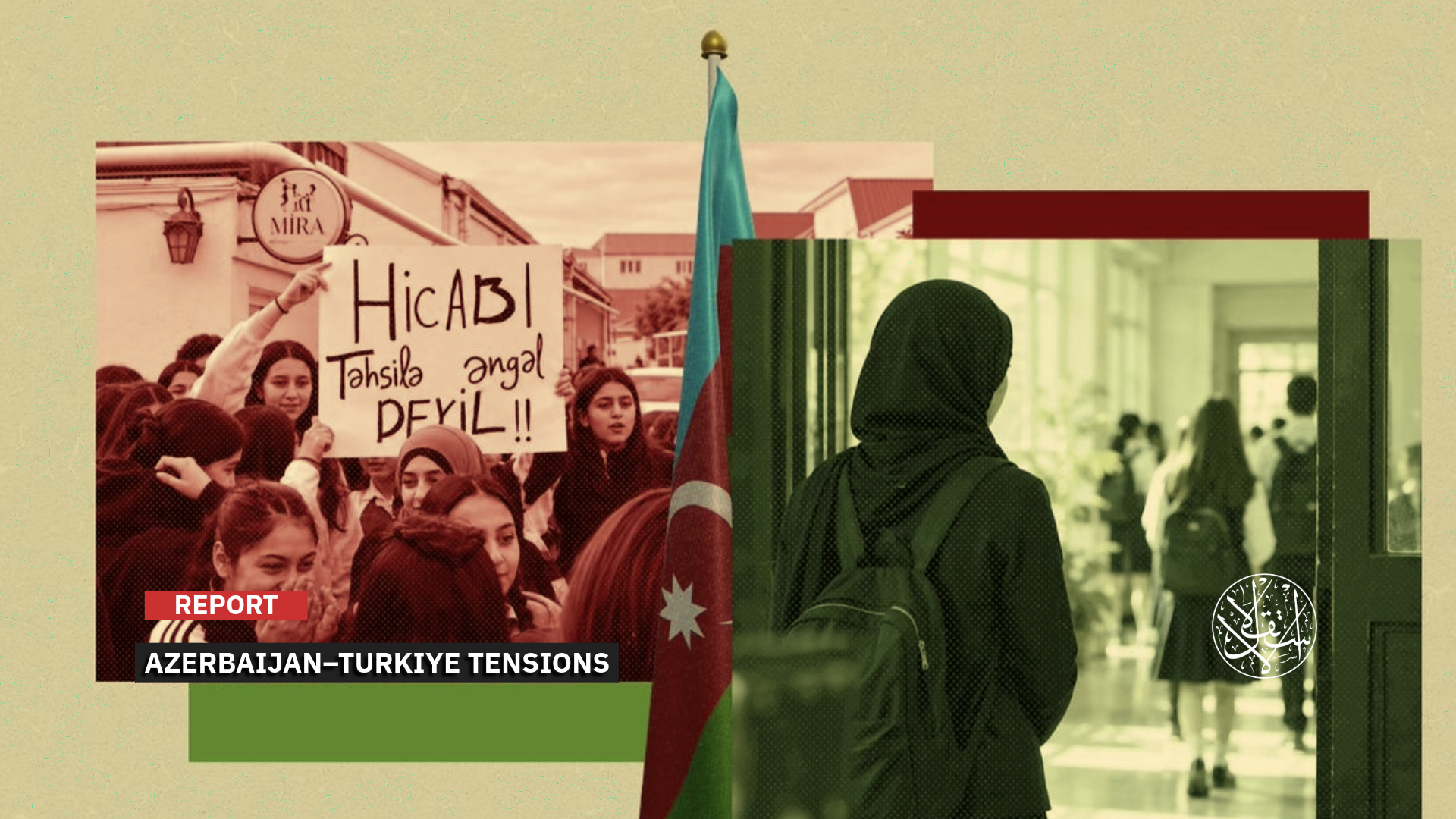
Azerbaijan escalated tensions further by declaring 31 Turkish citizens persona non grata.
The dispute between Turkiye and Azerbaijan has entered a dangerous phase after Azerbaijan’s Prosecutor General’s Office issued international arrest warrants on October 20, 2026, for seven Turkish citizens, including journalists, amid tensions between the two countries over Turkiye’s stance on Azerbaijan’s decision to ban the hijab in schools.
The decision has raised questions. Azerbaijani authorities have not only escalated their actions against female students and teachers who wear the hijab by expelling them from schools, but have also arrested and imprisoned Azerbaijani activists who protested the ban. They have now broadened their punitive measures against critics to include citizens of another country: Turkiye.
The official charges brought by Azerbaijan against the seven individuals, most notably religious scholar Abdullah Imamoglu, head of the Ozgur-Der association, were also unusual.
They included public incitement to forcibly change the constitutional order, inciting religious hatred and enmity, and overthrowing the government.
These accusations point to a flawed understanding of democracy in Azerbaijan, where the country’s secular political model is at odds with provisions of its own constitution. Although the constitution establishes a secular state, it also guarantees freedom of religion and expression.
The charges also point to a deterioration in the justice system and the judiciary’s subordination to state orders. According to Freedom House’s 2026 data, Azerbaijan scored zero on the judicial independence indicator, as well as zero on several indicators related to freedom of expression, the media, and elections.
According to Azerbaijan’s Prosecutor General’s Office, the international arrest warrants against the seven Turkish citizens were issued over posts they had published on social media platforms and websites. Azerbaijani authorities alleged that the posts contained calls for violence and religious extremism.
Pro-government Turkish media described Azerbaijan’s restrictions on the hijab as reminiscent of the measures imposed in Turkiye on February 28, 1997, during what became known as the postmodern coup, led by Turkish generals as part of efforts to topple the democratically elected Islamist government in power at the time.
No Longer Just a Hijab Crisis
Recent developments between Baku and Ankara indicate that the crisis is no longer limited to preventing female students and teachers from wearing the hijab in Azerbaijan, or to a dispute over school dress codes.
The crisis has entered a more sensitive phase following attacks on Turkiye by Azerbaijani officials, followed by the Azerbaijani Prosecutor General’s Office bringing criminal charges against seven Turkish citizens, issuing arrest warrants against them in absentia, and placing them on an international wanted list because they had disseminated speeches containing religiously radical content.
The individuals against whom the Aliyev administration issued international arrest warrants are religious thinker Abdullah Imamoglu, Freedom Association president Ridvan Kaya, Fatih Tezcan, along with Ahmet Sanli, Fahrettin Taskaya Saral, Abdurrahman Tumer, and Alparslan Tanrikulu.
Abdullah Imamoglu wrote, “Because of the speeches I delivered at the press conference organized by the Change Initiative in front of the Azerbaijani Embassy in Ankara to protest the hijab ban, the oppressive Aliyev regime has issued an international arrest warrant for me.”
He explained, “Criticizing the Aliyev regime and this injustice, and reminding people that the hijab cannot be banned because it is a commandment from God, is not a crime. Rather, it is the greatest honor for us.”
He stressed the need to stand alongside our brothers in Azerbaijan who are subjected to injustice over the hijab, and to defend the hijab, which represents our women’s modesty and crowns their heads, affirming that whatever the cost, we will never abandon the truth.
Azerbaijan escalated its stance further by declaring 31 Turkish citizens persona non grata and banning them from entering the country.
The authorities justified the decision by citing statements made by these individuals that they said targeted Azerbaijan’s sovereignty, national security, and constitutional order, in addition to inciting religious hatred and violence.
This was preceded by Azerbaijani criticism of Ankara’s support for Azerbaijan in the liberation of the Nagorno-Karabakh region.
Critics claimed that Baku had purchased Turkish weapons like any other country, while downplaying Turkiye’s role in the conduct of military operations, the presence of Turkish army commanders in Azerbaijan during the war, and the role of Bayraktar drones. Aliyev has said that his country paid for the drones, while Turkish officers were responsible for operating them.
Azerbaijan’s dispute with Turkiye continued to escalate, with Azerbaijani media even accusing Turkish Foreign Minister Hakan Fidan of attempting to incite a rebellion against President Ilham Aliyev’s administration during his most recent visit to Baku, through meetings he held with opposition figures.
The website Qafqazinfo, which has close ties to the Azerbaijani presidency, linked Fidan’s visit to broader allegations concerning Turkish-affiliated entities operating in Azerbaijan.
Despite Turkiye’s denials, the website asked, “Has Azerbaijan also faced attempts by Turkish-affiliated entities to stage a coup and create chaos in the country?”
The website’s report accused the Justice and Development Party (AKP) of attempting to spread its Islamist ideology through affiliated non-governmental organizations, including an organization that Fidan was alleged to have visited.
The report also claimed that Turkish intelligence had used these entities to interfere in the internal affairs of other countries, suggesting that Fidan might have issued instructions to this effect during his visit.
It further claimed that the Ottoman Empire drove Armenians into Azerbaijani territory in 1915 to divide the country, a conspiracy theory previously promoted by some Azerbaijani nationalists.
On October 18, 2026, the newspaper Publika also accused the AKP of exporting Islamist thought and the Muslim Brotherhood, while warning other countries that Turkiye’s state development agency, TIKA, could pose a threat to their domestic stability.
Another Azerbaijani news website, Globalinfo, accused Turkiye of pursuing a neo-Ottoman policy in the region, claiming that Ankara treats Baku as a subordinate state rather than an equal partner.
Azerbaijan even made easing tensions with Turkiye conditional on Ankara dismissing the presidential adviser who had criticized the Azerbaijani president, as well as taking legal action against Turkish citizens and public figures who had strongly criticized Aliyev.
According to Middle East Eye on October 20, 2026, Azerbaijan also demanded that Turkiye shut down social media accounts and pages leading campaigns within the country over the hijab issue.
Turkish presidential adviser Oktay Saral published a message on social media calling on Baku to reverse the hijab ban, stating that preventing female students who wear the hijab in Azerbaijan from exercising their right to education is unacceptable.
He added, “The right to education should not be sacrificed to any ideological imposition. We expect Azerbaijan to correct this mistake as soon as possible. The way should be cleared for young people, not obstacles placed in the path of their future.”
Leyla Sahin Usta, deputy chair of Turkiye’s ruling Justice and Development Party (AKP) and a prominent figure in the opposition to Turkiye’s hijab ban in the late 1990s, also criticized Azerbaijan’s decision.
In response, the New Azerbaijan Party, led by President Ilham Aliyev, issued a strongly worded statement warning Ankara against seeking dominance over the Islamic world. It described the Turkish remarks as “irresponsible” and cautioned against interference in Azerbaijan’s internal affairs.
On October 13, 2026, the ruling party criticized Saral’s remarks and those of Turkish lawmakers, stressing that the slogan ‘One nation, two states’ does not give either side the right to interfere in the other’s internal affairs or impose its political and ideological choices on it.
This was followed by Azerbaijan’s reception of the president of “Israel” with a warm welcome, in contrast to its criticism of Turkish officials.
Azerbaijani officials emphasized that their country was subordinate to no one and pointed out that “Israel” had also helped Azerbaijan in the Nagorno-Karabakh war, even if Turkiye had provided support as well. This appeared to signal a continuing clash in bilateral relations.
Azerbaijani lawmakers further provoked Turkiye by claiming that Aliyev is not only the successor to his father, Heydar Aliyev, but also the successor to Mustafa Kemal Ataturk, according to Azerbaijani MP Zahid Oruj.
The dispute over restrictions on the hijab in Azerbaijani schools has therefore put relations between Turkiye and Azerbaijan to a political test, as the debate has evolved from a domestic social issue into a public dispute between figures from Ankara’s ruling party and officials in Baku.
Turkish analysts believe that the 13th Summit of the Organization of Turkic States, scheduled to take place in Ankara on October 29–30, 2026, will be a decisive factor in determining the future course of relations.
If President Ilham Aliyev attends and is seen embracing Turkish President Recep Tayyip Erdogan, this could signal an effort to mend differences and prevent further escalation at the expense of the principle of ‘One nation, two states’.
However, if Aliyev stays away and sends a representative in his place, this would be a clear indication that the crisis is deeper than anticipated and that the dispute over secularism and sovereignty has failed to contain the tensions, despite the two countries’ shared defense, economic, and ethnic interests.
His absence would also raise serious questions about the future of the Organization of Turkic States, according to Turkish international relations expert Dr. Ahmad Shahidov.
At the organization’s most recent meeting in Baku, after Turkish Foreign Minister Hakan Fidan walked out of the hall in protest at a speech by the Israeli representative, none of the other member states withdrew.
This indicates that unity in words, thinking, and action within the organization has yet to be fully achieved, Shahidov said.
The summit takes on added significance because it brings together the leaders of the Organization of Turkic States (OTS), which was established in 2009 under the Nakhchivan Agreement, signed by Turkiye, Azerbaijan, Kazakhstan, and Kyrgyzstan. Uzbekistan later joined the organization as a full member.
The organization has expanded its scope to include political, economic, trade, and customs cooperation, as well as transport and energy, moving beyond an exclusively economic focus.
Turkiye and Azerbaijan have been among the main driving forces behind this process since its inception. They have also elevated their bilateral relationship to an alliance through the Shusha Declaration, signed in June 2021.
The declaration provides for defense cooperation, the modernization of the armed forces, and the development of the defense industry, as well as the coordination of political positions, the promotion of investment and trade, and the development of transport corridors.
Their economic interests illustrate the potential losses both sides could face if relations deteriorate over the long term.
Bilateral trade reached approximately $7.08 billion in 2025, while Turkish investments in Azerbaijan amounted to around $17.9 billion and Azerbaijani investments in Turkiye totalled approximately $21 billion, according to data from Turkiye’s Ministry of Foreign Affairs.
These interests extend beyond trade and investment. Azerbaijan serves as an important gateway for Turkiye to Central Asia and provides transport routes for energy and goods heading towards Europe. Meanwhile, Baku benefits from cooperation with Turkiye in defense, transport, and energy.
These interconnected interests give both countries an incentive to prevent a domestic social dispute from spilling over into areas of strategic cooperation.
The crisis began on September 26, 2026, when the Azerbaijani government adopted stricter school dress-code regulations prohibiting clothing that violates the approved uniform or conflicts with the principle of secular education.
Although the regulations did not explicitly mention the hijab, several schools interpreted them as covering headscarves and barred female students wearing the hijab from entering classrooms. Reports also indicated that some teachers were prevented from carrying out their duties while wearing the hijab.
Given the close relationship between Turkiye and Azerbaijan, former Azerbaijani President Heydar Aliyev coined the slogan ‘One nation, two states’ to emphasize the historical, cultural, and linguistic ties between the two countries, while recognizing that they are independent states.
His son, current Azerbaijani President Ilham Aliyev, has repeatedly attributed the phrase to his father, while Turkish President Recep Tayyip Erdogan has also used it to describe relations between the two countries.

Flaws in the Political System
The significance of the dispute over the hijab between the two countries lies in the fact that it goes beyond a disagreement between allies.
It raises questions about the nature of the shortcomings in Azerbaijan’s political system and its political model, which defines the limits of freedom of expression, religious freedom, and judicial independence, yet fails to uphold these principles in practice.
It also raises questions about how Azerbaijani state institutions use laws designed to protect the constitutional order to confront purported threats that may be unfounded, and how constitutional provisions concerning secularism and freedom of belief can be turned into tools for restricting opposition and criticism.
These questions take on added significance in light of Freedom House’s 2026 assessment, which classified Azerbaijan as ‘Not Free’ and awarded it 6 out of 100 points, citing the concentration of power in the hands of President Ilham Aliyev and his family, the weakness of the opposition, and the erosion of civil liberties.
The crisis, which escalated to the issuance of international arrest warrants for seven Turkish citizens over the hijab issue, has exposed three levels of disagreement.
The first concerns civil liberties, including the boundaries of secularism, freedom of religion, and the right to education.
The second concerns sovereignty and the limits of an ally’s right to criticize its partner’s domestic policies.
The third concerns the nature of Azerbaijan’s political system and its structural shortcomings, particularly the independence of the judiciary, media freedom, and the ability of the opposition and civil society to hold those in power accountable.
This suggests that Azerbaijan’s democratic shortcomings cannot be reduced to the hijab decision alone.
International assessments and human rights reports point to broader problems, including the concentration of power, weak political competition, restrictions on independent media, the persecution of opponents inside and outside the country, and the silencing and imprisonment of critics of the hijab ban.
The hijab crisis has exposed a fundamental tension between secularism and constitutional rights. Azerbaijan is a Muslim-majority country, with Muslims accounting for approximately 96 percent of its population. Its constitution defines the state as secular while also guaranteeing freedom of religion.
However, the authorities justify the hijab ban by citing school dress-code regulations and the need to preserve the secular character of education, overlooking guarantees of religious freedom.
In doing so, they make secularism appear hostile to religious freedom rather than a safeguard for freedom of belief, as the government claims it should be.
Turkish analysts argue that the dispute and the shortcomings of Azerbaijan’s political system lie in how secularism is applied. Does it mean that educational institutions remain neutral towards religions, or does it mean prohibiting certain religious expressions in schools?
They argue that neither the constitution nor the dress-code regulations explicitly ban the hijab, but that government instructions were issued to schools to prevent female students and teachers wearing it from attending.
If the Azerbaijani authorities insist that they respect freedom of religion and expression, the practical test of that commitment lies in allowing female students to receive an education, protecting peaceful protest, and ensuring that criminal laws do not become instruments for silencing critics.
Turkish criticism of Azerbaijan’s decision has focused on the principle that states have the right to establish school dress codes, but the legitimacy of such rules depends on their clarity, how they are enforced, and the extent to which they respect constitutional rights.
On October 16, 2026, Amnesty International described preventing girls from entering classrooms because of the hijab as a violation of the rights to education, freedom of religion, and freedom of expression. It called for the restrictions to be lifted and peaceful protesters to be released.
From a human rights perspective, a dispute over dress codes should not result in a student being denied an education. Nor should secularism be used to restrict freedom of belief without a clear legal basis and a proportionate justification, according to Amnesty International.
Critics of Azerbaijan’s political system argue that the issue is not merely the hijab decision itself, but also the environment in which such decisions are made and whether citizens, journalists, and opposition groups can challenge them without facing persecution.
Ilham Aliyev has been president of Azerbaijan since 2003, when he succeeded his father, Heydar Aliyev. Political power has become concentrated in the hands of the president and his family, while the opposition has been weakened by years of restrictions and persecution, according to Freedom House.
Freedom House therefore classifies Azerbaijan as ‘Not Free’, pointing to the opposition’s limited opportunities to gain power through elections, the lack of meaningful political competition, and low scores on indicators relating to electoral freedom, judicial independence, media freedom, and freedom of assembly.
This means that the country’s democratic shortcomings are not limited to restrictions on particular forms of expression.
They also concern citizens’ ability to hold the authorities accountable, replace them through competitive political processes, and challenge their decisions, including the hijab ban, before the courts, given the judiciary’s subordination to the ruling system.
Freedom House’s 2026 data show that Azerbaijan received a score of zero on the judicial independence indicator.
Human Rights Watch’s 2026 report on Azerbaijan documents increased pressure on independent media, the opposition, and civil society during 2025.
The report refers to the arrests of journalists associated with independent media outlets and prison sentences handed down to journalists working for media organizations, including Abzas Media. It also describes judicial and security measures targeting the organizations Meydan TV and Toplum TV.
In June 2026, the organization stated that Azerbaijani authorities were using criminal cases against critics living abroad, including trials in absentia based on social media posts or online comments.
It argued that these practices could constitute a form of transnational repression aimed at silencing critics beyond the country’s borders as well.
The irony is that, this time, the authorities have pursued citizens of another country, Turkiye, through international arrest warrants, because they criticized Azerbaijan’s hijab ban.
The latest prosecutions, therefore, are not taking place in a vacuum. They come against the backdrop of a documented pattern of legal proceedings in absentia against critics living abroad in Azerbaijan.

Relations with ‘Israel’
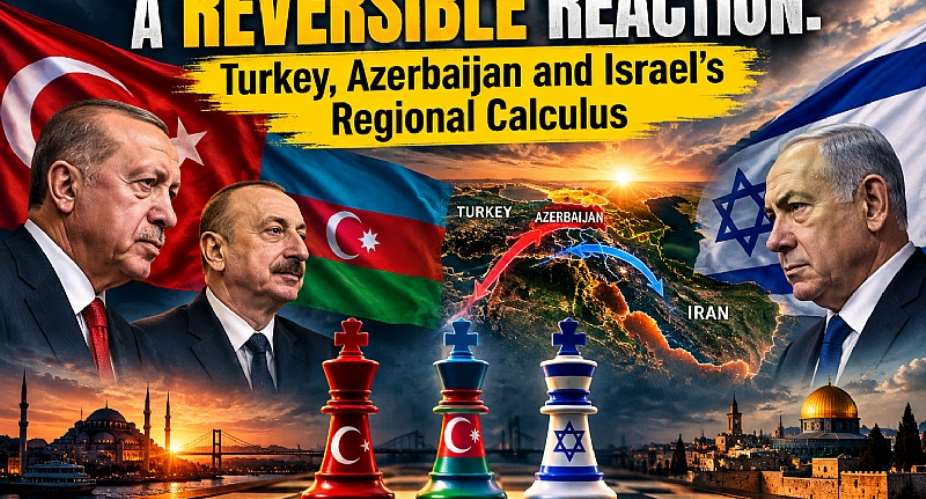
The close relationship between Azerbaijan and “Israel” is an important factor in understanding the regional dynamics surrounding the recent tensions between Baku and Ankara, making “Israel” part of the broader context of the political dispute.
Baku and Tel Aviv maintain a strategic partnership encompassing arms, security technology, and energy. Azerbaijan has relied on Israeli drones and weapons systems, including arms used in the Nagorno-Karabakh war, alongside Turkish support through Bayraktar drones.
The decision to restrict the hijab therefore drew criticism from some Turkish circles, which linked Baku’s hard-line secularism to its growing closeness with “Israel”. Tel Aviv consequently became a point of contention in Turkish-Azerbaijani relations.
As Turkish-Israeli relations deteriorated over the war on Gaza, Azerbaijan’s close ties with “Israel” became an increasingly sensitive issue for sections of Turkiye’s media and political establishment.
The issue went so far that pro-government Turkish media described the hijab restrictions as a possible signal of closer ties with “Israel”.
The ruling New Azerbaijan Party rejected these accusations, calling them a distortion of Azerbaijan’s relations with “Israel”, according to Eurasianet on October 15, 2026.
Notably, according to these arguments, Azerbaijan’s hard-line stance towards Turkiye is linked to its alliance with “Israel” and countries hostile to Turkiye. Azerbaijani MP Rasim Musabeyov even threatened Turkiye by invoking “Israel”.
“We have no intention of disrupting our beneficial relations with Israel for the sake of a few people,” he said, adding, “We do not want to weaken our relations with Tel Aviv because they are built on such a solid foundation that they cannot sever these ties, even if they wanted to.”
He added, “The Justice and Development Party (AKP) government portrays Israel as an ideological enemy and wants to drag Azerbaijan down this path. But Azerbaijan is not alone; Kazakhstan, Uzbekistan, and Turkmenistan also reject this Turkish approach towards Israel.”
Analysts believe that Azerbaijan is deliberately stoking tensions with Turkiye and manufacturing pretexts for doing so, despite the extensive ties between the two countries across various fields.
They link this to the war against Iran and Azerbaijan’s alleged role in it, whether through direct involvement or by allowing its territory to be used.
Given Baku’s relationship with “Israel”, which has a deep security and military dimension, disagreements with its Turkish ally are escalating.
Turkiye, meanwhile, faces persistent threats from Israeli Prime Minister Benjamin Netanyahu, who is beating the drums of war against Turkiye and placing it within a hostile Sunni camp opposed to Tel Aviv.
These analysts believe that Azerbaijan may have chosen to side with “Israel” against Turkiye, despite the close ties between the two countries, for several reasons.
These include the influential role of the Jewish community in Baku’s political life and economic ties: “Israel” receives 40 percent of its oil from Azerbaijan, amid close military and economic relations between the two sides.
An analysis published by Forbes on October 19, 2026, suggests that Azerbaijani President Ilham Aliyev insists on maintaining close relations with “Israel” at the expense of his ties with other countries, because Israel offers the best security guarantee against interference by its southern neighbor, Iran.
“Israel”, in turn, is also keen to maintain these close ties with a distant ally because Azerbaijan poses a threat to Iran’s northern border. Iran’s Azerbaijani province seeks to secede and join its neighbors across the border in Baku.
As a result, Aliyev is compelled to maintain his alliance with both Turkiye and “Israel”, which, unfortunately, has led to the outcome witnessed at the conference. Even Herzog’s use of an Azerbaijani aircraft to travel there became a major issue.
Sources
- Seven More Persons Placed on the International Wanted List in Connection with Public Calls Against the State and the Dissemination of Materials Containing Religious Hatred
- Azerbaijan Issues International Arrest Warrants for Seven Turks Amid Hijab Crisis [Arabic]
- Turkey, Azerbaijan Quarrel Over Hijabs and Israel
- Azerbaijan, Freedom in the World 2026
- Azerbaijan: Events of 2025
- Azerbaijan and Turkey Spar Over Hijab Ban