Amid a Divided Judiciary: Who Decides the Legitimacy of Elections in Libya?

The roots of the impasse lie in the shift of the struggle over political legitimacy into Libya’s judicial institutions.
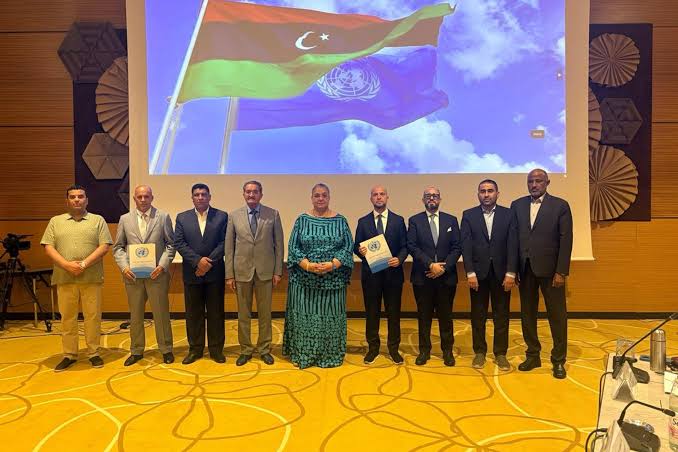
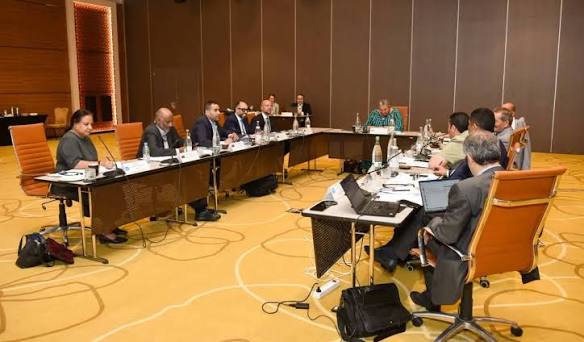
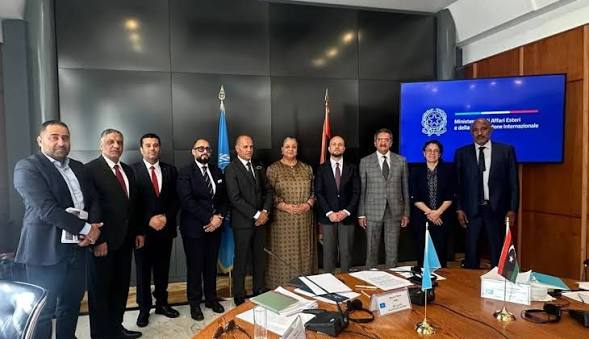
The search for Libyan elections whose results everyone will accept has moved into the heart of the institution meant to protect their legitimacy. The “4+4” Committee met in London on October 28, 2026, to discuss unifying the judiciary and to follow up on its political agreement.
Libya has two rival authorities claiming the power of constitutional review, and two rival heads of the Supreme Judicial Council. The committee’s test is to turn an understanding between competing forces into a settlement that the judiciary accepts and that preserves its independence.
This file is moving forward alongside talks on unifying the military institution, which ties the future of the elections to the state’s ability to enforce the law. How far can the committee go in overcoming the judicial divide? How can it balance the need for political consensus with guarantees of independence? And what obstacles could prevent elections whose results everyone accepts?
A Consensus in Search of Legitimacy
The London meeting ended with an agreement to broaden consultations with the various components of the judiciary. Participants also agreed to keep engaging political actors to build support for the August 30 agreement.
The UN statement did not announce a new judicial body or a final settlement of the jurisdictional dispute. This outcome reflects the stage the committee has reached.
It has moved from discussing election arrangements to trying to resolve the institutional disputes that could derail them. Executive decisions, however, still depend on a consensus broader than the meeting’s participants.
The committee draws its weight from bringing together figures linked to the Government of National Unity and the General Command in the east, along with figures from the House of Representatives and the High Council of State.
Its meetings began in Rome in April 2026 and continued in Tunis. They led to the August agreement, which covered reconstituting the board of the High National Elections Commission and resolving disputes over the electoral framework.
It also set out the goal of holding presidential and legislative elections within 24 months under a unified executive authority. This makeup allows the committee to negotiate with power centers that can either carry out the arrangements or block them.
The limits of that ability became clear when the agreement came up for approval. The House of Representatives endorsed it on September 14, 2026. The High Council of State rejected it on October 5, citing constitutional, legal, and institutional objections.
UN envoy Hanna Tetteh explained that the smaller dialogue is not the only mechanism for advancing the political process, and that a broader national mechanism is being considered. This shows the gap between the committee’s influence and the powers of the institutions.
A political understanding needs a legal path to make it binding, and the judiciary’s acceptance to stop it from becoming a new source of legal challenges.
The 2015 Libyan Political Agreement lists the president of the Supreme Court and the attorney general among the sovereign posts that require consensus.
Judicial appointments are therefore subject to institutional arrangements broader than the committee, and bypassing them could open the door to new challenges.
A Clash of Authorities
The roots of the impasse lie in the shift of the struggle over political legitimacy into Libya’s judicial institutions. That struggle then turned into a dispute over who holds constitutional jurisdiction. In December 2022, the House of Representatives approved the creation of a constitutional court, and Law No. 5 of 2023 was issued, naming Benghazi as its seat.
The law transferred constitutional cases to the new court and renamed the Supreme Court the Court of Cassation. It also gave the House of Representatives the power to appoint the new court’s first panel of judges. The dispute thus came to cover both jurisdiction and how judges are chosen.
The Supreme Court rejected this path, relying on rulings by its Constitutional Chamber against the law creating the alternative court. In response, in December 2025, the Benghazi court issued a ruling declaring earlier rulings of the Constitutional Chamber null and void. It based this on its view that the chamber’s mandate had expired.
Conflicting rulings followed in early 2026 on legislation passed by the General National Congress and on the organization of the Supreme Judicial Council. As a result, the authority of a ruling, and which body may issue it, became part of the dispute instead of an agreed reference for settling it.
The dispute then spread to the management of judges’ affairs. Laws No. 22 and 32 of 2023 changed the leadership and makeup of the Supreme Judicial Council and gave the House of Representatives a decisive role in appointing its head.
A report by the UN Secretary-General documented how, in February 2026, the dispute moved on to control of the council’s headquarters and the transfer of departments to Benghazi. The top of the judicial administration was thus split in two, affecting appointments, transfers, and inspections, alongside the split over constitutional authority.
This explains why unification cannot be reduced to choosing a consensus head. Settling jurisdiction, the conflicting rulings, and the effects of past decisions is still needed for the institution to work on a single legal basis and to protect litigants from the fallout of the dispute.
The solution must also cover staff, budgets, and archives, so that two administrations do not keep operating in practice under the banner of unification.
The Limits of a Settlement
To untangle this, Al-Araby Al-Jadeed reported proposals just before the London meeting, citing sources close to the committee. They include reconstituting the Supreme Judicial Council under the name “Supreme Council of Judicial Bodies”, reconstituting the Supreme Court’s Constitutional Chamber with nine members, and reviewing judicial legislation issued after 2014.
These ideas are part of an independent Libyan judicial mediation effort. The UN mission has said its support for the mediation is technical, limited, and provided on request, and that it does not take part in the mediation’s internal sessions.
An earlier version published by the Al-Wasat portal proposed selecting the chamber’s members as follows: three nominated by the general assembly of the Supreme Court, three chosen by the Supreme Judicial Council, and three experienced specialist professors from the universities of Tripoli, Benghazi, and Sebha.
That version also proposes that the House of Representatives appoint the head of the judicial council from three candidates the council selects from among its members. These arrangements try to combine institutional and geographic representation.
But they raise questions about whether members can be independent of the bodies that choose them, and about the limits of the political role in appointments. These details remain earlier proposals; no final adoption was announced in London.
They also face an objection over whether the path to reform is legitimate. Just before the meeting, the general assembly of the Tripoli Court of Appeal insisted on the unity and independence of the judiciary and on the binding authority of Supreme Court rulings. It rejected amending judicial laws through exceptional procedures or unilateral decisions outside the constitutional path.
The Benghazi court had already rejected the mediation, insisting that the law creating it is valid. With the institutions disagreeing over the very basis of their jurisdiction, the committee faces the dilemma of building an agreement that all of them can accept.
A balanced distribution of seats also needs guarantees of competence and integrity, and protection from arbitrary dismissal and transfer. Only then will consensus turn into real independence, and courts will keep their oversight of the other branches once the judicial bodies are reconstituted.
The Constitutional Declaration affirms the independence of the judiciary and the right to litigation. It also prohibits shielding administrative decisions from judicial review.
Who Decides the Outcome?
These guarantees matter because of the judiciary’s role in deciding who runs in the elections and how election disputes are settled. Law No. 28 of 2023 on presidential elections sends challenges over candidacy conditions and preliminary results to the courts of appeal.
Certain rulings can then be appealed to a special panel of Supreme Court justices formed by the court’s general assembly.
The law provides for the 5+5 Joint Military Commission to secure the panel’s sessions. It makes the panel’s rulings final and binding on the elections commission.
This electoral panel is different from the Constitutional Chamber, which reviews whether legislation is constitutional, even though both are linked to the Supreme Court.
The electoral framework is being amended, but these provisions show how recognizing the court is tied to accepting the result.
If candidates dispute the legitimacy of the body hearing challenges, the dispute could move from candidacy conditions to the announcement of the winner. The losing side could then find an institutional basis for rejecting the decision.
Unification is therefore tied to securing a recognized authority before the vote, clear appeal procedures, and equal access to the courts for all candidates. That does not mean a unified institution alone is enough to guarantee fair elections.
The experience of Sebha shows how judicial procedures intertwine with the balance of power. In November 2021, the UN mission warned about the continued closure of the court of appeal and judges being prevented from working, as well as threats against bodies handling electoral complaints.
The incident shows how competition can be blocked before the ballot boxes open, simply by closing the path to legal challenges.
The impact reaches beyond elections. Citizens, lawyers, and administrators all need to know which law applies and which court’s rulings will be respected.
The International Commission of Jurists has warned of the division’s effects on legal certainty and equality before the courts. Unifying judicial authority is therefore tied to everyday rights, and to trust in an institution that is supposed to protect everyone from abuse of power.
A Test of Force and Law
Even an agreement on rules and leadership faces another test when rulings must be enforced. The Cairo Institute for Human Rights Studies has documented armed groups interfering in arrests, investigations, detention, and trials. It reported that gunmen opened fire around a personal status court in Abu Salim, Tripoli, in July 2025, halting its proceedings.
These incidents show the limits of administrative reform when protecting judges, bringing defendants to court, and enforcing rulings depend on forces that answer to no independent judicial authority.
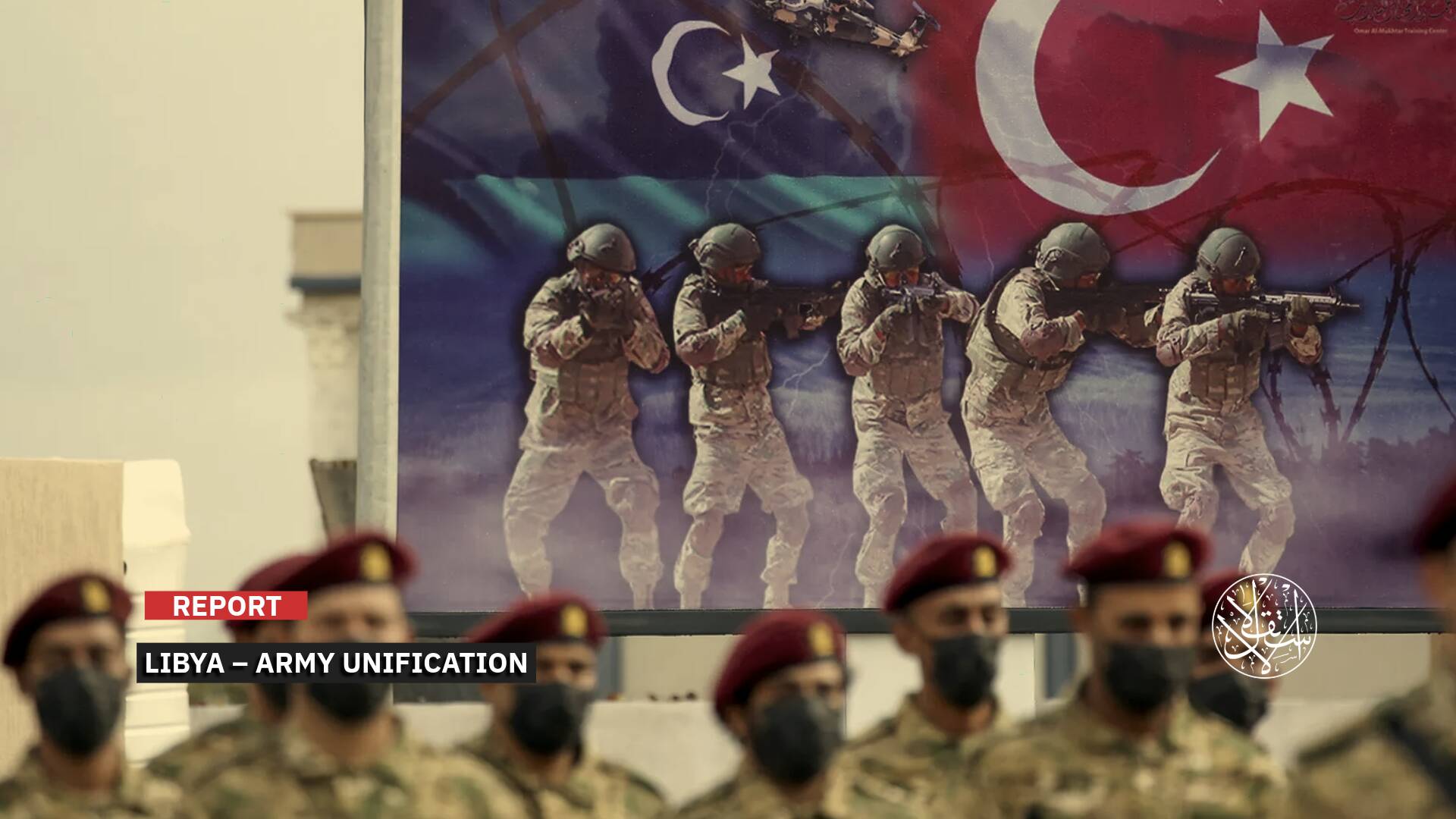
Seen from this angle, it matters that the judicial track is moving at the same time as the military talks in Ankara. The local Al-Wasat portal, citing informed sources, reported preliminary understandings on making Sirte the seat of a joint command and on dividing powers between the Ministry of Defense and the Presidential Council.
Progress on security arrangements could help protect the courts and enforce their decisions, provided the instruments of force are subject to the law.
Treating the judiciary as part of a power-sharing deal between the two camps, however, risks carrying the division into the unified institution itself. The parties’ shares would be balanced, while judges would remain exposed to their pressure.
The Security Council welcomed the August agreement and called on the parties to support it and to unify institutions. UN backing and British hosting help bring the parties together and provide technical support. They cannot, however, settle the dispute over jurisdiction or guarantee compliance inside Libya.
The committee’s chances therefore depend on three things: broadening consultations, tying the settlement to accepted legal procedures, and dealing with the appointments and decisions that piled up during the split.
Progress could unify the administration of the judiciary while the constitutional dispute continues. Or it could lead to a broader settlement, if the institutions accept common rules and the powerful forces commit to them.
The participants in London agreed to meet again in two weeks. Progress at that point can be measured by whether the objecting parties take part, how clear the guarantees of independence are, and what steps are taken to end the split in judicial authority, before the real test of the elections and their results.