From Severing Ties to Opening an Embassy in Jerusalem: Why Has Colombia Changed Its Position Toward ‘Israel’?
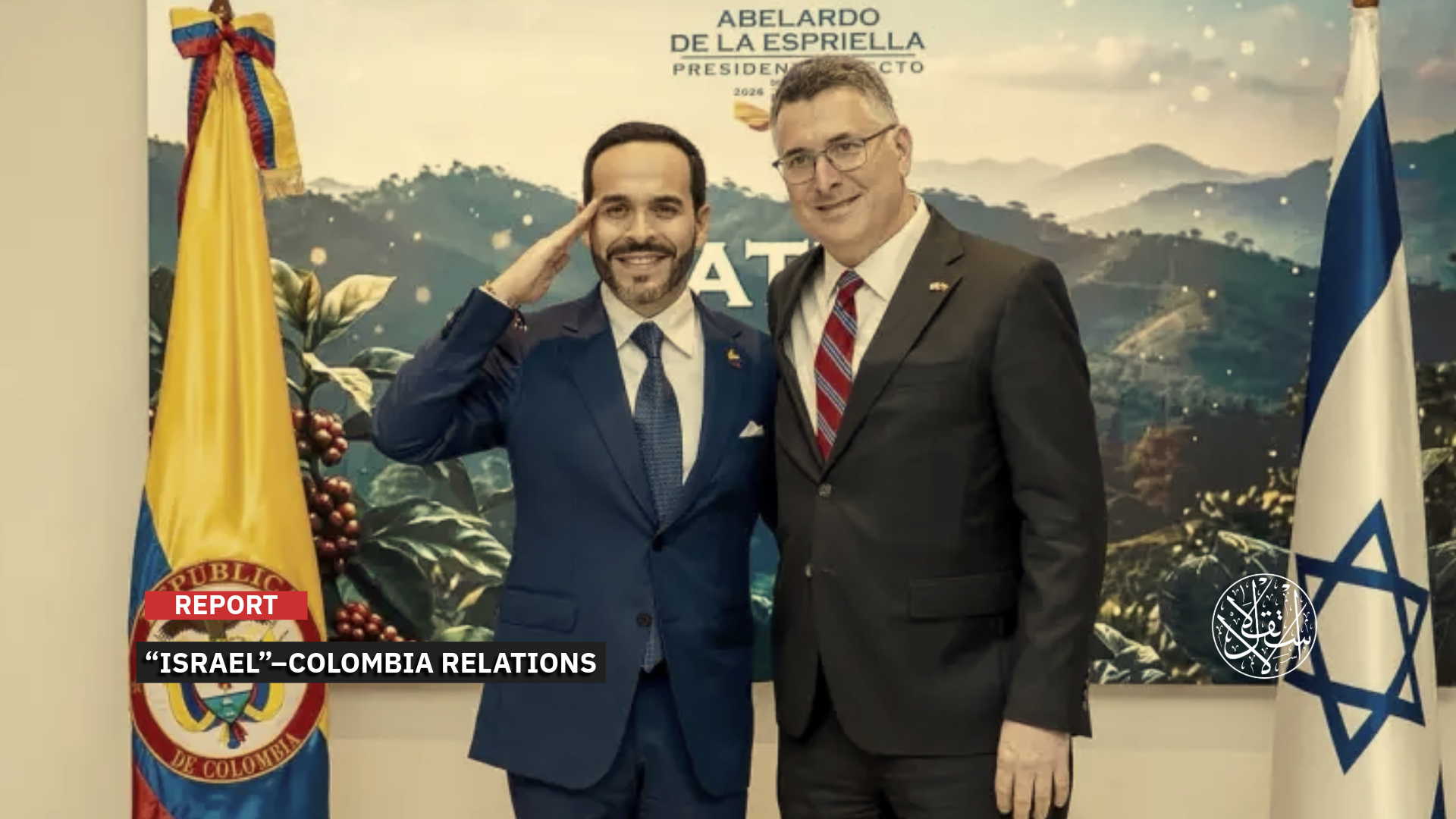
Rapprochement with “Israel” allows Colombia’s new president to differentiate himself from his predecessor’s policies.
In less than three months, Colombia shifted from participating in international efforts to pressure “Israel” to restoring relations with it, opening its embassy in occupied Jerusalem, recognizing “Israel’s” purported sovereignty over the occupied Syrian Golan Heights, and reversing measures taken under former President Gustavo Petro.
The shift came with the rise to power of right-wing President Abelardo de la Espriella, who sought to strengthen the alliance with Washington and revive military and security cooperation with “Israel”.
The rapprochement is driven by interests involving arms, coal, and technology, as well as political and ideological affinity that offers “Israel” further diplomatic gains.
How Did Colombia’s Policy Shift?
Diplomatic relations between Colombia and “Israel” date back to 1957. Over the following decades, they grew into a broad partnership of arms sales, military training, intelligence cooperation, and trade.
This was particularly evident during the presidency of former Colombian President Alvaro Uribe, from 2002 to 2010, when Bogota increasingly relied on Israeli military technology to confront armed groups and drug-trafficking networks.
However, “Israel’s” war on Gaza following October 7, 2023 plunged bilateral relations into an escalating crisis.
The deterioration began when “Israel” suspended defense exports and security cooperation with Colombia following criticism of the Israeli government by then-President Gustavo Petro. Later that same month, Petro recalled Colombia’s ambassador to “Tel Aviv” for consultations.
On February 29 2024, Petro announced a halt to new arms purchases from “Israel” following the killing of Palestinians who had been waiting for humanitarian aid in Gaza.
Colombia subsequently filed a declaration of intervention on April 5, 2024, in the case brought by South Africa before the International Court of Justice, which accuses “Israel” of violating the Convention on the Prevention and Punishment of the Crime of Genocide.
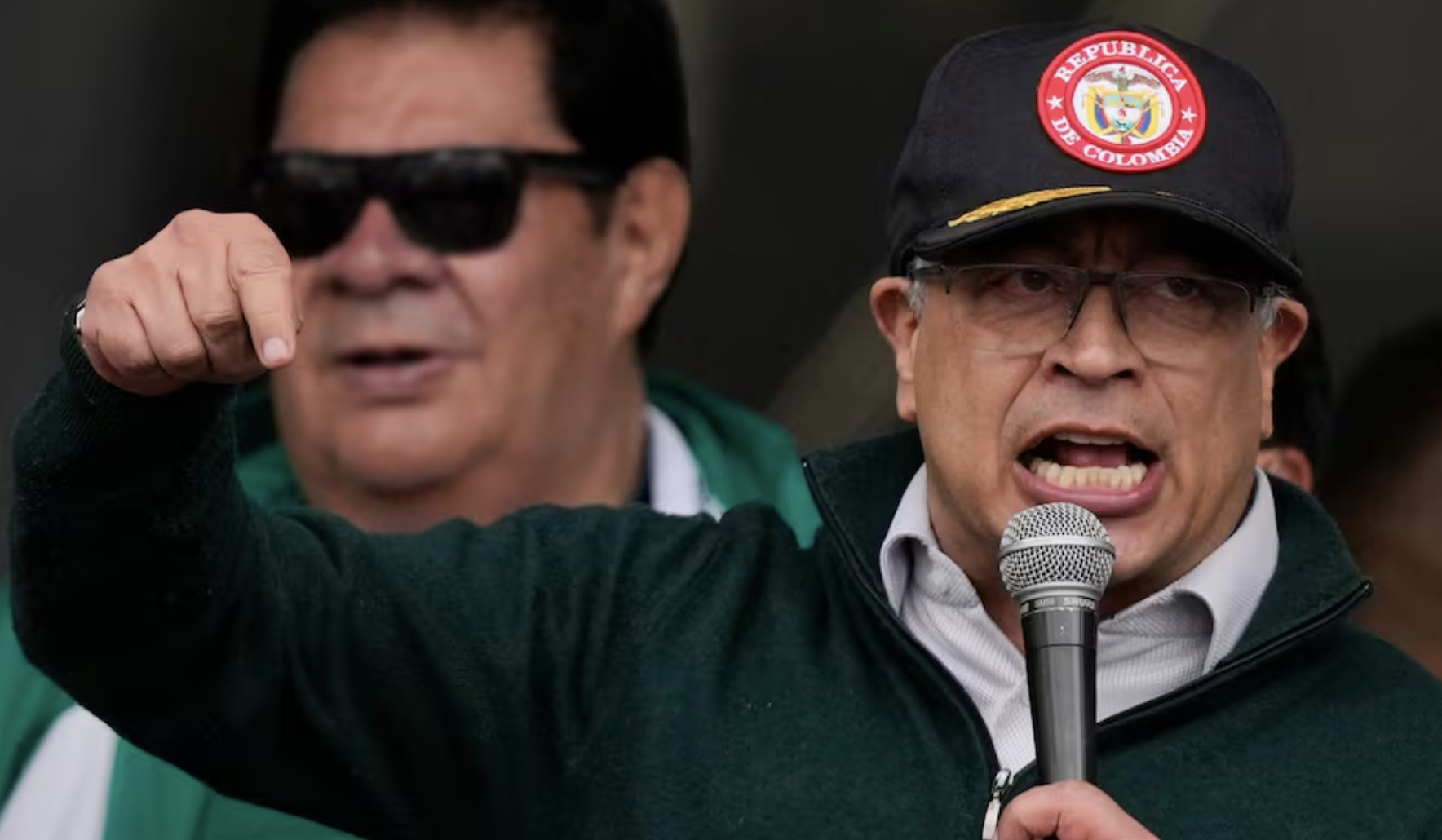
The formal diplomatic rupture came on May 1, 2024, when Petro announced at a rally in the capital, Bogota, that Colombia would sever diplomatic relations with “Israel” effective the following day.
He accused Benjamin Netanyahu’s government of committing genocide in Gaza and stressed that defending the Palestinians was tantamount to defending humanity.
The measures also extended to the economic sphere. On June 8 2024, Petro announced a halt to coal exports to “Israel”.
His government issued a decree on August 14 regulating the ban on existing contracts. These exemptions were abolished under a new decree on August 28, 2025.
On October 1, 2025, Petro announced the termination of the free trade agreement between the two countries and ordered the remaining Israeli diplomats to leave Colombia.
The decision followed the interception by Israeli forces of the Global Sumud Flotilla, which was heading towards Gaza, and the detention of Colombian women participating in it.
However, the 2026 presidential election brought a major shift. Lawyer and businessman Abelardo de la Espriella defeated left-wing candidate Ivan Cepeda in the second round on June 21.
His victory followed a campaign in which he pledged to tighten security measures against armed groups, expand the capabilities of the army and police, reduce the state’s role in the economy, and stimulate the business and energy sectors.
De la Espriella made the restoration of strategic relations with the United States and “Israel” a priority of his program, viewing both countries as sources of advanced military technology, particularly drones, artificial intelligence, and intelligence systems.
Preparations for an understanding with “Israel” began before his inauguration. On July 15 2026, Colombia’s designated foreign minister, Omar Bula Escobar, met his Israeli counterpart, Gideon Sa’ar, in Washington.
During the meeting, the two sides agreed to restore full diplomatic relations, exchange ambassadors, reinstate mutual visa exemptions, relocate the Colombian embassy to Jerusalem, resume coal exports, and withdraw from international proceedings in which Bogotá had participated against “Israel”.
On August 6, one day before the inauguration, Sa’ar visited the northern Colombian city of Barranquilla, where he held a meeting lasting approximately three hours with De la Espriella.
Their discussions covered diplomatic, security, and economic cooperation. The meeting followed an earlier encounter between the two in Buenos Aires, Argentina, in November 2025.
The following day, De la Espriella assumed the presidency in Sa’ar’s presence. Meanwhile, the US State Department announced its intention to allocate $1 billion in security assistance to Colombia’s new government, in coordination with Congress, to support cooperation in combating drug trafficking and organised crime and to strengthen the country’s military and security capabilities.
Trump had endorsed De la Espriella during his election campaign. In September 2026, the Colombian government held further talks with Washington about acquiring aircraft, drones, radar systems, and equipment to combat money laundering, alongside training and intelligence-sharing arrangements.
On June 25, 2026, the Carnegie Endowment for International Peace argued that Trump’s intervention in Latin American elections reflected an approach centred on supporting politically aligned leaders and rewarding personal loyalty.
It warned that Washington’s reliance on personal relationships with presidents could leave its influence vulnerable to fluctuations as governments change.
On the ideological front, an investigation published by the Colombian outlet La Silla Vacia on September 9, 2026 revealed the growing influence of conservative religious leaders within the new government and highlighted the role played by Catholic and evangelical institutions in supporting the president during his election campaign.
The Spanish newspaper El Pais also reported on October 11, 2026, that Marcos Peckel, executive director of the Jewish Confederation of Colombia, said the president viewed “Israel” as a partner in terms of shared values, religious beliefs, and security and political interests.
The newspaper also documented the participation of government officials and evangelical leaders in events organised by Bogota’s Jewish community.
In an analysis published by La Silla Vacia on October 15, Andres Molano, a professor of international relations at Colombia’s Universidad del Rosario, argued that De la Espriella’s government had made diplomatic concessions that went beyond what was necessary to resume cooperation with “Israel”.
Oscar Palma, a professor of international security at the same university, shared this assessment. He noted that “Israel” maintained close relations with countries that kept their embassies in “Tel Aviv” and did not recognise Israeli sovereignty over the occupied Syrian Golan Heights.
Molano argued that rapprochement with “Israel” offered Colombia’s new president an opportunity to distinguish himself from Petro’s policies.
The outlet’s analysis linked the new government’s decisions to De la Espriella’s religious, political, and security orientations, as well as his relationship with the Trump administration.
The Interests Behind the Rapprochement
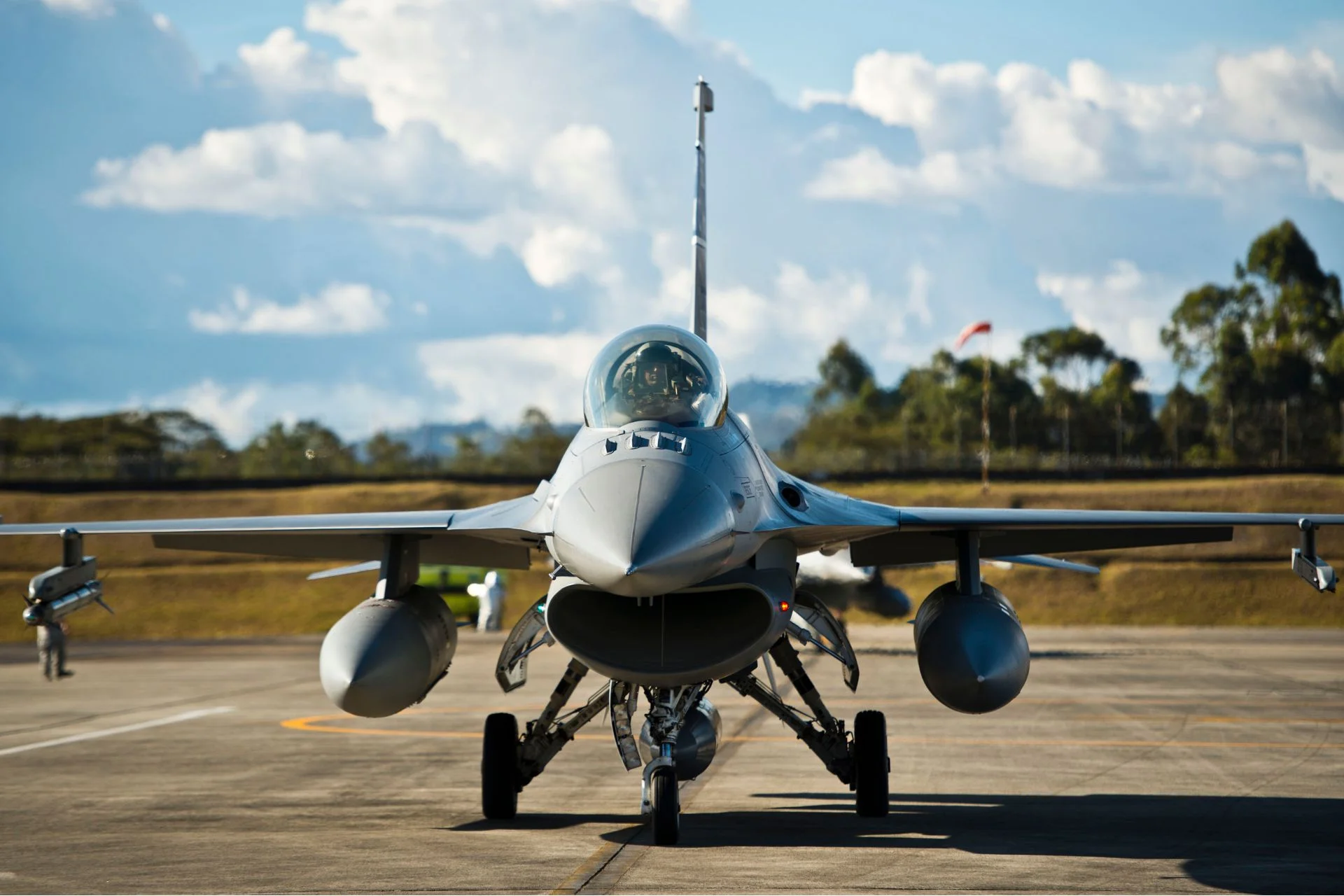
The Colombian armed forces relied on Israeli weapons systems for decades, including fighter jets, missiles, guided munitions, assault rifles, communications and intelligence systems, and cybersecurity technologies. This made military relations one of the most significant interests linking the two countries.
Colombia began purchasing Israeli-made Kfir fighter jets in the late 1980s and eventually operated a fleet of 22 aircraft of this type, which were used in military operations against armed groups. Their continued operation depended on maintenance and upgrade services provided by Israel Aerospace Industries.
The relationship also extended to “Israel’s” Rafael Advanced Defense Systems, a company specialising in missiles and weapons systems that developed the Derby missiles used to arm Kfir fighters, as well as Elbit Systems, which specialises in defense electronics, drones, and command-and-control systems.
In addition, Israeli Galil rifles were manufactured locally by Colombia’s state-owned military industries company, Indumil, under licensing and technology-transfer arrangements.
Because of these ties, Petro’s government maintained some existing military contracts despite its decision to halt new arms purchases, including contracts covering fighter-jet maintenance and missile systems.
Colombia’s then defense Minister, Ivan Velasquez Gomez, stressed the need to maintain the operational readiness of this equipment until suitable alternatives could be secured.
In an effort to modernise its air force and reduce its dependence on Israeli fighter jets, Petro’s government signed a contract with Swedish defense manufacturer Saab on November 14, 2025, to purchase 17 Gripen fighter jets for €3.1 billion.
The agreement covered 17 fighter aircraft, equipment, weapons, training, and technical services, with deliveries scheduled between 2026 and 2032.
It also included industrial cooperation and technology-transfer programs in aviation, cybersecurity, sustainable energy, water purification, and healthcare.
However, the new administration began reviewing the contract's terms. In early October 2026, Colombian Air Force Commander Major General Juan Jaime Martinez Ossa confirmed that discussions were under way with the Swedish company to assess the financial and contractual aspects of the deal, as well as its associated industrial benefits, while the agreement to purchase the aircraft remained in place.
In an address to the Senate on September 16, 2026, Colombia’s foreign minister outlined the reasons behind the security rapprochement with “Israel”, citing the need to strengthen intelligence capabilities and cybersecurity and dismantle arms-smuggling, money-laundering, and armed-group financing networks.
On October 2, when Tania Gilinski Bacal was appointed ambassador to “Israel”, Colombia’s Foreign Ministry explained that her mandate included deepening cooperation in strategic intelligence, combating transnational crime, cybersecurity, and information sharing, alongside economic and technological cooperation.
Tania belongs to one of Colombia’s most prominent business families. She is the sister of businessman Jaime Gilinski Bacal, while her father and another member of her family had previously served as ambassadors to “Israel”.
The renewed intelligence cooperation has also brought the controversy surrounding the Israeli spyware program Pegasus back into focus.
Developed by Israeli surveillance technology company NSO Group, the program became the subject of demands by Petro in September 2024 for an investigation into its purchase by Colombian intelligence agencies for approximately $11 million during the administration of former President Ivan Duque.
Questions were raised about the source of the funding and the possibility that the software had been used to monitor political figures and opposition members.
Beyond arms, coal represents one of the most significant mutual economic interests between the two countries. Before the export ban, Colombia was “Israel’s” main supplier of the commodity.
In 2023, Colombia exported approximately 3.04 million tonnes of coal to “Israel”, worth $446.9 million, according to international trade data published through the World Bank database.
The Israeli market accounted for approximately 5.4 percent of Colombia’s total coal exports by volume that year, while Colombian coal represented more than half of “Israel’s” coal imports, according to some estimates, making it an important source of supply for Israeli power plants.
Exemptions included in the initial ban in August 2024 allowed some shipments to continue under previously signed contracts.
Data published by El Pais in July 2025 showed that approximately 1.24 million tonnes of coal, worth $100 million, had reached “Israel” between September 2024 and April 2025, before Petro tightened the restrictions in 2025.
The restrictions contributed to a shift in “Israel’s” sources of supply. Data from Kpler, a company specialising in tracking shipments and commodity trade flows, showed that South African coal exports to “Israel” increased by 87 per cent during the three months ending in November 2025, reaching approximately 474,000 tons.
After De la Espriella came to power, his government announced in August 2026 that coal exports would once again be permitted. On October 9, it issued a decree repealing the previous ban and restoring thermal coal exports to the general trade framework.
The decree cited political developments related to the ceasefire in Gaza and Colombia’s international trade commitments.
It also reported that coal exports to “Israel” had fallen from approximately $225.2 million in 2024 to $84.9 million in 2025, with no recorded exports during 2026 up to the time the decree was prepared.
The Colombian Mining Association estimated that the restrictions had harmed tax revenues, local returns, and employment opportunities in coal-producing regions.
Meanwhile, companies faced difficulties regaining the Israeli market after buyers turned to alternative suppliers, at a time when “Israel” was also pursuing plans to reduce its reliance on coal-fired electricity generation.
The rapprochement also extended to the free trade agreement between the two countries, which entered into force in August 2020.
The agreement provided for immediate tariff exemptions covering 99 per cent of Colombia’s industrial exports and 97 percent of its agricultural and agro-industrial products, with tariffs on the remaining goods scheduled for gradual reduction.
In 2024, Colombian merchandise exports to “Israel” amounted to approximately $279 million, compared with imports from “Israel” worth around $113 million, bringing total bilateral trade to approximately $392 million, according to the Observatory of Economic Complexity (OEC), an international platform for analysing trade data.
Colombia’s non-mining and non-energy exports to the Israeli market reached $55.7 million in 2025, according to ProColombia, the government agency responsible for promoting exports, investment, and tourism.
On October 13, 2026, the two countries completed an exchange of diplomatic notes formally restoring the free trade agreement.
Israeli Foreign Minister Gideon Sa’ar said his government had succeeded, within two months, in reversing most of the consequences of Petro’s policy towards “Israel” and reopening avenues for economic cooperation.
The rapprochement also extended to agriculture. Colombian Agriculture Minister Indalecio Dangond visited “Israel” between 7 and October 9, 2026, meeting his Israeli counterpart, Avi Dichter, officials from Mashav, the Israeli Foreign Ministry’s Agency for International Development Cooperation, and representatives of companies specialising in irrigation, water management, and agricultural production technologies.
On October 9, Colombia’s Ministry of Agriculture announced that the two sides had reached understandings on training 25 Colombian agricultural engineers in “Israel” in January 2027, as well as developing greenhouse agriculture and water-reuse technologies for irrigation.
The cooperation is particularly relevant to the northern Colombian department of La Guajira, which faces significant water and climate challenges.
The meetings also involved Israeli companies, including LR Group, which specialises in project development and investment; Metzer Group, a manufacturer of irrigation systems; and Bermad, which produces water-control systems. These engagements form part of the Colombian government’s efforts to expand technological and agricultural cooperation with “Tel Aviv”.
How Far Will This Shift Go?
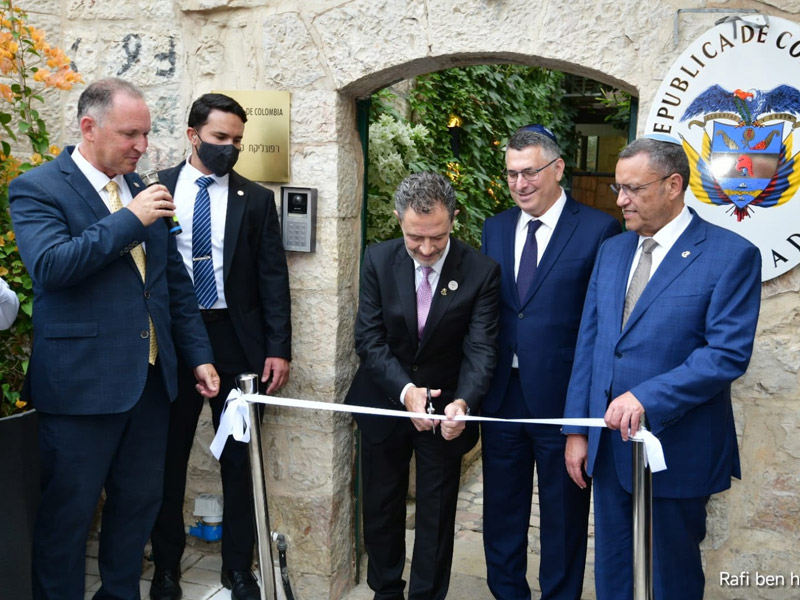
Colombia opened its embassy in Jerusalem on October 14, 2026, becoming the tenth country to establish an embassy in the city. The move reversed a diplomatic decision Bogota had taken approximately 46 years earlier.
Colombia had previously maintained a diplomatic mission in Jerusalem until 1980, when it relocated it to “Tel Aviv” in compliance with a UN Security Council resolution adopted that year.
The resolution rejected Israeli measures aimed at changing the status of the city and called on states to withdraw their diplomatic missions from it.
The opening ceremony was attended by the Colombian and Israeli foreign ministers. Escobar described the move as an expression of mutual trust and a shared determination to develop cooperation, while Sa’ar portrayed the embassy’s relocation as a diplomatic gain that strengthened recognition of Jerusalem as “Israel’s” purported capital.
The Colombian delegation’s visit continued until October 16, when Escobar met Israeli President Isaac Herzog. Their discussions covered cooperation in defense, trade, investment, and technology.
On August 10, 2026, the Colombian government had announced its recognition of “Israel’s” purported sovereignty over the occupied Syrian Golan Heights, justifying the decision by citing the region’s strategic importance to “Israel’s” security and its ability to protect its citizens.
Colombia’s Foreign Ministry confirmed that the decision implemented a commitment agreed upon by the two sides on August 8, one day after De la Espriella took office.
This made Colombia the second country, after the United States, to recognise Israeli sovereignty over the Golan Heights, following a similar decision by Trump during his first presidential term in 2019.
Colombia’s recognition contradicts UN Security Council Resolution 497, unanimously adopted on December 17, 1981. The resolution declared “Israel’s” decision to impose its laws, jurisdiction, and administration on the occupied Syrian Golan Heights null and void and without international legal effect.
In an address to the Colombian Senate’s Second Committee on September 16, 2026, Foreign Minister Escobar defended the recognition of the Golan Heights, linking it to what he described as security threats associated with Iran, Hezbollah, and drug-smuggling, arms-trafficking, and money-laundering networks in the Middle East and Latin America.
He said his government had reassessed the strategic circumstances surrounding the Golan Heights, while acknowledging the existence of a UN Security Council resolution and emphasising the importance of negotiations between Syria and “Israel”.
Damascus condemned the decision and, on August 12, 2026, submitted an official protest to the UN Secretary-General and the President of the Security Council, rejecting Colombia’s recognition and reaffirming Syria’s sovereignty over the Golan Heights.
The shift also extended to international legal proceedings. On September 18, 2026, the Colombian government notified the International Court of Justice that it was withdrawing its declaration of intervention in South Africa’s case against “Israel”, explaining that the decision fell within the president’s constitutional powers to conduct foreign relations.
On October 14, during his visit to “Israel”, Escobar announced that Colombia had requested to withdraw from the Hague Group, an international coalition established in early 2025 to coordinate measures relating to Israeli occupation violations in the Palestinian territories. He confirmed the withdrawal the following day, declaring his opposition to the group's approach towards “Tel Aviv”.
At the United Nations Security Council, where Colombia holds a non-permanent seat for the 2026–2027 term, its representative emphasised “Israel’s” right to protect its security and citizens and condemned Hamas, the Palestinian Islamic Resistance Movement, and Hezbollah during a meeting on the Middle East and the Palestinian question on September 28, 2026.
Colombia continues to formally recognise the State of Palestine, a decision adopted in August 2018 during the final days of former President Juan Manuel Santos’s administration. However, the new government halted a project proposed by Petro to open a Colombian diplomatic mission in Palestine.
Colombia’s policy shift drew criticism from Arab and Muslim countries. The Palestinian Foreign Ministry condemned the opening of the embassy in Jerusalem, describing it as a violation of international law and UN Security Council resolutions.
On October 16, a joint statement issued by the foreign ministers of Arab and Muslim countries rejected the move and called on Bogotá to reverse it, stressing that it contradicted United Nations resolutions concerning the status of the city.
Opposition also emerged within Colombia. On October 7, 2026, hundreds of demonstrators took to the streets of Bogotá in a protest organised by the October for Palestine coalition, denouncing the assault on Gaza and the government's restoration of relations with “Israel”.
On October 14, coinciding with the embassy's opening, Bogota and other Colombian cities witnessed larger demonstrations against De la Espriella’s government.
Participants included supporters of former President Petro and left-wing candidate Ivan Cepeda, as well as trade unions, students, social organisations, and Indigenous communities.
The protests focused primarily on economic and security policies and social rights, while rapprochement with the United States and “Israel” was among the issues that drew criticism from demonstrators.
The restoration of relations with Colombia forms part of a broader policy announced by Israel’s Foreign Ministry to make Latin America a diplomatic priority in 2026, amid the rise of right-wing governments seeking to expand political and security cooperation with Washington and “Tel Aviv”.
Israeli Prime Minister Benjamin Netanyahu highlighted the significance of this shift during a reception marking the opening of the Colombian embassy on October 14.
He said that something extraordinary is happening in Latin America, expressing his view that the region was witnessing a renewed trend towards closer relations with “Israel”.
Sources
- Trump Can Play Kingmaker in Latin America. He Can’t Build Lasting Influence
- President Petro Announces That Diplomatic Relations with Israel Will Be Severed Tomorrow [Spanish]
- “The Jewish People’s Best Friend in the World”: Colombia’s Rapid Shift Toward Israel [Spanish]
- Israel: From an Ally of Colombia to a Role Model for Abelardo [Spanish]
- Saab Signs Contract with Colombia for Gripen E/F Fighter Jets
- De la Espriella Government to Review Terms of Gripen Fighter Jet Contract [Spanish]
- Coal; briquettes, ovoids and similar solid fuels manufactured from coal exports to Israel in 2023
- Prime Minister Netanyahu’s Remarks at the Ministry of Foreign Affairs Reception Celebrating the Inauguration of Colombia’s Embassy in Jerusalem