Two Years After Pulling Out: France Finds Its Way Back Into Chad
France’s return to Chad is less about restoring its former relationship with the country than adapting to a new reality in Africa.
Nearly two years after Chad declared an end to France’s military presence on its territory, relations between N’Djamena and Paris have shown signs of a diplomatic and military thaw.
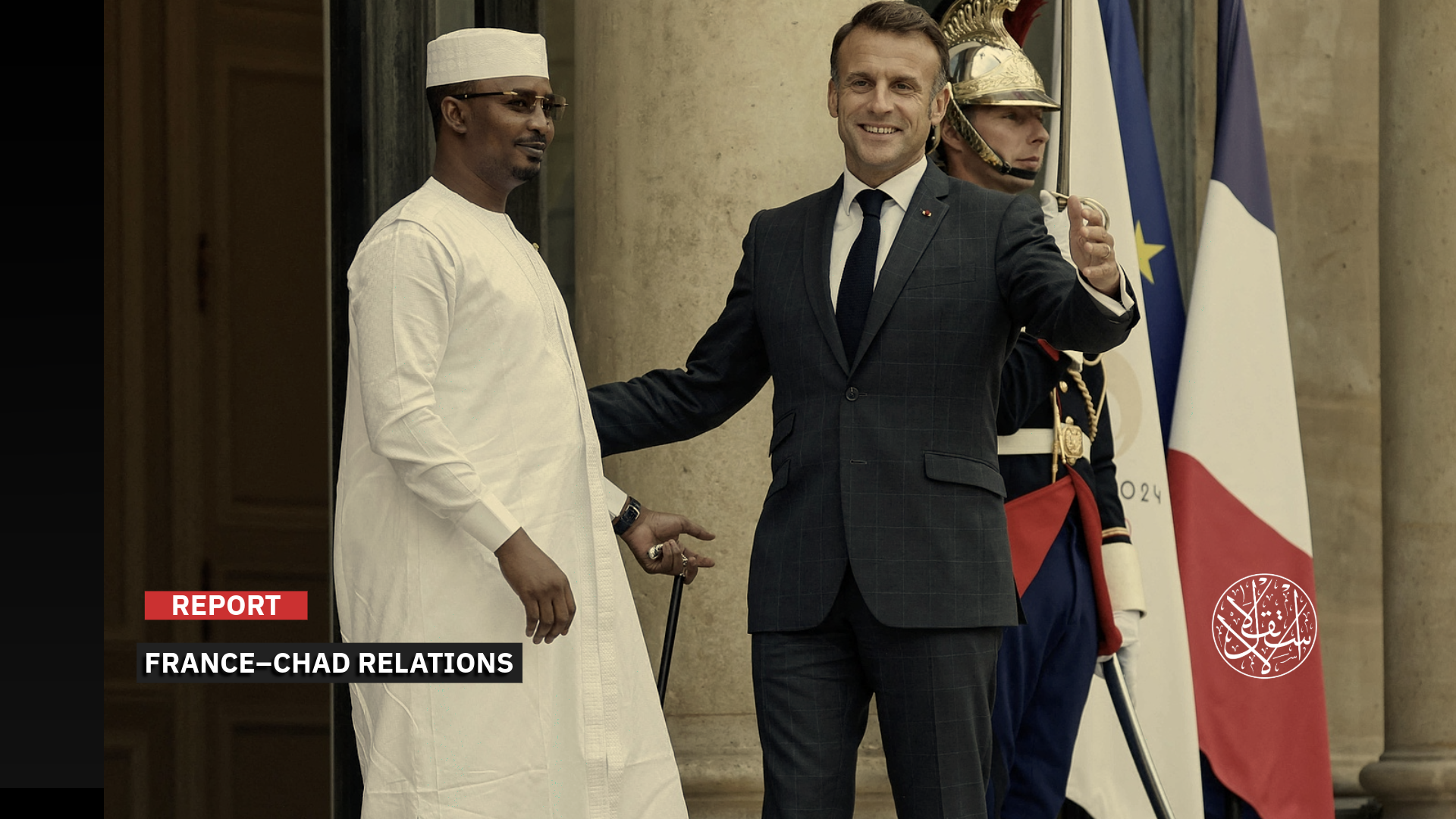
The two countries signed a “declaration of intent” in Paris on October 13, 2026, during a visit by Chadian President Mahamat Idriss Deby, who met with his French counterpart, Emmanuel Macron.
The development comes after France closed its military bases in Chad and N’Djamena rejected continued cooperation with its former colonial power, following a pattern similar to that of other countries across the Sahel and West Africa.
The new agreement could pave the way for the resumption of defense cooperation between France and Chad under a different security framework, as Paris seeks to address the failures of its previous approach in the Sahel, which contributed to an unprecedented decline in its traditional influence in the region.
N’Djamena appears to be moving past its differences with its historic ally, France, in pursuit of several objectives through the revival of their partnership, despite the potential risks and challenges, as well as the interests both sides stand to gain.
In November 2024, the Chadian government announced the termination of its defense and military cooperation agreements with France, its former colonial ruler, and demanded the withdrawal of French troops and the closure of their military bases in the country.
Signs of a Thaw
Signs of a thaw in relations between the two countries began to emerge in January 2026, when French President Emmanuel Macron welcomed his Chadian counterpart, Mahamat Idriss Ddeby, at the Elysee Palace. The meeting was followed by another encounter on the sidelines of the Africa Forward Summit, held in Nairobi, Kenya, in May 2026, signaling a significant step toward restoring relations.
A third meeting between the two presidents in Paris on October 13, 2026, marked a culmination of efforts by both countries to resume bilateral ties, particularly in the areas of security and defense.
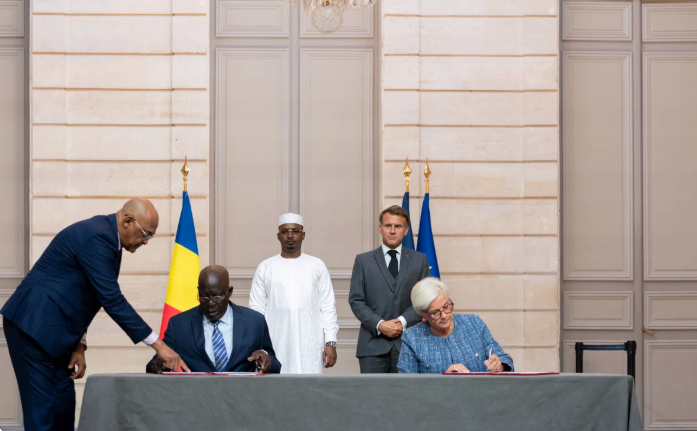
This rapprochement was underscored by the signing of the new declaration of intent by French Minister of the Armed Forces and Veterans Affairs Catherine Vautrin and her Chadian counterpart, Issakha Maloua Djamous. The agreement aims to restructure and organize bilateral defense cooperation in specific areas, including military training, the exchange of expertise, and support for the industrial and technological capabilities of Chad’s armed forces.
In press statements at the time, the French and Chadian governments described the “renewed partnership” as extending beyond traditional military ties to encompass stronger economic, trade, and cultural relations.
In this context, Macron wrote in a post on X, “Together, we are building a partnership based on mutual respect and tangible cooperation that benefits both our peoples, particularly in the cultural and economic fields, while delivering concrete progress for our businesses.”
Le Monde revealed that French military personnel had returned to Chad on a limited basis in the summer of 2026 to train units of the Chadian army, following the withdrawal of French forces from the country in early 2025. The development coincided with the signing of a new declaration aimed at strengthening defense cooperation between Paris and N’Djamena.
The disclosure came after French President Emmanuel Macron welcomed his Chadian counterpart, Mahamat Idriss Deby, at the Elysee Palace in October, where the two countries’ defense ministers signed a declaration of intent to expand cooperation in training, expertise, defense industries, and technology.
Citing Chadian sources, including military officials, Le Monde reported that around 20 French personnel had begun training Chadian forces in early summer at the Moussoro training center and the shooting range in Massaguet, north of the capital, N’Djamena.
A Chadian officer said the training involved members of the Rapid Intervention Force, an elite unit established in late 2023 that is tasked, among other duties, with protecting President Deby.
According to the newspaper, intelligence cooperation between the two countries did not come to a complete halt in 2025 despite the announced military break. It continued, particularly in efforts to counter armed groups in the Lake Chad region. A team of firefighting specialists from the French military also took part in training Chadian personnel over the summer.
In another development, Paris is seeking to regain access to the Adji Kossei air base at N’Djamena airport, which French forces vacated in early 2025.
Le Monde reported in June 2026 that the French military wanted to use the base for military aircraft takeoffs and landings when needed, without restoring the large-scale, permanent deployment that preceded the withdrawal.
France is also considering supplying the Chadian army with two helicopters and a troop transport aircraft, as well as the possible return of French reconnaissance aircraft. However, these arrangements remain under discussion and have not been announced as implemented.
Citing a French military source, Le Monde reported that Paris wants to revive cooperation gradually and cautiously. A senior Chadian officer, meanwhile, stressed that the new partnership must be built on clear terms and mutual interests, unlike the previous phase, when he said the French treated Chad as though it were subordinate to them.
Cooperation and Risks
On the practical implementation of the October agreement, French armed forces spokesperson Colonel Xavier Rival announced that two Mirage 2000 fighter jets and a CASA transport aircraft would soon arrive in Chad.
According to a report published by Africa Radio on October 30, 2026, the “short-term” deployment will enable training activities for the Chadian air force.
The report said the deployment is part of the GEX military exercise, scheduled to take place in Côte d’Ivoire and Gabon from November 8 to 30, 2026.
The outlet said Paris was demonstrating its willingness to help counter regional instability while developing the capabilities of the Chadian air force, with respect for the country’s sovereignty.
It concluded that military cooperation between France and Chad was entering a new phase as both sides seek to expand exchanges in training, expertise, defense industry, and technology, in line with the declaration of intent signed in Paris.
Despite the potential benefits of resuming defense and security cooperation between France and Chad, which could bring gains to both sides, the African Studies website Qiraat Afriqiyah warned in an analysis published on October 29, 2026, that “the move is not without potential risks.”
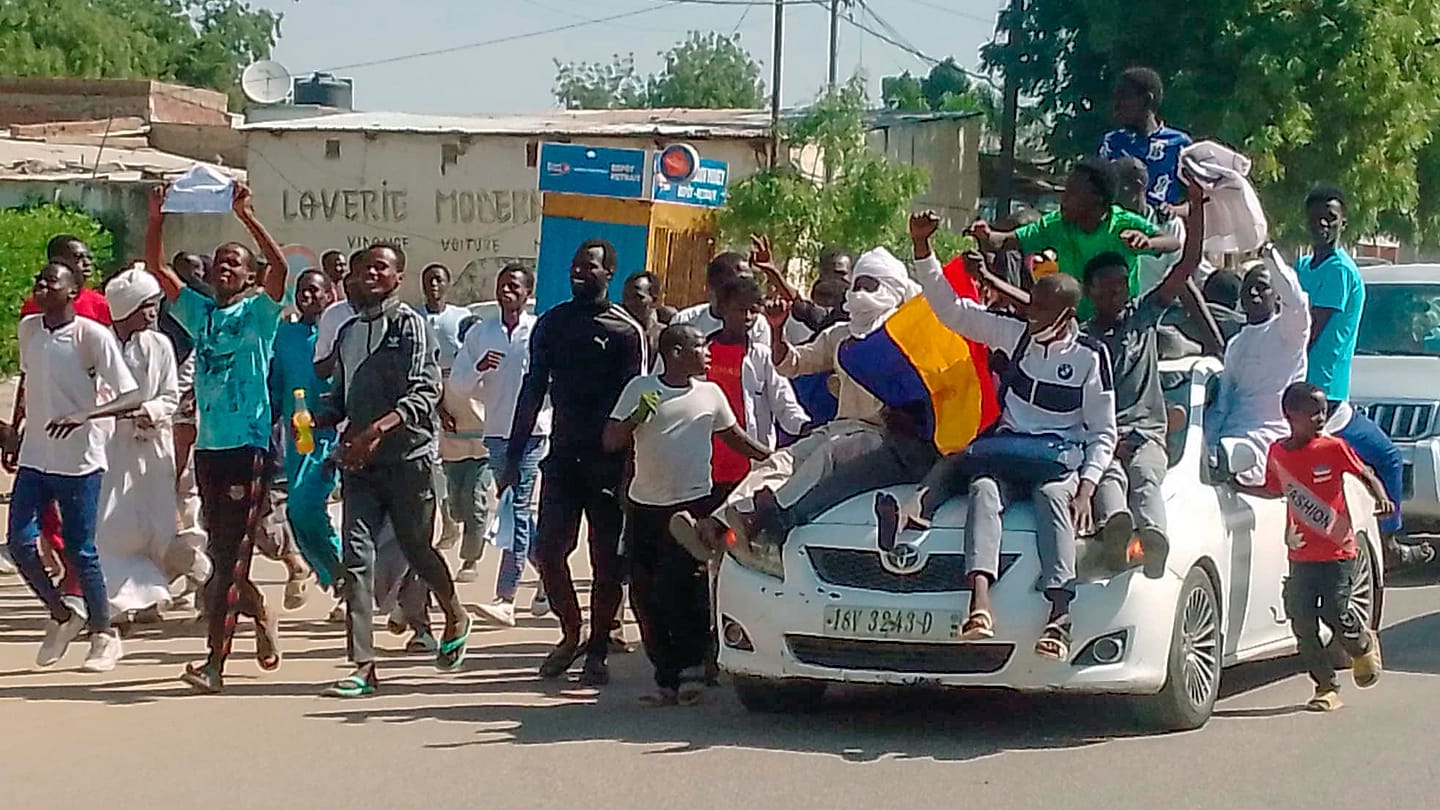
For Chad, the website noted, restoring ties with the former colonial power could spark public anger, particularly since N’Djamena’s decision less than two years ago to cancel its cooperation agreements with France and expel its troops was justified on the grounds of protecting national sovereignty.
The political opposition could portray the signing of the declaration of intent with France as a contradiction of President Mahamat Idriss Deby’s position or an outright abandonment of the national sovereignty rhetoric that the political establishment relies on to strengthen its domestic popularity.
At the regional level, the move is likely to cause resentment among Chad’s neighboring governments and strain relations with them, potentially undermining N’Djamena’s efforts to join the Alliance of Sahel States.
It explained that such resentment could lead neighboring countries to view N’Djamena as a French proxy and a source of threats to their security. This would require Chad to reassure its neighbors and address their concerns by maintaining cooperation, emphasizing its neutral position, and demonstrating its commitment to resolving regional conflicts rather than fueling them.
For France, the analysis continued, its return to the Sahel and Sahara through Chad could be viewed with suspicion and concern by governments that have ended the French military presence on their territory and turned toward alternative partnerships.
Chadians themselves and the populations of other Sahel countries could interpret the move as colonialism by other means, or as a French attempt to reestablish its foothold and expand its influence across the region in ways that could destabilize it and undermine regional security.
A Testing Ground
In an assessment published on October 20, 2026, the Center for African Security Studies (CASS) argued that France’s return to Chad was less about restoring its former relationship with the country than adapting to a new African reality.
CASS stressed that Paris could no longer rely on its historical superiority, as African governments have become increasingly inclined to diversify their partnerships rather than depend on a single power.
Chad’s geographical position, the center noted, offers France an opportunity to regain a foothold in a region linking the Sahel to Central Africa, at a time when its ability to exert direct influence over the three Sahel states is declining.
The center added that France would likely pursue this approach through limited military cooperation, training, arms supplies, intelligence sharing, and economic and defense partnerships rather than redeploying large numbers of troops.
However, it cautioned that the success of this effort would depend on Paris’s ability to present itself as a partner that respects Chad’s sovereignty and N’Djamena’s willingness to maintain a balance between France, Turkiye, Russia, and other powers.
Cass stressed that any return to the traditional model of French influence could reproduce the nationalist and popular backlash that led to the previous rupture.
Chad appears to be a testing ground for France’s ability to rebuild its influence in Africa without reverting to its previous model. Meanwhile, the competition for security influence across the continent is shifting from a bilateral contest between France and Russia to a multipolar landscape involving international and regional powers with different tools of influence.