From Settlements to Military Camps: Is Israeli Occupation Building a Parallel Army in the West Bank?
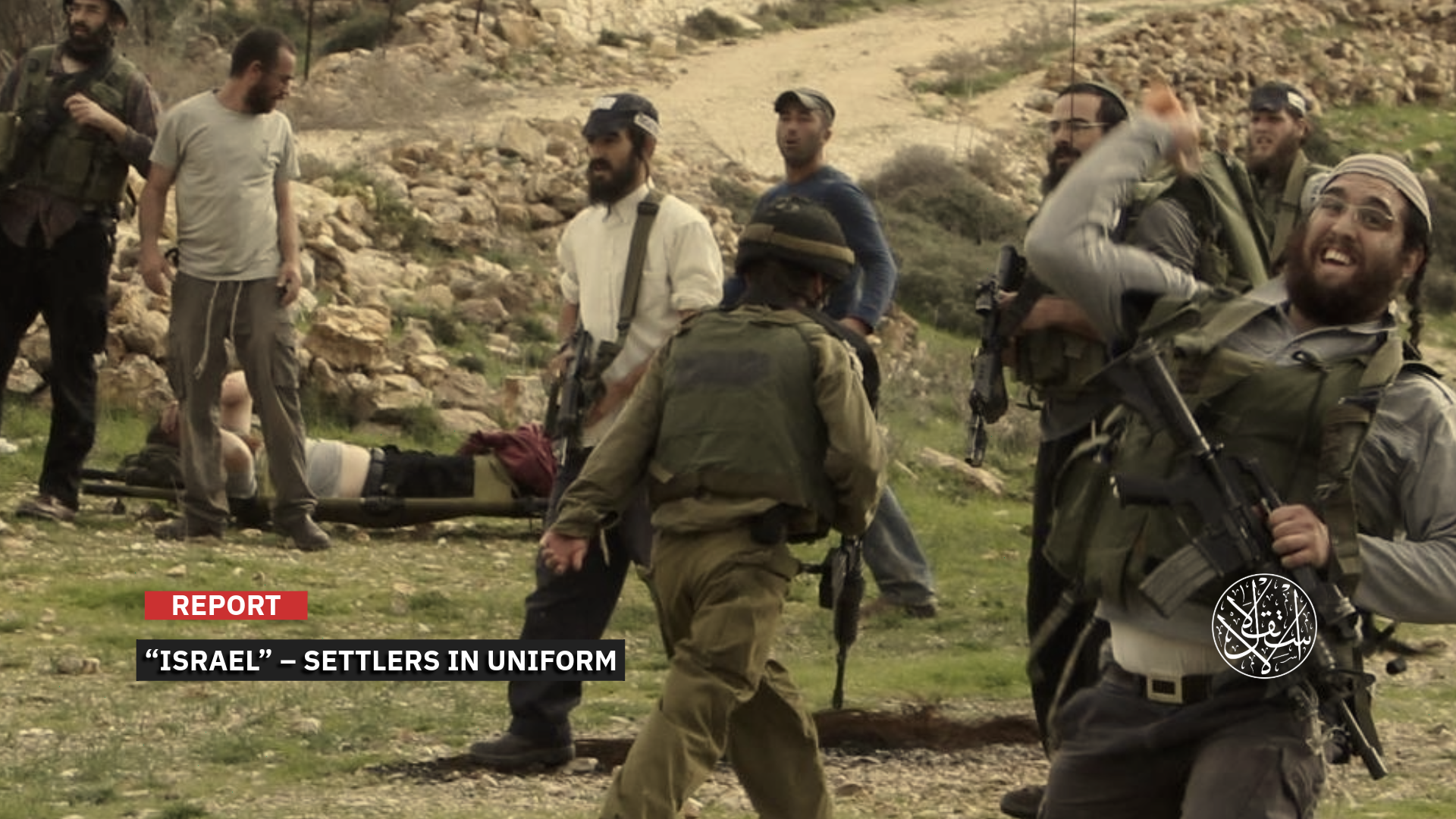
The project to arm settlers is expanding by establishing training facilities inside settlements.
An armed network is expanding across Israeli settlements in the West Bank, bringing together reservists, security teams, and rapid response units, while providing thousands of settlers with weapons and security and military powers that extend beyond the settlements themselves.
Since October 2023, these forces have stepped up their presence in patrols, checkpoints, and field operations. Testimonies from Israeli Occupation soldiers and human rights investigations have documented their involvement in attacks on Palestinians, exposing the growing influence of settlers within the Israeli Occupation’s military apparatus.
The expanding military role of settlers raises questions about the emergence of a parallel army in the West Bank, as armed settlers increasingly take part in military and security operations amid escalating attacks, the displacement of Palestinian communities, and expanding annexation plans.
The Settlers’ Army
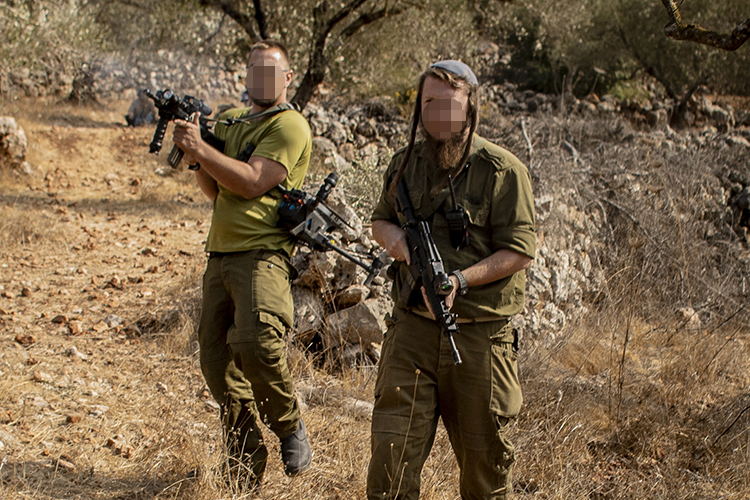
The project to arm settlers and organize them into military formations is expanding through the establishment of new training facilities inside settlements, further strengthening their military infrastructure.
On November 10, 2026, the Palestinian Colonization and Wall Resistance Commission (CWRC) revealed that Israeli Occupation authorities had approved a plan allowing shooting ranges to be established at 31 settlement sites across the governorates of Ramallah and al-Bireh, occupied Jerusalem, Nablus, Jericho, and the Jordan Valley.
The plan covers 29 settlements, outposts and settlement neighborhoods, as well as two industrial zones: «Maccabim and Sha’ar Binyamin.»
According to the CWRC, the plan adds shooting ranges to the permitted uses of land designated for public buildings, commercial and industrial activities, and sports facilities. This would allow the construction of facilities for firearms training and the training of armed personnel, subject to obtaining the necessary permits to establish and operate each range.
An Israeli government list dating back to 2022 identifies nine previously licensed shooting ranges inside West Bank settlements, including «Ariel, Karnei Shomron and Ma’on.»
Separately, a 2024 document published by the economic company affiliated with the Mateh Binyamin Regional Council outlined a project to build a shooting range in the «Psagot» settlement near Ramallah. It linked the project to a surge in firearm license applications after October 2023 and pledged to fund both the facility and the roads leading to it.
The plan comes amid an expansion of settler armament led by Israeli National Security Minister Itamar Ben-Gvir since late 2023, including the easing of firearm licensing requirements and the equipping of armed response teams.
In December 2023, Israeli financial newspaper Calcalist revealed that the National Security Ministry had requested the purchase of 25,550 assault rifles and millions of rounds of ammunition to equip emergency response teams across the Israeli Occupation, under an allocation of 633 million shekels (one dollar equals three shekels).
In January 2026, the War Ministry announced that it had completed the distribution of thousands of Arad rifles to rapid response teams under a deal worth approximately 100 million shekels. The deal was part of a broader arming program covering Israeli communities inside the territories occupied in 1948, as well as West Bank settlements.
Militarily, the Regional War Units, known in Hebrew as Hagmar, are the most prominent formations incorporating settlers into the Israeli Occupation army.
These units date back several decades, when the Israeli military assigned them responsibility for guarding settlements. Their mobilization was expanded after October 2023, as regular forces were redeployed to other fronts.
According to Human Rights Watch (HRW), the military called up approximately 5,500 settler reservists to serve in regional war battalions. An investigation published by The Guardian on January 30, 2026, cited Israeli estimates putting the initial mobilization at around 7,000 settlers.
According to the Israeli Occupation military, the number of Hagmar personnel on active duty has fallen by 85 percent from its peak mobilization level, although hundreds remain deployed, particularly in the West Bank. These include at least 500 personnel who were stationed at agricultural settlement outposts in December 2025.
These units officially fall under the command of regional brigades and battalions and include reservists affiliated with the settlements around which they are deployed. Local emergency response teams and security coordinators also take on additional roles in guarding settlements and responding to incidents.
Alongside this military structure, Israeli Occupation police inaugurated a unit of settlement volunteers in the Hebron area on July 9, 2025. Its first phase included 105 members from settlements including «Efrat, Kiryat Arba, and Gush Etzion,» who were provided with weapons, equipment, and special police powers.
At the inauguration ceremony, far-right extremist minister Ben-Gvir spoke of shifting these teams from a ‘defensive’ model toward a combat-oriented and offensive approach. The National Security Ministry oversees the expansion of civilian response teams, while Hagmar units remain under military command.
The proliferation of armed formations has allowed settlers to combine civilian status with military powers, amid gaps in oversight and accountability highlighted by Israeli human rights organization Yesh Din.
In a statement on February 25, 2026, the organization noted that the system includes active-duty soldiers, others on military leave, and settlers who independently wear military uniforms. This makes it difficult to determine the legal status of an armed individual when attacks occur.
The Role of Armed Settlers
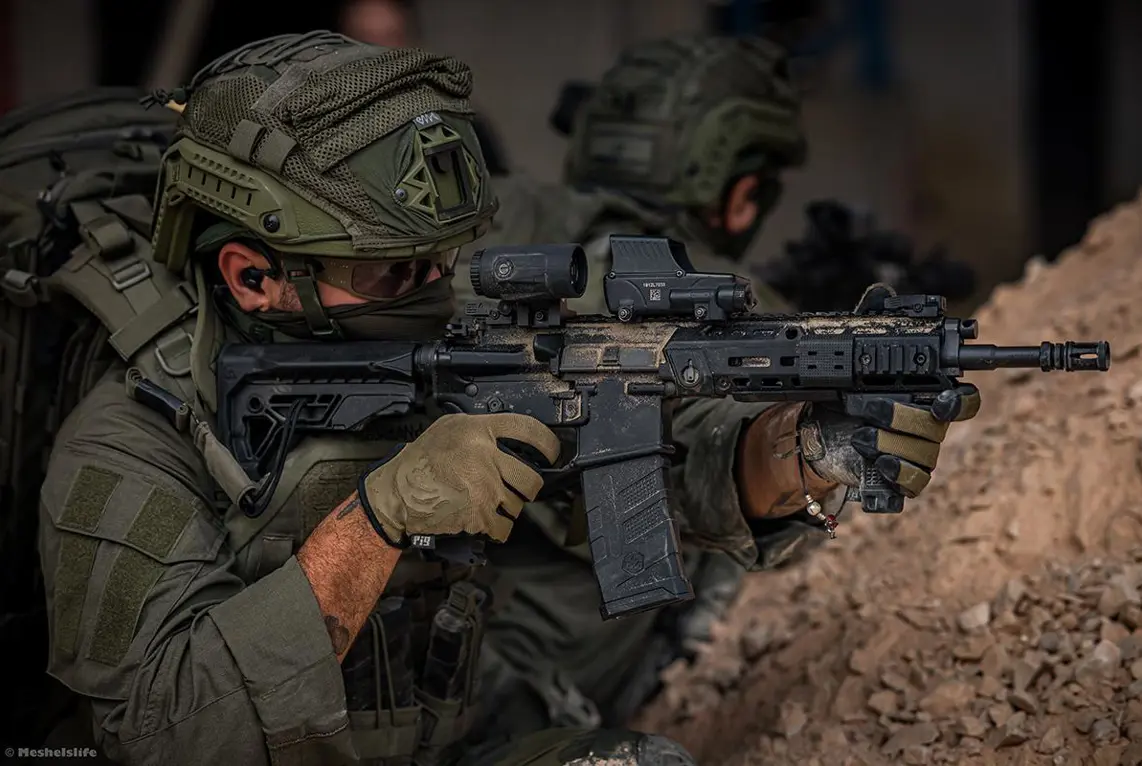
The activities of some settler formations extend beyond protecting settlements to conducting patrols, setting up checkpoints, and carrying out searches and arrests inside Palestinian communities.
An investigation published by The Times of Israel in June 2026 documented the involvement of Hagmar members in attacks inside Palestinian villages. They drew on their familiarity with the area and their ties to nearby settlements. Human rights organizations, meanwhile, have accused members of these units of exploiting their authority to advance settlement interests.
A former Israeli reservist, who spoke to The Guardian under a pseudonym in January 2026, revealed that Hagmar members often arrived at confrontation sites in Palestinian villages before regular forces.
Although the units officially fall under battalion commanders, the soldier described considerable freedom in their field operations. Nadav Weiman, executive director of Israeli organization Breaking the Silence, which brings together former military personnel, said recruiting settlers into these formations had given them the same powers as regular soldiers and allowed those powers to be used in pursuit of the settlement movement’s goals.
The case of Jinba village in Masafer Yatta, south of Hebron, illustrates the expanding field role of these units. On March 28, 2025, a Regional War force arrived in the village following a settler attack on residents. It arrested 22 Palestinian men and boys and took them to a military base.
The force returned that night to search homes, a school, and a local clinic. The operation involved the destruction of property and equipment. On March 31, the Israeli Occupation military announced disciplinary measures against several officers and soldiers after an investigation acknowledged that vandalism had taken place and that sensitive facilities had been searched without the required permits.
On March 2, 2026, brothers Mohammed and Faheem Ma’ammar were martyred during a settler attack on the village of Qaryut, south of Nablus.
According to residents’ testimonies and video footage, a settler wearing a military uniform shot the brothers during an attack on homes near agricultural land. The Israeli military acknowledged that the shooter was an active-duty reservist and announced that his weapon had been confiscated and a criminal investigation opened.
Israeli human rights organization B’Tselem said the soldier had arrived with a group of settlers, and that forces who later came to the scene confronted Palestinians instead of arresting the attackers.
An investigation published by Al-Jazeera on November 10, 2026, provided further evidence of this overlap, documenting cases in which settlers took part in attacks wearing civilian clothes before appearing in military uniforms carrying official weapons.
One of them was Yitzhak Levi Filant, a settler from «Yitzhar,» south of Nablus. The investigation identified him by comparing photographs with residents’ testimonies. He was seen assaulting farmers in the village of Tell, then returning in military uniform to issue orders to them.
The investigation found that 14 of the 63 Palestinians martyred by settlers since October 2023 were shot by individuals serving in the military or wearing military uniforms.
Gideon Levy, an Israeli journalist with Haaretz, has pointed to the growing presence of settlers within military units deployed across the West Bank, including in command positions, a development that strengthens their influence within the military establishment.
The system also faces an additional accountability problem. Yesh Din explained that the military prosecution may classify some attacks by settlers wearing military uniforms as acts committed outside active service, while the police may treat them as offenses committed by military personnel.
The Israeli military maintains that Hagmar units operate under its command and follow its rules of engagement. It says it investigates violations and punishes those responsible. Yesh Din, however, has documented gaps in the investigation and accountability mechanisms for attacks by armed settlers.
The Impact on Palestinians
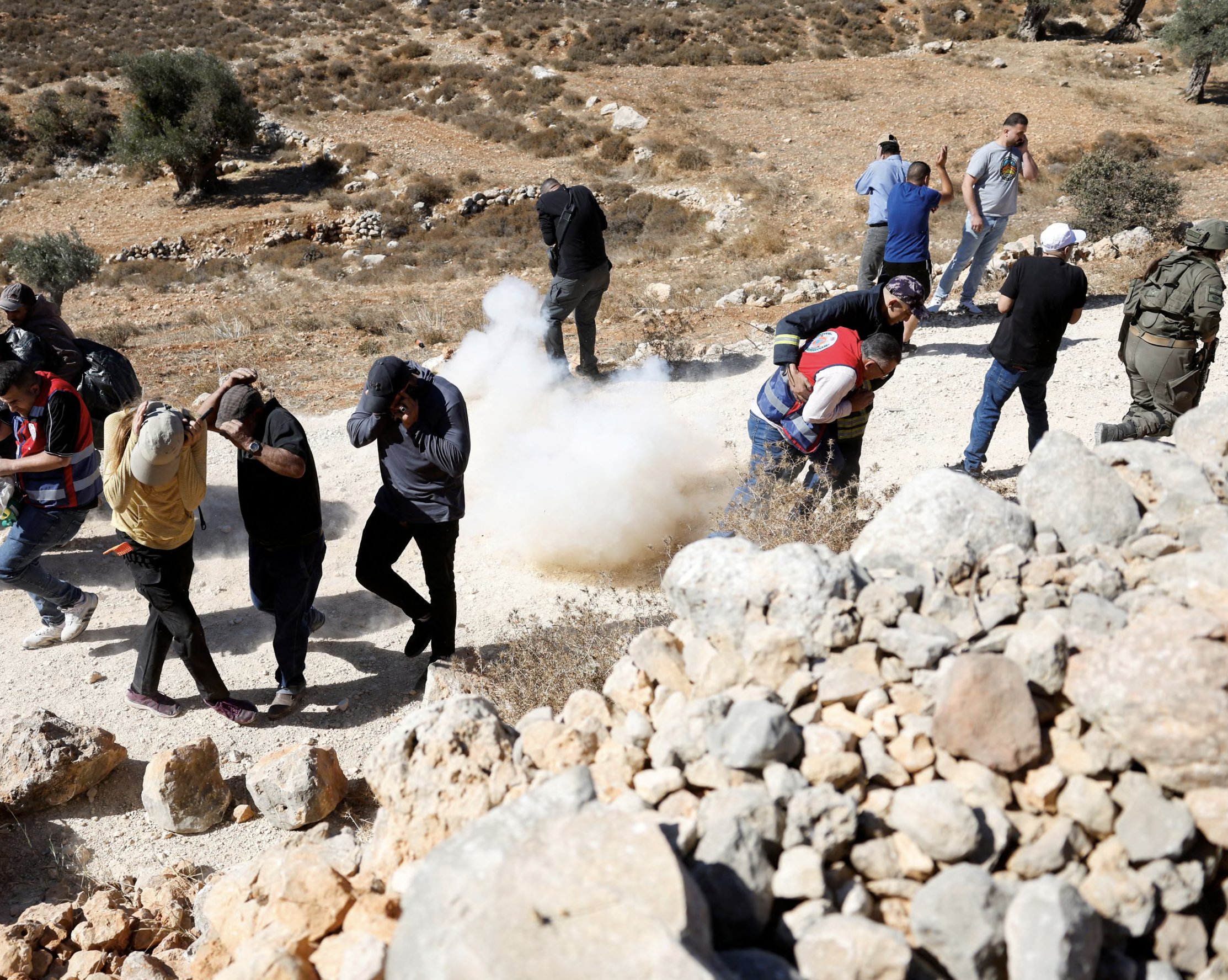
The effects of this armed expansion are increasingly evident on the ground, with a sharp rise in settler attacks, particularly against agricultural and herding communities.
In a report published on November 6, 2026, the UN Office for the Coordination of Humanitarian Affairs (OCHA) recorded 457 attacks in October that resulted in injuries or property damage, the highest monthly figure since it began documenting such incidents in 2006.
OCHA also recorded 377 attacks linked to the olive harvest season between September and November 2, 2026, exceeding the total number documented during any previous harvest season.
Using a broader monitoring scope, the CWRC reported 1,369 attacks in October 2026, up from 647 in September, an increase of 111.6 percent. It also reported that 31 Palestinians had been martyred by settler gunfire since the beginning of the year.
The attacks were concentrated particularly in the governorates of Ramallah, al-Bireh, and Nablus. They included shootings, arson attacks on property, crop destruction, livestock theft, and preventing farmers from reaching their land.
Settler attacks and movement restrictions are also driving the growing displacement of Palestinian communities. In a report published on October 15, 2026, OCHA documented the complete or partial displacement of 133 Palestinian communities since January 2023. Of these, 49 were entirely displaced, including 13 in 2026.
The attacks and restrictions have particularly targeted agricultural and herding communities. Preventing Palestinians from accessing their land, grazing areas, and water sources undermines their livelihoods and forces some families to leave.
An analysis by ACLED, an organization specializing in armed conflict data, found that 259 new settlement outposts were established between the beginning of 2023 and August 2026, including 186 agricultural outposts. Some have expanded into Area B, which is under Palestinian civil administration.
According to the analysis, 49 percent of recorded settler attacks between the beginning of 2026 and early September took place within three kilometers of agricultural outposts established that same year, highlighting the role of these sites in extending attacks into new rural areas.
Agricultural outposts allow small groups of settlers to establish control over vast areas of surrounding land through grazing, road construction, and control over movement routes. The presence of armed groups around these sites further increases pressure on Palestinian farmers and herders.
This expansion is reinforced by direct government support. In March 2026, the Israeli Occupation government approved an allocation of approximately 50 million shekels to equip unauthorized settlement outposts with off-road vehicles, drones, and surveillance equipment.
In a report published on August 20, 2026, HRW documented attacks on seven Palestinian communities in the governorates of Ramallah, Nablus, and the Jordan Valley. The attacks included armed assaults, property destruction,n and livestock theft. Some took place in the presence of Israeli Occupation forces or alongside their movements.
Sarah Sanbar, a researcher at HRW, said the Israeli Occupation government provides settler attackers with weapons, legal cover and funding to advance its control over Palestinian land.
Data published by Yesh Din in early 2026 support this assessment. The organization found that 93.6 percent of the investigation files it monitored concerning ideologically motivated crimes committed by Israelis against Palestinians between 2005 and 2025 were closed without indictments. Only 3 percent resulted in convictions.
The escalation in settler attacks coincides with government measures to expand settlements, legalize settlement outposts, and strengthen control over Area C.
In its advisory opinion issued in July 2024, the International Court of Justice concluded that settlement policies, land confiscation, and settler violence had helped create a coercive environment that forces Palestinians to leave their places of residence. It also affirmed the Israeli Occupation’s responsibility to protect the civilian population.
The expansion of settler armament and training, alongside settlers’ participation in military operations, points to the consolidation of their role within «Israel’s» system of control over the West Bank.
As attacks intensify and Palestinian communities are displaced, concerns are growing that these formations could become a permanent military force serving settlement expansion and annexation plans, while benefiting from powers granted by Israeli Occupation institutions and weak accountability mechanisms.