Libya’s Divided State and Military: Four Obstacles to Turkish-US Unification Efforts
Ankara’s talks have stalled not simply over technical disagreements on military integration, but because unifying Libya’s military institution cuts to the heart of the conflict.
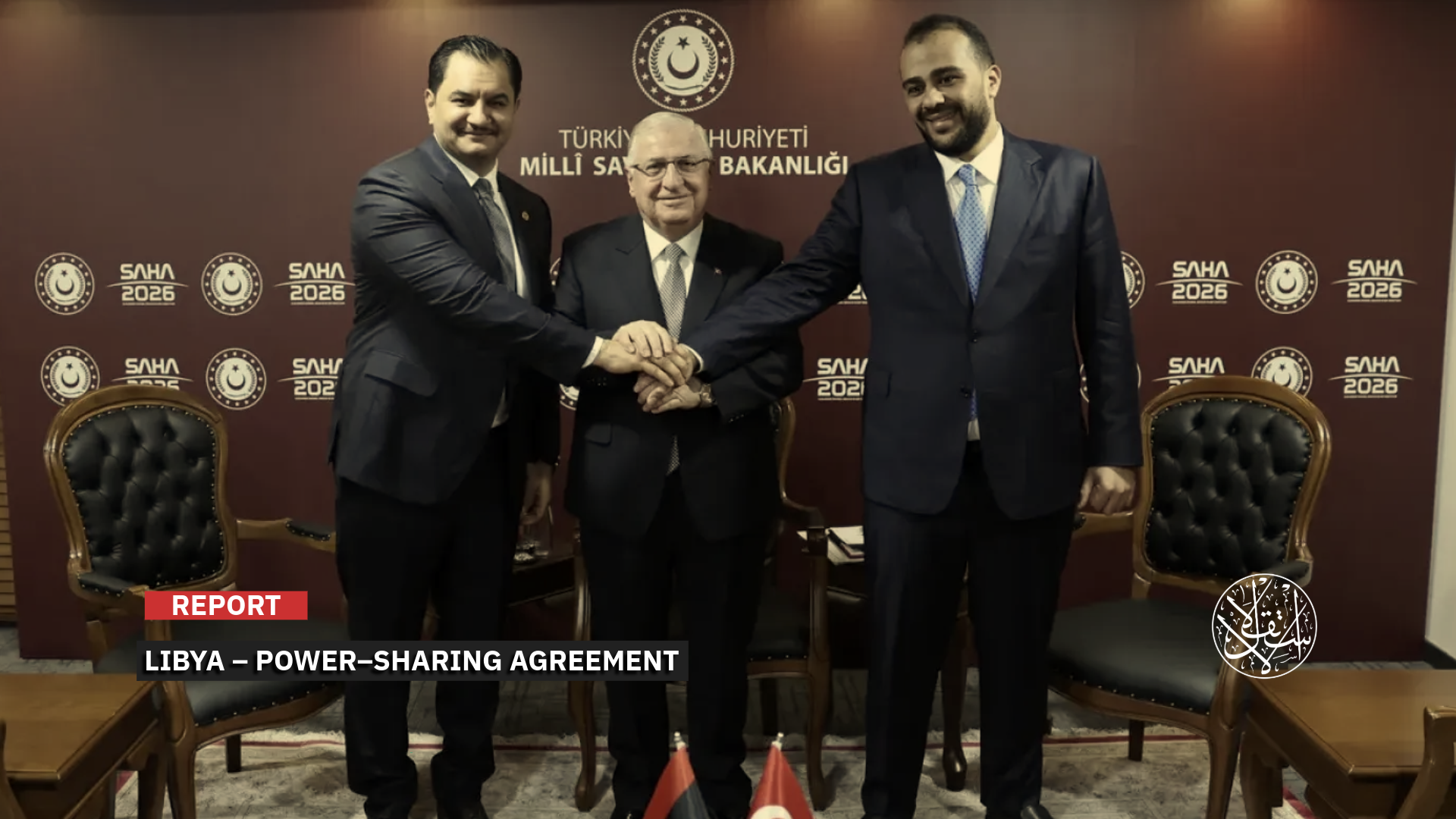
The latest round of talks hosted by Turkiye in late October 2026, aimed at unifying Libya’s rival governments in the east and west under Abdul Hamid Dbeibeh and Khalifa Haftar, ended without an agreement.
An understanding on the maritime agreement, including eastern Libya joining the deal previously signed by the western authorities, was expected to pave the way for a broader political settlement and a power-sharing deal under the U.S. plan known as the Boulos Plan.
However, the two sides failed to reach a final agreement on the structure of a unified military command and its relationship with political authority, with structural, political and regional obstacles preventing a decisive breakthrough despite initial understandings and significant progress on several issues.
Libyan sources believe the absence of internationally recognized Prime Minister of National Unity Abdul Hamid Dbeibeh from the meeting with Saddam Haftar, and his decision to send only the deputy defense minister, weakened the momentum of the negotiations and limited their outcome.
According to the sources, the talks lacked momentum and produced no tangible results, focusing exclusively on military issues while leaving political unification off the agenda.
The discussions centered primarily on unifying the military institutions in eastern and western Libya, while talks on unifying political authority were postponed to a later stage.
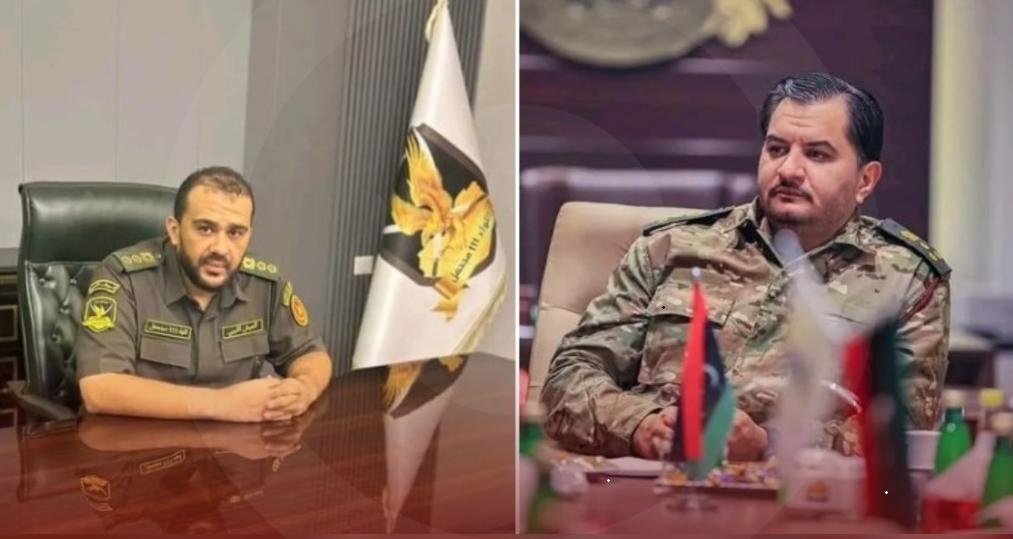
The meeting was attended by Saddam Haftar, deputy commander-in-chief of forces affiliated with the eastern Libyan authorities, and Abdul Salam al-Zoubi, deputy defense minister in the Tripoli-based Government of National Unity, under Turkish mediation and with U.S. support.
Four Reasons Behind the Deadlock
The Ankara talks between representatives of eastern and western Libya were significant not merely as an attempt to regulate relations between two rival military forces, but also as a test of whether one of the most complicated aspects of the Libyan crisis could be addressed: the division of political authority, armed forces, and competing claims to legitimacy.
The failure to reach a final agreement, despite the focus on military unification, showed that overcoming Libya’s divisions requires more than security understandings. It also depends on resolving the struggle over political decision-making, financial resources, and state institutions.
Persistent disagreements between eastern and western Libya over who should govern the country and control its military and wealth have contributed to the stalled negotiations and the postponement of political unification talks.
Disputes also extended to the structure of a unified military command, the authority empowered to issue orders, and the mechanisms for integrating rival forces, amid recognition that merging military formations alone would not be enough to establish a unified state.
Unifying the armed forces is difficult without a political agreement on the executive authority, budget, and sovereign institutions. Otherwise, the process could amount to little more than redistributing influence rather than building a unified national army and a single state.
The main obstacles to political and military unification can be grouped into four key issues:
First, disagreements over the military command structure. The talks between Saddam Haftar, representing the eastern-based military, and Abdul Salam al-Zoubi, representing the Tripoli-based Government of National Unity, focused heavily on military integration.
Although eastern representatives initially agreed in principle to abolish the position of commander-in-chief of the armed forces, which had previously been created for Khalifa Haftar, the two sides reached an impasse over how to establish a joint command structure and who would ultimately lead it, Libya Observer reported on October 25, 2026.
Second, disagreements over disarming militias versus preserving personal influence. Analysts point out that neither faction is prepared to relinquish full control over its local militias and allied armed units.
Western factions fear that a unified command could inadvertently concentrate power in the hands of the Haftar family, while eastern forces remain skeptical of the various military factions controlling western Libya.
Third, fears of an elite deal and local backlash. The proposed U.S.-backed framework seeks to establish a power-sharing arrangement under which Abdul Hamid Dbeibeh would remain prime minister, while Saddam Haftar would secure a senior position on the Presidential Council. The proposal has triggered internal tensions, according to AFP on October 28, 2026.
Libyans have criticized the prospect of entrenching the status quo, arguing that such an arrangement and the division of senior positions would simply create an elite deal that indefinitely postpones democratic elections and protects incumbent leaders without delivering transparent governance.
They also argue that any arrangement allowing the Haftar family to retain military leadership would face strong opposition because of its role in the 2019-2020 war, including the campaign to invade and bombard Tripoli, which ended with the collapse and defeat of Haftar’s forces and their withdrawal.
Fourth, regional geopolitics and maritime tensions. The talks took place as the eastern-based House of Representatives unexpectedly ratified a controversial 2019 maritime boundary agreement with Turkiye.
Although the move significantly improved relations between Ankara and Benghazi, it triggered strong reactions from regional and European powers and deepened divisions among regional actors. Greece, Cyprus, Egypt, and the Israeli Occupation strongly condemned the agreement.
Moreover, despite broad alignment between Washington and Ankara on Libya’s stability, the United States described the agreement as unhelpful and provocative, Fox News reported in early November 2026.
European powers also remain divided over how to address the crisis, while Russia opposes measures that could reduce its military presence in eastern and southern Libya.
Overall, Ankara’s talks have stalled not simply over technical disagreements on military integration, but because unifying Libya’s military institution cuts to the heart of the power struggle.
Who will command the army? Who will control political decision-making? Will a unified authority pave the way for elections, or will the existing military and political forces strike a deal that redistributes influence without changing the rules of governance?
Disagreements therefore persist over the powers of a unified military command and its relationship with political authority, as well as whether an agreement will be limited to military arrangements or extend to the distribution of senior positions, including seats on the Presidential Council, according to Libyan sources.
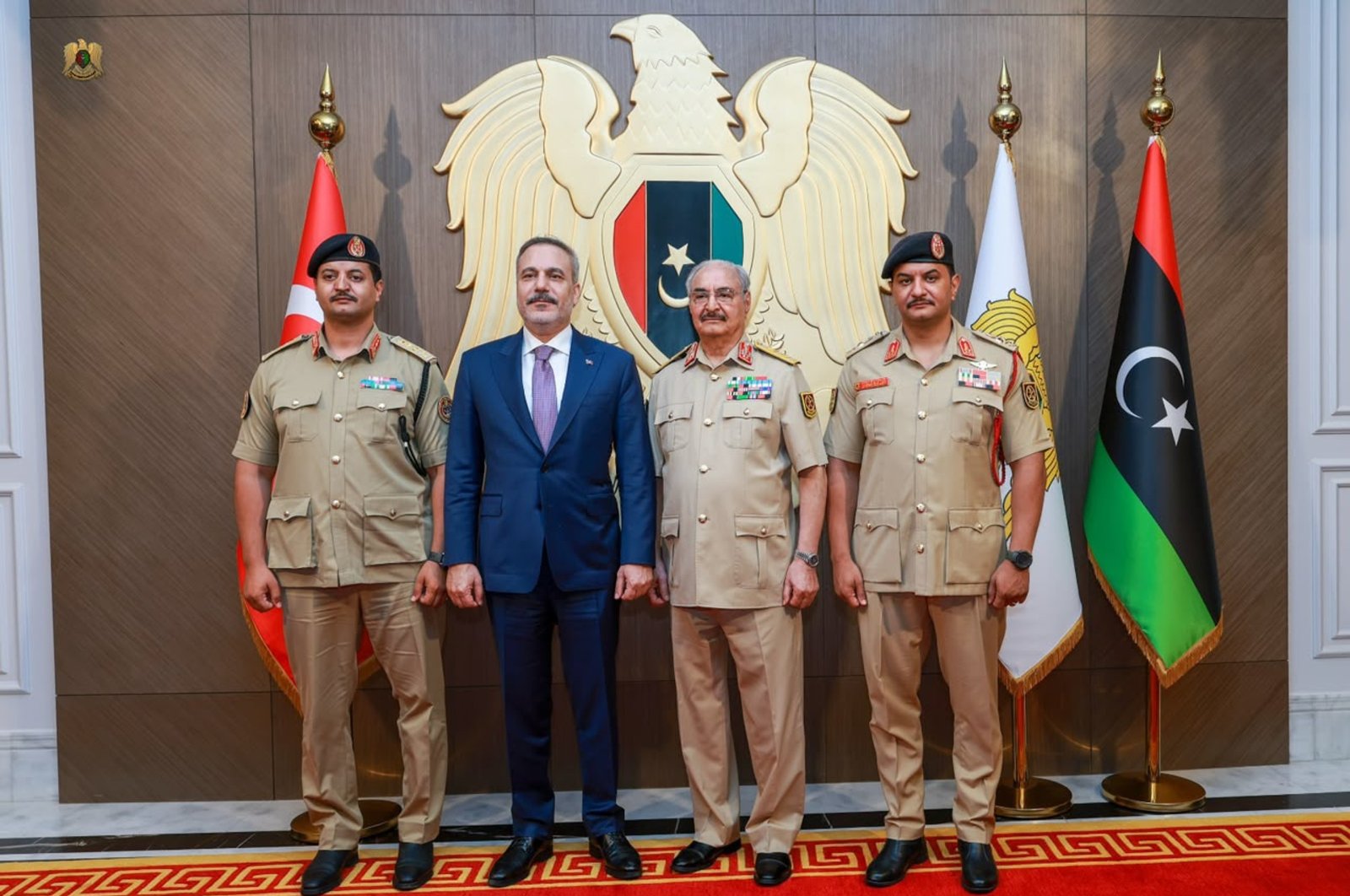
During the negotiations, Turkish Foreign Minister Hakan Fidan said on October 24, 2026, that the time had come to reunify the rival authorities in eastern and western Libya.
He also suggested that an announcement could be made soon, following a meeting he hosted in Istanbul with senior European diplomats and representatives of regional powers.
"We have now reached a stage where the conditions are ripe to permanently secure the reunification of the east and the west," Fidan told journalists.
"One of the most important pillars of national unification is how the military units currently controlled separately by both sides will be brought together under a single umbrella," he added.
"God willing, you will soon hear very good news about this from Turkiye."
The Real Dispute
Libyan sources say the first and most fundamental obstacle is that the two sides are not simply negotiating the integration of separate military units. They are negotiating the transfer of the actual power exercised by eastern and western military commanders to a joint military institution, as well as who will lead the unified army.
While Khalifa Haftar hopes to see his son and designated successor in command of the eastern-based army appointed Libya’s defense minister in a unified government, military and political figures in Tripoli reject this prospect, asking: How can someone who led a military assault on the capital and killed hundreds of Libyans be put in charge of our army?
In eastern Libya, military influence is concentrated in the hands of Khalifa Haftar and the General Command of forces under his leadership. In the west, power is divided among the Tripoli-based Government of National Unity and multiple armed formations, each with its own leadership, interests, and networks of influence.
Establishing a unified command raises a sensitive question: Will the forces be placed under a supreme military command with broad autonomy, or under a joint civilian authority empowered to appoint commanders and hold them accountable?
An analysis published by Le Monde on September 13, 2026 points out that the dispute goes beyond the allocation of positions. It reflects fundamentally different visions of the army’s role within the state.
In the east, where Khalifa Haftar and his sons hold power, the military institution enjoys clear primacy in the governing structure. In the west, particularly in the capital, Tripoli, placing the army under civilian political authority remains a much more sensitive issue.
Joint military exercises held in Sirte in April 2026 demonstrated that the participation of eastern and western forces in the same activity, during the joint Flintlock exercises, had not progressed beyond a stage of “coexistence.”
The two forces had not integrated their chains of command or communication systems, according to Sadeq Institute Director Anas el-Gomati. This remains difficult given that Haftar’s forces owe their allegiance to him rather than to a unified Libya.
An agreement on the army’s organizational structure would therefore fail to resolve the problem unless it clearly and bindingly determines who issues orders, who controls the budget and appointments, and how disputes between military commanders and civilian authorities are resolved.
The army unification talks cannot be separated from the broader U.S. initiative seeking to establish a unified executive authority bringing together the eastern and western camps.
According to Le Monde, the initiative discussed a possible arrangement under which a figure from Haftar’s camp would head the unified executive authority, while Abdul Hamid Dbeibeh would remain prime minister.
However, this was not a publicly announced final agreement, but rather a proposal reported to have been discussed during the negotiations.
One weakness in any agreement reached by representatives of the rival eastern and western authorities is the assumption that each side can commit all the armed and political forces operating within its sphere of influence.
In the east, Haftar commands broader and more centralized military influence, although this does not mean internal disagreements are absent.
In the west, power is fragmented among armed formations and centers of influence in Tripoli, Misrata, Zawiya and Zintan, whose calculations may conflict with any settlement reached by senior leaders.
Le Monde points out that Misrata, home to influential armed formations, could become a center of resistance to any arrangement perceived as granting the Haftar family excessive control over the unified army.
Competition among centers of power in western Libya could also make it difficult for the Tripoli government to guarantee the implementation of any agreement that lacks broader acceptance among local actors.
Negotiators may therefore succeed in reaching an initial understanding, but they will face a different test when they return to Libya: Will armed groups accept the new arrangements? Will they surrender their independent decision-making and sources of funding? And who will guarantee that the agreement is not used to weaken one side while strengthening the other?
Turkiye’s Role
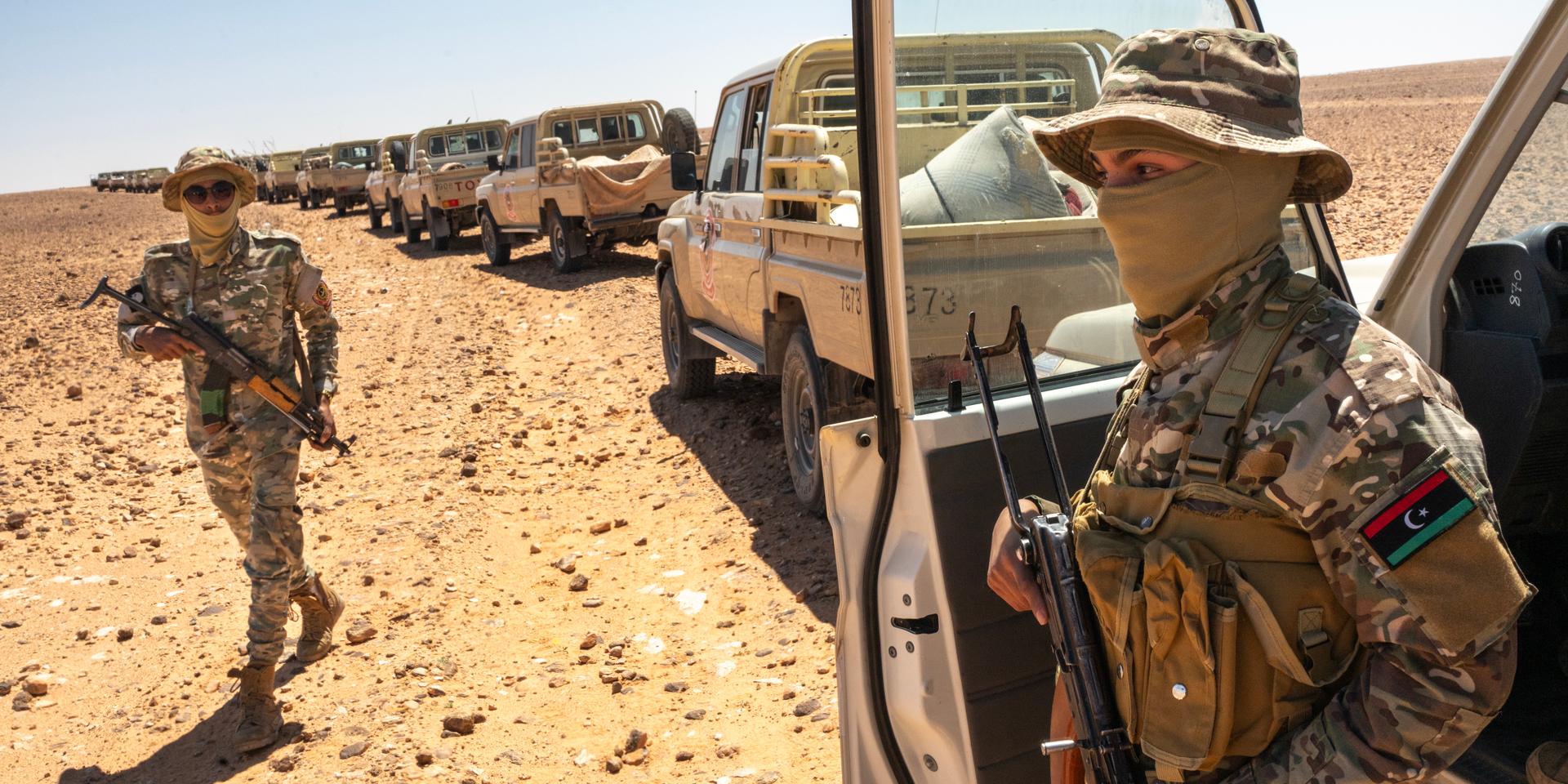
The shift in Turkiye’s relationship with Haftar’s camp is one of the most significant developments that made the talks possible. However, while Ankara has channels of communication with both sides, it does not hold all the keys to a settlement.
Turkiye supported the Tripoli government militarily during the war years, helping it counter Haftar’s 2019 offensive on the capital. In recent years, however, Ankara has expanded its relations with eastern authorities, making it one of the few countries able to engage with both sides.
But expanding relations does not necessarily mean having the power to impose a settlement. Turkiye’s rapprochement with the east is also driven by strategic and economic interests.
These include the maritime agreement signed with the Tripoli government in 2019, which the eastern-based House of Representatives approved on October 20, 2026, after years of rejecting it.
The decision drew objections from Egypt, Greece, Cyprus, and other European parties over its implications for maritime boundary delimitation and the interests of other countries in the eastern Mediterranean.
From Ankara’s perspective, closer ties with the east could strengthen efforts to safeguard the maritime agreement and expand economic and security cooperation. However, this does not mean Libyan factions will automatically accept any power-sharing formula, or that Turkish interests necessarily align with the calculations of all parties.
Nor is Libya an arena free of international competition. Egypt, the UAE, Russia, Turkiye, and the United States all have distinct interests and relationships with local actors.
The involvement of multiple foreign powers could facilitate a settlement if their interests converge, but it could also complicate the process if they disagree over who should lead Libya next or how power and resources should be distributed, according to reports by Reuters and Le Monde.
U.S. Sponsorship
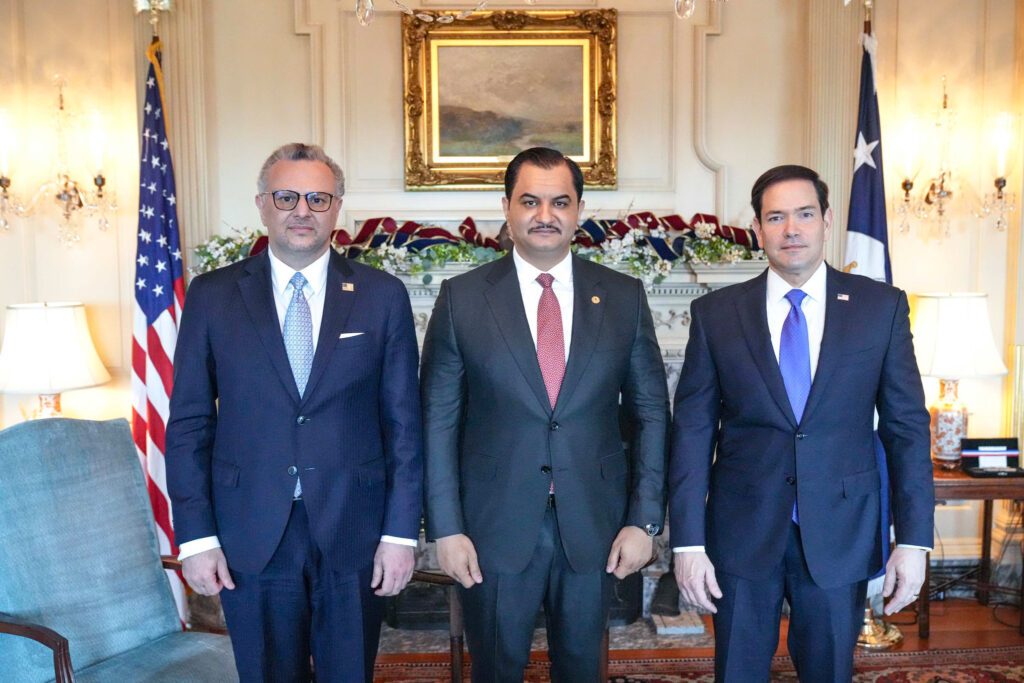
The so-called “Boulos Plan” to reunify Libya, named after U.S. envoy Massad Boulos, calls for Abdul Hamid Dbeibeh, head of the Tripoli-based government, to remain prime minister, while Saddam Haftar, son of the eastern Libyan military commander, would become head of the Presidential Council.
Although the United States has diplomatic and economic leverage and has helped bring the parties together and encourage security and financial cooperation, its ability to enforce a domestic agreement remains limited if the armed power brokers on the ground are not convinced by it, or if either camp believes the settlement will cost it its influence.
After 15 years of Washington largely remaining on the sidelines in Libya, Trump has sought to position himself as a peacemaker in the divided country, bridging the rift between rival authorities in the east and west through mediation efforts aimed at securing a power-sharing agreement.
However, rather than easing tensions, the initiative has triggered a frantic reshuffling of power balances and exposed the fragility of alliances on both sides.
According to Western assessments, the U.S. initiative faces four main constraints:
First, the lack of sufficient guarantees. Reaching an agreement on military leadership is not enough. Both sides need assurances that the unified army will not be used to settle scores or bring one side under the control of the other.
Second, conflicting interests. Negotiators may agree on broad principles but clash when it comes to allocating positions, budgets, and powers.
Third, implementation challenges. There is no guarantee that all armed formations in western Libya or the various forces within the eastern camp will abide by an agreement signed by their representatives.
Finally, competition between political tracks. A quick deal among existing power brokers could conflict with a UN-led process that links institutional unification to elections and a broader constitutional settlement.
According to the U.S. Congressional Research Service, political and local divisions, competition for power and resources, weak state institutions and security forces, and foreign intervention and support for rival factions have all been major factors behind the persistence of Libya’s crisis and the failure to build a stable state since 2011.
The decisive question now is whether the negotiations will lead to unified institutions under civilian authority, paving the way for elections, or produce a deal among centers of power that redistributes positions while leaving the roots of division intact.