Justice Through ‘Top-Up Packages’: Controversy in Egypt Over Imposing Court Fees

“According to lawyers, the system requires users to top up their balance in advance, much like electricity and water meters.”
As Egyptian courts prepare to implement the new Criminal Procedure Code in October 2026, and the Ministry of Justice launches a new digital platform as part of its remote litigation system, Egyptian lawyers have accused the authorities of imposing flat court fees, warning of the consequences of what they described as the commercialisation of justice.
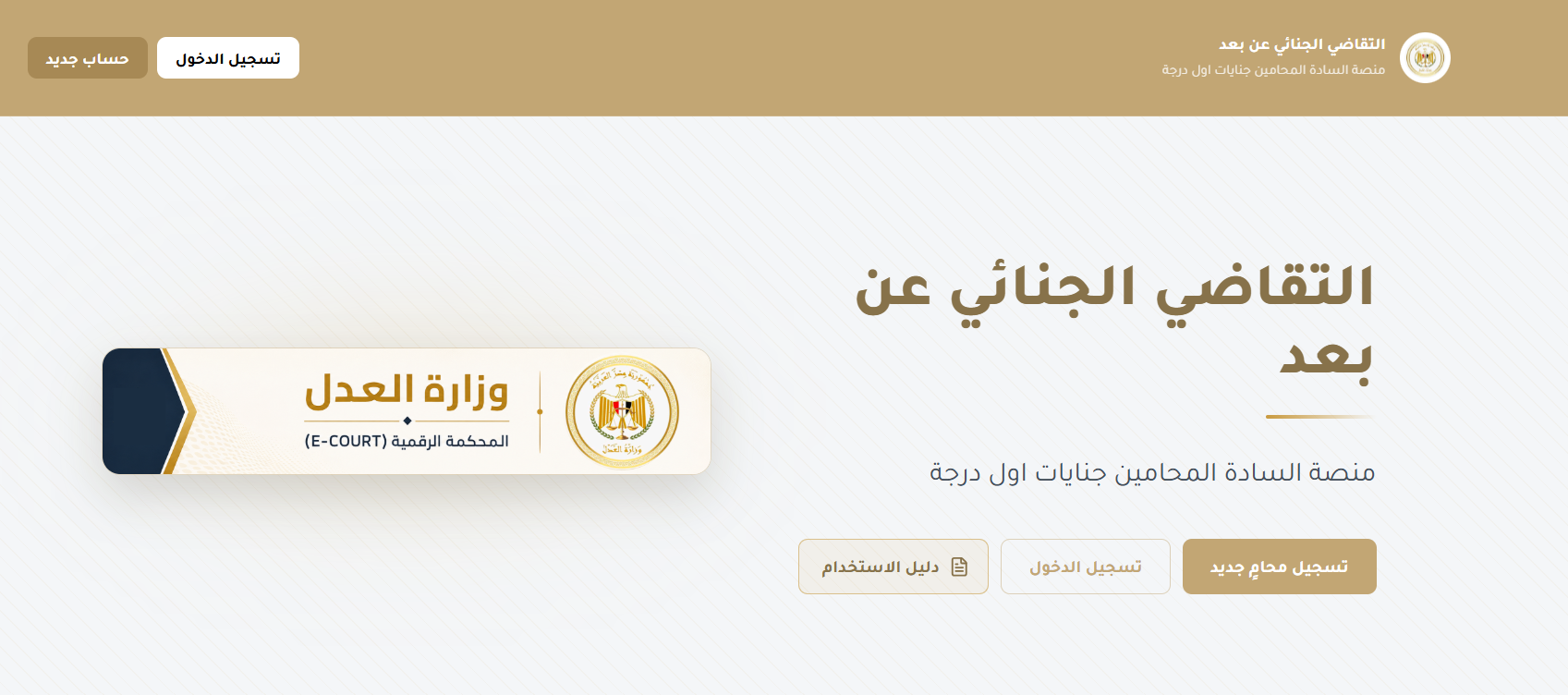
The Egyptian government said that the launch of the digital services platform for lawyers and the opening of registration were intended to pave the way for the activation of remote criminal litigation services as part of the implementation of the new Criminal Procedure Code.
However, lawyers said they were taken aback to find what amounted to a price list for litigation, resembling mobile phone packages for accessing essential services related to the right to litigate.
Lawyers who attempted to register on the platform explained that it requires lawyers to pay an annual subscription fee, in addition to a separate fee for attending each remote criminal court hearing, as well as fees for attending pretrial detention renewal hearings.
They added that further fees are charged for photocopying each page of criminal case files, which average around 500 pages, bringing the total photocopying cost to nearly 5,000 Egyptian pounds ($1 = 51 Egyptian pounds).
Lawyers must also pay 2,500 Egyptian pounds to receive text message notifications of court decisions as soon as they are issued.
According to lawyers, the system requires users to top up their accounts in advance, much like prepaid electricity and water meters, with the cost of various services, including attending hearings, renewing pretrial detention and requesting copies of case files, deducted from the balance. They consider this practice unlawful.
Lawyers have described the new fees, the way they are imposed and their potential impact on access to justice as an additional burden on both legal practitioners and citizens' right to litigate, while others argue that the measures go further, amounting to what they describe as the commercialisation of justice.
https://s3.eu-west-3.amazonaws.com/alestiklal/gallery/2026/9/28/1085734433.png
What Happened?
On September 8, 2026, Egypt's Ministry of Justice launched a remote criminal litigation platform, saying the move was part of preparations for the new Criminal Procedure Code No. 174 of 2025 to enter into force in early October 2026.
The platform offers lawyers a range of services, including attending criminal court hearings remotely, renewing pretrial detention, accessing case files and following up on court decisions. It also provides other litigation services, such as printing documents and obtaining copies of court records.
However, lawyers said they were taken aback by the high fees for remote electronic litigation. On September 9, al-Shorouk newspaper reported that the fees had been set at 500 Egyptian pounds for an annual subscription, 500 Egyptian pounds for attending a criminal court hearing remotely, 100 Egyptian pounds for attending a pretrial detention renewal hearing, 10 Egyptian pounds for photocopying each page of a case file and 5 Egyptian pounds per text message containing updates on court decisions.
The Ministry of Justice defended the new system, explaining that the use of remote hearing services is optional and that checking hearing schedules remains free of charge. Traditional procedures also remain available to those who wish to use them.
To collect these fees, Egypt's Ministry of Justice signed three cooperation protocols on June 23, 2026, at the request of the head of the regime, Abdel Fattah el-Sisi, with Banque Misr, financial technology company e-finance, electronic payments company B Plus and Delta Misr for Payments, which operates under the name Sahl.
According to the State Information Service, which is affiliated with the presidency, the protocols aim to digitise judicial services and expand the implementation of electronic payment and collection systems.
Mechanisms have also been established to collect fees through bank cards, digital platforms, electronic payment platforms and companies, mobile applications and government-operated payment terminals available at courts. Direct payments are also permitted, with an instalment option available.
https://www.facebook.com/photo.php?fbid=1106670895349940&set=a.208764925140546&type=3&ref=embed_post
Exorbitant Fees
Against the backdrop of a broader government drive in Egypt, linked to the country's economic conditions, to increase revenue from services and taxes imposed on the public, the authorities have been imposing excessive fees for a wide range of services, including the issuance of official documents, building permits, driving licences and other services. Judicial services have now been affected by these fees as well.
The excessive fees set by Egypt's Ministry of Justice for certain services on its remote criminal litigation platform have sparked legal and professional debate over the extent to which litigants and lawyers should bear the cost of judicial services.
Critics have gone so far as to use the term ‘commercialisation of justice’ to describe this trend.
Lawyers told Al-Estiklal that the issue is not the existence of court fees, which have historically been imposed in Egypt and other countries, but rather their excessive levels, which risk turning access to justice into a service that can be purchased according to one's ability to pay.
They stressed that many litigants, particularly the families of poor people and detainees who have been left without a source of income following the arrest of their breadwinners, including children who have been without financial support for more than 10 years, cannot even afford the basic costs of litigation.
A lawyer who asked to remain anonymous explained that some lawyers, particularly those working with human rights organisations, volunteer to defend the families of detainees free of charge. However, the imposition of exorbitant litigation fees makes this task more difficult.
"Lawyers will have to pay these costs out of their own pockets, or families will refrain from pursuing litigation and seeking to defend their rights. This constitutes a serious legal flaw and deprives them of their right to litigate, as it has become a 'commodity' they cannot afford, even though it is an inherent and constitutional right," he explained.
Another lawyer who uses the remote litigation system estimated that the fees a lawyer might have to pay in a single criminal case could amount to nearly 5,000 Egyptian pounds (approximately $100). These costs would ultimately be borne by the citizen seeking to pursue litigation, in addition to the lawyer's fees.
The final cost varies depending on the number of hearings, the number of pretrial detention renewals, the number of pages the lawyer needs and whether the lawyer purchases a text message package or pays for each message individually.
The lawyer noted that the fees published on the litigation platform include a 500-Egyptian pound annual subscription, 500 Egyptian pounds for attending each remote criminal court hearing, 100 Egyptian pounds for each pretrial detention renewal hearing, 10 Egyptian pounds for each photocopied page and 5 pounds per text message, or 2,500 Egyptian pounds for a package of 500 messages.
To illustrate the costs, the lawyer calculated that a case involving just five hearings, assuming it is a criminal case with five remote hearings, would require the lawyer (or citizen) to pay a 500-pound annual subscription, plus 2,500 Egyptian pounds for the five hearings (5 × 500 = 2,500 Egyptian pounds).
https://www.noonpost.com/wp-content/uploads/2025/04/noonpost-3566591-jpeg.webp
In addition, there would be two pretrial detention renewal hearings × 100 = 200 Egyptian pounds, photocopying 30 pages × 10 = 300 Egyptian pounds, and 20 text messages × 5 = 100 Egyptian pounds, bringing the total to 3,600 Egyptian pounds.
The cost could rise to 5,000 Egyptian pounds or more if the case extends over several hearings, not to mention tips for court ushers and other expenses, bringing the total cost to nearly $100 in fees alone.
This has led lawyers and human rights advocates to argue that digital services are not merely optional services, particularly when they are directly connected to a lawyer's exercise of the right to defence, but are effectively mandatory and subject to fees; otherwise, there is no access to litigation.
They warned that turning the judiciary into an "investment service" would impose heavy financial burdens on ordinary citizens and those with limited means, obstructing their access to justice and potentially prompting them to abandon their rights or resort to traditional methods such as customary dispute-resolution sessions, according to al-Manassa on September 8.
Meanwhile, Mahmoud el-Dakhli, secretary-general of the Egyptian Bar Association, categorically described the fees as "unconstitutional," arguing that they were introduced through administrative decisions rather than by law.
Others questioned whether the infrastructure and internet networks at courts were ready to handle the system, stressing that recurring technical problems have begun to delay the resolution of cases and waste litigants' time.
By contrast, officials at the Ministry of Justice say the platform is intended to reduce the time, travel and costs involved, noting that some fees are linked to services actually provided electronically.
The head of the Justice Minister's Technical Office said that remote attendance could save lawyers the cost of travelling to another governorate, while some digital services are available for fees equivalent to those charged for their paper-based counterparts.
Article 97 of the Egyptian Constitution stipulates that litigation is a safeguarded and guaranteed right for all and requires the state to bring judicial bodies closer to citizens and work to ensure that cases are resolved swiftly.
Article 98 also guarantees the right to defence and requires the law to ensure that people who are financially unable to do so have access to the means of seeking justice and defending their rights.
This means that fees that impose financial burdens restricting or obstructing the fundamental right of access to the courts or the right to defence would be unlawful.
This principle has been clearly reflected in rulings by the Supreme Constitutional Court. In a ruling concerning the Judicial Fees Law, the court affirmed that regulating the right to litigate may not impose financial or procedural burdens that restrict or obstruct the fundamental right, or turn litigation into an unjustified financial risk.
In 2025, lawyers also challenged before the administrative courts increases in fees for services at the Cairo Court of Appeal, covering 33 judicial services, including the registration of statements of claim, certain appeal procedures, and obtaining copies of judgments and documents.
The Egyptian Centre for Economic and Social Rights said in a statement in early June 2025 that, in its view, the fees had become a requirement for certain procedures and constituted a restriction on access to justice.
The Egyptian Initiative for Personal Rights also cited an earlier ruling by the Supreme Administrative Court that annulled fees imposed on automated services at the Ismailia Court of Appeal, based on the principle that the imposition of fees must have a legal basis, according to the initiative's account of the ruling.
https://www.fakartany.net/wp-content/uploads/2025/04/Untitled-design-1.jpg
Lawsuit Challenging the Fees
The new decisions prompted a number of lawyers, including Khaled Ali, to file a lawsuit against the Ministry of Justice before the administrative courts on September 9.
They argued that imposing mandatory fees for certain services without a legislative basis constitutes a restriction on the right to litigate and the right to defence.
The plaintiffs said the amounts constituted new, additional and mandatory fees to be collected from anyone practising their profession through the remote litigation system, under the new Criminal Procedure Code, which is scheduled to enter into force in early October 2026.
They added that their objection was not limited to the amount of the fees, but also concerned the principle of imposing them without a legislative basis.
They pointed out that, in the absence of a legal framework establishing the criteria for setting these fees, identifying the authority empowered to impose them and providing safeguards for the rights of defendants and the defence, there would be nothing to prevent the fees from being increased without limit in the future.
The lawsuit also relied on established rulings by the Supreme Constitutional Court, which have held that the right to litigate requires enabling every litigant to access the courts in an accessible manner, without being burdened by financial costs or obstructed by procedural barriers.
It also argued that the right to defence is inseparable from the right to litigate, as the two are complementary rights that ensure access to justice.
The lawsuit also referred to Article 38 of the Constitution, which stipulates that no person may be required to pay taxes or fees except within the limits prescribed by law.
Lawyer Khaled Ali said the lawsuit seeks to annul the challenged decision and the consequences arising from it, stressing that the fees imposed for using the platform violate the Constitution and amount to an usurpation of the legislature's authority, since fees may only be imposed within the limits established by law.
Ali explained on his Facebook account that the announced fees represent additional and mandatory financial burdens on lawyers.
He argued that access to the platform is not optional, but has become a means through which lawyers practise their profession and defend their clients in cases involving investigations, pretrial detention renewals or remote trials.
He stressed that imposing a mandatory fee for the use of remote litigation services, without a law establishing those fees and setting the rules governing them, constitutes a restriction on the right to litigate and the right to defence, while imposing additional financial burdens on lawyers and litigants.
He noted that the lawsuit relied on constitutional provisions concerning the right to litigate and the right to defence, particularly Articles 97 and 98, as well as Article 38, which stipulates that no person may be required to pay taxes or fees except within the limits established by law.
He also stressed that the lawsuit cited previous rulings by the Supreme Constitutional Court and the Supreme Administrative Court, arguing that judicial fees must be imposed through the constitutionally prescribed legislative instrument, rather than through an administrative decision issued by the Ministry of Justice.
According to the lawsuit, setting and imposing these fees through a decision by the Ministry of Justice amounts to an usurpation of the legislature's authority, because the creation of fees and the imposition of general financial burdens must be carried out through the legislative instrument prescribed by the Constitution.
The lawsuit stated that the challenged fees constitute an obstacle for the plaintiffs and litigants and impose an additional financial burden on them, on top of their other financial obligations.
https://www.facebook.com/khaled.ali.72/posts/4304157339729591?ref=embed_post
Commercialisation of Justice
The expansion of fees for judicial services has opened a debate over the limits of turning justice into a paid service and the extent to which this is compatible with the constitutional right to litigate, with critics describing these exorbitant fees as the commercialisation of justice.
Commercialisation of justice refers to the transformation of justice or litigation procedures into a commodity that can be obtained or influenced in exchange for money or some material benefit.
In other words, it is an accusation that Egypt's judicial system, or the authorities represented by the Ministry of Justice, are allowing money or commercial interests to influence court rulings or access to justice.
The Justice Support Foundation at the Arab Centre for the Independence of the Judiciary issued a legal paper on September 11 entitled ‘Commercialising Justice… Violating the Right of Access to Justice’, examining the constitutional and legal framework governing judicial fees.
The paper reviewed examples of unlawful increases in judicial fees since 2018 that were imposed through administrative decisions by court presidents and heads of prosecution offices, in violation of the Constitution and the law, and which, it argued, violate citizens' right to access justice and obtain redress.
The paper concluded that these fees should be abolished and called on the Egyptian Bar Association to challenge unlawful increases in judicial fees and defend citizens' right to litigate without discrimination, particularly poor people who are unable to pay such excessive fees.
Bassem el-Sawaf, a member of parliament representing the Egyptian Social Democratic Party, also submitted a parliamentary question to the prime minister and the justice minister concerning remote litigation fees and their impact on the right to litigate and the right to defence.
In his question, he said, "The justice system has recently witnessed a growing expansion in the imposition of fees and financial charges associated with litigation procedures, obtaining documents and copies, and enforcing judgments, culminating in the introduction of new fees for remote litigation services."
He added that "this raises fundamental questions about the legal and constitutional limits on imposing these burdens, and the extent to which they affect citizens' ability to access the courts, exercise their rights and defend them."
He said, "The cost of a single lawsuit, from its initiation through enforcement of the judgment, can now reach thousands of pounds, excluding lawyers' fees and transportation costs."
He questioned the fact that the cost of photocopying an official document in some criminal case files could reach 40 pounds for the first page and 35 pounds for each subsequent page, meaning that photocopying a 1,000-page file could cost more than 35,000 pounds (approximately US$650), ultimately paid by the citizen seeking justice.
He described the danger of these fees as turning justice into a "commodity," stressing that justice is not a luxury service, litigation is not a commodity, and the right to defence should not depend on one's ability to pay.
What Does Commercialisation of Justice Mean?
Commercialisation of justice is a term used to describe the transformation of justice and the judiciary from a public service and a fundamental right guaranteed by the state into a commodity governed by market principles, including supply, demand and financial capacity.
In this situation, access to justice becomes available to those who can afford to pay, rather than litigation being a means of defending rights and freedoms guaranteed equally to everyone.
Commercialisation of justice is not a specific legal term in Egyptian legislation. Rather, it is a critical expression used when justice is viewed as a service with a price, making financial capacity a factor affecting a person's ability to access the courts or benefit from judicial procedures.
Commercialisation is said to occur when fees move beyond being limited procedural charges or contributions toward the costs of litigation and reach a level that can constitute a barrier for a person seeking to enforce a right, particularly when the fees are mandatory, high or attached to procedures that litigants cannot reasonably avoid.
Examples and forms of the commercialisation of justice include the privatisation of the judicial system and growing reliance on private arbitration centres, security companies and legal firms to manage disputes outside the official court system.