Al-Khalidi: Gaza Is Ready for Elections, Arrangements for Voting in Occupied East Jerusalem Underway (Exclusive)
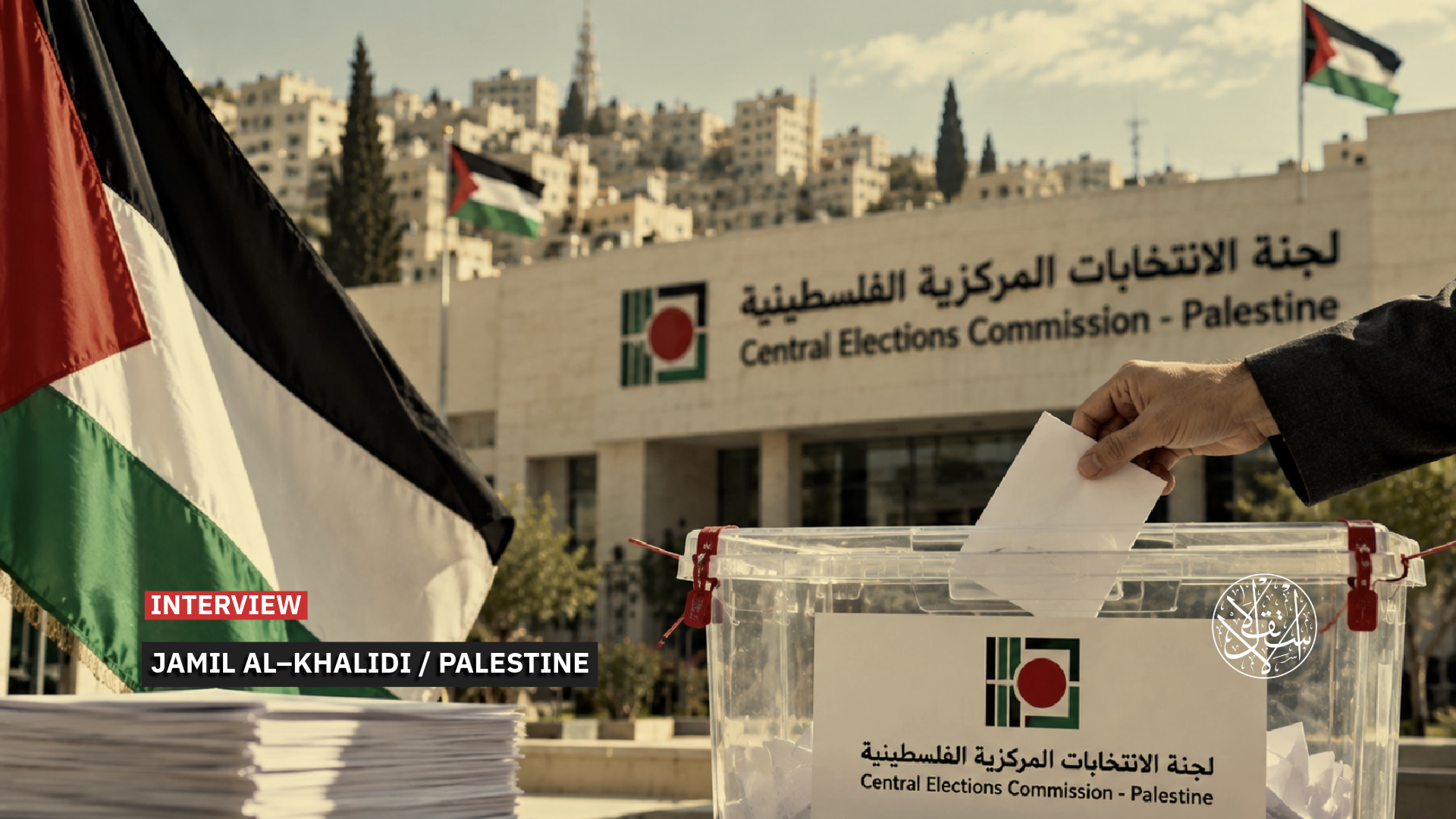
“The infrastructure has been destroyed, creating one of the main challenges facing the CEC, but there are still reasonable and workable alternatives.”
As Palestinian local elections draw closer, attention is turning to Gaza and occupied Jerusalem, where unprecedented logistical, security, and on-the-ground challenges are forcing election authorities to look for alternatives and new mechanisms to ensure voting can take place in areas devastated by the war.
In this interview, Jamil al-Khalidi, the regional director of the Palestinian Central Elections Commission (CEC) in the Gaza Strip, discusses the election’s readiness, plans for opening polling stations, and alternatives for war-damaged areas, as well as the participation of Palestinians in occupied Jerusalem, election security, and the situation of displaced people from Gaza who are currently in Egypt.
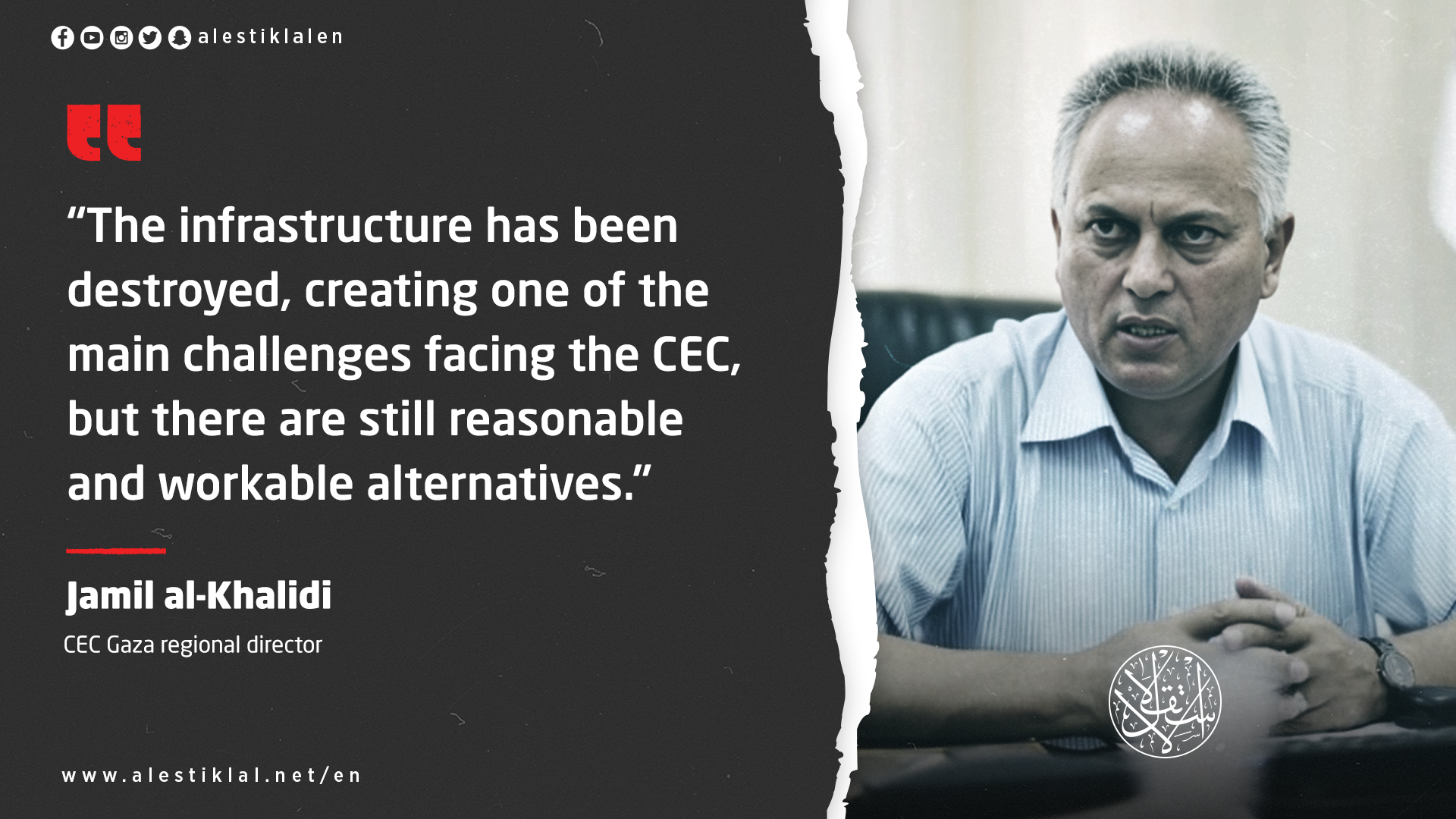
Gaza Is Ready Despite the Devastation
How far have preparations for local elections in the Gaza Strip progressed?
At the Palestinian Central Elections Commission, we are working according to a timeline covering every stage of the electoral process, beginning with updating the voter registry and ending with election day, the vote count, and the announcement of the results.
We are now approaching the stage of opening nominations in the West Bank, the al-Quds (occupied Jerusalem), and the Gaza Strip. An office for the Deir al-Balah electoral district will open in Gaza to receive applications starting September 26. We are logistically ready, particularly when it comes to preparing the polling stations that will be available on election day.
Polling stations will be distributed across areas of the Gaza Strip that remain accessible, particularly displacement areas. We have conducted field visits across the Strip to ensure that polling stations cover the inhabited geographic areas where voters live.
There will be roughly 800 polling stations, and we estimate that more than 1.1 million voters are registered in the Gaza Strip.
How will you open polling stations across the Strip, particularly in areas experiencing widespread displacement?
Yes, we have a practical plan. Polling stations will be distributed across areas of the Gaza Strip that remain accessible, particularly displacement areas.
We have conducted field visits to different areas to ensure that polling stations cover the inhabited geographic areas where voters live, and we have approximately 800 polling stations.
How suitable is Gaza’s current infrastructure for holding elections?
The infrastructure has been destroyed, which is one of the challenges facing the commission, but there are still reasonable and workable alternatives.
We have been in contact with the Ministry of Education, and we found that many schools could be used as polling stations, even though some have been partially damaged or are being used by displaced people.
We have also contacted the United Nations Relief and UNRWA to provide us with a list of available schools, as well as government-run education points set up in tents, which could also be used as polling stations.
Logistically, there are also obstacles caused by the blockade, including the fact that ballot boxes, ballots, and election ink have not been allowed to enter. But we have begun finding local alternatives for these materials in line with international standards.
What does the CEC need to ensure free, fair, and transparent elections in Gaza?
Several factors are involved, including the presence of international and local observers, journalists, and the media, as well as the procedures followed by the Central Elections Commission and its trained and qualified election workers.
We have been in contact with foreign institutions and diplomatic missions to facilitate the participation of international election observation missions. Everyone has expressed a willingness to participate, but one international mission was prevented from reaching the Gaza Strip.
There is also local monitoring by civil society organizations with experience in election observation, along with journalists and the media.
But the most important factor is security: creating an environment that allows candidates to move freely and hold public meetings, and voters to reach polling stations freely.
What alternatives has the CEC prepared for areas that remain devastated or lack suitable polling stations?
Despite the destruction of the infrastructure, there are still reasonable and workable alternatives. Schools that remain usable, UNRWA schools, and government-run education points set up in tents can all be used as polling stations.
We have conducted field visits to different areas to ensure that all inhabited geographic areas where voters live are covered.
Security Is the Key to Elections
How will you deal with the possibility that some areas of Gaza may be inaccessible on election day for security reasons?
If an emergency occurs at a polling station, the CEC authorizes the station’s head to consult with the Elections Commission and the electoral district office to determine the appropriate course of action.
The polling station can be closed for a short period if necessary, with the lost voting time made up during the final hours of election day, without affecting the electoral process as a whole.
Do the emergency plans include relocating polling stations or extending voting hours if the process faces obstacles on the ground?
There are mechanisms for dealing with emergencies. If an emergency occurs at a polling station, it can be closed for a specific period, with the lost voting time made up at the end of election day according to the mechanism determined by the CEC.
Who will be responsible for securing the electoral process and protecting polling stations?
The electoral process cannot proceed without security and protection. The CEC is in contact with all relevant authorities involved in this matter, and we will soon announce the mechanism for securing and protecting the voting process and the electoral process as a whole.
What is the nature of the communication with the Gaza Committee regarding the elections?
All stages of the electoral process are being conducted under the auspices of the Palestinian National Authority, which has jurisdiction over the process, and the presidential decree was issued by the president of the Palestinian National Authority.
As for the administrative committee in Gaza, it has no involvement in the elections at this point. If it enters the Gaza Strip before the elections are held, the situation will be different, particularly with regard to security arrangements. At the political level, a decision will have to be made on what role it will play in protecting the electoral process.
Al-Quds Awaits the Political Decision
What alternatives has the CEC prepared to ensure that Palestinians in al-Quds can participate?
The CEC has several alternatives if the Palestinian leadership adopts any option for including Palestinians in al-Quds in the electoral process.
We have alternatives that preserve al-Quds’ symbolic importance in terms of its population, geographic location, and connection to the rest of the Palestinian territories.
We will be ready to include Palestinians of al-Quds in the electoral process, as was the case in 2006, and there are other procedures and alternatives as well. The political leadership is the one that makes the decision, and the CEC will implement it.
What indications or arrangements are in place so far regarding the possibility of Palestinians in al-Quds participating in the elections?
This is a matter for the leadership and the political level. There is communication with the international community to convey a message to the Israelis and seek an answer on how those Palestinians can participate in the electoral process.
The CEC is ready to implement any alternative decided by the political leadership to enable Palestinians in al-Quds to participate.
What is your assessment of the November 28 election date given the current circumstances?
We have a presidential decree calling for elections to be held on November 28 of this year, and we are working on that basis. The CEC is ready and will be ready on November 28 to hold the elections in accordance with the decree.
The CEC is not discussing postponement or cancellation. We hear what is being said about those possibilities in the media, but we hope the conditions will be suitable for holding the elections on the scheduled date.
What circumstances could lead the CEC to recommend postponing the vote?
There are currently no specific circumstances that would lead the CEC to recommend a postponement. The CEC is working in accordance with the presidential decree and the date set for November 28, and it is ready to hold the elections.
The security situation and the difficult security conditions are a challenge to the electoral process, and the necessary conditions must be provided to ensure that the elections can take place.
If the elections cannot be held on schedule, who has the final say on postponement?
The electoral process is being conducted under a presidential decree issued by the president of the Palestinian National Authority, and the CEC is operating in accordance with that decree.
As for al-Quds, the political leadership makes the decision, and the CEC is responsible for implementing it.
Voters in Egypt
What about Palestinians from the Gaza Strip who left for Egypt during the Israeli war? Will they be included in the electoral process?
We are treating this group as if they were still in the Gaza Strip because their departure was forced by the war.
According to the CEC’s estimate, around 120,000 voters from the Gaza Strip who were forcibly displaced are currently in Egypt.
The CEC has contacted the Palestinian presidency to inform it that, subject to approval by the political leadership, it intends to include these displaced voters in the elections.
The CEC is awaiting a response from the Palestinian Authority and the presidency. There will then be coordination between the Palestinian Authority and the Egyptian authorities to establish an appropriate mechanism for enabling the displaced Palestinians in Egypt to participate.
As for candidacy, those who were displaced to Egypt during the war are eligible to run for office because they remain residents of the Palestinian territories and have a residential address there.