Morocco’s Zionists Push for a Woman Prime Minister, Islamists Push Back: What’s Behind It?
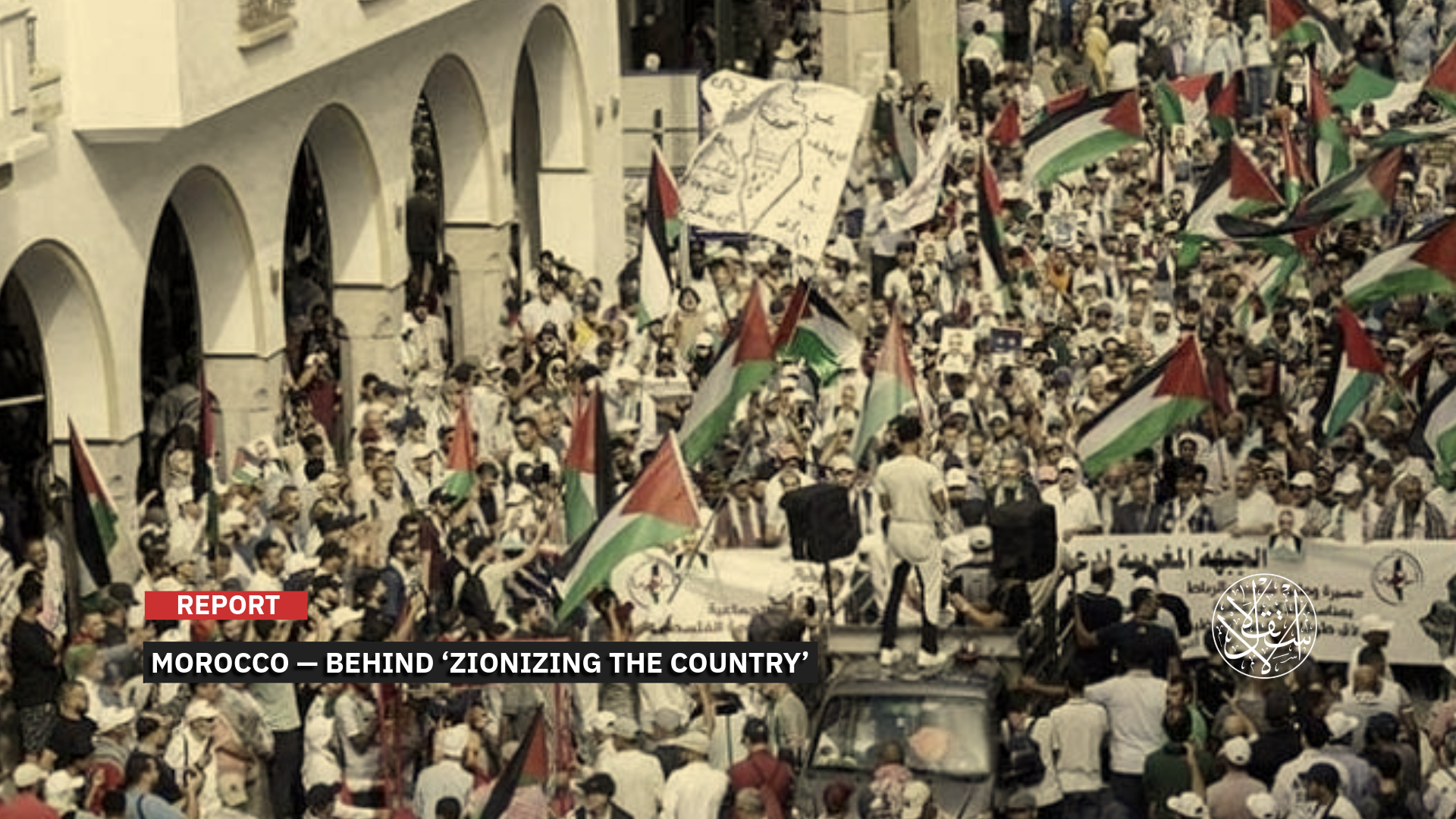
The announcement is clearly aimed at undermining the Justice and Development Party’s campaign.
Amid intensifying political competition in Morocco following the legislative elections held on September 23, 2026, the debate over the “We Are All Israelis” movement has resurfaced after it announced its support for the Authenticity and Modernity Party (PAM), which came first in the election.
Ahmed Charai, founder of Morocco’s “We Are All Israelis” movement and owner of one of the country’s largest media groups, announced his support for PAM, known as the “Tractor” Party, and its leadership member Fatima Zahra Mansouri to become prime minister.
In an article published on his website, Ahdath Info, on September 17, Charai said his position “should come as no surprise,” noting that expressing political views is common in major democracies and, in his view, does not affect the professional commitment of the media outlets he heads.
He added that the Justice and Development Party, which led the Moroccan government from 2011 to 2021, has a vision and reference framework for society that, in his description, differs from the “open, enlightened modernist outlook” embraced and promoted by his media group.
He said the next phase requires the rise of a political force capable of combining economic growth, social equity, and comprehensive social modernization, arguing that PAM is, in his view, the best option for advancing this approach.
He added that the party is based on what he described as a “struggle for the values of modernity,” pride in the components and diversity of Moroccan identity, opposition to ideological isolation, efforts to address pressing social issues, and the promotion of an alternative capable of driving change in the face of conservative currents.
Charai owns Global Media Holding, a holding company that includes several Moroccan media outlets, including Medi Radio, the news website Kifach.com, and Ahdath Info, where he serves as chairman of the board and publisher.
The group also includes The Observer of Morocco and Africa (L’Observateur du Maroc et d’Afrique) magazine and LalaMoulati.
Charai also serves on the boards of several professional organizations, including the National Association of Media and Publishers (ANME). He is also an adviser at the “Jerusalem Institute for Strategy and Security” and a board member of the Atlantic Council in Washington.
Angry Reactions
A large number of Moroccan political and civil society figures and activists reacted to Charai’s statements, including Azyz Hnawy, secretary-general of the Moroccan Observatory Against Normalization. In a Facebook post, Hnawy said that Charai is backed by the “Zionist JISS organization, led by Colonel Lerman, which is making this known through its board member, Ahmed Charai.”
He also pointed to Charai’s media outlets, describing them as a media network serving authoritarianism and anti-democratic rule. He said the outlets had previously received nearly 20 billion centimes, more than $20 million, in 2021 from Budget Director Fouzi Lekjaa to support what he called the National Association of Media and Publishers, which Charai and others founded.
Journalist Ali Anouzla, meanwhile, said Ahmed Charai, who coined the phrase “We Are All Israelis,” had simply switched sides. Until recently, he said, Aziz Akhannouch and his party had been presented as the face of modernity, with Akhannouch portrayed as a successful businessman capable of building a social state and leading Morocco’s development.
“He and his media group continued to benefit from his support, backing, and defending his project until the evening of September 18, 2026,” he added.
“Today, with the instructions having been issued, the compass has turned, and PAM has become the one presented as the force behind a ‘modern and progressive project,’ capable of inspiring hope and confidence and building the future, while promoting a new phase led by the champion of the ‘struggle for the values of modernity.’”
“That is fine. Every era has its sun, and every sun has its worshippers. It is in the nature of ‘sun worshippers’ to change their faces wherever the sun turns,” Anouzla said.
Human rights activist and university professor Latifa el-Bouhsini, meanwhile, addressed Charai directly, writing, “The ‘Tractor’ Party has nothing to do with modernity, contemporaneity, or even authenticity.”
“It is essentially an exclusionist party that has evolved into a force bent on eliminating its opponents and an active member of the rent-seeking cartel.”
In another Facebook post, she wrote, “There is complete consistency between Zionism and defending illicit enrichment. Charai is calling on people to vote for one of the oligarchy’s figures, the daughter of a pasha from the PAM.”
“There are issues on which there is complete and clearly expressed consensus: national sovereignty, rejecting normalization and supporting Palestine, and rejecting the oligarchy and the corruption that comes with it.”
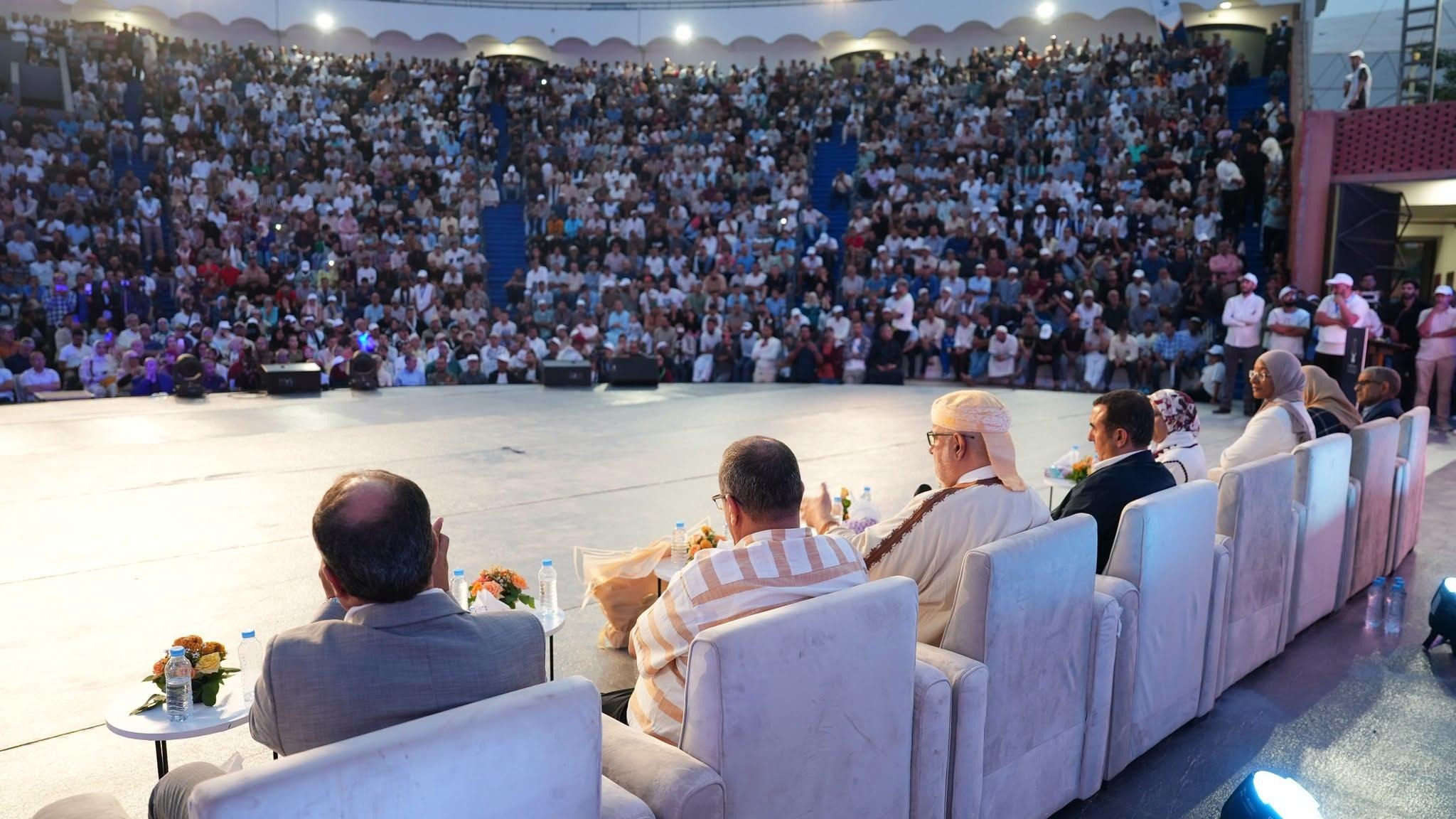
At the party level, the first response to Charai’s article came from Justice and Development Party Secretary-General Abdelilah Benkirane, who strongly criticized Charai and called on citizens to stand up to anyone seeking to “Zionize” the country.
Speaking at a party meeting in Taroudant in southern Morocco on September 19, Benkirane said, “As for his call to support Fatima Zahra to become prime minister, we are waiting for her to tell him, ‘Stay away from me,’ otherwise we will understand that she is Israel’s candidate to become Morocco’s prime minister.”
The leader of the Justice and Development Party said the genocide in Palestine over the past several years had exposed the Israeli Occupation’s brutal face, killing tens of thousands of children, women, and men and destroying everything in the Gaza Strip. Yet, he said, some people had the audacity to declare, “We are all Israelis.”
“You alone are Israeli and Zionist. We are not,” Benkirane continued, stressing that his party had rejected, continues to reject, and will continue to reject normalization. He said Israeli penetration means infiltrating society and state institutions and must be firmly resisted.
Benkirane had previously spoken at numerous internal party meetings and public gatherings about his rejection of and disassociation from Charai’s “We Are All Israelis” slogan, calling on those who work with him and those close to him to reject what he described as a shameful and degrading label with grave consequences in this life and the hereafter.
Israeli Spaces
In his analysis of the announcement, writer and analyst Mustafa el-Rashidi said it carried significance beyond a personal position on a party taking part in the elections, given that Charai operates within established American and Israeli political and intellectual circles.
In an article published by Dinpresse on September 19, el-Rashidi wrote, “This is about a media figure with influence and publicly acknowledged ties to international centers close to U.S. and Israeli decision-makers, choosing to announce his position just days before the legislative elections.”
“The timing of the article raises further questions because it came after Morocco and Israel announced an agreement to upgrade diplomatic representation, open two embassies, and appoint ambassadors.”
El-Rashidi said Charai’s support for a particular party could come to be viewed as an endorsement of the political current he sees as best positioned to safeguard the direction of the new phase in foreign policy, the economy, and culture.
He stressed that Charai’s use of the phrase “modern and progressive project” echoes the language surrounding the founding and early rise of PAM, when the party presented itself as a political force capable of confronting the Islamists and reshaping the political landscape around a bloc close to the state.
He argued that this rhetoric shifts the election away from competition over economic and social programs and toward a contest over the identity of society and the direction of the state. He said this shift gives the Justice and Development Party a clear electoral opportunity, as it can rally its base around defending Moroccan identity, rejecting normalization, and confronting the influence of money and the media.
Meanwhile, the local website Zone24 published an article on September 18 arguing that Charai had gone beyond expressing a personal view on the elections by putting his media influence behind PAM and discussing the possibility of Fatima Zahra Mansouri becoming the next prime minister.
As if Moroccans now have nothing left to do but wait for the ballot boxes to deliver a verdict on a choice that has already been laid out in a newspaper article. This is precisely where the public has the right to ask Charai: if September 23 is the day of decision, and if Moroccans are the ones who will choose their representatives in parliament, where does this confidence in speaking about the next prime minister come from before voters have even cast their ballots?
The website stressed that the problem begins when this personal choice turns into rhetoric suggesting that the election result can be predetermined or that certain political options enjoy special legitimacy before receiving it from the ballot box.
More troubling is the attempt to link this choice to what could be understood as royal preference or to seek direct or indirect shelter behind the phrase ‘Our King wants it.’ Presenting political choices this way is not only unconvincing but also undermines democratic debate itself.
The website warned that King Mohammed VI is not the head of a political party, and the monarchy is not a participant in the electoral contest. It argued that turning any party position into something resembling a ‘royal choice’ is unacceptable. No one has the right to speak on behalf of the monarchy, and the king’s image or status should not be used to strengthen the electoral position of one party or another.”
Targeting the Islamists
Commenting on Charai’s article, political analyst and activist Hassan Hamouro said Charai, who heads a multi-outlet media group and is known for his outspoken hostility toward the Justice and Development Party, had made a striking move by declaring his support for PAM, or at least part of it.
Speaking to Al-Estiklal, Hamouro said that while every citizen, media figure, or other individual has the right to support any political party, Charai’s announcement “is clearly aimed at the Justice and Development Party’s campaign, with the goal of distracting the party’s leadership and shifting the focus of its campaign message.”
He cautioned that “politics cannot be understood through intentions alone. The timing of events and their broader context also matter. It can therefore be argued that the announcement upgrading Morocco’s relations with the Israeli Occupation to ambassadorial level is intended to deprive the Justice and Development Party of an electoral issue that its opponents associate with the party: opposition to normalization.
He added that it could also be an attempt to shift the electoral mood by cooling support among voters who consider opposition to normalization one of the factors in deciding whether to vote for the Justice and Development Party.
“Charai’s group announcing its support for the PAM could also be seen as an attempt to distract from the Justice and Development Party’s campaign message, primarily to ease pressure on Prime Minister Aziz Akhannouch and reduce the potential electoral impact of public dissatisfaction with the government’s record on the number of seats won by the Justice and Development Party,” the political analyst added.
Hamouro stressed that the Justice and Development Party had succeeded in making the government’s record a central issue in the election debate and that its sustained messaging had helped create a broader mood of support for the party, with voters moving toward a protest vote against the three parties forming the government, in line with the logic of democracy.
Sources
- Ahmed Charai Writes: The Modernity Choice [Arabic]
- Benkirane Responds to “We Are All Israelis” Charai’s Support for the “Tractor”: Citizens Must Stand Up to Those Seeking to Zionize the Country [Arabic]
- Analysis: What Political Signals Does Ahmed Charai’s Article Send? [Arabic]
- Charai’s Words Have No Legitimacy [Arabic]