Who Will Protect South Lebanon If UNIFIL Leaves and Israeli Occupation Remains?
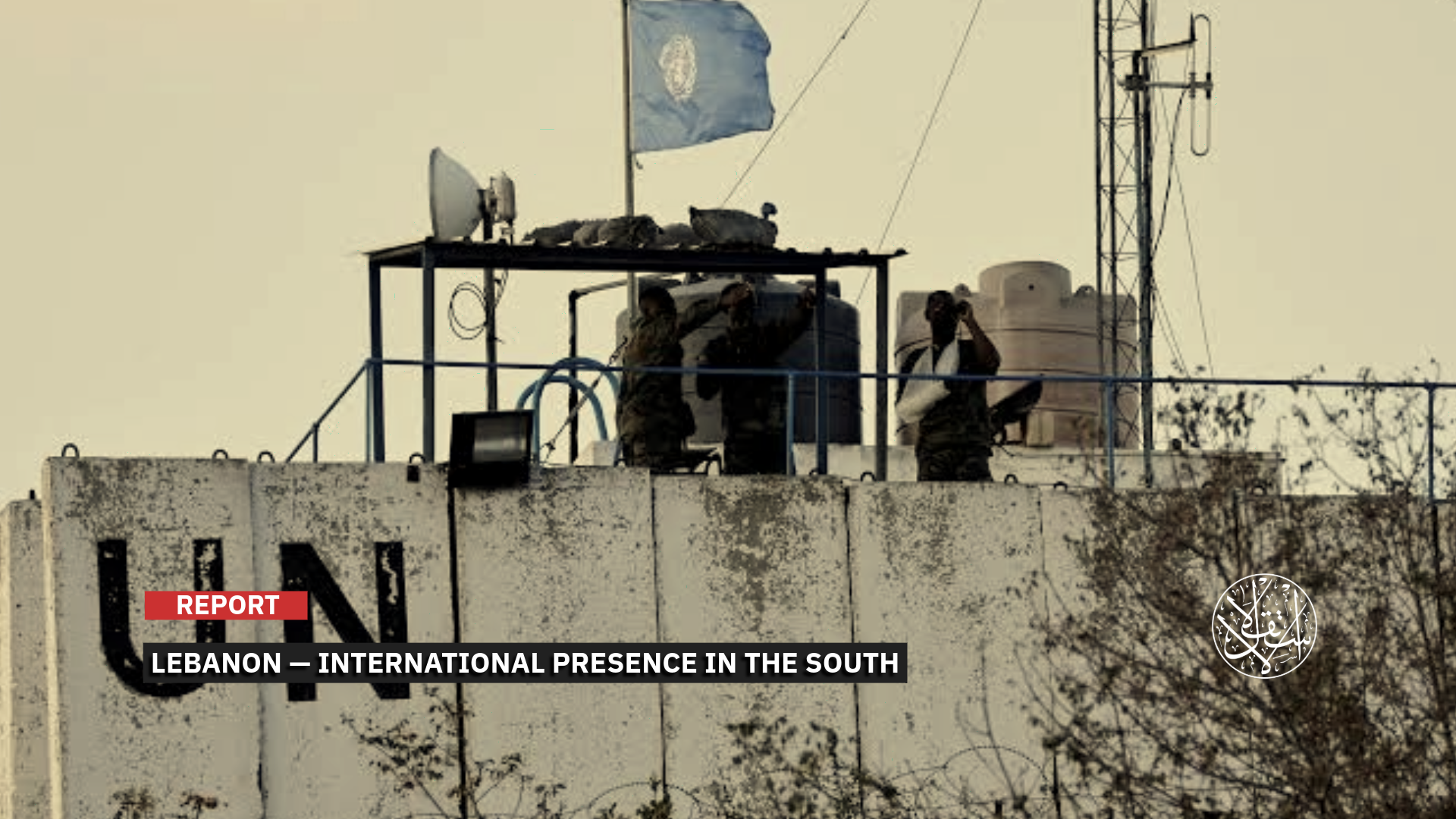
Southern Lebanon has relied on UNIFIL through a mission that has lasted nearly five decades.
United Nations forces are preparing to leave southern Lebanon as Israeli Occupation forces continue to consolidate their control over villages devastated by the war that began in early March 2026. Israeli checkpoints continue to restrict the movement of those who remain in the villages and the delivery of supplies to them.
As the mandate of the United Nations Interim Force in Lebanon (UNIFIL) approaches its end in December 2026, residents of the south face the prospect of losing the international presence that connects them to other parts of their country, with no guarantee that the Israeli Occupation will withdraw or that an alternative will be put in place to provide the protection needed to safeguard their lives and help them return.
Behind this looming deadline, the suffering is unfolding on two fronts: families determined to remain despite isolation and shortages of food and fuel, and displaced people for whom returning home has become an open-ended wait, facing destroyed homes, cut-off roads, and infrastructure that remains unfit for life to resume.
UNIFEL withdrawal, which is scheduled to take place gradually over the following year, is drawing closer as arrangements to hand over the international force’s positions to the Lebanese Army remain stalled, while positions continue to diverge over the future of the international presence in the south.
This raises questions that go beyond the fate of the UN force itself: What will be left for residents of the south if UNIFIL leaves while Israeli occupation continues? Who will accompany food and medical convoys, monitor attacks, and document violations?
Can the Lebanese state protect those who remain in the villages and facilitate the return of the displaced, or will the departure of the international force become another factor pushing residents out of their towns and prolonging displacement?
Rmeish: Life Behind the Checkpoints
In the town of Rmeish, where around 6,000 people still live inside the area occupied by the Israeli Occupation, fears about the future have become an extension of daily life, as residents’ options continue to shrink because of isolation, checkpoints, and difficulties getting supplies through.
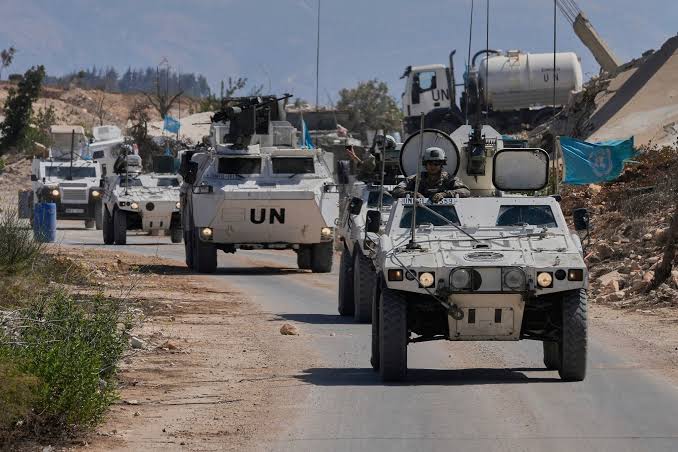
The road into the town passes through Israeli checkpoints, while tanks are positioned among abandoned villages and buildings destroyed by bombardment. UNIFIL escorts have become an essential means of allowing traders and supplies to reach residents.
During a field visit reported by Reuters on September 16, vegetable shops were closed, while shelves at other stores were only half-stocked with nonperishable food.
One falafel shop owner used up the tomatoes he had left, as the sound of explosions could be heard from other parts of the south. Before the visit, aid and commercial convoys had been canceled at the last minute without specific reasons being given, while stocks of fresh produce and fuel were beginning to run out.
George Ibrahim, a 45-year-old teacher, summed up the town’s predicament in remarks to Reuters.
“We consider ourselves to be living in a large prison, isolated,” Ibrahim told Reuters. “Without UNIFIL, I don't know what the future is.”
Staying in the town requires an open road, a source of income, and the ability to leave to receive medical treatment, needs that families cannot meet on their own.
The isolation has also deepened residents’ fears of being cut off from the rest of Lebanon and that their decision to remain in their towns could be misinterpreted as acceptance of or cooperation with the Israeli Occupation.
Captain Julian, a French reconnaissance company commander, meanwhile, said crossing the Israeli checkpoints requires a security escort, expressing hope that a way could be found to allow civilians to move through and live in peace.
A Force Leaves, and Witnesses Disappear
Southern Lebanon’s reliance on UNIFIL has developed through a mission that has lasted nearly five decades. The force was established in 1978 to verify the Israeli withdrawal and assist the Lebanese state in restoring its authority. Its mandate was expanded after the 2006 war to include monitoring the cessation of hostilities, supporting the deployment of the Lebanese Army, and facilitating aid and the voluntary and safe return of displaced people.
Within its area of operations between the Litani River and the Blue Line, the force plays a role in protecting civilians facing imminent violence, within its capabilities and mandate. It is not, however, tasked with waging a war to disarm Hezbollah.
The war has demonstrated the limits of the international force’s ability to prevent attacks, while field coordination, evacuations, and documenting violations have remained among the functions on which residents and international institutions rely.
One example was its escort, on June 7, 2026, of ambulances carrying stranded patients from Rmeish to Tyre, following coordination with the Israeli Occupation army. It also provided support to Tebnine Hospital and helped address the dangers posed by unexploded ordnance, which threatens residents as they travel and inspect their homes and land.
More than half of its roughly 50 bases, however, are now inside occupied territory, including its headquarters in Naqoura. Under Resolution 2790, its operations are due to end on December 31, 2026, with the withdrawal taking place over a year and specific transitional functions in place. This means the end of the mandate does not mean the troops will disappear all at once.
As its presence is scaled back, questions are emerging over the fate of the Blue Line records, communication channels, and access for UN investigators to areas where suspected Israeli war crimes may have occurred.
These records include meeting minutes, maps, and measurements accumulated over decades, providing a reference for documenting events and disputes on the ground.
The mission facilitated access for UN investigators during the war, and people familiar with the matter expect that access to become extremely difficult after its departure. Lebanese contractors also fear losing their jobs and the accommodation they found near its bases, leaving the loss of international monitoring to overlap with the loss of daily protection and income.
Displacement That Return Does Not End
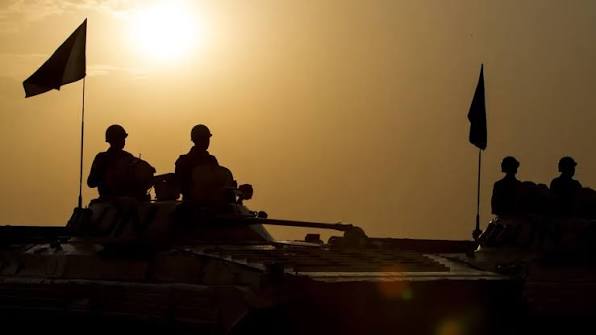
Beyond the isolated towns, displaced people are experiencing another side of the crisis. The International Organization for Migration recorded 341,228 people still displaced within Lebanon as of September 15, 2026, an increase of nearly 12,000 from the beginning of the month.
The figure covers the country as a whole and does not represent a separate count of people displaced from the UNIFIL area of operations.
Of those, 324,692 were staying outside collective shelters, while 16,536 were living in 166 centers. The figures show how much displacement extends beyond formal shelters, while recorded returns do not necessarily mean that people have regained their homes and services or that the risk of renewed displacement has disappeared.
Available data on the districts of origin show that Nabatieh, Tyre, Bint Jbeil, and Marjayoun together accounted for 79 percent of displaced people at the beginning of July, equivalent to around 395,000 people at the time.
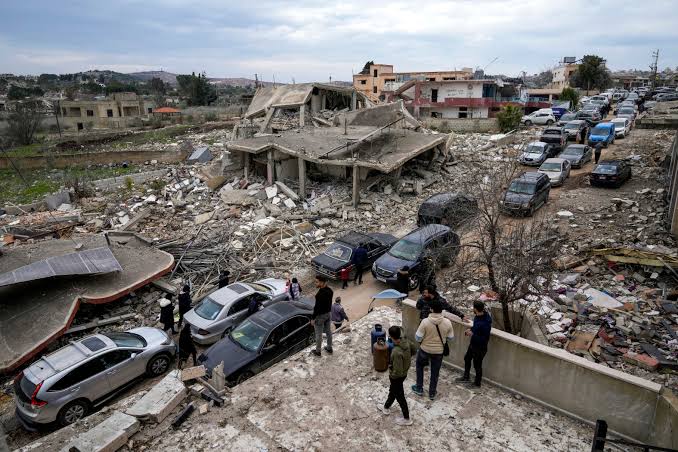
The town of Western Zawtar illustrates how difficult it is to turn return into a stable resettlement. According to the Lebanese Army, around 70 percent of residents have been able to inspect their properties, but only 60 of the 450 families have settled back in, with most homes completely destroyed.
The obstacles extend beyond housing. Damage to infrastructure and services is also preventing a return to normal life.
Doctors Without Borders says solar panels powering pumping stations were destroyed or damaged in all the villages visited by its teams, along with wells, tanks, and pipes. In Yater, temporary water tanks were used, while in Froun, a filtration unit was repaired after the main tank broke down.
The disruption also extends to education. Of the 436 damaged educational facilities documented by the Ministry of Education and UNICEF, 286 are concentrated in the South and Nabatieh governorates.
In Tyre, displaced families from Mansouri are staying in schools, linking the restoration of education to finding alternative shelter for displaced residents.
Families are therefore facing villages where resuming life is difficult even when they can reach them, making return itself only the first step in a long process that does not necessarily guarantee stability.
A State Under Siege
The return of these families is being held back by a military and political reality that existing agreements have failed to change.
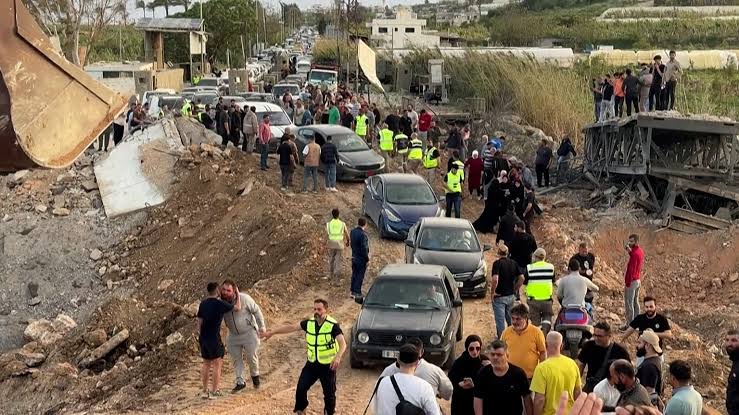
Since the war resumed on March 2, following Israel’s offensive as part of the war on Iran, Israeli Occupation forces have expanded their ground attacks, destroying homes and crossings over the Litani River and isolating towns from the areas around them. Demolitions continued on September 19 in Mansouri, Meiss el-Jabal, and Talousa.
A Reuters investigation found that the area “Israel” declared occupied after the April 2026 ceasefire covered around 600 square kilometers, while the area covered by both the occupation and evacuation orders extended to 2,000 square kilometers.
As a result, areas affected by displacement have extended beyond the areas of ground deployment, making it impossible to reduce the conditions for return to simply a decline in the intensity of airstrikes.
On June 26, 2026, a U.S.-backed framework agreement opened a path linking an Israeli withdrawal to the deployment of the Lebanese Army and the state’s exclusive control over weapons. But disagreements over its implementation have left residents caught between opposing conditions.
Israeli War Minister Israel Katz has tied the withdrawal to the disarmament of Hezbollah, while the group has rejected giving up its weapons before the occupation ends.
Its Secretary-General Naim Qassem said in August, “We oppose the framework agreement and call for its rejection.”
President Joseph Aoun, meanwhile, has stressed the need to place weapons under state control without triggering an internal confrontation while providing the army with the support needed to assume its responsibilities.
The army has announced the establishment of checkpoints and observation posts, the opening of roads, and the seizure of weapons in southern areas. But it has said Israeli attacks are hampering its efforts and driving renewed displacement.
This highlights the limits of the government’s ability to act. It can organize relief efforts, advance the diplomatic track, and deploy units where they are able to move, but it has not secured an end to the occupation or reached an internal settlement to resolve the duality of arms.
Taking over UNIFIL’s bases becomes an additional dilemma when the sites themselves are located in areas the army cannot freely access.
A Future Without Guarantees
Lebanese political researcher Hussein Atwi warned that the end of UNIFIL’s mission without an extension or an alternative force would leave a security vacuum threatening the safety and stability of the south. He said the ongoing dispute between Beirut and Paris on one side and the Israeli Occupation on the other leaves the mission’s future open to all possibilities.
“Lebanon and France are seeking to prevent an interruption in the international presence in the south. Paris initially supported ending the mandate as part of a transitional phase aimed at strengthening the Lebanese Army but later backed a limited extension after the war once again brought the risks of a vacuum sharply into focus,” Atwi told Al-Estiklal.
“President Joseph Aoun also warned of this when he said that the absence of any extension or alternative would threaten the security and stability of the region.”
“The French vision links stability in the south to three tracks that must move forward together: the withdrawal of Israeli Occupation forces, placing weapons under state control, and strengthening the army’s capabilities,” he added.
“Israel, meanwhile, claims that UNIFIL has failed to prevent Hezbollah from building up its capabilities and rejects extending its presence. Its UN ambassador, Danny Danon, has reiterated that position and expressed a desire for direct communication with the Lebanese Army.”
Atwi noted that the French Foreign Ministry has confirmed that consultations are continuing with Italy and other partners, without finalizing arrangements for the next phase.
The options under discussion, he said, include a limited UN presence for monitoring and communication, expanded political support for Lebanon, and the launch of a European mission to train the army.
But he stressed that training alone is not enough, because it does not automatically provide escorts for supplies and evacuations or ensure deployment near border villages.
Atwi also pointed to Prime Minister Nawaf Salam’s address to the United Nations, in which he strongly called for an alternative force to ensure continued monitoring, reporting, and communication, alongside funding for the needs of displaced people and reconstruction.
“This request shows that Lebanon needs practical guarantees covering field operations, resources, and deployment, not merely political statements declaring support,” he said.
He warned that the risk of displacement expanding will grow if aid is reduced, demolitions continue, and the army is unable to reach affected areas. This could mean the displacement of residents who have remained, a prolonged absence of those already displaced, or a return followed by renewed displacement.
Atwi concluded his remarks with a question that captures the concerns of southern residents and the uncertainty surrounding their future: “Will the government leave us in Israel’s grip, or will we be driven out? If we decide to stay, what will our situation be?”
Sources
- Beyond UNIFIL: Who Will Fill the Void in Southern Lebanon and Shape Its New Security Map? [Arabic]
- UNIFIL Positions in Southern Lebanon: Between the “Yellow Zone,” the “Garrison,” and the Neutral Zone [Arabic]
- United Nations Interim Force in Lebanon (UNIFIL) [Arabic]
- UNIFIL Spokesperson: International Presence Is Crucial in the South at This Critical Stage [Arabic]