8,000 Missing Beneath the Rubble: Will Gaza’s Evidence of Israeli Crimes Disappear with the Debris?
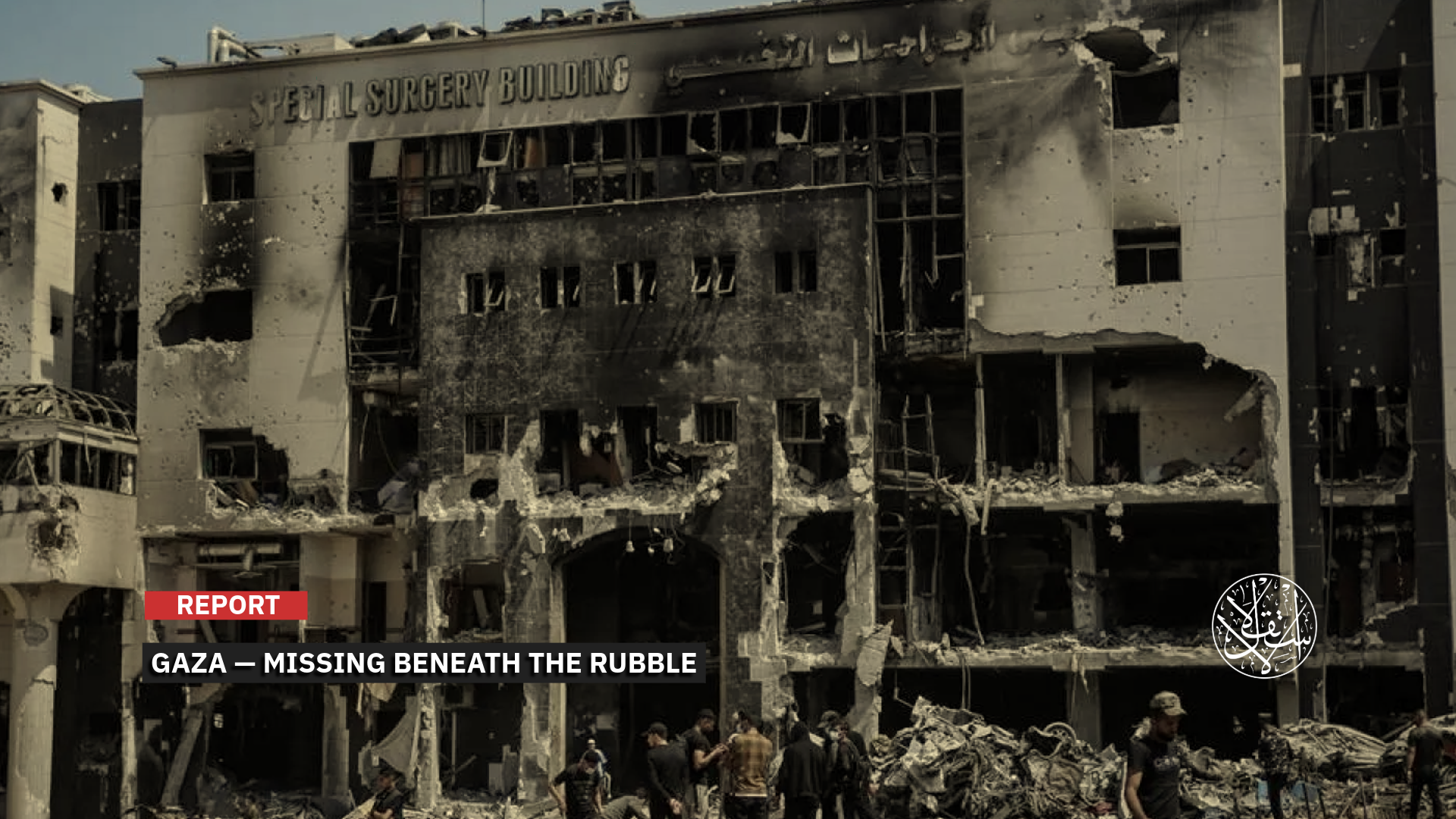
Israeli bombardment has left more than 60 million tons of rubble across the Gaza Strip.
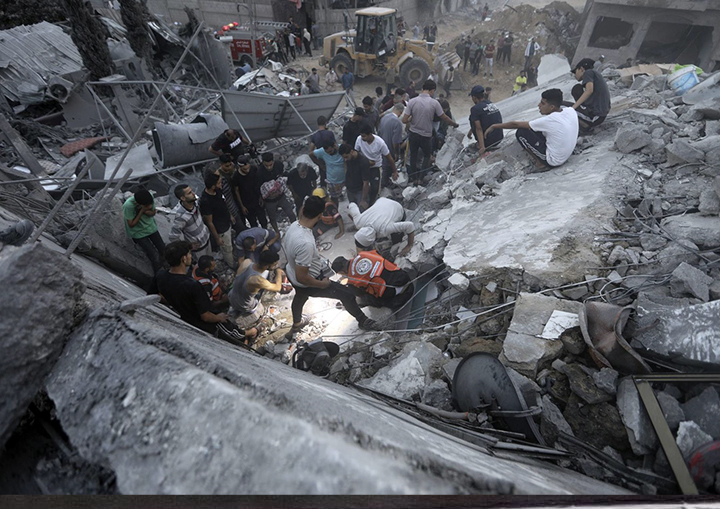
Beneath tens of millions of tons of rubble across Gaza, thousands of families are still waiting to recover the remains of their loved ones, even as bulldozers and heavy machinery begin clearing sections of the debris to reopen roads, reach essential facilities, and restore basic services.
The buildings crushed by three years of Israeli bombardment contain human remains, ammunition fragments, blast evidence, and personal belongings that could later become crucial evidence in investigations into violations and crimes committed by the Israeli Occupation army during the war.
How Are the Missing Recovered?
In mid-September 2026, the Palestinian Civil Defense (PCD) said more than 8,000 people were believed to remain buried under the rubble, after estimating the number of missing at around 8,500 in February.
The volume of rubble in Gaza has exceeded 60 million tons. By late July, around 630,000 tons had been removed, with some of it crushed and recycled, as clearing operations expanded while thousands of missing people remained trapped beneath the debris.
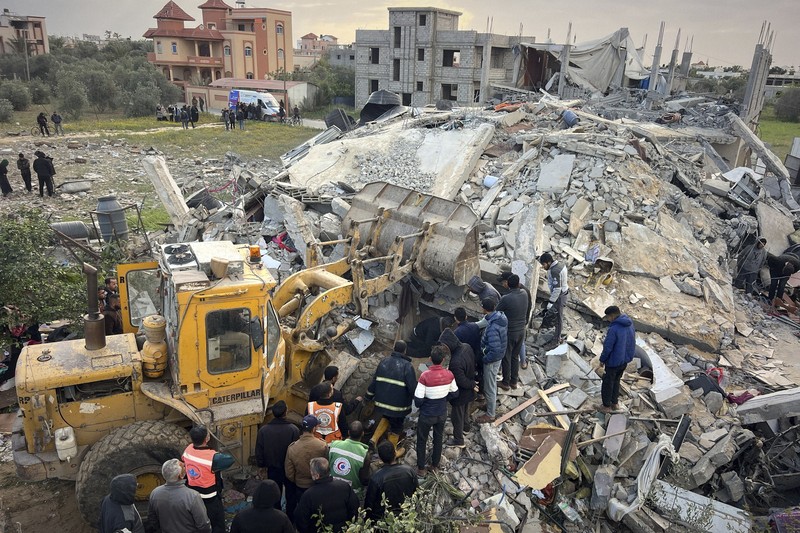
The search usually begins with a report from the family providing the missing person’s name, the last place they were seen, and the building they were in when it was bombed. PCD teams then try to reach the site and remove layers of rubble and concrete blocks to locate the missing.
On September 15, the head of the Office of the UN High Commissioner for Human Rights (OHCHR) in the Occupied Palestinian Territory said PCD had only one functioning excavator, forcing its crews at many sites to recover remains by hand amid shortages of machinery, fuel, spare parts, and equipment needed to lift concrete blocks.
The scale of the shortfall became clear during recovery operations in the Zeitoun neighborhood southeast of Gaza City. In September, PCD said it had recovered 96 bodies and human remains from a site bombed in November 2023, including the remains of 58 children and 23 women.
OHCHR said coordinated recovery operations were impossible across around 70 percent of the Gaza Strip, where Israeli Occupation forces control the area or impose severe restrictions on access.
Unexploded ordnance poses another danger to search teams. The UN Mine Action Service conducts assessments of buildings and roads before rubble removal can begin.
During one period in July 2026, the UN Office for the Coordination of Humanitarian Affairs (OCHA) recorded 21 explosive hazard assessments to support rubble removal and other humanitarian activities.
The International Committee of the Red Cross (ICRC) is also involved in the missing persons effort by tracing cases, restoring family links, and providing expertise in the management of the dead and forensic work.
In a report covering January through June 2026, the ICRC said it had documented more than 1,200 new missing person cases and closed a similar number of files after obtaining information about those individuals.
It also received more than 16,900 calls from families searching for relatives, helped local authorities recover people from beneath the rubble by hiring heavy machinery, and trained more than 100 forensic practitioners in search, recovery, and documentation.
Identifying remains relies on recording age, sex, height, dental characteristics, physical features, clothing, and personal belongings, then comparing them with photographs, medical records, and information provided by the missing person’s family.
DNA testing is part of the process when a sample from the remains and a reference sample from relatives are available, along with laboratories capable of conducting the analysis. The ICRC recommends assigning every body or human remain a unique number that keeps it linked to records and personal belongings even after burial.
The process is further complicated by the limited capacity of laboratories in Gaza to conduct DNA testing for thousands of cases. In some instances, remains can be linked to a family or household without establishing the individual’s identity.
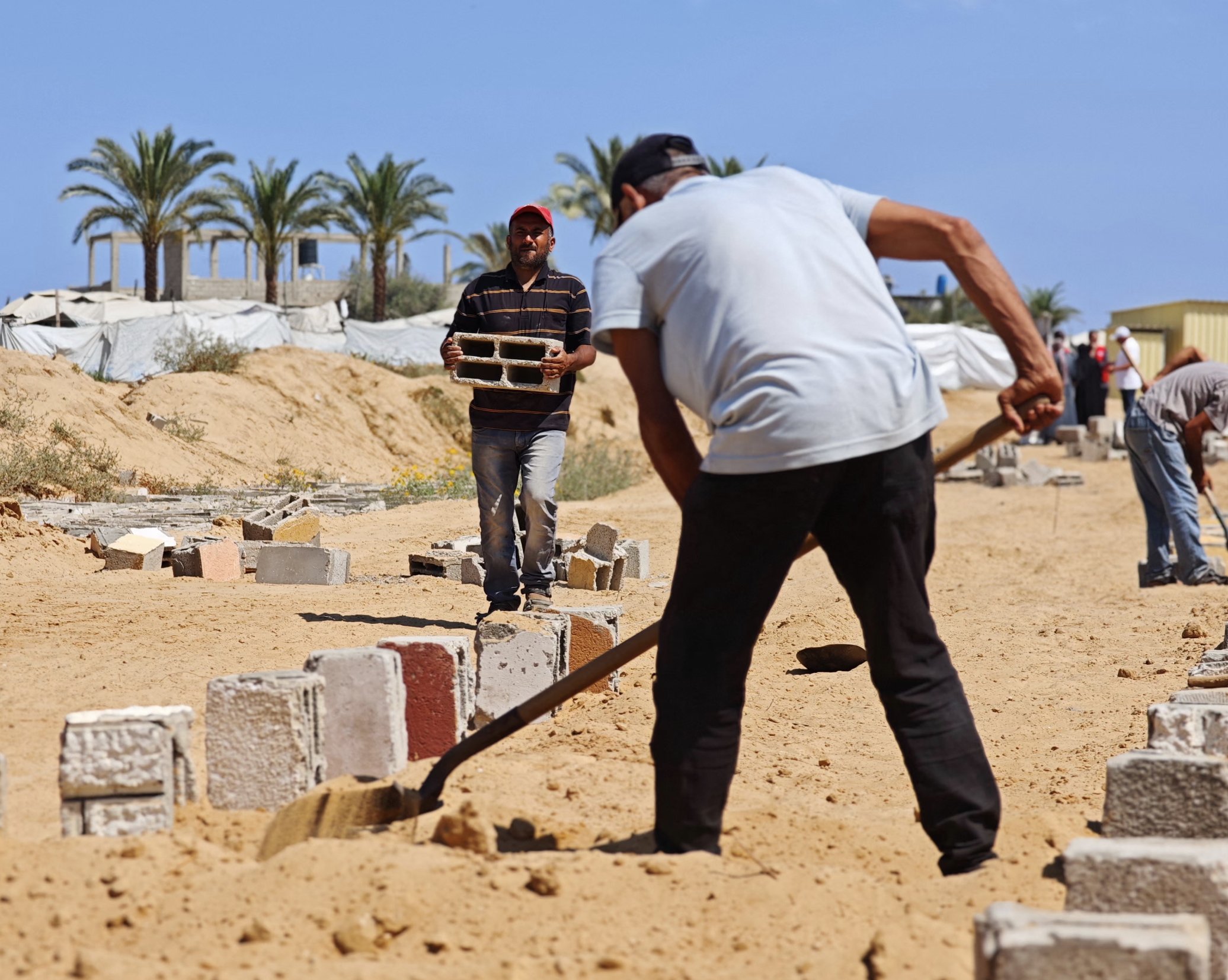
Ziad Obeid, director of the cemeteries department at Gaza’s Ministry of Endowments and Religious Affairs, said more than 650 unidentified bodies had been buried in a designated cemetery in Deir al6Balah, in numbered and documented graves that allow them to be located again when more advanced identification methods become available.
Identifying remains also becomes more difficult the longer they remain beneath the rubble. Decomposition, moisture, animals, structural collapses, and the movement of debris can separate bones from clothing and personal belongings and displace parts of a body from their original location.
What Is Lost When the Rubble Is Removed?
On September 7, 2026, Francesca Albanese, the UN special rapporteur on the human rights situation in the Palestinian territories occupied since 1967, warned that removing, crushing and transporting rubble before recovering remains and documenting the sites could result in the loss of evidence linked to international crimes.
UN High Commissioner for Human Rights Volker Turk said that the recovery of entire families’ remains from sites destroyed by Israeli strikes has raised serious concerns over grave violations and possible war crimes. He called for international investigators to be granted access to all parts of Gaza.
The forensic value of a site depends on preserving evidence in its original context. The location of shrapnel, ammunition fragments, blast marks, and the pattern of a building’s collapse can help weapons experts determine the type of ammunition used and how it was deployed.
The location of a body can also be important to an investigation. Its position inside a building, its proximity to other victims, and what was found around it can help investigators reconstruct what happened at the site. Ammunition remnants are particularly significant in Gaza because the Israeli Occupation army has used highly explosive weapons in densely populated residential areas.
Forensic investigation guidelines recommend photographing and documenting a site before altering it, recording the locations of evidence and remains, and preserving their connection to the place where they were found.
Ahmed Dhahir, director of the forensic medicine department at Gaza’s Ministry of Health, said the handling of remains begins at the site where they are found. The location should be photographed and its coordinates recorded, while the required forms for the body are completed before it is transferred for examination. The remains are then preserved until they are handed over to the cemeteries department at the Ministry of Endowments and buried in a way that allows the burial site to be located again later.
Speaking to Al-Estiklal, Dhahir said documentation and identification efforts face severe shortages of personnel, specialists, and equipment. Only a limited number of doctors work in forensic medicine, while Gaza lacks specialists in forensic dentistry and osteology, as well as laboratories for DNA, toxicology, and tissue analysis.
Dhahir added that forensic medicine departments also lack portable X ray machines, which can help detect plates, metal fixators, signs of previous surgeries, and other features that could help identify remains.
He noted that forensic medicine infrastructure suffered extensive damage during the Israeli aggression, leaving teams to work with limited resources compared with the scale of cases they receive.
Removing rubble before it is documented weakens investigators’ ability to link remains and shrapnel to the site where they were found, particularly when debris from several buildings or the remains of multiple people become mixed together.
OHCHR warned on September 15 that the passage of time and the removal of rubble increase the risk of losing evidence needed for accountability. It called for the preservation of forensic medical information and biological samples, as well as the recording of burial locations.
The International Criminal Court (ICC) has been investigating crimes committed in the Palestinian territories since March 3, 2021. On May 20, 2024, the ICC’s then prosecutor, Karim Khan, said the material collected by his office included interviews with survivors and eyewitnesses, verified photographs, videos and audio recordings, satellite imagery, and statements by officials under investigation.
Investigators can compare satellite imagery and witness accounts with shrapnel and the locations of victims at the same site. But establishing those links becomes more difficult once rubble is mixed together and concrete is recycled.
In January 2024, the International Court of Justice (ICJ) ordered the Israeli Occupation to take effective measures to preserve evidence related to the charges brought by South Africa’s case under the Genocide Convention.
Who Is Monitoring the Rubble Removal?
Since April 2024, a UN and Palestinian system has been in place to manage Gaza’s rubble through the Gaza Debris Management Working Group (DWG), which is co-led by the United Nations.
The DWG uses damage assessments, satellite imagery, and building databases to estimate the volume of rubble and develop plans for its removal, sorting and recycling, with the participation of Palestinian institutions, municipalities, humanitarian organizations, and explosive hazard specialists.
The Palestinian Ministry of Public Works and Housing plays a key role in planning rubble management alongside municipalities. The UN Development Program and its partners carry out work to clear roads, provide access to hospitals and public facilities, and sort, crush, and reuse concrete.
The UN Environment Program bases its estimates of rubble volumes on assessments by the UN Satellite Centre, UNOSAT, which uses satellite imagery and building data to estimate the amount of debris generated by the destruction.
By July 2026, more than 231,000 tons of concrete had been crushed at five sites, with more than 184,000 tons reused in roads and the foundations of structures. These efforts help clear streets and provide access to hospitals, water networks, and public service facilities.
Rubble management procedures also set out how to handle human remains found during the work. Their location is recorded and documented, the relevant Palestinian authorities are notified, and the remains are separated from construction waste. Explosive hazards are also assessed before some removal and demolition operations.
Sites linked to missing people or strikes under investigation require forensic and forensic medical examinations before bulldozers enter. Gaza, however, lacks a unified mechanism covering the entire territory and giving an independent body the authority to halt rubble removal until such examinations are completed.
Rubble removal may begin to clear a road or address a structural hazard at a site where remains or materials of investigative value are still buried. Such sites require forensic and forensic medical examination before anything is moved.
The problem is more acute in areas controlled by the Israeli Occupation army. On September 15, Ajith Sunghay, head of the OHCHR Office in the Occupied Palestinian Territory, said the recovery of bodies had stopped across large areas of Gaza because of Israeli restrictions on access.
At the same time, damaged buildings create pressure to speed up removal efforts. In September 2026, a building damaged by bombardment collapsed in Gaza City’s Tal al-Hawa neighborhood, killing more than 20 Palestinians, including children. Around 100 people were living inside the building.
Ramesh Akbarov, the UN Humanitarian Coordinator for the Occupied Palestinian Territory, said the incident highlighted the scale of the danger facing displaced people living in buildings damaged by the war. He said this makes it necessary to accelerate the removal of buildings at risk of collapse while protecting sites containing missing people and evidence.
Sources
- Gaza remains recovery points to possible war crimes, says UN rights chief
- Gaza: UN expert warns Israeli rubble-clearing could erase traces of atrocity crimes
- Humanitarian Situation Report | 23 July 2026
- Statement of ICC Prosecutor Karim A.A. Khan KC: Applications for arrest warrants in the situation in the State of Palestine
- Growing risk that thousands buried in Gaza’s rubble may never be identified, says Red Cross
- In Gaza, the fate of thousands missing remains unknown