Iraq’s Airports Caught in the Crossfire: Washington Pressures, Tehran Resists and Baghdad Maneuvers
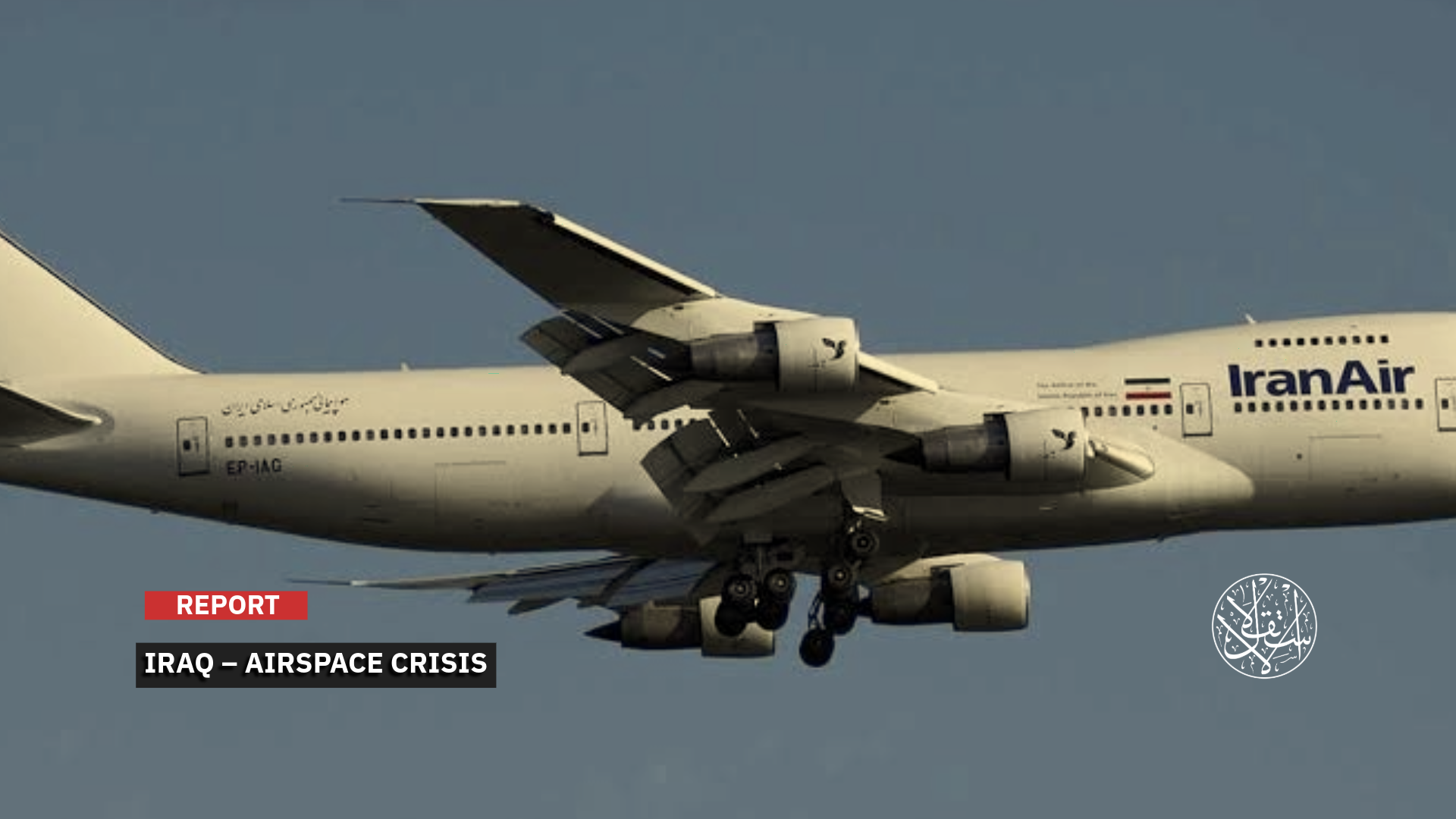
“The situation is more complicated than simply imposing a blanket ban on Iranian flights.”
On September 24, 2026, the Iraqi authorities’ decision to close the country’s airports to Iranian flights triggered political tensions with Tehran, after opposition spread from Iranian circles to Iraqi political forces and militias with close ties to Iran.
The issue no longer appears to be limited to aviation measures; it has increasingly intersected with questions of Iraqi sovereignty, relations with the United States, and the nature of Iraq’s relationship with Tehran, as well as the ability of Prime Minister Ali al-Zaidi’s government to implement its decisions in the face of political and armed forces opposed to them.
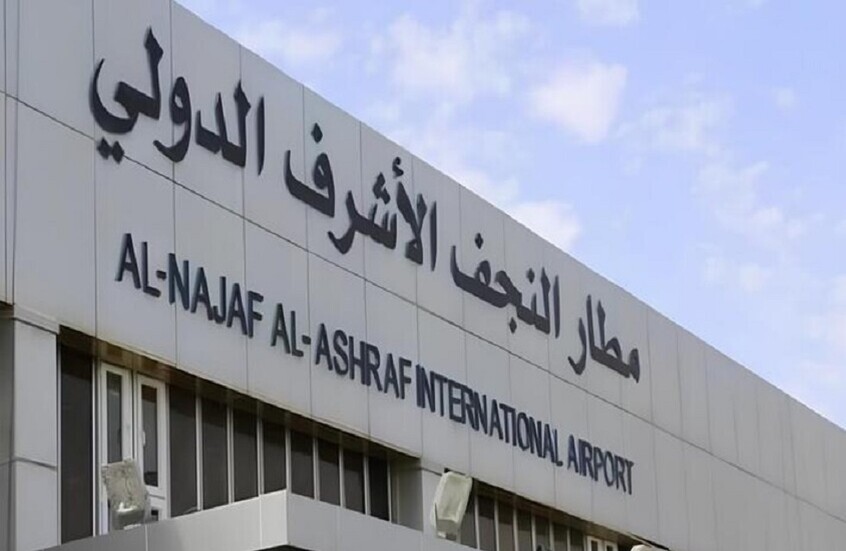
The most prominent criticism came from Ali Akbar Velayati, the Iranian Supreme Leader’s adviser on international affairs, who criticized the closure of several Iraqi airports, including Najaf International Airport, to Iranian flights in a post on X on September 25. He said the measure was aimed at what he described as the unity of the fronts.
Velayati addressed a direct message to Iraqi Prime Minister Ali al-Zaidi, saying, “Legitimacy does not come from Washington, but from the land of Najaf and the blood of the martyrs.”
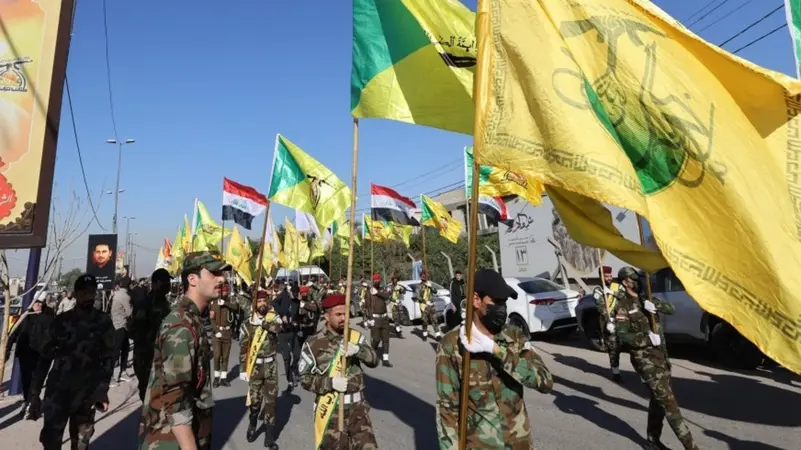
In response, Iraqi militias rejected the decision, including Kata’ib Hezbollah, Harakat al-Nujaba, Kata’ib Sayyid al-Shuhada, and the Badr Organization.
Iranian Pressure
The reactions from Iran and Iraqi forces aligned with the Wilayat al-Faqih regime show that the decision to close the airports is no longer simply a regulatory measure concerning air traffic, but has become a test of the relationship between Baghdad and Tehran.
The sensitivity of the decision is particularly evident in the case of Najaf Airport, which serves as a major gateway for Iranian pilgrims traveling to Iraq and holds religious and economic significance. This has made any restrictions on Iranian flights open to political exploitation by forces opposed to them.
In this context, Tehran linked the decision to the concept of unity of the fronts, while Iraqi forces entered the political confrontation.
Kata’ib Hezbollah rejected the ban on Iranian airlines and called on Iraqis to break this siege by supporting Iranian products and refraining from activities that could further increase the suffering of Iranians.
Abu Alaa al-Walae, secretary-general of Kata’ib Sayyid al-Shuhada, also called on parliament to take a position obliging the government to reject what he described as the will of the American war, arguing that turning Iraqi airports and territory into part of the pressure campaign against Iran runs counter to the historical and religious ties between the two countries.
The opposition was not limited to militias. Former Prime Minister Adil Abdul Mahdi described the closure of Iraqi airports to Iranian flights as a major mistake and a relinquishment of national sovereignty, calling on the government to reverse the decision.
The issue has therefore moved beyond aviation into a broader debate over sovereignty and the limits of Baghdad’s ability to respond to U.S. pressure on the one hand while maintaining its relations with Tehran on the other.
Iraqi political affairs researcher Muayyad al-Douri told Al-Estiklal on September 28 that the Iraqi government would proceed with implementing the ban on Iranian flights because the matter was beyond its capacity, amid the possibility that Iraq could face sanctions if it opposed or circumvented the U.S. decision.
Mr. al-Douri cited previous cases that he said demonstrated the difficulty militias face in changing decisions linked to U.S. pressure, pointing to their earlier opposition to the withdrawal of foreign forces following the killing of Qasem Soleimani and Abu Mahdi al-Muhandis.
Another example cited by Mr. al-Douri was the groups’ inability to pass the Popular Mobilization Forces law during the previous parliamentary term in 2024, as well as U.S. President Donald Trump’s rejection of Nouri al-Maliki’s candidacy for prime minister before Ali al-Zaidi assumed the position.
https://s3.eu-west-3.amazonaws.com/alestiklal/gallery/2026/9/29/1629613755.webp
A Confusing Decision
However, developments in the following days showed that the situation was more complicated than simply imposing a blanket ban on Iranian flights. Days after Iraq announced the ban on Iranian flights, Iraqi Airways resumed flights to Iranian airports from Najaf Airport, following a direct order from Prime Minister Ali al-Zaidi.
Al-Sumaria News reported on September 24 that Iraqi Airways had resumed flights between Najaf Airport and Iranian airports, while emphasizing that the ban on Iranian airlines’ aircraft landing at Iraqi airports, including Najaf Airport, remained in effect and that no directive had been issued to lift it.
Sources at the Ministry of Transport also said that air travel between Iraq and Iran had resumed under a decision issued by Iraqi Prime Minister Ali al-Zaidi.
For the time being, scheduled air traffic between the two countries would be limited to Najaf Airport for flights to and from Iran, according to Kurdistan24.
On September 28, Iraq’s ambassador to Tehran, Yasser Abdulzahra al-Hajjaj, announced that Najaf Airport would reopen to flights arriving from Iran within 24 hours, stressing that the federal government, headed by Ali al-Zaidi, was making continuous efforts to resume air traffic between the two sides.
Al-Hajjaj explained that Baghdad had not issued a decision to suspend flights with Iran, saying the disruption had resulted from foreign ground-handling companies refusing to operate for fear of U.S. sanctions. He reiterated that air traffic at the airport would resume within the following hours.
This development adds another dimension to the crisis, as Baghdad appears to be trying to distinguish between banning aircraft operated by Iranian airlines from landing and maintaining civilian flights between the two countries through Iraq’s national carrier.
In this context, Mr. al-Douri predicted that Iraqi Airways flights will operate, as happened at Najaf Airport, in addition to increasing ground transportation instead of air travel.
He estimated that Iran was seeking to portray the issue as primarily religious, whereas the measure actually concerns Iranian aviation.
Economically, continued restrictions could affect passenger traffic, trade and religious tourism, particularly because travel between Iraq and Iran is linked to medical treatment, education, family travel and religious visits, while Iraq’s holy cities receive large numbers of Iranian pilgrims.
As a result, prolonged restrictions could raise costs for the transportation, hotel, and services sectors, while Baghdad seeks to avoid U.S. pressure and sanctions, according to local media reports.
https://s3.eu-west-3.amazonaws.com/alestiklal/gallery/2026/9/29/836715309.jpg
Iraqi Communications
This issue has placed Iraq in a sensitive position between Washington’s sanctions and Tehran’s demands, as Iraqi writer Ehab Moqbel explained in an article published by al-Maalouma on September 28.
The writer argued that “the issue of Iranian aviation is no longer simply a dispute over landing rights or aviation safety procedures. Rather, it shows how U.S. sanctions are extending to countries and companies that provide services to Iranian aircraft, from fuel and ground handling to ticket sales and airport services.”
According to Moqbel, Iraq’s four main airports in Baghdad, Najaf, Erbil and Sulaymaniyah stopped receiving flights to and from Iran, while other countries imposed restrictions to varying degrees.
He noted that the U.S. Treasury Department targets Iranian airlines over what it describes as using commercial aviation to transport personnel, weapons, and equipment linked to the Islamic Revolutionary Guard Corps (IRGC), adding that Washington imposed new measures on September 8 targeting dozens of entities in Iran’s aviation sector.
The issue, according to this analysis, is that the sanctions do not stop at Iranian airlines; they can also affect foreign companies that provide fuel, landing and ground-handling services, or sell tickets for Iranian airlines.
Thus, according to the Iraqi writer, the impact of sanctions can extend from an Iranian airline to a foreign airport, then to a service provider and a country seeking to keep civilian air traffic operating.
Moqbel said Iraq represents the most sensitive link because of its ties to the United States on the one hand and its deep commercial, religious and social ties with Iran on the other.
After the flights were suspended, overland travel became a more costly and time-consuming alternative, while Baghdad began negotiating with Washington to obtain exemptions allowing some flights to resume for humanitarian and civilian purposes.
Moqbel said the U.S. administration could treat Iraq’s request as humanitarian and civilian in nature by granting specific, conditional exemptions, such as limiting flights to certain airports and restricting them to civilian and humanitarian purposes, while imposing monitoring mechanisms and requiring guarantees from Iraq.
Meanwhile, Iraqi writer Mazen Sahib argued in an article published by Kitabat on September 29 that the suspension of Iranian flights at the airports of Baghdad, Najaf, Erbil and Sulaymaniyah came amid concerns among Iraqi ground-handling companies about being exposed to U.S. sanctions.
He said Baghdad was communicating with Washington to obtain exemptions allowing flights to resume for humanitarian reasons, including medical treatment, education and religious visits.
According to Sahib, Tehran viewed the situation as an extension of U.S. sanctions into the regional sphere rather than simply a technical aviation measure, while Baghdad was moving toward dialogue with Washington, seeking exemptions and attempting to preserve civilian interests without directly clashing with the sanctions.
The aviation crisis therefore reveals the limits of Iraq’s room for maneuver between Washington and Tehran.
As Sahib put it, “Tehran treats sanctions as a tool of conflict, while Baghdad sees them as a reality beyond its control whose effects must be contained.”
The government’s ability to manage this balance remains tied to its capacity to maintain civilian travel on the one hand while avoiding U.S. sanctions and pressure on the other, at a time when Iraqi political forces and militias oppose any measure they view as restricting Iran.