How Right-Wing Lobbying Networks Exploit the Data of Millions of American Muslims
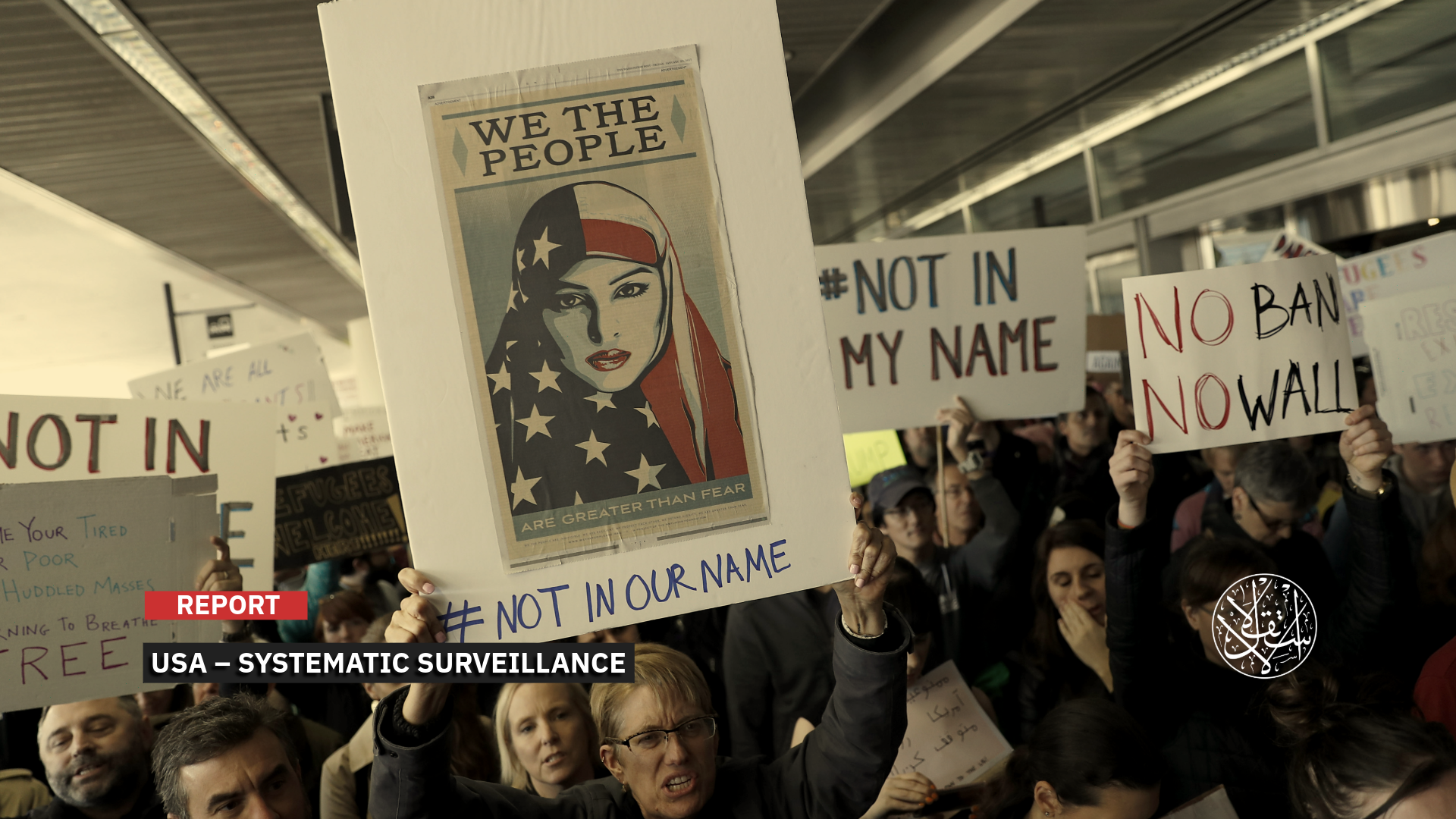
“Organizations accuse the MEF of promoting Islamophobia and spreading disinformation about Muslims.”
The events of September 11 were not merely a geopolitical earthquake that shook the foundations of US foreign policy; they also marked a harsh domestic turning point that redefined the state's relationship with its Muslim citizens.
Overnight, American Muslims found themselves in the dock, forced to wage an ongoing battle to defend their faith and constantly prove their national loyalty in the face of a sweeping wave of suspicion driven by security agencies and the media machine.
This mistrust quickly translated into an arsenal of legislative and operational measures. The Patriot Act paved the way for the erosion of civil liberties, while mosques and civil organizations became targets of systematic intelligence surveillance programs.
Meanwhile, tens of thousands of immigrants and citizens were subjected to mandatory registration and security interrogations that viewed places of worship as nothing more than hotbeds of suspicion and doubt.
This stifling atmosphere cast a heavy shadow over the collective consciousness of rising generations. The political ambitions of an entire generation of young people evaporated under the fear that their religious identity would be exploited as a pretext for smear campaigns and character assassination in any electoral arena.
This retrenchment went beyond a mere reluctance to run for office; it struck a devastating blow to civic engagement itself.
Financial support for campaigns became a high-risk calculation, and a conviction took hold that any association with Islamic institutions or organizations amounted to political suicide—effectively alienating a candidate from the broader electorate. Thus, a generation emerged that viewed public service as a minefield to be avoided.
This withdrawal did not remain merely a psychological apprehension; it manifested practically in the near-total absence of significant Muslim representation in Congress or in legislative and municipal bodies throughout the decade following the attacks.
The appearance of an elected official with an Arab or Muslim name became a rarity—an exceptional event within a deeply polarized political landscape.
Despite earnest efforts to break this isolation and gradually enter the public sphere, political advancement has been met with a sharp spike in hostility.
Human rights organizations have recorded unprecedented levels of Islamophobia, with documented complaints exceeding 8,700 in a single year—the highest figure in three decades of record-keeping.
This incitement was not confined to the grassroots level; it was also leveraged by prominent political leaders—most notably President Donald Trump and his running mate, J.D. Vance—who explicitly and directly targeted Muslim candidates and officials based on their religious identity.
This charged dynamic reveals a profound structural dilemma within the American democratic experience. Despite their achievements in integration and professional and civic success, Muslims—at critical political junctures—continue to be treated as subjects under surveillance, required to demonstrate loyalty and prove their innocence at every turn, rather than as full partners exercising an inherent constitutional right guaranteed by the principles of equal citizenship.

Ideological Algorithm
In a related context, a recent investigation by the Huffington Post revealed that a right-wing U.S. think tank known as the "Middle East Forum" has—since 2006—maintained a vast database containing information on thousands of American Muslims and their organizations. This data includes names, social media accounts, and tax records.
According to the investigation, the database is titled the Counter-Islamist Research Room and contains over 5,500 records on individuals and 10,600 records on organizations—including schools, mosques, and businesses—comprising more than 4 million data points in total.
The records cover individuals across 45 countries, with more than 4,700 residing in the United States.
The database lists prominent political figures, including Democratic Rep. Ilhan Omar, Rep. André Carson, and Rep. Rashida Tlaib, as well as Minnesota Attorney General Keith Ellison.
It also includes Rep. Alexandria Ocasio-Cortez, who is labeled in the file as a fellow traveler—a term historically used to describe individuals suspected of sympathizing with the Communist Party.
The list includes mosque imams and Islamic school officials, alongside doctors, lawyers, journalists, and activists.
It also encompasses individuals who are not Muslim but whom the forum regards as allies or associates linked to issues concerning the Muslim community.
Classifications used in the database include radical, alongside others relating to various Islamic movements and schools of thought.
The list of organizations includes prominent Islamic institutions such as Islamic Relief and the Council on American-Islamic Relations (CAIR), as well as organizations not primarily focused on Muslims, such as Oxfam and the Women's March.
The forum’s executive director, Gregg Roman, stated that these classifications are generated automatically using an algorithm based on a set of ideological markers associated with each individual.
The revelation of this database has reignited debates regarding Muslim privacy, civil liberties, the limits of data collection, and the profiling of individuals based on their religious or political activities.
Calls are mounting to ensure that publicly accessible data is not weaponized to target individuals or institutions based on their religious identity or their association with issues concerning the Muslim community.

Security Measures
Researchers and human rights organizations have warned that the database could be used as a targeting list, enabling government agencies to monitor and pressure individuals or organizations—particularly given the rise of anti-Muslim rhetoric in the U.S.
The forum rejects these criticisms, maintaining that its activities fall within standard research practices for tracking political and ideological networks, and noting that the data it collects is already available in public records.
The forum’s activities have been linked to specific instances of targeting; in 2025, for example, it published material on Georgetown University researcher Badar Khan Suri. This material included links to his posts criticizing Israel and a reference to the fact that his father-in-law had worked for Hamas.
A month later, U.S. authorities arrested Suri and initiated deportation proceedings against him.
He was subsequently released after a judge concluded that the government had failed to provide evidence substantiating the allegations, though the deportation case remains ongoing.
The forum stated that it does not make immigration decisions but merely publishes research.
Additionally, a forum official, Sam Westrop, played a role in the exclusion of more than a dozen Islamic schools in Texas from a state school voucher program, after accusing certain institutions of having ties to extremism.
This issue sparked lawsuits from schools and students' families; one such suit claimed that the accusations created an atmosphere of fear and danger within the schools, forcing some institutions to increase security measures.
Some schools were later reinstated in the program, while the lawsuits remain ongoing.
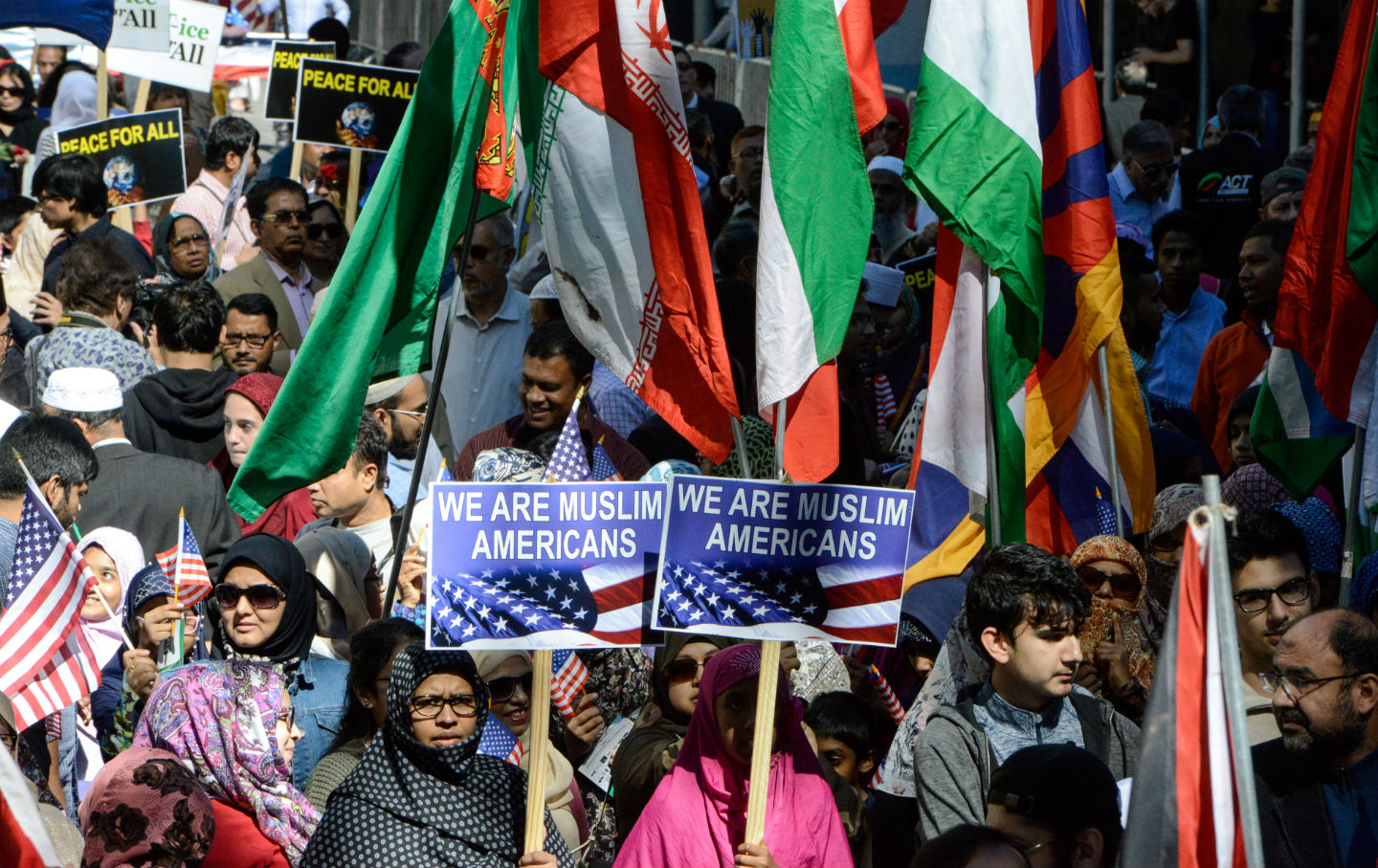
Anti-Muslim Hate
Founded in 1994, the Middle East Forum (MEF) states that its mission is to protect Western values from threats originating in the Middle East; it operates on the premise that radical Islam is the problem and moderate Islam is the solution.
Over the years, the Forum has strengthened its presence within American Republican circles, where it is known for its pro-Israel stance.
In 2017, it collaborated with former Republican Rep. Ron DeSantis to establish a pro-Israel congressional caucus.
The Forum also filed a legal brief supporting DeSantis’s move—as Governor of Florida—to designate CAIR a terrorist organization, a decision that was subsequently blocked by a federal judge.
In response to criticism, the Forum stated that mapping ideological networks is a common practice in American civil society, pointing to other organizations that track networks or individuals based on ideology.
It maintained that the classifications in its database represent an assessment of the public record, not an accusation or a conviction.
Conversely, for years, human rights organizations and researchers have accused the Forum of spreading anti-Islam and anti-Muslim rhetoric and of influencing policies and public discourse regarding the Muslim community in the U.S. The organization’s revenues exceeded $4.6 million in 2024.
In 2025, Gregg Roman was called to testify before Congress, where he advocated for halting aid to a number of Islamic charitable organizations.
The U.S. Department of Homeland Security suspended more than $8 million in grants allocated to several Islamic institutions—citing alleged ties to terrorism—following a report issued by the MEF.
The Department stated that it had suspended funding for 49 projects after an MEF report alleged that, between 2013 and 2023, the Department had provided approximately $25 million to groups linked to terrorism, according to the Common Dreams platform.
The funding was provided through the Federal Emergency Management Agency’s (FEMA) Nonprofit Security Grant Program (NSGP), which aims to support religious institutions at risk of hate-motivated attacks by funding alarm systems, cameras, and security monitoring.
The CAIR has described the Middle East Forum as an anti-Palestinian and anti-Muslim hate group and has labeled its founder, Daniel Pipes, a racist.
It also condemned Secretary of Homeland Security Kristi Noem, deeming her decisions based on the delusions of the MEF—a hate site that prioritizes Israel above all else.
An MEF report described CAIR—which had received $250,000 from FEMA—as linked to Hamas. This claim relied solely on the organization's inclusion on a list of unindicted co-conspirators during the 2007 Holy Land Foundation trial, even though CAIR itself faced no criminal charges.

Surveillance and Espionage
In January 2021, The Washington Post revealed details of a spying operation targeting the CAIR.
The newspaper reported that the Investigative Project on Terrorism—an organization hostile to American Muslims—was involved in the scheme, recalling the atmosphere American Muslims have endured since the events of September 11, 2001.
Recent years have also seen revelations regarding US authorities using various applications to spy on Muslims in the United States, raising warnings that such practices compromise their privacy.
These apps included popular ones such as "Muslim Mingle, Muslim Pro, Full Quran MP3, Qibla Compass, QR Barcode Scanner, and Al-Moazin Lite".
Special code was embedded within these widely used Muslim-oriented apps in order to track who downloads and uses them.
In 2020, Twitter users called for the Muslim Pro app to be deleted following reports that the US military was using user data to spy on them.
A report by Vice revealed that the US military reached an agreement with a private company to purchase data on 98 million users, citing counter-terrorism efforts as the justification.
The majority of users of these applications are Muslim; a fact viewed as a continuation of US policies-initiated decades ago in Muslim-majority countries such as Afghanistan and Iraq.
In a related development, a study conducted by Rice University in the US found that Muslims are five times more likely than adherents of other faiths to experience police harassment based on their religion.
More specifically, the study indicated that Muslim adults who identify as Black, Middle Eastern, Arab, or North African are the most likely to report experiencing police harassment due to their faith.
A report by Middle East Eye noted that, given an overall rate of 3.8% among US adults, Muslim individuals are approximately five times more likely to state that they have faced police harassment because of their religion.
The geopolitical climate following the 9/11 attacks has created a strained relationship between American Muslim communities and law enforcement authorities.
According to the Rice University study, many American Muslims fear state-imposed police surveillance—manifested through measures such as online tracking, airport security, routine traffic stops, and monitoring within religious sites.
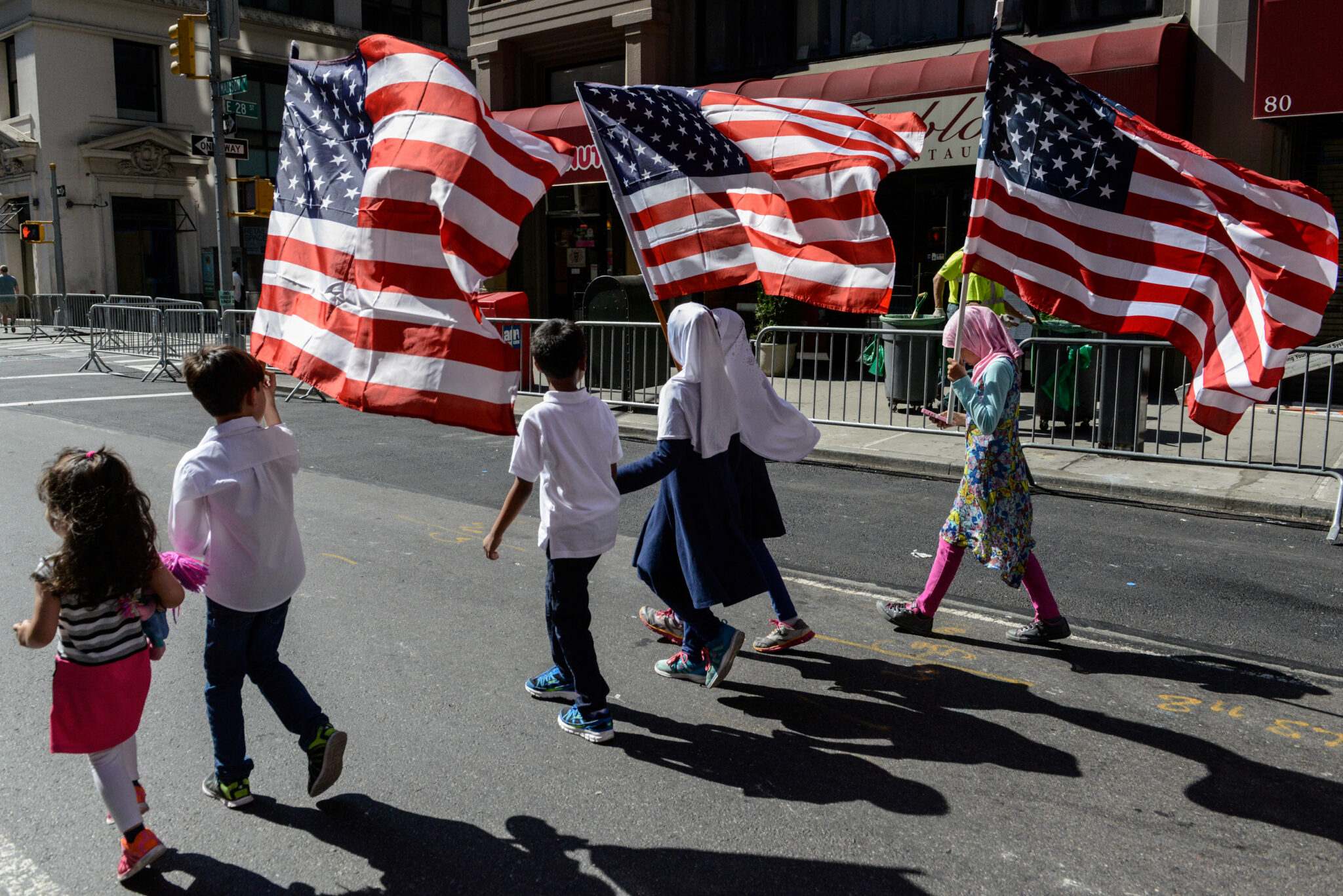
In a related development, a new report released by the Pew Research Center this month reveals that the Muslim population in the United States has more than doubled in less than 20 years, reaching approximately 5.5 million people of all ages today, compared to just 2.4 million in 2007.
The report—released as the 25th anniversary of the 9/11 attacks approaches—indicates that Muslims have become a growing and vital part of the American religious fabric, with the number of mosques rising from 1,200 in 2000 to 2,800 in 2020.
Despite this growth, the report notes that some Americans’ views of Islam have become more negative than they were immediately following 9/11.
Today, 51% of adults believe that Islam encourages violence more than other religions, compared to 25% in 2002.
Sources
- A Right-Wing Org Quietly Tracked Thousands Of Muslim Americans For Decades
- 25 Years After 9/11, MEF Opens Nation’s Largest Counter-Islamism Clearinghouse to Researchers
- 25 Years After 9/11, a Portrait of Muslim Americans
- CAIR Calls on DHS to Clarify Reported Plan to Ban American Muslim Nonprofits Critical of Israel from Receiving Federal Grants
- America's longest-serving Muslim mayor reveals impact of FBI watchlist
- Religion, Race, and Perceptions of Police Harassment
- How the U.S. Military Buys Location Data from Ordinary Apps