From the Military to the Palace: What Did Niger’s Failed Coup Reveal?
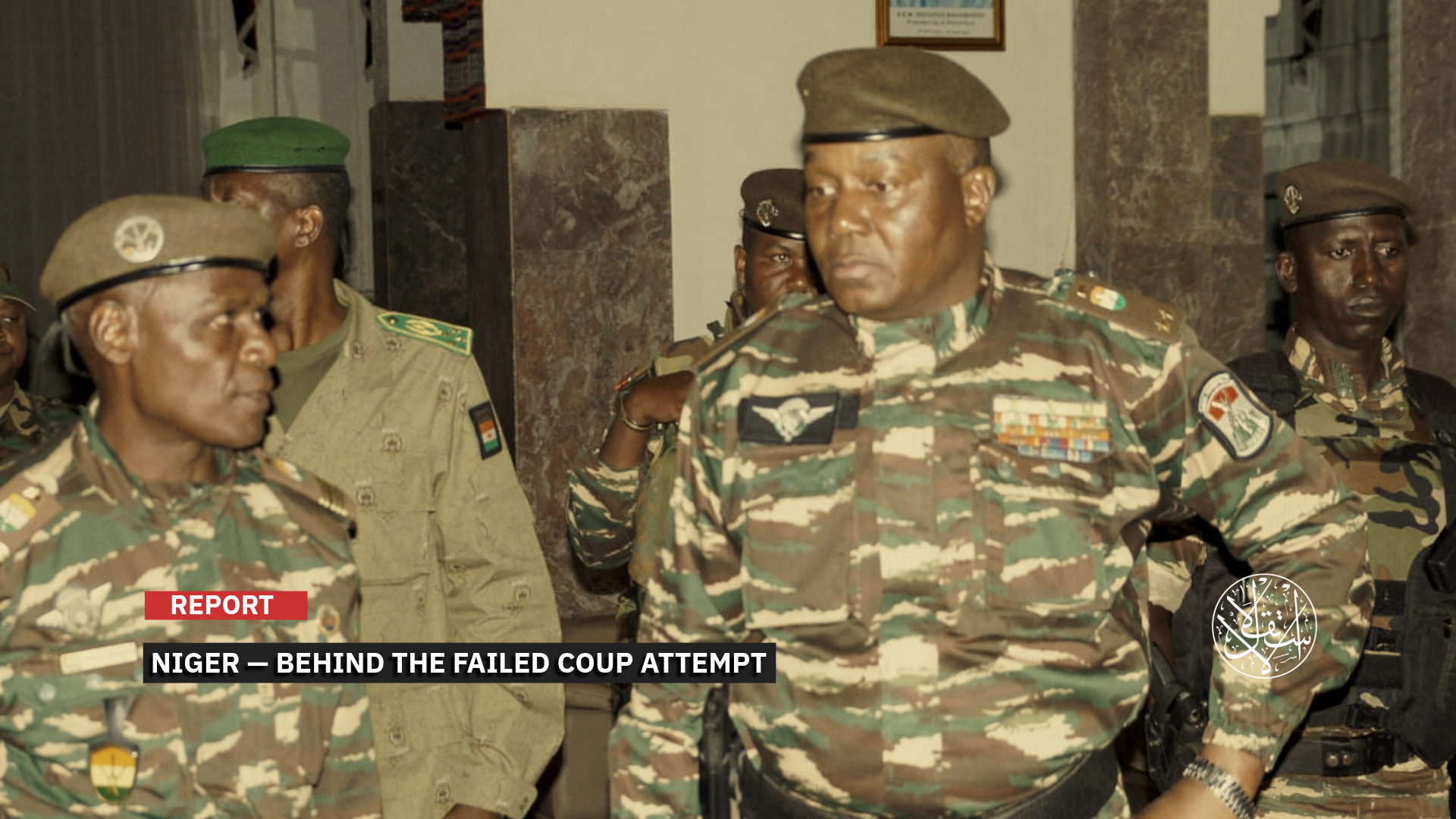
The attempted military mutiny turned into armed clashes that lasted more than seven hours.
At dawn on Saturday, August 29, 2026, Niger’s capital, Niamey, was shaken by a military mutiny that erupted into hours of armed clashes, centered mainly around Diori Hamani International Airport, Air Base 101, and the area around the presidential palace, before forces loyal to the transitional authorities regained control of the positions held by the mutineers.
The use of heavy weapons, the attempt to seize the airport, and the push toward the presidential palace indicated that this was more than a limited protest within the army. It amounted to an apparent coup attempt, according to several assessments, while reports also emerged saying that France, which has lost much of its influence in Niger to Russia, may have played a role from abroad. The failed uprising was ultimately put down with the intervention of Russia’s Africa Corps, which provided ground and aerial support to government forces.
But there was also a domestic grievance behind the mutiny, according to African reports. Some of those involved were soldiers from southwestern regions of Niger, among the areas hardest hit by insecurity, where troops have borne much of the burden of fighting armed groups linked to Islamic State and al-Qaeda. Many soldiers have been killed, amid complaints over inadequate military support and difficult conditions.
The coup was therefore initially linked to the anger of frontline soldiers fighting jihadist groups along Niger’s borders, after years of worsening insecurity and mounting battlefield losses.
French and Western reports, along with statements by Russia’s ambassador to Niger, raised the possibility that France had exploited the mutiny and may have coordinated it from abroad in an attempt to restore the influence it lost to Russia and secure access to the uranium needed for its nuclear reactors, which are facing severe shortages of the material.
Russia’s ambassador to Niger, Viktor Voropaev, told the Russian news agency TASS on August 29 that the mutiny may have been coordinated by external forces. He did not directly accuse France of organizing it but said France was deeply dissatisfied with its loss of influence in the Sahel.
The failure of the coup, however, does not necessarily mark the end of the crisis. It could instead open a new phase of reshaping Niger’s military and security institutions while testing General Abdourahamane Tiani’s ability to maintain cohesion within the military establishment that brought him to power in the first place.

What Happened?
According to the Nigerien Defense Ministry’s official account, the events began on the evening of August 28, 2026, when a group of soldiers detained several of their colleagues inside Air Base 101 before opening fire on several sensitive sites in the capital.
Accounts from inside Niamey, however, painted a more complicated picture, describing heavy weapons fire, attempts to seize the airport and advance toward the presidential palace, and the takeover of the state television building. The developments made clear that this was an attempted military coup, rather than a limited protest within the army.
Control of the airport carried both military and political significance. It could have allowed the mutineers to cut the capital off from the outside world, prevent reinforcements from reaching it, and, conversely, bring in outside support for their own side.
The attempt to seize the presidential palace was the clearest sign that the mutiny was aimed at taking power and removing General Abdourahamane Tiani, who came to power in the July 2023 military coup that ousted elected President Mohamed Bazoum.
Behind the Mutiny
In the aftermath of the mutiny, accounts from local sources and Nigerien journalists offered a domestic explanation for the coup, pointing to young soldiers who had turned against the army leadership over conditions in the border regions, the lack of security, and the heavy burden they carried fighting Islamic State and al-Qaeda militants.
According to these accounts, a group of soldiers arrived from the border regions under the command of one of their leaders at Air Base 101, where they launched the mutiny and seized the base before moving on to the airport, the television station, and the presidential compound.
One of the most significant details to emerge about the participants was that some of the units involved belonged to elite forces tasked with fighting extremist groups along the country’s southwestern borders.
African reports said military units operating in the Dosso region near the border with Nigeria, where Nigerien forces have been conducting operations against Islamic State and other armed groups, took part in the mutiny.
This made military exhaustion and mounting casualties one of the main explanations for the mutiny. Niger’s army has been fighting on multiple fronts against armed groups capable of carrying out deadly ambushes and attacks on military positions.
Part of the tension within the military stems from the gap between the demands placed on soldiers and their ability to withstand mounting losses and relentless pressure.
But that explanation alone does not account for the attempt to reach the presidential palace, raising the possibility of broader political and security motives.
Oumar Alansari, a researcher specializing in the Sahel, said the soldiers were angry because they had been left on the front lines through months of killings and systematic attacks in successive ambushes by Islamic State and al-Qaeda militants.
He said this was happening with “miserable equipment and gear shown in field footage that was little more than the weapons of a local police checkpoint, bearing no resemblance to the equipment of a regular army fighting for survival against experienced militant groups.”
He said the situation created a predictable chain of decline: as young soldiers and officers watched their comrades fall one after another without meaningful support and with weapons that could not protect them, trust within the military itself began to break down. The sense that the leadership had abandoned them on exhausted front lines, without care or even the basic means needed to fight, deepened.
That accumulated anger soon traveled from remote border areas and neglected villages into the heart of the barracks, turning battlefield frustration into an armed mutiny against a leadership accused of focusing on securing the palace and striking deals while leaving its fighters exposed.
The irony is that the very justification General Abdourahamane Tiani used to carry out his military coup in July 2023 was the lack of security in Niger, driven by Islamic State and al-Qaeda attacks along the borders.
It is also the same grievance raised by the mutineers this time, who complained about a lack of military support as they fought a brutal war on the front lines, according to Reuters and The Associated Press (AP) on August 29, 2026.
On July 26, 2023, presidential guard units led by Tiani moved against President Mohamed Bazoum and detained him inside the presidential palace in Niamey. Military officers then appeared on state television to announce Bazoum’s removal, suspend the constitution, and close the country’s borders.
Tiani and the officers supporting him largely justified the move by pointing to the deteriorating security situation and escalating attacks by jihadist groups, accusing Bazoum’s government of failing to protect the country.
The military junta also cited economic and political problems, arguing that the government’s continued policies would lead to further deterioration.
But the coup was also rooted in a struggle within the military itself, rather than being simply a military move against the government over the security situation. Tiani’s own position was reportedly under threat amid tensions with Bazoum and the possibility that he could be removed as head of the presidential guard.
What Role Did France Play?
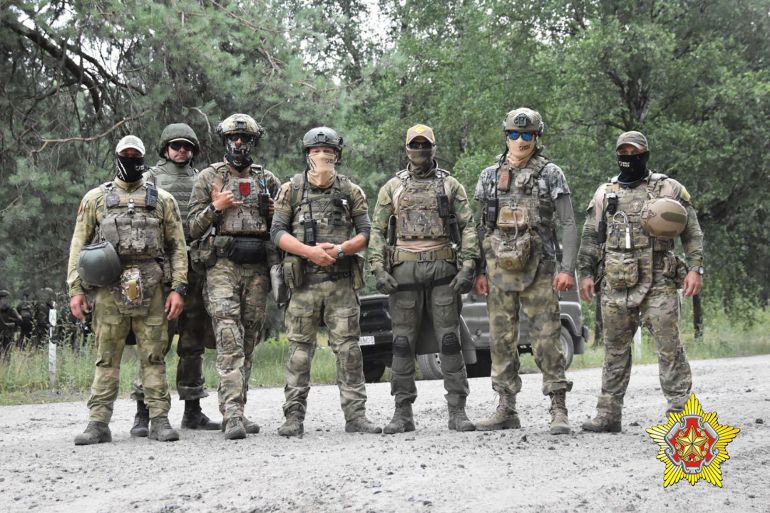
Talk of a possible French role is rooted largely in the geopolitical tensions that preceded the events. Niger’s transitional authorities have long accused Paris of trying to destabilize the country, amid a dramatic shift in relations following the 2023 coup, after which Niger turned to Russia in place of France.
Niger’s state television RTN directly accused France of being behind attempts to destabilize the country after the coup was thwarted, saying Paris had changed its strategy and was seeking to stir divisions and discord within the military.
It said “French imperialism” and Niger’s enemies had turned to infiltrating the military and sowing discord within its ranks after failing to destabilize the country through terrorist attacks.
State television also rebroadcast earlier remarks by Tiani accusing France of seeking to destabilize Niger and using every means at its disposal in a battle to preserve its influence.
French assessments said the soldiers who carried out the coup were loyal to France, having served in joint French and Nigerien forces fighting extremist Islamist groups in the Sahel region of southwestern Niger.
According to Le Monde on August 30, 2026, the mutiny was led by young special forces officers, including personnel serving in the Wallam area of southwestern Niger as part of Operation Almahaou.
The operation was a joint military campaign launched by Nigerien and French forces in early 2023 to confront extremist jihadist groups in the tri-border area between Niger, Mali, and Burkina Faso. This meant the soldiers had trained with French forces and may have developed loyalties to them or could have been encouraged by France to carry out the coup.
That relationship changed dramatically after Niger distanced itself from France and the West, joined the Alliance of Sahel States with Mali and Burkina Faso, both opposed to France, and strengthened security cooperation with Russia and the Africa Corps.
Niger thus became one of the main arenas of the French-Russian struggle for influence in the Sahel, making any internal turmoil in Niamey almost inevitably viewed through the lens of that rivalry and raising questions about a possible French role in the broader competition with Russia.
Beyond France, Chad and coup leader Khalifa Haftar, who controls eastern Libya, also want Niger’s president to fall and may have worked with Paris to encourage the mutiny, according to French journalist Thomas Dietrich.
“Beyond the jihadist attacks and internal factors, which cannot be ignored under any circumstances, there are many who want to see Abdourahamane Tiani fall, including France, of course, as well as Chadian President Mahamat Deby and Field Marshal Haftar, who support several rebel factions in Niger,” he said.
Russia’s Africa Corps
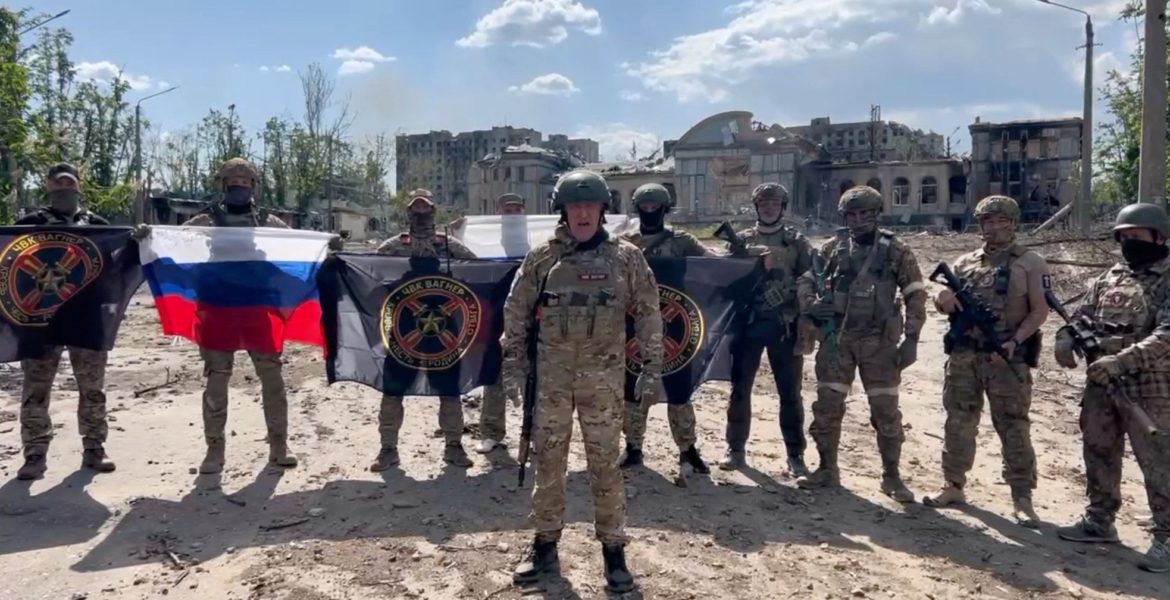
As soon as the military mutiny broke out, Russia’s ambassador to Niger, Viktor Voropaev, said the Russian Defense Ministry’s Africa Corps had received a request to help neutralize the mutineers in the capital, Niamey.
Speaking to TASS on August 29, 2026, the diplomat said the command of the air base located within the airport had asked the Africa Corps command for help “in neutralizing the mutineers.”
He said those involved in the mutiny were young officers who came from the Tillaberi and Dosso regions, where Nigerien forces are fighting Islamic State and al-Qaeda militants.
Le Monde reported on August 30, 2026, that 200 Africa Corps personnel had put down the mutiny at Air Base 101, using drones to strike the young, French-speaking mutineers alongside ground forces.
The assault left several Nigerien soldiers dead, according to a government source, although no exact death toll was announced.
This was not the first time Russia had helped Niger repel attacks on Niamey airport. On January 28 and 29, 2026, Russian Defense Ministry personnel from the Africa Corps helped Nigerien armed forces repel a terrorist attack on the airport by Islamic State.
The Alliance of Democrats of the Sahel (ADS) condemned the Nigerien authorities’ use of the Russian Africa Corps to put down the soldiers who had rebelled against the military regime and called for the protection of the detained soldiers.
The ADS is a political and civil coalition opposed to the military regimes ruling Mali, Burkina Faso, and Niger. It is neither a military alliance nor a government organization. It was established in 2026 by citizens, political figures, and activists from the three countries, with much of its activity centered in exile, particularly in Europe and Brussels.

Algerian Aircraft
Four Algerian Sukhoi fighter jets flew over Niger shortly after the military authorities announced that the coup attempt had been defeated. The unusual deployment later revealed the significant role Algeria played in helping crush the mutiny, strike positions held by the army rebels, and restore stability.
Algeria’s Defense Ministry officially acknowledged the role in a statement, confirming that it had sent four Sukhoi Su-30 aircraft on a “support mission for the Nigerien army to confront an attempt to destabilize the brotherly state of Niger.”
To underscore this role, Algeria’s army chief of staff Gen. Said Chengriha arrived in Niger’s capital, Niamey, on August 30, 2026.
Le Point said that Algeria intervened in the war in Niger, while Russia has gone from partner to regime guardian.
Business Insider Africa, citing Nigerien reports, said four Algerian Su-30 Sukhoi fighter jets and an Ilyushin Il-78 aerial refueling aircraft landed at Niamey International Airport on August 30, 2026, one day after Nigerien forces, with support from Russia’s Africa Corps, regained control of the strategic air base following the coup attempt.
According to the outlet, Nigerien authorities described the Algerian mission as a manifestation of the “strategic support” provided by the Algerian armed forces to their Nigerien counterparts.
According to Niger Fr, an X account covering news related to the Alliance of Sahel States, the aircraft were received in Niamey by the prime minister, the defense minister, and the chief of staff of the armed forces, along with senior military officials.
This was the first time Algeria had sent a combat force from its army abroad at the request of a friendly country for support. Such a deployment became constitutionally possible after the November 2020 constitutional amendment, which authorized it.
Algeria’s significant support for Niger’s authorities against the mutiny came after the launch of a series of joint strategic projects, most notably the Trans-Saharan Gas Pipeline linking Nigeria, Niger, and Algeria, the Kafra oil field near the Algerian border, the trade corridor, the maintenance of the Zinder oil refinery, and a power plant in Niamey.
These projects require military support to ensure the security of energy facilities shared by the two countries, particularly as attacks by Islamic State and al-Qaeda militants continue.
On June 18, Algeria announced that it was ready to provide direct support to the Nigerien army in the fight against terrorism and strengthen its military and logistical capabilities as part of counterterrorism efforts. It later delivered four military helicopters.
The Algerian intervention also marked the first time Algeria had worked directly with Russia’s Africa Corps, amid reports of intelligence cooperation between the Algerian army and Moscow, including the transfer of Russian weapons to Niger through Algeria, according to Jeune Afrique, in an effort to thwart a French-backed coup.
The events in Niamey show that Niger’s military regime, despite successfully thwarting the attempt to seize power, faces a genuine internal test and significant fragility, particularly according to French media reports.
The soldiers who mutinied did not come from outside the military establishment but from within it. Available reports indicate that members of units tasked with fighting armed groups, particularly Islamic State and al-Qaeda, were among those involved.
This means the regime’s problem is not limited to an external terrorist threat. The effects of the war could also spill over into the military institution itself, which is supposed to be fighting it, particularly since the president himself came to power through a military coup in 2023.
The failure of the mutiny, therefore, does not mean the crisis is over. It could instead mark the beginning of a new phase of restructuring Niger’s military and security institutions and potentially another test of Tiani’s ability to preserve the cohesion of the military establishment that brought him to power in the first place.